Has the Time Arrived for Hosted Lifebits?

I’m a big fan of Kin Lane‘s for many reasons: he’s west coast cool, he’s passionate about what he believes in, he’s a technical wizard, and he wraps that all up with some intense creativity and vision. What one might call the complete package. He’s ramping up his Reclaim efforts currently, and we got to spend some time together at the Emory Domain Incubator to start imagining what that might look like more broadly.

One of the ideas he was toying around with I really loved came as a response to the presentation  Tim Owens and Martha Burtis gave about their work setting up the Domain of One’s Own environment at UMW. They talked about hacking the management and billing software WHMCS to hide all traces of money from all students, staff and faculty using the service. This makes sense because none of them pay anything to get a domain and web hosting. So much of WHMCS  is defined around domains costs, billing notices, overdue warnings, etc.  The software is designed for folks who want to resell domains and hosting so this makes sense, no one really buys that software in order to give products away 🙂 So as Tim and Martha quickly learned, erasing any mention of money from this application for UMW Domains was hard—the transactional logic is written into its DNA.

What Kin suggested during their session is that perhaps the WHMCS layer needs to function more as an educational/social experience that explains how domains and web hosting works, helps people understand how to think like the web in a contextual manner, and links a community together. I love this idea, and it’s funny that an article Kin linked to on Twitter just over an hour ago in Wired about the Indie Box project gets at some of this in there reference to an open source application marketplace on these personal servers. But two of the issues I see with that project are a) you have to pay $500 for your own server, and b) you have to manage your own server.

Don’t get me wrong, the vision behind this project is awesome, and I’m a big fan. I’m just wondering  if the hosted part of our identities on the web doesn’t still make some sense. You can still move your life bits to open source applications on a solid web host, and you can still have a marketplace for open source applications, Installatron is a pretty solid example of this. Kin has talked about building a marketplace of APIs that pull your contributions from various third-party, NSA-friendly platforms into your own server—but do you want to opt out all together? Maybe, but managing a server under your desk was never much fun, and I can’t imagine it will be that much better now.

So, thinking about this the idea Jon Udell was exploring in 2007 about hosted lifebits might be a conversation we’re ready to have more broadly currently given that the NSA is scanning our emails and Google and Facebook are hoarding our data. I think many of us would be willing to pay for hosted services that enable us to store and share our various digital lifebits,  providing access and privacy as needed. In many ways Kin’s idea of the re-imagined layer for domain and hosting management might consider what this might look like as a way at this issue. What if people created API tools you could pay a nominal fee for to ensure you could regularly archive your tweets, Flickr images, Facebook updates, etc? What if you could go beyond that an ensure some consistency of your online environments in terms of links, media, etc? Engineering an open web can only happen when each of us starts reclaiming some of the fundamental pieces of our personal digital archives, which does not necessarily mean taking on the role of full blown server admin. Collaborative labor collectives can be useful in some scenarios 🙂

This is one of the things I really want to start thinking about in relationship to Reclaim Your Domain. How can I start reclaiming my various online spaces that I’ve been living in for the last decade or more to go through the process of consolidating and ensuring a future for these conversations within and beyond the moment.
Posted in Domain of One's Own, reclaimopen | Tagged , , , , , | 3 Comments

Colussus

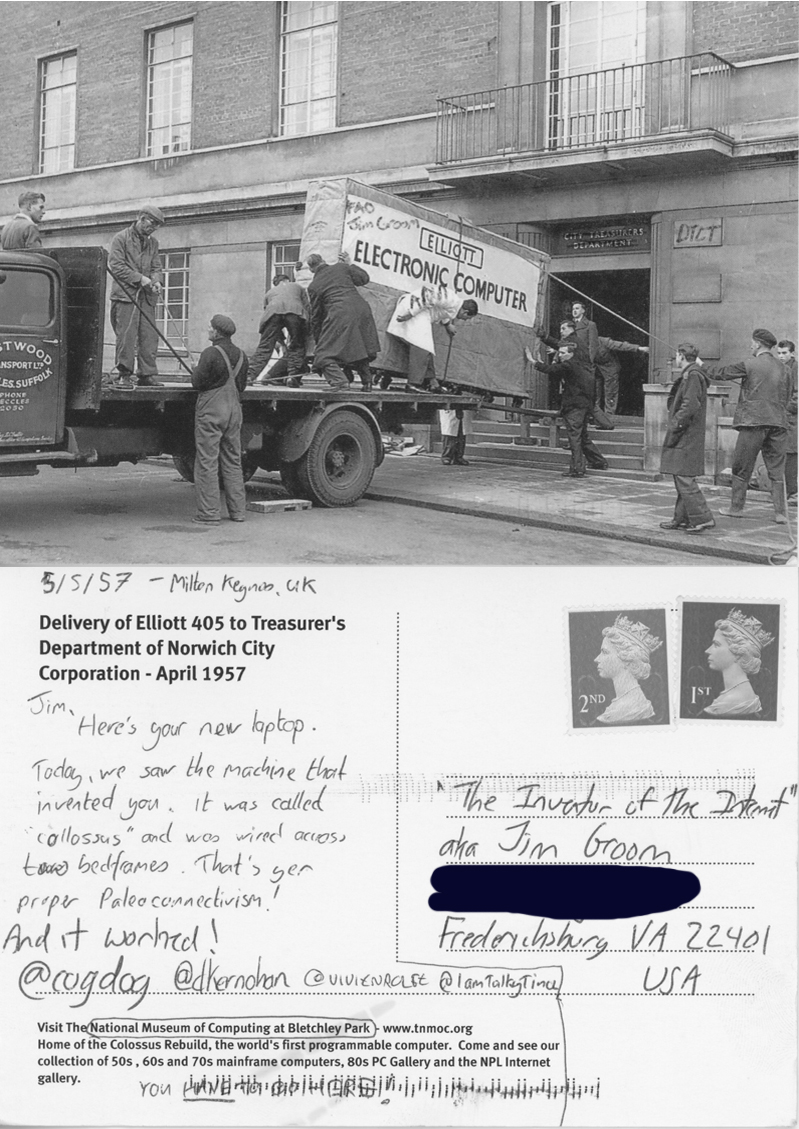
A ds106 communal postcard from Britian 🙂

I received the above postcard from the U.K. this past Friday, which was appropriate given it came the same day I was informed the Internet Course would be running during the first summer session—a week from today ! I was sure this class wouldn’t fly given there were only three students signed up since March, but it seems there was a last minute surge and it got approved. I’m actually thinking the next five weeks might warrant an in-depth exploration into the history of the internet with this group. I’ve been moving in that direction anyway during the Spring semester, but this awesome postcard from Vivien Rolfe, David Kernohan, Talky Tina?, and Alan Levine seals it. The scene in the postcard capturing the delivery of “Colussus” the Elliott 405. The museum is also home to a rebuilt Colussus, the world’s first programmable computer. It is pretty awesome—the digital in 1940s England seems so antithetical somehow—very paleoconnectivist, if you will . Here’s a nice bit from Wikipedia about the Colussus:

Colossus was the world’s first electronic digital computer that was at all programmable. The Colossus computers were developed for British codebreakers during World War II to help in the cryptanalysis of the Lorenz cipher. Without them, the Allies would have been deprived of the very valuable military intelligence that was obtained from reading the vast quantity of encrypted high-level telegraphic messages between the German High Command (OKW) and their army commands throughout occupied Europe. Colossus used thermionic valves (vacuum tubes) to perform Boolean operations and calculations.

Vacuum tubes for Boolean operations and calculations?! The “Boolean Vacuums” would be a great band name. I love this stuff, and this postcard made my weekend. I was impatiently waiting to scan it so I could share the love as far and wide as possible. Old gold computer history #4life!

The National Museum of Computing is now very high on my list of palces to visit worldwide, and I am wondering if we have something like it the States? I can’t really think of anything in D.C.? Anything similar come to mind where the national history of US computing is narrated and curated in physical space?

Posted in fun, The Internet Course | Tagged , | 22 Comments

Polaroid Selfies

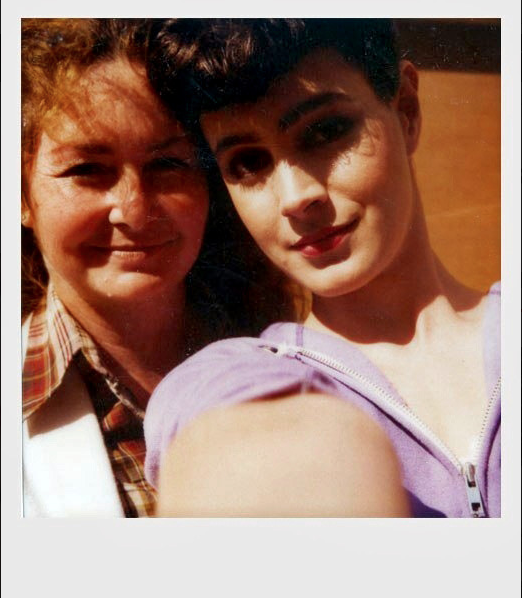
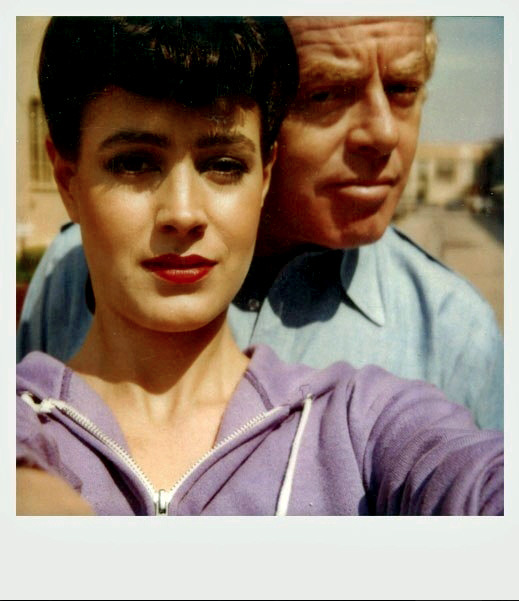
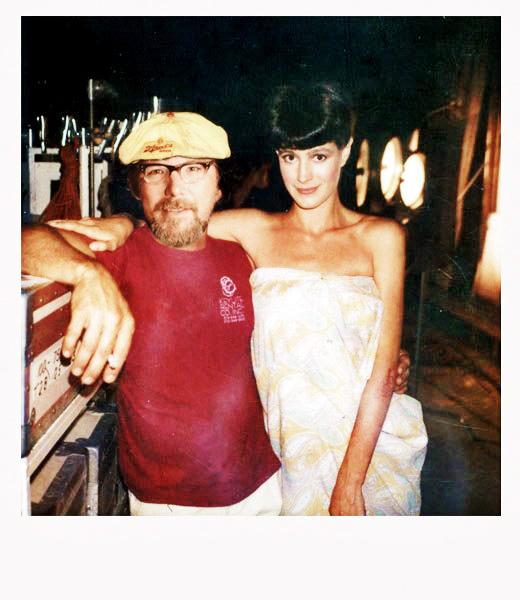
Sean Young Selfies


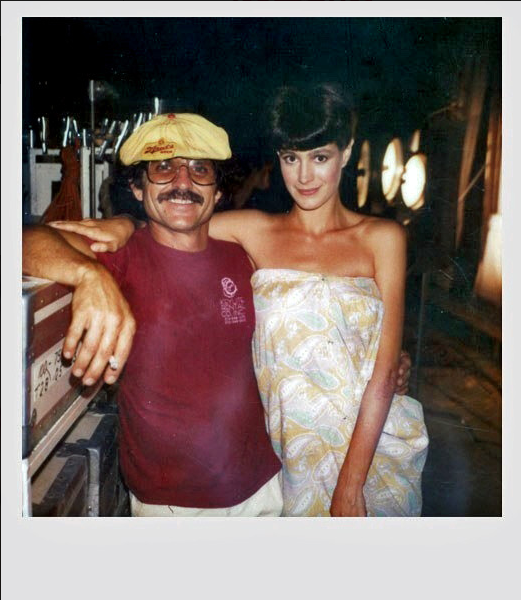
Dr Garcia pointed me to this post that has Sean Young’s polariod pictures from the set of Blade Runner (1982). I was struck my how much they resemble the selfie aesthetic of our current moment. It’s interesting to be reminded just how remarkable the Polariod technology was in the late 70s and early 80s, and it was both realtively affordable and very low barrier—O.G. point and click. There was a Huffington Post article back in January talking about Andy Warhol’s experimentation with the Polaroid might qualify him as the original king of the selfie —although ocne you make that argument there will always be an earlier example.

Sean Young Selfies Sean Young Selfies Sean Young Selfies Sean Young Selfies

I love when the digital hearkens back to an aesthetic in analog technology (is this the opposite of the New Aesthetic somehow?), even if unwittingly given that it’s premised more on  handheld immediacy than any real homage to late 70s, early 80s technology. And as a reimnder that I am the real king of the selfies, Noise Professor unearthed this early gem 🙂
selfie_with_sean_young

Posted in fun, movies, pop culture | Tagged , , | Leave a comment

A Problem of Coherence

Almost two weeks ago (is it really two weeks already?) I attended the Domain Incubator at Emory Unviersity wherein we had a focused discussion about several of the possibilities and issues surrounding Domain of One’s Own. As a quick aside, isn’t it cool this initaitve has already had it’s own dedicated conference? 🙂  Last week I wrote about the many faces of domains, and Clay Fenlason and Pete Rorabaugh have been on a blogging tear in the wake of the incubator. Whereas I still haven’t blogged about the presentation I gave on Saturday afternoon framed around Domains and the problem of coherence, so I figured I should write a bit about that before it’s gone.

I’ll start by saying this wasn’t one of my best presentations, and I don’t necessarily mean that in a self-deprecating way. Truth be told I didn’t even really give this presentation,  Jon Udell did. I spent 20-25 of the 37 minutes of the presentation playing clips from Udell’s 2007 presentation “The Disruptive Nature of Technology.” I’ve been retuning to this gem again and again when trying to conceptualize Domain of One’s Own, and I thought this would be the perfect occasion to suggest the ideas driving Domain of One’s Own are far broader than just education.

In fact, the clips I included during this talk were part of another talk I gave for Campus Technology almost a year ago. I was trying to making the argument that Domain of One’s Own repositions the question of coherence to the individual scale rather than the enterpirse—and syndication helps provide the glue. It’s a move to the idea of faculty, staff, and students becoming a node within a broader network that ideally moves well beyond the limited, and often arbitrary, frame of education.

Having said all this, I’m not sure I was entirely successful with this approach. Udell made his points brilliantly, and I think they re-inforced many of the discussions we had as part of the incubator. His articulate presience is remarkable. But the awkwardness of playing eight or nine 2-3 minute audio clips changes the sense of energy I’m used to feeding off while presenting. In some ways that was good because it switched the attention from me as performer to Udell as thinker, but in other ways I felt I was playing them something they could just as easily have listened to at home. I punctuated his points within the context of the conference, but I’m not sure I had the rhythm and delivery to make it not seem awkward.

What’s more, I was actually letting Udell give the talk, which might have been better dealt with by trying to build on his work from seven years ago with my own ideas. It was an experiment born out of the fact that I felt the “Domains in the Afterglow” talk I had orginally created with the Incubator in mind back in January had run its course after Sloan-C. I referenced that idea in the beginning of this talk by running through my original slidebeck and then throwing it out, which points to a larger tension in my talks recently. Giving a talk a few times is really good for it’s flow and rhythm, but not always so good for my relationship to it. It quickly begins to feel rote. I depend on the energy of not knowing what I’m gonna say next, so having an extemporaneous conversation, if you will, with a 2007 talk with Udell was my way at this. Not sure it worked, but then again I’m not sure it didn’t either. The fact I remain so uncomfortable about it may be telling, or maybe it isn’t. Either way, I’m gonna try this one again in one fashion or another because I now know it’s not rote yet 🙂

Posted in Domain of One's Own, presentations | Tagged , , , | 1 Comment

Two Digital Divides

Two Heade Shark

The Two Headed Shark

We have yet to begin to consolidate the opportunities that have opened up for in the last decade of the internet, in terms of the most basic stuff.

Jon Udell ended his 2007 “The Disruptive Nature of Technology” presentation discussing what he called the “two digital divides” of technology. You can listen to his two minute riff about this in the clip above. Udell suggests the first digital divide, which many of us are familiar with, is linked to access to the technology, or not. The second digital divide revolves around the mystification of tech by what he terms “the geek tribe” (Audrey Watters gets at this beautifully in her critiques of the Silicon Valley mindset). His bit about becoming a reformed member of this geek tribe by actually trying to explaining innovations in technology in plain, comprehensible language is fundamentally a communication issue.

Udell’s bit about the second digital divide resonated deeply with me becasue it gets at what has been most fun, and challenging, about the edtech space: explaining what I do to someone 🙂 Attempting to understand and then explain the potential of various web technologies to people who don’t live in that space is not easy. The creative challenge of searching for the right analogy or metaphor to make what seems foreign and technical immediately familiar and practical is premised on many failures. That’s why blogging, at least for me, has been such an integral part of the job these last nine years. It’s a simple space that I can seed all sorts of ideas on the fly in a low stakes manner to try and explain ideas I am struggling with. And it also helps that I’ve had to wrap my head conceptually around a lot of this tech myself over the last decade.

I think that’s why I’ve been enamored of folks like Mike Caulfield who continually takes great, entertaining pains to try and explain a wide variety of complex, highly technical issues as free of jargon and assumptions as possible on his blog. I’m not suggesting Caulfield is easy-to-read or simplifying the tech, he’s definitely not. Frankly, I often come away scratching my head and wondering what the hell terms like middleware mean. He comes to edtech as a translator. The same can also be said of Audrey Watters—that’s why the two of them have become indispensible to my understanding of the broader field of tech over the last several years (although Audrey is more given to Brian Lamb-like doom mongering than Mike 😉 ). It’s what immediately struck me about Kin Lane when I met him last year, he has an unmatched passion when it comes to explaining how APIs work and why understaning them is crucial to our ability to remain good citizens of the web. For all three there’s a deep impulse to educate and engage around the tech as it relates to our lives rather than provide a mystical solution to enterprise problems.

So, while the first variety of digital divide centered around access is a deeper political issue that would entail re-imagining the internet as a utility (which I am all in favor of), I  believe the second might be considered part of the domain of education. How can we help fight the mystification of tech with history, context, and application. Rather than chasing the next innovation—as attractive as that can be—the time has come to start framing curriculum for thinking like the web, to quote another Udell classic. But not in a fashion that consigns this endeavor to an undergraduate Computer Science elective, but across all disciplines. How can we begin to frame more broadly how the technical innovations made possible by the internet over the last fifty years are informing the present and shaping the future of just about every element our culture? Engaging that question deeply seems to me one way at the educational imperative of closing that second digital divide.

Posted in Instructional Technology | Tagged , , | 8 Comments

Let the Fire Burn


Two nights ago I happened upon a documentary on Netflix titled Let the Fire Burn (2013). THis film uses found footage to tell the story of the violent stand-off between the black liberation group MOVE and the city of Philadelphia in 1985. I was roughly thirteen or fourteen when this happened, and I don’t remember any of it. As I watched the documentary two things occurred to me: 1) 1985 was longer ago than I’d like to think, and 2) this show-down between MOVE and the Philadelphia police was insane.

The documentary does an excellent job of giving you the backstory of MOVE, founded as a “back to nature” movement that became increasingly militant as the city became more and more intolerant of their alternative lifestyle. There were two major stand-offs in MOVE’s thirteen year history. The first was in 1978 wherein a raid on their co-operative home resulted in the shooting of a Philadelphia police officer. The other was in 1985, and in this confrontation five children and six adults assocaited with the MOVE organization were burnt to death. The insane part of this was that the Philadelphia Police and Fire commissioners not only started the fire, but let the house continue to burn down with these eleven people in it. Hence the title of the documentary.

The racial tensions in the film are everywhere present, and it’s impossible not to recognize, at least from the privileged perch of historical hindsight, the barbarity of the response on the part of the city of Philadelphia. That said, what’s powerful about the documentary is MOVE doesn’t entirely come off as innocent, righteous victims. Their ongoing acts of bitterness and broadcasted hatred over a loudspeaker on their house was regularly terrorizing residents of this blue collar neighborhood. At the same time, the coordinated response to let eleven people burn to death in a fire started by the police department is a savage response that is incongrous with the crime. And to add to this narrative, there’s at least one white polcie officer on the force that, against the rank and file, ackknowledges this fact.

The documentary deals with this event by piecing together news reports, a depositon with the only child who escaped the fire, as well as numerous scenes from a community hearing wherein police officers, politicians, MOVE members, clergy, and other community leaders try and make sense of this horrific incident. If you have some time, this documentary comes highly recommended. It makes a powerful argument that the long, ugly history of institutionalized racism continues to undergird the power structure of the state. In fact, 1985 is not really that long ago at all, and waht’s interesting to me is how resonant the title is with James Baldwin’s essays about just that in The Fire Next Time.

Posted in movies | 2 Comments

“I Confess” and “Torn Curtain”

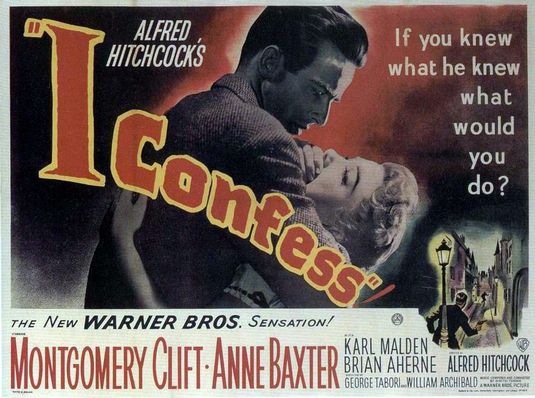
i_confess Antonella and I watched Alfred Hitchcock’s  I Confess (1953) the other night, and I was a bit disappointed. That’s rarely the case with a Hitchcock film, but I couldn’t help feeling the story was stilted and Montgomery Clift couldn’t get into anything resembling a rhthym. Karl Malden was solid, as always, but it was hard to identify with any of the characters in the end.

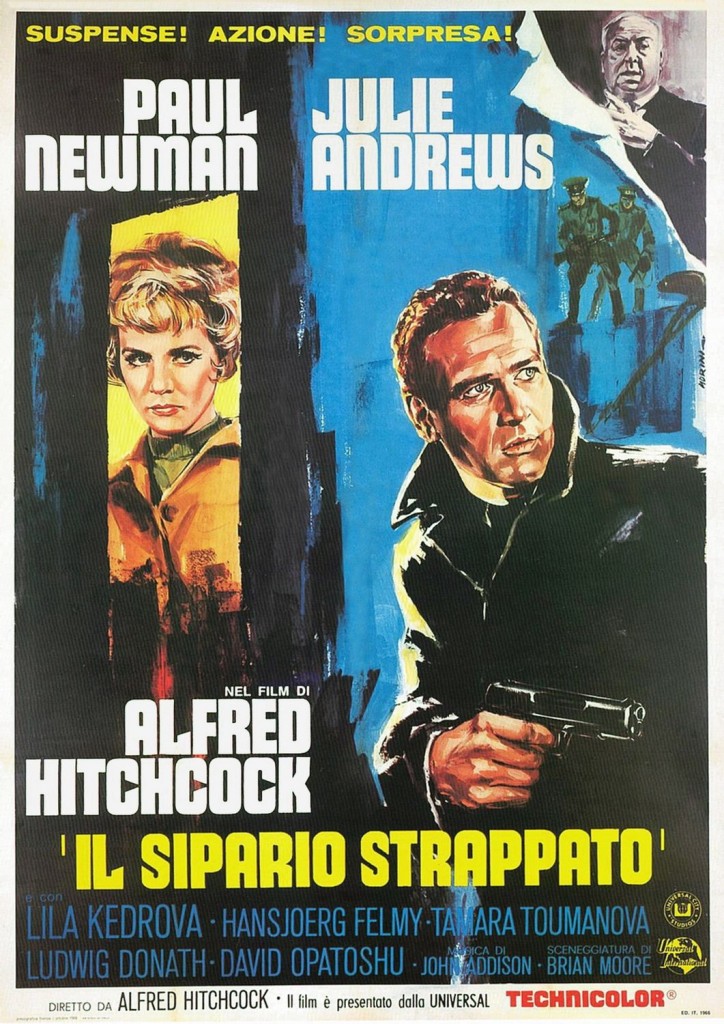
Clift reminded me of Paul Newman in Hitchcock’s spy thriller Torn Curtain (1966). Just like Monty in I Confess,  Newman was horribly stiff. According to the I Confess Wikipedia article, Hitchcock and method actors did not get along. One anecdote states that when Newman asked Hitchcock about his motiviation for a particular scene, the Master responded, “your motivation is your salary.” It’s hard to deny the tension between method acting and Hitchcock’s style of direction when you watch these two films.

torn_curtain_ver4_xlgAll that said, of the two I would argue Torn Curtain is more entertaining given the plot is a bit more intriguing and it has one of the longest, bestest fight scenes in any of Hitchcock’s movies. Acknowledging, of course, it still suffers from a lack of any rhythm or chemistry between Newman and Julie Andrews.
Below is the almost six minute long fight scene from Torn Curtain that Hitchcock employed to emphasize how hard it could be to kill someone.  A strategy that flies in the face of the slick, flashy James Bond films of the time. What’s interesting is this is not about the psychic difficulty of murder, a theme Hitchcock has explored at length in other films, but the purely physical challenges of the act. How much energy it takes to kill another human being is a harrowing message in and of itself. [Quick film note, the video below from Torn Curtain  pairs the scene with Bernard Herrmann’s score for the film that Hitchcock decided against using, in fact Hermann and Hitchcock would not collaborate again.]


Torn Curtain Fight Scene (Gromek’s Death) Bernard Herrmann… by konway87

A few quick points about I Confess. This might be the only Hitchcock film to take palce in Canada, Quebec City to be exact.  Am I right with this? I haven’t seen them all, but so someone may quickly prove me wrong.

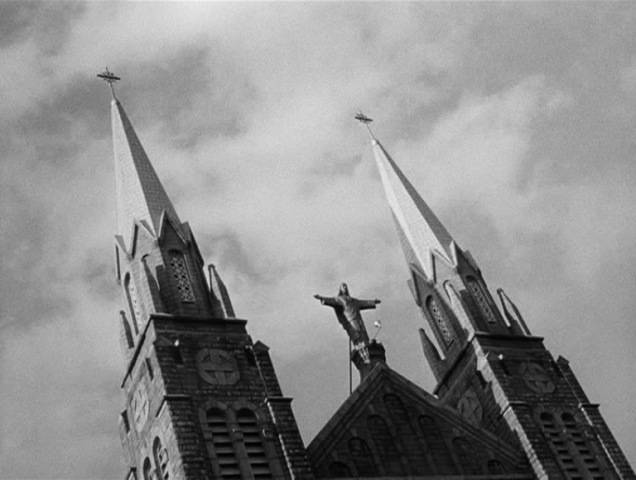
Some of the visual the elements Hitchcock employed in I Confess are awesome. For example, in one montage he weaves the landsape of Quebec City into the film through seamless cuts between church steeples and cops interviewing priests to communicate parts of the plot through what seem like uniquely filmic ways.

con9

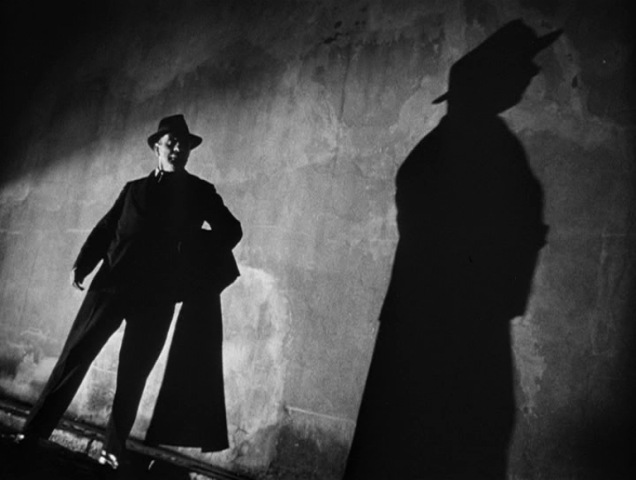
What’s more, the shot below of the killer taking off his frock and retreating down an alley way is the best shot in the film. The noirish shadows captured on an angle are gorgeous. In fact, many of the shots, including the two shown here, were told slant. This added a compelling cinematic effect, but I’m not sure they added much to the narrative. The murder was never a mystery—you know almost immediately who the murderer is and why he did it. In this regard the tension was simply not there. The only real question in the film was whether the priest would turn in the murderer based on the killers late night confession, effectively breaking his holy orders. I hate to say it, but that tension was forced at best, even if you are a Catholic. So I can imagine it might seem almost nonsensical for most others. con2

Posted in movies, Uncategorized | Tagged , , , , , , , , | 4 Comments

Talking Domains All Semester Long

Image credit: Kin Lane - Reclaim Evangelist

Image credit: Kin Lane – Reclaim Evangelist

One of the many cool things Cathy Derecki did while at UMW was create EagleEye, a weekly faculty and staff online newsletter about what’s happening in the community. The site runs in the umw.edu in WordPress on our umw.edu install, and the posts are broken down into two basic categories: the first is professional notes, announcements about who presented, published, karate chopped someone, etc. The other is focused around events, news, awards, etc.

I’ve tried to share as much of my presentations and other work not just on this blog, but also on EagleEye whenever posible. Turns out this semester was a bear, and I am just getting around to updating my last five talks on EagleEye. So, given I just spent more than an hour writing it all up, I figured I’d taken advantage of a little cross-posting.

Since early March of 2014 Jim Groom has delivered numerous invited presentations about the work the Division of Teaching and Learning Technologies (DTLT) has been doing with Domain of One’s Own.

On March 6th Groom delivered a featured session at the 2014 Digital Media Learning Conference in Boston, MA focused around the theme of Connected Practices. The presentation was titled “Domain of One’s Own: Notes from the Trailing Edge,” and it delves into the question of why higher ed has turned its back on the web for teaching and learning, an invention it in many ways made possible. Here’s an extended post framing the thinking behind this presentation, and there is also an archived video of this presentation below (the Domain of One’s Own discussion starts at minute 32:00).

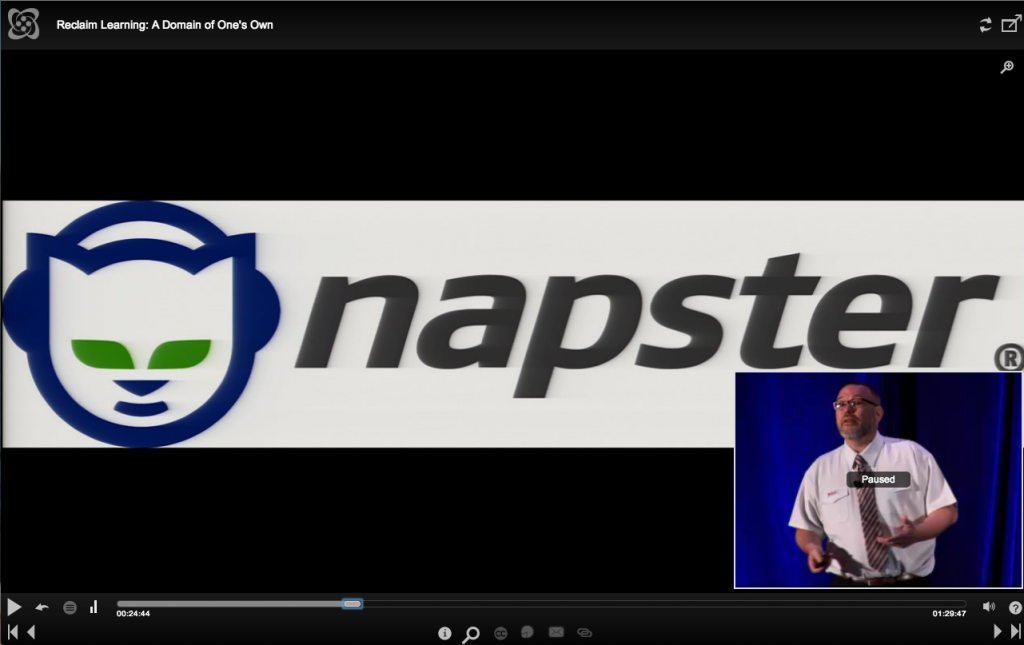
On March 14th Groom was invited to deliver the keynote presentation at UMW’s 4th annual EdTech Conference titled “Reclaim Learning: A Domain of One’s Own.” This presentation examined a decade’s worth of experimentation and development at the University of Mary Washington that has resulted in a series of innovative projects such as UMW Blogs, ds106, and Domain of One’s Own. The presentation examined the common denominator of these edtech projects: they operate from a shared ethos of supporting an open environment for teaching and learning online by helping faculty and students alike exert control over the digital spaces they learn, teach, and live in.

On March 28th Groom was invited to keynote the Baruch College’s 17th Annual Teaching and Technology Conference. The presentation was titled “Domain in the Afterglow Or, What we Can Learn about Digital Identity from Geocities” and it explored the development of web publishing at universities during the mid-90s as well as the emergence of one of the earlier social media sites: Geocities. The presentation explores how higher ed turned away from the open web as platform at the turn of the millenium in exchange for coherence, security, and ease-of-use, the issue remains what was lost in that sacrifice. You can see the slide below and read more about the rpesentation on Jim Groom’s blog here.

On April 10th Groom delivered the keynote presentation at the Sloan-C Emerging Technologies Conference titled “Domains in the Afterglow” that was a further tightening of the talk delivered at Baruch College almost two weeks earlier.  The focal point being how can universities more broadly support an infrasstructure beyond the learning management system that enables digital literacy and creates a student-centric technology ecosystem. Below is a video of the talk, and here is a trail of the Twitter conversation that resulted from this presentation. You can read more about this presnetation on Jim Groom’s blog here.

Sloan-C Keynote Talk

More recently, on April 26th and 27th Jim Groom was invited down to Emory University, along with Tim Owens and Martha Burtis, to discuss Domain of One’s Own with representatives from various colleges in the Atlanta region at the Domain Incubator. This was a confernece inspired by the work happening at UMW, and the two-day intesive program was dedicated to sharing the work UMW and Emory (who is running a pilot of Domains this year) have been doing over the last year. The keynote presentation Groom delivered was titled “Domain of One’s Own: a Problem of Coherence” and you can see the video below. The talk, which relies heavily on the ideas and words of Jon Udell, explores the deeper cultural implications of Domain of One’s Own by taking a broader view of the idea of coherent personal digital archives as somethign we will all need in the near future.

Posted in Domain of One's Own, presentations | Tagged , , , | Leave a comment

Converging

Image credit Andy Rush

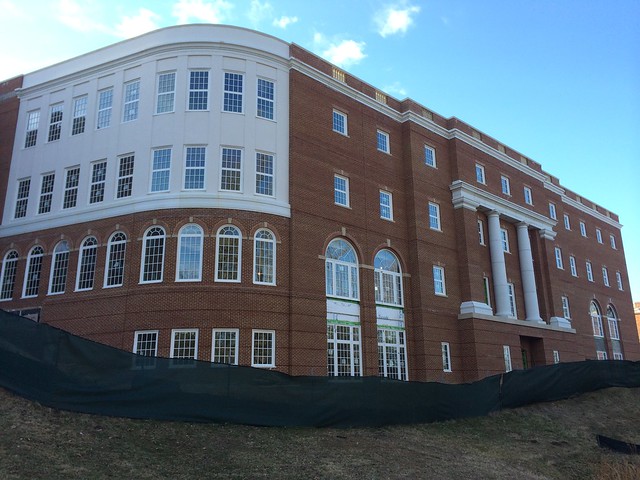
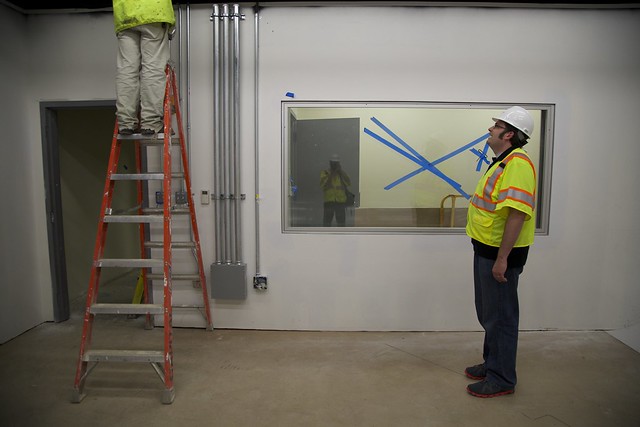
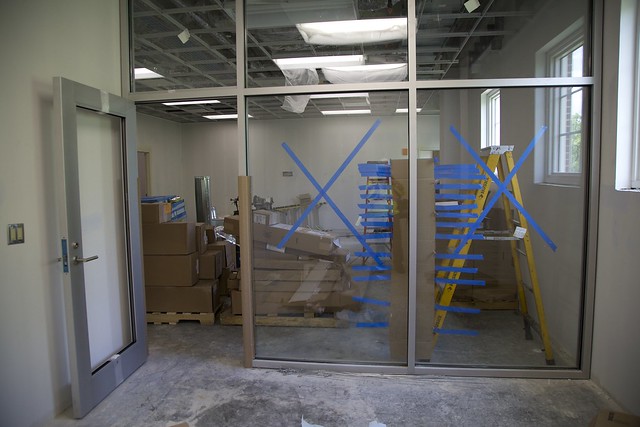
Yesterday I took a tour of the nearly completed Information Technology Convergence Center (a.k.a, ITCC and the Convergence Center). The building will be opening mid-Summer, which is hard to believe. I’ve been at UMW long enough now that I can say “I remember almost eight years ago when that building was just a twinkle in Chip German’s eye.” Well, the vision has been poured into concrete, and in two short months DTLT will be moving into our new digs in a pretty amazing building that will have an editing lab, production studio, a cyclorama, an incubator classroom, an active learning classroom, a digital auditorium, a digital knowledge center?, a media wall, a digital archiving lab, and much, much more.

Tim Owens hard at work building the video production studio. Image credit Andy Rush

In other words, we’re heading into a state of the art physical hub for all things digital. The move will bring our group into a building that will share space with the Department of Information Technology, the Writing Center, the Speaking Center, as well as the library. Convergence, indeed. Various faculty and student support outfits will be aligned within a uniquely futuristic space unlike any other on any campus I’ve yet to see. And it will be centered around the main floor which features be a large, open space with a two story media wall, various collaboration areas, lounge seating, computer nooks, and a coffee shop—all right on campus walk.

Andy Rush was joking with me a month or so ago about how I’d be running over the goal line with this one on my blog. But that’s not gonna happen, as much as I’d love to after seeing it. I’ve been on the outside of the design of this building from day one. I was the naysayer of the group who refused to believe it would ever get funded back in 2006. When the financial crash hit in 2008, I was certain of it. And even after it got funded I was still talking smack about the state’s penchant for investing in capital projects not people, the loss of DTLT’s DIY grit, and on and on. All the while the three DTLTers who’ve been central to the process from day 1—Martha Burtis, Andy Rush, and Jerry Slezak—paid me no mind and went about designing a remarkable building, making sure all the while they continually communicated “what the IT Convergence Center should be.”


Video stolen from this post by Andy Rush which was in turn taken from TrueLook, Inc. and courtesy of W.M. Jordan Company

After my tour yesterday it was easy to understand what they’ve been excited about all this time. They took the longview on this one, and they were right. And while my focus is on DTLT’s contribution, this building wouldn’t have been possible without a number of people from all over campus, in particular UMW’s associate Provost John Morello (chair of the building committee) and Len Shelton (UMW’s project manager on the ground). It was truly a community effort to realize this space, and it was really cool to see just how indelibly DTLT left it’s mark on the final design—and I had nothing to do with any of it.

I paid for my neglect of the ITCC with my office 🙂 Image credit: Andy Rush

During the building tour yesterday, it struck Mary Kayler and I just how intimately Martha knew every detail of that building. That’s when it hit me how cool it must be for her to realize the fruit of what been at times a trying and frustrating process of communicating the future of UMW. I think it might have been worthwhile when you live to see that work realized room by room 🙂 The old gold DTLT trio of Martha, Jerry, and Andy continue to prove why they’re the core of so many of the great things that have emerged from UMW’s DTLT over the last decade. It’s been an honor to walk alongside them, even if I was completely unhelpful along the way of this project.

Finally, you know this building is a big deal when it pushes Jerry Slezak back into blogging again. It’s starting to feel like old times around DTLT again, we got Jeff McClurken leading us towards the future. And with Tim Owens and Ryan Brazell locked in for what will be a transformative move into the future of our group, the potential for realizing the rich possibilities of the digital liberal arts have never seemed closer.

Posted in dtlt, umw | Tagged , , | 9 Comments

Mastering All the Domains

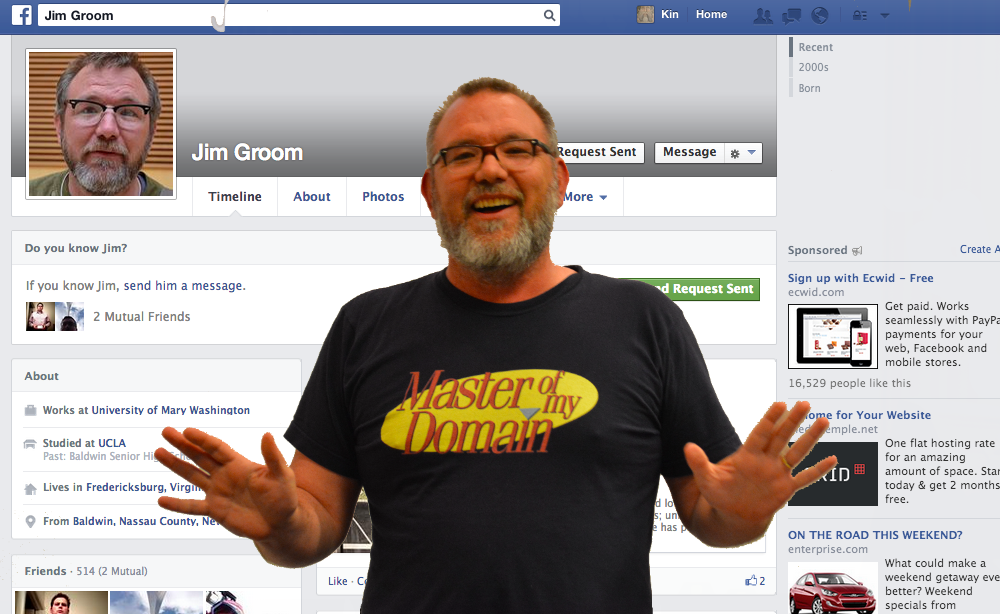
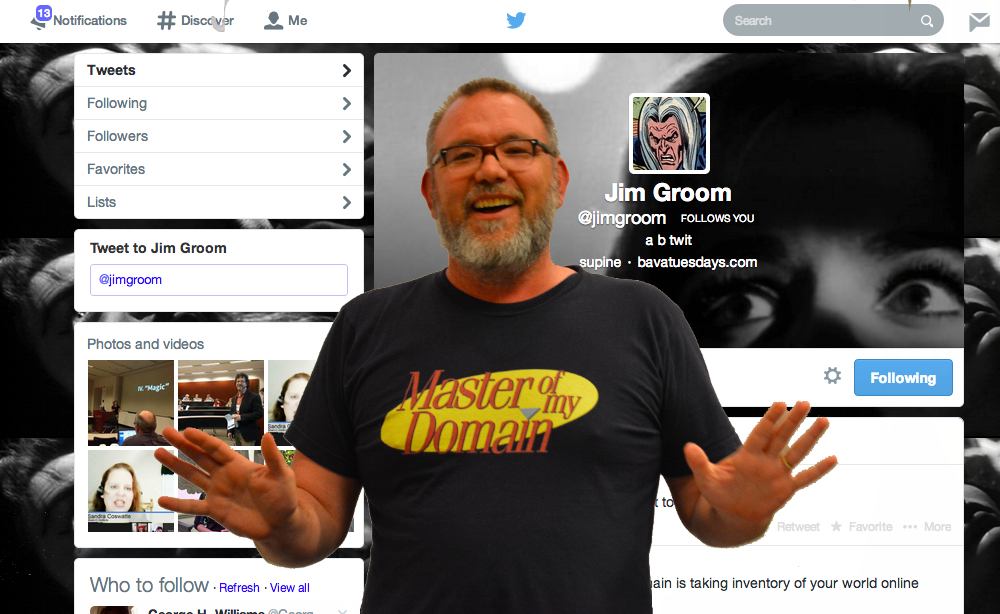
Isn't he dreamy....#NOBODY Who am i really talking about? What will Audrey think?

Image credit: was taken and photoshopped during a recent talk at the Emory Domain Incubator by Kin Lane while he was posting to his API Evangelist blog, getting coffee for Audrey, conducting an inventory of all APIs in the educational space, as well as putting the final details on the federal government’s latest read-write API. All in day’s work. #NOBODY

As the semester winds down I’m gearing up to MASTER ALL THE DOMAINS!

Posted in Domain of One's Own, fun | 2 Comments