N.B: Ongoing experiments with AI-enhanced posts for my Family Pictures Podcast summaries. I think this will be one of the last. Although I do really get a kick out of how ChatGPT understands how I write, and what it fashions as my voice. Anyway, I know this might be annoying for some, and my son is talking shit on me for even playing with it, so I’ll eventually be forced back into the writing grind. Also, the GIFs are all mine, made with ezgif.com 🙂
For episode 18 of the Family Pictures Podcast, we tackled a film I’ve returned to many times over the years—not because it’s a classic, but because it’s a case study in narrative propaganda done with all the force of a melodramatic slap. We’re talking about Not Without My Daughter (1991), starring Sally Field and Alfred Molina, directed by British filmmaker Brian Gilbert.
This film, released as the Gulf War kicked off, is a glossy Orientalist nightmare—a post-Midnight Express captivity drama dressed up in family trauma and American righteousness. If you’re into weaponized domestic melodrama with geopolitical subtext, well, saddle up.

Film opens with a happy American family on the lake in Alden, Michigan
The first 13 minutes are ridiculously efficient. Betty and Moody (Field and Molina) live in idyllic Michigan. He’s a doctor, she’s devoted, their daughter Mahtob is adorable. But as Moody faces racism from his colleagues and growing nostalgia for Iran, he convinces Betty to take a “two-week” family trip to Tehran. He swears on the Qur’an they’ll come back. Spoiler alert: they won’t.
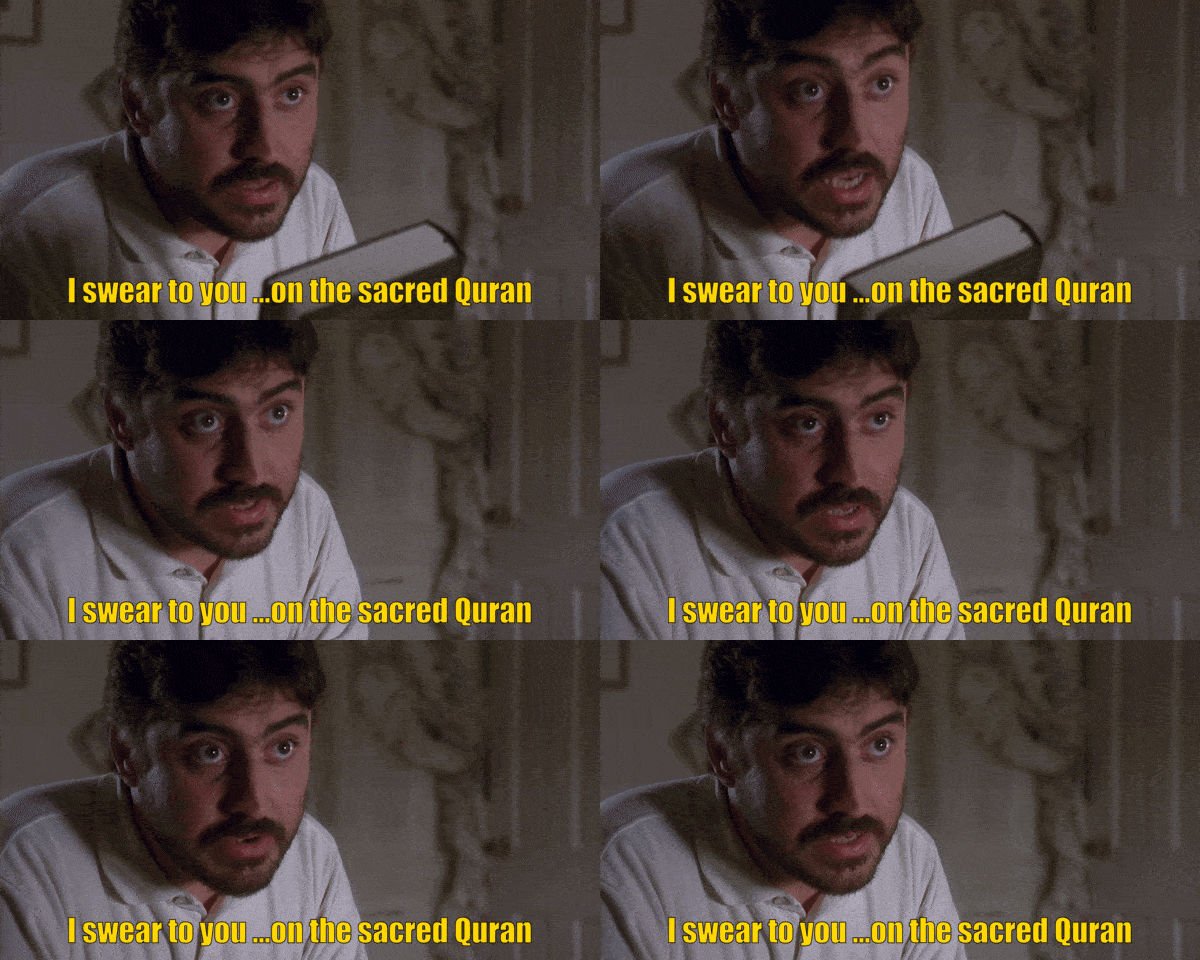
Moody swears on the Quran to convince Betty to travel to Tehran
Moody’s transformation from sensitive immigrant to eyebrow-twitching villain is all but complete by the time they land. The lighting darkens. The sound design tightens. His voice drops an octave. And just like that, we’re in captivity narrative territory.
What’s more, Tehran is introduced as a place of chaos, moral extremism, and blood-soaked ritual. There’s no subtlety—just fear. Betty is stripped of agency, language (no subtitles), and even sunlight. The moment Betty is confronted on the streets for not being fully covered by the Guidance Patrol is the first time we’re introduced to Jerry Goldsmith’s manipulative soundtrack that underscores the harrowing realities of Iranian culture. As Moody’s family member immediately reminds Betty after she is accosted, “every single hair that’s not covered is like a dagger aimed at the heart of our martyrs.”
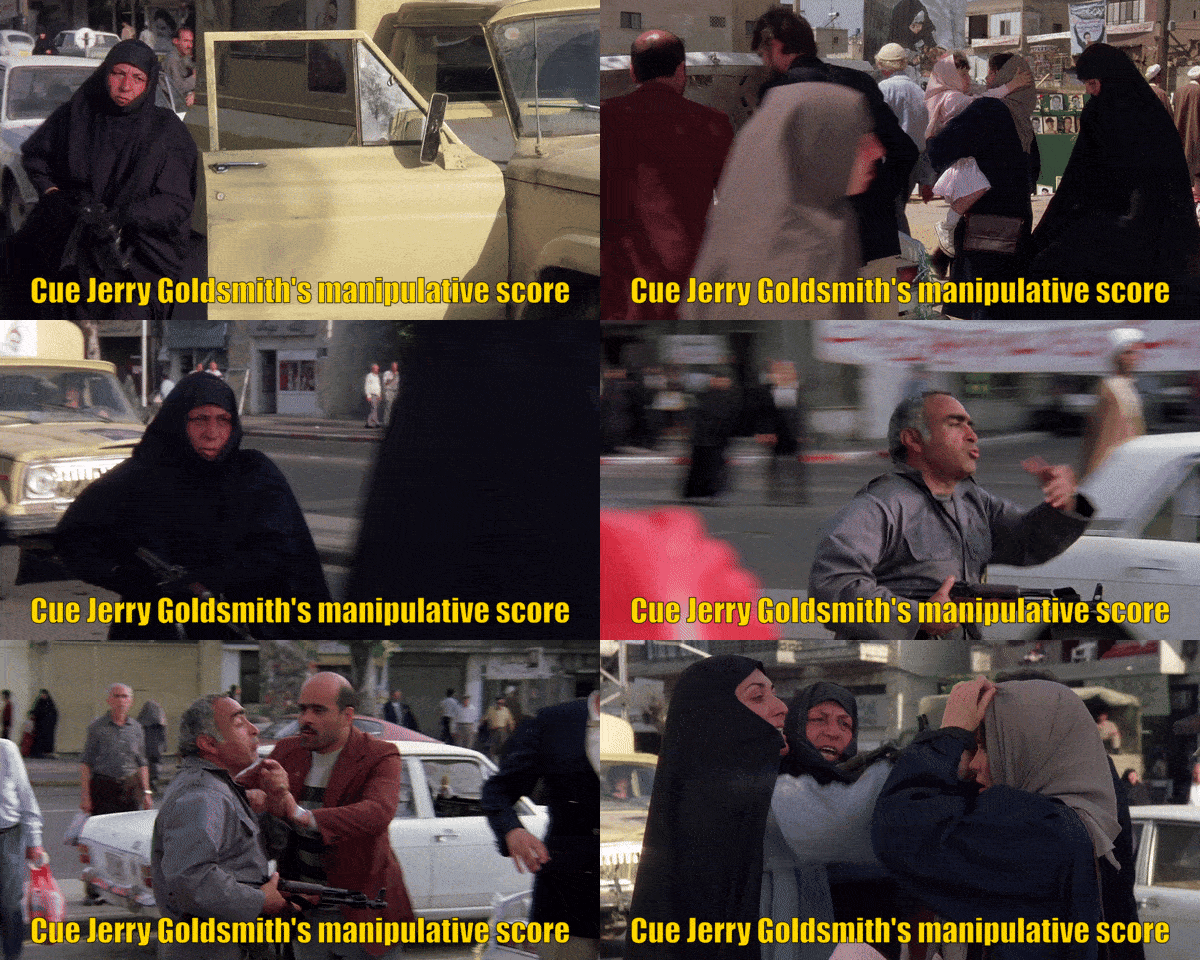
The moment when Betty is confronted by the moral squads in Tehran
It’s not long before Moody becomes a full-blown zealot. The cultural friction is exaggerated at every turn. And with no subtitles, the viewer is put firmly on Betty’s side—suspicious, confused, and morally affirmed.
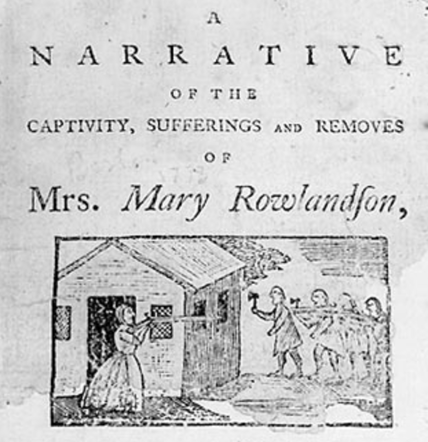
A Narrative of the Captivity and Restoration of Mrs. Mary Rowlandson is a 1682 memoir written by Mary Rowlandson
What makes this film so rich for analysis is how it fits within a deep tradition of American captivity narratives. From Mary Rowlandson’s 1682 memoir to Jessica Lynch’s 2003 media moment, the structure is the same: white Christian woman taken by the savage Other, rescued by resistance and faith.
Betty’s growing desperation becomes a stand-in for America’s moral righteousness. By the time she’s sneaking through alleys in a chador and whispering to smugglers, the film has traded realism for national myth-making. And it works—viscerally, manipulatively, masterfully.
The final 20 minutes are textbook white-knuckle escape drama, culminating in Betty and Mahtob crossing into Turkey under cover of night. The music swells. The sun rises. She whispers: “We’re home, baby, … we’re home.” And the flag might as well unfurl on screen.
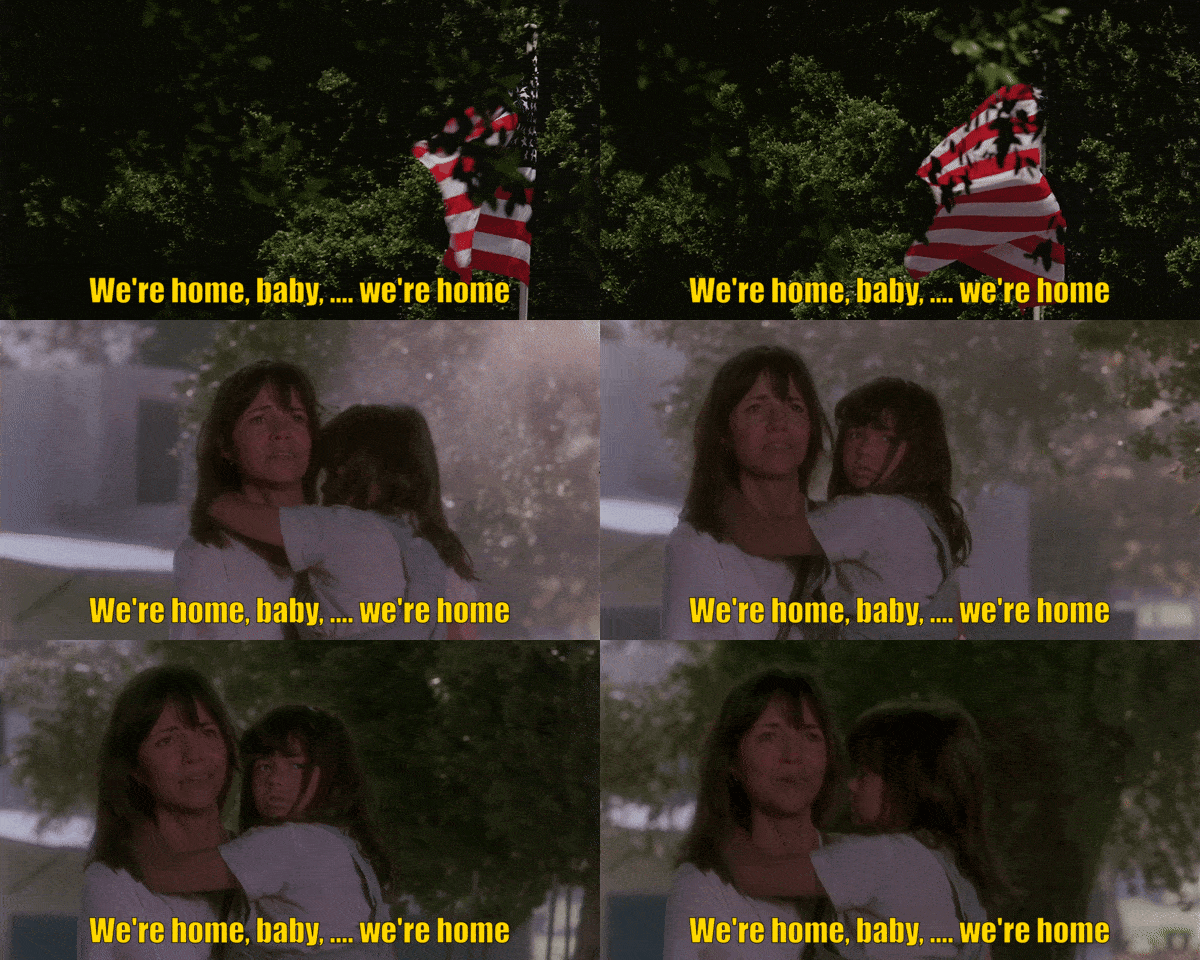
Betty and Mahtob arrive in Turkey, a proxy for the US complete with a gigantic Stars and Stripes to hammer home the point
This isn’t just an escape from abuse—it’s a symbolic return to the safety and superiority of America. The film doesn’t just end with triumph; it ends with affirmation of a national narrative. The West saves. The East imprisons. Faith in God (the right God) will deliver you.
Not Without My Daughter is pure 90s Middle Eastern menace, with a heavy coat of melodrama and moral clarity. And that’s why I keep watching it—it’s a cinematic time capsule of how America framed “freedom” and “otherness” right as the Gulf War began and as the seeds of post-9/11 foreign policy were being planted.
If you’ve already seen it, go watch it again (if you can stomach it), and bring your Edward Said and popcorn. If you haven’t, well it’s evergreen when it comes to propaganda.