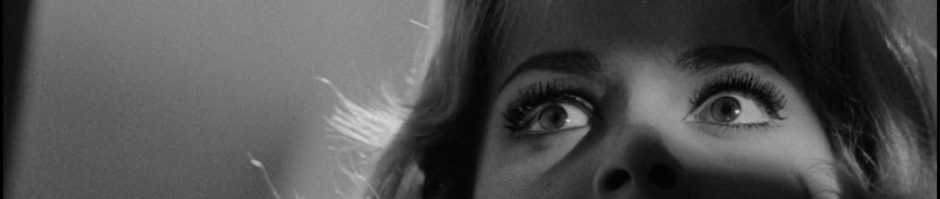
While it’s been two months since I’ve blogged about our weekly episodes of the Family Pictures Podcast, don’t you think we haven’t been continually putting out the hits. In fact, just yesterday we wrapped up episode number 22 and it continues to be a total blast. So now it’s time to catch up on my posts, otherwise it never happened …
Episode 14 was all about Michael Roemer’s 1984 Vengeance is Mine (alternatively titled Haunted) which was made for public television and came and went without much fanfare. In fact, that’s a theme for the select films that Roemer made. His 1964 film Nothing but a Man, focusing on the struggles of a working class black man, gets rediscovered 30 years later after being designated by the Library of Congress as “culturally, historically, or aesthetically significant.” Interestingly enough, this coincides and is very much embedded within the 1990s independent film renaissance. I first discovered Nothing But a Man in my local VHS store, and at first was thinking it was a new release from a black indy voice from the 90s such as Carl Franklin, John Singleton, or Ernest Dickerson, but turns out it was made by two Jewish guys during the early 60s.
The same thing happens with his next film The Plot Against Harry (1971), a mob comedy that Roemer describes as not getting a single laugh. As a result it was never theatrically released, but found a cult following and critical acclaim nevertheless. As a result it finally received a theatrical release in 1989. This guys’ films are late bloomers for sure!
In the 1970s he made the documentary Dying for PBS.* The film follows three terminally ill people during the last months of their lives, highlighting his connections with the cutting-edge documentary filmmakers of the 60s, namely Frederick Wisemen and the Maysles Brothers. What’s clear is that Roemer (who died a few weeks ago just 3 years shy of a centenarian) was a maverick of independent filmmaking who continually refused the idea of telling the kinds of stories Hollywood wanted. While his topics were eclectic, his films remained grounded in a cinema vérité that makes them both refreshing and compelling decades later.
So all that is a round about way to bring us back to Vengeance is Mine, which was one of two features he made for PBS’s American Playhouse in the early 80s. Originally titled Haunted when aired on TV, Vengeance is Mine is the title it was theatrically released with in 2022 at the Film Forum in New York City. Are there any other filmmakers that have had almost every one of their films re-released decades later to new found critical acclaim?

Criterion Channel page for Vengeance is Mine
I discovered this film while browsing the Criterion Channel after a long day of work. I saw the title Vengeance is Mine starring Brooke Adams from 1984, which was the same year Brooke Adams was in David Cronenberg’s Dead Zone. I was immediately intrigued because seeing Brooke Adams in what the title promised to be a Charles Bronson-esque vigilante flick was what the doctor ordered. What I got was something all together different, but turns out an equally intense drama that Roemer was dishing out. I was re-listening to the podcast episode while writing this post, and I have to say it’s probably my favorite to date. Not only because it was a new discovery for both of us, but also because so little has been written about the film. My co-host Michael Branson Smith (MBS) has a brilliant reading of the film which is fleshed out in the episode. In short, MBS argues that one of the main characters of the film, Donna, is actually a ghost haunting her family. And we go through several moments that reinforce this reading. I joked that we had a “Roemer Reveal” while preparing this episode and the sense of uncovering a potentially novel reading of the film made the discussion that much more exciting.
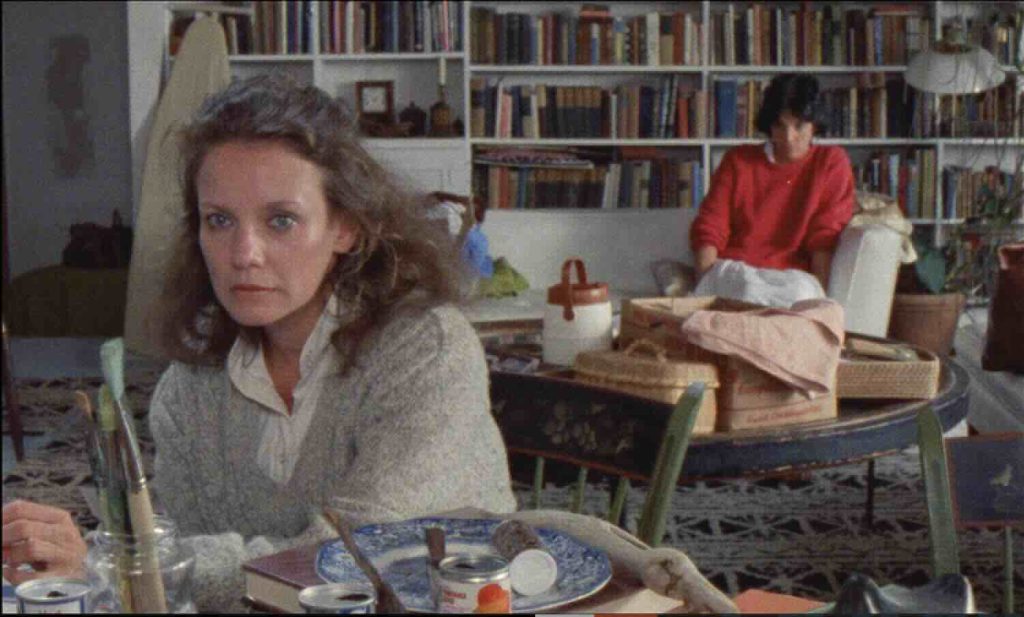
Is Donna a ghost haunting her family from beyond as MBS argues?
What took me so long to post about it was the feeling I needed to do more to capture some of that magic. For example, I wanted to get started on the non-existent Wikipedia page for this movie, as well as write a more coherent article with MBS that we could try and pitch to the Criterion Collection—an organization instrumental in getting Roemer’s films back on the map. I let my excitement and aspirations get in the way of just pushing this post out, but thankfully I woke up this morning remembering it’s just a blog and I can do whatever I want. Plus, the other episodes were piling up and the sooner I blog about the discussions the better.
But the other part of why it’s taken a bit is because there’s a moment in this film that touches on some of my own psychic baggage when it comes to family. There was a particular scene wherein the character Donna (who might be a ghost, but is definitely struggling with mental illness) has a moment of disassociation from reality, and her daughter is calling out to her while she sits staring blankly in the driver’s seat of her car. Disassociation is a mental condition in which a person literally breaks from reality, the Mayo Clinic describes it as “conditions that involve experiencing a loss of connection between thoughts, memories, feelings, surroundings, behavior and identity.” My mom suffered from this and witnessing her have an “attack” (as we called it) at random moments when we were shopping in a super market or browsing a department store was no joke. She would literally become unmoored from any sense of self, language, or identity, and as a result stare blankly into space and often articulate words like “wanna saya” that had no meaning. It’s as if the person I knew had regressed instantly to that of a toddler, the adult consciousness had instantaneously left her body without warning. What was left was a confused soul that found themselves abruptly thrown into an alien world. It was pretty nuts.
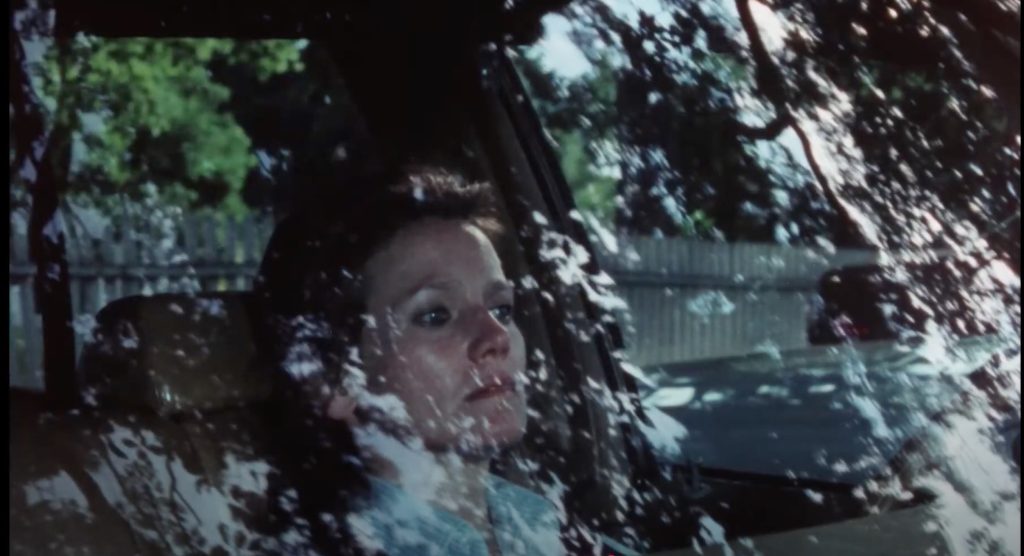
Scene of Donna’s Disassociation in the car from Vengeance is Mine
I had a pretty big family so often one of my other siblings was with me when this happened. We figured out early on that the best way to manage this was to joke to deflect any attention and then immediately get her out of the public’s eye (where it often happened) because explaining what was happening was almost impossible. The easiest and best solution was waiting it out. Every so often some do-gooder got involved which often meant calling the cops and/or an ambulance, something to be avoided at all costs. Once the authorities arrived it would not only make her condition worse, but there was a good chance she would land in 3K (our family metonym for the psychiatric ward at our local hospital). The easiest way to deal with it was to retreat to our car and wait it out. The attack could last anywhere from 20 minutes to an hour, but inevitably it passed. She would slowly come to, and the nagging fear she might not come out of it would finally retreat.
Roemer’s depiction of Donna’s dissociative attack transported me to the back seat of our big blue Suburban stranded in a strip mall parking lot somewhere on the south shore of Long Island. I would be sitting anxiously alongside my mom, and probably a sister or two, hunkering down and waiting it out. I like how Roemer never exploits Donna’s condition, as it would be most filmmakers wont to do, but compassionately draws her as a troubled mother who is trying to cope with a debilitating mental illness. I also like how Jackie, her daughter, is not sheltered from this reality given that’s part of who she is and what she’ll have to make sense of in terms of the family baggage this film is all about. Who we are and what we have to deal with is what makes us special.
________________________________
Like Vengeance is Mine, Dying was restored and re-released in January of this year at the Film Forum. Crazy how everyone of his works seem to get a second life.