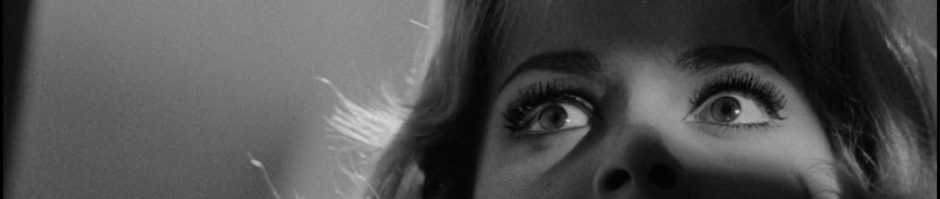
I posted a little while back about a few of my favorite noirs, and decided to re-visit one of the films from the list: The Killers (1946). I truly love this film, and on yet another go round I’m beginning to understand a bit more as to why. To start with, the movie does an excellent job of directly lifting the flashback-based narrative from Citizen Kane. The only difference is that the figure piecing together the life of Charles Foster Kane was a journalist, whereas Jim Reardon (Edmund O’Brien) was an insurance investigator doing routine follow-up on the murder before paying out a ‘nickel and dime’ insurance policy. The shift of the principal investigator from a journalist to an insurance man reflects how Noirs seldom, if ever, focus on a figure of standing and greatness that is newsworthy for the life they lived, but rather for the crimes they committed. Noirs often focus upon the deranged, criminal, impoverished, or forgotten characters -a style of film dedicated to the unspeakable elements of society who spend their time moving from one boarding house to the next.
And while the narrative logic of The Killers is ultimately fleshed out with Welles-inspired flashbacks, I would argue it gains all of its momentum through one of the most hard-boiled and downright brutal sequences in cinema. A sequence which is taken almost verbatim from Ernest Hemingway’s 1927 short story of the same title. I quote the first three minutes from the opening scene below (the whole sequence runs around nine to ten minutes) in order to give you a sense of the darkness (both cinematic and psychic) that pervades the opening scene. Hemingway’s story was a tale about a man (the Swede) who refuses to run away from death and ultimately faces it with both resignation and dignity -an unfathomable reality for most- and for Hemingway the zenith of a darker sense of heroism. The director of this film, Richard Siodmak, was a German-born Jew who fled the rise of Nazism during the 1930s, arriving in the US in 1939 and begam making films in Hollywood as early as 1941. He was also a filmmaker in Germany and his experience with sophisticated studio shooting and the brilliant lighting of black and white (prevalent in many films from Germany throughout the 1920s and early 1930s) brings much to the Hollywood noir style of the 1940s, some of which is readily apparent in the clip below.
THE KILLERS Intro from Jim Groom on Vimeo.
One of the things that occurred to me while watching this film for the umpteenth time was the ways in which the horrific, yet shadowy, realities of Nazism inform the first 10 minutes of this film. Adorno’s famous claim that ”After the Holocaust there can be no poetry,” or, as Daphne Merkin explains this quote, “in the wake of such mind-numbing atrocity, there can be only linguistic diffidence, an exhausted heap of words” (link) informs the ways in which the popular appeal of film Noir may have started immediately trying to speak to such an atrocity indirectly through allegorical images. Almost immediately after this global atrocity, a Siodmak adapts a short story by Hemingway to filmically comment on the unutterable horror of the legacy of Nazism using the figure of the Noir killers. Moreover, the ultimate violence of their being no perceivable idea, as they communicate to Nick Adams in the clip above, dramatically captures that sense of unfathomable horror that remains. The first 10 minutes of The Killers is noir at its meanest and most brutal, particularly because it is framed by a historical moment in which the is world reeling from the realization of the violent extremes that humanity is all too capable of. Film Noir in many ways marks the end of humanism through the filmic language and ushers in the rise of our modern era.
Fine post, though we need to have a smackdown on the death of humanism. You know I still believe in masterpieces and great lives. 🙂
So when ya comin’ to me film class, Jimmy lad? We’re doing Vertigo in a week or so–and Fast, Cheap is on the bill for next Wednesday. A splendid time is guaranteed for all.
A smackdoown with you, Gardner, would be a privilege and an honor. However, there is no way I’m up to it! Nonetheless, I think I am gonna sneak in on Vertigo next week -my least favorite Hitchcock with my least favorite American actor of all time. I think Jimmy Stewart defined the idea of playing one character badly for an entire career. Maybe there will be a smackdown after all 😉
Jim,
There’s a Google search result which appears to be an RSS feed of my site. I need this material removed from your site if it in fact is still offered so I can then have Google remove the search result.
Thanks!
G
Great post. A interesting angle I had not appreciated before. I have linked to your post from my blog.
Pingback: film noir » The Killers (1946) - Siodmark and The Death of Humanism
Pingback: film noir » Noir More Dark Than Black
Pingback: film noir » The Killers (1946): Fata Morgana
Pingback: Noir: More Dark Than Black – Detnovel Magazine