The ds106 Summer of Oblivion scare ’em straight email

The following email went out on May 31st, 2011 in preparation for the ds106 Summer of oblivion online course through UMW. It is directed primarily at the 27 UMW students registered for the course, but may be useful for anyone interested in a brief overview of the class.
__________________________________
Subject: ds106: Summer of Oblivion

Hello and welcome to the online, Summer version of Digital Storytelling (CPSC 106).

Please read this email in its entirety!

I wanted to take a moment to quickly orientate you all in regards to how this course will be run over the Summer (June 20th – July 21st).

Let me start by saying this course will probably be unlike most courses you have taken thus far in your school career, and that is not simply because it will be held entirely online—for it is quite likely in this day and age some of you have taken an online course before. What is different about ds106 (my nickname for the course) is that you will not only be asked, but required, to narrate your process of learning over the course of the semester. You will be required to purchase and manage your own domain and web hosting space (details forthcoming); you will be expected to create a series of online identities across several web services (including YouTube, Flickr, Twitter, delicious, Google Apps, etc.); and regularly update your own web space where you will be installing, designing, and customizing your own blog. More specifically, you will be asked to use these spaces to create digital narratives both individually and collaboratively over the course of this accelerated semester—so please be prepared to work together.

Also, it is very important to keep in mind that a lion’s share of the course work and by extension your grade will be focused around the regular updating of your own blog as well as commenting on the blogs of your classmates. I can not stress strongly enough how essential both blogging and commenting are to your success is this course. If you foresee any issue with either of these activities—particularly with doing them openly online—I recommend you reconsider taking this course.

One other issue that comes up again and again with this course is the time commitment. We will be creating a variety of narratives across a wide range of media, experimenting with everything from digital photography to digital audio to web video. These forms are often quite complicated and time consuming, and while the students who have taken this class in previous semesters enjoyed the process tremendously, they almost all noted it demands a significant amount of time. If you are taking a large number of credits or some particularly difficult classes in other disciplines this Summer (or trying to hold-down a full-time job, etc.), you may want to reconsider taking this course. What’s more, if you took this class as a 100-level filler and expect to get by with minimal work or engagement, you will quickly realize that it’s far more than that—and the dangerous part of the course is you will greatly enjoy the work. Don’t be seduced! At any rate, consider this fair warning. And please try not to make me remind you that you were warned before the class even began.

The main site for the course is located at http://.ds106.us. Please go there and register for the site, selecting that you are part of the “UMW Summer Online Course” during the registration process. If you have any problems registering please let me know.

Something to keep in mind about that course site is that it will not only include the posts of students from UMW, but also from others beyond the boundaries of our school. Ds106 may be taken by more people from outside UMW than the number enrolled in the class at UMW—and they will be taking it for free. Why free? Free because they are not getting credit for the class like you are from UMW. Your work as a class will not be filtered into a particular section of the course site, but you will be side-by-side assignments that are submitted by people from a wide range of experience and interests—almost all of whom have no association with UMW whatsoever. This is in many ways a microcosm of the web, we will not be working within a siloed learning management system, rather we will be doing our business out on the open web. If this is concern, then you have yet another reason to reconsider taking the course.

This course is designed to get you to both think about and interact within the digital landscapes and networks that everywhere surround us. Narratives and storytelling provide the frame we need for exploring and experimenting with emerging forms of creative expression in the digital realm as well as means for interrogating the digital environments we are increasingly dependent upon. To this end you will be asked to steward your own website, and one of your first assignments will be to purchase your own domain and establish your own web host—and by extension your own digital identity.

Shortly I will be sending out an email with instructions for getting your own webhost, domain, and installing WordPress. I will also be expecting you all to get Twitter, Flickr, and YouTube accounts as soon as possible and update your ds106 profiles with the relevant URLs for your accounts for each of these services.

In the meantime, be sure to register for the course site here to formally commit. Also, if you already have an account on the ds106 site for any reason you don’t need to sign-up a second time.

Best regards,
Jim Groom
Posted in digital storytelling, ds10699 | Tagged , , | 3 Comments

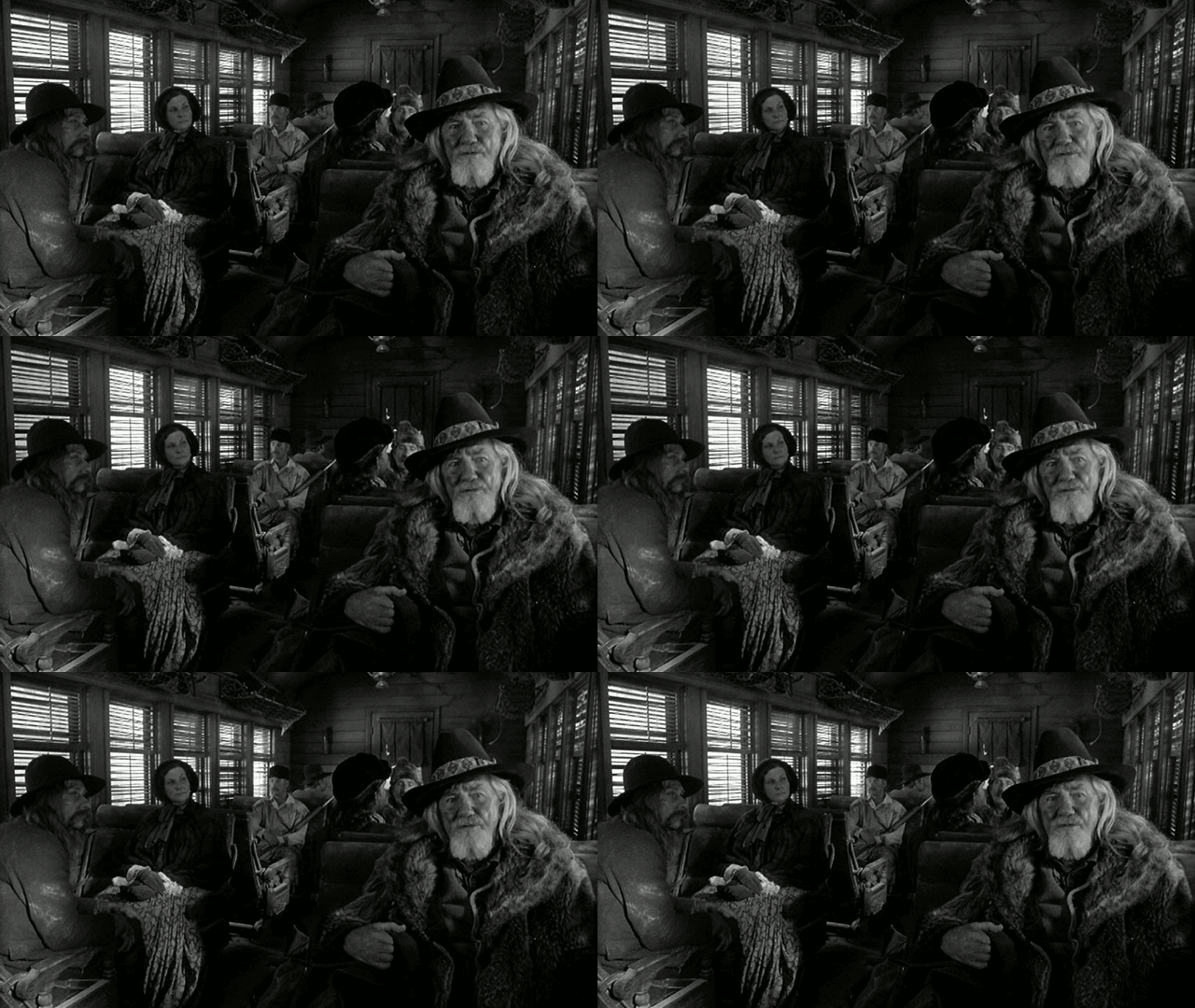
Cue guitar

Dead Man: Brrrrrrrrrrrrrrrrrrrrrraaaaaaaaaaaaaang

Posted in digital storytelling, ds10699 | Tagged , , , | 5 Comments

Plains People

Dead Man: Plains People

Posted in digital storytelling, ds10699 | Tagged , , , | 6 Comments

That Bastard Jim Groom

So one of UMW’s finest, Kate DeMazza, came by DTLT today and let me know that some genius has created a tumblr blog called That Bastard Jim Groom that is populated with images and saying thanks tot he handy, dandy Jim Groom meme generator. What can I say, I have arrived people!!! I will be signing autographs all Summer.

I wonder which one of the UMW #ds106 internauts is behind this awesome 🙂 I have some ideas.

A few of my favorites…

Image of Jim groom

null

Posted in digital storytelling | Tagged , | 4 Comments

Televenous

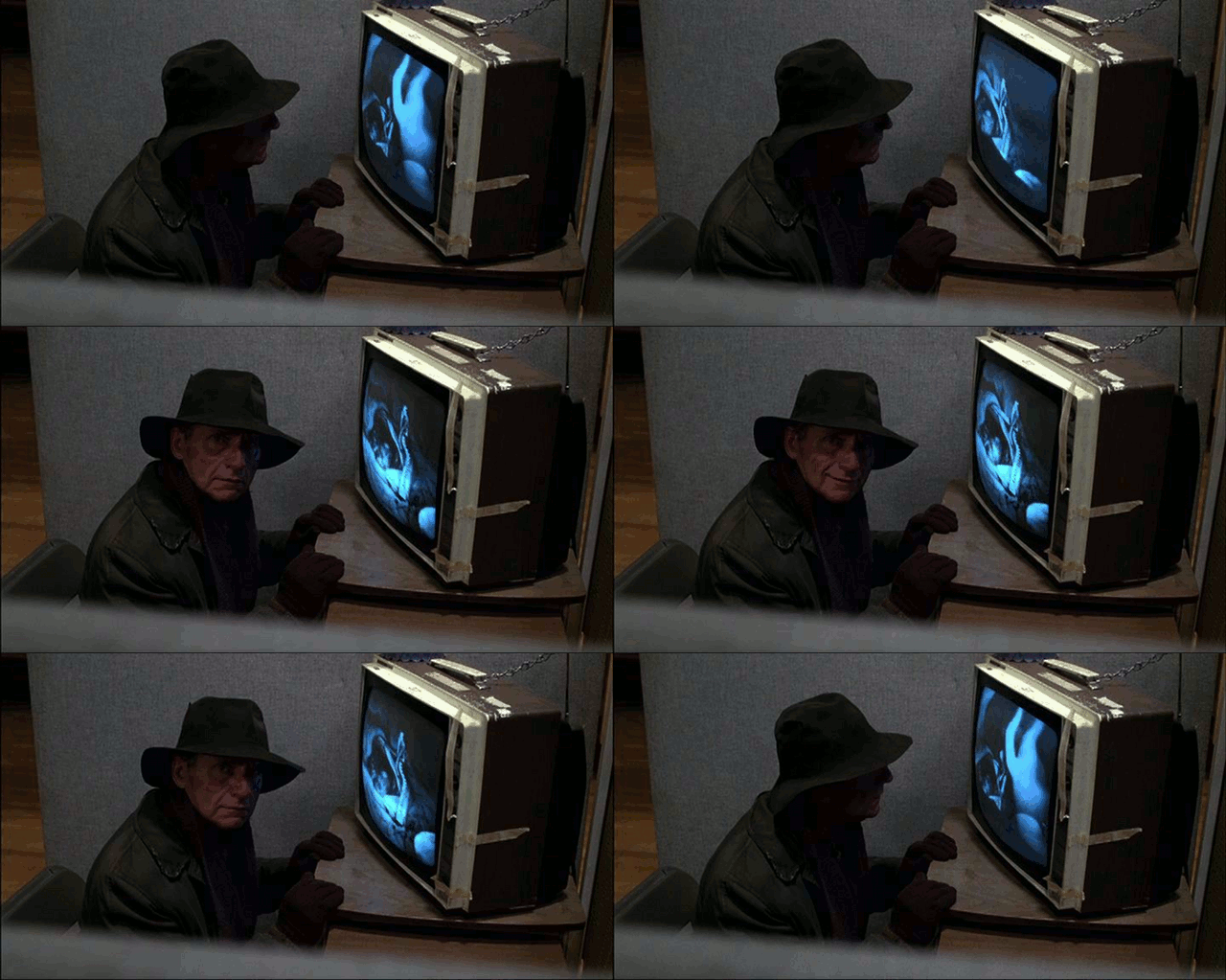
Videodrome: First it controls your mind, then it destroys your body

I know, I know, I know, it is way too big. But I couldn’t resist, it is so beautiful!

Posted in digital storytelling, ds10699 | Tagged , , , | 3 Comments

This is not a test!

The correct answer is C

ds106radio is not a test, it is #4life! Special thanks to Bryan Jackson for making my dream test come true!

Posted in digital storytelling, ds10699 | Tagged , , | 3 Comments

Scifi Radio

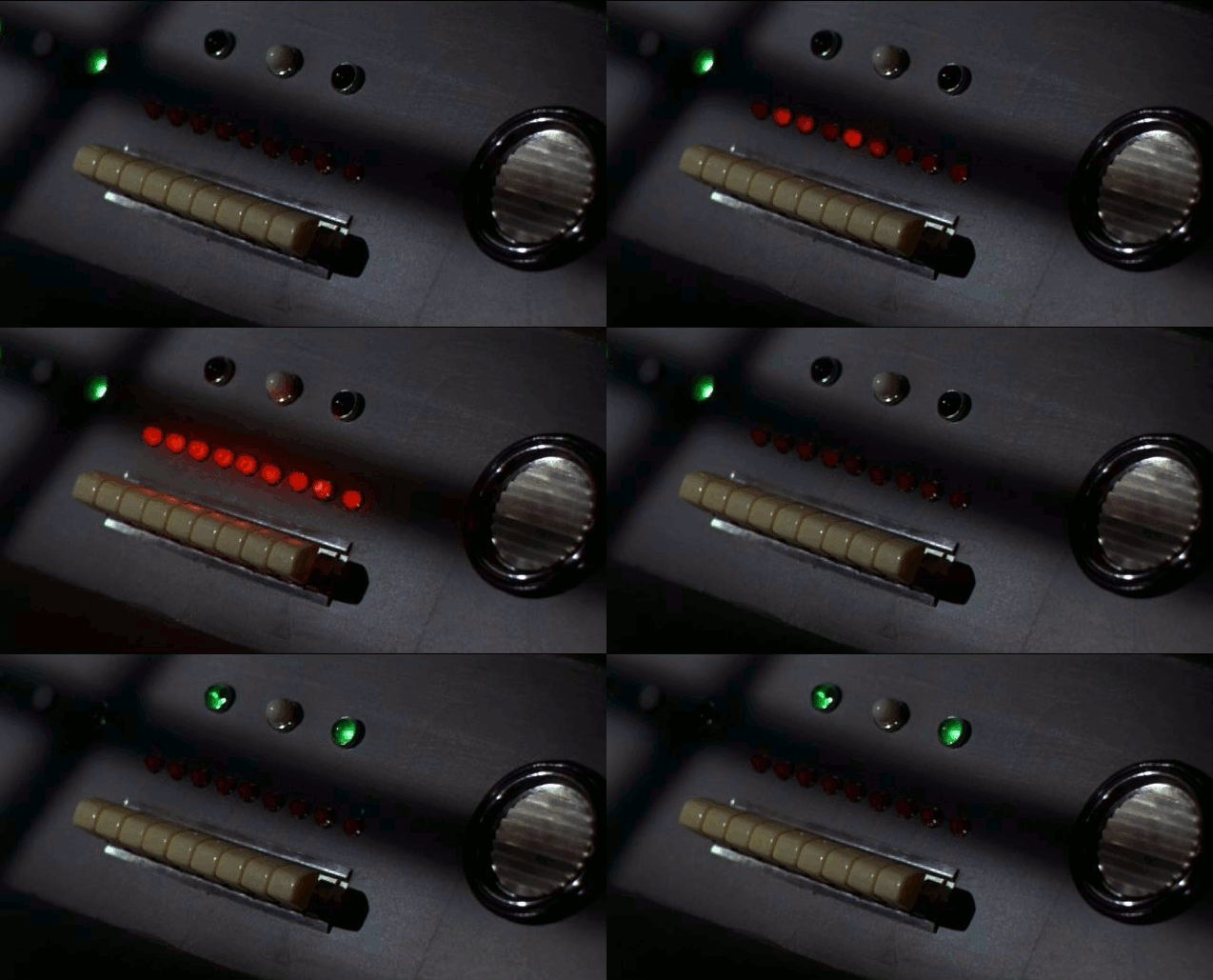
Planet of the Vampires: Scifi Radio

One of the things I love about the aesthetic of Mario Bava’s Planet of the Vampires (1965) is the low tech spaceship control console that seems analog, almost like a radio you’d find in a 60s car. Kinda reminds me of ds106radio—old school tech and aesthetic that meets cutting edge ideas for exploring the yet unchartered space of online connections.

But actually this post is not about Mario Bava, not is it about ds106radio. Rather, this post is about John Johnston‘s awesome application for the Mac, movie2gif, he made using SuperCard. it makes creating animated GIFs a cinch, and it is basically a GUI interface for the open source, command line GIF animator called Gifsicle. It is a clean, dead simple interface, and it makes the process of creating animated GIFs that much more accessible, which any good interface should. it does everything from grabbing the stills, to letting you resixe it, to previewing your animated GIF, it is brilliantly conceived. Kudos to John. You can read his post about it here. What’s more, he even created a step-by-step screencast to get you going quickly.

Movie2Gif from John Johnston on Vimeo.

In his post, and in the video, John really nails the strange fascination that seems to accompany the creation of animated GIFs:

One of the things that the ds106 folk have been doing is creating animated gifs from very short sections of movies. I am still not sure if I see the whole point of this, but it becomes a very addictive process.

I couldn’t agree more, I am not sure if their is a point to these animated GIFs other than personal amusement, but I do know I am addicted. It’s a blast to make them, and it helps me focus on single shots and scenes of film I would have passed over before. I like to think it opens up a new way for me to look at films I love. A way of breaking down shots, and hopefully a way of thinking harder about how the were framed by the artist. What’s more, there seems to be a move towards creating elegant and subtle movements in film and photography that has been termed the cinemagraph (kind of an upscale animated GIF 🙂 ). I found a quick tutorial for the cinemagraph using Photoshop, and I will be checking that out to see if I can get some of the same effects in GIMP. So, all this to say what’s old is new again—despite the fancy clothes—long live the animated GIF!

Posted in digital storytelling, ds10699 | Tagged , , , , , | 7 Comments

ds106: The Summer of Oblivion

Videodrome: Dr. Brian Oblivion

Starting on June 20th there will be another round of ds106, this time an intensive, five week version that will run through July 21st. Currently we have 25 students registered for this course at UMW despite every attempt to scare them away with this pre-course email. Now there is no reason to try and scare anyone interested in taking the open, online version about the workload because you can do as little or as much as you want, and leave the rest. No apologies necessary, you do what you do—only requirement is that you try and have fun doing whatever it is you do.

I come with no expectations for what this second go around will be in terms of numbers and participation from the open, online folks. I was blown away during the Spring by just how many folks brought it on a regular basis, and I’m not sure we can expect that his time around given it’s during the dead of Summer and a far quicker, more intense version of the course, but making it open was the best thing that ever happened to ds106—so how could I not put out the invitation again. So come on in and make some art with us—we would love to have you! What’s more, I’ve found ds106 has been an amazing way to connect with new folks from around the world and I jump at the opportunity to keep that goodness going.

So, if you are interested do me the favor of filling out the form below so I can make sure your work syndicates cleanly from your blog. After that, just head over to ds106.us and register on that site and be sure to fill out as much of the profile information as possible, and be sure to include an avatar! That’s it, easy as ds106 art!

I’ll be sending out some details about the course along with the syllabus and calendar early next week. There will also be a series of tutorials on the course wiki for getting one’s own web host, domain, and installing one’s own WordPress blog. That said, as a preface to those forthcoming resources I’m introducing some new elements to the course this time around. We will be playing in Minecraft (minecraft.ds106.us) as a way to see how this space works for collaboration, machinima storytelling, and distributed communication within a virtual game world. Also, there will be a daily radio/TV broadcast by Dr. Brian Oblivion (featured in the animate gif above). I’ve decided to go through with both Minecraft and the alternative teaching identity. The former is a no brainer, this is a virtual world and given the class is entirely online how could we not experiment to see what this space might afford us? As for Oblivion, I wanted to push myself in this course to not only experiment with and challenge some of the ideas we have about the role of the professor, online learning, and mediated communication—but I wanted to do this while reading Marshall McCluhan’s work closely and using the course and my story within it as a way to think through and comment on his ideas. I figure if I am not pushing myself to explore and be consumed by this media then it would run counter to the whole reason for the course in the first place. So, there it is, ds106: The Summer of Oblivion—but this analyzing is paralyzing, let’s play this dang thing!

Posted in digital storytelling, ds10699 | Tagged , , , , , | 8 Comments

Romero

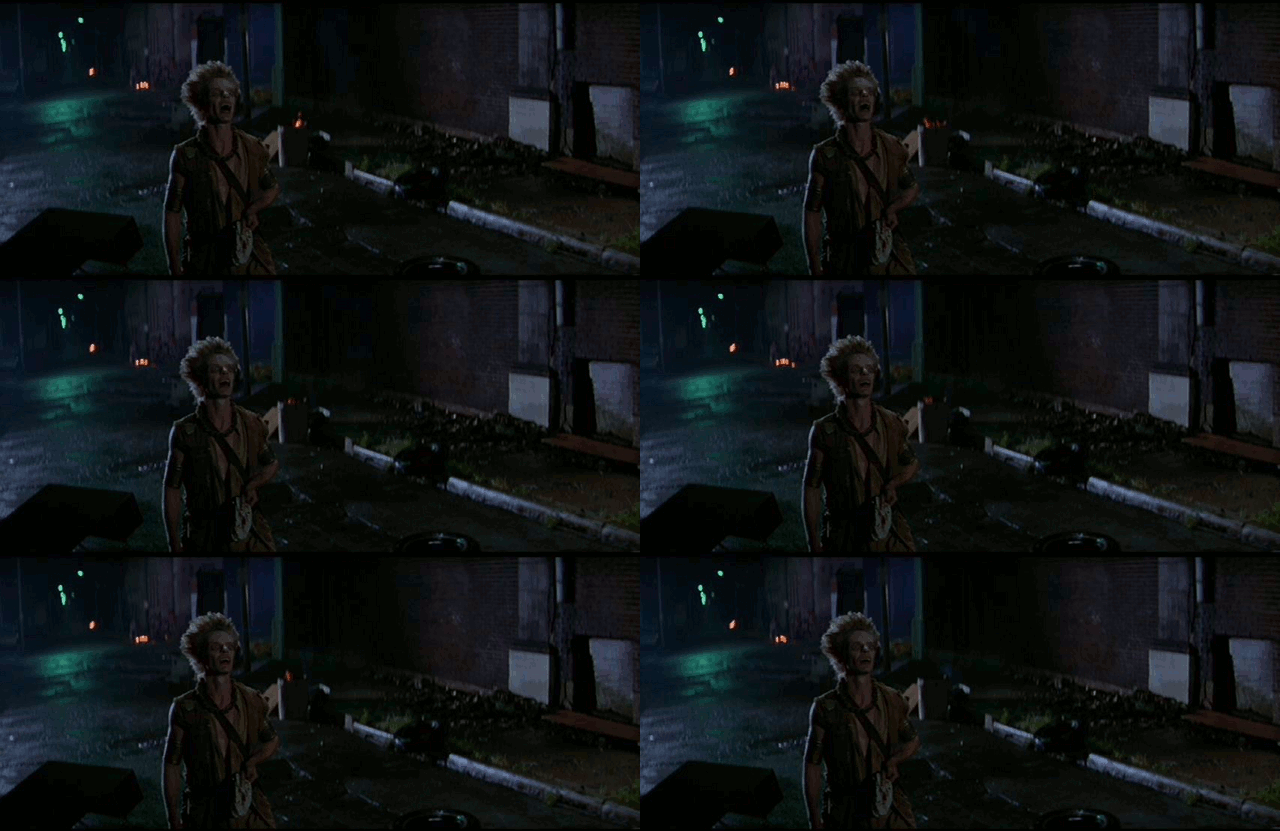
Escape from New York: Romero

And now to find some way to have Romero’s (Frank Doubleday) hiss to be associated with the image over and over again.
Romero’s hiss from Escape from New York

Posted in digital storytelling, ds10699 | Tagged , , , | Leave a comment

Open Educational Essence

You would need to scan to the 18 minute mark, or just click link below, or just watch it all!
https://video.bccampus.ca/media/ETUG+-+What+is+the+value+of+openness/0_wy0s8ymw/37261#t=18:00

This was a video I did in response to the question “What is the value of openness?” for the ETUG Open Keynote—which you can see in its entirety here. I love the whole re-imagining a famous movie scene, and have done this before with Tom Woodward and another with Andy Rush, and I want to do more of it in the future.

This video was inconsistent, but I do love the last part where the scene with General Ripper from Dr. Strangelove dovetails seamlessly into the idea of a professor refusing to give away their instructional essence to the students. Too much fun!

Update 10-6-2019: Now defunct YouTube embed:

Posted in open education | Tagged , , , , | 6 Comments