N.B: The following post summary is predominantly written by ChatGPT 4.0. I couldn’t help but experiment with taking the extensive notes Michael Branson Smith and I wrote-up for this episode and feeding them into the machine. I asked it to use the notes and create a summary of the podcast in the style of my posts from bavatuesdays Family Pictures Podcast category.
The result is strange, it apes some of my over-the-top language, but at the same time is able to remain far more pithy and succinct. It describes what we talk about in the podcast pretty well and skates along the surfaces of topics and themes that we outline in the episode, but it seems to also glean language from the web, so it’s both ours and not ours at the same time—although that idea of ownership and language seems antiquated to me at this moment.
The whole sense of simulacra of thought, language, and communication—in a Philip K. Dick kind of way—is truly unnerving. At the same time, I can see why people might be tempted to take these AI summaries and run with them given the amount of time and energy it takes to write a simple summary post for a podcast (I’ll spend 2-3 hours on any given podcast summary). To that point, we’re moving in on episode 25 and I’m just getting around to posting about episode 16 — the struggle of blogging from behind is real.
Anyway, I re-wrote ChatGPT’s original take, but only parts of it, in many ways the bones of the posts are the machine’s. I have no intentions of using ChatGPT to blog—let’s be clear about that—but I’m interested in getting a sense from anyone who might read this what are the tell-tale signs that help you know its not mine. What is the Voight-Kampff test for a bava post?
Maybe admitting it’s not mine from the beginning ruins any real validity of such a test, but at the same time I have my own idea about this that I’ll be writing about soon. That said, I’d be interested in getting a sense from people if I truly have a style, and if so how easily it’s faked. I wonder if what Blonde Redhead says is true, can “fake be just as good?”
_________________________________________
The Family Pictures Podcast posts just keep on coming, and this one features the inimitable Divine—flaming, flailing, and full of eyeliner.
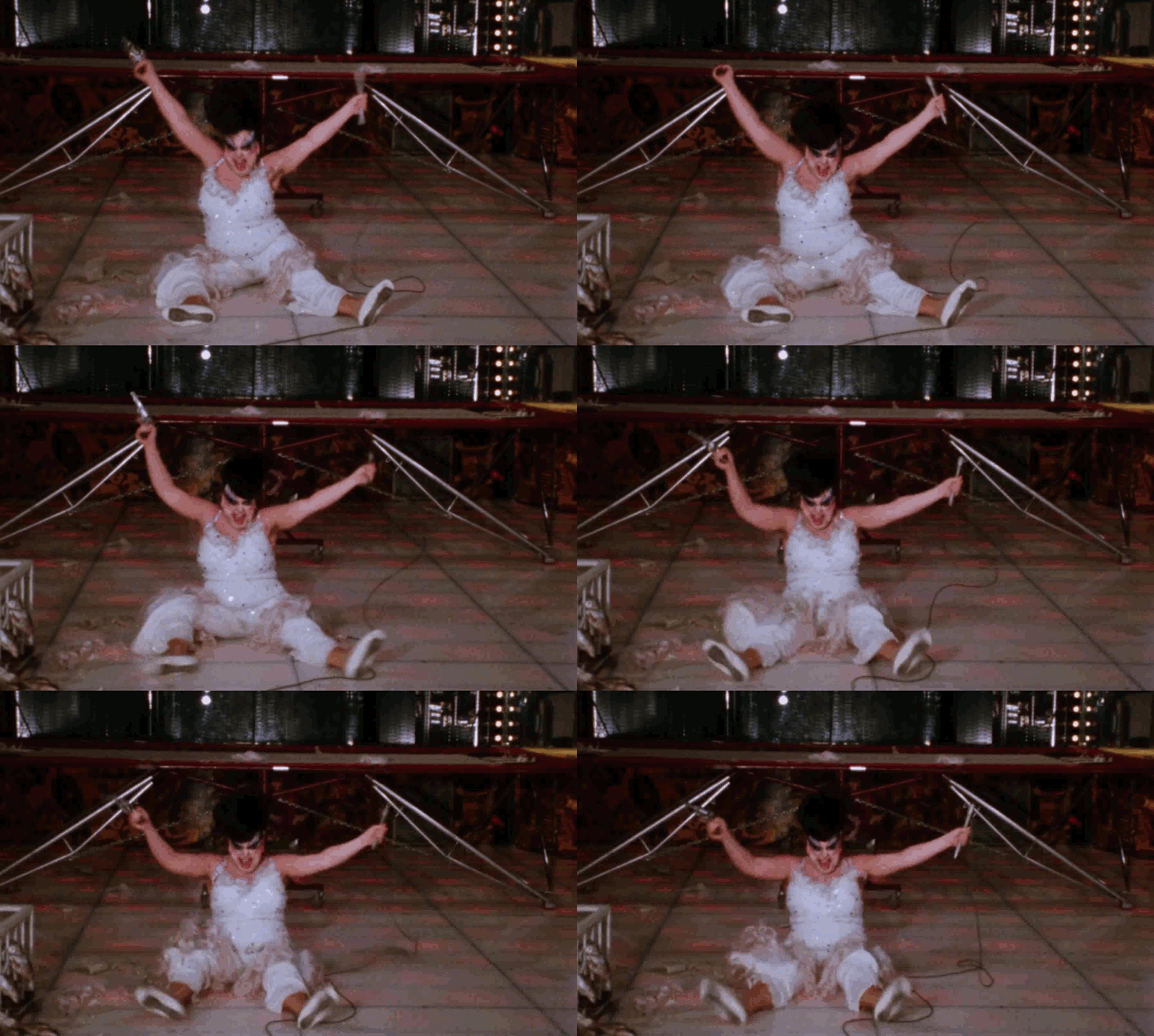
Divine glitching out in John Water’s Female Trouble
Our 16th Family Pictures Podcast episode goes deep into John Waters’ anti-family values masterpiece, Female Trouble, and it might just be our trashiest episode yet (I mean that as high praise, not so sure yhe same is true for my co-host MBS). Released in 1974 and riding the shockwave of Pink Flamingos, Female Trouble is a high-camp hellscape of melodrama, delinquency, and pure filth—all lovingly dissected by the greatest unknown film podcasters on the web.
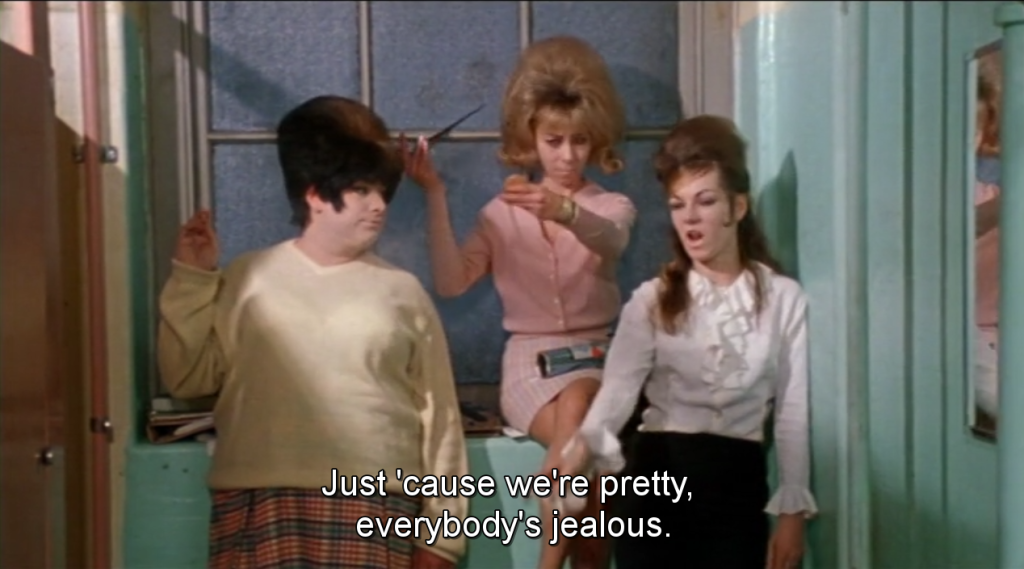
Female Trouble opening in the spirit of a JD film: “Just ’cause we’re pretty everybody’s jealous”
We open on Dawn (played in all her scenery-devouring glory by Divine) terrorizing the halls of her Baltimore high school. She’s flunking, fighting, and dreaming of a pair of cha-cha heels that never arrive—thus triggering perhaps the most unhinged Christmas morning this side of a department store clearance sale. When Dawn’s rampage leads her out of the house and into the arms (and mattress) of a mustachioed trucker (also Divine), we begin our descent into a kind of mythic trash-epic—a bildungsroman rewritten by Warhol, Anger, and a punch to the face.
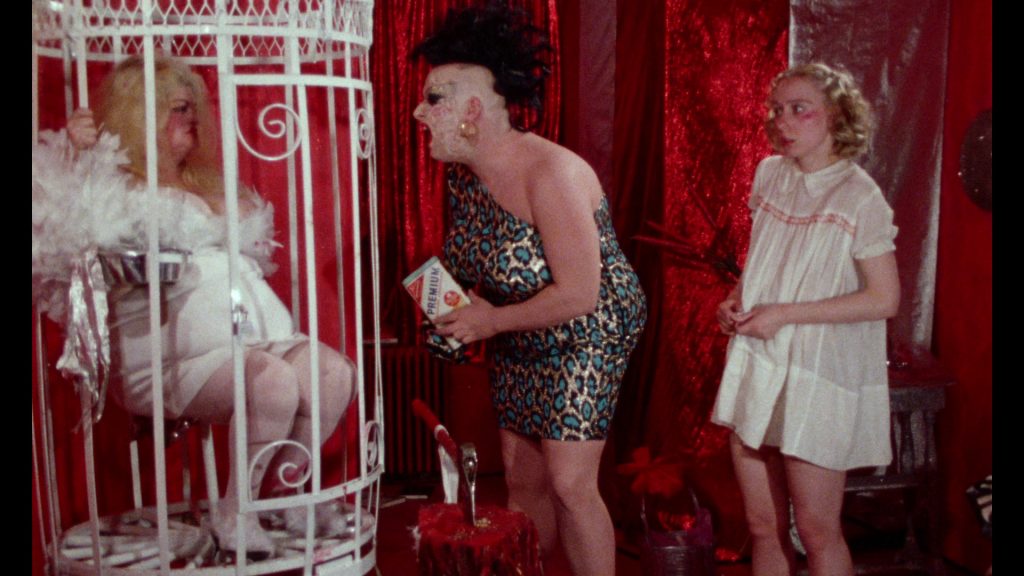
The technicolor torture chambers of Female Trouble
One thing we spent time marveling over in this episode is how Female Trouble wears its squalidness like a badge of honor. Vincent Peranio’s production design turns condemned Baltimore buildings into lurid dens of beauty, debauchery, and bedazzled squalor. From the Lipstick Beauty Salon (headquarters of Donna and Donald Dasher’s aesthetic fascism) to Dawn’s row house turned technicolor torture chamber, it’s a setting-based storytelling clinic for all aspiring no-budget auteurs.
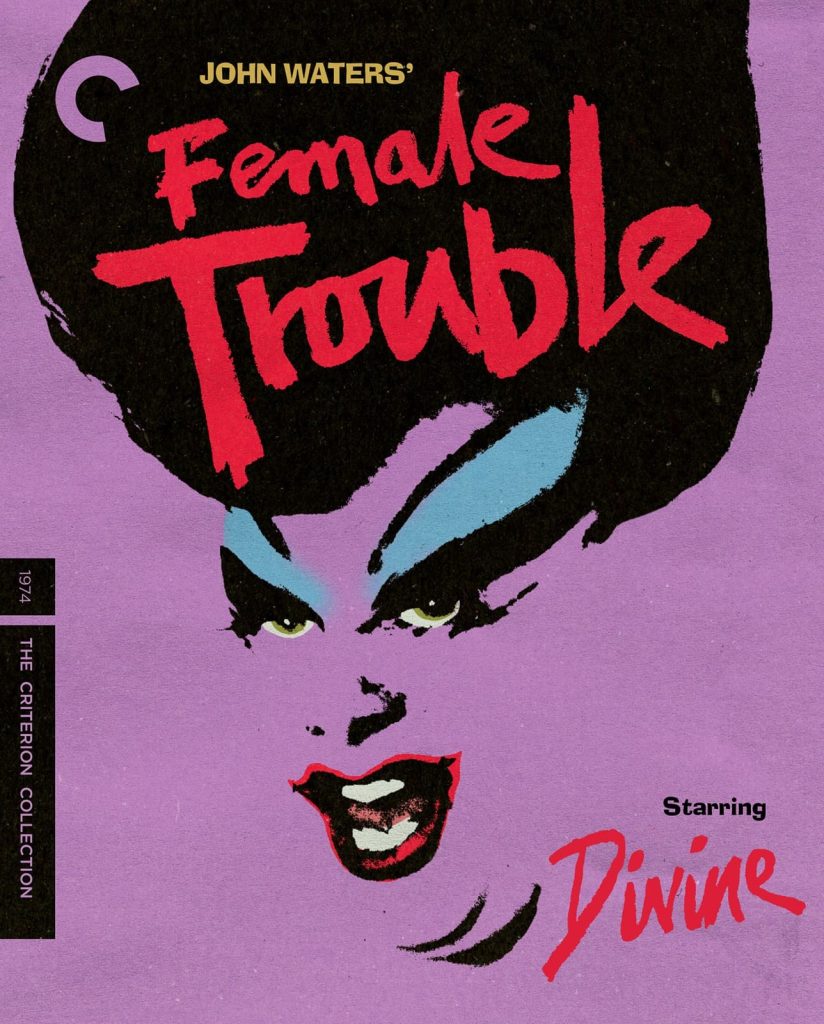
There’s a Criterion Collection version of this film, so you know it has to be good! 🙂
Ed Halter, writing on Criterion’s site, summed it up best by describing Peranio’s interiors as “the ultimate in mise-en-kitsch”—garish wallpaper, outdated furniture, and so much suburban sleaze that it starts to feel like art. Or maybe it always was.
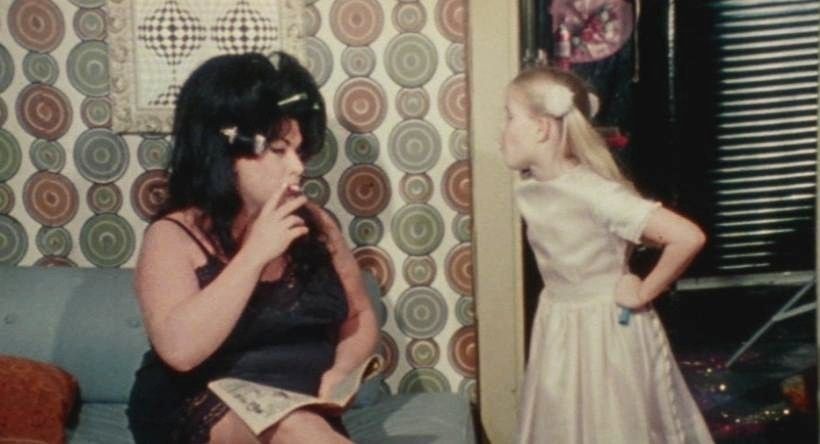
Dawn Davenport reminding Taffy why she can’t go to school, have friends over, or do anything else that might annoy her.
It wouldn’t be Family Pictures without a family—and Female Trouble gives us a doozy. Dawn becomes a mother (to Taffy, played by Mink Stole), but parenting here involves more chain-link bondage than PTA meetings. Taffy’s rebellion grows with each passing year, culminating in patricide, folk music, and one of the all-time great cinematic insults involving oxygen and testicles.
From Aunt Ida’s dream that her nephew becomes queer, to Divine’s descent into acid-scarred celebrity, the film charts a “domestic” arc that takes a sharp detour through arson, assault, and art-murder. By the end, Dawn’s death-row monologue—equal parts self-pity and righteous fury—feels eerily prescient. “Who wants to die for art?” she screams, and honestly, it’s hard not to cheer.
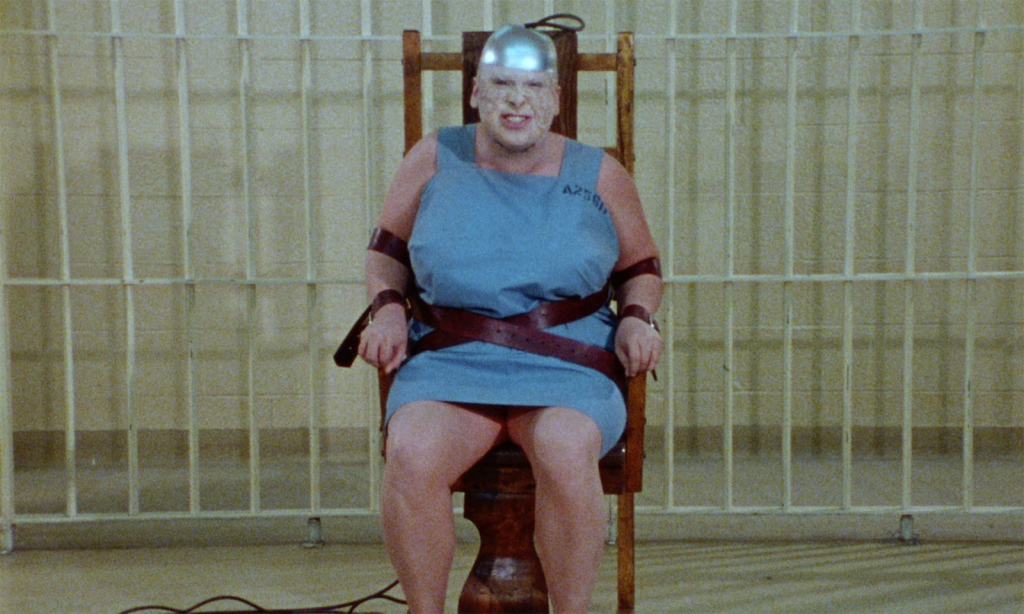
Divine’s final monologue from the electric chair. Image credit: Criterion Blog
Waters may be staging a drag farce, but the satire bites deeper than expected. The film sees into a future of tabloid talk shows, reality TV, and spectacle-driven infamy long before Geraldo got his nose broken on live television. Dawn’s fame is forged through violence, fetishized disfigurement, and glamorized crime—a grotesque mirror of American celebrity culture.
And through it all, the Dreamlanders deliver. Divine is a force of nature, but let’s not forget Cookie Mueller, Mary Vivian Pearce, Edie Massey, and David Lochary, all of whom elevate this chaos into something that transcends camp and becomes… well, family.
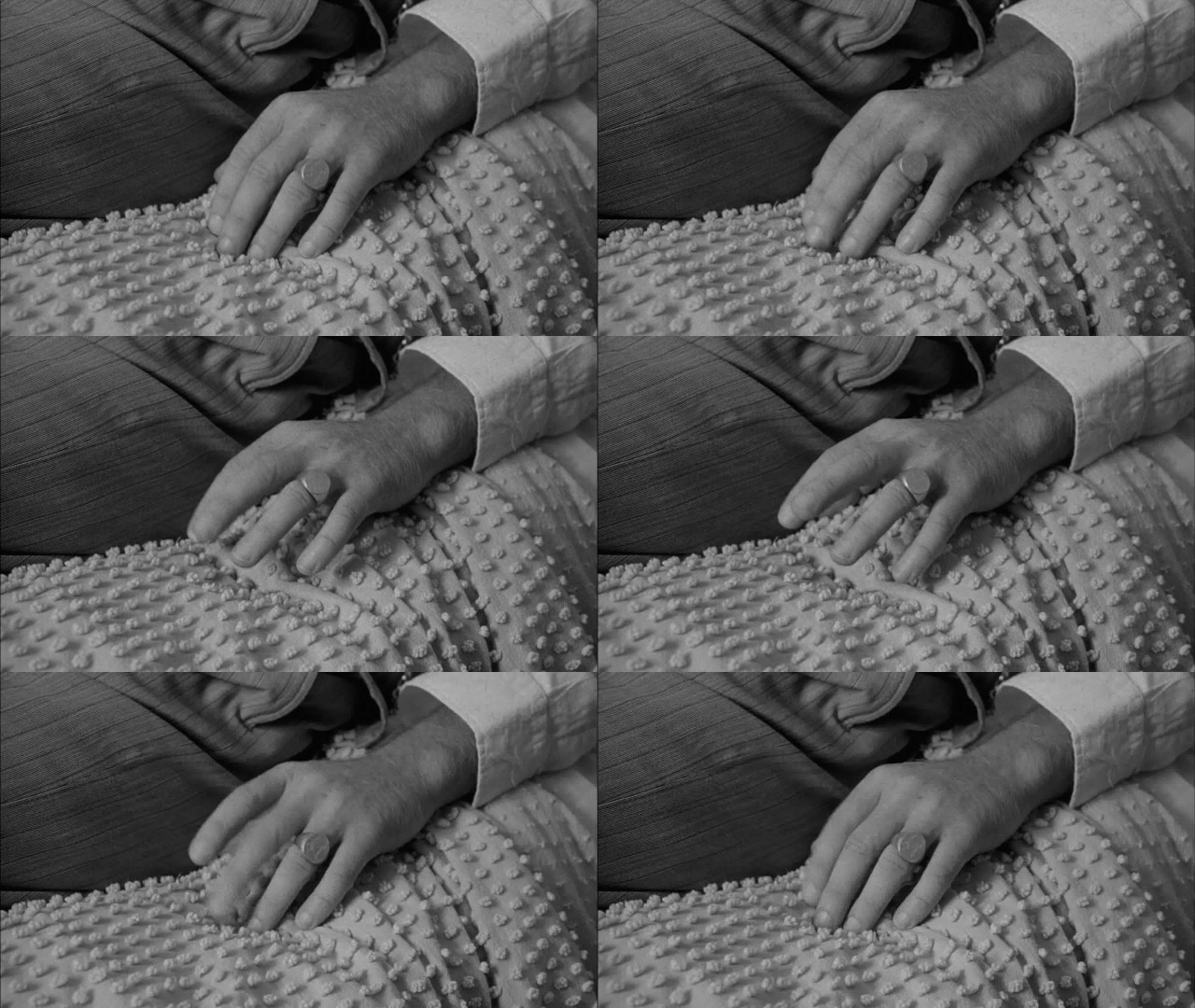
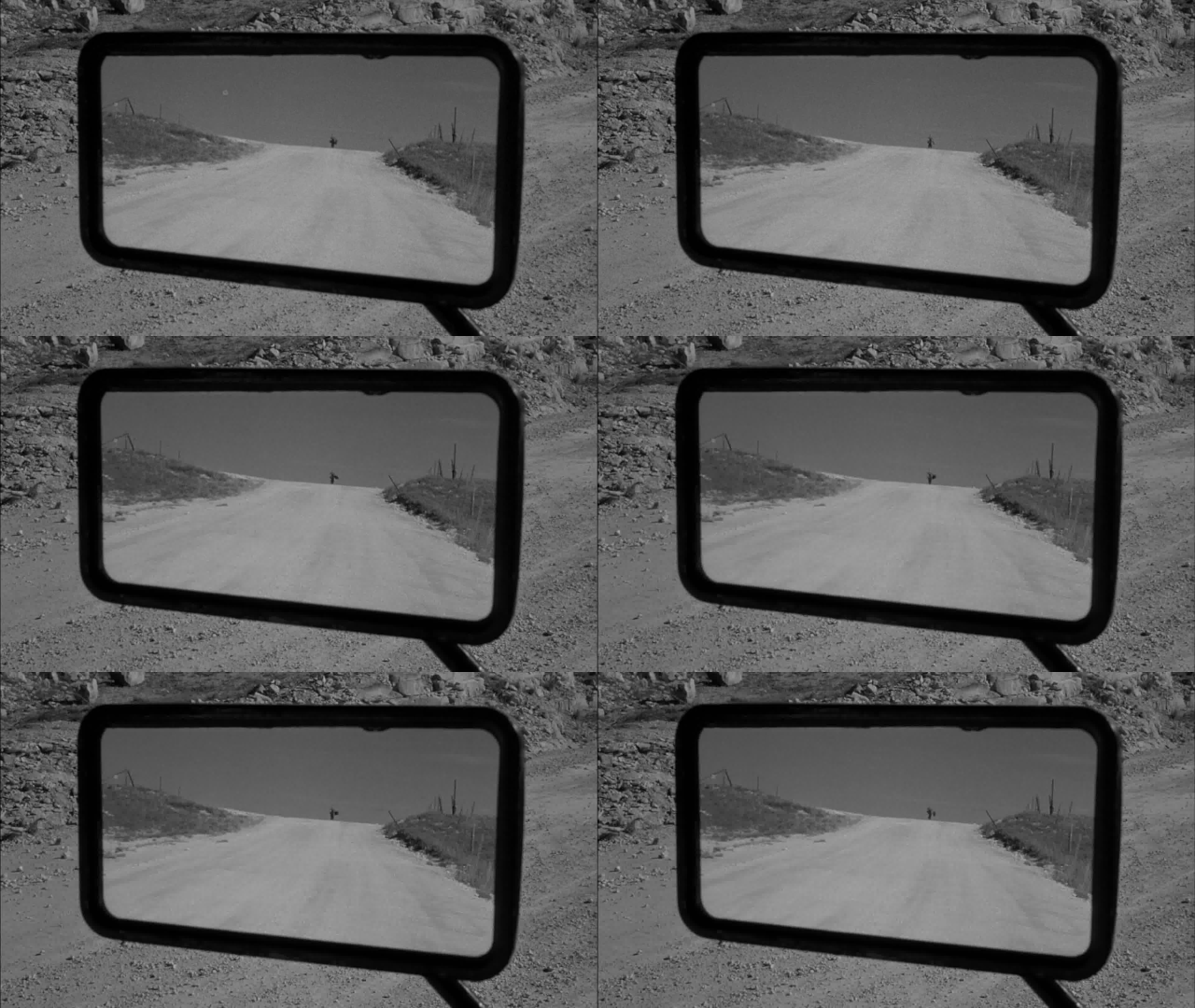
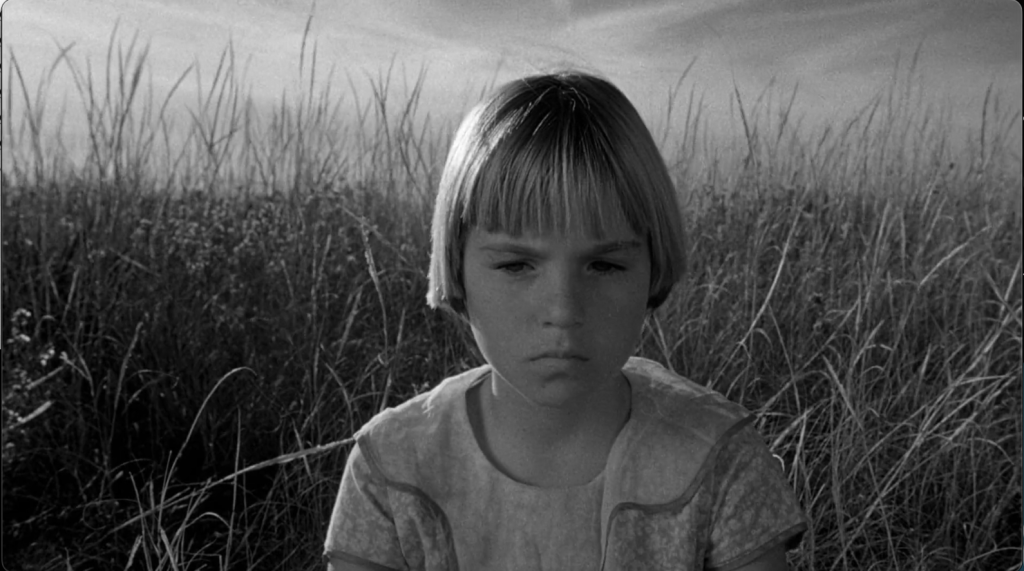
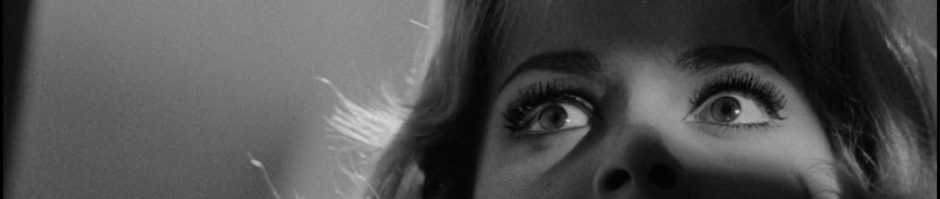
Female Trouble may prove to be the most misanthropic, degenerate, absurdly hilarious entry in our Family Pictures Podcast catalog—and I loved every minute of it. It’s a film that says “no” to morality, “hell yes” to filth, and “pretty pretty?” to every warped idea of beauty you’ve ever held—even re-visiting Twilight Zone‘s “Eye of the Beholder” episode with a not-so-pretty twist.
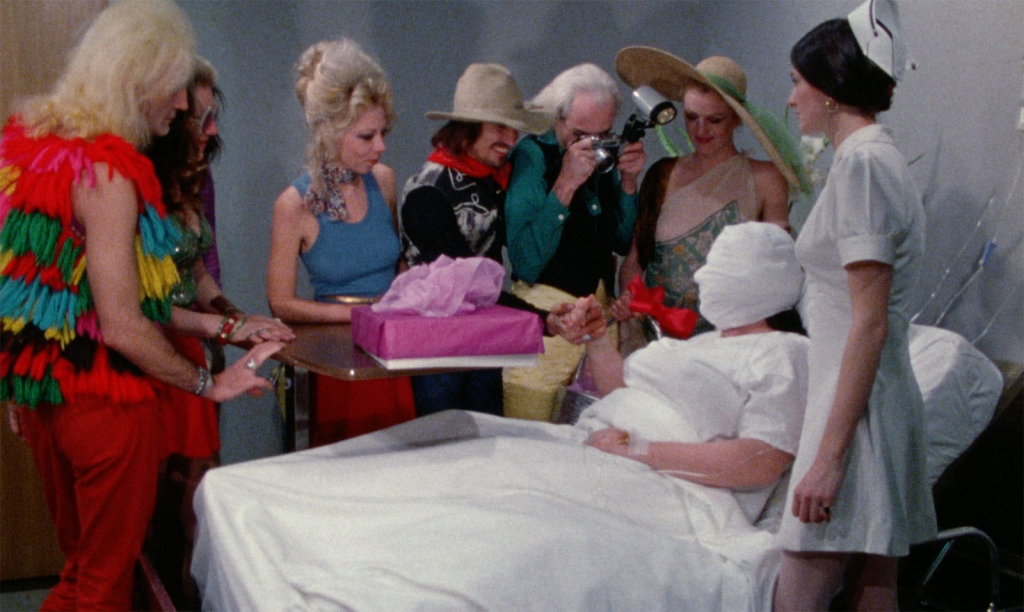
John Waters’ spoofing the “Eye of the Beholder” scene from Twilight Zone. Image credit: Criterion Blog
This one’s for the delinquents, the outsiders, the folks who never got their cha-cha heels but learned to strut anyway. Press play, prepare to gag (in every sense), and as always, keep watching the family pictures—even if they’re soaked in Aqua Net and set to screaming.