UMW’s Console Living Room Now in Stereo

Yesterday my family and I went to JWK Electronics in Petersburg, VA for my monthly fix of 1980s technology. The proprietor, Justin, totally rules, and he hooked me up once again. Last time I was there they just got a mint condition Fisher component stereo system. Turns out it’s from 1983, which makes it perfect for UMW’s Living Room Console.

It’s got four components: turntable, receiver, tape deck, and radio receiver. It’s also got some serious speakers. What was mint is the whole thing fit perfectly into the entertainment center I have to say that the stereo really completes the living room. After Zach and I put it all together yesterday, we played The Cars “Heartbeat City” on vinyl, and it was heavenly! Inspired, I went to Fat Kat Records here in Fredericksburg and picked up some additional period appropriate albums:

Blondie‘s Parallel Lines sounded so amazing! Has to be one of the most influential albums of the 70s and 80s. The sound has never gotten dated, unlike Def Leppard 🙂 While I was picking up the stereo, I also saw a late 70s Fisher stand-alone turntable, and I couldn’t resist because we had an almost identical piece growing up. Nostalgia buys #4life.

I also got my hands on a box of Betamax tapes. Filled with all the Bond films, Star Wars, E.T., Ghandi, etc. What’s even cooler is I also got around 15 home recorded tapes of shows like Little House on the Prairie, MacGyver, MTV videos, etc. Our VHS and Betamx tape collection is filling out beautifully, although we have to cull some of the post 1985 additions.

A cool thing about the home recorded TV tapes is that Zach and I can hopefully use them to get some commercials and independent TV station bumpers. We’re working on programming a week of TV across several stations. Once we get this done and figure out how to broadcast it across several channels, this installation will feel as close to “done” as it ever can be.

When I finally sat down for a second and listened to some music and scanned the work we have done, I have to say it’s one of the most rewarding projects I’ve worked on at UMW. It converges my penchant for nostalgia, interest in 80s media, and building a sense of place and time into the work I do in some powerful ways. I also love that it’s situated in physical space in ways most of the other work I’ve been part of isn’t. Rather than keeping the console in the #ITCC, assuming we even can, Zach and I talked about having the exhibit travel to other schools. That would be pretty sick. The #cunyconsole, #truconsole, #psuconsole, etc. Pretty wild. Anyway, this is the project that just keeps on giving, now we have to finish the TV programming and this thing will be true art!

Update: The videos in this post were previously embedding from Vine, but I have since downloaded those shots and uploaded them here for posterity.
Posted in Console Living Room | Tagged | Leave a comment

The Reclaim Code

As Bud (the great Harry Dean Stanton) notes after snorting a long line of speed in Repo Man (1984), “Not many people have a code to live by anymore.”  I couldn’t agree with him more, and this seems particularly true in edtech where we seem to spend far too much time and energy searching for technological salvation through analytics, data, and scale. The closest thing to a code most “innovators” cannibalizing edtech proffer are hollow notions of disruption.

I’ve been thinking a lot about the Repo Code ever since Tim and I were talking the other day about our vision for the future. As we double-down on our commitment to Reclaim Hosting, we have to make one thing entirely clear: we are NOT EDUPRENEURS. If you label us as such, we will be offended. This word suggests we are trying to disrupt educational institutions. We are not, we are trying to support those who want to do cool things within them. That horrible word also suggests we are sitting on some big idea waiting for angel funding or VC investment. This is not the case, we WILL NOT be taking any VC funding from anyone for two reasons:  a) VC funding is the devil’s work, and b) we have a viable business model based on a trailing edge technology called web hosting.

What’s more, how we have built our business over the last two years is simple: we have kept our prices and overhead very low and provided exceptional service. This is not ground breaking, it’s just solid work. Work both Tim and I are really proud of. We’re an independent hosting label focused on supporting education, but open to any and everyone. The notion of independence is very important to us because it means we are not beholden to any other interests but our own. I like to believe we are part of what I hope becomes a broader movement of independent edtech, “green spaces” for exploration, experimentation, and collaboration. We need to Reclaim Innovation from the corporate disruptors.

SO, Tim and I have come up with you might call a Reclaim C.O.D.E. to quickly delineate what we believe and why we are doing this.

Community: First and foremost, Reclaim was made possible by the various and variegated people in our community. Reclaim Hosting is part of a long history of experiments and collaborations: ds106, Hippie Hosting, Domain of One’s Own, etc. Many of the people who use and trust Reclaim Hosting are the same ones who helped us build it. Moving forward it only seems natural that these are the same people that will join Reclaim in more official capacities as we grow. We will hire from within!!!

Openness: Tough term, it’s taken a beating as of late for good reason: over used, under delivered. For us openness remains what it has always been. Share everything we do openly and freely. We will share all our work/code openly on the web. Our model is not some secret sauce code base, it’s support and development to people who want to experiment with teaching and learning on the open web. The more we share it, the better it is for everyone, especially the people we work with! [One of the under appreciated laws of blogging.]

Decency: Unfortunately web hosting is an industry over-run with fear-mongering and bullying that is built into the very fabric of the business. Just take a look at Godaddy or Network Solutions, it’s awful. We’ve done a lot to make the process easier, more decent, and honest (and we still have much more to do to make it even better). We won’t prey on people’s fear of getting hacked or manipulate their lack of understanding how certain things work. When you work with Reclaim Hosting, you will be treated with decency and honesty.

Education: Our strength is education. Not simply because we have worked in higher ed for decades, but also because the mission behind Reclaim Hosting is to try and educate as many people as possible about how the web works. Ask any of the more than 700+ folks who have submitted a ticket at Reclaim Hosting how that’s worked for them. We spend time showing folks how to use this space to create something on the web. Reclaim Hosting is a community for educators to explore the web for teaching and learning, and it may be the best thing to happen to higher ed since ds106 🙂

That’s the C.O.D.E. for us. We have a strong value system we operate from, so you’ve been warned. What’s more, we’re not necessarily consultants. People ask us to consult, and we have and can. But I associate consulting with parachuting in and out telling folks what they need. That’s not us, we have an ongoing relationship with folks once the come to work with Reclaim. Out core business model is built on providing web infrastructure for learning from the individual to the course to an entire institution. We partner with all of them to suggest how to use it most effectively. But not one and run, but, rather, over time. It’s a relationship, it’s part of a broader community of independent edtech. That’s what we do, and it’s pretty amazing.

Posted in reclaim | Tagged , , , , | 6 Comments

Slacking off at Reclaim

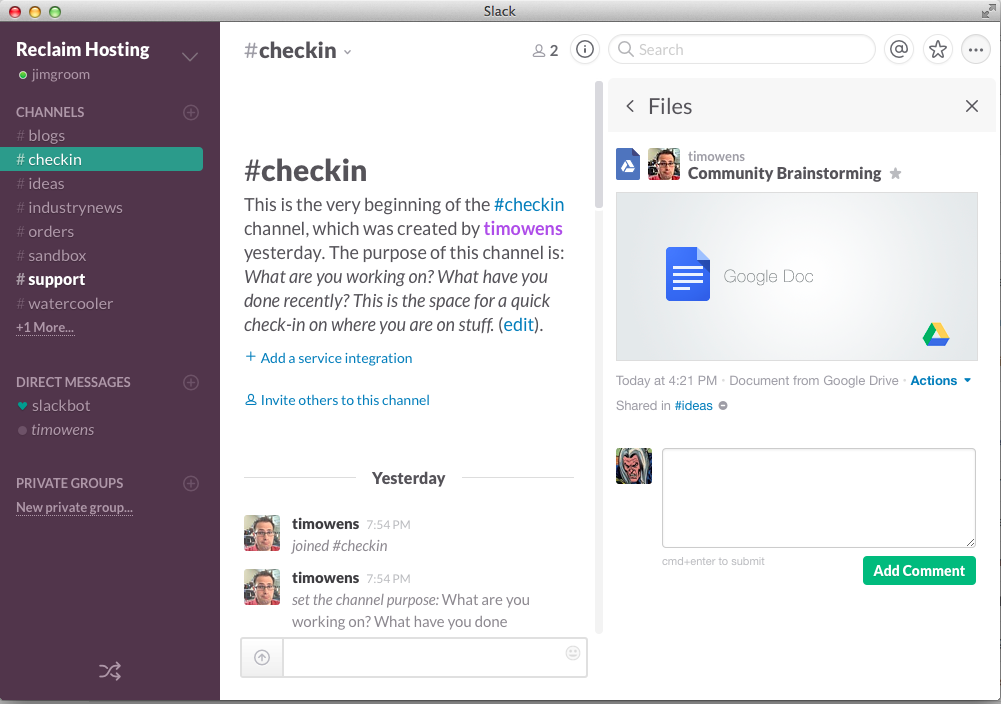
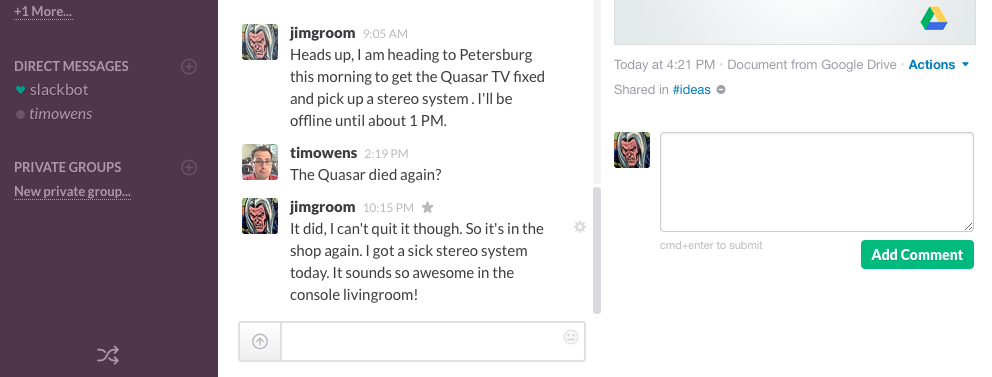
One of the many great perks of going full time at Reclaim Hosting is that I can work from anywhere. This is something my family and I will be capitalizing on, which means Tim and I need to get into a tighter rhythm if we’re gonna work effectively in a distributed fashion. Yesterday we re-visited Slack, a team communication tool Tim setup back in November. As he put it accurately and succinctly” “Slack works to eliminate as many emails as possible.” I think that’s a very useful way to think about it. It’s a tool that focus communication for a working group or team in one place, and allows you to integrate all sorts of other applications. For example, our customer support tickets from Intercom or the @ReclaimHosting mentions on Twitter. You can think of it like a more fluid, next generation version of BaseCamp, if that makes any sense to you.

Screen Shot 2015-05-30 at 10.42.55 PM

So Slack can be a window in your browser or an application on your computer you have open to see recent tickets on Intercom or who s mentioning ReclaimHosting on Twitter or what Tim is working on now. Hell, I can even read his latest blog post on “Building Slack Integrations for Reclaim Hosting” in the blogs channel of Slack. [You can set up a channel as a focused feed aggregator for blogs.] We plan on committing to it for a while to see if it helps us work more closely together.

Screen Shot 2015-05-30 at 10.43.08 PM

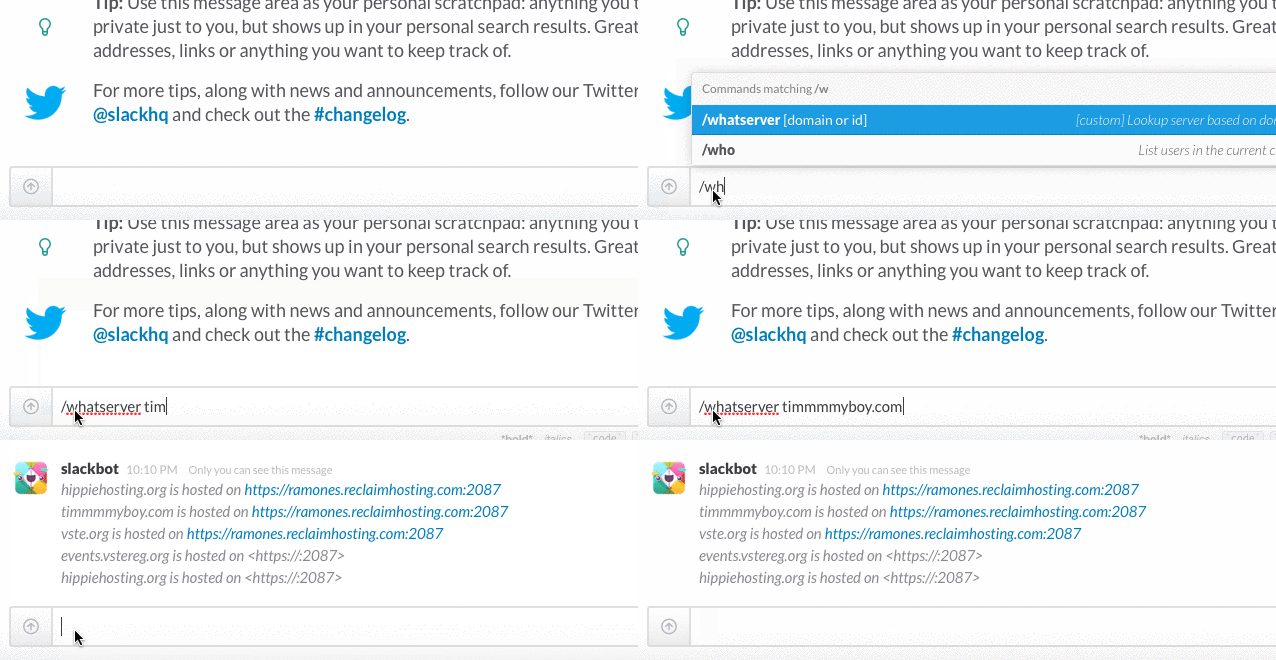
And as Tim’s post explains, he has been working on creating custom integrations (what are called “slash commands”) to scratch some itches we have when responding to support tickets. For example, when someone submits a ticket we usually have to search our billing system to find out what server they are one (we have several now) before we can help them. So Tim built a slash command that allows us to type “/whatserver ”  and the information will be retrieved from our billing system and printed in Slack so we can logon to the server, circumventing the extra step of logging into our billing software. I think that is so awesome, check out the GIF demo of the process below.

Another custom slash command Tim built today is grabbing whois data on any domain by simply typing: /whois .  My domains registration information will be printed in Slack. It’s pretty awesome. It always takes someone showing me how something like this might be useful—like blogging, for example—but once they do, I am #4life! Also, this post highlights another major reason I’m so excited about Reclaim, Tim is an endless fount of new and very cool ideas. He is always open to experimenting, truly a first class lab rat!

Posted in reclaim | Tagged , , , , | 2 Comments

I’m just gonna leave this here for posterity :)

Posted in dtlt, umw | Tagged , | Leave a comment

Trigger Warning: Self-Promotional Nostalgia Ahead

I’m afraid there will be a lot of nostalgia, self congratulation, and general indulgence—is this a new thing?—on this blog over the next few months as I transition from UMW to Reclaim Hosting. I believe this will be temporary, but I wanted to provide a warning anyway given it could get ugly quick.

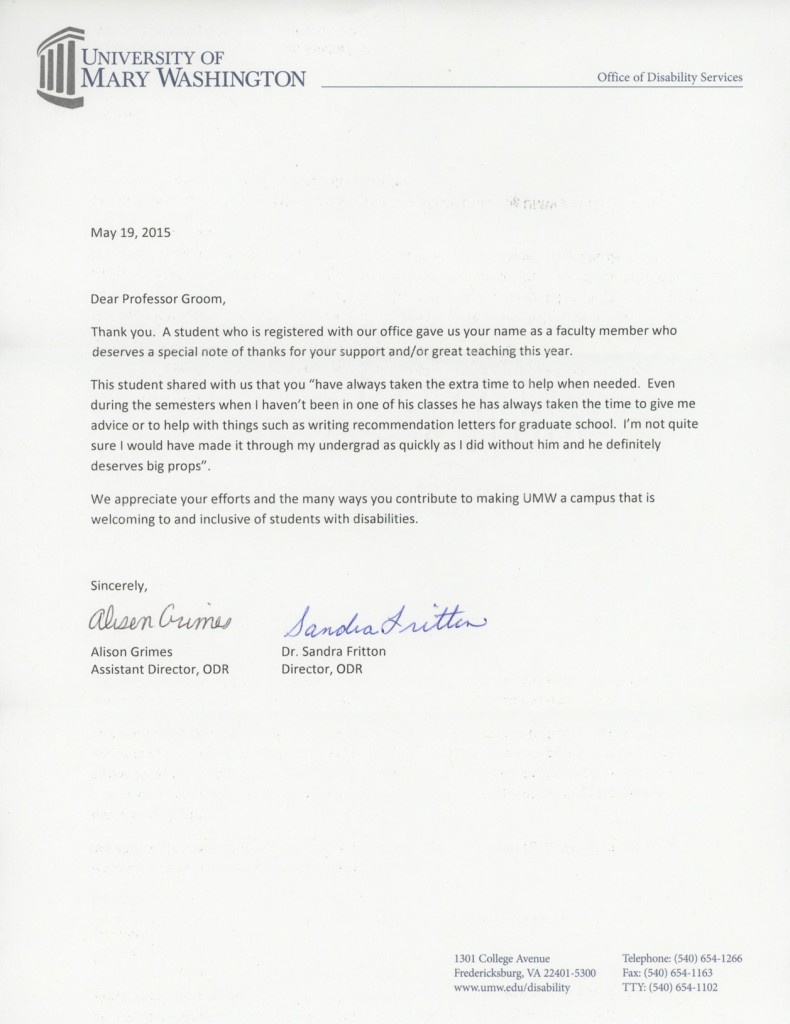
I finally got around to picking up my UMW mail today, and I was surprised with this gem of a letter from the Offices of Disability Services.

disability_letter

Wow, how cool is this? I never got a letter from an office before highlighting something cool an anonymous student said about me. Kudos to Sandra Fritton, the new Director of the Office of Disability Services, for this simple and quite effective form of outreach and promotion to help create a sense of purpose and community.

As for the student’s remarks, they make me very happy. The question came up whether I’ll miss teaching after leaving UMW, and the answer is no. I will definitely continue to teach here or elsewhere. That said, I will miss being embedded in an institutional community of higher education full time. That’s all I’ve know since 1989 when I became a college freshman. I’ve continuously been part of higher ed since, whether as a student or an employee. I think I’m going to miss so many elements of being part of that community full time, and most of all my personal, day-to-day interactions with students.

I write many, many letters of recommendation for students, and I must have taught well over 300 or 400 students at UMW since I got here in 2005. I have no idea the student they are referring to, but the simple idea that our humanity is what helps students through their educational journey must never be forgotten. Say what you will about institutions, but partnering with faculty and rotting the minds of students at UMW has been a deeply human experience for me.

Posted in umw | Tagged , | 1 Comment

Independent Teaching Networks

In the wake of my announcement that I’ll be going full time with Reclaim Hosting, more than a few folks wondered whether I’ll be teaching in the future. This came as both a surprise and honor. I build my teaching around the things I am interested in, and I have been fortunate enough that UMW has let me try this on numerous occasions over the years with various partners.

Howard Rheingold commented, “You are going to jones for students. I know that I am.” And David Kernohan echoed a similar idea:

I can’t see I world where I don’t do teaching either. In fact, of the list of classes I want to teach, only one of them (the Library of Congress Movie MOOC) would really depend on being at UMW (or at least in the area) for the full imagined effect—though it could definitely still be done. The others, like the seminar about Italy during the Years of Lead, a course exploring Domain of One’s Own, a refresher on Zombies and Copyright, or a fullblown cultural hist0ry of Sharks are still very much in my future.

giphy

In fact, with the work I’ve been doing with Zach Whalen on the Console Living Room,  I started thinking the the 1980s course I talked about co-teaching with Dr. Garcia in that list post could be even more pointed than a whole decade. What if we had a course about a 16 weeks of a single year*, say the Spring or Fall of 1984 or 1985. What’s more, it would never happen in anything resembling a classroom. Rather it unfolds as a 16 week media experience of television, radio, cinema, etc. in a living room across roughly those same 16 weeks 30 years earlier. The idea was inspired by the broadcasting of 1980s TV Michael Branson Smith setup in the UMW Console last month.


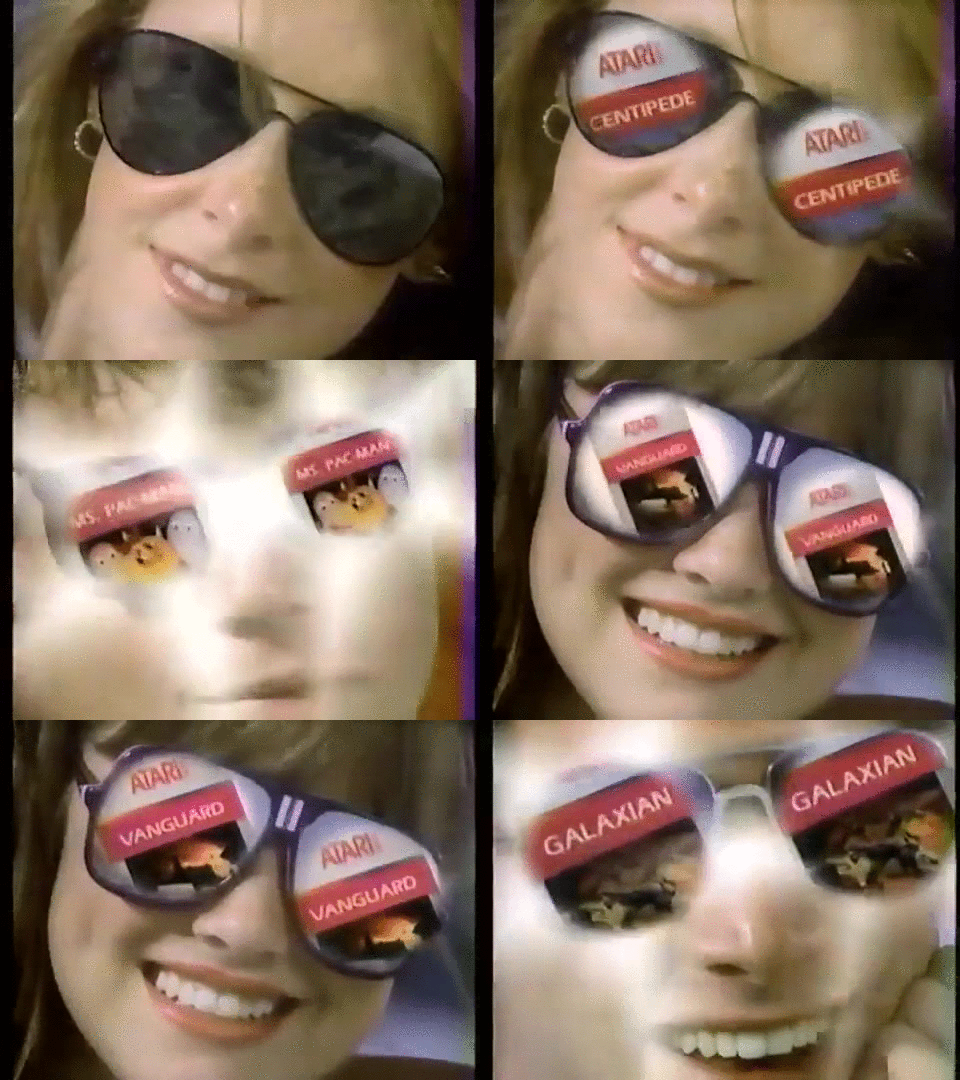
Animated GIF from Atari 5200 ad thanks to Zach Whalen!
So, rather than having a course where you talk about 1980s culture. You setup a framework (or a living room) that over the course of 16 weeks recreates a culture across the axis of television, radio, VHS tapes, cassette tapes, vinyl records, books, magazines, etc. Students (or anyone else in the community) could come into that living room and grab from a library of VHS tapes, video games, cassette tapes, books, records, magazines, etc. and experience those various bits of culture. What’s more, they could watch TV across numerous networks and/or tune into radio across various stations. And they would blog and reflect on those various moments they experience, and the cultural assumptions of the moment. They could go there to watch together, do it alone, or explore and share back new elements of media from that moment. In fact, Zach and I have started the the initial TV programming of the TV portion at least.

This could be reinforced and framed by various readings from that year focusing on broadcast TV, radio, video games, etc. I am planning on doing research this summer around history of network and independent Television stations in light of the rise of Cable TV during the 1980s—not to mention the explosion of VCRs. I’m intrigued by that idea, and that could be one whole part of this class that isn’t taught, but experienced in a way other than a classroom. I love this idea. It’s exhibit meets classroom, and I wouldn’t necessarily need to be there to “program” it.

I can’t imagine I’ll stop having ideas like this, and you can teach classes like this anywhere. In fact, there has got to be a department out there somewhere who might see the opportunity of bringing in various folks to teach courses with an eye towards the long, diverse, and complex history of media and edtech.  I’ve had an amazing experience teaching with folks like Martha Burtis, Alan Levine, Paul Bond, and Maggie Stough. And I want to teach with more and more people. I want to teach a course on radio with GNA Garcia, Noise Professor, and Grant Potter. A course 0n 80s cinema with Mikhail Gershovich, Scott Leslie and Martin Weller. A course on the technology of poetry with Chris Lott. A course on the history of edtech with Brian LambAudrey Watters and Mike Caulfield. A course on the history of the internet with Alan Levine and Howard Rheingold. A course on Digital identity with Bon Stewart. A combined #Rhizo106 with Dave Cormier. A course on gothic tech with Bryan Alexander and Audrey Watters —and that’s just spitballing it. These are all courses that could be done without me, and if I thought a bit longer I could come up with 50 more. Teaching is just plain fun for me.

That said, it helps (at least for me) to have a specific group of students at a school who are taking it for credit for consistency and focus, but that could parallel an open and online presence fairly easily. I guess all this is to say I think this move to Reclaim Hosting may very well free me up to teach even more through a “ds106 network” of sorts, and I’ll be doing just that this summer with prisoner106, and again this Fall as a “silent partner” for Tales from ds106 with Paul Bond at UMW. Hell, I might even be teaching for UMW still if it makes sense, and I’ll hopefully try out some of these courses. But there is no reason to wait on any one institution or MOOC provider warehouse, we should be doing this as our own independent teaching network of awesome. Cause that’s what we are, and the teaching is one way to both enjoy it and push ourselves to think more deeply about what we are doing. Bryan Alexander said it better than me:

…we independents should form an alliance. Or a cult, a secret society, a union, a triad.

___________________________________________

*Years ago Larry Hanley was talking about focusing a distributed course across several countries on one specific year, I think it was 1977.

Posted in Uncategorized | Tagged , , , , | 6 Comments

Broadcast TV in the Console Living Room

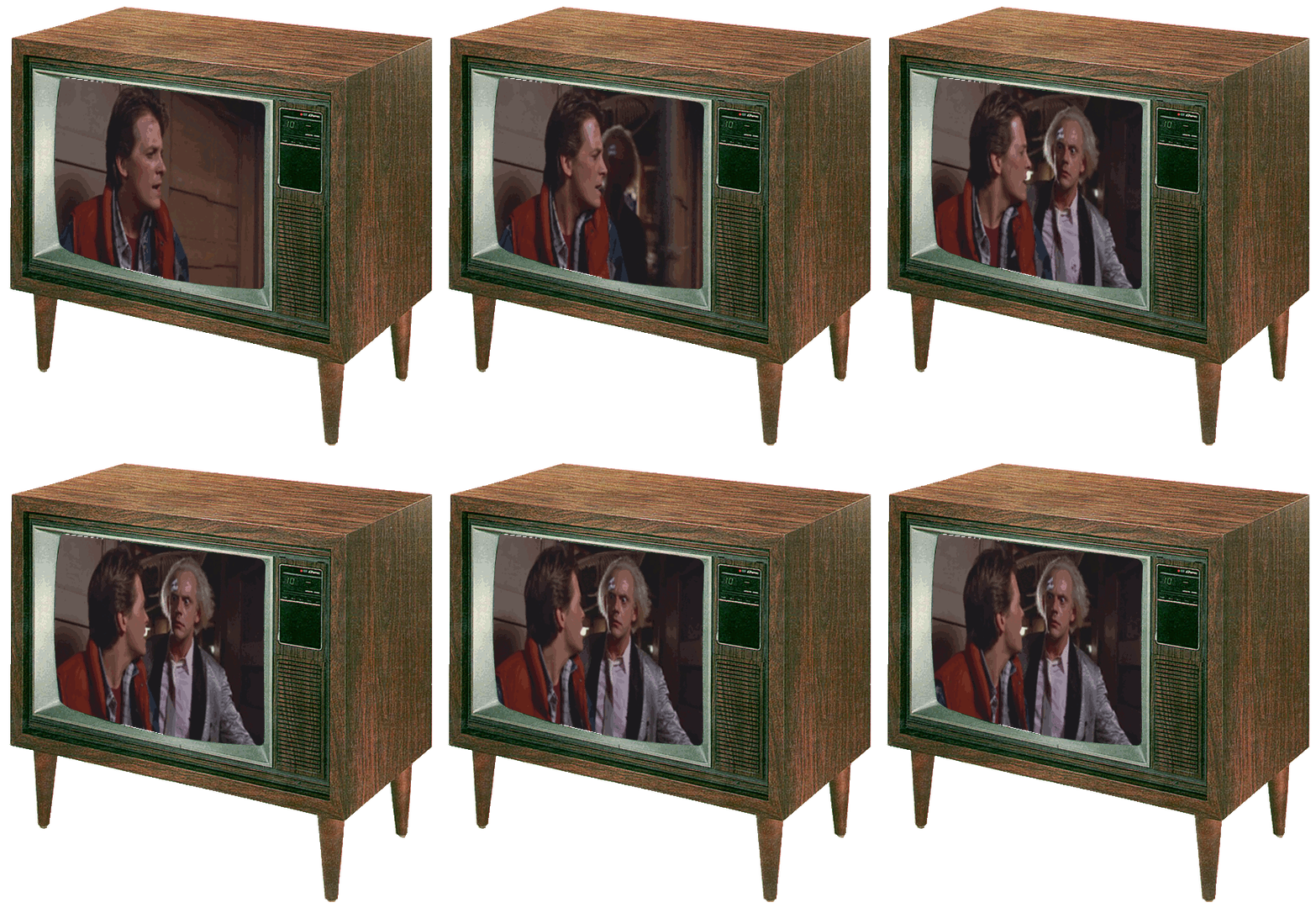
When Michael Branson Smith came to town last month as a visiting artist, he brought with him an entire day’s worth of CBS programming for network television from the mid 80s. He edited back in the commercials to most of the shows—which is awesome—and his programming featured everything from the $25,000 Pyramid to The Price is Right to The Young and the Restless to The Dukes of Hazzard. And the coolest part, he loaded the entire day’s video files on a Raspberry Pi Automatic Video Looper which broadcast through a short-range TV transmitter to the five televisions we have in the #umwconsole living room.

Michael Branson Smith not only left his TV transmitter behind for us to play with until ours comes (still waiting), he also blogged the entire setup from beginning to end in a Special MBS Presentation. The best independent TV station in the land 🙂


Below is a quick look at the TV transmitter setup and Raspberry Pi Zach Whalen and I finally got working last week. We followed MBS’s directions for getting the Raspberry Pi Automatic Video Looper up and running. The one issue we finally figured out was loading videos off an external thumb drive from the Pi–this was not working. We found if you format the USB external drive as Windows NFTS, and change the option for the Video Looper to look for it (Zach figured this out!) you can run all the videos immediately from the jump drive. So, it’s as easy as loading a days worth of TV programming on a larger thumb drive (NFTS formatted—which is a bit of a bummer for Mac users), that is then plugged into the Pi . Once you start the Pi (which has the Video/Audio out going to the TV transmitter) you are all set!

As the illustrative Vines may suggest above, I am getting ready for a marathon Broadcast of the Prisoner in the #umwconsole this week. I’ve already been watching a couple of episodes two or three times while playing with the transmitter this weekend, and getting everything all set. Be seeing you!

Posted in Console Living Room, digital storytelling | Tagged , | 1 Comment

Resignation

It’s official, I have resigned my position at University of Mary Washington, and will be going full-time at Reclaim Hosting. It’s almost surreal, and I follow in the footsteps of the great Tim Owens—-whose hard work these last six months has made it all possible. And while I reference the opening sequence of The Prisoner above in honor of #prisoner106, my resignation was neither premature nor acrimonious, and it won’t be immediate. I will be working through September at UMW to ensure a smooth transition. What’s more, one couldn’t have asked for a better situation over the 1o years I’ve been at UMW. I had amazing colleagues in DTLT, a remarkable level of autonomy, and the best faculty and students you could imagine. I think the work I’ve done at UMW speaks for itself, and I leave feeling I was part of a group that truly made the campus a better place to teach and learn. There can be no greater professional satisfaction than that in this line of work.

As to why, it’s pretty simple and I alluded to it in an earlier post. I’ve been longing to explore some of the exciting work Tim and I have been doing with Reclaim Hosting and this is my chance. We’ve been growing Reclaim slowly but surely for almost two years now, and it’s at a point where we can both devote our full attention to what’s next. I’m looking forward to working more closely with Tim on a daily basis because he has been an unbelievable source of inspiration for me these last four years. I would follow him and his edtech work to the ends of the earth. I learn a ton from working alongside him, and I want that to be my full time job. What’s more, I  think we complement each others skills quite well: he’s awesome and I can promote awesome pretty well 🙂

I’ll be transitioning most of my attention on this blog to exploring the work we’re doing with Reclaim, while at the same time working through what will certainly prove an amicable, but deeply emotional, breakup with UMW (that’s the real reason I need three months to transition 🙂 ). I love that school! It has provided me countless opportunities to explore and experiment as part of my day job since 2005. While I am thrilled with the future prospects Reclaim provides, I will remain forever grateful to everyone at UMW—it’s truly a remarkable community of committed, talented, and generally awesome people. It’s been an honor to serve in your ranks for the last decade.

Posted in dtlt, featured, reclaim, umw | Tagged , , , | 88 Comments

The Other Prisoner

santa.88--SANTA CLAUS IS COMIN' TO TOWN-- Fred Astaire narrates this tale of Kris Kringle (voiced by Mickey Rooney), a young boy with an immense desire to do good things for others, and eventually earns the name of Saint Claus, or Santa Claus.  ABC Family presents this timeless animated special as part of it's annual "25 Days of Christmas" programming event.  ( WARNER BROS)

Melanie Barker’s post about the many possible Prisoners and Villages #prisoner106 might be referring to reminded me of a similar experience I had during the Christmas of 2001. I come from a very large Irish Catholic Long Island family. There were so many of us that we never bought presents for everyone at Christmas, rather we did what’s called a Kris Kringle—a gift exchange between each of the kids. I buy for Kevin, you buy for Daryel, Kerren buys for Billy, etc. We didn’t keep that process secret though, we picked names out of a hat, and that was who you bought for, and you usually had a discussion about what they wanted.

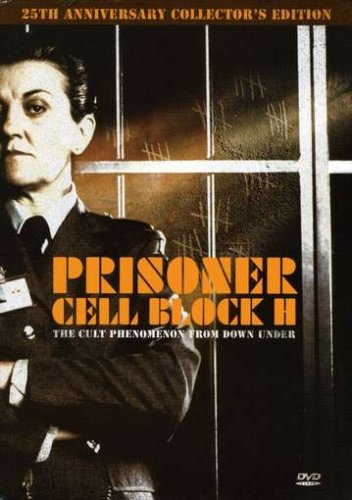
Where the hell is this going, right? Well, I’ll tell you, you impatient cuss. My sister Kissy picked my name out of the hat in 2001, and I told her I would love the DVD set of The Prisoner. But as Melanie noted, there is more than one TV series with the title Prisoner, and it just so happens that Prisoner: Cell Block H (a cult classic Australian soap opera from the 1970s about a women’s prison that sounds like it may have been the proto-type for Orange is the New Black) was celebrating its 25th anniversary in the form of a special edition DVD released by A&E for the first time in the U.S. in 2001.

You may have figured out where this is going. My sister, who is not a connoisseur of obscure psychedelic British television from the 1960s—damn her :), figured Prisoner: Cell Block H had to be the TV series I was talking about, and she bought it for me as a Christmas present. Was I ever shocked 🙂

Prisoner Cell Block H 25th Anniversary DVD

I still have the unopened 25th anniversary DVD of Prisoner: Cell Block H, in fact it is sitting right next to me as I right this because Melanie’s post got me thinking I should finally watch this Aussie cult classic. And that’s what I loved about college, and what keeps me coming back to ds106. When I was at UCLA, I got turned on to cultural work I had no idea about (like the other Prisoner) and those experiences were formative in my thinking about the world. So many intellectual fires were lit for me during those years. This sometimes happened in class, but more often than not was a result of various conversations with friends, acquaintances, and strangers. That’s what ds106 reminds me of (but it would be more accurate to say my small neighborhood of the blogosphere), the best of college where you can be turned on to various bits of local and international cultural productions that blow your mind.

Posted in digital storytelling | Tagged , , | 2 Comments

DTLT’s Hurley Award Winner: Martha Burtis

The Great Martha Burtis

I have been remiss in mentioning that one of my favorite people this side of the Rappahannock, Martha Burtis, was awarded the 2015 Hurley Award. This award is presented to an administrative/professional faculty member who performs exceptionally meritorious service to the University; demonstrates strength of character; and maintains steadfast dedication to the University’s mission.

Martha does all that and more. So when Jeff McClurken asked me to write a letter in support of Martha (he was a genius for nominating her), I knew it was going to be a long one.  There’s so many good things to write, and I think of her as my mentor during these past four years of DTLT directorship. What’s more, Martha has been so central to every creative, crazy thing we’ve done at DTLT these last years—I’m thinking here about ds106 in particular, Summer of Oblivion #4life. Despite the fact that so many folks associate me with DTLT’s success because I happen to be the one who writes and presents about it most often, it’s always been a team effort. And everyone in that team has consistently turned to Martha for leadership and guidance no matter our title.

Just this morning while we were talking with the good folks from Georgetown’s CNDLS about everything from Domain of One’s Own to the Digital Knowledge Center to the new Convergence Center, Martha can effortlessly articulate the inter-relationships of all these things like no one else can. It’s truly a treat to listen to her while she unleashes her immense insight, wisdom, and strategic circumspection.

So, I figured I would share the letter I submitted below as a way to document at least some of her accomplishments over the decade I have worked with her at DTLT. Truly one of the most rewarding professional relationships of my life. I can’t say enough about how central she has been to the broader transformation of UMW’s digital culture, not to mention my own understanding of what it means to manage institutional culture.

___________________________________________________

Martha Burtis has been a primary driver for much of the innovative work that has taken place in UMW’s Division of Teaching and Learning Technologies (DTLT) over
the last decade. In her more than thirteen years at the university she has served in a variety of capacities from Instructional Technologist to Director to Special Projects Coordinator. Most recently she has become the founding Director of the Digital Knowledge Center (DKC), a new center within DTLT designed to provide peer-to-peer tutoring for students working on digital projects across the university. It is impossible to capture all the amazing work Martha has done for UMW in a single document, but it might be useful to trace some highlights of her service to give a broader sense of the impact she has had stewarding her alma mater into the digital age of teaching and learning technologies.

Martha defined the course of this group during the first experiments with commodity web hosting and personalized domains in 2004. Her willingness to experiment with open source applications and build hybrid tools to demonstrate what was possible for the rest of the group was a really powerful catalyst for much of the work to follow over the coming years. In Spring 2006 she organized and executed one of DTLT’s most ambitious course development projects ever. She worked with Theatre professor Gregg Stull to completely re-design the department’s senior capstone course to be an entirely online, digital portfolio that was managed across an impressive ecosystem of open source tools. This was one of the earlier integrations of WordPress into a course at UMW, not to mention various other technologies such wikis, mapping, RSS, and multimedia to name just a few. It was a level of web-facing instructional technologies that was radical for the moment, and it took a technical fluency, broader vision, and organizational acumen that is a rare combination in any one person.

Her work that semester made Martha the logical choice for director when Gardner Campbell left the university in Spring of 2006. Martha’s time as director demonstrated another dimension of her talents: strategic planning. Martha proved to be adroit at managing DTLT’s move from the Department of Information Technology (DoIT) into the Provost’s Office, understanding our group’s mission needed to be rooted in the academic side of the house. Our work was given a new sense of purpose and promise under Martha’s leadership because we were encouraged to fully engage exploratory research and development with faculty during her tenure. The commodity hosting experiment burgeoned, and services like UMW Blogs were established. What’s more, the idea for Domain of One’s Own (a project she would manage many years later) was first introduced as a goal we would all aspire to over the coming years.

After the birth of her second child, Martha made the choice to work part-time as the Special Projects Coordinator. This era of her career at UMW demonstrated the group’s continued reliance upon her keen advice and understanding of how we should navigate myriad challenges. This is also the moment of her career wherein she returned more directly to web development and programming for the group. She re-designed UMW Blogs on more than one occasion and did extensive plugin and theme development for this system. Additionally, she started working on more focused faculty projects with various professors to build research focused databases, such as Andi Livi Smith’s Survey Database.

These programming skills along with her broader vision of the field and the university were brought to bare in some truly remarkable ways when she turned her attention to teaching the Digital Storytelling course at UMW ds106. Not only has she proven to be an amazing instructor of this open, online course, but she developed some of the most innovative parts of its technical infrastructure: the assignment bank and the Daily Create. These are two extremely impressive examples of Martha’s continued commitment to making the integration of technology into the course a meaningful and relevant experience that models the open web, rather than siloing it off in a learning management system.

More than ten years later, Martha is still pushing hard on her remarkable ability to balance strategic thinking, technical prowess, and innovative approaches to teaching and learning technologies. Arguably the formation of the Digital Knowledge Center this past fall is her most impressive work to date. She has trained nine student tutors to support our student community on a wide range of digital projects, making DTLT’s ability provide that much more support to UMW’s academic community. Thanks to Martha, our group has built capacity to provide more integrated support for faculty and students alike. Which undergirds the very raison d’etre of what it is DTLT does, help the UMW community make the long, important transition into a digital learning environment. UMW could not have a better steward than Martha Burtis in this regard, and I can think of no one on campus who deservers the Hurley Award more.

Posted in dtlt, featured | Tagged , , | 4 Comments