Nevermind the Selfies

sid_selfie
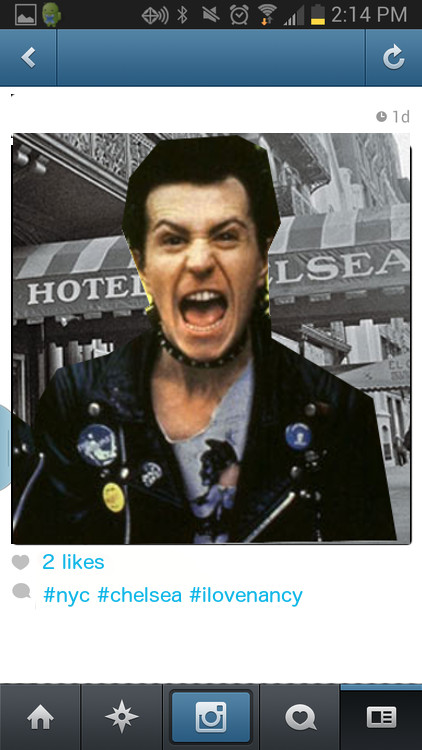
I took the opportunity of teaching ds106 again to finally take a stab at Tom Woodward‘s historical selfies assignment. If I hadn’t waited until the last minute, I would have done a string of The Wire selfies, which I still plan to do. But given I did all my visual assignments in two hours last night, I’ll think of this as a warmup for bigger things to come. Because I have to say this is a very fun assignment, a a few other ds106ers have been trying it as well to great effect.

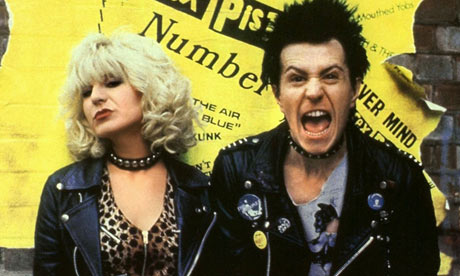
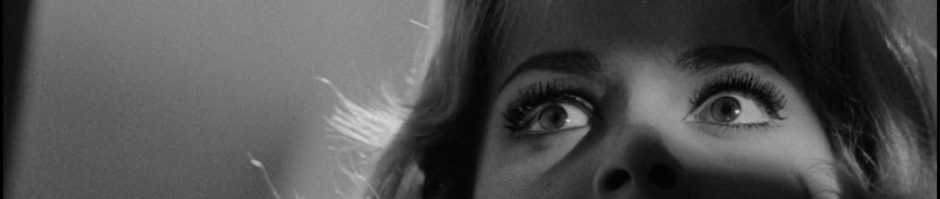
But in the meantime, I tried to do something punk rock because if it doesn’t look that good its all right because it’s part of the ethos 😉 I took the following shot from Alex Cox’s brilliant 1986 film Sid and Nancy as my image of Sid Vicious (so already a couple of mediations in given this is actually Gary Oldman).

Chloe Webb and Gary Oldman in the film Sid and Nancy

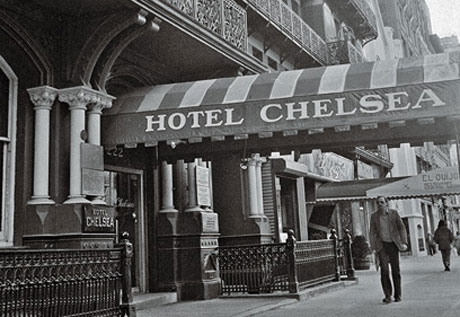
I cut Sid out of the above image and pasted him into a layer with the old school, black and white image of the Chelsea Hotel (included below) using GIMP. Once I had the selfie image, I brought it into the Photoshop template (which worked seamlessly in GIMP) that Tom Woodward shared as part of the assignment. I scaled the selfie layer to make sure it fit over the image area in the template. After that, I adjusted the likes and hashtag layers in the template to show Sid was out of favor at this point in his career (only 2 likes!), and was in NYC—if you didn’t pickup on the Chelsea Hotel bit. Also, it was worth reinforcing his relationship status with Nancy. But the hashtags were an overt, if not pedantic, foreshadowing that this may be his very last selfie.

hotel_blog

Posted in digital storytelling, Uncategorized | Tagged , , , | 1 Comment

Omar’s Tie Fly By

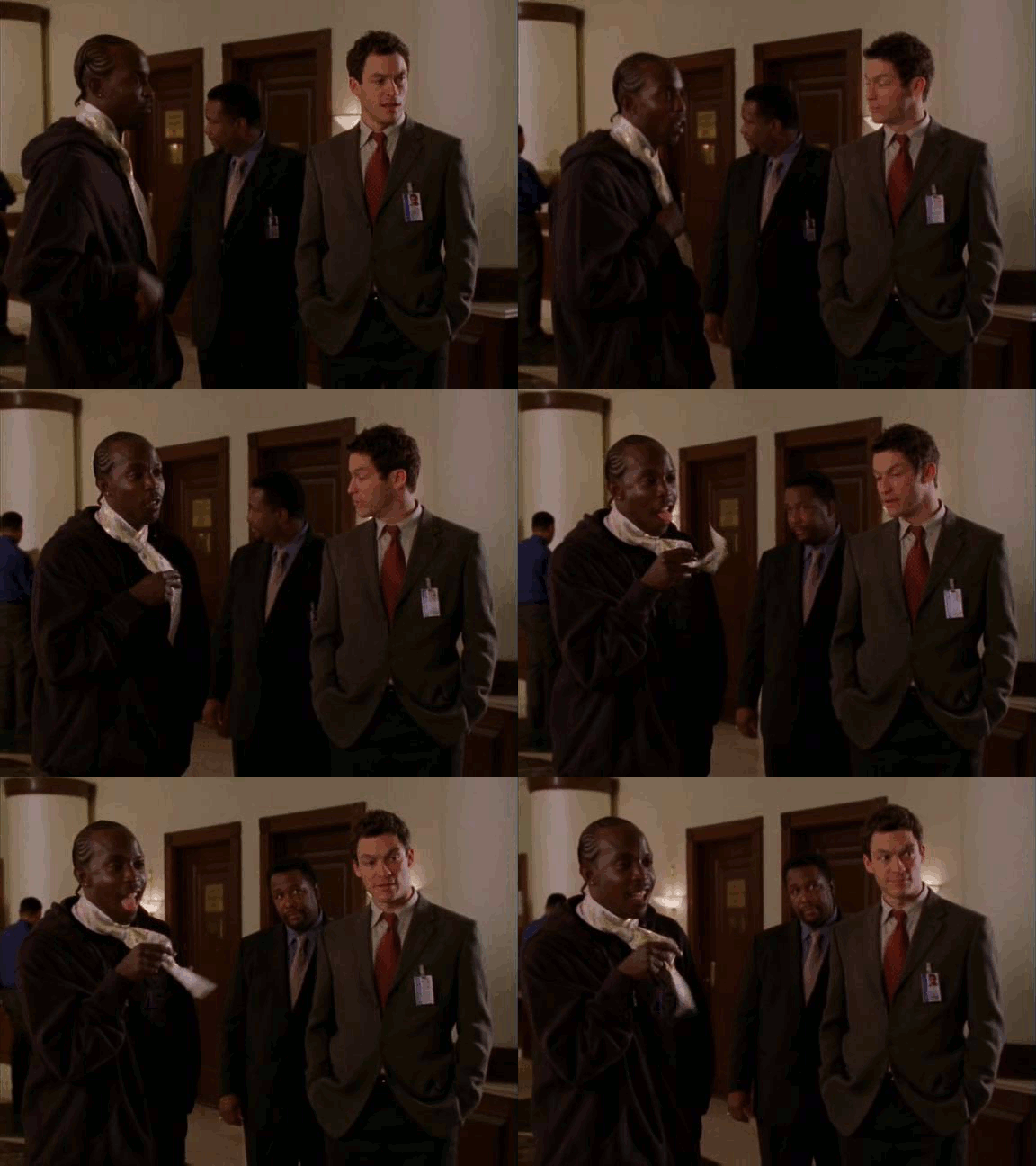
Omar Little rules.  You pretty much realize that by the first season’s end, but by the second season he starts to take on legendary status because his knowledge of greek mythology, his brilliant courtroom apparel, and his ability to shutdown Maury Levy in a courtroom of his peers. It’s all in the video below if you need a reminder of his brilliance in Season 2, Episode 6, “All Prologue,” which may be one of the best episodes of the series.

He’s one of the better characters TV has ever seen, and that’s embedded within a series that probably has ten or fifteen of the best characters TV has ever seen. But when I was watching this time around, I was fascinated by the almost childlike heckling of Bird Omar does with his tie after he’s been sentenced to life. He uses the crazy tie he wears in court to taunt him, and there’s a sense of joyfulness that’s mixes oddly with some violent vengeance. It just hit such a strange register for me that I had to make an animated GIF. So I did, as one does.

omar_tie 01


Posted in digital storytelling | Tagged , , , , | 4 Comments

ds106 Salad Days

I’ve been admiring assignments like the Shakespearean LOLcat for a while now, and this time I decided to stop analyzing and start paralyzing with my awesome art! I knew the quote I wanted to do right away. It’s a line I’ve repeated regularly since reading Antony & Cleopatra in undergrad because I love the way it sounds—and it allows me to condescend my egregiously green judgement in the past. I’m just glad we didn’t have Facebook then, but I digress. It’s from the very end of Act 1, Scene 5 and spoken by Cleopatra when she is bemoaning her youthful fling with Ceasar:

My salad days,
When I was green in judgment: cold in blood,
To say as I said then! But, come, away;
Get me ink and paper:
He shall have every day a several greeting,
Or I’ll unpeople Egypt.

Given the focus on salad days for this quote, I then searched for a LOLcat and salad on Google and found this bit of magic, in animated GIF form no less.

So, I downloaded the GIF and brought it into GIMP with the idea that I would add the quote to every layer. But it turns out this animated GIF was done as a mask (you can see how to do GIF masks in GIMP here) which means much of the background is untouched— and the GIF is smaller and cleaner.  After realizing this, I simply aligned the text on areas that do not animate, and merge them down to the background layer. This made the text appear consistently.  The only other hack around was airbrushing a black background for the second part of the quote because the green was getting lost in the log. I tried adding a drop shadow to the edges, but for some reason couldn’t do it in this GIF—anyone have any ideas why not?

Anyway, that was fun, and 2.5 stars to boot 🙂

Posted in digital storytelling | Tagged , , , | Leave a comment

Wire 106: Week 6 – The Design of Things

Wire episodes: Season 2, Episodes 9, 10, and 11.

DailyCreates: 3

Video Discussions: If the following times don;t work for you, let us know times that do for future weeks. Also, you have to be part of at least three video discussions by semester’s end.  Sign-up for this week here.

  • Episode 9: Wednesday, October 1st at 3:00 PM
  • Episode 10: Thursday, October 2nd at 5:00 PM
  • Episode 11: Friday, October 3rd at TBD

Lunch: Given my schedule, there will be no wire106 lunches this week, but check back next week.

This Week’s Design Assignments

I Can Read Movies Assignment

Complete at least 15 stars of Design assignments—keep in mind you can substitute up to two animated GIF assignments for a design assignment. You can find the design assignments here, and the animated GIF assignments here. The only condition is at least 8 of those fifteen stars must be based on one or more of the three The Wire episodes that are required viewing this week. Also, you can’t do any design assignment you already did in week 1. One of the design assignments we recommend is the DS106 Design Review, which will give you a sense of some of the best design work in ds106 over the past three years.

Each design assignment must be blogged! Don’t forget to review  Alan’s tips of how to write-up assignments like a pro —some of you have been very light on the write-ups, and that’s not a good thing.

Feel free to submit new assignments as you feel compelled, you have to submit and document at least two assignments before the end of the course.

Resources:

Check out Tim Owens ” We Are All Artists” as well as the list of sites below that he refers to in his talk.

Links

Additionally, review this assignment document and spend some time reviewing the design concepts and the linked resources. The goal here is for you to develop a deeper, more nuanced understanding of the basic elements of design. For our purposes,  the following major design elements have been identified  for further investigation this week:

  • color
  • typography
  • metaphors/symbols
  • minimalism & use of space
  • form/function/message
  • balance
  • rhythm
  • proportion
  • dominance
  • unity

After reading and reviewing the assignment document, you should be able to provide a basic explanation of each of these concepts.

DesignBlitz

To reinforce your understanding, you need to undertake a “Design Blitz.” Carry your camera with you this week and take photos of objects, ads, signs, etc. that illustrate one of these ten concepts. Provide an example of at least four these concepts in the designed environment around you. Share all your photos on Flickr via Known and tag them designblitz on Flickr. These are in addition to your Daily Creates!

When you have completed your Blitz, write a blog post that includes (THAT MEANS EMBED!) the photos and your analysis of the design elements and what makes them effective or not. (You should do this in one single post.)

PRO TIP: Sometimes we can learn just as much from badly designed things as we can from well-designed things!

The Vignelli Canon:
Another design resource that’s worth looking at is The Vignelli Canon. It’s a short booklet by Massimo Vignelli, who was a superstar in the world of graphic design. The booklet is light on text and heavy on space and imagery, so it’s a quick read. His purpose in writing it was to share his knowledge for the benefit of other designers. As he says, “Creativity needs the support of knowledge to be able to perform at its best.”

Vignelli did most of his work in the pre-Internet era, when graphic design meant ink on paper, so some of the information is not so relevant to our online environment, but the principles still stand. So take a look at it, and let us know what you think. Categorize your reflection post under Thoughts/Ideas and tag it “vignelli” (no quotes).
Posted in digital storytelling, Uncategorized | Tagged , , , | 1 Comment

Red Moon

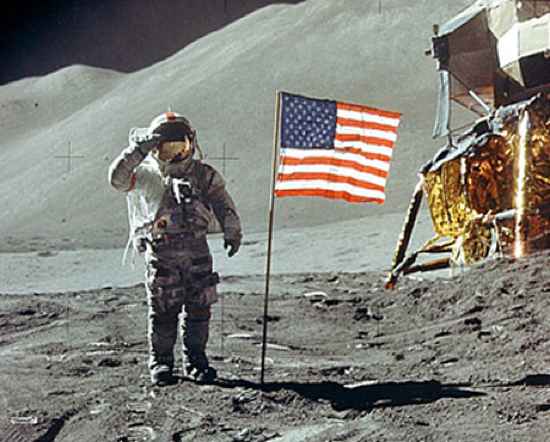
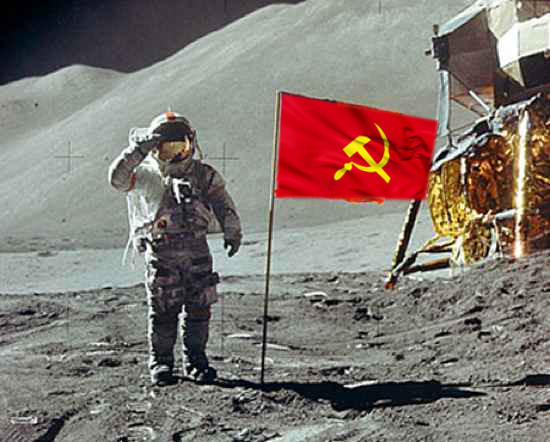
I went through the assignment bank to see what hadn’t been done yet, and I was surprised to see the “Image Manipulation and Historical Narrative” hadn’t been done, so I decided to fix that. I figured I would take one of the more iconic images from the space landing and photoshop it—again 🙂

appollo11

What if it wasn’t us? So uch of the investment in science, research and technology was spurred on by the Cold War, in particular Sputnik. In Where the Wizards Stay Up Late, Katie Hafner links Sputnik to the funding of ARPA which effectively gave us the internet. The same year we got a man on the moon, although the latter is controversial 🙂 So, what if the commies got there first?

appollo11_goes_red

This was a fun assignment because it forced me to play with the perspective tool in Gimp, which was pretty simple and slick. I grabbed an image of the sickle and hammer in Google images that was wind blown, and added it to the Apollo 11 image as a layer and changed the perspective and blurred the edges. It’s not perfect, but enough for the illusion, and it’s good practice for design week!

Posted in digital storytelling | Tagged , , , | 1 Comment

Noise Pollution!

Today’s Daily Create “Noise pollution!,” submitted by Sandy Brown Jensen, asks you to stand still and record the ambient sounds where you are. It actually specifies you do this in the middle of your day, but by the time I sat down today it was nighttime and all I could hear were the sultry sounds of an early Fall evening in Virginia. So I went outside and made a 30 second recording.

But after that I started playing with a wide variety of effects in Audacity to see what I could do. And one effect, Paulstretch, kinda blew my mind. It sounded like a soundtrack for a David Lynch film. It took the 30 second recording of the singing insects in my back yard and strectched them out to 5 minutes. Kinda trippy. Enoy

Posted in digital storytelling | Tagged , , | 2 Comments

From Radio to Television to Wire 106 or, Why I teach

Iicon_4661 already blogged a bit about the Wire 106 listen along last week, and this week’s watch along, but I want to take a moment to reflect on these particular course activities. The shared object of attention for this course is The Wire (Seasons 1-4), and we spent last week focusing on listening closely, and this week exploring the visual elements of the show. Having the online students of wire106 come together in a distributed manner through the “radio” (i.e. ds106radio) and “television” (i.e. Synchtube) has worked wonders for course community. We were able to spend several hours listening and watching together, and we were linked through our course hashtag #wire106 on Twitter.

icon_66074Creating a virtual framework for fostering community is pretty much what I’ve been doing the last nine years. I’m not an expert in digital storytelling. I make no pretense to being a master teacher—there are scores of faculty at UMW alone who can claim that mantle before me. And I’m certainly not overly technical, probably one of my greatest strengths in edtech. I’m simply trying to find ways that we can build a sense of rich, dynamic course communities for a class through virtual, distributed online spaces, and then translate that experience back to others. The work the last two weeks with the radio (kudos Grant Potter) and synchronized video streaming (something Tim Owens and NoiseProfessor were exploring back in 2011) is yet another moment wherein I feel there’s so much rich potential beyond the fluorescent-lighted LMS environments (now with canned video lectures!). And what’s interesting is this distributed approach mimics seemingly trailing edge technologies like radio and TV, but adds interactive, immediate conversations through Twitter.
Screen Shot 2014-09-26 at 7.11.08 PMI am not suggesting this approach is anywhere near perfect, and I do my fair share of manic repairs on the Millennium Falcon of course spacecrafts that is ds106. That said, these targeted moments of communal listening and watching gets at the idea of a unique shared experience that we can return to in targeted group video discussions to explore the themes that emerged through the conversations we had while listening and watching. And the students are integral to these conversations and discussions—it’s pushing beyond easy, lazy outs where teaching online is synonymous with simply broadcasting in one direction. In ds106 we control the vertical and the horizontal, and we are sure as shit not lazy!

And this all returns me to the work happening with Connected Courses this week, which asks us to reflect on the question “Why do you teach?” I teach for a lot of different reasons: ego, performance, pushing myself to learn, sharing my passions, money, social capital, social justice, etc. And when it comes to online courses, it’s all those things and the idea that every time I do it’s another opportunity to push on the idea that distributed, online learning can be every bit as engaging and community forming as face-to-face. Not so much because I want to pit the two against one another, but because the privileging of one often ghettoizes the other. And, as a result, elides the conditions of labor that make a good online course possible. And then there’s the fact I am not a professor, I just play one on TV—and thankfully UMW has let my alter ego reign up and until now. But more on Dr Oblivion in another post.

Image credits: Radio designed by James Fenton from the Noun Project. Television designed by Arthur Shlain from the Noun Project


Posted in Connected Courses, digital storytelling, Uncategorized | Tagged , , , | 5 Comments

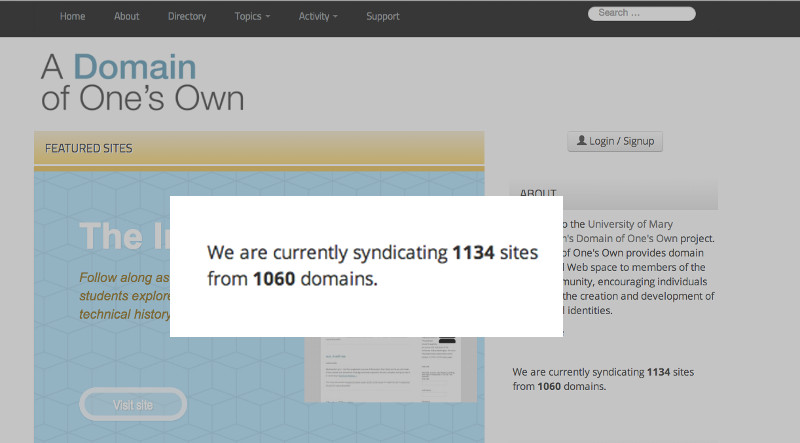
1060

From #ds106 to to #umwdomains 1060! It’s worth taking a moment to actually think about the scale we are rolling out web hosting at UMW for our entire community.  We’re nearing on 20% of our campus population.

dooo_1060

Now, as Ryan Brazell likes to remind me, we have to make sure the quality, not the quantity, frames this project. Time to start blogging about just that, because I have no doubts it does.

Posted in Domain of One's Own | Tagged , , | Leave a comment

The 411 Photoblitz

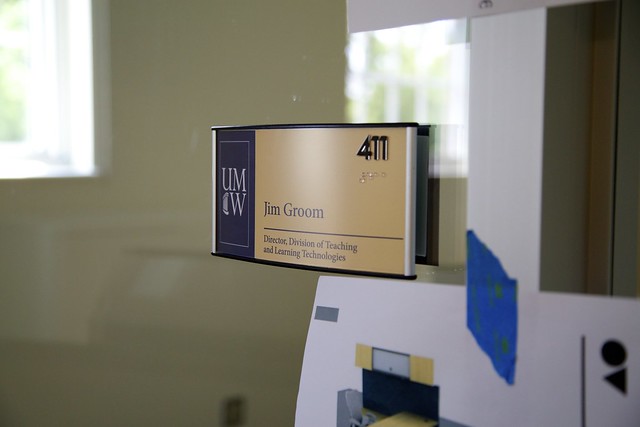
I’ve been doing a lot of office nesting over the last six weeks or so. Why? Well, because we moved into a brand new building (which rules), and it just so happens the director of DTLT (that’s me) got an office as a result. The idea is pretty foreign to me given I have been working in a bullpen for almost nine years, but I have gotten the opportunity to arrange all my toys. So, when John Johnston’s Photoblitzer, inspired by Alan Levine’s 20-minute Photo Challenge, was assigned this week I knew I was going to photoblitz my office. I mean, how could I not given I haven’t left my office for near on six weeks?

Untitled

Image credit: Andy “Candycrush” Rush

As you will soon see, I have a lot of toys in my office, it may be the best office ever in history. But without question the best office on UMW’s campus.

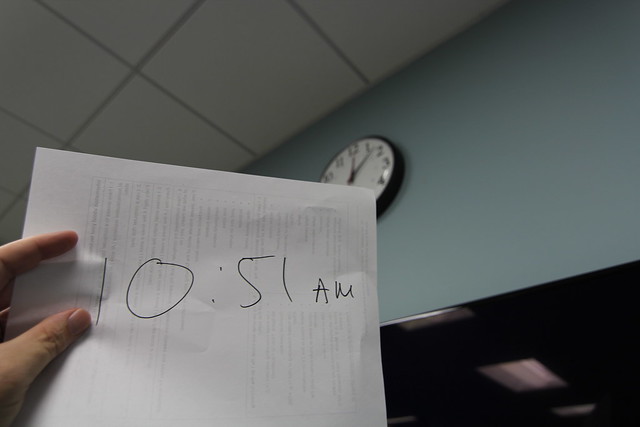
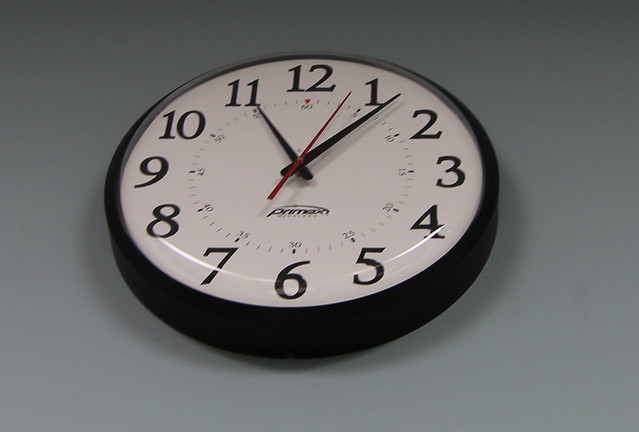
Starting time (nevermind the background):
Photoblitz fuzzy Start time

Photo Blitz Image #1: Take a picture of two contrasting things
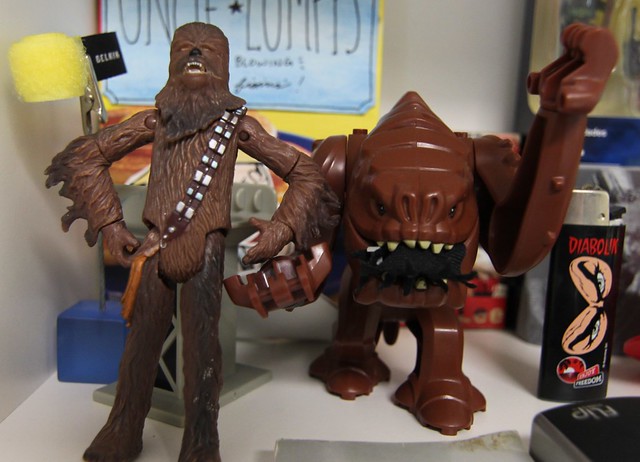
Chewbacca vs Rancor
Photo Blitz Image #1: Take a picture of two contrasting things

Photo Blitz Image #2: Take a picture of an interesting tree
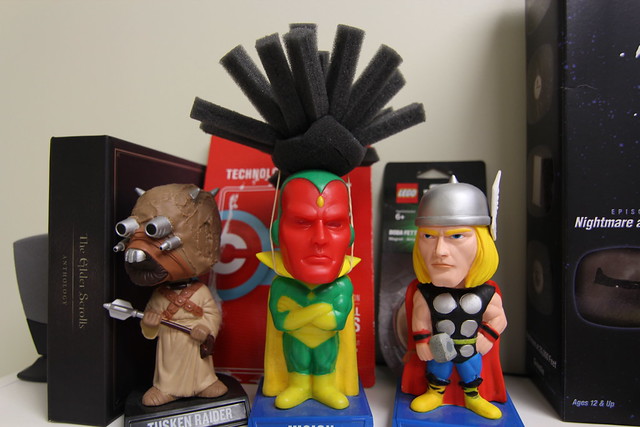
The Vision Tree
Photo Blitz Image #2: Take a picture of an interesting tree #photblitz #ds106

Photo Blitz Image #3: Fill the frame
This is a photo of my son Miles’s three-headed Hydra I stole from him and now sits in my office.
Photo Blitz Image #3: Fill the frame #photoblitz #ds106

Photo Blitz Image #4: Take an image of an irregular pattern
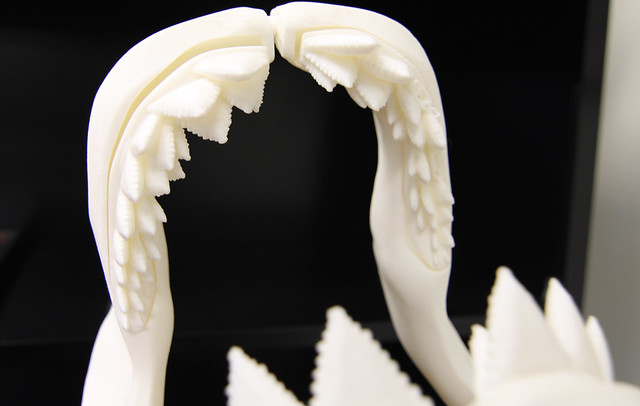
Shark teeth follow an irregular and haunting pattern. This is a 3D print of Great White jaws.
Photo Blitz Image #4: Take an image of an irregular pattern #ds106 #photoblitz

Photo Blitz Image #5: Take an image of a word on a sign that describes how you feel
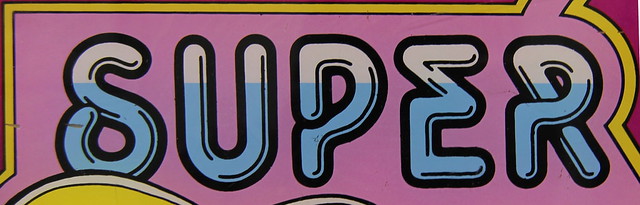
SUPER [COBRA] One of the many stand-up arcade signs on the wall of my office. Such beautiful colors and font.
Photo Blitz Image #5: Take an image of a word on a sign that describes how you feel #ds106 #photoblitz

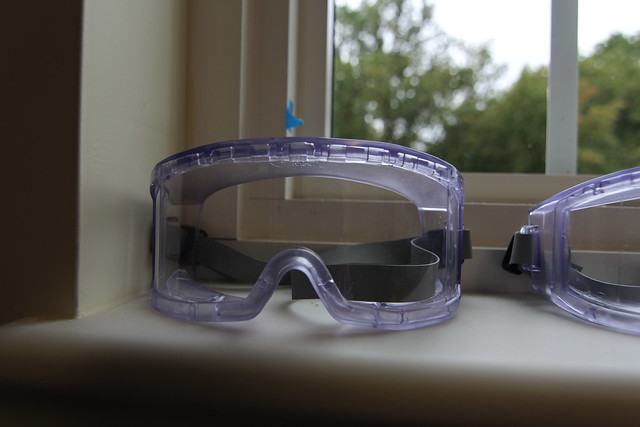
Photo Blitz Image #6: Take a picture of something you wear
I always have my safety goggles close at hand!
Photo Blitz Image #6: Take a picture of something you wear #photoblitz #ds106

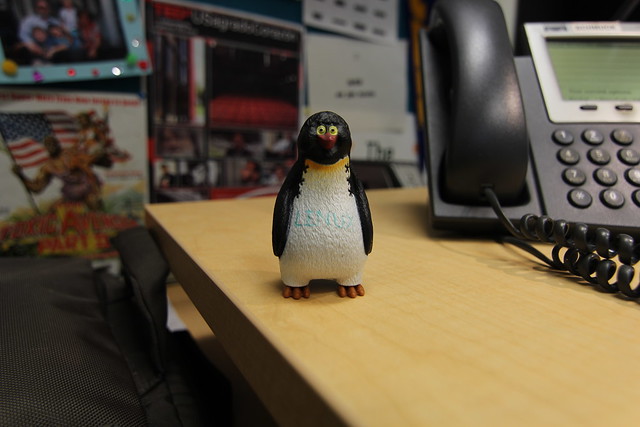
Photo Blitz Image #7: Take a picture of a pet (domesticated, wild, rabid…)
For my final image, I took a picture of Linux, the open source penguin. The pet that keeps on giving.
Photo Blitz Image #7: Take a picture of a pet (domesticated, wild, rabid...) #ds106 #photoblitz

Closing time:
Photoblitz Finish time

Posted in Uncategorized | Tagged , , , | 5 Comments

Atari 2600 Joystick

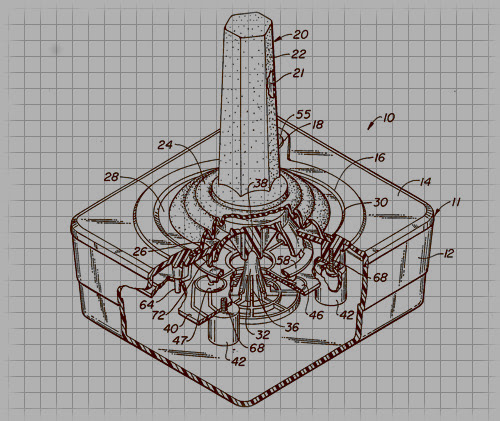
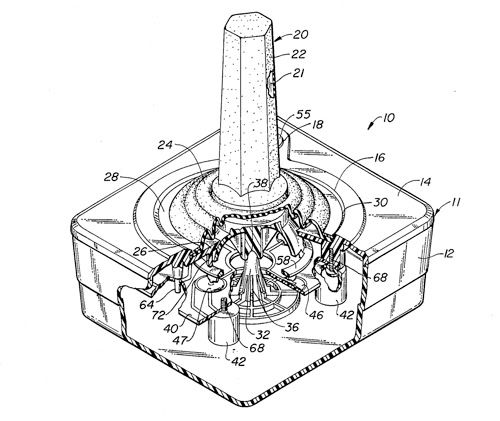
Another awesome Daily Create today (thanks Mariana!), this one was imagined by Tom Woodward and has you picking a patent image and cleaning it up to make it look cool. I couldn’t find a patent image I was in love with, so I found a schematic of the Atari 2600 joystick here, and I started playing with that. I added gridlines, made the whole canvas gray, and then played with the brightness and contrast (upping contrast and reducing brightness). It’s nothing special, but I invoked the 10 minute rule for Daily Creates and moved on. The result is below:
2600_joystick

The Daily Creates (TDC) have been very fun this semester in ds106. In fact, some of the most creative work students have done thus far has been TDCs. This got me thinking how sick it would be to have the Daily Create as a regular prompt on the media wall in UMW’s new and awesome IT Convergence Center? [The media wall is a two story screen made up of 40 HD monitors that spans the main two floors.] The idea being we have that day’s Daily Create featured on the media wall, and also show examples of what people did as they come in throughout the day. We could also encourage folks to submit new assignments and more. Effectively, we’d be inviting the entire campus into ds106 🙂


Posted in digital storytelling | Tagged , , , | 1 Comment