Reclaiming SPLOTs

I already blogged this summer about my growing excitement about the possibilities for SPLOTs (which is an acronym for simple teaching tools) for Reclaim Hosting. But after a recent trip to Colgate University, I’m ever more bully on these tiny teaching tools. SPLOTs piqued a lot of interest during a workshop and presentation I gave at Deakins University and Charles Sturt University respectively in July, so Lauren Brumfield and I decided to integrate them into the two-day workshop we were running at Colgate University around their Domain of One’s Own setup to see if we got a similar response. We did. 

The response to SPLOTs amongst the small group gathered to administer and introduce the campus community to Colgate Domains was quite enthusiastic. We spent day one providing a system overview of Domains, with a deep-dive into managing cPanel, WHMCS, etc. Day two was focused on using Domains for teaching and learning, and showcasing some of the possible applications both within and beyond WordPress. It was during that second day where we decided to dig into SPLOTs—although we did introduce them briefly the day before when talking about syndication sites. Rather than having a pre-defined script around SPLOTs, we decided to wing that part of the workshop and have everyone in the room try and build a portfolio using the SPLOTs Alan Levine designed on StateU. In fact, this month it has been Alan’s turn to play the SPLOT Warrior, and I have no doubt he’s already got the revolution Down Under in full effect.

Image credit: Alan Levine

We introduced two of Alan’s recent SPLOTs to the good folks at Colgate: Big Picture (a portfolio theme) and SPLOTPoint (a web-based presenter tool). The idea was pretty interesting because while we knew of these tools, and knew Alan loaded them on StateU for his workshops in Australia, we had never played with them. So, we decided (kind of on the fly) to do an experiment and see how easy they really were to figure out and setup for a group of people who had never used them before. It was a risk, but we framed it as a kind of test of authenticity—how simple are these damn things?! Well, they did pretty good. Lauren narrated her exploration at the front of the room, and everyone else chimed with what they were discovering and within 15-20 minutes everyone had a solid handle on how to edit and customize their own portfolio theme. That sold everyone in the room, including me….again. 

We did the same thing with SPLOTPoint, and that was even easier given what we learned using Big Picture. It was eye-opening for Lauren and I. The workshop attendees immediately saw various uses, and they were not limited to the templates Alan designed— but those example tools provided an amazing jumping off point. Colgate requested a sandbox with Alan’s SPLOTs so they could start playing, and it also led Lauren and I to ask each other why we are not doing more of this for other schools. Well, we can change that right quick, and Lauren’s recent post about sharing SPLOTs with Colgate is a good first step.

One of the things I get immediately excited about is Reclaim working more closely (hopefully) with Alan Levine, Brian Lamb, Tom Woodward, and maybe even Martha Burtis (I am thinking specifically of her awesome giffing.net, ds106 Assignment Bank, and the database work on survey.umwblogs.org) to figure out how to offer their genius creations to more folks. But also, to visiting schools and building workshops and training around getting ed-techies at various schools to try and build their own. One of the things that blew me away was the instructional designers at Colgate immediately saw how a particular flavor of one of these SPLOTs could be used by an Art Historian or Biology professor for widely disparate projects. This is possibly the furthest you can get in edtech from defaulting to the LMS (without going rogue hippie and claiming it is not about the technology), and the idea of cultivating more of this at a wide-range of schools while building homegrown capacity on the ground would be pretty awesome. What’s more, why couldn’t we find a way to make these various tools available to schools across the web. It would be glorious to see an explosion of small, targeted tools that folks share and play with, and it would be a practical and productive response to the perceived erosion of options beyond the LMSs of the world. Why can’t we have nice, small, cheap, and out-of-control things in edtech? I’m not sure these tools even need to be sustainable, what if they are disposable by default? What if their singularity (wrong word? 🙂 ) is their beauty? What if scaling SPLOTs were less the point then cloning and mutating them? 
Anyway, we’re hell bent on Reclaiming the SPLOT, and WE WANT YOU TO JOIN THE SMALL, NOT SO SECRET, REVOLUTION. 🙂
Posted in reclaim | Tagged , , , | Leave a comment

17,405

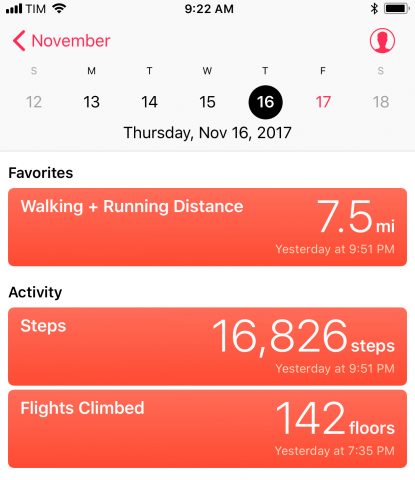
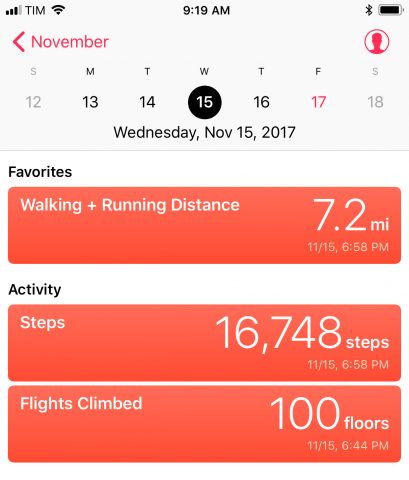
No, that is not the number of posts on the bava, but rather the average number of steps I need for each of the next 44 days to get to the coveted average of 10,000 every damned day in 2017. This was a challenge I set for myself in February of 2017 with the idea of getting to what Antonella calls the mere “baseline” of daily exercise. It took a long while and it is still within my reach this late in the year, so it would be pretty cool to accomplish it. I was on track through October, but the last two weeks in the US killed my daily average. It was hard for me to get out and walk besides my time in NYC, which was the only place I had anything resembling the daily average I rack up here in Italy just going about my normal routine.


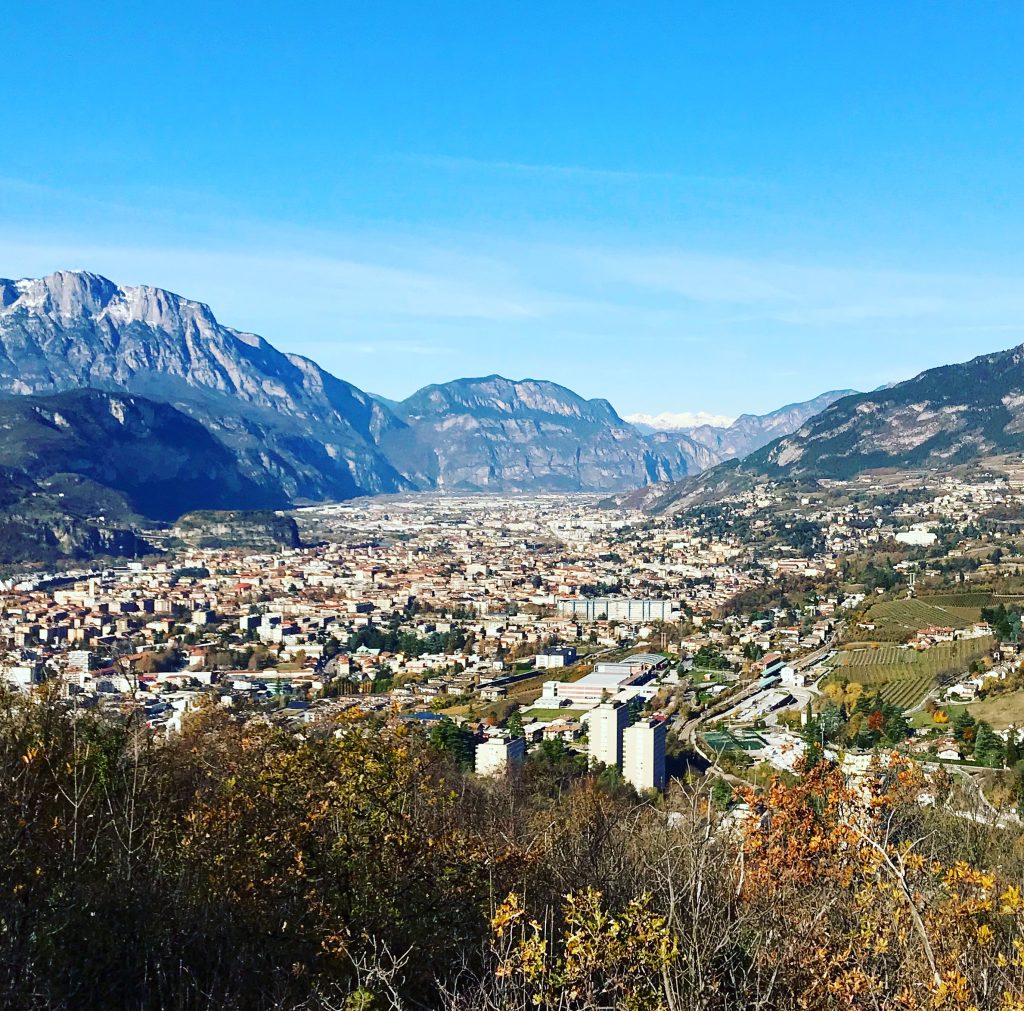
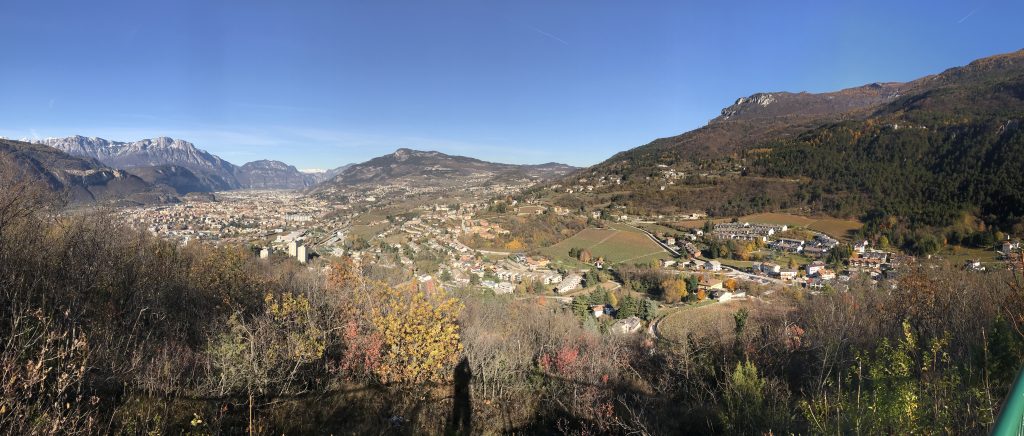
After just two days back in Trento I walked as much as I did in my first week back in the States. It felt good, and the views don’t suck. Plus, it is the flights climbed that makes me question Antonella’s idea that 10,000 is baseline in this vertical world.

So, it feels good to be back, and if my math bears out I have a daily average of 8985 steps over the 321 days of 2017 so far. Which is a grand total of 2,884,185 steps. Now, if I want to get to 3,650,000 steps, or the 10,000 daily average, I would need another 765,815 steps over the next 44 days, or 17,405 steps—just about 8 miles a day. Not exactly a layup, but it will be fun to give it a go. And if I can, it will feel good to finally be at the Trentino “baseline for exercise.”

And yes, I know I have been reduced to blogging about steps on bavatuesdays, but way I figure it could be a lot worse—I could be talking about American politics.

Posted in Uncategorized | Tagged , | 12 Comments

Back in the USSA

I’m sitting in Frankfurt’s airport after a pretty intense two-week trip back to the good ole USA. My post title references the fact that as I was entering the country around Halloween the Mueller investigation into Russian collusion charges was heating up with the promise of indictments. The current U.S. political drama is insane no matter how you slice it, but oddly a bit less painful (at least for me) when actually in the country rather than watching it from abroad. Who knows, I try and turn the volume down on that bullshit as much as possible, which reminds me I need to finally extricate myself from Twitter and the other rat nests of social media I’m half-heartedly holding on to. All I need is my blog and this thermos!

Anyway, that was not what I wanted to write about, although it will come up again later on in this post. But let me start at the beginning. I was heading to the States for three main reasons: a Workshop of One’s Own, the Reclaim Annual Retreat, and a two-day training session at Colgate University. It was a full agenda to begin with, but it also provided me an opportunity to catch up with friends and family in NYC and Long Island, which is always a treat. 

First up is the Workshop of One’s Own, which was our first real focused workshop for Domain of One’s Own administrators. We had 6 admins from various institutions to the Reclaim Headquarters in Fredericksburg for two intense days of training around administering Domain of One’s Own. I would go on in detail, but you won’t have to listen to me drone on about it because Lauren Brumfield already blogged the hell out of it! She provides a detailed look at what we covered as well as linking to the documentation we created in preparation for the event. The documentation alone was worth pushing ourselves to run the workshop; we now have a rich trove of resources for Domain of One’s Own admins. But for me the real gold was having the Reclaim team all together taking folks through Domains.

I was blown away with the preparation and execution of the various sessions, and in particular Lauren and Meredith’s adept facilitation of their sessions on everything from DNS to .htaccess to migrations —not easy topics to discuss for an hour. I’ve already talked about building capacity at Reclaim, but it occurred to me while watching them go is that we are also building expertise—and that is awesome. But not only amongst the Reclaim Hosting team, but also in the folks at the various schools running Domains. The work we are doing is not just about cPanel or WHMCS, it is about our platform which is the web. So this workshop is a deep dive into understanding how servers work, and by extension the very infrastructure of the web. I think it went off quite well, and after our first run I have no doubt we can do even better next time.

After the workshop the Reclaim Hosting team headed to New York City for the weekend to hang out. We did something similar for the cPanel conference in Portland, Oregon last October, and we found spending a few days together just hanging out was tremendously useful and productive. It proved to be the case yet again. We had a general check-in on where everyone’s at, as well as shared dreams of what we want to see next year. All the while we ate good food, saw inspiring museum exhibits, played 80s arcade games, took in a broadway show, and rode the Staten Island Ferry. Not bad at all, NYC never disappoints. Meredith wrote up the trip on her blog (look mom, they’re blogging!) and it’s cool to get her take on it given she’s only been full-time for two months—although it feels like more given how quickly she has become indispensable.

We didn’t come into the weekend with any expectations that we would get something tangible out of it, but we did. In fact, we have a full blown plan for the next six months at least (more on what we’re doing in future posts), and I feel deeply inspired creatively going into 2018 as a result. So it was a total boon for me. The idea was for us just to enjoy ourselves and have fun with hopes that would lead to good things, and I truly believe it does. I think that was part of the success of UMW’s DTLT during the 10 years I was lucky enough to work there, and I think Tim and I are intentionally trying to cultivate some of the looseness and fun that framed those years that allowed us to explore wildly, while at the same time remaining committed to a culture of support and presence that made the work sustainable. Trying to figure out that balance and what makes a team successful is both difficult and interesting, and while I don’t pretend to have any answers, I feel Reclaim Hosting is starting to click in some very important ways when it comes to the work.

After New York City, Tim and Meredith returned to Fredericksburg, while Lauren and I went to Colgate University for a two day workshop to get them up and running on their Domains pilot. This is the second time Lauren has joined me on a trip to a school, last October we went to Muhlenberg College. The previous event was focused around a talk and various workshops, which is often the case when I visit campuses (the Muhlenberg students were a blast on Twitter.) But this trip was a bit different because Lauren and I were co-facilitating the two-day workshop at Colgate to train instructional designers and system administrators on how Domain of One’s Own works. This piggy-backed nicely on the work we did for Workshop of One’s Own the previous week. Additionally, we were very intentional about treating this as preparation and experience so that she can start visiting schools solo in the future. We’ve been making great strides in building capacity and expertise at Reclaim this year, and this is but another example. It also helped that Jeff Nugent put together a great cast of characters for us to work with during our time there. It is nice to see Jeff land so well at Colgate continuing the fine work he did at VCU.

I’m definitely gonna go into greater detail about this workshop in another post because it deserves it, but let me just say that Lauren and I were able to balance a cohesive structure and spontaneous play that kinda mirrors the emerging Reclaim ethos I was trying to explain above. We had the workshop planned out quite well and day 1 ran like a tight ship. But during day two we were able to read the group a bit better and actually improvise on our plan. We responded to their interests and were able explore some of them in real-time together. They were very enthusiastic about SPLOTs, so Lauren and I improvised for an hour and a half having them build their own SPLOTs as part of the morning and afternoon sessions. The coolest part of that was both Lauren and I were new to the tools we were demonstrating (SPLOTpoint and Calling Card), so it was an experimental modeling of something we didn’t know, and the sense of shared exploration and purpose was exhilarating—a highpoint in workshopping for me. What’s more, it only reinforces the fact that SPLOTS and Reclaim are a match made in heaven, but more on that when I write that post. 

After an exhausting, but very fulfilling, two days in Colgate, Lauren and I parted in Syracuse and returned to NYC to round out my trip with friends and family. One of the great fortunate coincidences of this trip was that the CUNY mafia was running one of their famous CUNY Pie pizza tours of NYC that Friday night, so I tagged along. 

https://twitter.com/mkgold/status/929195263843033088

It was as awesome as it sounded, and a special treat was seeing and talking with Boone Gorges. He is an elusive one on the world wide web, but just a short time with him reminds me how both inspiring and hysterically funny he is—I do miss his presence. We talked about his and Darcy Norman’s initial reclaiming efforts in 2012 and 2013 that gave Reclaim Hosting its name, and also about his continued diet of a social media free internet. I have to say his arguments are pretty compelling, and he looks and sounds no worse for the wear of being off the internet map. I deeply love the CUNY folks, I can trace pretty much my whole career back to a handful of people at the Graduate Center, many of whom were at that table eating pizza. For me, returning to NYC is always an exercise in resisting the urge to daydream about trying to move back. It’s a strong drug.


Fly like an eagle, boys!

A post shared by Jim Groom (@jim.groom) on

After that, I hung out with my family in Long Island, enjoying high school football games, great diner food, and catching up with my extended family whom are awesome.


Some Sunday fun with family.

A post shared by Jim Groom (@jim.groom) on

And as a cherry on top of an already amazing trip, I was able to grab breakfast at Mike’s Diner in Clinton Hill before heading to JFK with Twitter rockstar Sava, who will soon be leaving the NYC bubble. We had a lot to talk about in that regard, and it was nice to catch up before she begins anew.

And with that, I’m here in Germany waiting to fly to Verona and then train to Trento and dig in for the next couple of months to hang with my special lady friend, enjoy my wonderful children, and return to my hiking routine. Back home, oddly enough.

Posted in fun, reclaim, Workshop of One's Own | Tagged , , , , | Leave a comment

OER You Not Inspired?

It was pretty hard for me not to do a double-take while reading David Wiley’s recent post about the “cost trap” of OERs. While I agree with the fact that defining educational resources around cost savings is uninspired, I found this a bit strange coming from Wiley. It seems to me, and I could be wrong here, that much of the push around OERs for the last several years has been just that: how much money free textbooks have saved students. In fact, I was one of the panelists at the Virginia Community College conference wherein David spoke about a free degree using OERs that led to Tidewater Community College’s Zero Degree program —or Z-Degree. A degree centered on providing free textbooks for all classes in a major with the explicit goal of saving students money.

That was probably around 2012 or 2013, and I was impressed (like many others I’m sure) with how Wiley was able to frame the cost-savings argument around open textbooks to build broader interest for OERs. And while I continue to find the discussion around OER textbooks uninspired, I did realize that it was the argument administrators and politicians were responding most warmly to. I got firsthand experience of just that when I served on the state sanctioned committee OpenVA that was working to explore visions of open pedagogy, open infrastructure, and open educational resources for higher ed institutions in Virginia. Of those three flavors of open, if you will, it seemed easiest for politicians and administrators alike to double down on investing in textbooks rather than pedagogy and infrastructure.

Why? Well, quite simply, the promise of saving people money was too powerful. It is a compelling argument in an age of academic austerity. As we heard from Virginia state senator Bryce E. Reeves first hand at UMW’s Division of Teaching and Learning Technologies in 2014, OERs provide a handy way for politicians to promise savings despite rising tuition due to lack of state funding. It seemed more a political distraction that uses the rhetoric of cost savings to distract from the the long con of gutting higher ed. 

But regardless of how I felt about it, it was working for OER adoption in Virginia and beyond. The cost-savings argument quickly morphed into a question of access, and taking issue with this could quickly put one in the uncomfortable position of ostensibly arguing against saving students money. Try to do that cleanly on Twitter 🙂 I chalked up my discontent with the continued funneling of attention and resources at OERs to both argument envy and a political game I have no interest in playing (OpenVA was hard for me in that regard).

I continued my work with domains, web hosting infrastructure, and supporting faculty and students in that pursuit. I have also occasionally talked about the issues I have with OERs  (namely they’re textbooks, they’re fairly boring, and they eat up most of the edtech conversation/resources), but I try to refrain from being unpleasant. But to read a post in 2017 claiming OERs are not about cost savings but rather open licenses and pedagogy is just too good a clickbait not to bite (I am bad at that). Stephen Downes did most of the heavy lifting breaking down Wiley’s argument in this post on Half an Hour, so I would recommend you read that for a far better job then I can ever dream of doing. But unlike Stephen I don’t really mind if Lumen makes money off providing seamless access to open textbooks for institutions. At Reclaim Hosting we make money off hosting open source applications every day. I think you can run a business premised on open source applications and still provide something folks are more than willing to pay for (which in our case is by and large support). 

But what does bother me a bit is the suggestion that OERs have not been primarily (and very intentionally) marketed as a cost saving strategy for years now. And the idea of pivoting away from that at the exact moment Pearson, Cengage, and McGraw-Hill are adopting that approach seems a bit too convenient. I fear it is OER wanting it both ways. What do you offer when cheaper is no longer enough? Well, you can return to the authenticity of the pedagogical experience of open and reassert the primacy of the open license. But when you do this, the Creative Commons license (as well as the 5 Rs) seem to be just as much a brand as anything those corporate publishers are doing to corner the market. The whole OER licensing discussion just seems like a jockeying for political capital, resources, and moral high ground when we all know it is little more than Learning Objects 2.0. And like Learning Objects, some simple questions still remain unclear: What are the OER adoption rates over time? Are OERs being re-used? How much grant funding has been spent on OERs versus savings for students? Etc. But at the end of the day, at least for me, OERs are about as far from fun, experimental educational technology as you can get—and the crisis of faith in open education right now is rooted in the fact that OERs (as in textbooks) have become the monolithic representation of that movement despite their utter lack of inspiration—framing them around cost savings (or not) won’t change this. 

Posted in open education | Tagged , , | 2 Comments

The Monogamous Book Club, Episode 2: The Shrinking Man

https://twitter.com/grantpotter/status/925769413223120899

Last week I put out a call for someone to talk with me about Richard Matheson’s 1955 novel The Shrinking Man. The Great Grant Potter heeded the call and came fully prepared to talk about the numerous depravities of shrinking a man’s world. Grant was awesome, and the conversation consists of me making broad claims about the book in sweeping language, while he digs into the text with laser focus and produces nugget after nugget. I first read the book over a year and a half ago in Scotland, and it has haunted me ever since. I tried to talk with Brian Lamb about the book in an Argentinian Steak House in Amsterdam, but he wasn’t ready to explore the limits of manhood. I felt like I needed to exorcise the perverse demons of shriveling manhood it had borne in my brain, and I think that contagion is what I liked so much about the book. It reads like a deconstruction of what it means to be a man in the 1950s. And while very much a book of that period, it’s incisive critique of reality’s relative hold on the social order seems very contemporary. The story of Scott Carey is one that highlights how quickly your own reality can turn on you once you’ve lost any sense of your place within the power structure you depend upon for stability. It was a fun conversation, and Grant was awesome and generous as usual. 

Posted in Monogamous Book Club | Tagged , , , | 2 Comments

Changing Ownership of a Hosting Account in WHMCS

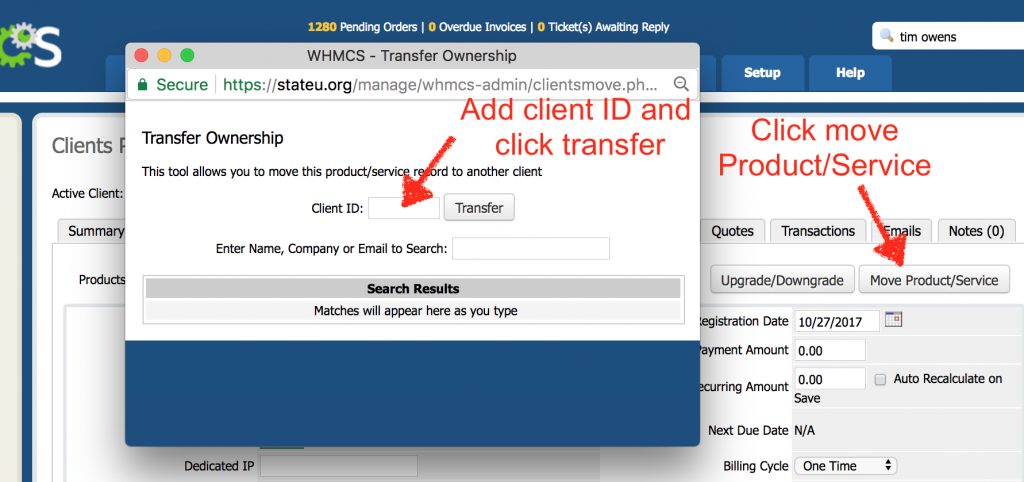
Changing ownership of a web hosting account in WHMCS is surprisingly simple. But why would you want to do this? Well, say for example a student or faculty was running a club or research site and they want to pass the ownership on to another person. As of now you  still cannot have multiple admins on a cPanel account (we do hope this comes soon!), so you would have to transfer the account to the new owner.  Assuming the user you want to transfer the account to already has an account in WHMCS, all you would need to do is go to the Product/Services tab for the hosting account you want to move and click the Move/Transfer button. 

Transfer a web hosting account between users in WHMCS

Transfer a web hosting account between users in WHMCS

After that, a window will pop-up asking you to add the user’s client ID number that you want to move the account to. Once you do that and click transfer you are all done. It is really that simple. You might want to Resend the Welcome Email to the new user, but that should be all.

Posted in reclaim, Workshop of One's Own | Tagged , , | Leave a comment

Resending Product Emails in WHMCS

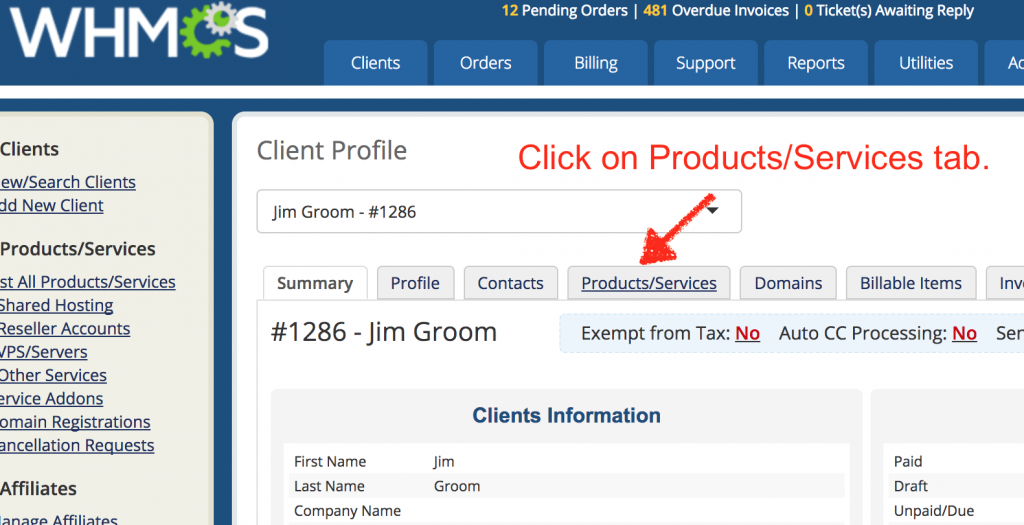
A simple, but useful bit on WHMCS is re-sending product emails. In this instance almost always product means web hosting given that is really the only product you would provide save for a domain depending on your school. Also, the only email you would really need to resend is the Welcome Email with their FTP credentials and other details. To do this login to WHMC and search for the user in the search box in the upper right-hand corner. Once you have found them, navigate to the Products/Services tab.

Click on the Products/Services tab

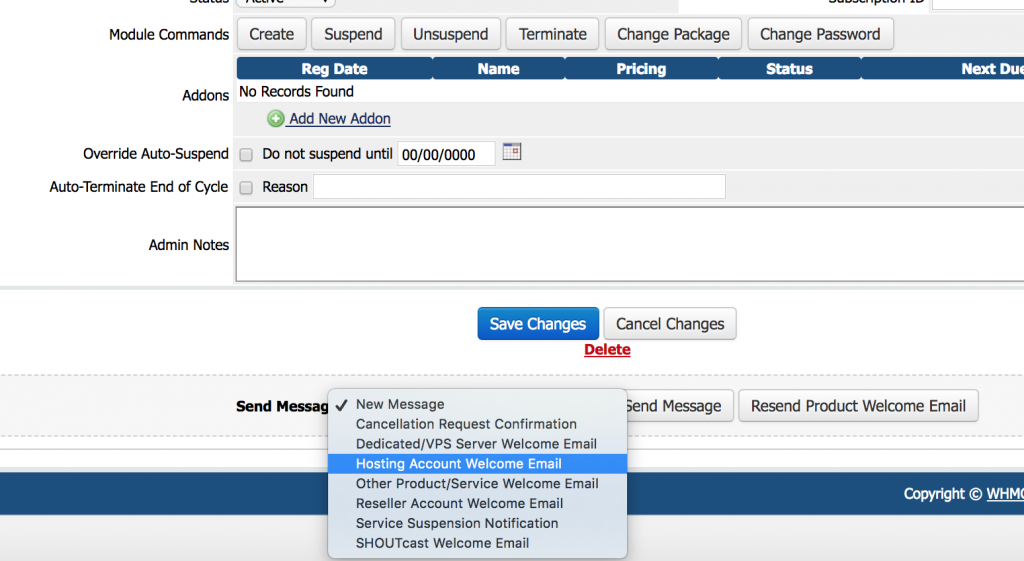
After that, at the bottom of that page there is a drop-down menu for re-sending email templates, you would want to re-send the “Hosting Account Welcome Email.”

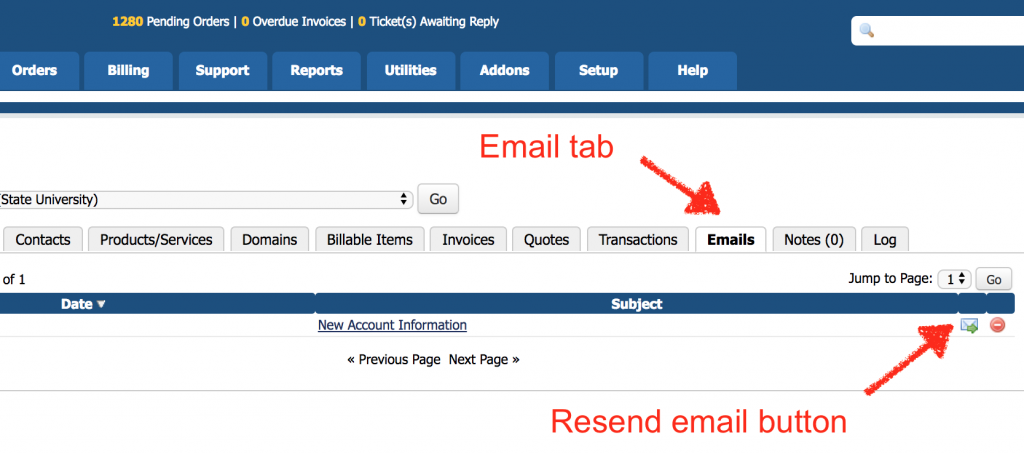
This can also be done from the Emails tab by clicking the email button next to the “New Account Information” email:

After that they should have been sent another copy of their Welcome email.

Posted in reclaim, Workshop of One's Own | Tagged , , | Leave a comment

Cancel, Delete, Terminate: Removing Accounts in WHMCS

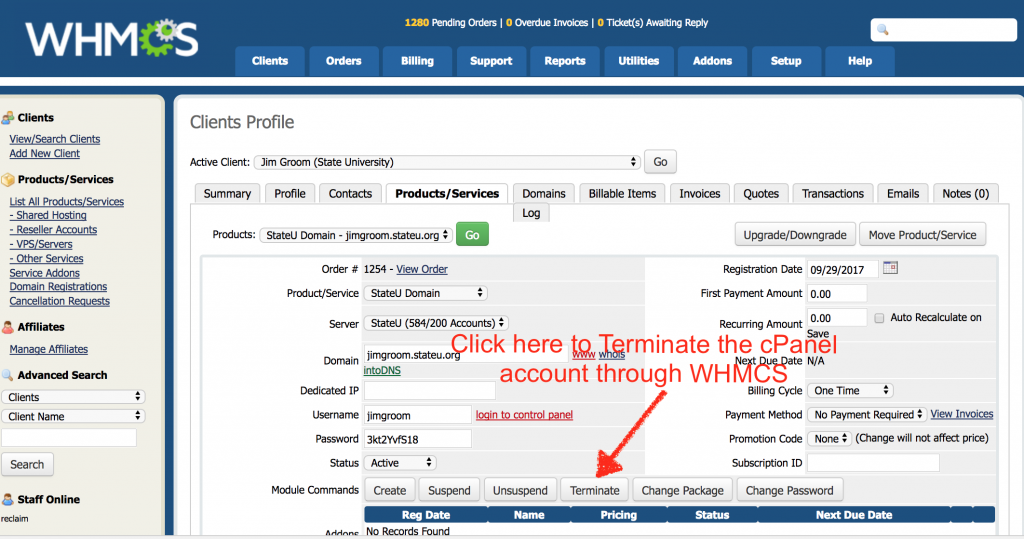
When supporting Domain of One’s Own, on e of the issues folks run into is someone having created an account they not longer want. This can happen for several reasons: they think Facebook is the one true web, they believe aliens invented the internet and are using it against humanity (distinct possibility), they don’t like the domain they created, they have done their work and want it gone, etc. Probably the most common is someone created a domain they no longer want, and would like a new domain new. If they have content on the site, this would be better done by changing the domain in WHM. But, if the account is empty, and they just want to start over, we can terminate their hosting account in WHM through WHMCS, and then delete their WHMCS account. NB: It is important that both are done on order for folks to start anew.

Click on the terminate button in WHMCS to delete the web hosting account product. Keep in mind you will still need to delete the user on order for them to create a new account.

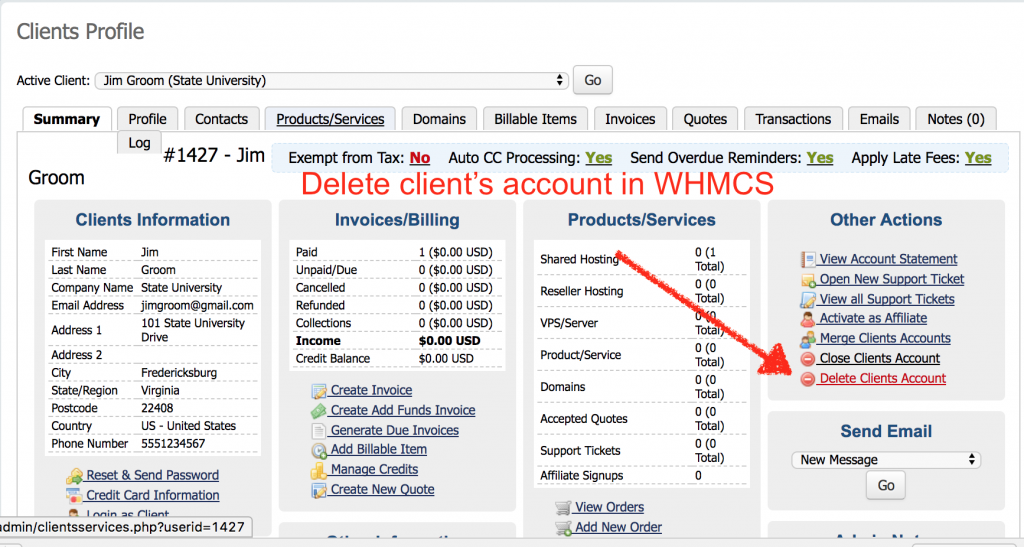
Terminating the WHM account through WHMCS is only half the battle. Once that is done, the WHMCS account for that user most also be deleted (assuming they only had one hosting account that is now terminated) given when they try and re-create a domain from the Dashboard page in WordPress the system will only let them create a new account if there is no trace of them in WHMCS. This is one way to prevent users from creating multiple web hosting accounts.

After you have terminated the account, you will need to also delete the client’s account in WHMCS so they can create a new account from WordPress.

Once the WHMCS client is deleted there will be no more sign of that user in WHM or WHMCS, so when they login through the Domain of One’s Own portal, they will have a clean slate. Keep in mind this is not recommended if the user already has created content given terminating the web hosting account will delete all their content.

Posted in reclaim, Workshop of One's Own | Tagged , , | Leave a comment

Domain of One’s Own: A Technical Overview

This post is part of a series I will be cranking out over the next 5 days or so as Reclaim Hosting prepares to run its first “Workshop of One’s Own.” What is that you ask? Well, next week Reclaim is hosting an event at its offices wherein system administrators and support folk at various schools running Domains will come together for two days in order to get in-depth, hands-on experience of how to manage and support Domain of One’s Own

When we provide an introduction for new schools one of the things I’ve started doing is to provide a conceptual overview of how the various pieces of a Domain of One’s Own work together. There are three application that work together to make Domain of One’s Own setup work, and below I’ll try and detail each hopes of better explaining how they work together. 

WordPress
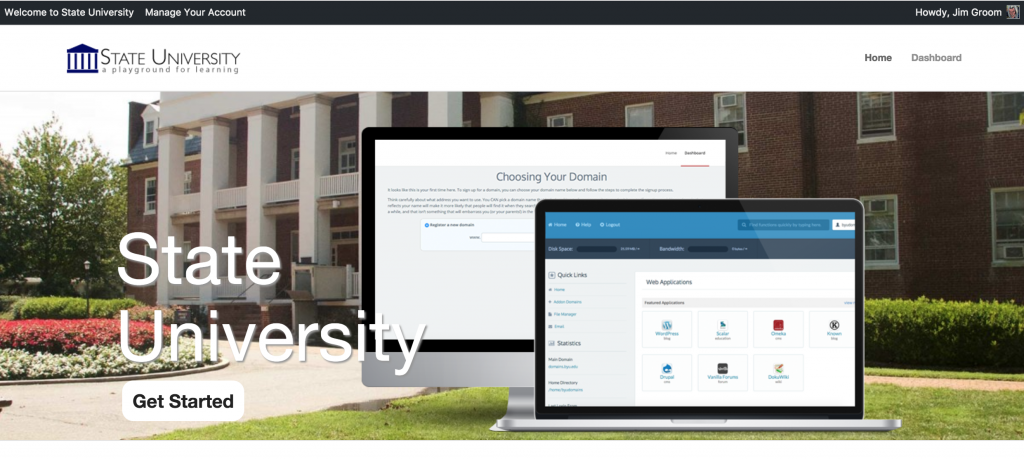
The venerable WordPress is in many ways the face of a Domain of One’s Own installation. We describe WordPress as a wrapper in which we embed cPanel. In fact, that is literally what is happening, we are using various functions and API calls in WordPress to both create and embed cPanel within the Dashboard page of WordPress.

StateU's forward face is a WordPress site

StateU’s forward face is a WordPress site

Why WordPress? Two reasons: 1) often times folks are familiar with it so it makes it easy for administrators of Domain of One’s Own to get up and running given they often have used it before. 2) Given the robust open source development community around WordPress, it provides us all kinds of pre-written code to integrate features such as single sign-on, ghosting as another user, and more. Fact is, rather than trying to integrate with a campus instance of Shibboleth directly, we can use plugins for Shibboleth others have written and vetted to do this far more seamlessly. 

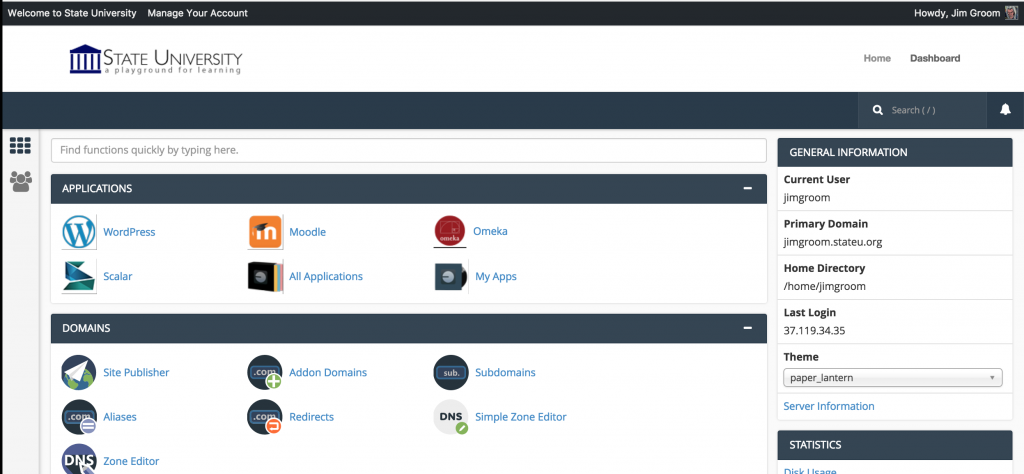
CPanel is embedded within a page in WordPress using functions and API calls to WHM and WHMCS

CPanel is embedded within a page in WordPress using functions and API calls to WHM and WHMCS

In this regard, WordPress is the place users will login with their school credentials, which will be checked against the single sign-on system, and then they are passed into the Dashboard that is embedding pages from both WHMCS and cPanel. And this might be a good moment to jump to the next  application we use….

WHMCS
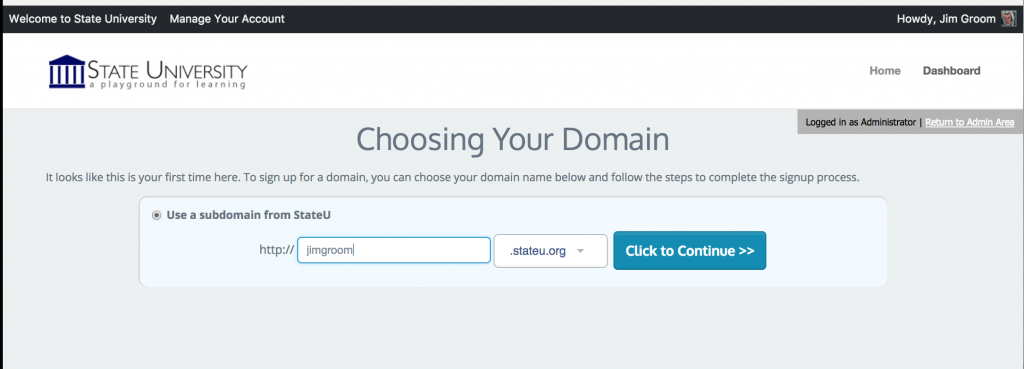
If WordPress is the face of the project, and the wrapper for cPanel, then WHMCS is the almost invisible gateway between WordPress and the cPanel server (known as WHM). As a user you only see WHMCS for a brief time while you are signing up for your web hosting account. 

When you are choosing a domain, who are using WHMCS

When you are choosing a domain, who are using WHMCS

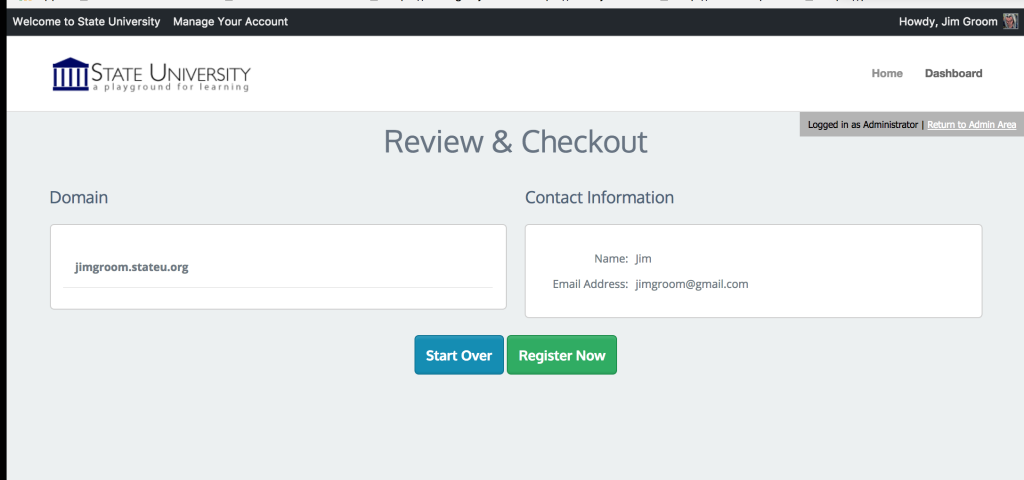
When you are reviewing your details you are also in WHMCS

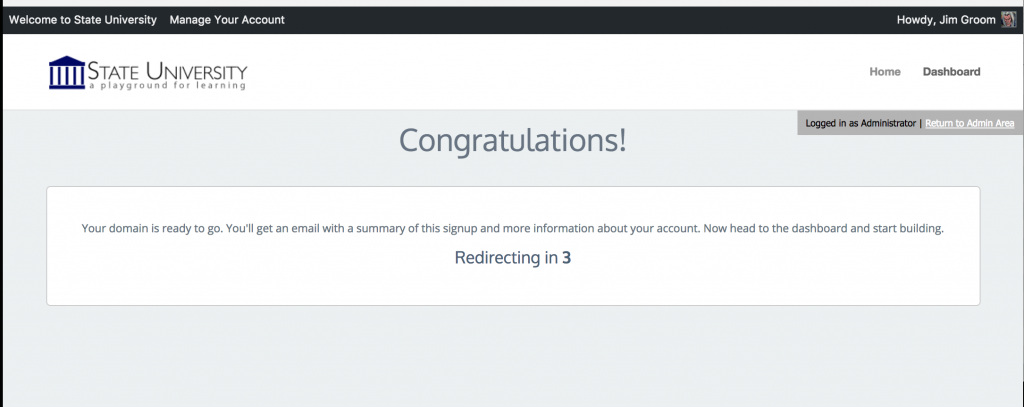
When you are counting down to cPanel creation you are still in WHMCS

When you are counting down to cPanel creation you are still in WHMCS

The three screens above are the only time a user will be “within” WHMCS. While you are still technically in WordPress, these order forms are being pulled from WHMCS, which is a client management software that sits on top of WHM and creates new accounts and sets up invoices, renewals, etc. In many ways it is simply a bridge to WHM that creates and manages the business end of accounts.

WHM
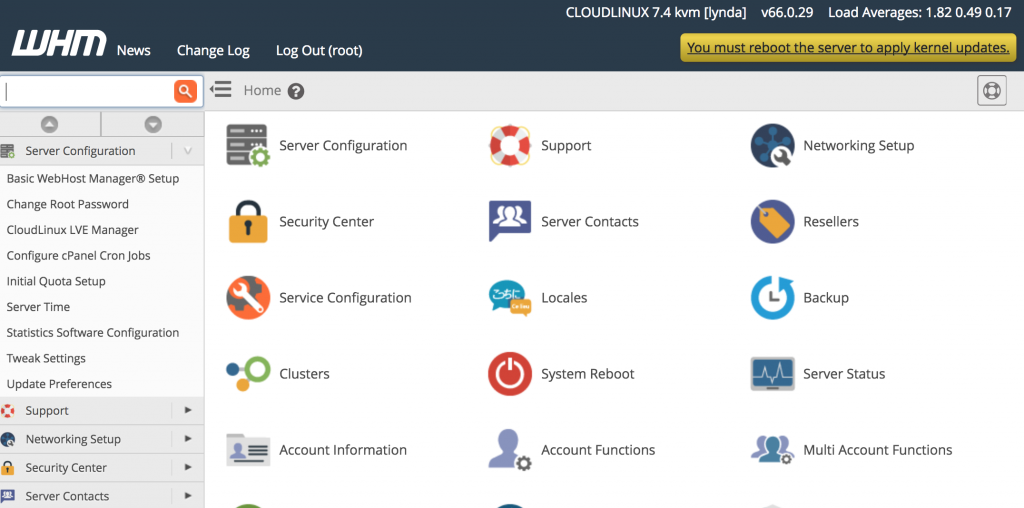
Finally, we have WHM (which stands for WebHost Manager) and this is the cPanel software that you use for creating a shared web hosting server. CPanel is the web hosting industry standard, which provides a lot of continuity for folks who want to take their work elsewhere. Where WHM fits in is it is actually the software wherein you manage the shared hosting accounts. WHM is where WHMCS creates those cPanel accounts that are associated with the various users at a school. It is where you can change storage quotas, checked the firewall for blocked IP addresses, manage Installatron settings, manage the email queue, and much more.

WHM is the software that enables you to manage the various cPanel  web hosting accounts

WHM is the software that enables you to manage the various cPanel web hosting accounts

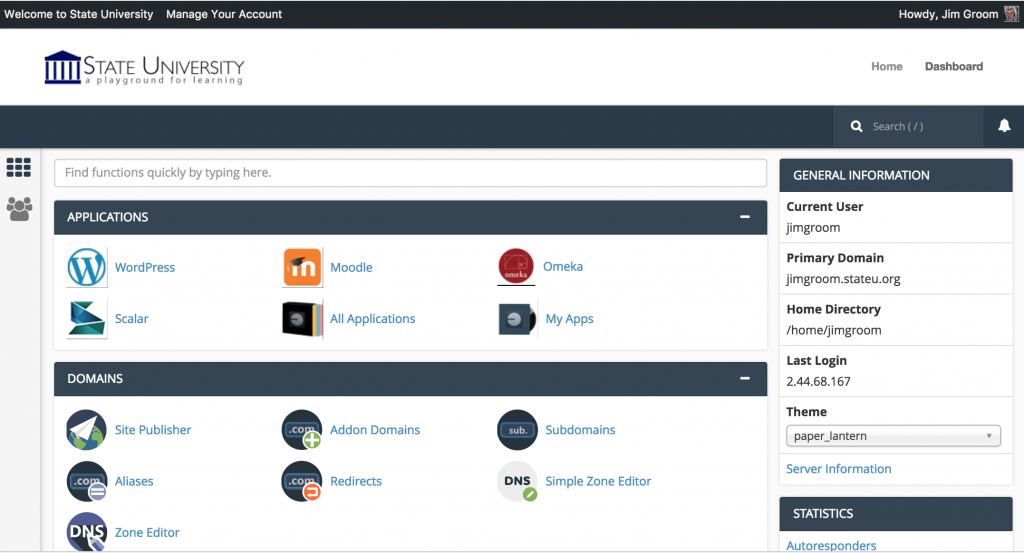
We will get into the various tasks you can perform through WHM, but for now it is important to understand that WHM is the software that manages the shared hosting accounts, and we are pulling those individual accounts back into the WordPress site’s Dashboard page using various functions and API calls to WHM to get this:

CPanel is now embedded within the Dashboard page of the WordPress site based on user credentials mediated through the school’s single sign-on service.

And that is the way in which the three major systems we use at Reclaim Hosting to build Domain of One’s Own operates.  There are many other details and specifics that we will elaborate on throughout the workshop, but this session is meant to serve as a more general technical overview to explain the various pieces before we dive into each of them in depth.

Posted in reclaim, Workshop of One's Own | Tagged , | 3 Comments

The Monogamous Book Club, Episode 1: Twenty Days of Turin

Well, I may have lost yesterday’s first episode given my failure to record, but Paul Bond was kind enough to offer an immediate turn around and spend another hour of his day before work talking about Giorgio De Maria’s The Twenty Days of Turin. This version is interesting in that it is a lot more depressing than yesterday’s  conversation. Things moved quickly from a book discussion to dark reflections on the state of things globally. It is apropos that Paul should be my first guest on the Monogamous Book Club given we have been doing some version of this about Mario Bava movies or Cormac McCarthy novels for years. Not to mention we have taught a few classes together as well. I’m comfortable with Paul, which makes for some good conversations. That said, this one may have been weighed down a bit by a general sense of fear and dread as the discussion moved towards history and our current geopolitical environment.

I think I’ll be calling on Paul again soon to join me for yet another episode wherein we will discuss Leo Perutz’s Saint Peter’s Snow, which Peter Berard referred to in his review of De Maria’s Twenty Days in the LA Review of Books which started Paul and I down this path many months ago. As for this discussion, well I guess you may just have to listen to us talk about Italian terrorism in the 1970s, Turino, social media miasma, scatological themes of the novel, European nationalism, U.S. racism, and more, well then this is your episode 🙂

Download the episode here.

Posted in Monogamous Book Club | Tagged , , , | Leave a comment