Ocean’s 106 Club

My own personal web monitoring system, Alan Levine, sent me this tweet Friday:

Turns out ds106.club was down, and I’m pretty sure a quick reboot would have cured it. But it actually was pointing to a deeper issue I had been avoiding for some time now: my neglected Amazon Web Services (AWS) instances. I had (notice the past tense) two instances running on AWS for a couple of years now. Back in 2014 I spun up a Ghost blog on AWS (more on that in my next post) and in 2015, inspired by Tim Owen’s demo at the Indie Web Camp in Cambridge, I used it to host ds106.club—an OG Apache server for ~tilde spaces. That space has 32 accounts on it (maybe 25 of those actually have anything on them) for folks that want to re-live the 90s web publishing experience. I do think it will make for an interesting time machine experience for a project I hope to be working on this year (namely rebuilding a working 1990s computer lab/living room) so I want to keep the server running. Even more so, when I start a project like this, no matter how silly, and folks invest their time and energy, I feel it’s my obligation to be a good steward of their work.

Anyway, the issue I was having with my AWS instance is my server key pairs (encrypted login keys) were not working any more. The .pem file was borking and I couldn’t access the server beyond rebooting the instance. This is not the first time the AWS key pair setup has bit me in the ass, and as much as I love the idea that AWS’s EC2 represents in terms of virtual server management, the interface and usability is horrendous. As Tim noted, “It’s a perfect example of an interface designed for server admins by server admins.” There’s nothing intuitive about managing an AWS instance, and this was never made more apparent than when I went through the process of try to re-issue a new key pair. I had to detach the storage volume from the existing instance, then re-attach it to a temporary instance, then ssh in to mount the drive, then issue a new key pair (which didn’t work for me because of permissions issues) then detach drive and finally remount it on the old instance. Unnecessarily complicated.

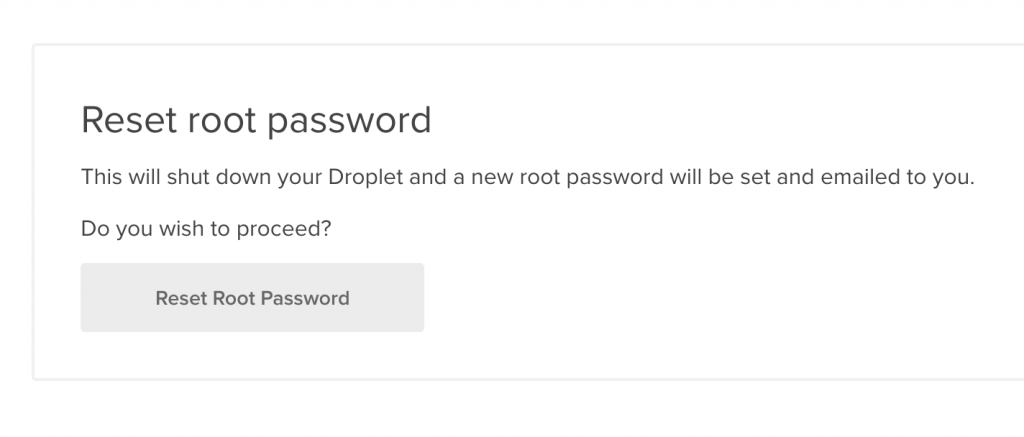
At this point I knew I had to abandon AWS EC2 instances all together, so I decided to just download the home directory from the temporary instance with everyone’s files and rebuild it on Digital Ocean, and that’s what I did. Digital Ocean’s user experience and interface is akin to working in WordPress, whereas AWS is Drupal—to rekindle an old analogy. I installed a $5 month instance with Ubuntu 16.04.1 x64. It was awesome not having to work through the long list of pre-setup I went through the first time with AWS (listed here).  The server booted in seconds and I could get right to updating packages, creating users, and installing Apache. As a quick note, when my access key failed on Digital Ocean I could easily get a root password for my server (that has made all the difference in the world for me!).
screenshot-2016-09-11-09-14-22Whereas on AWS I was using an Amazon Linux AMI, on Digital Ocean I tried the latest available release of Ubuntu. Given this, there were a few things I had to work through. Installing Git worked cleanly with the tutorial for Ubuntu 14.04, so no problems there. The instructions for installing Apache and editing the httpd.conf file in the original tutorial where not applicable. As this resource notes:

httpd.conf: historically the main Apache2 configuration file, named after the httpd daemon. Now the file does not exist. In older versions of Ubuntu the file might be present, but empty, as all configuration options have been moved to the below referenced directories.

So I installed Apache2:

sudo apt install apache2

And then used this guide to enable userdir, which is what allows for the tilde spaces. I have to look into enabling PHP, but I’ll wait to see if John Johnston needs it 🙂 This guide worked and the server was setup, and I added some other goodies like Finger, Lynx, Tree, Irssi, Mutt, and Tmux.

The last step was copying all the directories from the old AWS server into the home directory of the new server and re-creating users, re-doing permissions, and distributing the new credentials and IP address. I still have to send details to a bunch of folks. But luckily, other than Alan, no one has been beating down my door. This is not surprising, but Alan and I have a lot in common in this regard. We take the management of communal web spaces seriously. No question it takes a whole lot of gardening to ensure these spaces stay around for a while, but I like that responsibility a lot—it motivates me during the times when I know digging into AWS key pairs is going to mean a long night of rebuilding. Especially when those long nights are when I tend to learn the most. Helping to garden the communal web that is ds106 for almost 6 years has been the most generative process I have ever been a part of, and when something gives you that much you have to keep giving back.

Posted in digital storytelling | Tagged , , , , | 9 Comments

The Grey Warm Pearls Shone…

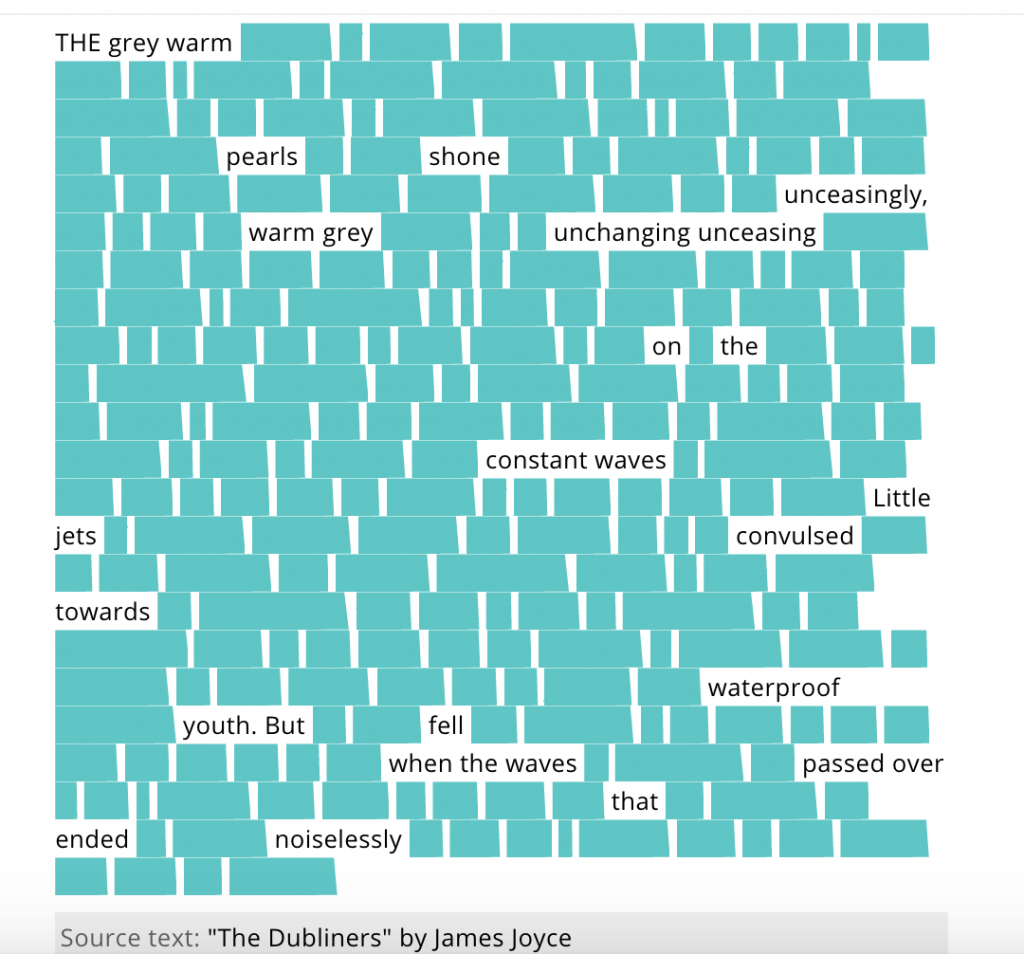
I finally got around to playing with Tom Woodward‘s Erasure Poetry SPLOT (smallest possible learning online tool?) on the VCU’s Artfulness site. I knew of the process of removing text from a page of text to create a tight, terse phrase or poem as Newspaper Blackout Poetry, and it was an early creative assignment for #ds106. But seeing the recent work Tom Woodward has done to wrap this exercise into a WordPress plugin was awesome. VCU’s Artfulness site has 3 different selections of text that you can blackout various words, sentences, etc. to make some poetry through editing. I tried the example “Biscuit,” which is a page from James Joyce’s Dubliners. Here is my final product online, and Im also including an image below if clicking strange links scares you 🙂

screenshot-2016-09-07-21-05-22

It’s immediately obvious I’m no Joyce, but what I loved about this exercise was how the process of going through a page of text word by word allowed me to isolate what I believed to be a water theme. The idea of pearls, waves, jets, waterproof, etc. I was also struck by the repetition of certain words and concepts again and again. In fact, my run at this process was an attempt to capture the text as if it was a series of waves endlessly, noiselessly washing over the reader. High brow, I know. But at the same time this tool immediately changed my approach to close reading of the page, not unlike how GIFs change my approach to close watching of a scene. It’s a powerful way to try an interpret a text, and leaves so much to the imagination—as great literature can.

As does this plugin! Amazing how Tom can do all this through a WordPress page, then capture it as an image or submit it to the site as part of a collection of poetry. This is a tool made for #ds106, and it really highlights beautifully the ethos behind creating small, simple tools for folks to explore an image, text, video, sound file, etc. Fine, fine work Mr. Woodward, I am remain a BIG FAN!

Posted in digital storytelling, plugins, WordPress | Tagged , , , , , , , | 9 Comments

Domains of Online Scholarly Presence

Yesterday Michigan State University’s Dean of the College of Arts & Letters, Chris Long, linked to this post on Twitter about MSU’s initiative to provide faculty and graduate students their own domain and web hosting.

Chris Long has been walking the walk of open, online scholarship for a long while now. He started regularly blogging his life and work as Philosophy professor while at Penn State University almost a decade ago, and he has not stopped.* There is added weight to a  dean’s advocacy for an entire college to shape their scholarly presence on the web when that champion has done it throughout their career as a faculty member and administrator.

“We’ve been working with our faculty and graduate students to think strategically about how best to build community around their scholarship by making sure their work is accessible to a broad public,” said Christopher P. Long, Dean of the College of Arts & Letters. “This is really just an extension of the land-grant mission to make knowledge accessible. But it’s also an opportunity to think strategically about how our work is presented and received so that it has the broadest impact possible.

The framing of academic domains as communal and broadly accessible is pitch perfect. Providing these spaces for MSU faculty is a calculated decision to not only help shape individual faculty presence on the web, but opening the door to the broader presence of MSU’s intellectual life online. And Long continues:

“What we realized early on is that students and faculty need a domain of their own, an online space they control to curate and present their work in ways that are consistent with the values and commitments of their research.”

Domains have been protean for the more than 40 schools exploring this as a project on their campus. For some it’s student portfolios, others course sites, others faculty scholarship,  still others straight-up library web hosting, etc. There is no one way at Domains, and the idea that each school molds it to their particular needs is a testament to its flexibility. At the same time domains are trailing edge technology, and they come with a fairly modest claim: simply provide your community a space to publish online. How they publish, what they publish, and for whom becomes is what gives this space a sense of life and personalization. And as the MSU article suggests, they have made providing guidance and support for their community during this process integral. Scott Schopieray, the Assistant Dean of Technology and Innovation, has been leading the effort to help faculty and graduate students get up and running:

“We weren’t providing 21st century web hosting …. all they could use was basic html. They couldn’t use databases, scripting, or install open-source products, none of that …. we will help them learn to build their sites in a way where it makes sense to them so they will remember what they are doing, and they can use any open source platform for content management based on what they are comfortable with.”

Domain projects live and die on the level of advocacy and support, MSU has both in spades in their initiative, which bodes quite well for the domain initiative in the College of Arts and Letters.

Yesterday was the first we at Reclaim heard about MSU’s announcement and their compelling two-minute video framing the project (you can find it at the top of this post). I must say we were pretty excited and humbled that they featured Reclaim Hosting so prominently. We try not to push ourselves on folks and we don’t pretend we are the next great disruptors of anything, we simply provide laser-focused support for student, faculty, and institutions exploring domains in a higher ed context. That’s our thing, and when smart folks like Chris Long and Scott Schopieray include us in their elegant and intelligent framing of what this means for their community, we really appreciate it.

In fact, there has been a series of extremely thoughtful, almost foundational posts, recently from Maha Bali, Audrey Watters, and Kate Bowles that I am now linking to for the second time in as many days/posts. The conversation around what domains are and are not is taking on some real momentum, and I have to say it is nice to see this conversation led by some of the smartest folks in the field. I have much to say on their respective posts, and that blog post has been in the works for a while given the conversation keeps getting richer with every addition, but something Audrey Watters said in her “A Domain of One’s Own in a Post-Ownership Society” beautifully captures how something like a domains project reinforces the ideal of a public Web:

But the Web – and here I mean the Web as an ideal, to be sure, and less the Web in reality – has a stake in public scholarship and public infrastructure. Indeed, I’d contend that many of the educational technologies that schools have chosen to adopt in lieu of the Web, in lieu of projects like Domain of One’s Own, help further this Uber-ification of education, in which everything we do now is trackable, extractable, and monetizable by other platforms, by private, for-profit companies.

This vision of public scholarship and infrastructure is echoed in Chris Long’s notion of the ideals that can and should undergird a public, land grant university that is invested in cultivating and sharing as widely as possible the ideas that inform who we are as a culture. The web is not adjunct to the mission of higher ed, in many ways it has become the mission.

_________________________________

*I became familiar with Chris’s work thanks to Cole Camplese‘s tireless advocacy of so much of the great ed-tech work that came out of Penn State in the last decade.

Posted in reclaim | Tagged , , , , | 2 Comments

Citizen-Ex’s Cultural and Political History of Top-Level Domains

Screenshot 2016-09-06 16.26.46

I was musing about the vanity domain industry in a recent post about WordPress opening bids on .blog domains (a TLD they purchased for somewhere in the neighborhood of $20 million). In the comments Tim Owens left a link to Citizen-Ex’s stories about six top-level domains. I really appreciate the way James Bridle frames the idea of algorithmic citizenship:

Algorithmic Citizenship is a new form of citizenship, one where your citizenship, and therefore both your allegiances and your rights, are constantly being questioned, calculated, and rewritten.

Along these lines, Citizen-Ex tries to materialize the intentionally nebulous, obfuscated infrastructure that defines “the cloud”:

We often think about the internet as something remote, distant, and ephemeral, and use terms like “the cloud” to describe it. But in fact, the internet is very real, and very solid: a world-wide infrastructure of computers, cables, routers – and people. And that infrastructure means its connected to real places, with real territory, real citizens, and real politics.

It is building on these ideas that the site frames the deeply political/cultural roots behind several national top-level domains such as Libya’s .ly, Scotland’s .scot, Syria’s .sy, Wales’s .cymru, Yugoslavia’s now extinct .yu, and the British Indian Ocean Territory’s .io. All the stories are worth a read, but I agree with Tim’s comment that the .io domain is of particular interest given its recent popularity amongst the tech community as an abbreviation for input-output. Bridle’s essay frames the colonial, geo-political origins of this territory nicely:

The British Indian Ocean Territory (BIOT) was created in 1965, when the British government legally separated the archipelago from the colony of Mauritius, which had been part of the British Empire since 1810. In 1967, when Mauritius gained its independence, Britain hung on to its new territory. The plan was pre-meditated: for some time, the British and US governments had been quietly looking for a “clean” island to use as a base for stationing troops and listening posts in the Indian Ocean. With its central location and deep anchorages, the BIOT was perfect – apart from the fact that people already lived there.

The 2000+ inhabits of the Chagos islands, Chagossians, were removed in 1966, and the territory remains British controlled and hosts a U.S. military base housed “NSA and GCHQ listening posts, supported the invasions of Afghanistan and Iraq, and provided prison facilities and a rendition staging post for the CIA’s torture programme.” These things aren’t immediately apparent when you see a .io domain, but to James Bridle’s raison d’etre for the whole project, the global history of empire and colonization is everywhere written into the web when you start looking close enough. When you think about it, the questions of empire and colonization in relationship to Silicon Valley and the tech start-up mentality makes the history of the .io top level domain that much more telling.

All of this ties into a rich conversation about the promise, value and limits of domain ownership. It’s interesting how the privatization of national assets and resources (often times being themselves seized by the nations from the people that produced them) points to how the politics at play all around us is written into the domain URLs we take for granted. I would love to see a move—like with higher ed more generally—that returns funding to the public resources that make personal, online spaces free and #4life, but all indicators point in the opposite direction. It’s gotten to the point at Reclaim Hosting where we have to re-visit the decision to make ID Protection for domains optional given how aggressive so many of these scum-sucking, bottom-feeding scam companies abuse the public data associated with domains. It makes me feel dirty, and I hate that, but after reading Citizen-Ex I am realizing that’s just the tip of the iceberg.

Posted in Domain of One's Own | Tagged , , , | Leave a comment

Georgetown Slavery Site

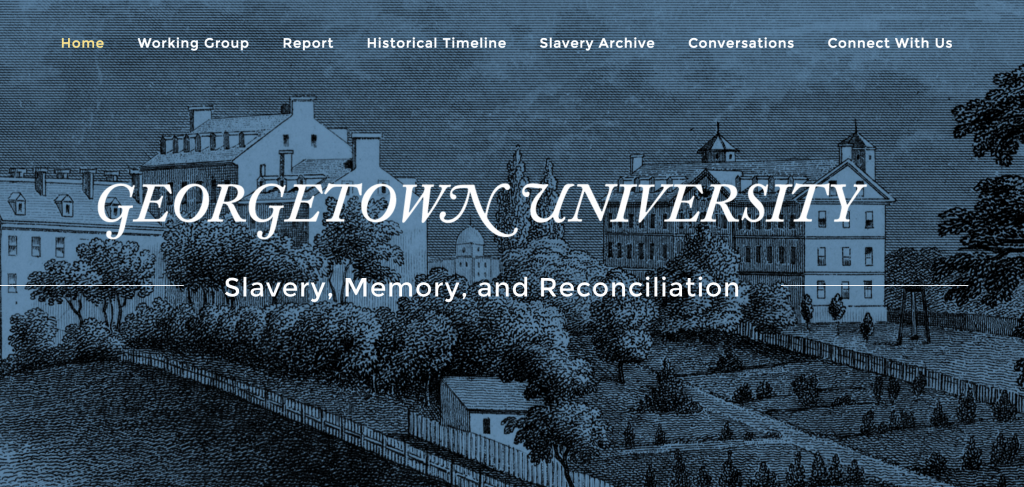
One of the things we were given a heads up about recently was the fact that the Georgetown Slavery, Memory, and Reconciliation site would be running Georgetown’s Domain of One’s Own server. Earlier this week they gave us a heads up there may be some interest and, as a result, traffic spikes over the coming days. Tim threw up the W3 Total Cache plugin, and things have held pretty solid thus far (knock on wood). It was wild to see the conversation around this topic emerge in my Twitter stream yesterday, and I was really impressed with Tressie McMillam Cottom’s post about why this important move by Georgetown should not be labelled reparations. It was clear this announcement was generating important discussion around questions of history, race, and what it means to make amends as not only an institution, but more generally as a culture.

Screenshot 2016-09-03 21.02.35

One of the things I was thinking about when going through the site—admittedly this is a formalistic observation based on my fascination with what’s possible with a domain and web hosting rather  than a comment on the question of reparations (although I think Tressie makes the latter point brilliantly)—was how this announcement was framed as a web-based experience. The main WordPress site, the historical timeline using Timeline.js, the extensive use of video to highlight the conversations had, the Slavery Archive in Omeka, the embedded report, the contact form using Google forms, etc.  The whole environment provides a powerful example of what you can create using a bunch of open source and/or free tools through a domain and web hosting account to architect a robust media environment around a topic. Fact is, domains and web hosting are still quite important to build a web of knowledge and understanding how to create a compelling argument using various media including a domain and a few select publishing tools is not dead yet.

Posted in Domain of One's Own, reclaim | Tagged , , , , , , | 3 Comments

bava.blog

Tim pointed me to Matt Mullenweg’s post back in May that WordPress now owns the top level domain .blog. Seems like it cost them $20 million, which seems a ton—but it points to the big business that is the TLD industry these days. For shits and giggles I looked into what it would cost to register bava.blog, and and seems to secure it would start at $250, with more if I had to bid for it at auction. I guess they need to make up their costs, but that ain’t cheap.Screenshot 2016-09-03 00.26.20

Too rich for my blood, especially given it is simply an affectionate term I use for this here site that runs quite well on a $12 .com. We’ve had to avoid the custom domain craze at Reclaim given the varying costs and the fact we provide a free domain with our packages which limits our choices, but at the same time I’m not sure we are missing anything. Seems the market has become glutted and what you pay for in terms of a namespace doesn’t necessarily match the value.

Posted in Domain of One's Own | Tagged , , , | 16 Comments

New Server: Joy Division

You cry out in your sleep,
All my failings exposed.
And there’s a taste in my mouth,
As desperation takes hold.
Just that something so good just can’t function no more.

“Love Will Tear Us Apart Again” – Joy Division

If there are more devastating lyrics than these in a love song, I don’t think I have heard them yet. The second server we are rolling out this Fall at Reclaim Hosting is named after the Manchester legends of post-punk: Joy Division. As a kid coming of age to music in the 1980s, few bands had a more powerful aura even before hearing their music. Much of this was because of Ian Curtis’s suicide before their planned U.S. tour.* All of which was further reinforced by the band’s dark, ambient sense of an emotional world lost—which adds further fuel to the narrative that associates them with a whole new gothic sound. The 1980s pastiche Stranger Things didn’t miss the psychic hold this band had on a generation, and I was taken by the fact they chose the song “Atmosphere.”

I spent time listening to this song a bit recently, and I was struck how this song seems to provide a roadmap for The Cure’s 1989 masterpiece Disintegration. Take a listen at minute 1:25 of the video above, and then listen to minute 1:20 of The Cure’s third song off that album, “Closedown,” below.

Not identical necessarily, but one is so heavily influenced by the other that it seems The Cure took that one song and turned it into an entire album—speaking volumes to the depths of Joy Division’s sound. And as I was listening and reading around the topic online most folks point to producer Martin Hannett for the distinctive sound you find in songs like “Atmosphere,” “Transmission,” “She’s Lost Control Again,” “Love Will Tear Us Apart Again,” etc. There is a cool video of Hannett talking about post-production and his creation of an “Imaginary Room” of sound with Tony Wilson on YouTube that is worth watching if your interested:

Martin Hannett’s production of Joy Division’s sound is also referenced in the brilliant film 24 Hour Party People (the story of Tony Wilson and Factory Records) and the scene at the end of the following video suggests even Joy Division accepted Hannett produced their signature sound that would go on to fuel a generation of Goth! 🙂

Interestingly enough that actor who plays Hannett (Andy Serkis), also plays Gollum in LOTR—so he has a long tradition of playing medieval emo Goths 😉

____________________________

*The apocryphal legend often repeated at the local Long Island record shop was that Ian Curtis had hanged himself slowly by standing on a block of ice and waiting for it to melt.This was just a few years after the fact, and it already had taken on mythic status an ocean away.

Posted in reclaim | Tagged , , , , , , | 5 Comments

The Bava Diner or, Comments on Post Independence

One of the interesting side effects of regularly blogging on the bava for almost 11 years is you get a longer view of the things you’ve written. I’ve posted a lot about technology, education, WordPress, domains, etc., over the years, but if analytics don’t lie, most of that stuff has been dormant for a long while. I really can’t blame folks for that, I wouldn’t revisit it either. But there are a number of posts I’ve written as many as 10 years ago that have seen uneven, but ongoing, traffic since they were published—perhaps not surprisingly none of them have anything to do with edtech. In fact, the posts that get re-visited have had very little to do with what I wrote, but have become a site for often personal remembrances and conversation.

Let me give you a couple examples. Eight years ago I wrote a one-off post about a Hank Williams performance at Sunset Park, PA. It was a sound file I got from this post on the now quiet WFMU blog [moment of silence]. I listened, loved it, then blogged it. Nothing profound to say about Williams other than how personable and intimate the Sunset Park venue most have been. But, the 35 comments on that post tell stories of time gone by and memories of what was. It starts slow with me getting a hot linking lecture for the audio file, but soon enough the Sunset Park fans come a knocking:

TJBigDog64 says:
October 11, 2008 at 12:18 pm
Man ol’ man! It just doesn’t get any better than ol’ Hank!
Sunset Park and New River Ranch are all but gone now. Just a mere memory. How sad; I really wish they were still around for us younger ol’ timers to enjoy. ?

And…

Becky says: 
December 19, 2008 at 5:04 pm
This is great!!! I am now 35 years old, but have a lot of memories from Sunset Park. From as early as I can remember until the time I was around 12 of 13 (and wanted to stay home) my parents would pack us up every summer weekend and we would go camping at Sunset Park. So many great summer memories from childhood were there. I’ll have to get an address from my father for you.

And…

joe bands says:
November 28, 2008 at 5:52 pm
anyone know where the old farm is located in west grove , like a address? if have info please e-mail me @…

What’s interesting is that the thread becomes about childhood memories of Sunset Park that often involve being dragged their by  parents and grandparents. No particular interest in any one star, though a number get mentioned, but more of a focus on the place, which makes sense given that was probably what they were looking for when they found this post. But there is also this idea, as you can see in the last comment above, of finding the old farm/park. To which someone replies almost 3 years later with specific directions followed by the heartbreaking line of the thread for me:

Former West Grover says:
October 16, 2011 at 8:06 pm
Get off Jennersville exit from route 1 onto 796S. 1/2 mile south from 796 and old baltimore pike.
It’s an old folks home and a strip mall now.

But it doesn’t end there, folks talk about their dad playing fiddle there, their uncle playing drums, their parents dragging them as rebellious teenagers, their siblings getting autographs, and on and on. It’s a nice stroll down other people’s memory lane:

diane miller clayton says:
December 6, 2011 at 9:52 am
my dad Sonny Miller played the fiddle with a many of bands there every Sunday. we looked forward to going there every Sunday. DOES ANYONE OUT THERE REMEMBER THE INDIAN DOWN BY THE WATER FOUNDATION? trying to find out what his name was. please let me know.

The whole all caps “INDIAN DOWN BY THE WATER FOUNDATION” question had me fascinated, and I was hoping someone would respond, but no luck. Soon after this comment the grandson of the folks who ran Sunset Park joined the thread:

Casey Waltman says:
August 10, 2012 at 9:45
My grandparents were the owners of Sunset Park. They are in their 90’s and still live in the farm house on the corner. My grandfather would be thrilled to read these comments of all the memories you have. I am one of five kids and my siblings were raised working in the park; selling t-shirts, ice cream, etc. I was only six when the roof caved in, but the memorabilia is all over their house and I’m glad to hear that Sunset Park hasn’t been forgotten.

Four years later the owner of the Sunset Park Ice Cream Parlor responds:

Jessica says:
April 5, 2016 at 7:41 pm
hello! I am the owner of Sunset Ice Cream parlor on lycoming creek road as of October 2013. I am trying to find more information or pictures of the park to hang in the parlor! If you have ANYTHING, even just the whole story of Sunset Park would be great! My email is…. THANK YOU!

And so on, for near on 8 years there have been a string of comments sharing quite personal (albeit short) remembrances of another time and place right here on the bava. This is a side of the bava I rarely talk about, but for me preserving these conversations and making sure these remembrances are discoverable is also part of what I consider my responsibility as a blogger. And, truth be told, I love this part of it. I think the comments above (and the ones to come) may have proved some of the most meaningful for me because they’re accidents of the searchable web that just happened to land on this little spot for a moment. Kinda like what happened when the highway system was built, and up cropped diners in the middle of nowhere America. Over time they become small, rundown, sun-baked spots (like the bava) that serve up a decent meal at a fair price. I imagine this variety of posts that take on their own life as kinda like Twilight Zone diners on the internet, and I’m the host that makes sure they are well taken care during their short stay, all the while listening to the tales of strangers on their way to or from somewhere else.

PDVD_037

All that said,  I am probably writing this post because Gene Wilder died the other day, may he rest in peace. Strange segue way I know, but it will make sense in a second. Back in 2010 I wrote a post about the character actor Erland Van Lidth, who like John Cazale died way too early. And that’s how the post went, talking about the films he was in which were defining for me as a kid, namely as Terror in The Wanderers and Grossberger in Stir Crazy (and there’s the Gene Wilder tie-in). I have written a bunch of longing posts about the cultural figures of my childhood on this blog, but for some reason this one became a thread for folks to share their Erland Van Lidth’s memories:

Classmate says:
March 27, 2012 at 5:43 pm
Erland was an amazing man….
I first met him when he was a member of the Boston Symphony’s Tanglewood Festival Choir.. where he sang Tenor….
Then were were classmate s( he was one year ahead ) at MIT…
I remember him being on the wrestling team…..
When he started to show up in the movies….
we were pleasantly surprised….

And…

Bob says:
February 7, 2014 at 6:45 pm
I was three years ahead of Erland at MIT and sang shows with him. He did not sing in Stir Crazy. He could have, but when the music was ready for later dubbing in, it was in the midst of a strike and he couldn’t participate. BTW, at MIT he was fondly known as “Baby Huey” — affectionately of course.

Classmates from his years at MIT offered fine remembrances of Erland, and I learned he was not only an actor, but also an MIT alum, a talented Soprano, an Olympic-caliber heavy weight wrestler, and a Computer Science instructor at Manhattan Community College. Wild, but soon after I am in for another surprise:

Philine says:
February 5, 2015 at 7:15 am
Thanks for your thoughts about my brother – it’s good to see people still remember him and appreciate his work. He was a truly remarkable man, and I miss him still. BTW, he may have stumbled into film acting, but he did theatre throughout high school and college. As Bob may well remember, he was an impressive Richard Henry Lee in “1776” at MIT, and Miles Gloriosus in “A Funny Thing….” – the audience roared when he said “step aside, I take LARGE steps”. He sure did.

And just last year Erland’s brother chimed in to say thanks and share anecdotes about his stumbling into acting. So awesome. And then this gem of an exchange:

Dougdenslowe says:
August 1, 2015 at 7:31 pm
Frank Miller said in a interview, way back when, that he based the Kingpin on this actor. Frank wasn’t the first writer/artist to use Kingpin in the comics, but in his Daredevil run in the ’80’s, was what brought the Kingpin his huge following. He was a minor villain in Spider-man, but Frank Miller’s Daredevil was what we all remember him by.

Philine van Lidth de Jeude says:
May 11, 2016 at 10:55 am
Wow. Seriously? That’s pretty damn cool! Thanks!

So, Erland Van Lidth inspired Frank Miller’s villain Kingpin in the 1980s Daredevil comics? How awesome is that? And this was news to Erland’s brother Philine as well.

tumblr_n1s3ivFwHb1qzqyrco1_1280

I’ve been meaning to write this post for a while now, and these are just two of the 9 or 10 posts on the bava that have taken on a life of their own in the comments. Random people have been treating these posts like diners in the middle of nowhere web bava to share their stories, what’s more these comments have almost all been genial and genuine, which is reaffirming for me. And, unlike Sunset Park, this blog will never become an old folks home and a strip mall!

Posted in bavatuesdays, blogging | Tagged , , , | Leave a comment

Putting Domains Infrastructure in the Cloud

cea6468e7a6819d228a42ed65ec9d76f

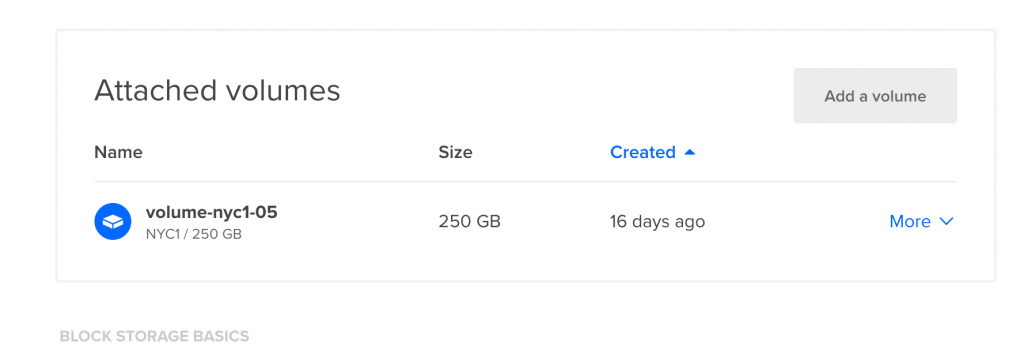
This semester we having been moving our Domain of One’s Own (DoOO) packages for new institutions to Digital Ocean. Up and until now we haven’t run DoOO through cloud infrastructure providers like AWS, Linode, Digital Ocean, etc. for two reasons: price and storage. It has been cheaper for us to run these packages off a larger dedicated server that we could virtualize and partition into 4 or 5 institutional setups. But ever as the financial differences were becoming nominal, the storage constraints on servers at Linode and Digital Ocean made it impossible. We offer 250 GBs as part of our DoOO package, but most comparably specced servers through Linode or Digital Ocean had 100 GB of storage max.
Screenshot 2016-08-30 18.32.48

Recently Digital Ocean announced Block Storage which essentially enabled us to run a server with 60 GB storage and mount another 250 GB SSD drive. Fast, cheap storage to accompany there server made the idea of running a Domains package on Digital Ocean feasible this Fall, so we did it. There are a couple of beautiful things about this development for Reclaim Hosting. First, if a school needs more storage or CPU power we can manage than almost immediately with the click of a button. When we had BYU creeping up on storage and CPU capacity limits we had to move them off our virtual server to dedicated machines, this meant a physical migration of accounts—that would no longer be the case.

Screenshot 2016-08-30 18.33.12

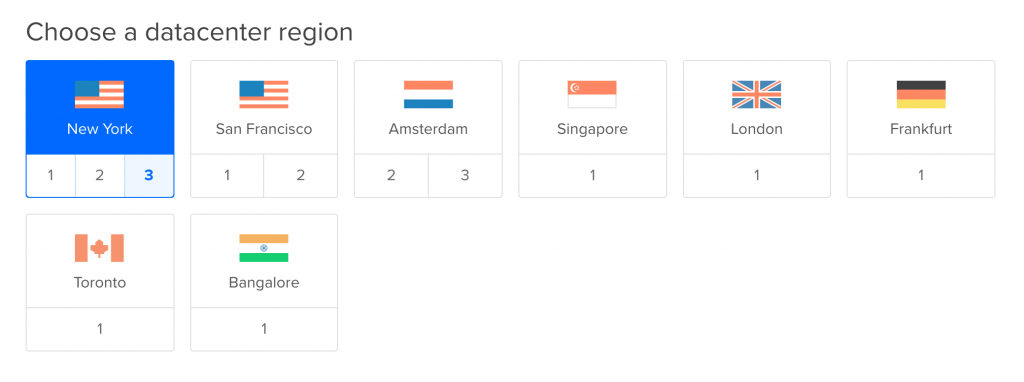
Second, Digital Ocean has data centers all over the world, and we can now offer DoOO packages to schools in data centers physically within Canada, the UK, the EU, and Asia. This is particularly important for schools in Canada, the UK, and the EU who need to comply with stricter regulations around data security and privacy—a process I’ve been learning a bit about this Summer. Who knows, we may even get a school from the UK or Europe running a Domains pilot sometime soon [fingers crossed]. As for Asia, not sure given there hasn’t been any serious interest in Domains infrastructure for schools there just yet, but we’ve already been using a Sydney-based AWS data center to host infrastructure for Charles Sturt University in Australia.

It remains fascinating and truly exciting for me how much simpler managing and scaling ed-tech infrastructure has become through services like Digital Ocean, I would love to find out if and how edtech groups are using these services for smaller projects. Phil Hill’s article about the quiet move to AWS for enterprise LMSs is a good one, but I would love to learn more about the one-off, marginal uses.


Posted in AWS, Domain of One's Own, Instructional Technology, reclaim | Tagged , , , , | Leave a comment

New Server: Dino Jr.

In honor of their more than three decades of awesome music, Reclaim Hosting is naming the first of two servers for the Fall 2016 semester after Dinosaur Jr. Few bands that were part of the 1980s hardcore, indie punk movement have had the staying power of this trio. They just kept on playing, and J Mascis returned punk to the glorious hey day of the rock and roll guitar solo. And while drummer Murph left in the early 90s to play with the Lemonheads and bassist Lou Barlow formed Sebadoh (a 90s indie giant), the original band has been back together since 2005. If you think of ed-tech groups as bands, which I tend to do, than Dinosaur Jr. have much to offer in terms of longevity, fierce independence, and influence on a whole generation of post-punk, show-gazing indie bands. I have had their 2012 recording session at Roundhead Studios in New Zealand in constant rotation on my playlist the last 6 months, and I highly recommend it. But if nothing else, listen to them play “Sludgefeast” off their classic 1987 album “You’re Living All Over Me.”  So rocking, so tight, these guys are too legit to quit!

Posted in reclaim | Tagged , , , | 5 Comments