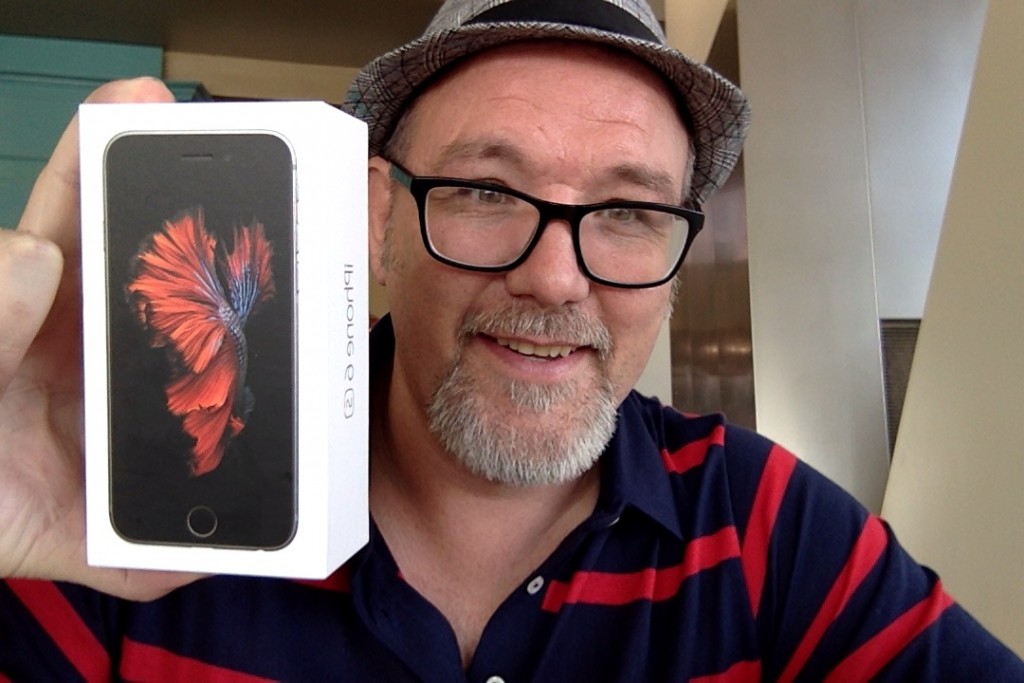
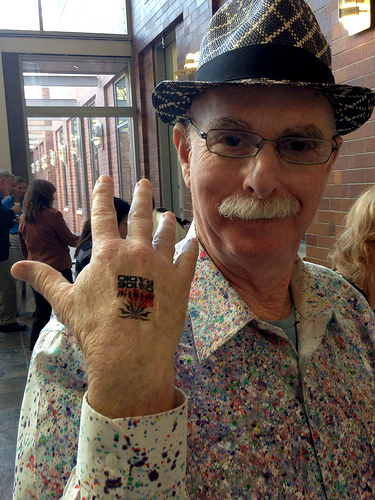
Successful Businessman Gets iPhone

Photo on 10-23-15 at 3.27 PM

It finally happened, after 20+ years of resisting the mobile phone revolution, I finally realized there might be something there. I’ll let you all know what I find out 🙂

As I begin to travel Europe in earnest I am really missing out on capturing so many of the details. I’m hoping this phone will help me start recording the quotidian strangeness of my new life in Italy. In fact, if I am honest with myself, that is what I have longed for secretly for a while now. After this trip to LA I decided it was time to lift the iron curtain on smart phones in my life and let the love in. I am feeling even more connected already, although I am fairly certain I will regret this decision sometime soon. Damn the torpedoes!

Posted in fun | 7 Comments

Reclaiming Italy

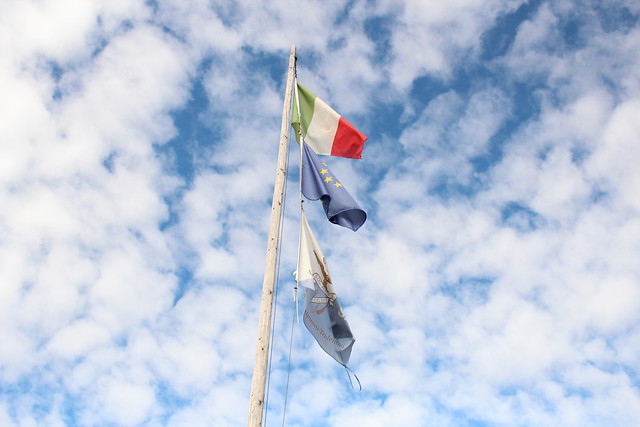
Capo Bava in Italia

I’ve been on the move the last few weeks presenting. From Puerto Rico (Sagrado) to Sacramento (University of the Pacific) to Washington DC (Georgetown) to Utah (BYU) to Trento, Italy (new home!) to Porto, Portugal (TEEM 15 conference), and presently I’m on a flight back again to California. I’ll be presenting at both the dLRN conference and Whittier College this week and next respectively, and then it is back to Italy. After that it’s one more trip to Santiago de Compostela, Spain for LibreCon before I hang up my passport for a while. So far the trips have been really generative, and I’m looking forward to catching up with a ton of folks at the dLRN event at Stanford, not to mention playing my best Lebowski with Mikhail in LA for a few days. And then I talk to another cohort of faculty, staff, and students at Whittier College who will be exploring the wonderful world of domains.

New colors

Do far the travel hasn’t beaten me up too bad; I’m finally get accustomed to it. That said, I’ll be spending the rest of the year at home in Italy just hanging out with the family and Reclaiming Italian style. I got a sweet taste of that this weekend when my family took me to a gorgeous restaurant (actually an Agritur) perched above the city of Trento for my birthday. The spot is called Bindisi, and it really was ridiculously beautiful.

Trento: Cloud City

Pranzo

The lunch was traditional Trentino fare, a lot of meat dishes (the rabbit is to die for, but Tessy was not having it), polenta, delicious cheeses, and my personal favorite the salumi. We enjoyed the day with our close friends Andrea and Tania and their two children. Andrea and Tania are filmmakers, sow e spent most of the two hour lunch talking films, particularly the fact that I want to help produce a 1970s era politzesscho as my side project/hobby.

Andrea: One of my favorite Italians

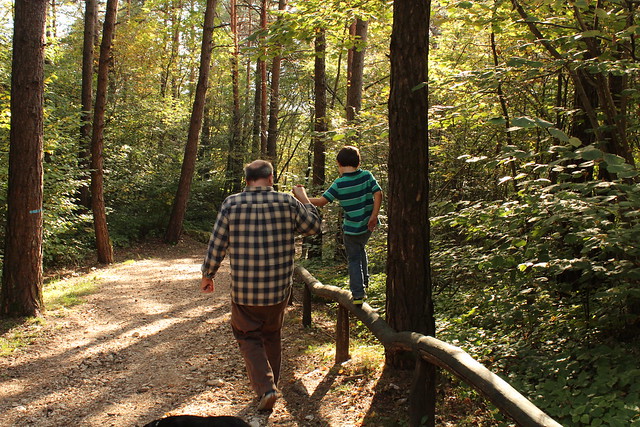
After a brilliant lunch with great conversation we went for a hike in the adjacent forest. It was a Sunday, and there were tons of folks with the same idea, we hiked for a couple of miles, met people that work with Tania and Andrea along the way, and the kids had a blast.

Walking the planks

At the end of the hike we spilled out into a field and I just laid down staring up at the sky taking in all of 44. As of right now, this is proving to be a very good time in my life. I just want to have the presence of mind to enjoy it because I have very rarely, if ever, felt such a deep sense of contentment and satisfaction as I did this past weekend. I’ve spent most of the last decade driven by equal parts curiosity, enthusiasm, and personal demons—it’s kinda nice to feel a bit of respite from the latter. And the decade before that was almost entirely spent battling the insecurities of grad school. It’s been a long while since I was my own man outside of the academic context, and I feel as close to comfortable as I ever have with where I am and what I’m doing. Reclaiming life Italian style!

Reclaiming the new home office

Posted in Italy | Tagged , | 2 Comments

Reclaiming WordPress for Lynda

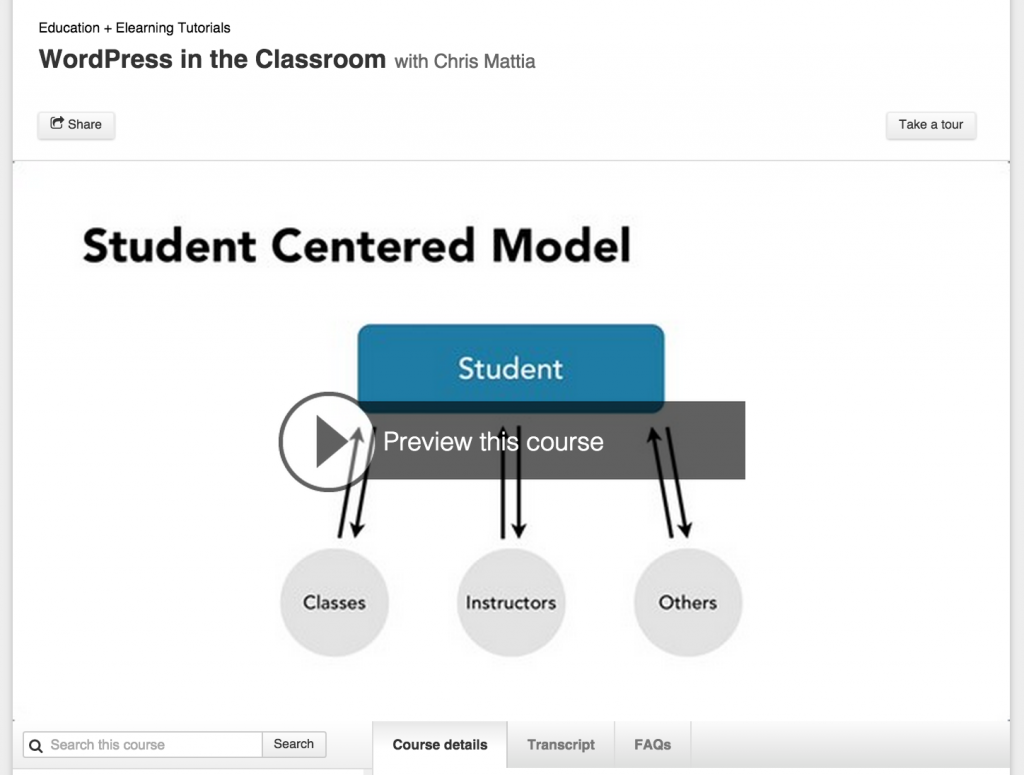
Screenshot 2015-10-14 18.42.20

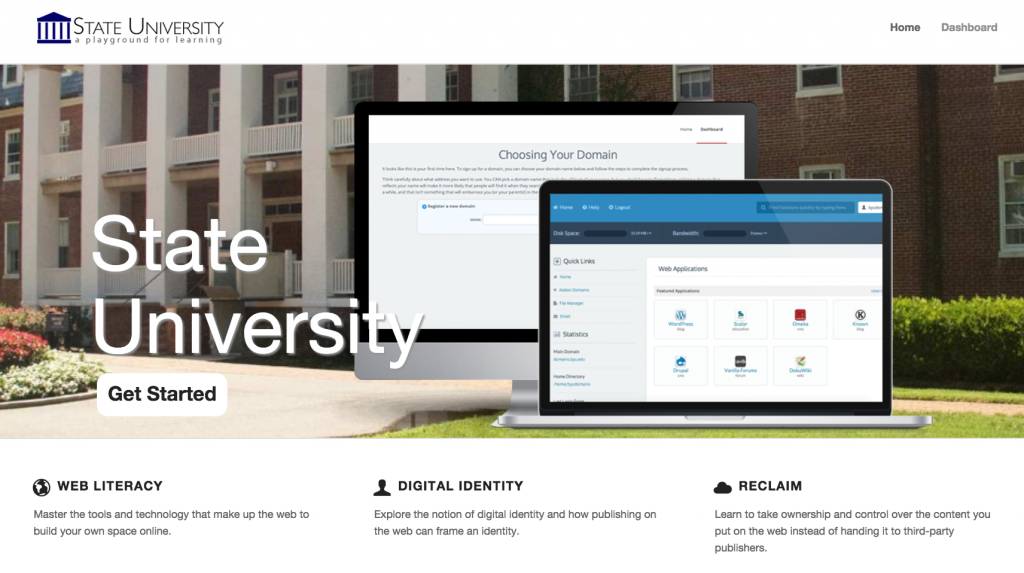
Yesterday Tim blogged about the Lynda course “WordPress in the Classroom” by Chris Mattia that takes faculty through setting up a course using WordPress. Mattia created the site through an example institution on Reclaim Hosting Tim created called State U. What’s cool about that is not only does it serve as a resource for anyone using Reclaim Hosting, but it also demonstrates how slick our hosting environment has become.

Reclaim Hosting's examples institution site: State U

Reclaim Hosting’s examples institution site: State U

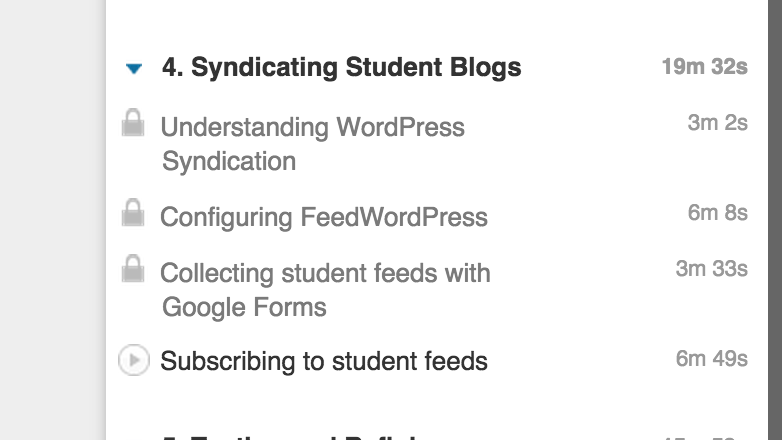
What I’m most excited about with this tutorial is the fact that Chris spends some time breaking down how to use FeedWordPress to feed in student sites, as well as how to subscribe to them.  This has been a long time coming, and Chris explains it beautifully.

Screenshot 2015-10-14 18.21.13

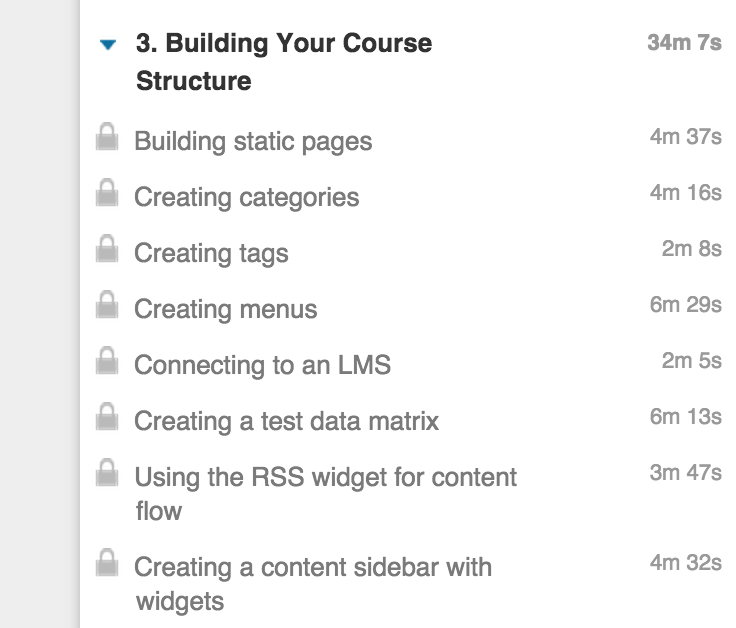
The other element I like is that the course setup is broken down into manageable chunks, and I could really imagine setting a faculty member loose on this to try it out, and then following up with pointed questions.

Screenshot 2015-10-14 18.21.22

Home

Posted in Uncategorized | Tagged , , | 2 Comments

A POEJAM in Porto

Image credit: "POE Jamming" by The great Paul Bond

Image credit: Paul Bond!

Last week I spent a few days in beautiful Porto, Portugal at the Technological Ecosystems for Enhancing Multiculturality (TEEM) Conference thanks to the kind invite from Graham Atwell. Since last April we had been planning a different kind of keynote: the People’s Open Education Jam (or what we affectionately refer to as POEJAM) 🙂 The idea was to collect ideas, themes, and issues from folks at the conference and remix and represent them to the audience with some guided commentary, discussion, interaction, and fun. One way at this was to collect some ideas and GIFs before and during the conference on the POEJAM site and reframe them as slides dealing with issues in open education. Another was numerous short videos wherein attendees share their ideas of open—something Graham shot, produced, and edited in record time!

Image credit: Valentina Zangrando's animated GIF for frustration at inability to acknowledge skills and competences informally obtained.

Image credit: Valentina Zangrando’s animated GIF slide for frustration at inability to acknowledge skills and competences informally obtained.

Between the two we had more than enough material, and what is always striking when doing these kinds of presentations is just how diverse people’s opinions are of open and it’s various challenges—which goes a long way towards making the presentation that much more interesting. We started with some broader perspectives from various videos and GIFs people contributed featuring various perspectives on open:

  • open as distribute sharing (a.k.a. the web)
  • open as transparency
  • open as pedagogical experimentation
  • open as self-evident design
  • open as a political ethos
  • open as vulnerability

The first ten slides or so helped “open up” open, so to speak. This was refreshing, at least for me, given how tightly that term has become associated with the idea of educational resources. After that part one of the organizers, Dr. Gustavo Ribeiro Alves, got up and told an inspired story about the story of the rock soup. In short, a monk comes to town and tells the community he will make the most delicious soup they ever tasted out of stones. The incredulous community was intrigued, and helped him gather all the necessities: stones(of course), a cauldron, water, wood, fire, some vegetables, and even some assorted meats, etc. In the end the soup was indeed the best, but it had nothing to do with the stones, they were the MacGuffin—the excuse to get people together to collaboratively make something. This was  the definition of open that rang truest for me, and I love it that the it didn’t come from Graham or I. Certainly what you’re shooting for in an un-keynote like this one.

Rock Soup

From there we tracked a number of trends in the various contributions that focused on specific themes defined open around the followed broader themes:

  • Access– the prevalent idea that all resources should be open to all people at all times thanks to such a resource. Despite our growing cynicism with the web, I think many educators still believe—to varying degrees—in the utopian impulses that drove the early web. I couldn’t resist showing this MCI TV commercial from 1997 as a time capsule of that utopian sentiment.
  • Open as community- community is an abused term, I totally understand this. But the idea that communities like ds106 provide a space for folks to share, build and collaborate around a variety of content seems for me the real gold of open. What’s more, the idea of comfort, invitation, and a sense of occasion all play into this idea of a porous, nurturing community for learning.
  • Open as Resources-  I think the European Union has the same ill-fated love affair with OERs as the US does, and probably for the same reason: they’re easily defined consumables that are readily quantifiable for grants. Over the last few years OERs in the U.S. have aligned themselves with textbooks and push hard on the savings for students which has fueled the continued grant funding. That said, not sure this will be the narrative in Europe given textbooks don’t seem to dominate the idea of a course in the same way. It will be interesting to see if the OER trend continues here despite what Viv Rolfe has noted as “the sheer volume of defunct OERs already funded.” Now there is a study worth funding 😉

  •  Open as Informal- The idea of learning beyond the classroom came up often, as did the vision of resources that were embedded within the lived environment—yet online and interactive.

This was a really fun presentation for me, reminded me of some of this insane experiments back in Non-Programistan circa 2008. I want to thank Graham and Anna for inviting me to take part in the madness, as well as beginning the long, hard work of my orientation to the European edtech world and beyond. You can see the entire presentation with GIFs, videos, and notes in the presentation online here (it’s currently in the Keynote format, which was the best medium we had for showing videos locally). I believe there is a video of the presentation somewhere, if and when I find it I’ll update this post with the presentation for some weird sense obscure posterity.

Posted in open education, presentations | Tagged , , | Leave a comment

A Domain Admin Dashboard with APIs

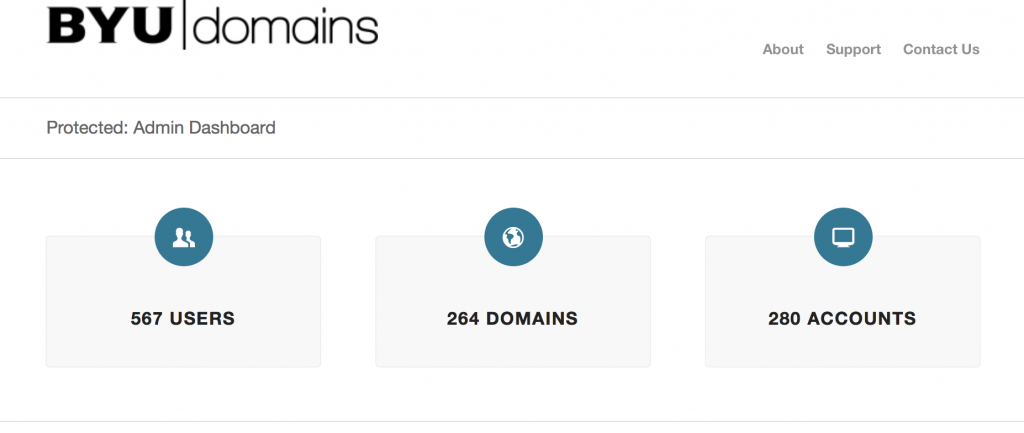
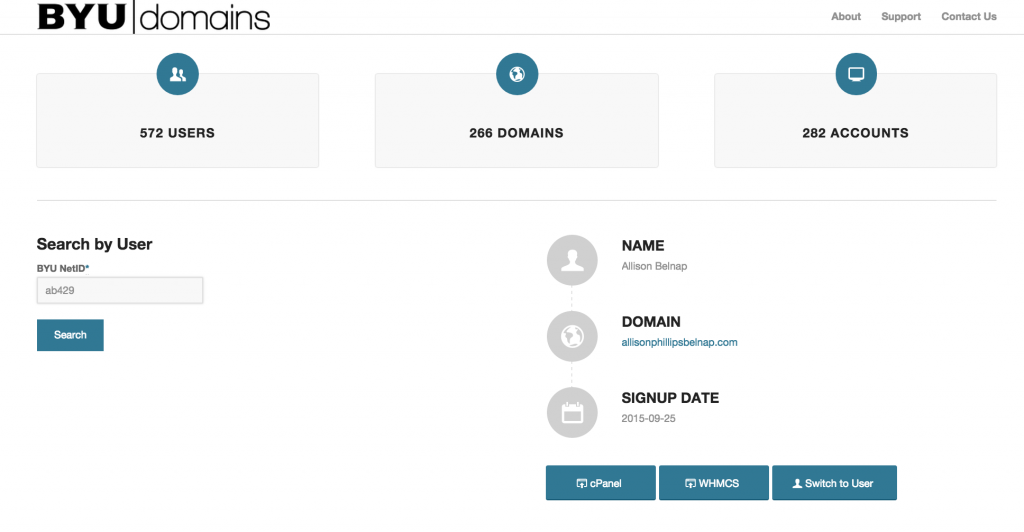
In my last post I tried to capture the work Tim and I did at BYU last week figuring out how an API-driven community site might work. The post is heavily narrative and as much notes for us and BYU as it is a peek into our thinking. The issue with that post is there isn’t really anything to help people visualize what this might look like. So, in this quick post I am going to share how we can use API calls to the web hosting interface CPanel and its client management software WHMCS. Peter Sentz, who is running the Domains pilot at BYU like a boss, requested (and I believe many other schools are interested in something similar) a quick dashboard/overview of how many users, accounts, and domains there are across the system. [The difference between users and accounts here is that users include all those who have also expressed interest, but may not have been given an account just yet.] So, on the heels of our work at BYU, Tim setup a page in the BYU Domains WordPress home to pull that information in from CPanel via API calls. It looks like this:

Screenshot 2015-10-06 19.14.28

That is the beauty of the API right there. Taking info from various systems and tying it together in a clean interface where an admin like Peter could use it. Another issue folks were having was finding a specific user’s domain and information. So based on a quick userid search form, Tim was also able to find a specified user’s domain and the date they created it. What’s more, it also includes links to that individual’s CPanel dashboard and their client info in WHMCS. Something like this:

Screenshot 2015-10-06 22.25.13

That’s about as solid an example of how we might start using these various API calls to create context specific interfaces for our Domains community as there could be. This is stuff Kristen Eshleman at Davidson College has been pushing for since the summer, and I think we are about to break it wide open with the work Tim is doing, not to mention the work Ben Werdmuller and Erin Jo Richey of Known fame will be doing to create integrated, personalized domains for these institutional communities. It’s exciting stuff!

Posted in reclaim | Tagged , , | 4 Comments

Initial Notes on an API-Driven Community Site for BYU

Last week Tim and I travelled to Brigham Young University to continue conversations started in June around how BYU’s University API initiative, Domain of One’s Own, and an emerging vision of personal APIs might converge. We spent the first part of this most excellent trip over dinner. I mention this because it just so happens David Wiley was in town, and Phil Windley was kind enough to invite him out to dinner with all of us. It was a surreal evening because we spent it talking about the parallel work Reclaim Hosting and Lumen Learning are doing, as well as hearing some fascinating stories from Phil about founding iMall, an early creator of e-commerce tools during the mid 1990s. It was one of those dinner conversations that will stick with me for a while, and it energized me thoroughly.

But the following morning it was time to get down to business. We spent most of it getting more insight into how BYU is defining their University API project. What is the University API? Phil Windley lays it out much better than I ever could in this post. But in short, it is the intentional  defining, mapping and abstraction of the various relationships of data resources across an entire institution to enable the BYU community to easily access, share, and re-use information on campus and beyond. It draws to mind the Herculean task of building a subway system in an existing, living city like NYC at the turn of the last century. It’s arduous, painstaking work—but essential to modernize infrastructure. We spent a good part of the morning looking at how they defined a variety of resources, but in the end Tim and I are neither linguists, programmers, or information architects so remaining at the level of JSON bracketed abstraction for too long is always dangerous to productivity.

Luckily, we came with a specific plan, and BYU’s Chief Information Officer Kelly Flanagan is one of those rare gems that can take that abstraction and immediately refine it into a simple problem to solve, “how to we use our APIs to give students the ability to control the personal data in their own domain.”  That’s where we come in (the we is kinda royal here, I’m just the blogger). Over lunch the discussion continued, and Phil, Kelly, and Troy Martin basically told us how excited they were about working with us to try and marry the abstract University API to the specific and personal domain. What’s more, they encouraged us. It’s amazing how generative some genuine interest and encouragement can be. After lunch I prepared for a talk I was giving to the campus community about “Digital Genealogies and Sovereign Source Identity” (more on that in a forthcoming post) and Tim caught some major inspiration.

Over the course of that afternoon and into the early evening Tim and I talked through, worked on, and even began to prototype an API-driven community site. Things fell into place for us. The UMW community site at UMW Domains is more than a year old, and Tim and Martha Burtis put that together in a couple of days with duct tape, FeedWordPress, and three Hail Marys. As we were showing it off to the BYU folks that morning several of the pages and many of the links just didn’t work. Even more of a reason for us to make sense of how we can start to bridge the data we collect and visualize for the community site using API calls. The community site prototype that Martha and Tim built accomplished everything it needed to: it recast web hosting as a fish tank rather than a black box. What we realized that afternoon was that our job now was to re-architect the community site for BYU so that it can provide all the data we get in the UMW Domains site now (recent posts, term, course, department, instructor, status, software, etc.) through API calls.

Tim started playing with the CPanel API immediately, and once he gets going it is a thing of beauty to behold. Upon creation of any new web hosting account on BYU Domains an api subdomain is created, such as api.timlovesapis.com. This will be the place where we start writing to the personal API.  What’s more, Tim also figured out how to get Known installed by default in the root of every new account for BYU Domains using CPanel’s APIs (not live for everyone just yet). So, when creating a domain on BYU Domains, the first thing a student will see is not CPanel, but a customized interface of Known that will be their personal API of sorts. They can integrate their various social media using Known’s Convoy, quickly post files, but also make some basic calls to CPanel to create subdomains, install applications, etc.

Known becomes the interface for their initial domain experience, with the option of accessing CPanel at anytime. And when they install WordPress in Installatron it will automatically write course, term, software, status, etc. to their personal API file. What’s more, if they are installing WordPress (which a majority will) the JSON-API plugin will automatically activate (at least until it is core) and write information like their recent posts, tags, etc. to their personal API file. So, the student has an API that lists all posts, subdomains, software installed, term(s), instructor(s), department(s), etc. Structured data they can now use to organize their career as a student, and the community can call to frame the experience in aggregate.

The next morning we did a demo for Troy, and I think we realized that Known provides a crucial bridge for the personal API vision here. If Known is the default interface for BYU Domains, it already has an API baked in, and it integrates students’ various social media sites from around the web. Known is the layer we build the API calls to CPanel through a simplified dashboard, as well as double down on integrating a contextualized reader into Known that enables the community to start following other people’s work based on structured relationships. Think a Tumblr like interface for all posts for a certain course that can be organized into columns á la Tweetdeck. Or all posts across a department, faculty member, Twitter, Facebook, etc. The community site as imagined through Known with a contextualized reader that enables you to personalize the way you experience the flow of data.

How can we do this? Well, by partnering with Ben Werdmuller and Erin Jo Richey of Known who will be working with us to design the interface and API hooks for BYU’s community portal. I am hopeful that this will be the groundwork for establishing an entirely new interface for personal web hosting across all the institutional sites using Reclaim Hosting (as well as a long-term relationship between Known and Reclaim!). It is really exciting stuff, and if it pans out the way we’re imagining, it marks a pretty dramatic shift in making web hosting, managing your personal data, and structuring your online existence that much more integrated. I can’t even begin to tell you how lucky we are to have the good folks at BYU’s Office of Information Technology pushing us to innovate wildly. They are remarkably open and willing to help us experiment along these lines, without ever shutting down the conversation in regards to what could go wrong, or what might or might not be kosher. They are in fully exploratory mode right alongside of us, and they have swung the doors wide open for us to see what’s possible. It’s like a whole new level of access for making web hosting and personal name spaces part of the “integrated domain” of higher ed in all the augmented-human-intellect-beauty such an Engelbartian turn of phrase draws to mind!

Posted in reclaim, reclaimopen | Tagged , , , , | 3 Comments

Porto Design Factory or, Kill the Classroom!

pdf_edificio

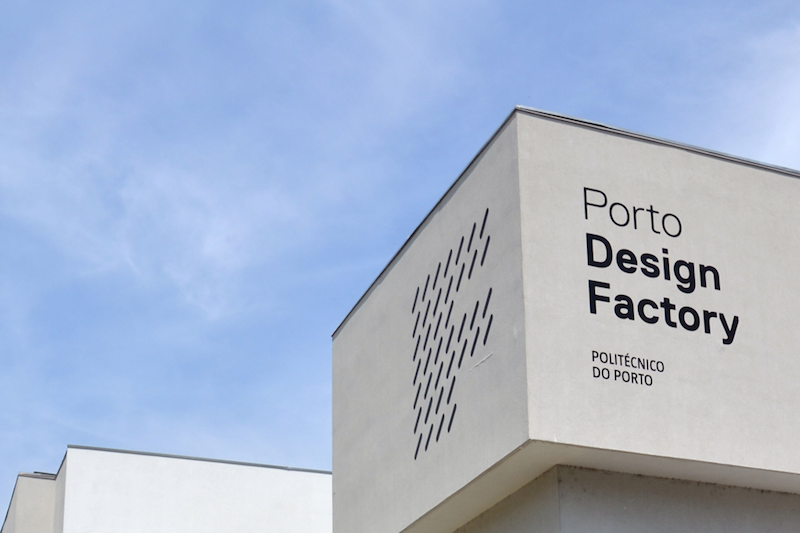
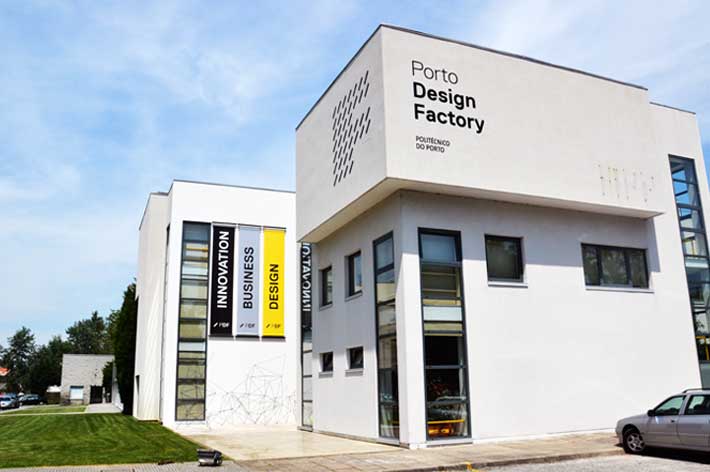
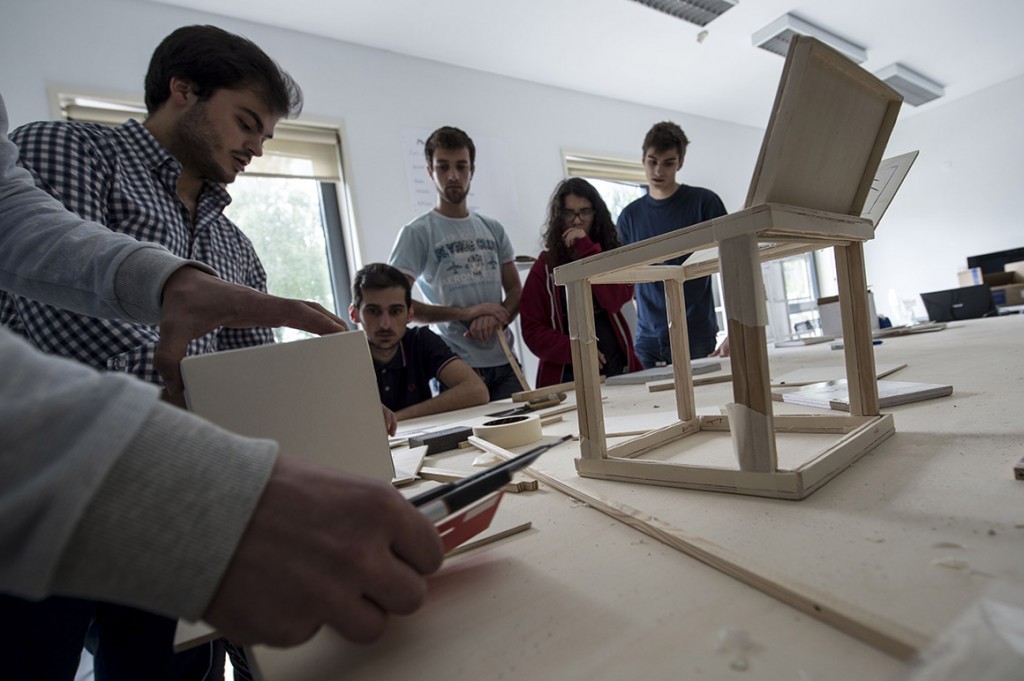
This morning at the Technological Ecosystems for Enhancing Multiculturality (TEEM’15) conference I attended a presentation by Natalia Guimaraes about the Porto Design Factory (PDF). I was truly intrigued by her presentation, particularly the set of “rules” that guide this “offshore” pedagogical experiment:

OLYMPUS DIGITAL CAMERA

The 10 Commandments of PDF

These are the principles behind the Design Factory, an experimental co-creation platform for interdisciplinary education, research and industrial collaboration. Natalia referred to PDF as an “offshore” entity because while part of the Polytechnical University of Porto (it occupies a really compelling campus building), it’s not associated with any one department. It’s a presidential project that has relative autonomy and is intentionally extra-disciplinary. It’s a space to bring students together to work on specific projects funded by business and agencies that need a particular problem solved. But those problems aren’t necessarily immediate, they’re often future-facing R&D concerns that students are given full freedom to explore. But there are conditions.There has to be a specific, real-world challenge they need to try and solve. They have to be international collaborators. And the working groups must incorporate several disciplines.  That said, how they decide to solve the problem is not determined by the funding agency—it is entirely in the control of the working group. A twist I love.

PP - 07 MAIO 2015 - PORTO - PORTO DESIGN FACTORY POLITECNICO DO PORTO

PP – 07 MAIO 2015 – PORTO – PORTO DESIGN FACTORY POLITECNICO DO PORTO

Add to this the fact that there are 11 other design factories all over the world. From what I understand the concept was started in—where else!—Finland at Aalto University in Helsinki, but a federation of distinct, independent design factories has sprung up around the world, including:

  • Tongji University in Shanghai, China
  • Swinburne University of Technology in Melbourne, Australia
  • Catholic University in Santiago, Chile
  • Tallinn Technology University in Tallinn, Estonia
  • Riga Technical University in Riga, Latvia
  • NHL in Leeuwarden, Netherlands
  • Underwood College in Seoul, South Korea
  • Philadelphia U in Philadelphia, USA
  • Pace University in New York, USA
  • CERN in Geneva, Switzerland

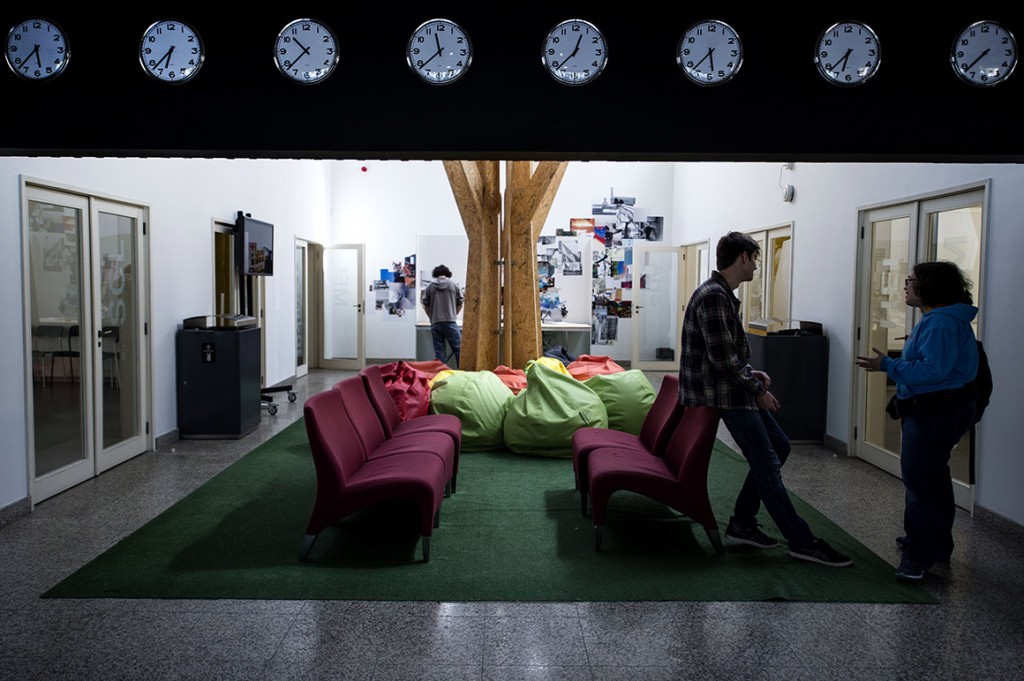
I was blown away by the presentation, and when they informed us it was 100 meters from the conference, I decided to visit it myself this afternoon. In fact, I am currently writing this post in the kitchen of the Porto Design Factory! It’s really a remarkable space, while rooted in the academic/pedagogical mission, it feels connected to the community as well as the business world. It feels like an academic startup of what could be, and incubator for new ways of imagining the classroom.

informacao.canalsuperior

When I spoke with the PDF’s coordinator,  Rui Coutinho, he went one step further, suggesting they aim to “kill the classroom.” The space is premised upon each person taking full responsibility for their learning, by placing it within a communal context in which the motivation and challenge is grounded in something other than a test or a paper. It’s a product of of their thinking materialized into a collaborative effort to do something. While they aren’t necessarily against theory, philosophy and critique, this is not where that happens. This is where you come when you want to make something as a result of those ideas. What’s more, this is not a place for discussions about intellectual property and monetizing what is created, it’s a laboratory for working through the creation process.

PP - 07 MAIO 2015 - PORTO - PORTO DESIGN FACTORY POLITECNICO DO PORTO

PP – 07 MAIO 2015 – PORTO – PORTO DESIGN FACTORY POLITECNICO DO PORTO

Another part of their ethic I found intriguing was the idea that everyone who spends time in the Design Factory needs to give at least 5 percent of their time back to the house. The quantify this with their own bitcoin-like system. When you help someone with something you get a coin from them, if you have no more coins you can’t ask for help until you help someone else.  Give as much as you get! Another element I love is that the kitchen is in many ways the community hub. They have great espresso (some have claimed the best in Porto!) and it also serves as the umbilical cord to the other Design Factories around the world.

Photo on 10-9-15 at 3.26 PM #2

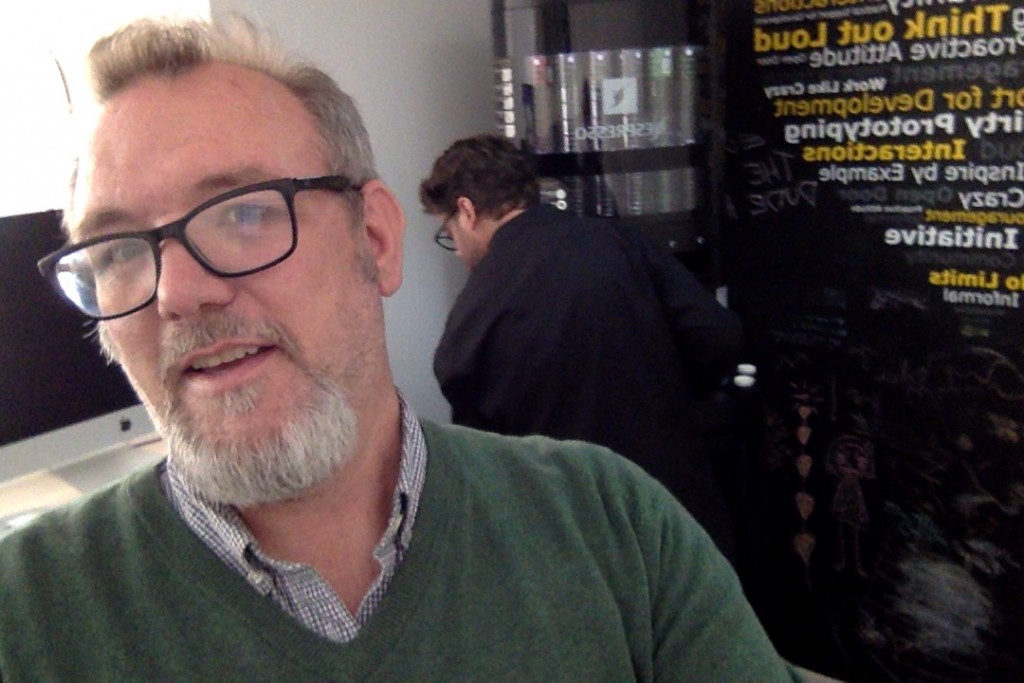
Selfie taken with my computer featuring the Espresso machine and PDF coordinator and braintrust Rui Coutinho

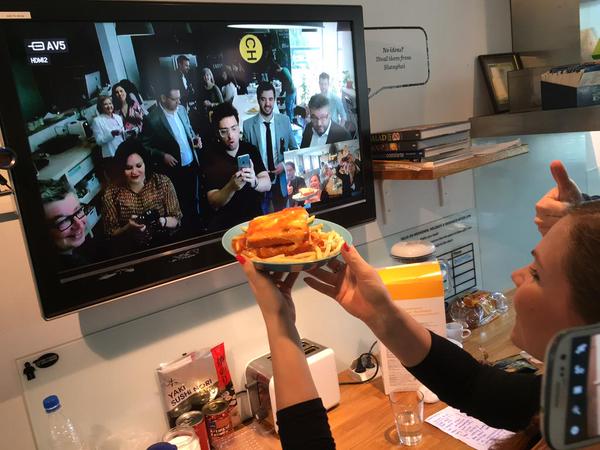
There is a TV in the kitchen overlooking the sprawling table that has a live feed of the kitchen of the Design Factory in Aalto University in Helsinki. It is a contact zone for the various spaces, and acts like a quotidian, collaborative portal between these creative communities.

11215743_1122163024477832_7280155420371314750_n

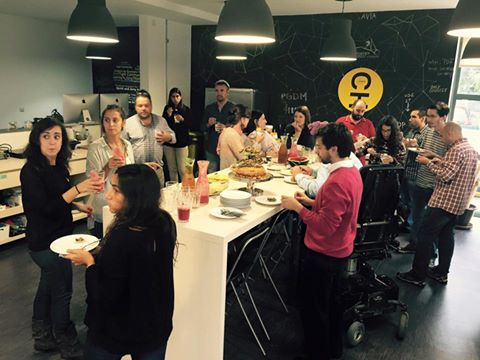
The kitchen in PDF

CEtxUloW8AAZJyO

A look at the kitchen in PDF on the screen of another Design Facory

The community and culture is built as much around coffee and food, as it is around engineering, design, tech, and business. The experience has really gotten me excited for truly different teaching and learning spaces that feel real.  This goes beyond the flipped class room, this is a view into what a flipped institution might look like.  Let the students work through the theory and conceptual on their own, and come back with their questions—but also prepared to try and apply what they are learning to something outside their particular discipline, not to mention comfort zone. Kill the classroom, indeed, and bring it back to a vitality that re-inspires a whole generation of learners.

Posted in Uncategorized | Tagged , | 11 Comments

DML’s Reclaim Hosting Interview or, why I love Howard Rheingold

Image credit: Alan Levine’s “Howard Rheingold is #ds106 #4life”

Since the very beginning when Tim Owens and I were getting Reclaim Hosting up and running two years ago, Howard Rheingold was right their experimenting with the platform for his classes at Stanford as well as providing broader support for our efforts through his vast network. I’ve come to understand over the last few years why Howard’s work is ground zero when it comes to imagining the web as a humanized construct for bringing people together. I could point to his pioneering work with online communities viz-a-viz  The Well, his numerous books on all things social web, innumerable blog posts, etc. That’s all part of an extensive archive of its own that will stand testament to his brilliant career thinking about the web as the social fabric of the future.

But more than anything it’s him—the person who online (and off) supports your work enthusiastically, champions ideas he believes in, and honestly and openly shares his excitement with others. There is no bullshit with Howard. He is who he is, and he shares what he likes. He didn’t have to do his previous feature of ds106 (though I’m glad he did because it enabled us to work together on Connected Courses), nor did he have to conduct this recent interview with Tim and I about Reclaim Hosting, but he did. And I really appreciate it, but more than anything I have come to appreciate him. Few people have been bigger advocates for this work over the last few years, and I’m personally honored he’s taken an interest in what we’re doing. It’s buoyed me more than a few times when I’ve had to ride the surf of uncertainty as I left the belly of higher ed–so thanks for ruling Howard, and thanks for yet another fun discussion.

https://vimeo.com/141404314

Posted in reclaim | Tagged , , , | Leave a comment

The Uneducation of a Technologist Interview

In April I presented at the European Distance and Elearning Network conference (EDEN), along with the likes of Maarten da Laat, Audrey Watters, and Martin Weller. You can see many of these presentations on EDEN’s YouTube account. I wrote about the presentation in detail already on the bava, but Steve Wheeler recently posted the brief interview we did as a post-mortem of the talk in an attempt to explain what Brian Lamb and I might have been getting at with the idea of the “uneducation of a technologist.”

Major kudos to Steve Wheeler on the intense amount of work he put in during this conference. I have some idea of how hard it is to do pre-conference interviews, wrangle folks during the event, live blog sessions(!), conduct post-mortem video interviews, and more during an event like this. To his great credit, Steve not only made it happen, but he made it look easy. I have mad respect for his ability to not only make it all happen during the event, but also make sure it gets out there after the fact. It ain’t easy, but you wouldn’t know if you were watching Steve go.

Posted in presentations | Tagged , , , | Leave a comment

The People’s Open Education Jam or, Say it with a GIF

This Friday I will be co-presenting with Graham Atwell at the  Technological Ecosystems for Enhancing Multiculturality (TEEM’15) in Porto, Portugal.  The talk is something we kind of half-baked up at EDEN15 this past April in Barcelona, and we have been playing with over a couple of months. I really love where we are now, and it’s all Graham’s fault!

tumblr_lzkoghOE3n1rn95k2o1_500

We will be collecting ideas from conference attendees over the course of the three-day conference and mix them into a presentation. My addition to the presentation was to use a Google form to have them isolate a specific topic they want to discuss in a sentence or two, and then find a GIF to illustrate the idea. In other words, have them say it with a GIF! who wouldn’t want to make a GIF slide for our talk, right? Groovy!

sassysuperman

So, that’s what we are going to do. And, indeed, some of  submissions have already started coming in, and I love what they’re doing. For example, we got a submission from one attendee who wants to explore accessibility for learners and educators, noting the following:

Open education should try to transcend the barriers to education such as poverty, access to technology, access to a stable internet connection, not being able bodied, access to transport etc, as well as administrative issues like not being on the ‘approved’ list of resources or being blocked by the firewall.

A big and very important topic, and what is even cooler is the metaphor and GIF this person chose to make her point. Dealing with accessibility in education is like “being a large Alice unable to get through the tiny door into Wonderland.”

too-wide

Or another example where a participant sees open education “as an opportunity for teachers’ professional development.” She goes on to say:

I would use the role of textbooks to show how copyrighted resources and business has disempowered teachers. Constructing OERs and opening up education are the opportunity for teachers to take control over the curriculum and thus, over their own teaching. I am very hopeful about this and the uptake of Open practices is a real opportunity that we cannot miss anymore. So, since I am hopeful about this new opportunity my gif could not be any other than the enamored one 😉

nmrd

How awesome is that? I am already convinced this will be the most animated closing keynote ever given on European soil, and we only have ten submissions so far. Want to be part of GIF presentation history? Well then, submit a topic around opened education that is near and dear to your heart? What’s more, try and map it on a metaphor that can then be illustrated with a GIF to drive the point home?  Not gonna be at TEEM’15? No problem, open is as open does, and participating from afar is one of the great joys of open. The form is below, help us make the People’s Open Education Jam (POEJAM) a completely awesome (and hopefully weird) experience!

Posted in open education, presentations, reclaimopen | Tagged , , , | 1 Comment