Mrs. Lizardo, or my worst educational experience

Back around Halloween Michael Branson Smith asked us to share our worst educational experience as part of his #ds106 course at CUNY’s York College. Despite the deep pain and horror my story still causes me, I decided to gut it out and share my Mrs. Lizardo story, it’s horrific but it needs to be shared because experiences like this are the very reason why our schools are failing us right now.

Posted in digital storytelling, fun | Tagged | 4 Comments

Remixed Book Covers

I was browsing UMW Blogs yesterday when I cam across this post about a remixed book cover of Cormac McCarthy’s The Road. The post is part of professor Gary Richards’s Contemporary American Fiction course blog, and the class happening to be reading The Road this week, and I watched the posts rush in. My interest was piqued because I am a fan of both the book and the movie, and it was fascinating to see all the responses to the novel—which ranged widely—as well as the resources students pulled in from the web, like this post’s inclusion of a video featuring UCLA professor Kenneth Lincoln comparing The Road to No Country for Old Men.

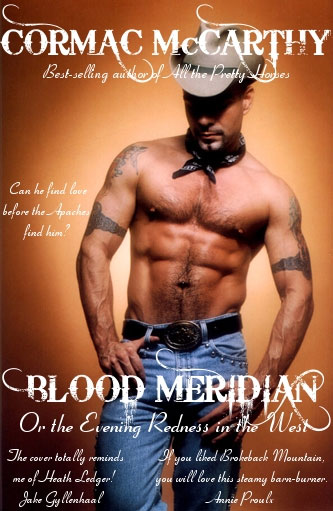
But back to the remixed book covers, I actually followed the link in the post to the original source which was an old post on Bookninja from 2008 which had a remixed book cover competition and several of the submissions were awesome. I’ll be including my favorites below, but as you might have guessed this would make an awesome #ds106 assignment—and I plan on submitting after I finish this post. But wouldn’t this also be an awesome design-inspired literature class assignment? I’m sure many have done it already, but how cool to remix the covers of at least 5 novels read over a semester as a way to frame an argument, add a written explanation of your thinking and voilà! This digital storytelling stuff can so easily go transdiscipline if we only tried. Anyway, here are the book covers, enjoy!

Posted in digital storytelling, UMW Blogs | Tagged , , , | 5 Comments

Ray Harryhausen’s Animated Creatures in Chronological Order

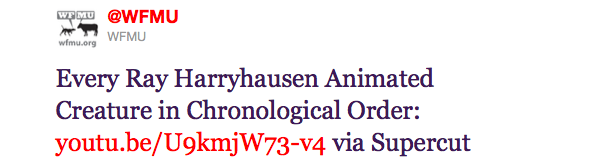
Being a fan of Ray Harryhausen’s creature animations, the following tweet from WFMU was an immediate score.

What is coolest about this is there are at least two or three films referenced here I haven’t yet seen. I started doing a number of Ray Harryhausen animated gifs over the last year, so maybe my goal should be to do an animated gif of every creature Harryhausen ever animated in a film. I like that goal.

Posted in digital storytelling, movies, video, YouTube | Tagged , , | 8 Comments

A Beautiful Web of Obsession and Pen Spinning

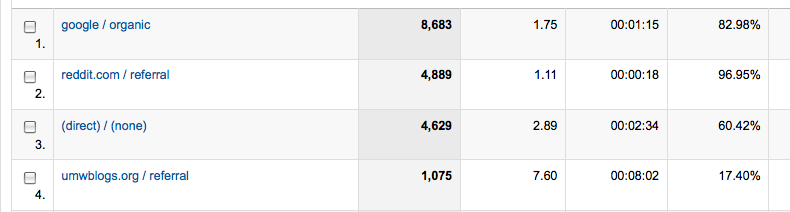
Every so often I head into Google Analytics to check out the traffic on UMW Blogs. This used to be a more regular occurrence when we were having load issues on the site, but this semester our blogging platform has been so solid I haven’t been checking the numbers nearly as much. But when I went in today I was shocked to find that yesterday was far and away the most traffic we’ve ever had on UMW Blogs. Almost 10,000 visits (9,579 to be exact).

I was floored, what had driven a 3000+ visit spike over our daily average? After a little digging I found that the student blog penspin.info that was being kept for professor Zach Whalen’s Writing through Media course was responsible for the increased traffic.

Interestingly enough, professor Whalen hosts the sharing/discussion space for this class on the public site of Reddit, and as it turns out the Reddit community picked up on the awesome Pen Spinning tutorials at penspin.info and as a result they’ve become a rather popular item in the HowTo section of Reddit. So, over the last two days Reddit has pointed almost 5000 people to this student’s blog. I love that what ultimately garners the most attention on UMW Blogs is pen spinning. The very thing people do in order in order to kill time in class becomes the reason for an instructional site par excellence on UMW Blogs.

And I have to think this happened as a result of professor Whalen’s decision to have students share and discuss there work on Reddit, which is in many ways right in the middle of the wilds of the web. What’s coolest though is that this is yet another example that the web, at its best, is made up of obsessed people that can’t help but share the things they are passionate about—and something as ostensibly useless as pen spinning becomes the site of sharing, instructing, and connecting. And I think one of the reasons why this site was so popular is how well the how-to was both illustrated and executed with both images and video, see this post as exhibit A.

What I love most about the web is that it ultimately challenges higher ed’s assumptions with regards to audience, relevance, and meaning. You never really know what people will be drawn to, what they will get out of it, and how it will inform their world view in different ways. We need to foster this uncertainty rather than run away from it, in fact I think the web makes way for a new era of teaching, to quote Ray Land, it makes way for a “pedagogy of uncertainty.”

Posted in UMW Blogs | 5 Comments

ds106radio: It’s not radio, ma’am, it’s the internet

Image for ds106radioA few weeks back, while returning from Portland, oregon—did I mention i still have an epic post about Portland to write?—I did a little experiment on my flight back East. On the first leg from Portland to Salt Lake City I bought wireless on the airplane for $12.99, thinking I would be in the air for roughly 6 or 7 hours, and it might be fun to tweet from 30,000 feet. On the short flight from Portland to SLC @Scottlo trie brining me in via Skype to his ds106radio show, but it turns the connection was not solid enough. What’s more, when i checke what applications I could and couldn’t use VOIP and Skype were forbidden, however it didn’t say anything about streaming audio. So, on the second, longer leg of the journey home from SLC to Washington, D.C. I got on the internet again an found the connection much stronger. So much so that I decided to try my Papaya app to see if I could live stream audio, and it turns out I could quite clearly. So, sticking to the wireless guidelines I figured I was totally in compliance. And below is a minute or two of this broadcast from 30,000 feet wherein I let the stewardess know she was live on ds106radio. She was not too pleased with me, she told me it was illegal to be on the radio while in the air on a plane, but I quickly countered “it’s not radio, it’s the internet ma’am.” And that is true, ds106radio both is and isn’t radio simultaneously, and my response was both preservation an a certain amount of truth. Why is radio illicit, but not Twitter or Facebook? Why streaming video, but not streaming live audio as radio? Why do we still feel the need to call ds106raio radio? I’m not sure of any of the answers, but I think that within the old metaphorical forms we use to understand the new there is both intense sense of potential and limits all at once, the 30,000 foot broadcast realized both of them immediately and intensely simultaneously. A post 9-11 broadcasted flight has strange new overtones, everywhere an everyone is always already being streamed, the vision of the future is a struggle between these points of light an strength.

Jim Groom airplane cast ds106radio hostess by easegill
Audio special thanks to the amazing Easegill archiving an uploading to SoundCloud

Also, Alan Levine picked up on the madness, and immediately remixed Nigel’s audio with a James Bond theme, which was brilliant.

What’s more, the redhot Giulia Forsythe (who is enfuego) went ahead and made a video for ds106airlines—brilliant!

Yeah, these are the kind of insanely creative people I hang out with online, where everything seems to happen at the altitude of 30,000 feet of awesome.

Posted in digital storytelling, ds106radio | Tagged | Leave a comment

A funny thing happened on the way to the hangout…

Image of BrasiliaAndy Rush and I were talking about what we were gonna do for today’s DTLT Today episode, and I pushed the idea of having a breakout chat space for the K12 Online Conference video session on ds106. I figured the conference might need a little space for conversation, and I was being a bit idealistic that anyone from the #k12online conference would a) see my tweet announcing the session and b) really want to discuss it. What’s more, Andy’s less than enthusiastic response to doing a session on the K12 Online video was yet another omen, but I pushed on.

Well, as it turns out no one from the K12Online conference showed up, but that doesn’t mean there wasn’t a party. Brian Lamb, Larry Hanley, David Kernohan, Noiseprofessor, Luis Valencia and Leslie Linballe and Todd Conaway a bit later on joined the hangout. But what turned this from a bunch of people we know tolerating us going on about the K12 Online Conference video to making this episode a bizarre cross between the Twilight Zone and Hollywood Squares was an unknown, shirtless google hangout crasher named Vitu (V2?) who was ostensibly Brazilian and basically having a blast messing with us. What ensues was pretty hysterical, at least from my perspective. I would suggest going to minute 15:30 or so of the video if you want mainline the madness. It builds from there, but don’t expect anything coherent or logical—this is in many ways a theatre of the absurd.

And the animated GIfs of the occasion was brought to you care of the inimitable noiseprofessor!

Posted in DTLT Today | Tagged | 4 Comments

Initial thoughts on #ds106 for Spring 2012

This coming Spring semester two sections of ds106 will be running out of UMW, and I believe at least two more sections out of CUNY’s York College and Temple University Japan. If any other courses want to run along side #ds106 let us know.

Image of ds106 banner

On the ds106.us site front, Martha Burtis has been hard at work re-designing the assignment submission with Gravity Forms, as well as re-rigging the ranking system so we can rank assignments across topics by difficulty level. More on that development soon, though we are hoping that the re-work of the assignments will provide a solid basis for minimum requirements for every section of the course for credit seeking students, making the online portion of the course that much tighter—excited about this.

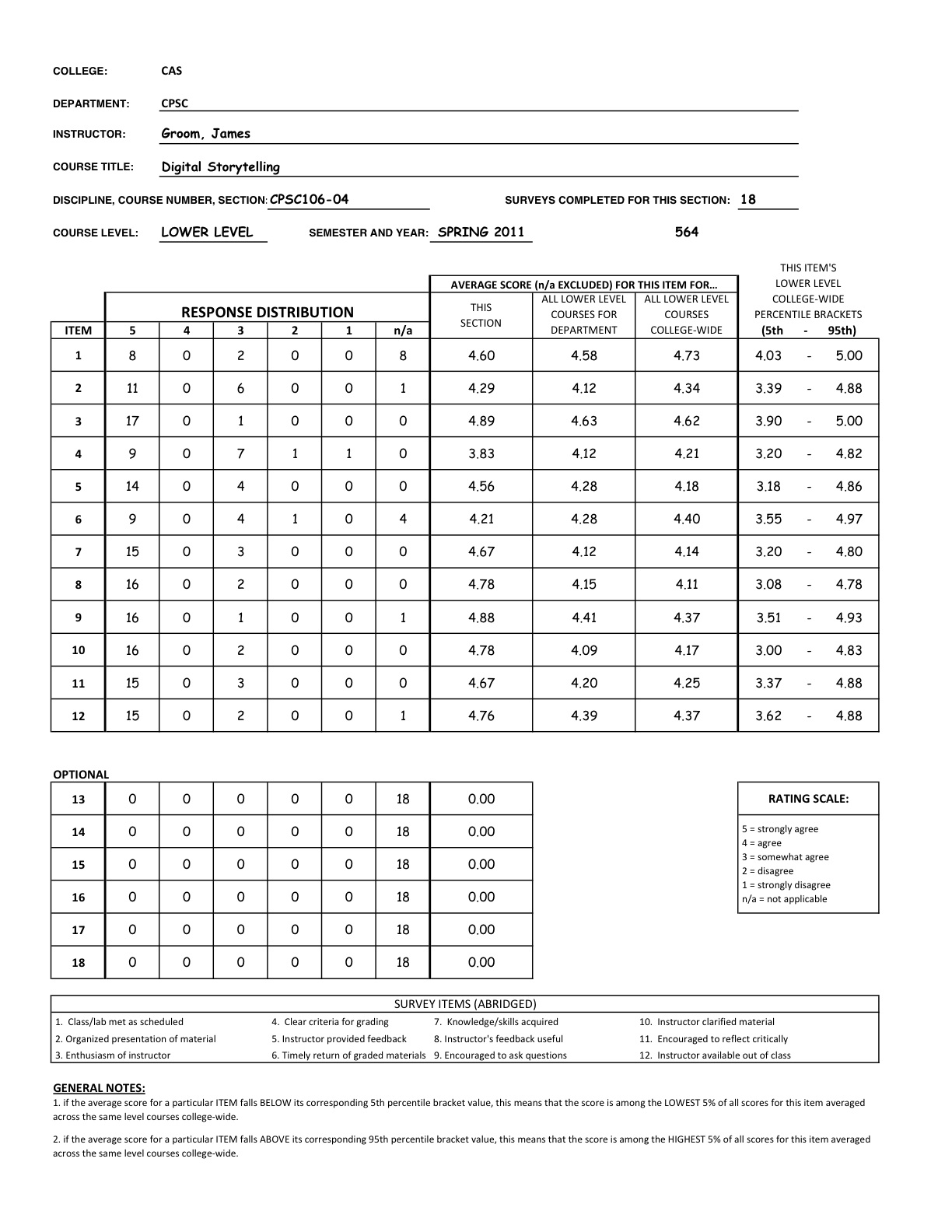
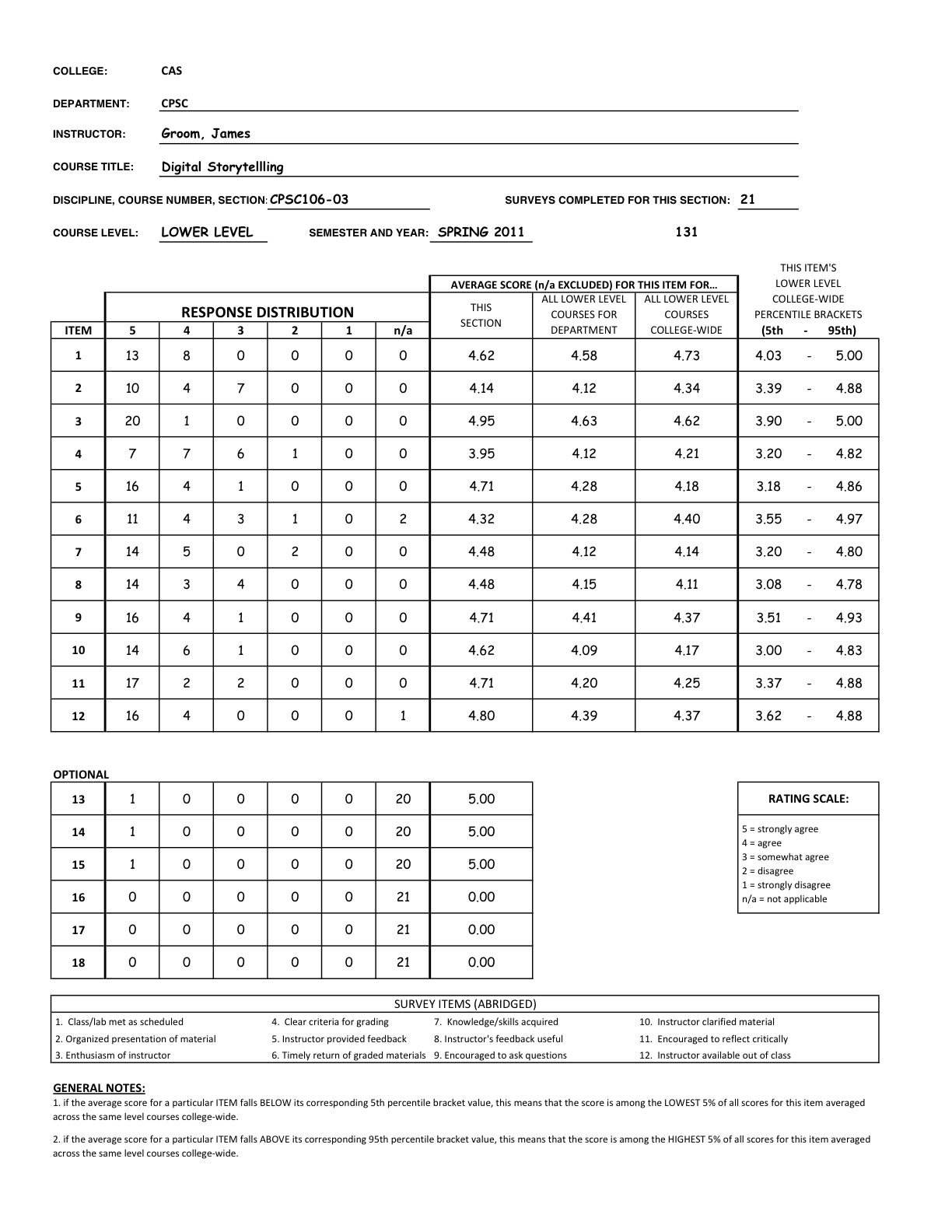
Speaking of which, I am playing a bit with the size of my section this semester. I am only teaching one section, and given I had a waiting list of 15 students, I decided to let anyone add it if they wanted to, and this week I will be sending out an email warning them that this class is experimental, open, annoying, etc., as well as giving them the option to take it face-to-face, online, or hybrid. In other words, they decide which mode they want the course delivered in. I am pretty comfortable with the online stuff given I have taught ds106 twice fully online now. Last Spring I taught the open, online ds106 to two sections with 25 students each: one fully online and the other f2f. What I noticed last Spring was a few f2f students actually preferred the fully online course and would rather skip class time with me—that didn’t happen the other way around, however :). And student feedback from both the f2f and online courses were pretty much on par—which I found amazing—see the evaluations below.

ds106 f2f Course evaluation Spring 2011 (Click for larger view)

ds106 section 4-fully online section, Spring 2011 (Click for bigger image)

If you look at the above evaluations closely, the overall scores taken together are higher for the online course than the f2f, what’s more the most significant difference on the evaluations were 7 and 8: knowledge skills acquired and instructor feedback. Skills acquired was 2 tenths of a point higher for online students and useful instructor feedback was 3 tenths of a point higher for online students. That said, using this evaluation is still quite inexact given the ways the questions are framed. I’ll try and implement some kind of student feedback into the online versus f2f division around week 6 to fine tune the course in-flight.

Question #4, “clear criteria for grading?” is something we’re trying to integrate into the assignment bank with difficulty levels and pre-defined points for weekly assignments that represent a minimum accomplishment, the rest of which is assessed by how they comply to a set of expectations for solid posting and sharing of their process as well as a more granular approach to points a la the great Scott Lockman. I will be making a conscientious effort to make this part of the class tighter this go around to see if I can’t let everyone know where they stand that is taking ds106 for credit—because while evaluations are imperfect, I have consistently scored significanctly lower on “clear criteria for grading.”

Over all though, my experience last semester was that the online students were quite independent—and I don’t really fear letting students choose how they want to do the class. Once both the f2f or online students realized I was on them like white on rice in their blog comments and on twitter from week 3 on—which is crucial—they did the course work regularly with very little prodding or intervention on my part. It also seemed that most online students felt connected to the course community through the twitter hashtag #ds106, their blog, and the ds106.us aggregation space and assignment hub. I will be sure to push even harder on the online students for regular community contributions this Spring, but as of now I am comfortable enough with ds106 to let each student choose how they want to take the class. And I know full well this is a luxury I have given I’m only teaching one course that I’ve taught six times now. At the same time, I keep coming back because it is easily re-imagined and it always proves a lot of fun, I hope Spring 2012 proves the same. I am working on integrating the signup for ds106 into blog feeds and the like cleaner, but in the mean time here is the Google form for open, online students who are interested.

Posted in digital storytelling | Tagged | 4 Comments

ds106 Crusader

Here is my first pass at mashing up Saxon’s Crusader album cover for ds106. Next semester I will have to spend a lot more time getting better at Photoshop/GIMP because it is all too evident I still suck. Anyway, join the ds106 crusade to rid the land of boring ass classes 🙂

Posted in digital storytelling | Tagged , , | 6 Comments

UMW Blogs and the Virtual Geography of Free Speech

Image of Bahrain and Richmond

UMW Geography professor Donald Rallis has an amazing two-part blog post about the relationship of the protest movements in Manama, Bahrain and Richmond, Virginia (part 1, part 2). Having been in both places recently, professor Rallis starts to triangulate the relationship amongst geography, protest movements, and the struggle for Free Speech in public spaces. Professor Rallis not only shares an amazing reading of the role of geography in these movements but shares images he took of both sites as well as video he took of the occupy Richmond event the day before it was shut down for “bad hygiene.”

Now what’s just as interesting as professor Rallis’s posts is the way in which he is sharing these posts on his Regional Geography blog. This space is both a personal and course blog he keeps wherein he shares his reflections on his teaching, research, and regular travels around the world. What’s even cooler is these reflections are syndicated from here to the UMW Geography department blog that is hosted on UMW Blogs but has it’s own mapped domain. This site aggregates a series of sites such as the Geography Club blog, course blogs, department updates, and brilliant posts like the one from Donald Rallis described above are sent out in a digest to over 300+ alumni of that department. Makes sense to me that the community of the department should be a space for thinking through what the #occupy protest movement, the Arab Spring, public space, and free speech have in common. And what could be better than having it out in the open where anyone can comment and broadcasting it to your alumni to invite them to the discussion? Isn’t this kind of the virtual geography of free speech on the web?

It is amazing to me that this very post is what so many more professors around UMW could be doing as a community with the way not only UMW Blogs is setup, but all the UMW department sites are all WordPress and every department page can default to a blog, in fact several already do. Now, this idea of virtual geography and free speech is something I don’t take lightly, and I read another Geographer on the topic of space and #occupywallstreet, namely the following bit from David Harvey‘s blog post “Rebels on the Street: The Party of Wall Street Meets its Nemesis:”

But now, for the first time, there is an explicit movement to confront The Party of Wall Street and its unalloyed money power. The “street” in Wall Street is being occupied—oh horror upon horrors—by others! Spreading from city to city, the tactics of Occupy Wall Street are to take a central public space, a park or a square, close to where many of the levers of power are centered, and by putting human bodies there convert public space into a political commons, a place for open discussion and debate over what that power is doing and how best to oppose its reach. This tactic, most conspicuously re-animated in the noble and on-going struggles centered on Tahrir Square in Cairo, has spread across the world (Plaza del Sol in Madrid, Syntagma Square in Athens, now the steps of Saint Paul’s in London as well as Wall Street itself). It shows us that the collective power of bodies in public space is still the most effective instrument of opposition when all other means of access are blocked. What Tahrir Square showed to the world was an obvious truth: that it is bodies on the street and in the squares not the babble of sentiments on Twitter or Facebook that really matter.

I take David Harvey’s point of bodies in public space seriously, and his dismissal of Twitter and Facebook here aren’t entirely out of line, but at the same time he blogged this deeply thoughtful and provocative reflections on the #occupy wall street movement. And the fact that he blogged it is significant just for that reason. This is a form that understands public bodies in public space differently, but potentially just as significantly. And the blog is a frame for discourse that we at UMW are poised to make part of the very DNA of discourse—what’s more it is framed by the web. I don;t think the bodies in the street and the babble on the web are that exclusive when the babble is an informed and bracing discourse about the moment we are living in, and I think Donald Rallis really strikes me as a UMW professor who is modelling this not only for his students, department, and colleagues at UMW, but for faculty just about anywhere. We should all be engaging this to some real extent because this is the world we live in right now, this is the space we occupy. We should be #occupyingumwblogs (or any other open publishing space) with our ideas about this moment and our reactions to it!

Posted in umw, UMW Blogs | Tagged | Leave a comment

K12 Online Conference Presentation: Disclaimer, Credits, and Resources

Welcome to the resource guide for mine and Tom Woodward’s presentation titled “The World’s Craziest Educational Videos featuring ds106”

Below are a couple of quick, useful links for this presentation:

Continue reading

Posted in digital storytelling, ds106radio, presentations | Tagged , | 12 Comments