Creepshow Diorama: Lights, Camera, Sand!

Update: If you are looking for the actual finished diorama go to the end of this rather long making-of post.

As the window area of the bav-o-rama is being finished, I’m trying to get the final pieces of the diorama figured out. If all goes according to plan, the inaugural Creepshow (1982) installation should be ready to go by mid-July. Very exciting! Here’s a look at what the space will look like, it’s pretty cool.

Alberto has once again worked his magic: the two side walls for the background are hinged to the wall and on wheels so it will be dead simple to adjust the angle they meet the back wall as needed.

All three are made of pressboard, and I have to figure out the best way to apply the comic strip background to these walls without creating a long term mess. Maybe I apply the background scenery to lauan first, so that it remains rigid while at the same time is easily attached and removed from the pressboard walls—any advice there is greatly appreciated, dear reader.

All three walls are 120 cm wide by 167 cm high, although the two side walls can change angles effectively changing the back wall width as needed.

Earlier this week I had a conversation with Michael Branson Smith (MBS) to get some advice on the looping video of Becky Vickers drowning, as well as the best way to handle the background. At first I was imagining breaking up the beach scene into three parts, ocean and shoreline creeping in on Harry Vickers’ head as the centerpiece, and the two bookends of that triptych creating a sense of space and dimension by adding in sand dunes you might find in the Hamptons or Montauk. That said, if the license plate on the Jeep driven by Richard Vickers is any indicator, the scene is set in New Jersey which has a very similar shoreline to those I grew up with on Long Island.

Creepshow Jeep with Jersey Plates

Anyway, MBS suggested we take scenes from the original graphic novel that accompanied the release of the film in 1982 in order to make a custom series of panels to give the viewer some context—just the first of MBS’s many brilliant ideas. So he and his wunderkind illustrator daughter are working up some possibilities, and I’m very excited about that, you can get a rough idea of what they’re thinking here:
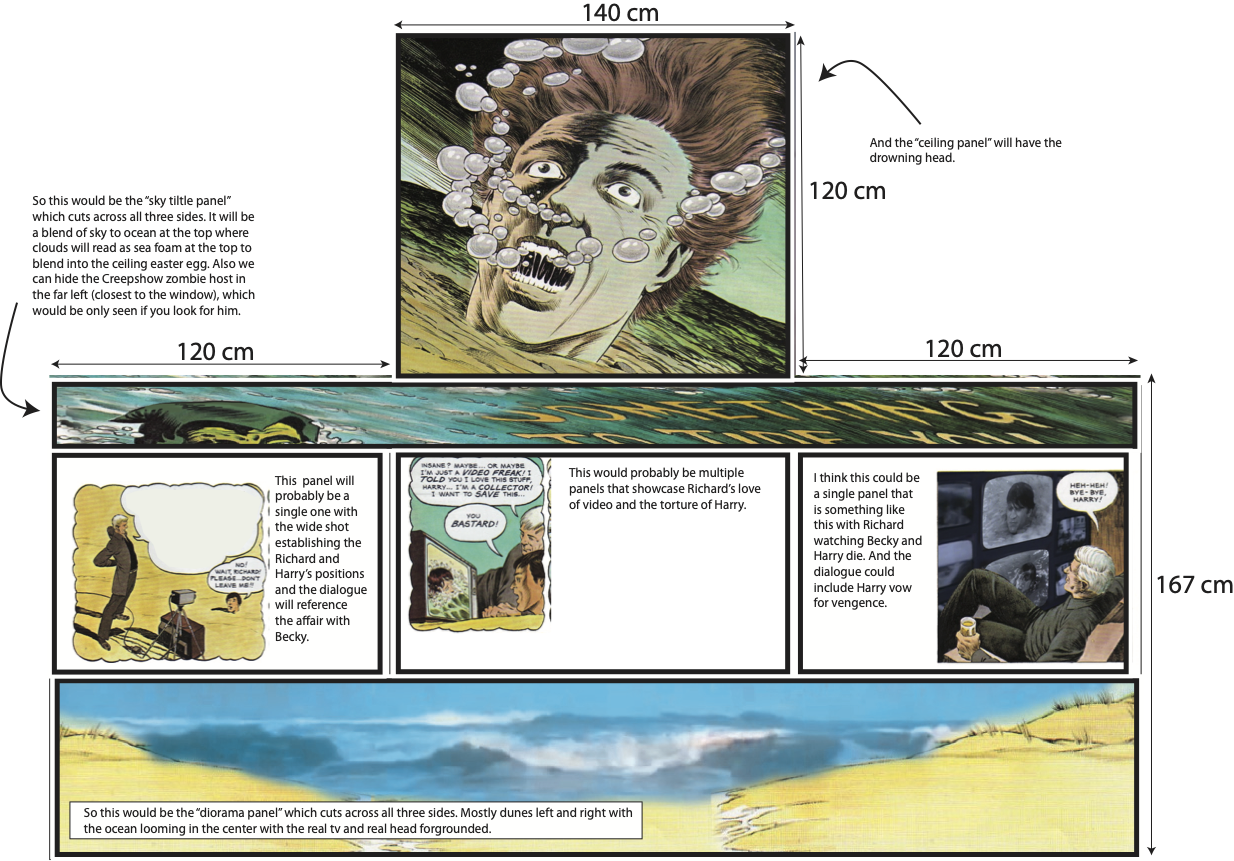
Something to Tide You Over Design

Something to Tide You Over Design background design concept

I have a meeting with that elite NYC design team tomorrow, so there’s definitely more to come on the background front–so good!

Another thing we got to discussing is how to contour the sand so it doesn’t look flat and relatively fake. MBS suggested chicken wire and paper mache to create an uneven surface that I can then glue the sand too, while at the same time affixing the head. He also suggested having the diorama floor of sand slope down a bit to reinforce a sense of scale and the normal incline of any beach at the shoreline. This seemed like an excellent idea, and after some youtube scouring I have a few ideas. I also realized it’s going to be important to mark-up the sand with various debris like dried seaweed, wood pieces, etc. to make it look somewhat convincing. Also, once again, I’m wide open to the experience and knowledge of anyone reading this given it’s all quite new to me. I’ve not done paper mache since third grade art class when we were tasked with wrapping and then painting a wine bottle to look like an bottom-heavy humanoid—a memorable project for sure.

Moving on, we got to talking about what might prove to be the most challenging piece of the diorama, a real-time switching of the video input from the looping video of Becky drowning to a live feed from a camera trained on anyone who stops and looks at the exhibit for more than a 5-10 seconds. MBS suggested that a proximity sensor attached to an Arduino might do the trick, so I’ve been looking for resources on this and have found at least a similar project someone has articulated using PIR motion detectors to switch  between different videos. I don’t want to switch between videos as much as switch between video inputs, but it might be the same thing. This is yet another area I could use some help with if anyone has some expertise in this area, or even knows someone who knows someone else I can reach out to 🙂 Getting this bit to work would be pretty rad, but we will see—world enough and time and all that.

Finally, another topic we touched upon was lighting, and the idea of two stand-up LED strips hidden on either side of the window. They should provide more than enough light and be easy to manage, while remaining outside the viewer’s field of vision—unlike my original idea for hanging lights. Then MBS floated the idea of the strips subtly changing color depending on the time of day so that the diorama reflects the actual time of day, so a brighter, sun-baked yellow during the day, much like the beach.At night the diorama has a bluish tinge, and I wonder if we can even have a redish/orange glow at sunrise and sunset. Luckily LED strips are pretty easy to find, but programming them to change color with the time of day might be another project for the Arduino, our Twang experiment many years ago might offer some insight there.

Anyway, that’s an update as to how the diorama is moving from a bizarre idea to an honest to god reality! There’s nothing better than watching a plan come together.

Posted in bav-o-rama, bavastudio | Tagged , , , , , , | 6 Comments

Team Reclaim

As Reclaim continues to morph, I ‘ve been thinking a bit about working teams. One of the real joys—and possibly under appreciated privileges—I’ve had professionally is being part of really amazing teams, which often translates to working with great people. I was living in New York City in the late 90s, just in time to witness (many times first-hand) the NY Yankees 3-peat World Series championships in 1998, 1999, and 2000. Now it might be easy to dismiss this team given they were chock-full of money and talent (they’re the Yankees, after all), but turns out the Orioles had an even higher payroll with arguably as much talent in 1998.* And also, remember the Mets!!! 🙂

Beyond the money and individual stars there was something more at play—a sense of joyful commitment to the work married with talent made them something else all together. Even the leagues of folks who hate the Yankees would crack a little with that particular team—they were hard not to respect because they played as a team and the greatness transcended any one player. What’s not to love about an impossible infield play by hall of famer Derek Jeter to rob the opposition of a hit followed by an equally impressive stop from everyman utility player Scott Brosius. It was greatness all around; they made each other better and as a result were unstoppable for 3 straight years—a herculean feat in any sport. To boot, they seemed to be having fun all the while.

Now edtech is not Major League Baseball, and this comparison is flimsy at best, but the NY Yankees of that era were emblematic of a great team, and one I witnessed first hand.† And for me the key seemed to be joy, having both a shared purpose as well as a lot of fun with your teammates. I think that translates very well for me with the work I did as an instructional technologist at University of Mary Washington alongside many amazing folks, but in particular Martha Burtis, Andy Rush, Shannon Hauser, and Jerry Slezak. They’re folks I miss being around regularly, but when we were together in the bullpen (maybe the baseball metaphor does work) exploring the magic of the mid-2000s web for higher ed was undergirded by a lot of laughter, and thankfully not spoiled by the years of million dollar state salaries. I’ve talked about the magic of working at the Division of Teaching and Learning Technologies (DTLT) on this blog extensively, so I will try and keep things moving along.

DTLT Reunion at Reclaim Open

My next team was in many ways taken from DTLT, as Tim Owens and I started Reclaim while working together there. We both eventually left the university, taking the newly minted graduate Lauren Hanks (Brumfield at that time) with us as we ventured into the unknown territory of Reclaim Hosting. We were a super small team for many years, it wasn’t until 2017 that we brought on Meredith Huffman (another fresh UMW alum). And with the addition of Chris Blankenship a couple of years after that (yet another UMW faithful!), we had the core of a team that would define the first 10 years of Reclaim Hosting.

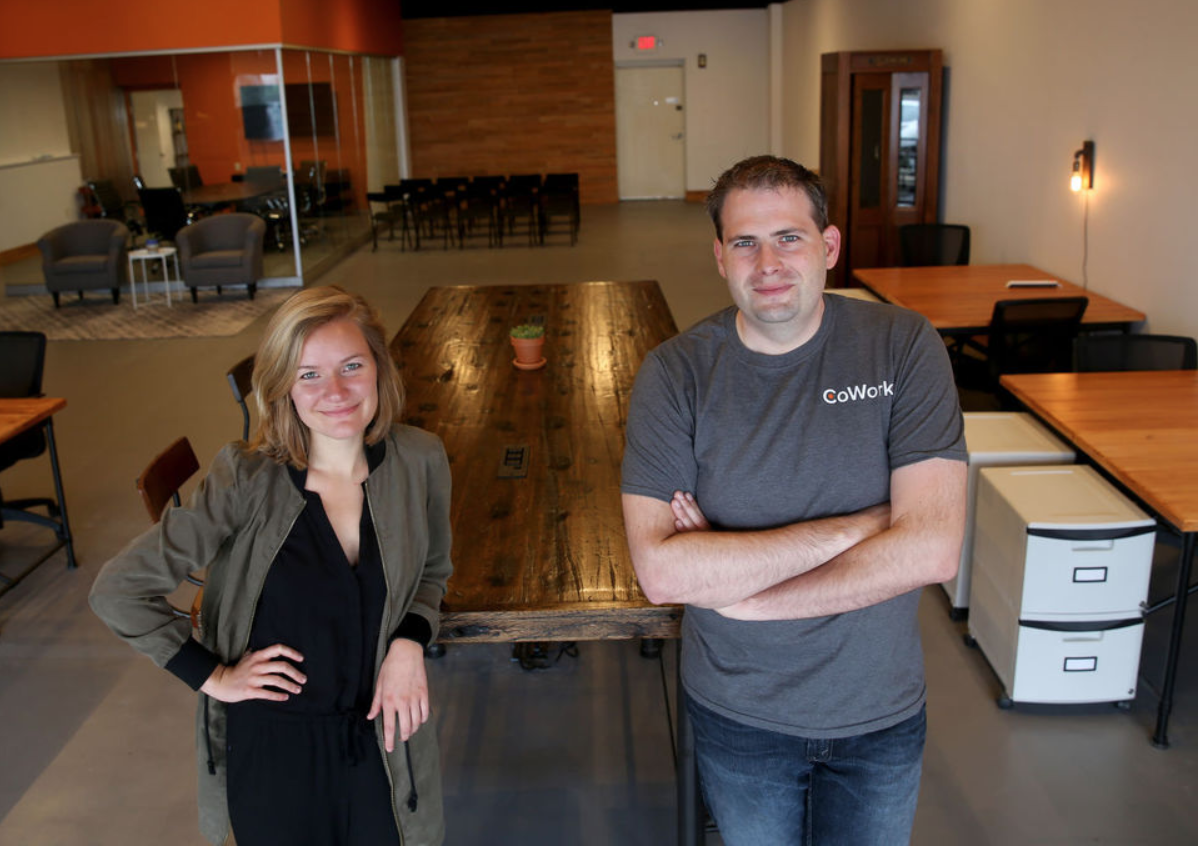
Tim and Lauren in a recently Completed CoWork

This was quite an intense period as we stayed lean and grew quick, but at the same time it carried over a lot of the fun and experimentation of our time at UMW, only with a fraction of the meetings. On top of growing our shared hosting, Domain of One’s Own, and managed hosting significantly, we also had time to open up a CoWork space, a VHS store, and eventually Tim took over the arcade we built and spun it off into his own career—leaving the now civilized terrain of Reclaim. And not too long after Tim became the pinball wizard, Lauren left just this past September after realizing the previous eight years Reclaim was all she had known professionally. It was time for both to strike out for new territory, leaving old man bava to his devices. The contributions both Tim and Lauren made are too immense to list here, and in many ways I’ve not written either a proper goodbye on this blog for fear of letting either go—but I’ll save that discussion for my next appointment with Dr. Freud.‡

I’m not going to lie, I was a bit concerned this past fall and winter as I was saying goodbye to Lauren and buying out Tim’s remaining share of Reclaim Hosting, and my mental stated reflected that transition. At the same time, one of the things I underestimated was just how resilient and awesome the team we’ve been building over the last several years has become. Meredith and Chris are the pillars of both support and infrastructure this new city on the hill is built upon, and in addition to that, bringing on Goutam Vijay Narang, Pilot Irwin, and Taylor Jadin almost three years ago ensured a solid base from which we could continue to provide the service our community is accustomed to, while at the same to building community through avenues like Reclaim TV, Discord, the Roundup Newsletter, and Reclaim the Blog—all of which we’ve never done to the same extent previously. In many ways we’re getting the word out better than ever before, and it’s still retains the tone and humor Reclaim always represented. Just 18 months ago we brought on Noah Dorsett who has done a phenomenal job shoring up security, which helps us all sleep that much better at night. But when Tim and Lauren were coming to the end of their reign, Meredith stepped up to play and all around manager; Pilot stepped up to manage support like a star; and Chris remained Chris keeping everything online.

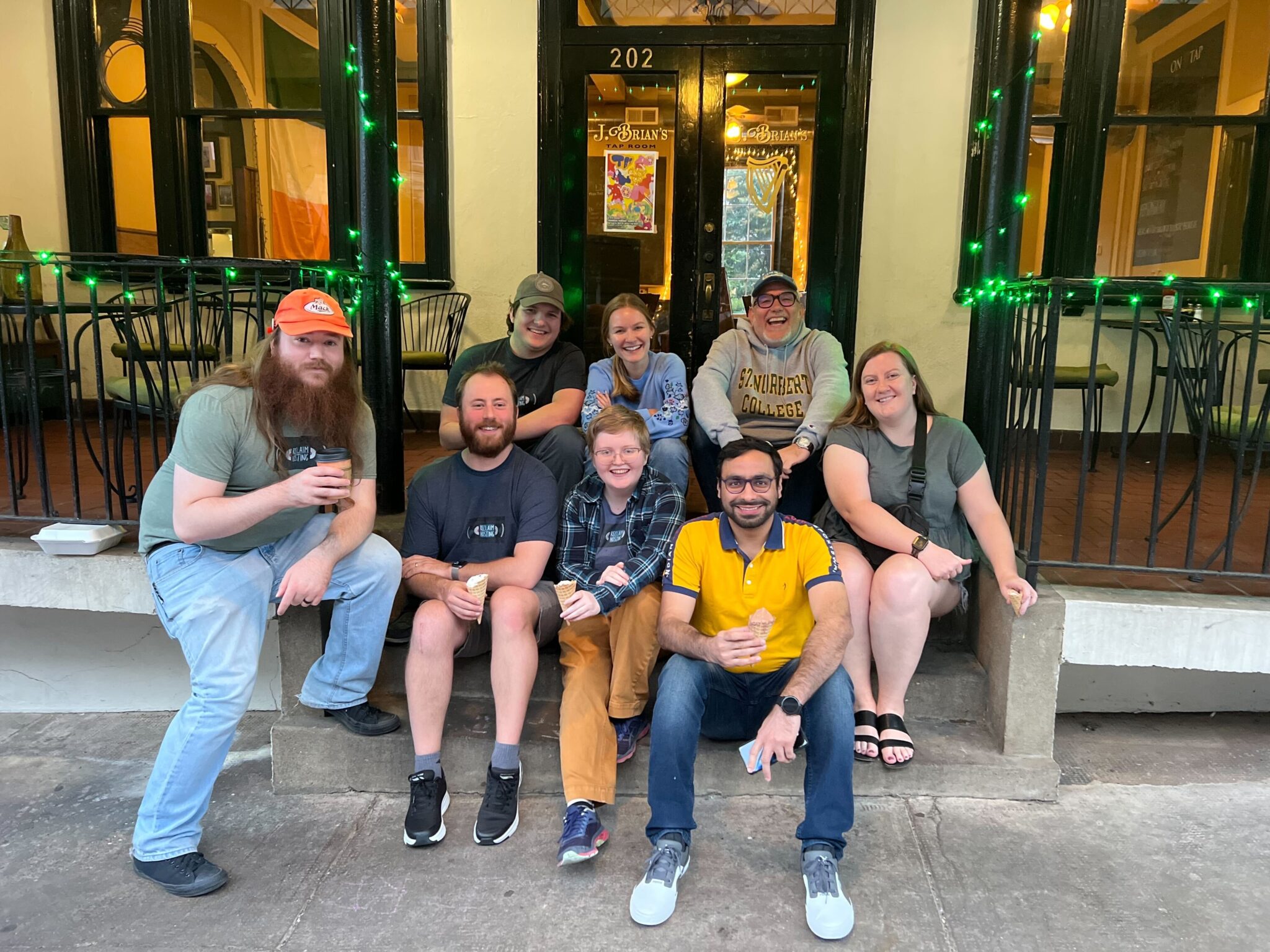
Team Reclaim at Reclaim Open

It’s also worth noting, eight months after Noah came, we hired on Amanda Schmidt to buttress our growing Edtech group, which Taylor and Pilot were already helping us define. It has been truly rewarding to watch Edtech find its legs, part of which has been the push for community building, and we’ve been able to support Reclaim Cloud that much more effectively, as well as introduce new offerings such as ReclaimEDU and ReclaimPress, we’ve done anything but sit on our hands.

But when Lauren left there was a serious HR and operations gap that we got ridiculously lucky to be able to fill with Maren Deepwell, her impact was immediate and she was able to keep the team focused, while generously sharing her vast expertise—the mentoring has been invaluable. When I had to take more extensive time off during the winter of my discontent, she worked with Meredith and the entire Reclaim team to make sure everything remained on track, and we scarce missed a beat—that fact alone speaks volumes to how much we have grown with our current incarnation of Reclaim.

I think part of my musings here might be that I just finished up annual reviews, and it was both a relief and rewarding to see how happy folks are at Reclaim—that for me is the number one indicator of success. By that metric, we are by and large killing it. And our team is still growing, with a brilliant hire of superstar Jason Teitelman, whose has been an remarkably good fit to further reinforce out focus on all things support. And just this month we’ve added Cass le Fay into a hybrid support/infrastructure role to provide Chris some relief with all things sysadmin—long overdue.

I would be remiss if I did not end with one of the most impactful changes that has happened in just the last two months, bringing on Justin Webb as managing partner, to manage finances and bring some of his long-honed expertise in all matters IT to bear on Reclaim’s future. We’ve worked with Justin for more than 7 years as a consultant, after being colleagues at UMW for almost 7 more—so the ability to partner with a know entity who has seen the inner-workings of Reclaim for so many years was a true relief. As the reality of not being entirely alone takes hold, I can feel the pressure and dread turn once again to joy and possibility.

As Tim stepped away the infrastructure team felt that hit, just as Lauren’s departure had us scrambling organizationally, so bringing on both Maren and, six months later, Justin marks the beginning of yet another era of Reclaim that has me excited all over again. Managing growth and valuing our services appropriately has it’s real challenges, and given Reclaim was never the work of one person, the fact that we’ve built a team that’s as good, and arguably deeper, than the one we had out first ten years really has me excited for what’s to come. It’s all about the people, and Reclaim has made all the right moves!

_____________________________________

*If you look at MLB payrolls since 1998, the Yankees have consistently been amongst the biggest spenders, but that has led to only 1 championship in 23 years—although arguably 2 given the Astros cheated. So while money always matters, there was also something else at play with this group.

†It was also hard not to be drawn in by the Chicago Bulls of the mid-90s and the god-like talent of Jordan even if you were not a basketball fan. But that team seemed to struggle with the cult of Jordan—whereas the Yankees championships were not as predicated on the one superstar (in fact, the one superstar often is an albatross in baseball, A-Rod anyone?). Now this could be a difference of sports, granted, but Jordan’s persona and talent were so ridiculously great that it was hard for any other player on that team to get much of the glory, which is unfortunately still playing out between Pippen and Jordan. What’s more, Jordan and the Bulls made Basketball a global phenomenon, which no team or player has been able to do for baseball. In fact, I’m seeing the impact of Jordan’s footprint 30 years later with basketball’s immense popularity here in Italy.

‡I think the same was true of Shannon Hauser when she graduated and “left” UMW

Posted in dtlt, reclaim, Reclaim Edtech | Tagged , , , | 6 Comments

Something to Tide You Over

I’ve been making some progress collecting the various elements needed for the Creepshow (1982)  episode “Something to Tide You Over” diorama. This will be the first diorama in the bavastudio space, and I’m pretty excited. I guess the first thing to note is that the window proscenium is being built out presently, and it’s coming along nicely:

Bav-o-rama walls

It’ll be hemmed in by an angled perimeter of three walls (eventually with paneling finish) to enclose the window diorama cleanly. I like this design because there’s both enough storage and enough space to work within. The last two pieces will be adding the third wall with a door for easy access.

Bav-o-rama

After that, we’ll need to figure out whether to design the background panels with something like 1/2? to 3/4? plywood that provides thicker, more stable material (but also heavier and harder to work with) versus a cardboard-like material so the panels are easier to handle. I guess the question will be whether or not we’ll eventually be hanging things off the background walls for various effects—something I imagine happening very easily in the near future. Perhaps we can move between both materials depending on the scene’s specific needs. We’ll see, all the same we will have to figure out a way to secure them cleanly.

In terms of the outside enclosure, the cocktail-style video game Rally-X will fit nicely up against the angled wall, giving ample space for stools for game players to sit and enjoy the play—always a challenge with cocktail machines. Beyond that, we are rethinking where the coach and chairs for the living room area go based on space, but I’m thinking the diorama will be finished well before the rest of the space (perhaps in just a few short weeks), which means I had to start collecting items for our first scene.

To give some context, the scene will be taken from the third episode of Creepshow (1982), namely “Something to Tide You Over.” In this scene Harry Wentworth (Ted Danson) is buried up to his neck in the sand on the shoreline by Richard Vickers (Leslie Nielsen) to torture him for having an affair with his wife Becky Vickers. As part of this elaborate and twisted revenge love triangle, Richard has placed a black and white television in front of Harry so that he is forced to watch his lover drown live, while at the same time preparing to meet a similar fate as the tide comes in. It’s a psychotic scenario straight from the mind of the master of horror himself, Stephen King, and adapted to screen brilliantly by the great George Romero.

My idea is to capture the scene from behind, where you see the back of Harry’s head, but can watch the wife drowning on the TV in some kind of loop. What’s more that image will switch to a camera above the TV that captures anyone who comes by the diorama on the street and stops to look. The switching between inputs for the TV is something I’m working on now, but it would be amazing if it were automatic versus manual. So, to build this out there were a few things I needed, noting I already have the black and white TV and camera. In fact, I did get the Sony ZV-E10 to push a live image to the 52 year old Motorola TV just yesterday, which was a blast!

Apart from that, I went shopping yesterday and got the other pieces I’ll need for the diorama, which are listed below, alongside the price.

  • A table top, low-quality aluminum camera tripod for the live camera: $30
  • Blue Metal Beach Pail (scaled at 2? to make the 9? TV seem bigger): $10
  • Mannequin head with real human hair that will need to be styled: $30
  • Life-size blue crab to reinforce accurate scale of mannequin head: $11
  • RF convertor for RCA signal for the old 1972 Motorola black and white TV: $10
  • 10 foot Micro HDMi cable to get live video out of Sony ZV-E10 camera: $11
  • A multi-HDMI Selector to seamlessly choose between live camera footage and looping video of Becky drowning: $12
  • 50-100 pounds of beach sand for the base of the diorama: $10

So, as of now I spent a grand total of $124.00 on this specific diorama. I’m hoping to keep the costs for each new diorama relatively low given I want this to be fast, cheap, and out of control rather than an obsessive struggle with verisimilitude. What’s more, I’ve been accumulating a lot of stuff over the years, and that should finally pay some dividends with this kind of project.

A couple of other pieces to figure out are how to get the footage of Becky Vickers drowning cleanly into a watchable, believable sequence with a GIF or short, looping movie. I know we worked with the video pi looper for OER19, and I can play with that and see if it still works. But I also have an extra mac mini hanging around that I can just run HDMI out and convert for the Motorola TV. On the mini we can use either a GIF in a browser window or looping video in something like quicktime without much overhead. So that piece is absolutely doable, I just have to study the various moments of Becky drowning and get some advice from the GIF/video king Michael Branson Smith on the best way to capture and edit them. I must say, the window diorama is really pulling the bavastudio together.

Update: I forgot to include a sketch I made of the diorama while traveling to Berlin a few weeks back. It think it captures the essence pretty well…

Posted in bav-o-rama, bavastudio | Tagged , , , , , , , , | 1 Comment

Reclaim’s Daystream Nation

It’s an anthem in a vacuum on a hyperstation
Daydreaming days in a daydream nation

Not sure exactly what hyperstation means in the Sonic Youth song “Trilogy” quoted above, but I do love the way it sounds. Maybe it’s alluding to the future fact that Reclaim Hosting will create a “hyperstation” on Reclaim.tv. A regularly streaming daydream pushed through a make-believe vacuum tube out to a glowing web. I’m not sure that even makes any sense, but that’s what I hear and see in my mind’s eye. All this nonsense to say that Reclaim has been streaming pretty regularly for a while now to Reclaim TV, and I wanted to highlight a few of the recent streams, as a way to celebrate this development.

As a way to embrace the anachronistic web of vacuum tubes, I want to first point out the stream Taylor and I did featuring Protoweb:

a free public service that hosts historical Internet websites to demonstrate the Internet in it’s early days. It is also a community driven project consisting of volunteers with the goal of rebuilding and restoring early Internet services to offer a seamless browsing experience.

We were going to use it on my Windows 98 machine I have been playing around with, but I bricked that machine right before the stream, so Taylor used his MiSTer multi-system card to reproduce a Windows 95 machine, and it really is an impressive toy. It can re-create a wide-range of old consoles and computing systems, and it is not so much emulation as an engineering/programming feat to run many of those systems in their native form on a more compact, shared hardware. Now that I have a new Windows 98 machine running, it’s time to get it connected to the web to try Protoweb out, it really does get at the heart of what surfing the web used to be like.

Speaking of the retro web I also streamed last week about the “pain and pleasure” of returning to an old operating systems like Windows 98. It brings back a whole slew of prior knowledge, and reminds me how difficult even simple tasks could be with a bug-ridden system like Windows. Although, truth be told I am loving returning to this late 90s operating system, and have a few more streams to share on this experience for sure.

We also caught up with Stephen Downes a couple of weeks ago to get his take on cloud computing, and what his process has been as he moves more and more of his cpanel and/or VPS based sites to various cloud providers. Turns out he is a regular “consumer digest investigator” on the various cloud platforms,* and his ability to keep pace with the changes and use his own code, domains, and tools as his laboratory is remarkable. An edtech is many things, to be sure, but the ability to dig in on the infrastructure and make open source tools do your bidding is one definition I’m biased towards—Downes truly walks that walk with his own fleet of sites.

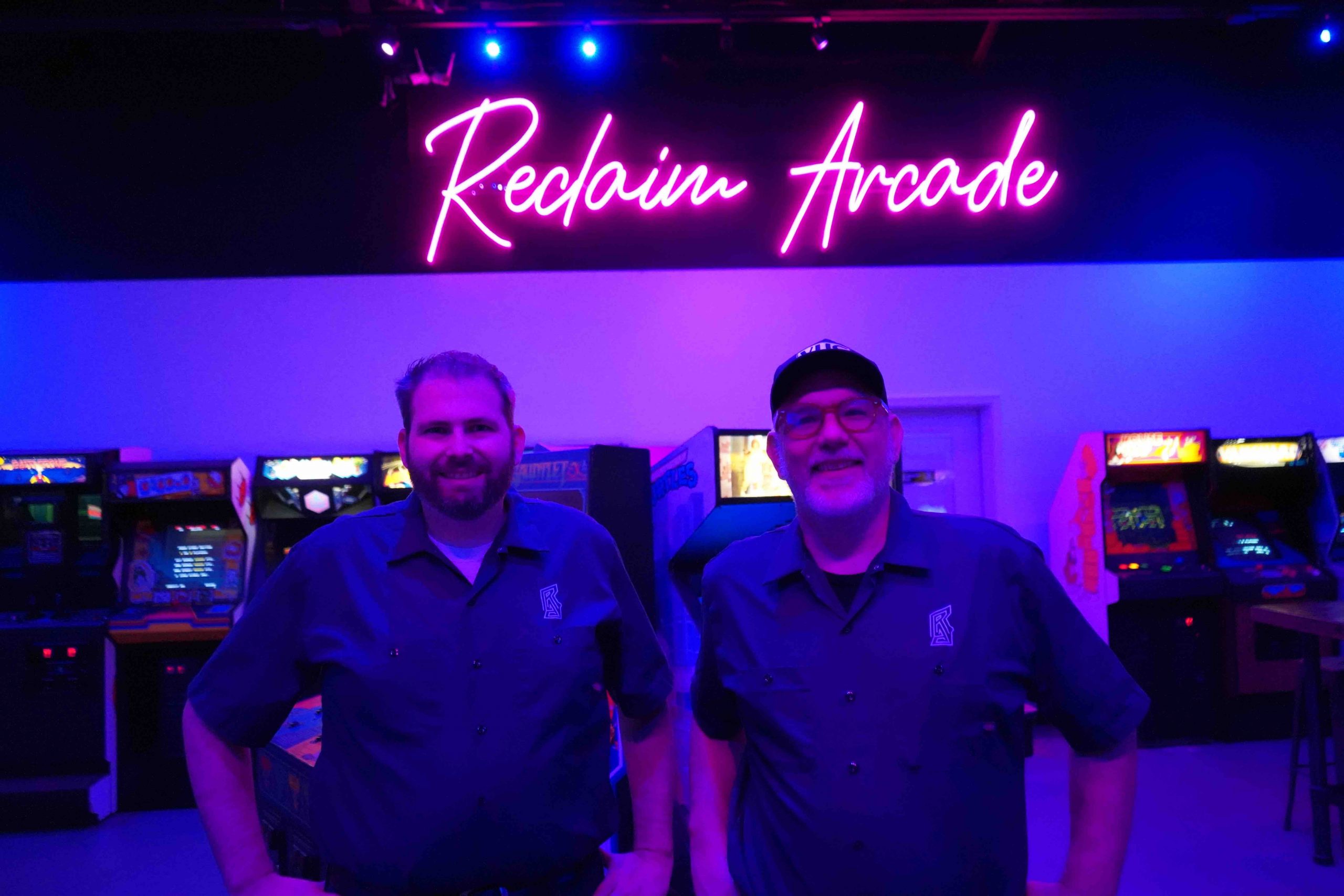
And coming in just a over an hour will be a discussion with “tell me again about my eyes” Tim Owens about how he is approaching marketing for the inimitable Reclaim Arcade—reconnecting with the OG Reclaimer.

And those are just the streams I have been involved with over the last month, there are many, many more accessible at archive.reclaim.tv that you can browse at your convenience, but here are a few I will highlight:

Taylor and Pilot caught up with special guest Quinn Dombroski (of whom Reclaim is a big fan) to talk about “Modeling Project Planning in DH throwugh Games.”  Quinn is just too cool and obviously loves what they do, and the passion for teaching and learning is infectious.

Maren and Meredith catch up with another very special guest, namely Bryan M. Mathers, to talk about his early adoption of newest product ReclaimPress. As it so happens, Bryan was not only an early adopter based on his needs for visualthinkery.com and his own website, but also he created the Reclaim aesthetic—up to and including the art for ReclaimPress. In fact, the visual “From Passion Project to Web Empire” is in many ways the metaphor we needed to explain what this service does differently than cPanel hosting in one, elegant graphic. As usual Bryan takes our thought chaos turns them into a compelling and elucidating communique that folks can wrap their head around.

And if you’re wondering if the Reclaim Support team can have some fun, Taylor’s creation of “The Best Support on the Internet” game show highlights Reclaim’s deep comradery, playfulness, and, of course, hosting knowledge. And while a bit indulgent, the streams are most fun because we’ve given ourselves the freedom to explore and share whatever we’re working on at the time.

In fact, I am so excited about our ability to stream regularly on Reclaim TV is that I imagine it as a multimedia-rich and often communal blogging process. I have long had the dream of us creating a “TV Station” for Reclaim, and over the last 6-12 months that vision has become a reality and I could not be more thrilled with the collective effort that has made it possible. YEAH!!!

_______________________________

*This is a paraphrasing of an Eric Likness comment during the live stream that was too good not to re-purpose here, so thanks again Eric, for being there!

Posted in ReclaimTV, video | Tagged , , , | Leave a comment

Swapping Matsushita Chassis on Millipede (and a few more bavacade updates)

Millipede Opened up from the Back

The big win for the bavacade this week was swapping out the existing Matsushita 19″ chassis in Millipede with a like-new replacement I got from Mike of East Coast Arcade Repair while in Virginia recently. It was kind of a fluke I should find another Matsushita chassis in such good working order given many folks consider this the worst chassis of the era. In various repair videos I have heard folks recommend just tossing the chassis and starting over, but as Mike was noting, this stuff is rare enough to begin with that throwing out anything seems like a total waste. I agree. Additionally, each tube is fit for a specific chassis, so swapping chassis often means reconfiguring the tube fitting, which is definitely not trivial.

The Matsushita often came shipped with Atari cabinets like Millipede as the service manual suggests, and I’m pretty sure the one I took out was original. The issue began when I moved it out of my basement in preparation for it going to the studio, the game powered on, board worked, but the screen was showing black. The monitor was getting power, so it had to be something on the chassis board(s), and given the sense that it’s extremely difficult to repair, I balked at the cap kit.

Millipede in bavacade

So, as luck would have it, Mike had a working chassis and I got that to swap it out, but when I did the screen was once again black…WTF! I dug in around the monitor adjustments, and it turns out the brightness was all the way down;* I also had to dial in the various red, green, and blue colors to get the game looking good—I am almost there, but not yet perfect.

Millipede Horizontal Position Hack

The other bit was that the horizontal position pot on the deflector board was not really adjusting the position all that much, and as a result, half of the high score and player 1 and player 2 scores where being cut off at the top of the screen. I have a hunch the horizontal position pot is bad, so it might need to be replaced, but I opted for the quick fix of simply pushing the black, cardboard monitor shield that surrounds the CRT up about a 1/2″ to solve the issue. A bit of a hack, and in the image above you can still see the player two score to the right gets clipped a bit, but much better than taking the soldering gun to the deflector shield.

So, with that fix, the first in the new studio, I only have Centuri Challenger down, and that is definitely a K4600 chassis issue, but no rush there.

It’s worth noting as well that I grabbed a backup Phoenix PCB board from Reclaim Arcade while in Virginia (so that game is back online), given mine was still with Mike before I left. Mike also fixed a few other boards for me, namely a Stargate backup board set I got online, two Crush Roller boards, a Williams FPGA board, and a Moon Cresta board. I’ll pick all these up the next time I’m in Virginia save the Moon Cresta board which was shipped to Portland, Oregon, and by all accounts is working beautifully with the newly installed high score save kit. YEAH! So, the bavacade maintenance continues, but at this point I’m definitely feeling ahead of the game.

____________________________________________________

*This does beg the question of whether or not the brightness was all the way down on the original chassis to begin with? If not that, perhaps some related soldering joint was broken during the move—a common issue. Not sure, but for right now I have a working chassis, and another that I can test out my theories if anything happens to the working one. It’s  my opinion that having backup chassis is never a bad thing.

Posted in bavacade, bavarcade, video games | Tagged , , , , , , , , , , , | Leave a comment

Mastodon Costs

I started running both social.ds106.us and reclaim.rocks Mastodon instances back in November 2022. The ds106 server has about 40 active users, whereas the Reclaim Rocks server is pretty much Reclaim Hosting‘s own server, and we have 3 or 4 users tops. I saw Tom Watson was asking other Mastodon admins what it costs to run a server, so I thought it was a good occasion to take a look and see what our monthly costs are for social.ds106.us. Turns out Tom is looking for information on servers with thousands of users, which is not the case here, so really this breakdown is limited to smaller servers like ours which will probably work for 40-100 active users pretty easily, much beyond that I’m not sure.

Another reason to post this is to alleviate some of D’Arcy Norman‘s concerns around the costs of running the ds106 Mastodon server 🙂 As of now it’s running comfortably on Reclaim Cloud and is entirely covered by Reclaim Hosting, and we’re happy to do it for as long as we remain a viable company. But in the event that changes, I think the costs would be pretty manageable for 30-40 people at well under $2 per month. Anyway, here are the costs over the last 5 months for a 4GB containerized server and a dedicated IP address:

Monthly costs for social.ds106.us server

The only thing missing here is the media, which is offloaded to Digital Ocean Spaces at $5 per month for up to 250GB. Although, as a result of doing this analysis, I discovered I let the bucket get up to a 1 terabyte given the cron job to remove cached media was broken. Running regular cleanup tasks will save you significantly on storage space, and offloading to an S3 compatible storage solution is a must. So, if you take the above sampling, that averages out to $51.26 per month, and another $5 for S3 storage a month, you end up with $56.26 per month to run a small Mastodon server on Reclaim Cloud. Given there are 40 active users, that would be $1.60 per person, per month, and much of this assumes that someone is interested in taking on admin tasks—which right now I’m happy to do—but there is definitely a human cost there long-term. Which reminds me, make sure you run your Mastodon in a Docker container to make updates as easy as possible, moving our Mastodon from a VPS to a Docker container was the best thing we did for making things quite easy on the management side.

Anyway, I hope this helps anyone who is trying to figure out these details, but I’m not sure how well these numbers scale, but I would love to hear about how folks at the hcommons manage their community of thousands on Mastodon.

Posted in Mastodon, s3, sysadmin | Tagged , , | 7 Comments

Ode to My 13″ Macbook Pro from 2015

13" Macbook Pro 2015

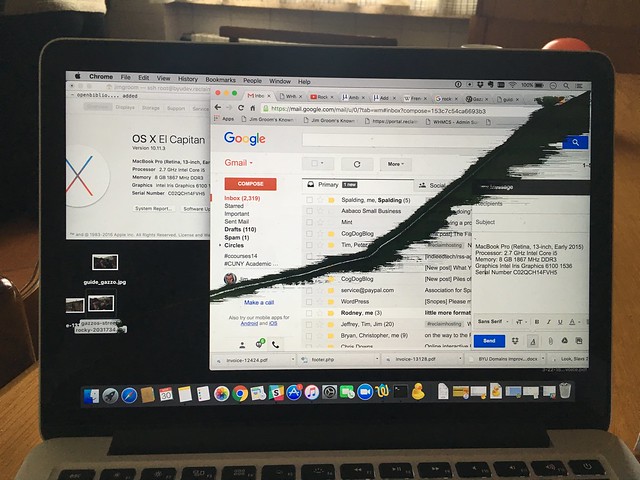
Those stickers tell a story, the above Macbook Pro is a 13″ retina display I bought in 2015. It was my first Reclaim Hosting company computer, and almost 9 years later has continued to prove to be the best computer I’ve yet to own. Things started out rocky between us, for sure. Just a week or so after purchasing the computer, I dropped it on a trip out to BYU and the screen cracked. Sad Panda!

That's no glitch

I waited about 6 months to get it fixed, talk about the challenges of computing with increasingly vanishing screen real estate. But after I finally bit the bullet and got a new screen, this computer has been rock solid ever since. The only reason I replaced it in 2020 was because it was struggling with all the video streaming requirements the pandemic thrusted upon us. It has 8GB of RAM and a 2.7 GHz dual core processor, but when I started playing with OBS it was definitely feeling the resource crunch.

Macbook Pro 13 2015 Specs

I had the unfortunate timing in 2020 of buying the last 16″ Macbook Pro with an Intel chip, that had four times the RAM (32GB) and an 8 core 2.7 GHz chip, but because of  a poor design the machine would continually overheat and the internal fan was like a plane taking off, definitely not ideal for streaming. So in many ways that machine was a total lemon, which led me to buy a M1 Mac Mini with 8GB of memory as my main computer in 2021 at a fraction of the cost of the Intel Macbook Pro.  And to be fair, the M1 chip was as fast as promised. In fact, I wrote a bit about the transition from the lemon Macbook Pro to the M1 already. The Mac Mini has proven to be quite a workhorse in and of itself, but the 2015 Macbook Pro continues to blow my mind, and let me tell you why.

Last week I was heading out of town, and for trips I usually resort to the lowly 16″ intel-based MBP lemon I bought in 2020. But this time that computer was incorporated into a strange streaming setup I am working on at bavastudio, so I needed a substitute. No problem, I can use the 13″ Macbook Air I picked up in New Orleans last Summer in a crunch given my Intel Macbook Pro got fried.*

Macbook Pro 13 2015 Open

However, turns out my son needed that Macbook Air for a school project given it’s that time of year, so I was considering traveling with just my phone—which is doable, but a bit dicey if things go really wrong. At this point it was late evening before a very early flight, so I was almost resigned to the phone until I thought why not try and setup a new user on the 13″ Macbook Pro that Anto uses. I wouldn’t need much app wise, just some basics in the event of a Reclaim emergency, such as 1Password, Slack, Asana, and, oddly enough, Skype. So, I set the machine up in about 30 minutes, and I had the old workhorse ready to go again in no time. It felt good to be reconnected with this “old friend,” and the only issue I ran into was that Slack would only run in the browser, not as a desktop app (which i think is related to it running on an older OS version, namely Catalina).

Slack in Browser MBP 2015

For anyone interested, the ports on each side give you an idea of how old this thing is. The left side has the magnetic power cable, two fire wire ports, a USB 2 port, and a headphone jack.

The right side has another USB 2 port, an HDMI port, and a large SD card port. Turns out I didn’t need access for any server issues that arose given my phone is pretty well equipped for server access, but I did use my dear old 13″ Macbook Pro for some banking and other tasks that are easier done on a laptop.

I imagine everyone working as long as I have with these machines has that one computer that has proven the workhorse you need to get things done, and has lasted well beyond its supposed relevance. That’s this computer for me, not to mention the 13″ form factor is much better for traveling, and when I’m at the home/studio office I have a multi-monitor setup hooked into the Mac mini, so the laptop goes in the drawer.

In fact, I should take a moment to write about my current M1 Mac Mini setup given I did get three screens running off it thanks to an NDI device Taylor shared with me, but that’s fodder for another post. This one is about my all-time favorite personal computer: the 13″ Macbook Pro from 2015, what a crunch chewy bar you are!

_____________________

*Another story there about how much the 2020 MBP sucks, it got exposed to a touch of water and the whole board fried, and I lost data and everything, luckily it was not my primary machine, but what a cluster. And this forced me to try and use my son’s Macbook Air from 2012 for the trip, but it proved way too slow for even the basics.

Posted in fun, general | Tagged , , | 2 Comments

The Blog Generation

One of the ReclaimPress discussions Taylor and I had recently was with Chris Long, who will soon be taking on the role of provost at University of Oregon, leaving behind some absolutely amazing work and colleagues at Michigan State University. Chris has been an early supporter of Reclaim Hosting, and for that we’re very grateful, but it wasn’t so much because he liked our logos or thought we were cool (though secretly I think he did : ).

Rather, it was because he was part of a group of faculty at Penn State University almost 20 years ago that saw blogging as a way of narrating their work and capturing the life of the mind over the course of their academic career. Chris stayed that course on his Long Road blog, and while we were discussing the option of moving his site, it became clear just how important it was to him that this move be seamless and his site run under the best of conditions. The discussion was going to start as an argument for him to move from cPanel to ReclaimPress (see my last post about a post-cPanel toolkit), but it turns out there was no argument to be had. Chris immediately saw the value of running his blog in ReclaimPress given it would be faster, backups allow for multi-region restores, and he has access via SFTP and SSH should he need it elsewhere easily.

Another brilliant image from Visual Thinkery to capture the preciousness of our blogs

In fact, this is a theme that’s been in the air as we work to bring old gold bloggers over to ReclaimPress. Maren’s “20 years of blogging… now on ReclaimPress” discusses just this very thing, highlighting just how crucial her blog has become to her sense of self online. As a result, the moment of moving it elsewhere brought the importance of this space into sharp focus:

My blog, which I mostly take for granted, and which, thanks to the super solid shared hosting experience I have had ever since 2016 I never really had to worry about, ever, suddenly became my most precious of domains.

Years of chronicling your work, commenting with colleagues, and generally prospecting your small bit of the web is something that has been deeply valuable to a whole generation of web denizens, and as the center cannot hold, perhaps that small blog at the edge of the web, tied to many, many others, can keep both hope alive and some freak flags flying.

I can’t really speak too much about returning to the blog given I never left, but I’m ready for the vinylesque revolution of blogging, in fact I know a place where you can press your own blog vinyl fresh on the web.

WordPress Vinyl Cutter on reclaimPress


Posted in blogging, ReclaimPress | Tagged , , , , | 6 Comments

My Post-cPanel Toolkit

I spend less and less time in cPanel managing my online presence. I’ve moved bavatuesdays off cPanel 10+ years ago given my blog demanded a bit more juice than shared hosting could provide resource-wise. But once my go-to site went off cPanel, all the other projects I’d created with WordPress over the years were beginning to break due to major version updates and plugin/theme incompatibilities. It’s a trail of web tears if you let it go too far, so I’ve been converting as many of those sites as possible to static HTML over the years.

So I started thinking about what tools I regularly use while running my sites off cPanel. The first, and most important for me, is moving DNS management to something like Cloudflare. You can get a free account, and once you’ve pointed your domain’s nameservers at Cloudflare, you can manage DNS for the apex domain and all subdomains from their interface. Making that jump was the biggest for me, but I’ve never looked back in terms of returning to cPanel for DNS management. Also, if you still have subdomains on a cPanel account, you can use an A record in Cloudflare to point back to the cPanel server IP address.

After DNS, one of the features folks might need is email. But email on shared hosting has always been a bad choice, and that is increasingly becoming the case, so much so that Reclaim is strongly considering discontinuing shared e-mail support for all shared hosting accounts. Why is hosting email on shared hosting a bad? Well, because there are tons of spam houses out there that monitor and block servers that send out what they consider spam (which is not always the case), which leaves small hosting companies like us playing whack-a-mole on the regular just to keep basic email working. And being a small company we have none of the leverage of a Office 365 or Gmail, so it’s truly a losing battle to ensure email running well on shared hosting. In short: don’t run email on your shared hosting cPanel server. And if you are anathema to the free services like Gmail  and want to get serious out security and taking ownership then take a look at Proton Email.

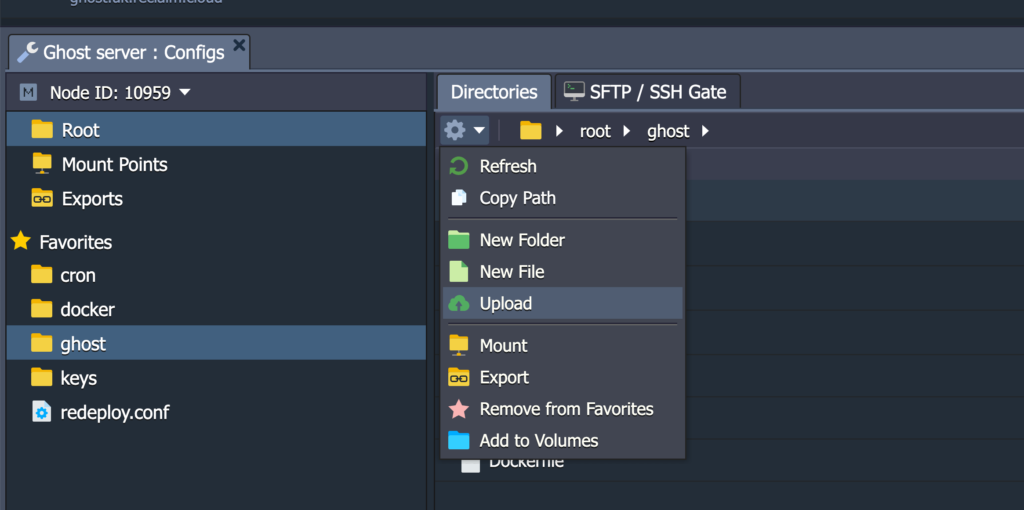
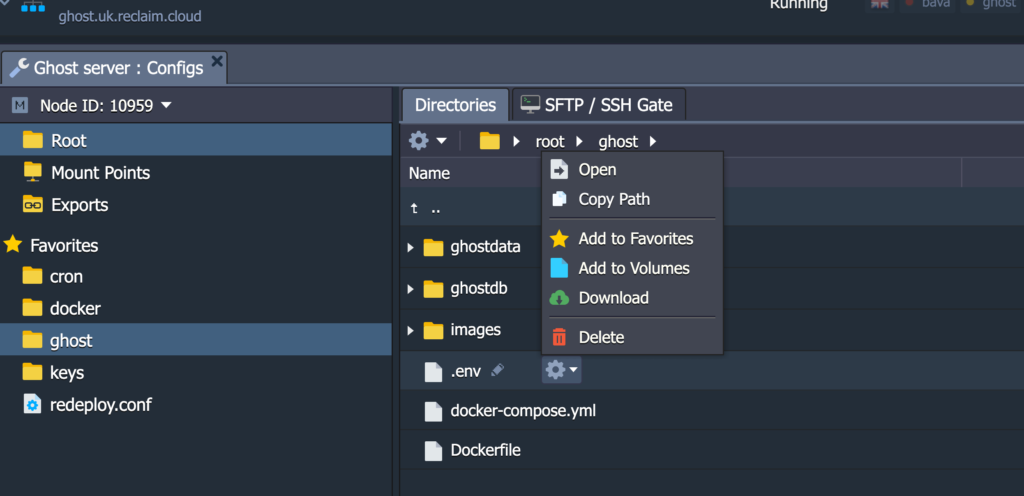
With DNS and Email out of the way, the other feature I would miss is file management. This is tougher, given it will depend where you’re managing your actual site. Here’s a for example, on Reclaim Cloud each environment has a file manager built in where you can traverse directories, as well as upload, open, edit, and delete files, so there is a built-in solution there.* So ReclaimCloud has its own file manager.

File management in Reclaim Cloud

File management in Reclaim Cloud

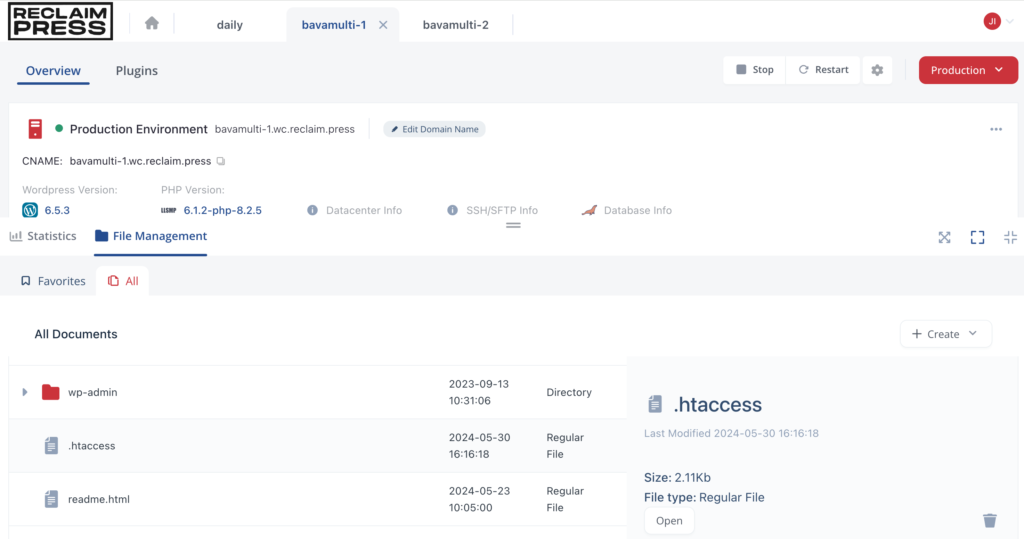
But for ReclaimPress things are a bit different on this front, you can open, edit, and delete static files in your WordPress instance, but you would still need to practice some FTP kung-fu to upload new files to the server outside the aegis of the Media, plugin, and theme uploader built into WordPress.

More limited File Management in ReclaimPress (no file uploads)

What else? Domain redirects? Handled in Cloudflare. SSL certificates? Handled in Cloudflare. And I really think that’s about it for cPanel core functionality, although I am sure I am missing a few things, so let me know.

The one piece that might get you thrown off as you start to use other applications in other stacks is that transactional emails for things like password resets, welcome emails, etc. are not taken care of by the server automatically. This is why transactional email services like Mailgun become necessary for blog applications like Ghost.†

In fact, most of the other self-hosted tools I’m using these days like Ghost, Peertube, and Mastodon can often be run as one-click, stand alone containers on a service like ReclaimCloud. Which means, for me, managing the DNS through Cloudflare and the transactional emails through Mailgun. I’m finding my dependence on cPanel more around preservation than active publishing at this point, and I think a small, secure apache server on ReclaimCloud for archiving most of those sites would break that tether, but that might be fodder for another post.

Another big reason why I have been exploring these alternatives over the years is not only because more and more apps are created outside the PHP mold, but also because cPanel’s pricing model continues to become unwieldy, with 20% jump after 20% jump in license costs. A post-cPanel plan is as much about online survival as anything else.

_________________________________________

*What’s more, if you’re running a WordPress site on ReclaimCloud, you can create subdomain-based directories in the ROOT folder where the WordPress site lives and host your archived, static sites by pointing the DNS for that directory subdomain in Cloudflare to the site’s IP. Alternatively, those directories can just be subdirectories off the main domain and work just as well.

†In fact, Ghost has built many of the basic email functions into the app, but the email newsletter features that have made it so popular still require a transactional email service like Mailgun.

Posted in bavatuesdays, digital identity, indieedtech, Reclaim Cloud, ReclaimPress | Tagged , , , , | 4 Comments

Reclaim the Comms

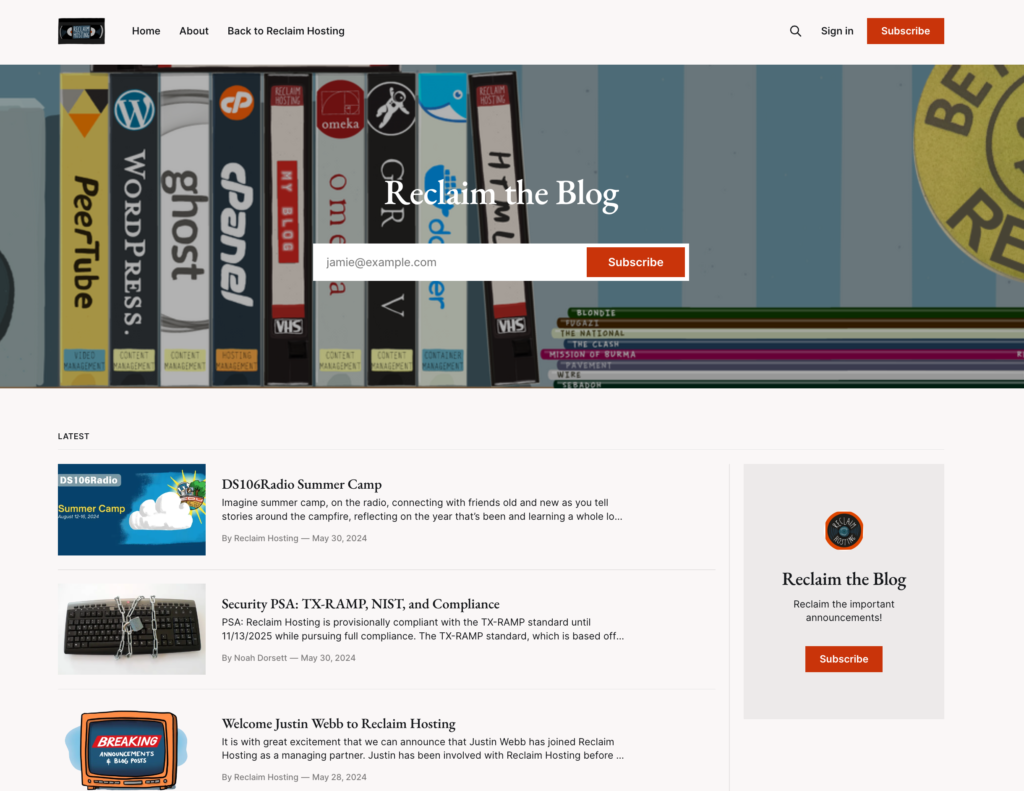
There’s been some discussion around the impact of the decline of centralized networks, such as Twitter, on individual and organizational communications. I’m not sure of the broader impact, but I do know it’s led Reclaim Hosting to take a wide range of approaches that have freed us from the impulse to centralize. More than two years ago we decided to focus on creating a monthly newsletter, as well as starting monthly community chats. More recently we moved away from irregular, syndicated posts from our own personal blogs and created a company-specific blog “Reclaim the Blog.”  Two of the three (the Roundup newsletter and Reclaim the Blog) are run on the open source blog software Ghost.* The community chat is usually held at meet.reclaimhosting.com/community-chat using the video conferencing software Jitsi, recorded for posterity and archived on ReclaimTV. We like open source.

Screenshot of Reclaim the Blog

Reclaim the Blog

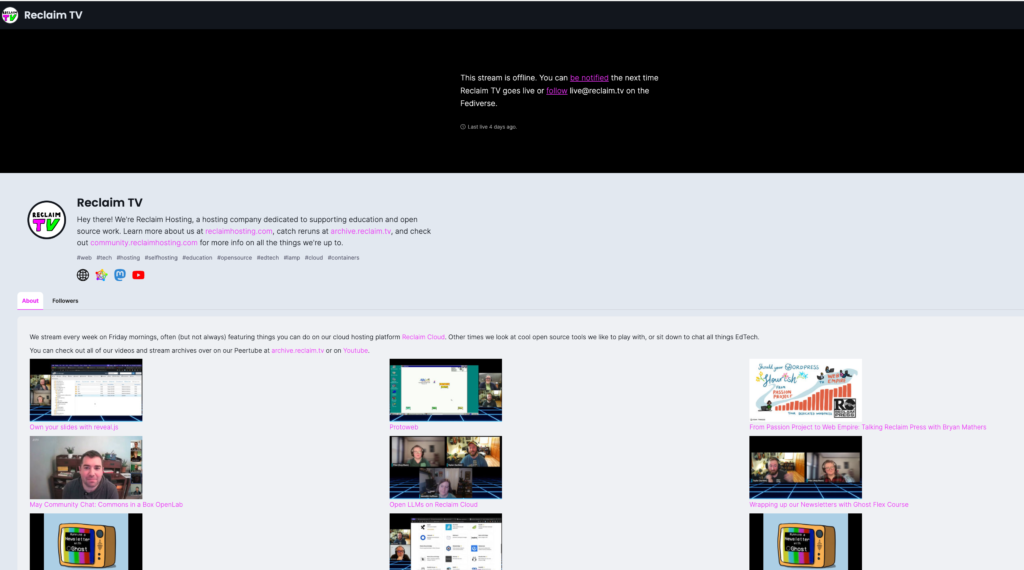
ReclaimTV is another facet of our social approach, we run regular video-based workshops and weekly streams that represent an ever-growing archive of the work we do. The forward facing site of ReclaimTV is built-out with OwnCast (Taylor documents the process here), and we usually use YouTube (and sometimes PeerTube) for the live streaming, which is often managed through StreamYard (but occasionally OBS). What’s more, we have an archive of all our videos in both YouTube and PeerTube that can be readily accessed after they premiere.† The videos you see on the OwnCast front page at Reclaim.tv are all pulled from PeerTube:

Screenshot of ReclaimTV site

ReclaimTV

In terms of announcing events, we do as much as we can to announce upcoming events in the monthly Roundup newsletter, and then use Mastodon to regularly remind folks and  make announcements for upcoming streams, blog posts, case studies, etc. A lot of our comms are still driven by email, but we’re hoping more and more they become part of an activity pub network with apps like PeerTube, OwnCast, and Ghost that are, or will soon be, part of the federated network.

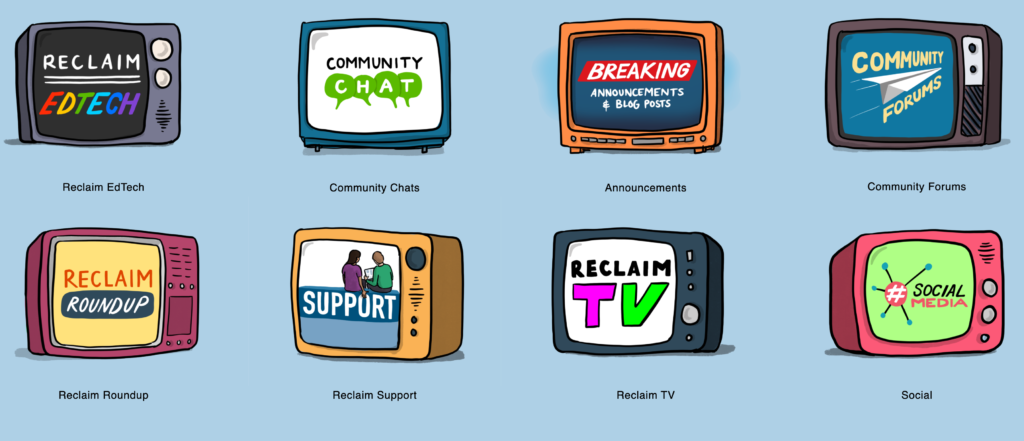
Reclaim Hosting’s Community page

In terms of an active community for conversation, Ghost has comments but they’re pretty dead thus far. We’ve been long-time users of Discourse for our forums, but that’s been a pretty quiet space. We decided to use Discord for integrating chat into workshops and live streams, and that has been working pretty well thus far for conversations (thanks to awesome folks like Erik Likness), but I think we could still do better on the broader conversations and pulling in new voices. You can get a sense of the broad range of activities at the community.reclaimhosting.com page, but the cool thing, at least for me, is that we’re relying on a fair amount of open source tools to create a fairly decentralized social presence. The return to a more heterogeneous web for publishing and connecting can be a bit more work, but at the same time I feel like we are returning to a web of building and connecting the tools to create that unique experience on the web we want, and that’s what I signed up for when I became an edtech—dammit.

_________________________________________

*The engagement numbers for both Reclaim’s newsletter and blog are staggering, anywhere from 40%-60% of the 800 users signed up open the email and click through links.

†The PeerTube mirror is based on the not-so paranoid fear of YouTube shutting down our account without notice

Posted in edtech survivalist, edtechsurvivalist, open source, reclaim | Tagged , , , , , , , , , | 2 Comments