Santa Cogdog

As some of you may know, I have been posting a boatload about toys over the past three or four months, I still have four more posts to write, but I wonder if this one isn’t a fitting end to the series, if if a bit preemptive. Cogdog has been chiding me all along about my toy posts, as have many others, suggesting they aren’t real blogging—the very banter I love —and in the spirit of fun-loving abuse, CogDog wrote this tweet:

Image of cogdog tweet

So, in order to escalate the banter, my son Miles and I took a look at Cogdog’s real Matchbox cars and made a plea for a playdate in the form of a video:

No question this is a shameless plea, and Cogdog not only took it in stride and enjoyed my strategic use of my children to make a point. He actually one-upped me again by actually sending some of his childhood toy cars to Miles (and I think the second video makes clear that Tessy understood the bubble wrap was hers to eat):

This is silly and all, but more than anything this is why I continue to have faith in what I do, and why I continue to do it. Very few people live the idea of giving and sharing on such a deeply personal level as Alan Levine, and he remains a real teacher and mentor in this regard. When I think about all the toy posts over the last few months, I think this was the very reason I did it, to foster those connections with my distributed friends that are so real and present to me on a daily basis. So thanks Alan for making this insanity so much fun, and Miles really does love the cars, we are planning to make a movie with them today, which will hopefully act as a follow-up post, and serve to ensure we are putting the toys to good use 🙂

Posted in 1102xmaS, fun | Tagged , , | 7 Comments

A response to David’s response :)

This is a comment I left on David Wiley’s post “Responses to the Rev and Stephen on ‘Openness'”, it’s extremely long, and should really be read in the context of the post on David’s blog, but for posterity I wanted a version here, because I think it outlines some of my facile thinking on openness that I need to work through and tighten up. Nonetheless, another shot in the dark, and more than anything it feels good to be blogging again, Twitter is no substitute for the real thing 🙂
__________________

David,

Wow, thanks for the lengthy and thoughtful reply, I guess one can expect nothing less from you, but two focused and articulate responses in one day—that’s a ton of work, and it is appreciated. And let me start this comment by saying that I understand that I am neither precise or entirely realistic when I approach the question of open education. I’m working through many of the ideas on the fly, and my deep-seated concerns about leadership and the institutionalization of opened is by no means cogent in my mind, in fact I am using this space and your help to develop these ideas, and I have a lot more work to do, so thank you for helping me to think about and articulate these amorphous ideas more precisely.

One of my questions in response to your thoughts is how the figure of radical becomes anyone that is in some ways outside of the upper echelons of the institutional hierarchy. At UMW, as a case in point, we have a large number of faculty members and students posting their class notes, syllabi, resources, and a semester’s worth of engaged discussion on course blogs that often have CC licenses. This is not a mandate from above and very few of the faculty would consider themselves radicals, in fact this is a community and culture of discussion, thought, and ideas that has born a practice of sharing resources. What’s unique about this process is that it is remarkably cheap and flexible, and at the same time has not been handcuffed by the idea of administrative buy-in—we ultimately got that, but only as a result of its success. What’s more, is that I think it gets at both the global and particular sides of the question of open you discuss early on in your post. We have managed to premise our system on an idea that anyone is able and willing to join the conversation at UMW—no restrictions—and they can use it as they see fit. More than that, we have worked with faculty and students to show them how they can act like hackers to create their own space online to publish their notes, syllabi, discussions, etc, and they are doing it in no small magnitude. This was a relationship premised as much on a need as it was on the idea that making this stuff available allows UMW to share the content created here widely. Google has become our friend in this account, and by doing such an experiment on a smaller, localized scale, the implications for sharing our working and allowing faculty and students to own their investment has been powerful. What’s more, is that this has been a grass roots, reciprocal relationship born out of both necessity and experimentation, and institutionalizing it has been happening to some degree, but on terms outside of an official administrative blessing—it has become a part of the fabric of the UMW landscape because people use it regularly and it seems to work for many of them. We really don’t have to dicate the terms of openness for the entire system, rather we have conversations about these ideas, and allow students and faculty to choose the level of open that they want for themselves. This is a case where we can see the ease of publishing and the searchability of blogs that are managed by individuals begin to redefine the open educational resources landscape on a small scale—but one which I think is happening to some great degree outside of educational institutions.

The point is that this is an example of how the web works, and by providing that possibilities through a series of discussions, demonstrations and relationships goes much further than an institutional position on open that is handed down to faculty and students, and seen as yet another directive—whether or not we see the value of it—and I agree with you that open and accessible resources are the reason behind the push, and have immense power and possibility. That said, the process through which a community comes to this, and realizes it is extremely important, and need not necessarily be born out of a bill of rights or specifically defined idea of open, rather it comes from a community working through this together.

And this is where the idea of the conversation happening in the blogosphere, and the back and forth that we both appreciate seems to me to capture the spirit of the process through a distributed group of people that care about this topic. And while I use the straw man of an imaginary table to suggest a kind of elect group of people defining open, I would suggest that I do this because I think the more we try and grow and scale open ed out of a specific set of principles neatly defined, the more we homogenize and dilute the generative process of individuals working together in distributed and localized networks to think through the implications of open access to content within specific contexts for themselves. This doesn’t mean the ideas of a few don’t greatly inform that community, it simply means that it isn’t stifled through a series of laws and essentialized principles.

As for the necessity of an increasingly greater scale of openness, this is one I am still struggling with, but I have to believe that the idea of open need not grow and develop in any one, pre-defined way. The ideas are out there, and that is where these conversation are so key, what I don’t know is if they need to be thought of in terms of real estate development—a kind of sprawling growth for the sense of reach and profit, not to say that there isn’t some real reward from more people sharing their work, but I wonder if it isn’t best accomplished through more specific communities making this happen for themselves. Do we bring open to them? Or do they define it and make it work within their own context for their own reasons? There is a crucial idea of empowerment here that is not bestowed upon one, but gained through a sense of self realization. Does that make any sense? And growing to grow is not necessarily an end in and of itself if it is a blanket vision.

Now, I tried to address some of the issues, but probably missed some, but I wanted to step out on a limb here and suggest that the confusion surrounding the metaphors comparing the open content movement and open source software movement may be born out of the way in which you use the comparisons freely in a post like this. As you suggest above:

The differences between software and content are not marginal. The necessary and appropriate considerations of openness in these two contexts are significantly different.

And this I agree with, they are rather different in their design and application, but it is when you make comparisons in your argument like the following that it seems you are conflating those differences:

Why do we open education people need to have a seat at the table in department meetings, dean’s council, and when the VPs meet with the provost and president? The same reason that open source software needs a seat at the table with Dell, HP, Gateway, and Lenovo. Sure, the hackers of the world can blow away that Windows 7 install, repartition their hard drive, and do a clean Ubuntu install. But how many more people would open source reach / how much more influence would open source have if the major vendors shipped Ubuntu or Red Hat or (name your favorite distro here) straight to consumers? Significantly more – infinitely more.

In this regard the idea of open content is thought of as a final product like a release version of OSS, rather than the relational process of programming the release. And I would argue that content is far closer to that process of relational discussion around ideas than a finsihed product like a textbook. And therein lies some different, more nuanced, considerations of just what open content might be. I think the 4Rs make sense, but it is a fairly complex relationship to picking up pieces and parts from a variety of different works that may or may not be openly licensed or “official” educational resources. Fact is, we can provide that open content from a variety of positions and varying levels of polish on a regular basis that others can re-use, re-mix, etc. without some official mandate or centralized repository. The emergence of localized networks and an imperfect process of sharing may have as much, if not more, value than a sytemized idea of OSS or open content, and the comparison above to make the point about content through the example of OSS may be part of the conflation, and also lead to a necessary push of systemitizing a process of sharing that need not be.

Ok, that’s it for now, but once again thanks for keeping me sharp, and I hope we can continue to go one like this because it pushes my facile thinking to the next level, and I both appreciate and need that right now.


Posted in Uncategorized | 7 Comments

Who provides the seats at an open table?

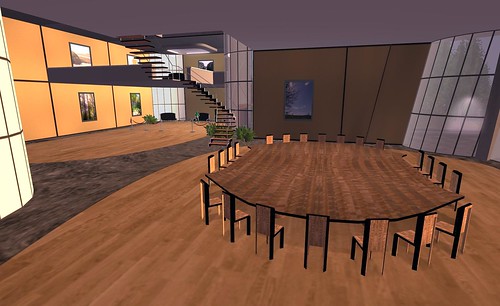
boardroom table
Image credit: Torley’s “architecture”

I’m following the beginnings of George Siemens‘ and David Wiley’s discussion of the term open as it relates to the open education movement with great interest. I’m fascinated by the various connotations a term takes on as it gains popularity, and I think we can agree—that like organic or green—just about everyone is jumping on the term open in education right now, regardless of any real sense of what that term means or what qualities afford such a designation. It’s no surprise to me that corporations like BlackBoard, Google, and Facebook would push for this label, and there is little question in my mind that the market cache such a term has right now is increasingly diluting any of its meaning, particularly given it’s not so much reliant on technical infrastructure or content (though they are necessary and relevant), but rather dependent on a series of networked relationships that change the very logic of slapping a term on a product or being offered a seat at the proverbial table.  Who invites us to this table?

The larger question in my mind is that what’s under girding this discussion is an even more insidious logic than a denatured sense of open, and that’s a sense of entitled leadership. Fact is, the push to make sense of open as a term and discuss it’s meaning, future shape, and ultimate value seems to be the most definitive step in forming an institutional structure of power around it. Who gets to discuss what open is? Where do they do it? Companies don’t really care too much about that discussion, they just care about appealing to users through a term, and if they make up the table, along with administrators at universities and the like, then why do we need to go to the table at all? Isn’t the push away from these legacies of power and privilege a part of what open is working against on it’s most powerful and truly transformative levels? Why does their need to be a continental congress on open? Why do we have to conflate it with system and then elect officials to define it for us?  Part of the power and the hope of this space for me is a new scale of working though these ideas that’s both hyper-individual and communally local at the same time. To frame the discussion around a table of designated players that move us forward seems in many ways contrary to possibilities these connections and relationships provide us. I don’t think of this so much as radical, but rather an alternative to the models of leadership, promotion, and adoption of ideas that have ultimately placed them squarely within a system that is moving in a unilateral direction of progress in the name of growth and profit. Therein lies a deep-seated contradiction and paradox of our current discussions of open and freedom when so much of the meaning of these terms is every where circumscribed by ideas of ownership, property, and exploited labor.

I can’t say this is much of a well thought out response as it is a series of questions and reactions, and I’m fine with that, because I am fine with resisting the urge to systematize and officially organize an ideology like open around a definite group of leaders, institutions, and practices—not only is it far too early in  the thinking, but our current ways of thinking and systems in place would do nothing both bleed the life out of a movement (not an institution) that is composed of a group of people that are not designated to act, but think, write, and create out of a spirit of loosely coupled principles and beliefs that may not be a ratified Bill of Rights, but are born out of the ideas that a sense of freedom and openness is not something anyone can define en masse or institutions can grant through laws. The question is not so much about open, as it is about the state of our hierarchical thinking about leadership, institutions, and order—-I’m afraid under the current conditions an organized approach to open education can give birth to little but a privileged group of leaders that define an institutional course premised on compromise, acceptance, and personal gain—rather than forging ahead with grassroots, reciprocal relationships amongst people invested in their immediate situation and working for change within and through a conversation, rather than an institution or system, much like David and George are doing—I just don’t understand the push to institutionalize and systematize such an approach? Will it really happen if we aren’t pushed to accept or refuse a position, but rather think it through vigilantly and critically in relationship with others? In short, does open need a table? What’s behind the push to institutionalize its meaning?

Posted in Uncategorized | 27 Comments

Have a very betamaxmas

With just 45 minutes left in what has been an amazing Christmas at la casa bava, I’d just like to send out some warm season greetings from the mighty bava to all my loyal subjects. And as a special thank you, I am going to recycle a gift I recently got from Scott “hot pants” Leslie: a BeTamaXMas—what a brilliant piece of web art contextualizing YouTube in the perfect 80s setting, with a TV Guide to lead the way no less. Click the picture below, and enjoy the snowy nostalgia.

Imae of BetaMaxmas

Posted in fun | Tagged | 1 Comment

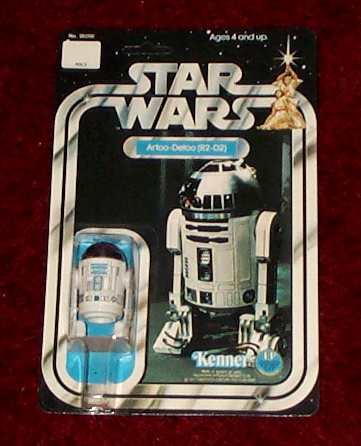
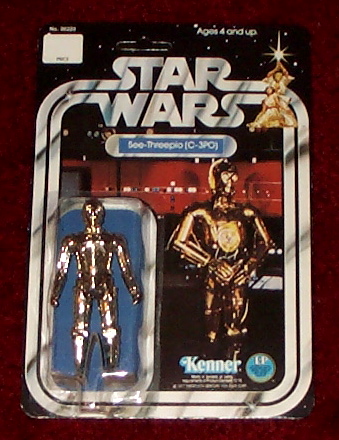
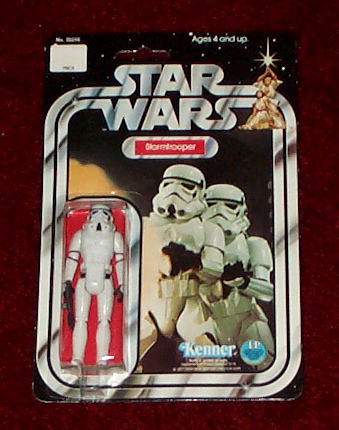
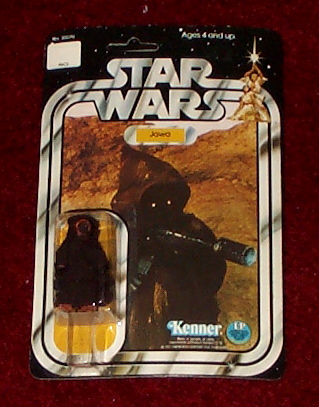
Day 5: Star Wars Figures, the Original 12

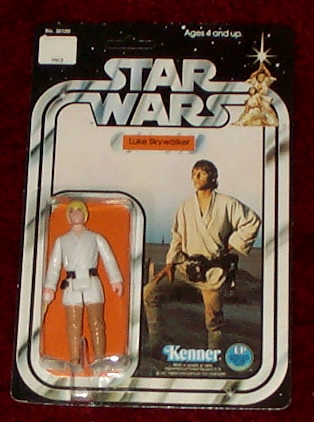
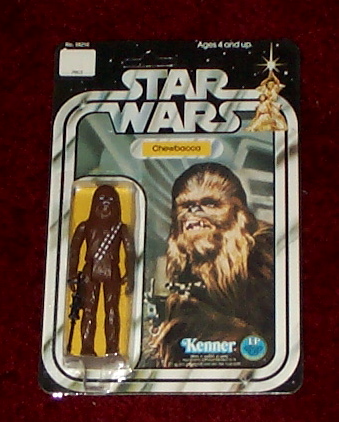
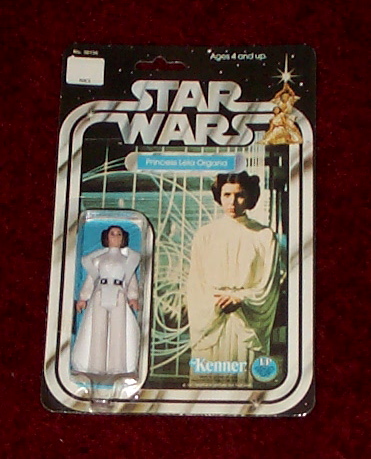
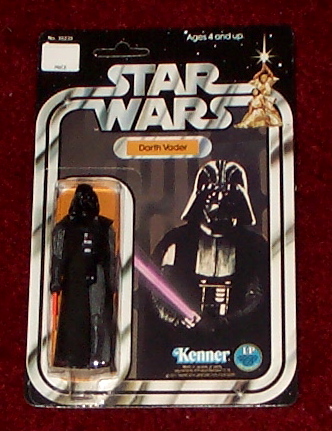
The original 12, not the apostles mind you, but more importantly the 3.75″ Star Wars figures released in 1978 that ushered in a new institution in toy franschises and arguably one of the earliest signs of the immense consumer-driven fan culture that would form around Star Wars for the next 30+ years.

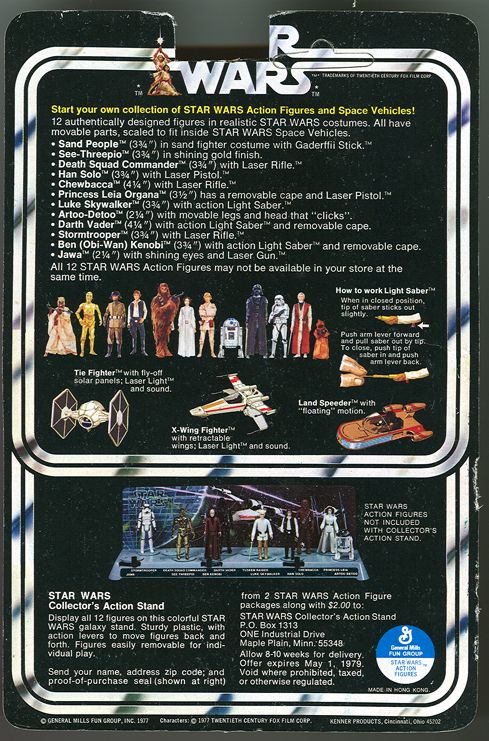
The first wave of action figures are easy to decipher if you have the right box. Check out the back of an original Sandpeople box which lists the original 12, as well as the accessory vehicles like the Tie Fighter, X-wing, and Land Speeder, not to mention the Collector’s Action Stand that were being sold in the early days of the Star Wars merchandising franschise.

sandpeople_swsp001c_back

The original 12:
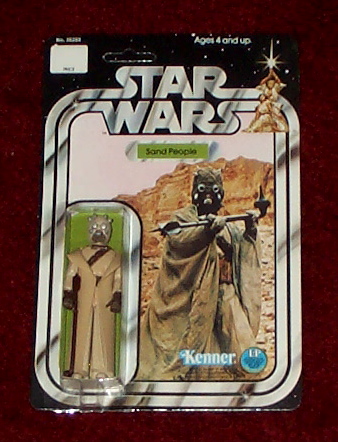
Sandpeople
Sandpeople
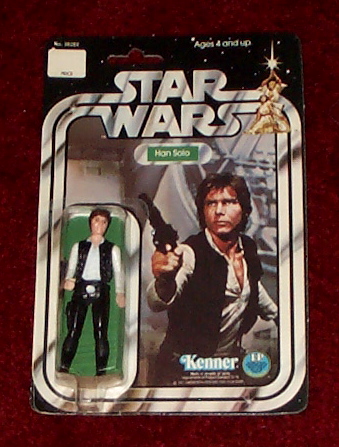
Han Solo
Han Solo
Obi Wan Kenobi
Image of 12 OBi Wan Kenobi
Luke Skywalker
Luke Skywalker
Chewbacca
Chewbacca
Princess Leia
Princess Leia
Darth Vader
Darth Vader
R2D2
R2D2
C3PO
C3P0
Stormtrooper
Stormtrooper
Jawa
Jawa
Death Star Commander
Death Squad Commander

And while writing this post I found out all kinds of wild stuff about the collector culture around these original 12 figures, namely that there is a vinyl coated Jawa that is rare and worth a lot of money. But more than that, the most rare figures are the Vaders, Kenobis, and Sywalkers with what is called a “Double Telescoping Lightsaber” —an early design for the light saber that made it look like it was a solid stem before you opened it up by pushing down the lever in the arm.  Anyway, there are only 3 known Vaders and Kenobis that are “carded” (or in the box sealed) known to exist with the double telescoping, and about 15 Sywalkers, which makes them extremely rare and probably a large forutune. But, while that is fascinating in some ways, it’s not really my thing.  I always wanted to be a collector, and while I have a collector’s instinct, I don’t have the fastidious mentality for it.  Anything of value I get, like all the Weebles sets I bought a number of years back, I ultimately allow to be destroyed in some way. So, suffice to say, I had all the original twelve figures, and while I bought the Death Squad Commander for the Death Star playset, I never really knew why he was one of the original 12, he always seemed oddly out-of-place.

But, more than any other figure, the Sandpeople figures were, and remain, my single favorite action figure of all time. You see, when I saw Star Wars for the first time in 1977, the film kinda stopped for me after Luke is searching for R2D2 and gets attacked by the Sandpeople.  I was so blown away by that scene (see it here on YouTube, and I have also embedded it below)  that the rest of the movie just seemed a blur.  I couldn’t get the Sandpeople out of my mind, they were like nothing I’d ever seen before. As I mentioned somewhere else on this blog, when I actually got home from seeing Star Wars for the first time, I tried to actually make Sandpeople action figures before I knew what that was.  I used tracing paper on piece of cardboard to try and draw him, it sucked—but I refused to stop until I finally created the form of a figure.  And still to this day, that Sandperson figure with the crazy vinyl coat (that was particular to the orginal 12), bad ass gaderffii, and scary looking mug still remains the ultimate in Star Wars mythology for me. Long live the Sandpeople.

TRaider

http://theswca.com/index.php?action=disp_item&item_id=49021

vintage_sandpeople_starwars_12back

Image credit: http://ratherchildish.wordpress.com/2009/12/16/the-sand-people-strike-back/

The single most powerful scene in Star Wars when I first saw it in 1977:

Posted in 1102xmaS | Tagged , , , , , , , , , , , , , , | 9 Comments

Day 6: Coleco’s Head-to-Head Football

Picture 1

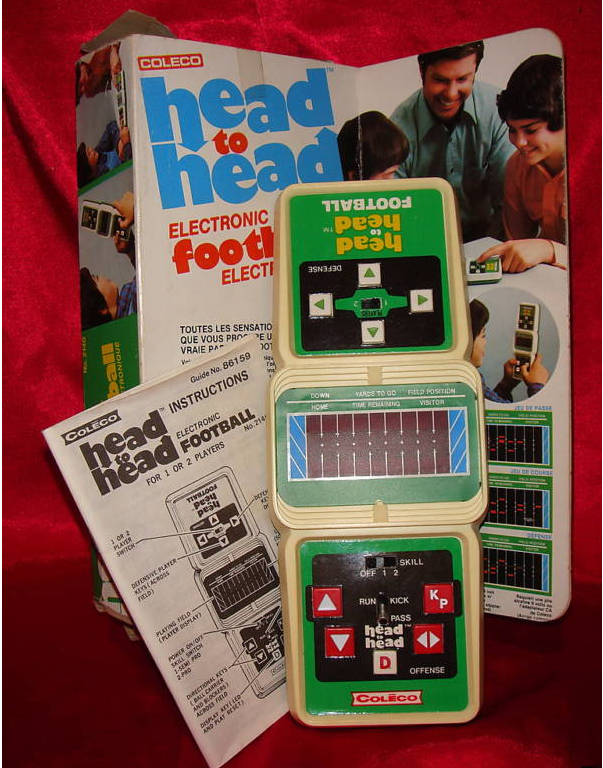
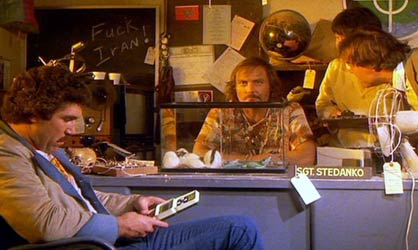
Darcy Norman posted about a Retro LED Footbal game a long while back, and in 1980 I got the Coleco Head-to-Head Football game, a handheld video game for two players, and absolutely the most memorable and fun of the handheld video games I got during the late 70s and early 80s. What was amazing to me about this game was that the design actually worked—kicking and passing were clearly and functionally differentiated, and the game play with one or two people was compelling. I loved playing defense as much as I enjoyed offense, and given how far we have come with mobile devices, I would rank this up their with the forerunners of design and conception—it still looks good. Another cool fact about this game I just learned here, is that it was featured in Cheech and Chong’s Nice Dreams.

Image of Coleco Head-to_Head in Cheech and Chong's Nice Dreams

Here is the original commercial:

Posted in 1102xmaS | Tagged , , , | 2 Comments

Day 7: Star Wars Land Speeder

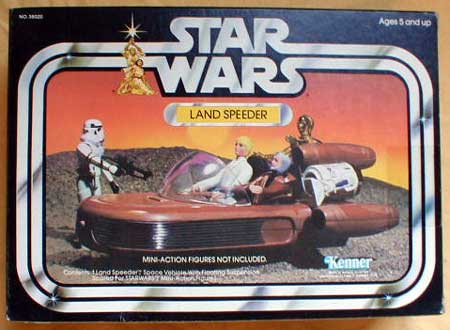
landspeeder-front

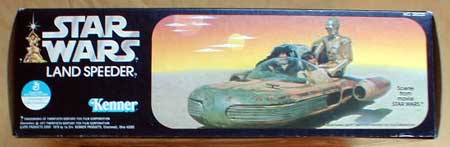
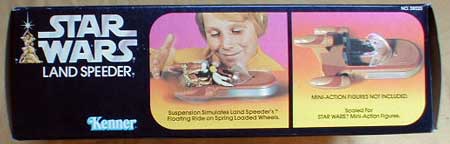
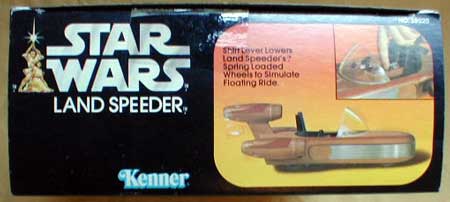
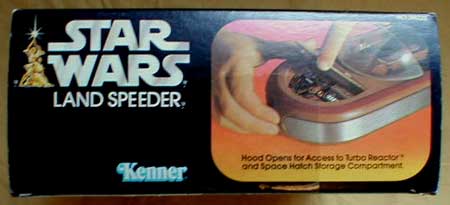
“These are not the droids you are looking for…” I must have uttered that famous Jedi mind trick phrase by kenobi a million times while playing with Kenner’s Land Speeder. And pound-for-pound this may have been the best of the Kenner toy vehicles given how faithful it was to the film version. The crazy depressable shock system on this toy gave the illusion of the actual gliding of the land speeder, and I was extremely impressed with the hood opening to reveal the mechanical innards—I never tired of this one. And when you coupled it with the Creature Cantina, it was without question one of my favorites, if not my favorite, of the Star Wars vehicles.

landspeeder-side1

landspeeder-side2

landspeeder-side3landspeeder-side4

Posted in 1102xmaS | Tagged , , , , | 5 Comments

Day 8: Star Wars Creature Cantina

cantina-catalog

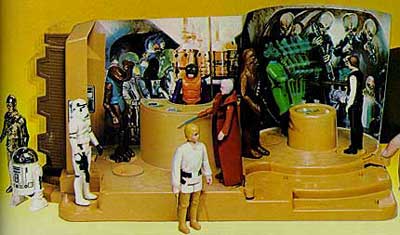
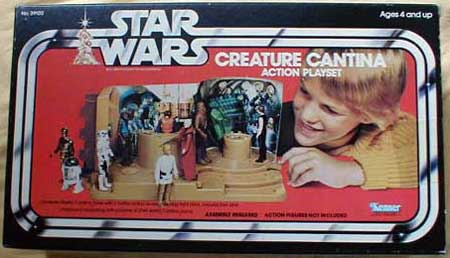
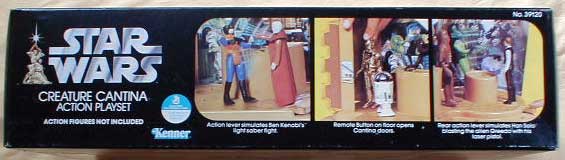
While the Death Star was the first and most impressive of the Kenner Star Wars play sets, the second may have been even more special to me given the subject: the Mos Eisley Cantina. I mean let’s face it, given the impact of that scene in the film, this play set would have been amazing if it was made out of tissue paper. The Creature Cantina is where you re-created Han Solo’s under-the-table jack of Greedo a million times. it is where you had Walrus Man and Obi Wan Kenobi duel it out, and it is also where you lined Snaggletooth and Hammerhead along the bar for happy hour. What can I say about this set, it was cheap, and not the best of the lot, but it was a little piece of a scene from the film that was burnt into my imagination.

Catalog Description:
RECREATE EXCITING ACTION IN THE WEIRD MOS EISLEY CANTINA!

From the scenic backdrop to the action platform, Kenner’s STAR WARS CREATURE CANTINA is pure adventure. By pushing the floor button, CANTINA door swings open and STORMTROOPER can enter. WALRUS MAN threatens LUKE SKYWALKER at the bar! Move action lever and BEN KENOBI knocks over creature. In rear alcove, HAN SOLO meets GREEDO. With action lever, SOLO knocks him over in mock battle. Circular bar surrounded by foot pegs for placement of SNAGGLETOOTH, HAMMERHEAD, or other STAR WARS action figures (not included). Ages 4 and up.

Source: 1980 Kenner Pre-Toy Fair Catalog

And the ever-important box:

cantina-front

cantina-side1

Posted in 1102xmaS | Tagged , , , , | 3 Comments

Day 9: Millennium Falcon

falcon-catalog

Catalog Description:
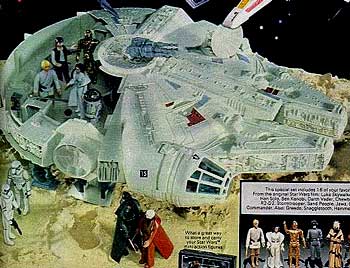
(15) Star Wars Millennium Falcon Spaceship. Use with mini-figures (not incl.). Battle alert sound, landing gear folds up. Cockpit canopy opens. Entrance ramp folds down. Radar dish swivels 360 degrees. Rear deck area lifts off to expose laser gun with seat that swivels 360 degrees and “clicks.” Game table. Secret floor panel. Remote force ball for Light Saber practice. 17x6x23 in. Plastic. Ages 5 yrs and up.
ORDER INFO: Unassembled. Uses 2 “C” batteries, order pkg. below.
79C59472C–Shipping weight 3 lbs. 12 oz…$24.77

In 1978 and 1979 the Sears Xmas Catalogs changed markedly from the previous years for two reasons that I can tell: consumer ready video game units like Atari 2600 and Kenner’s Star Wars line. With the explosion of these two realities in the toy market, from 1978 until 1984 most toy catalogs would pretty much be a Star Wars/Atari 2600 vehicle for consumption. And given those were my formative years of childhood in regards to toys, in should come as no surprise that my top ten would reflect that reality. But not entirely, because the other development in this moment that wasn’t considered a toy, but may have been the greatest toy of all, is the VCR, which represents the third element of this holy trinity of the late 70s and early 80s.

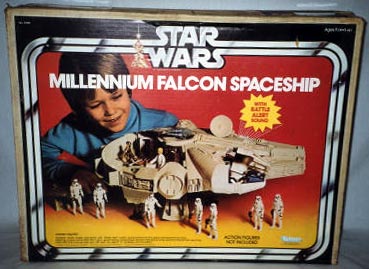
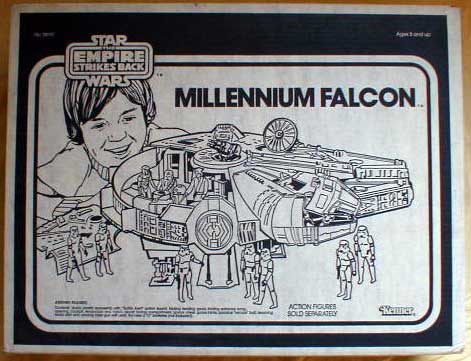
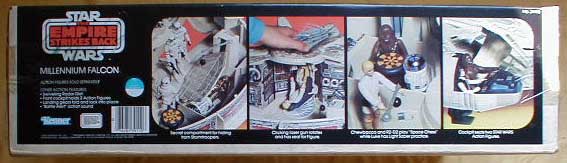
With that being said, I guess it was just a matter of time before this series got to the Kenner’s Millennium Falcon, it was without question one of the most awe-inspiring toys of the day, with removable hatches, entrance ramps, landing gear, 360 degree gun cockpits, remote force ball, the whole nine yards. This was absolutely a toy to be reckoned with.  And one of the few issues I had with it, is that I never seemed to have enough Storm Trooper figures to reproduce the amazing feeling of the first run box for this toy. And in many ways, as is often the case with the bigger Star Wars toys, the box was a huge part of the toy.  I loved the way they made the color picture on the front a kind of black and white cartoon on the back—what a wild aesthetic I never really thought about until now.
falcon-sw

falcon-esb-back

falcon-esb-side1falcon-esb-side2

And here’s the original commercial:

And here’s a commercial that frames the whole early line of toys from Kenner, my guess s that this commercial was released in early 1979:

Posted in 1102xmaS | Tagged , , , , | 6 Comments

Day 10: Fisher Price Play Family School House

Fisher Price Play Family School

Fisher Price Play Family School

I have no hard proof, but I have to believe that the Fisher Price School House was the most ubiquitous of the Play Family sets. it seemed like there was one of these in eery home, and the magnet letters seemed to be on just about everyone’s fridge (I just bought those magnets for my fridge tonight in honor of this classic playset). What could possibly be better than playacting learning in a little red school house? It’s kind of a nostalgia in toys back in the 70s, dreaming of a time when school and learning wasn’t framed on the scale and infused with a test-based logic that suffocate and possibility of play. As an edtech loser, I should have the little red schoolhouse on my desk as a constant reminder of what the internet provides us, a way back.

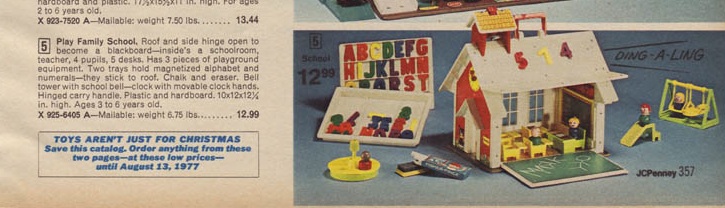
And as a compelement to my last posts on all things Fisher Price Play Family sets, here is an image of a number of these amazing toys from the 1976 JC Penney Xmas Catalog.


Image credit: Wishbook’s “1976.xx.xx JCPenney Christmas Catalog P357”

Posted in 1102xmaS | Tagged , , , | 4 Comments