The semester has been pretty busy at Reclaim Hosting, so much so we needed to roll out a third shared-hosting server last week. This one was named after the early LA punk band X. X marks the server in this case: x.reclaimhosting.com. X is a band I got turned on to during my seven-year stay in LA during the early 90s. X reminds me of seedy one-room apartments on Sepulveda Blvd, taking the bus (which was always hairy in LA), and the layer of filth left over from the 70s and 80s that was just beneath the surface of America’s big cities. Albums like Los Angeles and Under the Big Black Sun became staple listening more than 10 years after their release, and Penelope Spheeris‘s 1981 documentary The Decline of Western Civilization sealed their allure in my imagination as the epitome of punk, in part thanks to the following scene wherein they sing “We’re Desperate”:
“Give ’em a flea bath, quick.”
But what I love about X is how fresh their music still sounds 35 years later. The duet between John Doe and Exene Cervenka never gets old for me, and songs like “The Worlds a Mess, It’s in My Kiss” seem more appropriate then ever, sadly. Billy Zoom’s guitar grounds the band’s sound in 50s rockabilly that works remarkably well with the crooning about poverty, drug overdoses, perverse sex, etc. It’s punk on the sun-baked edges of civilization; a solipsistic struggle with the quotidian realities of sordid abjection—so much so that it seems to forbid political anthems, which in the end may be one of their greatest assets as a band.
I woke up this morning with an excited text from Tim “the wonderful wizard of Reclaim” Owens pointing me to some work he did on our Cloudron test instance. Short version: it is awesome.
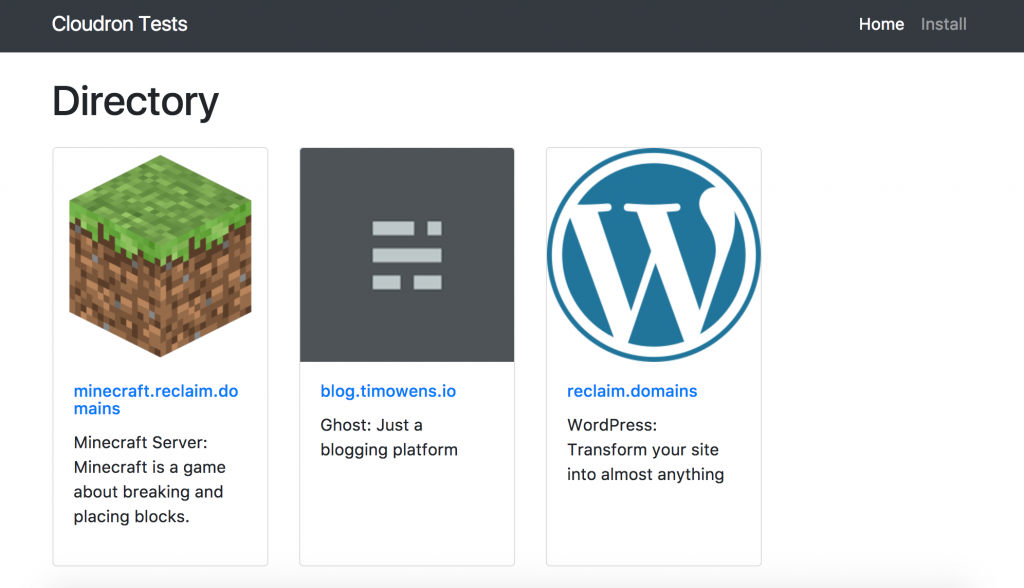
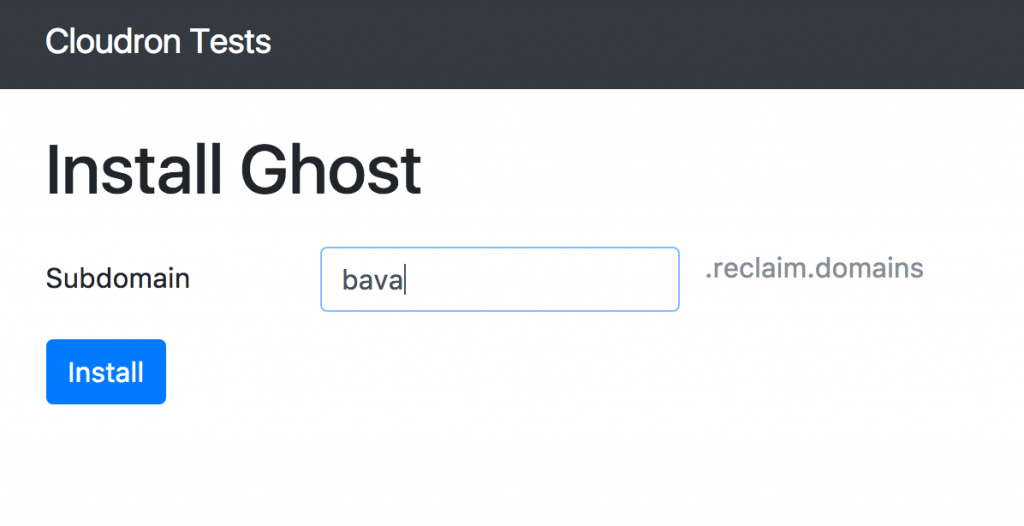
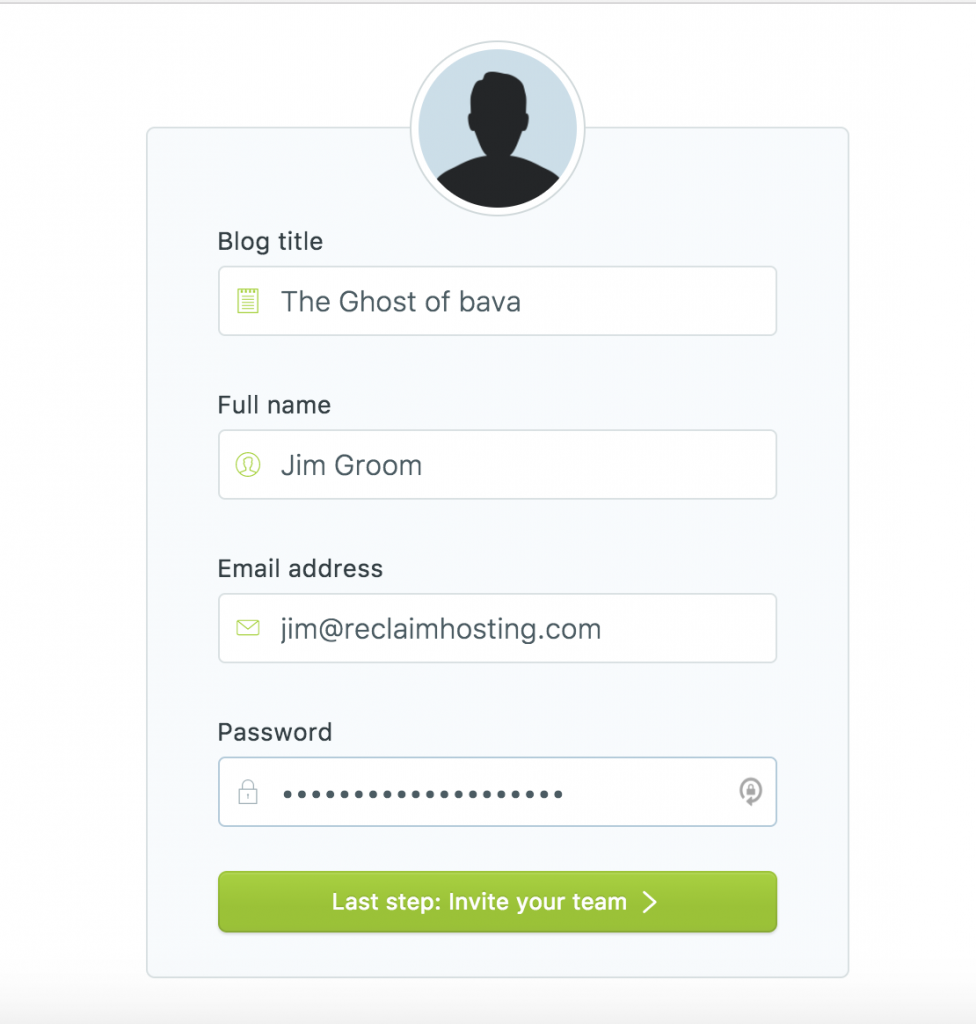
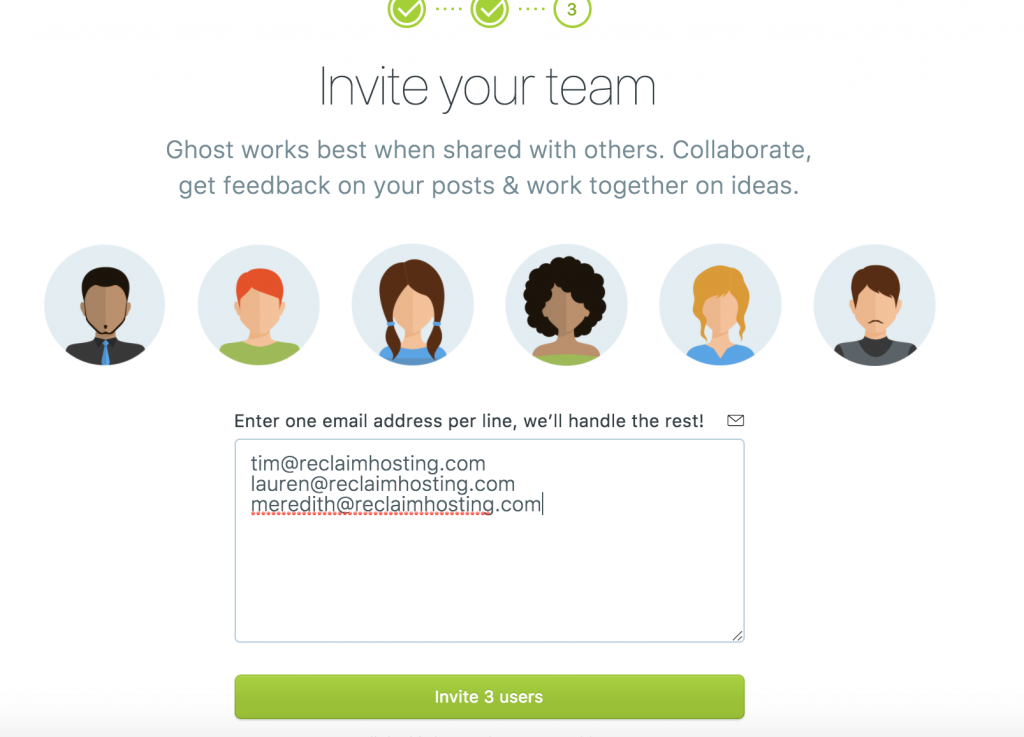
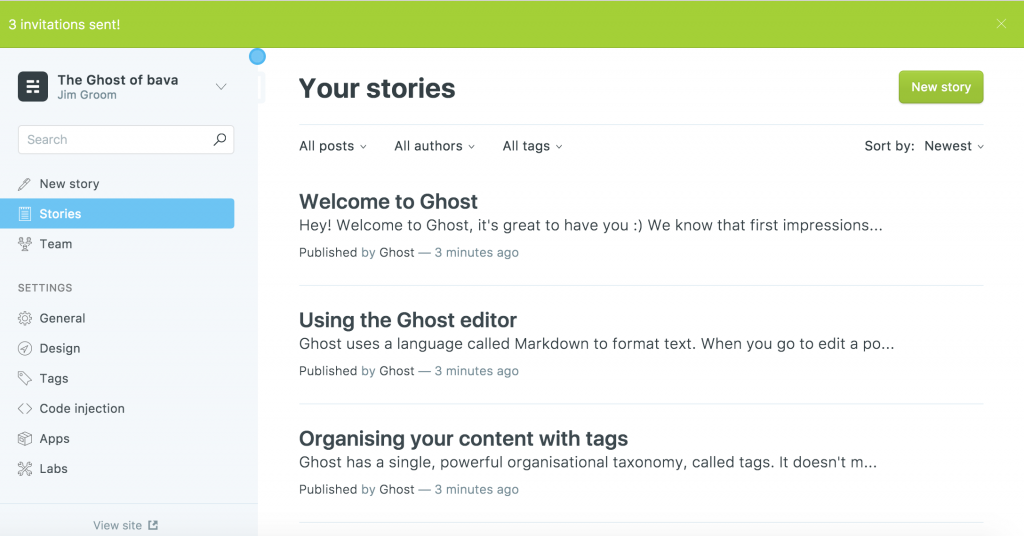
Now for the slightly longer version. First off, for more background on Cloudron and why we are even exploring it, check out these twoposts. Tim has made good on his promise to make this as simple as possible, and below I will use a series of screenshots to narrate the process of spinning up a Docker image of the node.js blogging application Ghost using Cloudron.
First up, decide your subdomain for the site:
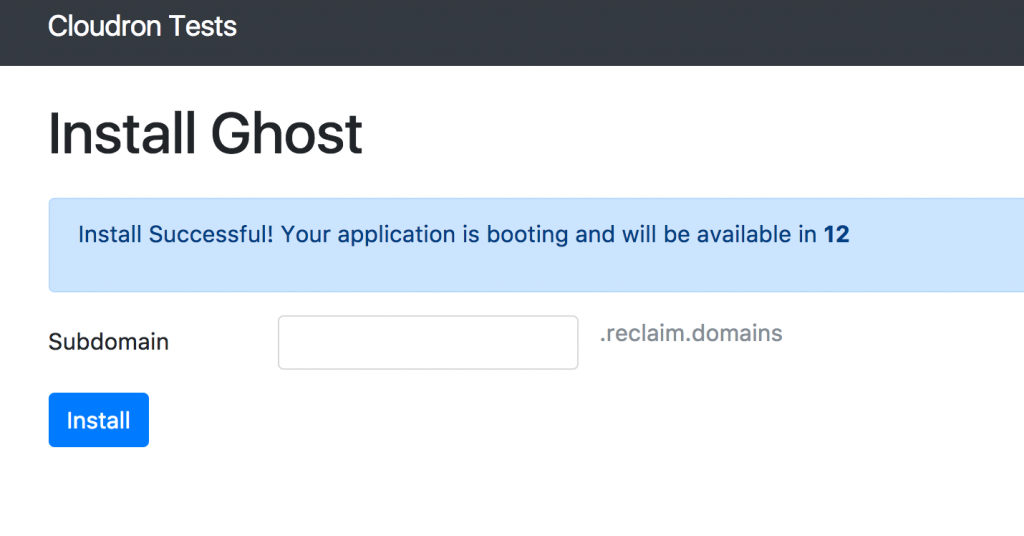
Next, wait 10 12 seconds for Ghost to install:
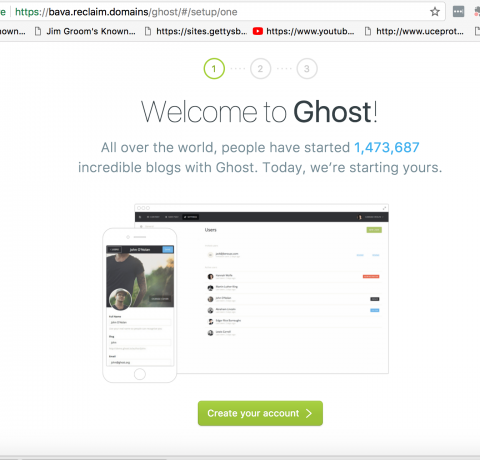
Welcome screen:
Next, create your Ghost username and password:
Invite a group of people by simply adding their emails:
Ghost is now running, have fun!
Whole thing takes a minute or so, depending how fast you type. What’s sick is that this is effectively a multisite option for a school that wants to provide a Ghost instance. Right now we can map Ghost instances (and instances of the Discourse forum, a Minecraft server, or what ever you need—and has a Docker container) on a subdomain of an existing URL. So, if a school wants to use, for example’s sake, ouapps.org, Ghost instances can live at jimgroom.ouapps.org/ghost, and arguably jimgroom.ouapps.org/discourse, etc.
Something that I was immediately impressed by is that emails are taken care of. When installing Ghost on our previous setup (same with Discourse) admin emails needed to be managed through an SMTP email service like Mailgun or Sparkpost (to name a couple), which meant some manual configuration that would make this process hard to scale. So, if a school said to us we want to provide scores of people access to Ghost or Discourse (not to mention or applications) we have a seamless and simple solution. You’re a genius Timmmmmmyboy!
I want to see if we can get an installer together for other apps like Manifold, Mastodon, and many more. Anyway, this is very exciting news, and next steps will be to see if dynamically creating and mapping these instances on domains in Reclaim Hosting’s shared environment will be possible. Once that is the case, we have a pretty slick solution for running apps across container apps integrated into Reclaim Hosting. A pretty huge step for us.
Many we can make this option Server of One’s Own, thanks for the name Keegan 🙂
Well, I’m not sure things are that dire, but it does feel good to still be blogging while most have gone fallow or re-entrenched to the email newsletter. I mean if something as lame as podcasting can get a second life, then why not blogging? Anyway, I’ll still be here when it happens, and now that I am ducking out of Twitter I’ll have more than enough time to re-focus my energy. I’m not sure if my blogging more is a good thing, but it is my thing dammit—and that is why I started the bava in the first place.
I have been remiss in responding to Keegan’s post in early August exploring the idea of “A Server of One’s Own,” but I have not forgotten it. In fact, what he outlines in that post is something that dogs me regularly. Namely, how can we provide more options for folks when it comes to hosting a more diverse array of applications beyond what Domain of One’s Own currently provides.
Let me explain. As it stands right now, Domain of One’s Own has definitive technical limitations given it is built around a LAMP server environment. What does that mean? Well, it means beyond HTML, you are pretty much limited to PHP, Python, and Perl scripting languages. Also, it only supports the Apache web server software and MySQL (or MariaDB) databases. In other words, it is a specific server environment (a.k.a stack) that only supports specific applications. But given the wild success of PHP apps over the last 15 years, in particular WordPress, for most of us web plebeians that has been enough.
More than five years ago now (that’s insane!) Boris Mann wrote a post about the “New Hack Stack,” wherein he lays out why shared hosting sucks and points to the future of applications moving from PHP to Node.js and Ruby made available on revision control sites like GitHub. Five years later Github code libraries are ubiquitous (my seven year old was playing a game at a Github URL just the other day) and while how exactly Github works is still fuzzy for most of us, the idea that it is a staple for developing and distributing code is not in question. Additionally, Node.js and Ruby applications such as Ghost, Jekyl, and Discourse (to name just a few) highlight popular applications that you cannot easily run in a cPanel environment (although you can run Jekyl on Reclaim Hosting, and I heard rumors folks even run Ghost within LAMP—that is cray cray!).
In fact, you can’t run Discourse in a LAMP environment, and a few years back Tim setup a multi-site instance for Reclaimers using Docker. So installing the next generation of web applications on the typical LAMP shared hosting account is quite difficult, if not simply impossible. And while WordPress does power near on 30% of all websites, things change fast, and it is not inconceivable (albeit unlikely) that this will change in the near future.
What’s more, it’s in Reclaim’s interest to be exploring this space, not only given there may be a host of new applications folks want to use that run in different server environments that provide a fresh lens on teaching and learning, but also because our relevance as a company will depend on it. We have been aware of this pretty much from the beginning, but we’ve also been fairly busy in the 3 years since that post—and every year has seen our business grow. I feel like we are just starting to catch our breath in that regard, the last year and a half has been about build capacity within a solid team, and that has been working out beautifully. But it is high-time to return to the idea of moving beyond the LAMP stack for those interested in Node.js and Ruby applications to name just a couple. And almost on cue Tim Owens wrote a post recently wherein he explore a possible solution: Cloudron. From Tim’s Beyond LAMP post:
Cloudron is a platform to allow you to easily run a server with apps self-contained, easily updated, and secure. What I feel sets them apart from the pack is that these applications are Docker containers which removes the traditional barrier of having to choose what your tech stack will be for a particular server. Want to run a PHP application alongside a Node.js app? No problem. You can even fire up a LAMP setup alongside an app that uses MongoDB and Nginx. Some of that might get technical but imagine the ability to run both Android and iOS from the same phone and how that might change our perception of what’s possible.
And you get a server for this app, and another server for this app, and another and another. If Cloudron proves to be a viable option and we can automate and integrate it alongside our cPanel accounts via APIs, then we may finally be able to realize some of our early reams. Back in December of 2014 we brought Kin Lane to Fredericksburg for a four-day mind meld to try and wrap our head around the idea early on. After that we started to get really busy, we left our day jobs, and things got crazy. We had a glimpse of short-lived hope for progress when the folks behind CloudLinux announced KuberDock in 2016, but that was abruptly killed in January of 2017.
What’s more, since late 2014, early 2015 we had been following SandStorm with interest, it provided a very similar infrastructure as Cloudron, but development was all but abandoned when the entire team went to work for Cloudflare. So, when Keegan wrote his post in August the prospect of a sever of one’s own felt far away, in fact when I started writing this post two weeks ago it felt far near on impossible, but life as a Reclaimer is intense (RIP Harry Dean!) and you never know when that irradiated Chevy Malibu is right around the corner.
In fact, Tony Hirst’s comment on this post by Martin Weller about “Rewilding Edtech” speaks to the need for more possibilities for exploring the next generation of edtech tools rather than constantly falling back on and resolidifying around the LMS/VLE. I’m not sure if Cloudron is going to be the answer, but it certainly looks promising and the idea (regardless of the specific tool) is long overdue. What’s more, I trust when Tim puts his mind to it it will become easy and accessible to just about anyone. Reclaim 2.0 🙂
In 2013, UNESCO added the Mediterranean diet to the Representative List of the Intangible Cultural Heritage of Humanity of Italy (promoter), France, Morocco, Spain, Portugal, Greece, Cyprus, and Croatia. It was chosen because “The Mediterranean diet involves a set of skills, knowledge, rituals, symbols and traditions concerning crops, harvesting, fishing, animal husbandry, conservation, processing, cooking, and particularly the sharing and consumption of food.”
I am presenting a talk at the OpenMED conference in Torino on Friday. I have been struggling a bit with the talk and, for that matter, open as a concept more generally.¹ But Martin Weller’s recent posts about a Mixed Tools Diet and Rewilding Edtech reminded me that using ridiculous metaphors to explain edtech is a time-honored tradition of the ragtag, online incarnation of the field known as edtech. And we need to savor that tradition lest edtech become an actual discipline (#resist!).
Anyway, the idea is to try and take some concepts basic to the Mediterranean diet and map them onto some fundamental elements of healthy open edtech in order to communicate some values of the field. So here it goes:
In many ways the signature feature of the Mediterranean diet is olive oil. So, what would Olive Oil be in terms of Open EdTech? Olive oil is ubiquitous in the Mediterranean diet as a kind of basic infrastructure that cuts across all plates. You put olive oil on mozzarella, tomatoes, pasta, pizza, salads, etc. It’s omnipresent, and it not only makes the food taste better, but its healthier. Making the leap of faith then, the undergirding ingredient of open edtech is first and foremost the open web. The basic protocols, markup languages and scripting tools that define the World Wide Web are the Extra Virgin Olive Oil of edtech that lubricates sharing by removing the artery-clogging principles of a traditional means of publishing by enabling us to seamlessly navigate and share within a de-centralized, distributed infrastructure of information.
So, we can understand Olive Oil as the open web, the fundamental ingredient which any idea of openness in educational technology is built upon. Now we have other essential elements such as vegetables, fresh fruits, cereals, nuts and legumes. These are the elements that underscore the light nature of this diet. This is designed to limit the amount of saturated fats, which might be understood as independent sites like Wikipedia as a vegetable garden of knowledge, creative commons as the fresh fruit, blogs as the nuts, and beans as the open source substitutes for high protein, fatty learning management systems (LMS). This may need some more work, but you get my drift. I have four days, so all recommendations welcome 🙂
Speaking of saturated fats, it is not expected that you avoid the LMS all together. In fact, we understand they can be useful, but as with most fast food it often defaults towards shutting down and templating content—so be wary. Less than 8% of your OpenEd diet should be LMS-related.
The same is true for social media, while Twitter, Facebook, YouTube, Flickr, and the like can be fast and convenient, diets are never about easy or pleasurable. In fact, look at what has happened when we let Facebook go 🙂 A rigorous diet of creating and maintaining your own resources online on your own space is essential to a new digital you. Resist the siren song of the quick fix dietary advice of social media conglomerates, and setup your own blog and start building your course and disciplinary resources through a leafier, greener web.
Anyway, that’s all I have so far and I’ll be working on it over the next couple of days before I head to Torino, so any and all fun-loving recommendations are welcome. I’m sure some of you people who actually know something about health and diets could help me out here. I mean, I’m sure there are some fringe dietary facts I could use, I’m still figuring out how Domains and ds106 fits in. Maybe this is one of those analogies that is better abandoned then seen through for obvious reasons … such as this post.
The 5 minute videos Downes has been creating for the Introduction to OpenEd MOOC Siemens and Wiley are running have been quite helpful for me. I particularly agree with his assessment of OpenEd as a series of personal relations rather than licenses and stuff, but he does a nice job of abstracting the vision of what connected networks mean. The videos nicely encapsulate Downes ideas about networks, open, and learning in quickly, accessible, and human bits. Downes is a machine.
His quick Photoshops of images and ideas give Antonella and I endless enjoyment. I almost feel guilty given how one-sided the relationship is, but I have to assume he gets something from it. But a few things have changed in my online habits recently. While hanging out with Timmmmyboy in Italy back in August, I made the quiet jump to Instagram. He left Twitter a while ago and has not looked back, I still frequent Twitter, but it has become a more and more distant relationship for me. I peak in regularly, but I’m making a concerted effort to refrain from serious conversations or too much energy expended. The platform has gone the way of the country that spawned it: there’s still so many awesome things there and I can’t abandon it entirely just yet, but the cost to one’s sanity is real. It’s kinda painful for me because Twitter had been the locus of much of my online community for almost 10 years—with ds106 really being the center of it all. That had slowly begun to change the last few years, but with Brexit and the 2016 presidential election in the U.S., it felt like Sauron had returned to Middle Earth.
The #jimgroomart has found its way into Instagram
So, I joined Instagram —not exactly a radical departure from convention, but rather an almost puritanical backsliding. I had sworn off Instagram from the beginning with their Facebook relations, inability to download images, and other typical proprietary, social media platform bullshit. But taking pictures has become my single biggest hobby while living in Italy, and while I am still on Flickr, I am definitely a shoot and publish TV baby. I usually do major Flickr uploads every couple of months, and then spend hours wading through them adding titles, appropriate privacy settings, and then hitting publish. I think of Flickr as an archive not a publishing platform.
What’s more, I am following my community to Instagram (as I did with Twitter 10 years ago) and like Twitter at the beginning it feels small and intimate. I also have a very different community than I do on Twitter, made up almost entirely of friends and family. Unlike my nieces and nephews who seem to have 100s of followers but just 3 or 4 images on Instagram that are very carefully selected profile images, I am my usual firehose self when it comes to posting. I just post and post. I know they’re thinking to themselves, damn, he is doing Instagram all wrong—which is kinda fun for me. In fact, my family and friends are the audience, which is quite different then who I am/was on Twitter. I told myself once I get to 100 images posted that I will make the relationship more official and actually blog it. And so I have. Luckily, whether Twitter or Instagram or Facebook or Tumblr or whatever, none of it ever seems longterm to me. If I really want it to last it goes on my blog. Instagram feels like a fun, intermediary step to share my photos, but I am still looking for the longterm sharing/archiving fix. Flickr has served the archiving role well for me when it comes to images, but I fear for its future. Twitter was where I had been sharing my one-off photos up and until August, but it has become apparent it is no longer the right place for them any more. It was like hanging up personal portraits in a burning building.
There were many reasons to get out of the U.S. for me, but a big one was to re-think my relationship to work. For the most part my work habits and general lifestyle in the US were not healthy. I was consumed with the web and my small place on it, and Twitter was definitely a large part of that. It was undoubtedly a blast while it was happening, and some amazing things and awesome relationships came of it. But truth be told it isn’t fun for me anymore. It’s been a long goodbye these past couple of years, but with phasing out posting images it’s just about done for me. I’ll keep it around for #ds106 posts and the random bits from folks I love and various movie and scifi accounts I follow, but beyond that I pretty much plan on being a ghost like I am on Facebook.
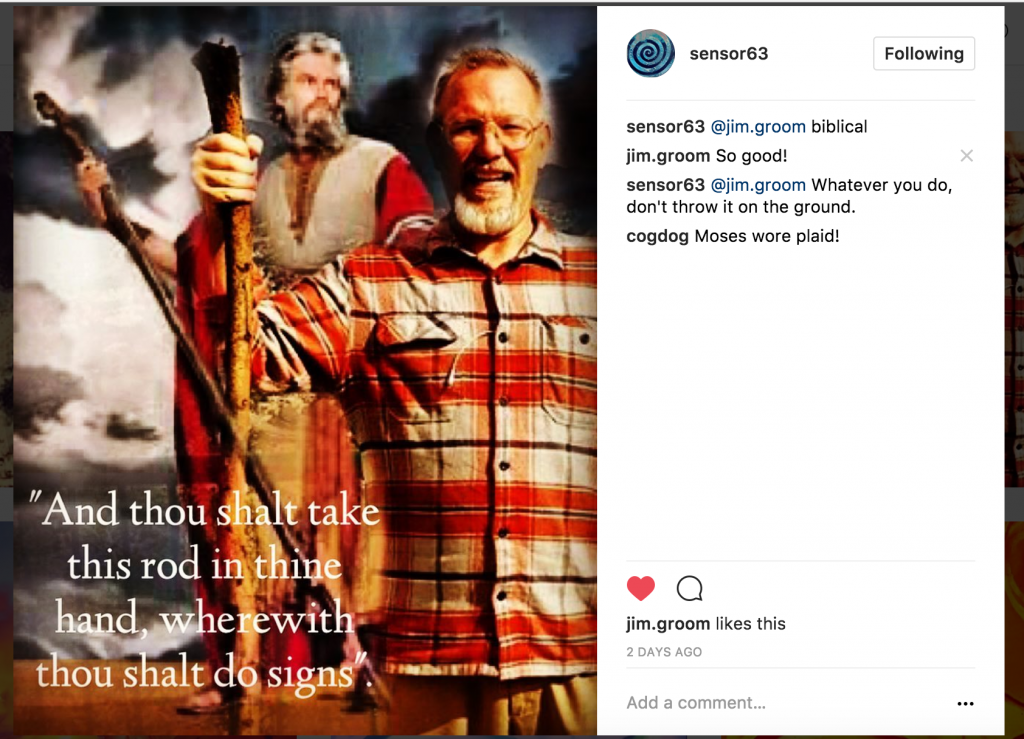
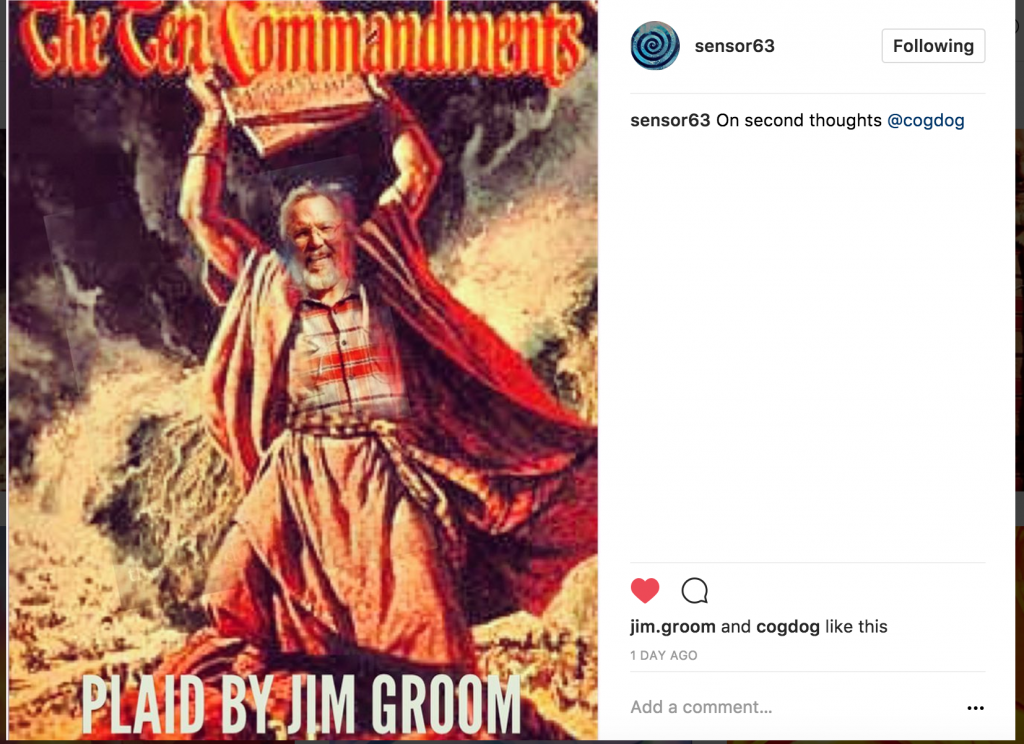
I can only thank the amazing Simon Ensor for putting me side-by-side with Charlton Heston as Moses on Instagram—this is a sign of the fun I was missing on Twitter save for Noise Professor—who has been true blue through and through. Who knows, maybe even Zack will find his way over, though how long can I keep going to that well? Regardless, the steady decline of Twitter can’t erase the amazing things that happened there for me: endless conversations about all things GIFs, ds106, ds106radio, and maybe even some other things. But nothing gold can stay, and it’s always good to retreat with those fond memories in tact.
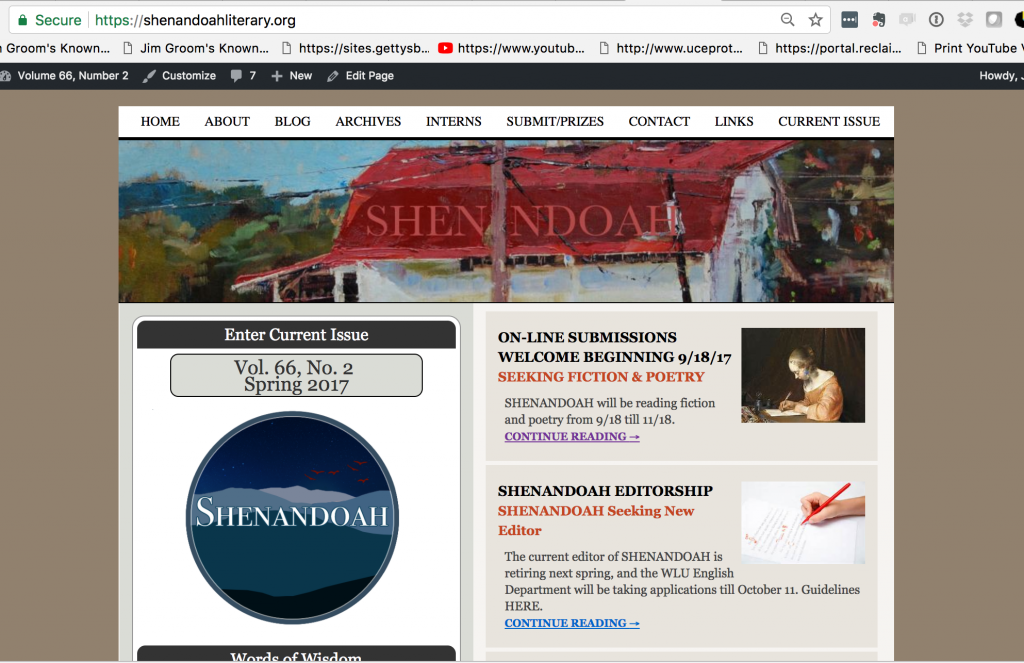
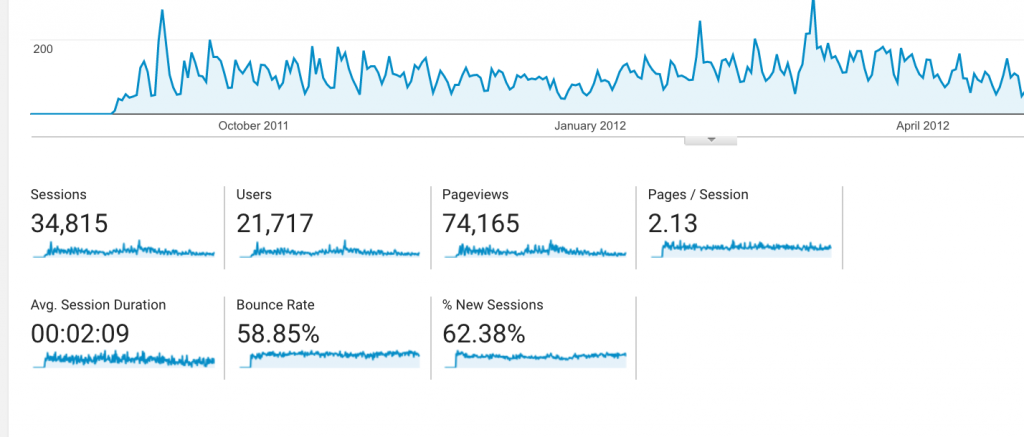
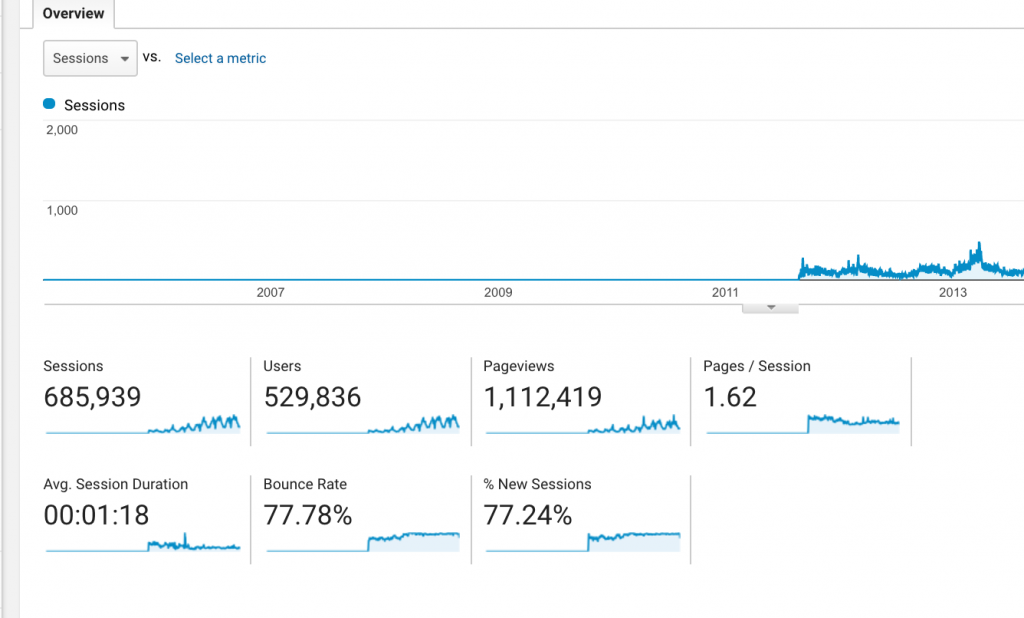
As discussed in my last post, I’ve been working on getting all the sites I run secured. An immediate candidate was the Shenandoah literary magazine. In 2010 I worked with Martha Burtis to design the site and have been hosting and maintaining it ever since. I have really enjoyed working with the editor R.T. Smith these last seven years, but he has announced his retirement this coming Spring. Well deserved. He took on the Herculean and unpopular task of moving a well respected physical publication entirely online. He weathered it beautifully, and with over a million views last year and half a million visitors the site has 25x the amount of exposure it did seven years ago.
Traffic from August 1, 2011 – August 1, 2012
Traffic from August 1, 2016 – August 1, 2017
This is a very solid base to build on for whomever comes next, and I imagine the new editor will have some ideas of how to keep broadening access. What I loved about Rod’s vision is that it was open and accessible to everyone online: no logins, no paywalls, no nothing. Bringing culture to the interwebs is never a bad thing. That said, at the very least the site is due for a more responsive redesign. It will be interesting to see what the future has in store for Shenandoah, and I plan on making the transition to the new editor as seamless as possible. I will probably bow out as the “webmaster” once Rod leaves given my other commitments, but I plan on staying around long enough to make sure all is well. One of the things that has been on my list is securing Shenandoah to make sure the main site, the Snopes blog, and all 11 (soon to be 12) issues load over https.
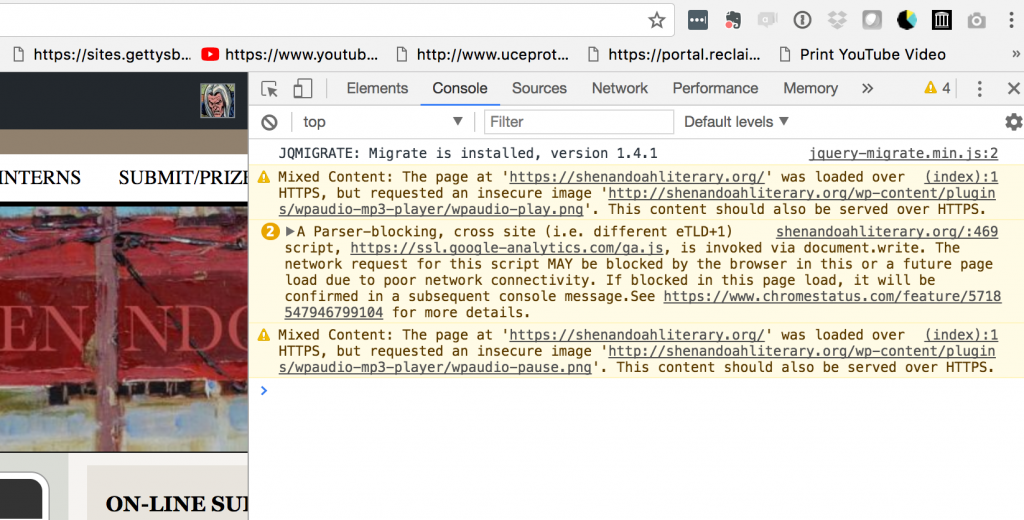
To that end I issued a free Let’s Encrypt certificate yesterday, and ran the SSL Insecure Content Fixer plugin across the entire network. That worked seamlessly. It is worth noting that Shenandoah is a WordPress Multisite instance in which the blog and all 11 (soon to be 12) issues are their own site within the multisite. It is a subdirectory setup, so all the sites can be secured by one Let’s Encrypt certificate, which is nice. Once I forced SSL the two errors I got were caused by a network activated plugin that was outdated (pictured below) and an insecure image on the front page of several issues (the image was embedded from another site that did not have SSL).
I deactivated the offending plugin, and I am looking for an alternative presently. I also replaced the embedded image with a local, secure alternative and all is well. The site is now running securely over https, and I will need to make sure there are no broken media links as a result. So if you see something, say something in the comments of this post.
There is a certain amount of satisfaction in having Shenandoah run securely over https. I admittedly waited too long, but better late than never. It is also provides a long overdue push to start getting some other things shored up as we prepare for the future.
It’s been a rainy weekend here in Trento, and the Fall weather is consolidating on this mountain enclave. I spent some time yesterday cuddled up on the couch with my laptop making a plans for securing sites. The larger plan is to finally extract the numerous sites from a WordPress Multisite multi-network I setup back in 2007/2008. The main driver of this is that I want to finally get all my sites loading over https. I can probably do this in its current setup, but too much web kipple has accumulated over the last ten years, and it is high time to dismantle that multi-network—even if I end up reassembling it.*
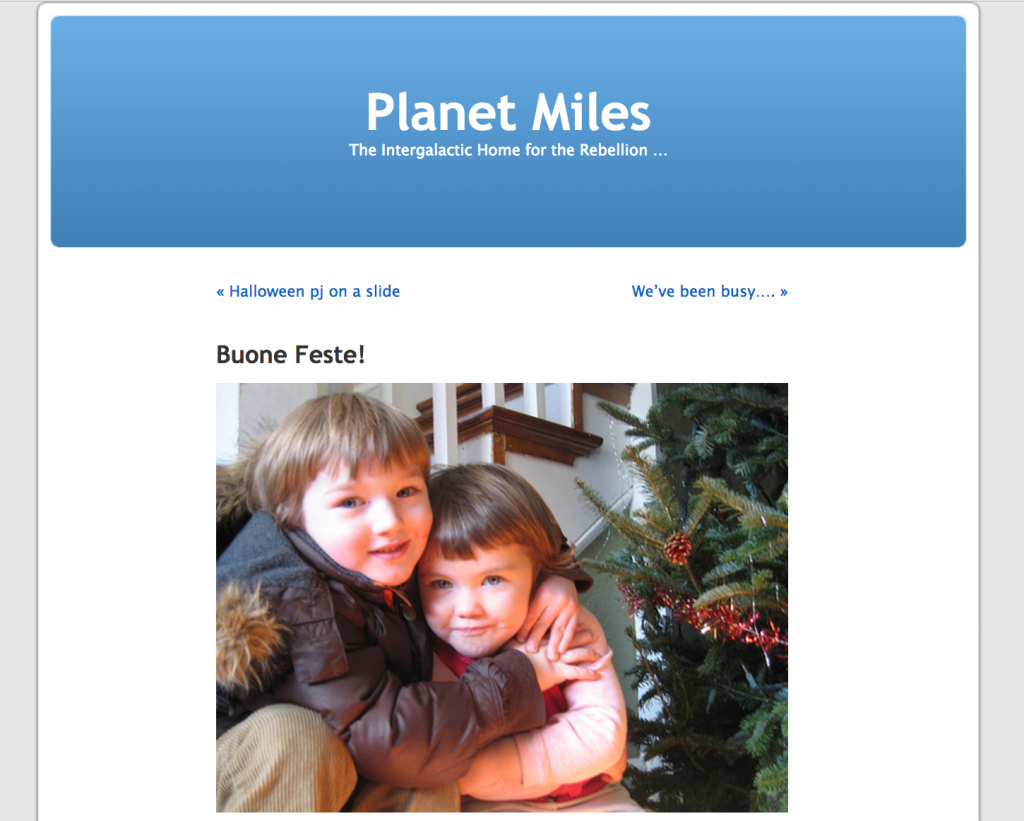
Planet Miles Screenshot
The multisite has 5 independent multi-site networks (you can think of multi-networks as as WordPress Multisites within a WordPress Multisite—INCEPTION!) that contain a bunch of project sites, course sites, presentation sites, etc. and I have been putting off cleaning this stuff up for years. I actually started the process over a year ago on my very first blog Planet Miles. It was the night before the AMICAL conference in Rome, and I was using the occasion to revisit my blogging roots as well as re-acquainting myself with the site’s architecture. It had been a long while since I played with a multi-network setup, and while I was able to move the site out successfully, the clean-up was never completed. There remained a ton of links and videos that needed updating and converting given they were using the effectively defunct FLV media format.
Click Video Above to Play
Anyway, I doubled-down on converting videos, but there are enough of them that it will take more than one afternoon. That said, I used this online media converting tool (that is admittedly over-run with poorly targeted ads) to start converting the FLV files to MP4 files. It worked quite well for me, but I’m not sure what the long term effects will be 🙂
So, in order to feel a small sense of accomplishment and finally secure one of my fleet of sites, I issued an SSL certificate for Planet Miles using Let’s Encrypt provided through that awesome web hosting company Reclaim Hosting. The process was easy, and it has been documented for Reclaimers, so no need to go through that. After issuing a Let’s Encrypt certificate, I ran the SSL Insecure Content Fixer which goes through your site and fixes any images, media, and other content that link to http rather than https—something that makes this process much, much easier. After that is done, I force the site to load over SSL by putting the following lines at the very top of the site’s .htaccess file:
RewriteEngine On
RewriteCond %{HTTPS} off
RewriteRule (.*) https://%{HTTP_HOST}%{REQUEST_URI} [R,L]
And voila, Planet Miles is now my very first secure site. It has taken me an embarrassingly long time to do this, but the tide has turned and I am committed to getting all my sites loading over https before the year’s end. In fact, I took a break from Planet Miles after a few hours of video conversion and SSL work and turned my attention towards getting the Shenandoah literary journal running over https, a short time later it was secured as well.† The bava’s web is becoming a safer place one site at a time.
*It has been very convenient to be able to update as many as 50 sites across five domains from one core set of files, plugins and themes. It makes a ton of sense to run a multi-network given my situation, but the problem is I started so early that there are layers of confusion around plugins, versions, and sites that I just need to rebuild. It’s all too long ago, and while I documented mostly everything, so many of the plugins and work arounds I was using are woefully outdated. Refreshing myself on what’s out there now is not a bad option, plus I will take the opportunity to convert a number of these sites to straight-up HTML thanks to the inspiration from Keegan.
† I’ll right that one up too, although it was fairly similar with just a few details worth pointing out given this is worth an announcement on the Shenandoah site as well.
I haven’t been as good at writing up daily sysadmin stuff as I should have, but I do reference this blog regularly for issues I have when playing a sysadmin on TV. One article I go to time and gain is the fix account permissions for a cPanel user, it has proven to be an indispensable reference, although by now I have the ‘fixperms’ command committed to memory. So, in hopes that I get better at this practice, I wanted to quickly chronicle some commands yesterday that helped me out with a storage issue one of our server’s was having.
We use Digital Ocean for a large swath of our servers now, and one of the key reasons we switched was block storage. Block storage enables us to mount significantly more storage then we would get with a normal virtual private server. For example, the server options at Digital Ocean provide 40Gb, 40GB, 80GB, 160GB etc. of storage space with their increasingly more powerful CPU/Memory options for servers. But if you are running a shared hosting server, you need anywhere from 500GB to 1 TB to meet the needs. Block storage allows us to add the additional 500+ GB to a server that may come stock with 80Gb. So, that’s what block storage is, additional storage you mount to your original server.
Now, yesterday a server was not responding reporting space issues. The dreaded 500 Internal Server errors rides again:
Internal Server Error 500: The system failed to open the session file “/var/cpanel/sessions/raw/johnaste:r15mndEoycCpsOQo” because of an error: No space left on device at /usr/local/cpanel/Cpanel/Session.pm line 269.
When this happens it is usually a daily backup plugin someone installed for a fairly large site that is eating through the storage. To confirm that, we use the following command:
df -h
or to include types
df -Th
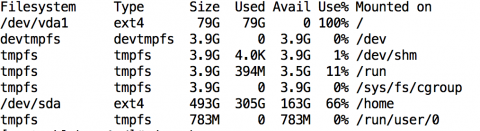
This will give you a list of your file systems and the space they take up in a human readable form (hence the -h):
The /dev/sda is the mounted storage block, and you’ll notice this has over 163GB free. No problem there, which confused me at first because the mounted disk is where all the new cPanel account are created and files are stored. This file system is mapped on top of the /home directory of the server where all new cPanel accounts are created and stored. But you will also notice there is no storage left on /dev/sda1 which is where all the core cPanel files are. That’s the issue.
The next thing I tried to do is install the tool NCDU, which is disk usage analyzer which will run through all your various folder and let you know where any big files are so you can start removing them. This is crucial when we have hundreds of cPanel account in distinct folders that we need to establish where the system storage drain is located. So, I tried to run
NCDU
But it was not installed yet. I then tried to install it
yum install ncdu
But given there was no more space I could not. Hmmm, so I found this article with yet another disk usage command that was quite helpful:
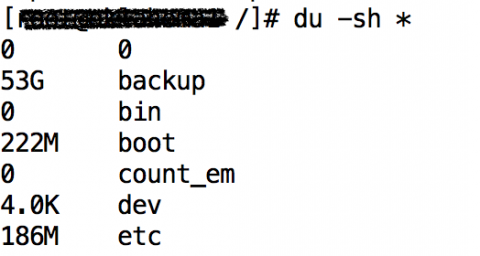
du -sh *
This did the trick, a directory within the backup folder (2017-09-13) on the main file directory with has 53 GB , which was a flag. I deleted the directory contents using this commands
rm -rf /backup/2017-09-13
And the system was back up immediately. A pretty simple fix*, but having the right commands goes a long way. Errors are scary, but reading the error and Googling can reap remarkable results 🙂 The web resources are really amazing for this stuff. It is not that different than figuring out how to hack WordPress themes and plugins, but the more you do it the quicker you get, and only this time hundreds of people depend on the fix rather than the two who read bavatuesdays.
*Turns out the backups were being mistakenly stored in this folder en route to AWS for another project.
Yesterday was a special day, Reclaim Hosting grew to four full-time employees with the hiring of Meredith Fierro. Four is the perfect number for a super group, wouldn’t you agree? Needless to say, the costumes are on order. Meredith worked as an intern in Spring, a part-time employee over the Summer, and as of yesterday we made it official. Meredith will be focusing on support, and she is already bringing some of that Digital Knowledge Center magic to Reclaim. Our timing was perfect given this Fall has been quite busy, but I believe we’re handling it like, well, spandex-clad super heroes.
Anyway, I was thinking about our group, and something struck me—we all have something in common: ds106. That’s right, everyone at Reclaim Hosting has been through ds106 at least once. So we have that going for us. It was never an articulated requirement of the job, but I can’t imagine the experience hurts. What’s more, Paul Bond and Bill Generaux are teaching a comic book themed version of the course currently, so I think I need to explore the Reclaim super hero theme a bit more. Ds106 is always good for those blog stats 🙂 At the very least I need to do an animated comic book cover assignment, and there are some relevant ones out there when it comes to the Fantastic Four.
Anyway, all by way of saying welcome to Reclaim Meredith, and it might be time to make some super hero art, dammit.
is an ongoing conversation about media of all kinds ...
Testimonials:
Generations from now, they won't call it the Internet anymore. They'll just say, "I logged on to the Jim Groom this morning.
-Joe McMahon
Everything Jim Groom touches is gold. He's like King Midas, but with the Internet.
-Serena Epstein
My understanding is that an essential requirement of the internet is to do whatever Jim Groom asks of you while you're online.
-James D. Calder
@jimgroom is the Billy Martin of edtech.
-Luke Waltzer
My 3yr old son is VERY intrigued by @jimgroom's avatar. "Is he a superhero?" "Well, yes, son, to many he is."
-Clint Lalonde
Jim Groom is a fiery man.
-Antonella Dalla Torre
“Reverend” Jim “The Bava” Groom, alias “Snake Pliskin” is a charlatan and a fraud, a self-confessed “used car salesman” clawing his way into the glamour of the education technology keynote circuit via the efforts of his oppressed minions at the University of Mary Washington’s DTLT and beyond. The monster behind educational time-sink ds106 and still recovering from his bid for hipster stardom with “Edupunk”, Jim spends his days using his dwindling credibility to sell cheap webhosting to gullible undergraduates and getting banned from YouTube for gross piracy.