The Wire Come to Life

For the final project in Wire 106 students were asked to chose a character from the HBO series The Wire and build an online presence for them across several social media sites. It’s been interesting experience these narratives because they hit me at the strangest times when I’m not looking for a story. For example, a couple of weeks ago Omar Little request to follow me on LinkedIn. I never setup a LinkedIn account, but after getting the email from Omar I felt compelled—but only a bit by fear—to comply with his wish 🙂 After setting up a LinkedIn account and following Omar, it turns out he  didn’t have much in his account as of yet given it was brand new, so I soon moved on.

However, a number of people have been discovering I am on LinkedIn now and started following me. I’ve been avoiding following people back because I’m fairly certain this experiment on LinkedIn will be short-lived, but I have been fascinated by the job culture of this network. We recently had Phil Windley and Kelly Flannagan from BYU here at UMW to talk about the work we’re doing with Domain of One’s Own. We had a great day, and the work they’re spearheading at BYU in terms of imagining a university-wide API is truly visionary, but I’ll save my thoughts on that for my next post.

Anyway, after the visit Phil followed me on LinkedIn, and I clicked on the link to check out his profile. Once I did I noticed a small notification on the right-hand side of the page that Omar Little has a new job.
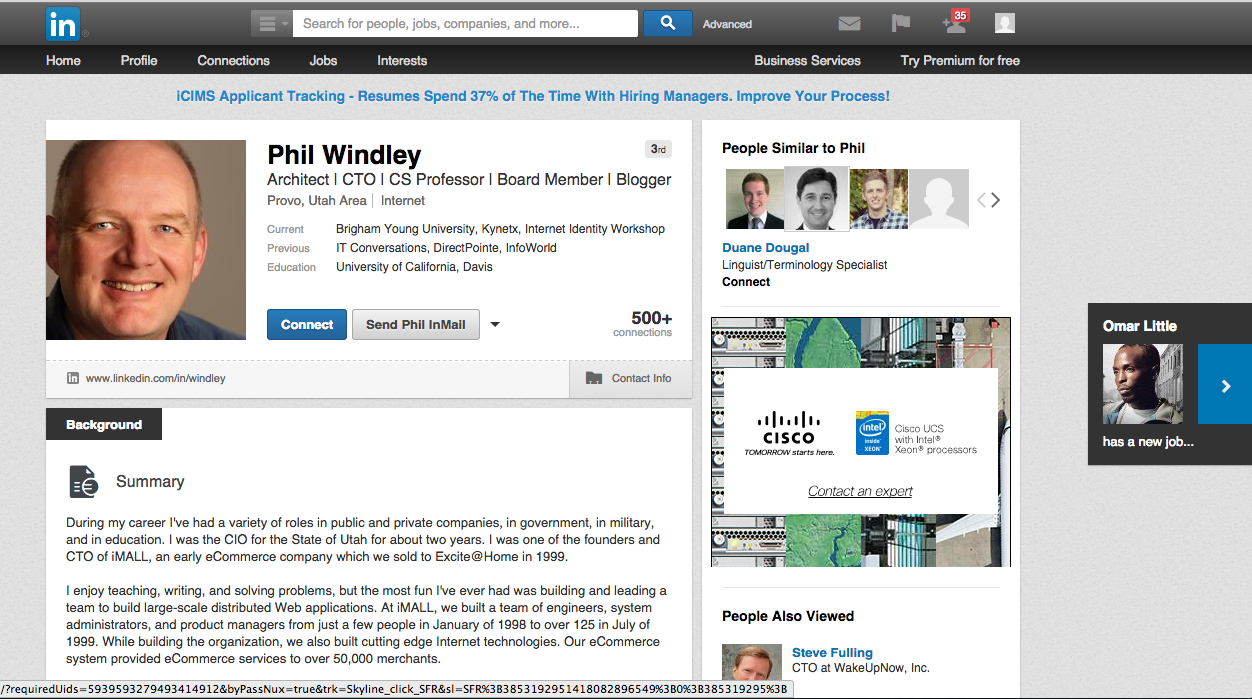
Screen Shot 2014-12-08 at 6.55.14 PM

I was intrigued and followed the link.
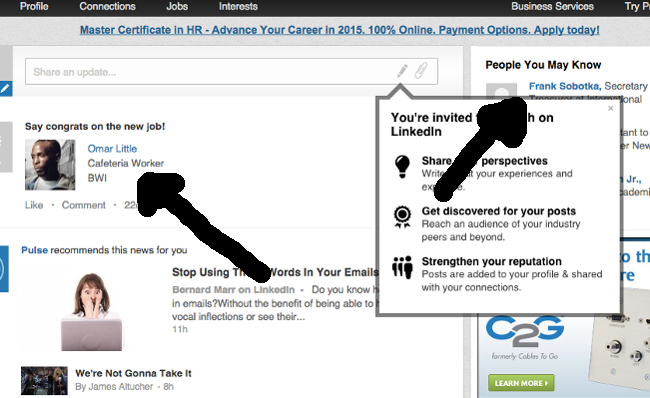
omar_got_a_job

Turns out Omar got a job as  a cafeteria worker at BWI Airport. Now that might seem arbitrary to those of you who’ve never seen the series, as well as for some who have. But this is an important detail from the show. Omar tells his grandma he works in a cafeteria at the airport because he knows she’ll never go there in order to hide his true life as a stick-up artist.

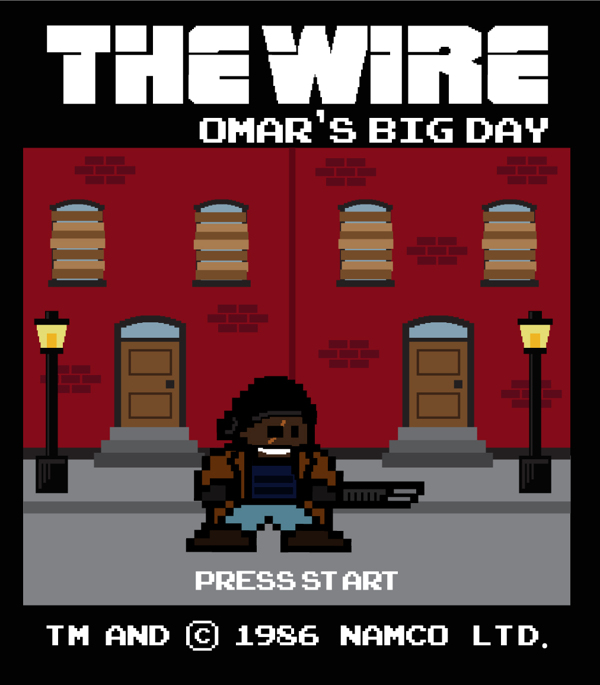
The beauty of this kind of distributed, transmedia project is all in the details. And this one blew my mind because I wasn’t expecting it, it hit me while I was going about my “normal” life on the internet. That said, it led me to imagine the true power of such a narrative for the class. Not only because it suggests a close reading of the show, but also because it in many ways subverts the whole enterprise of LinkedIn. This act highlights the subterfuge at the hear of a long gone patina of respectability and dignity in the American workplace. No character in The Wire knows better that the game is played by gangsters and professionals alike—and just as ruthlessly. How’s that for the power of a single status update?! Kudos to Melinda Albrycht, the mastermind behind the curtain of Omar, she did a brilliant job with the entire class, and her transmedia version of Omar was no exception.

You might have also noticed that Frank Sobotka was one of the people LinkedIn thought I might know, and it turns out I did know Frank. We go way back to days before the containerization of the dock. But that’s a tale for another post. As you might imagine, the rest of the evening was lost to a Wire 106 transmedia rabbit hole that highlighted how much the beauty of this form of storytelling lies in its truly liminal position between the worlds of fiction and non, imagined and real, virtual and concrete. And this is just one of many, many examples. Stay tuned for more.
Posted in digital storytelling | Tagged , , | 2 Comments

Wire 106: Week 16 – Game Over

Seemed like just yesterday we were preparing for the big adventure that was #wire106.

f458cbd5065cdd458e5e6404bdef6b41

But 50 episodes of The Wire later and 2336 posts of awesome—as of this moment—looks like the game is over.

Game_Over

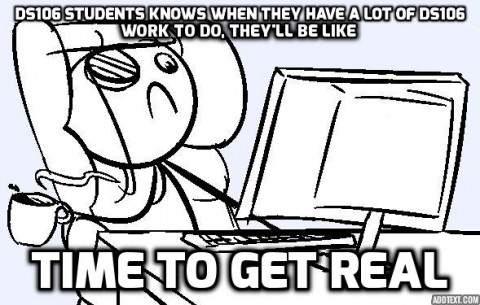
Given it is finals week, and ds106 has been a ton of work this semester (Paul and I do apologize kind of), you might be feeling like this:

7XpJTcZ

Or even this:

oprah_bees

But that feeling of elated relief will pass, and you will come to the discovery, much like Bodie does in the scene below, that this game is rigged:

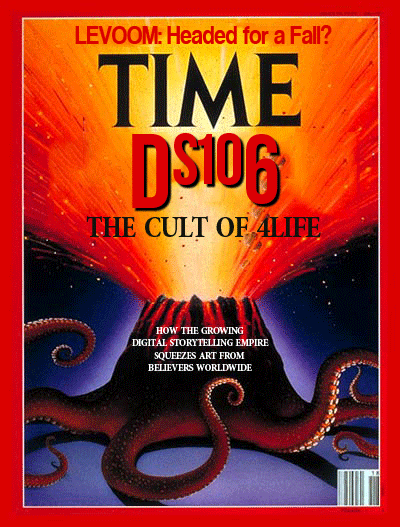
#ds106 is not a course, and you are not a student. This is a community (some say a cult), and you are officially #4life.

ds106 cult

Image credit: Martha Burtis

There is still season 5 to watch, which many argue is not the best, but we’ll be watching, tweeting and making art around it. We hope you do too. What’s more. with over 2300 posts published in 15 short weeks there’s no way any of us could read everything. But the beauty of ds106 is it isn’t constrained by time or place, there’s world enough and time to return to each others work and continue being inspired.

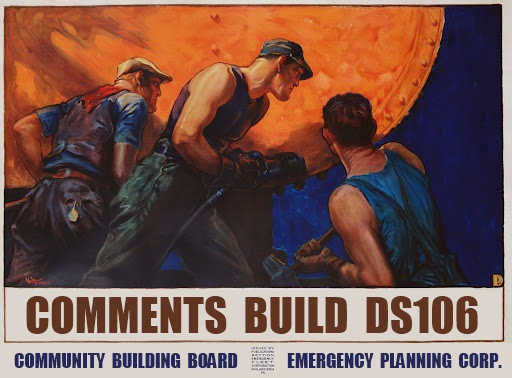
There are no assignments for finals week, but if you find some time, let folks from around the ds106 community know what work inspired you and leave some comments to spread the love.

Image credit: Jack Mulrey’s ds106 Propaganda Poster

You have been an amazing group, your work has been brilliant, and your willingness to learn openly not only alongside one another, but  a broader community has been inspiring. You all ruled the school. Until your next masterpiece, take care and comb your hair!

Posted in digital storytelling | Tagged , | 7 Comments

Bought by Some Chinese Concern

As I was preparing today’s Connected Courses discussion about the intersecting ideas that link Connected Learning and the Indie Web I came across Ignatia De Waard’s post about Stephen Downes’s presentation on Personal Learning he gave at Online Educa Berlin earlier today. I was struck by this by bit of her summary of the talk:

Reclaiming the web, means it is important to have his own space, this is what is meant by reclaiming. The concept of bringing back to us of what is ours.
….
The web is not a platform, it is a bunch of personal spaces. This is the basis for the cMOOCs in 2008. The fact that these mooc were distributed added to the fact that this learning was personal. This created a network where the participants genuiinly owned their learning. But what followed took the learning away from the personal to the personalized again, where the data was no longer personal.

I really like the framing of the web as a series of distributed, personal spaces versus the vision of it as a platform. Linguistically I am often lazy about the difference, and reading Ignatia’s summary of Downes’s talk helped me fine tune this distinction for our discussion about many of these very concerns. It was nice to read this because it reinforces a movement currently afoot on the web that is challenging the long term value of  platforms like Twitter, Facebook, etc. How can we rethink the flow of publishing wherein the content originates in our personal spaces, and we decide upon the site and context wherein we share it—what is referred to by the indie web folks as publish on your own site and syndicate elsewhere (POSSE).

The ideas circulating within certain corners of the edtech communities overlap with those that are driving the indie web. This might have been why I really enjoyed the conversation today with Mikhail Gershovich, Ben Werdmuller, Erin Jo Richey, and Simon Thomson. The conversation was central to so many of the concerns I’m occupied with on a daily basis. Admittedly, I was a bit selfish in framing this panel discussion, but I felt Connected Courses (and Connected Learning more generally) could be well served to consider itself within a broader context of certain technical principles that remain crucial to helping us think like web.

Simon Thomson did an excellent job capturing that spirit when suggesting indie web applications like Known, at their best, encourage people to take responsibility for their own data.  This is where the technology is constitutive, applications like Known embody those principles so that they become part of how we experience the web. This is where Erin Jo Richey and Ben Werdmüller represent a breath of fresh air. They’re building an application that is grounded in some of the core principles of the indie web that might also be understood as happen to as core principles of connected learning. So here’s to hoping, as Mikhail suggested, Known isn’t “bought by some Chinese concern” anytime soon 🙂

But even if it were, it wouldn’t necessarily matter because the indie web, connected learning, thinking like the web, or whatever you want to call it is rooted in the idea that you need to take responsibility for your digital identity. You need to become the “master of your own domain,” and that might be why I really enjoyed this discussion. It represents just another attempt to try and make sense of the forces and factors that are defining the way we understand the web for teaching and learning—and this is a vector of inquiry and possibility that I have a lot of faith and hope in.

Special thanks to Jamieson Pond for making these sessions happen, it all worked so smoothly thanks to him. Big fan!

Posted in Connected Courses | Tagged , | Leave a comment

Free at Last

Thanks to Syd Bauman’s Daily Create I was inspired to reflect on a ton of assignments I did for ds106 over the last five years. I have created many, many assignments for #ds106—I counted at least 100. Choosing a favorite would be difficult, and I would probably change my mind if asked the same question next week. But one assignments I’m really proud of is the animated comic book cover design assignment. I knew I wanted to do one, but they can get pretty complex, so I enlisted Tim Owens and Alan Levine to help me create the “Free at last” cover of a Hulk comic. One of my favorite assignments ever because it was hard, and I learned a ton about Photoshop as a result. Plus, it’s an animated GIF and I think it looks awesome!

Image of Hulk Comic Book cover animated GIF

Posted in digital storytelling | Tagged , , | 1 Comment

In Memory of a Poet

It’s a sad day. I got the news earlier today that one of the very best people I’ve ever had the pleasure of working with has died. I knew Claudia Emerson as a brilliant teacher both inside and outside the classroom. Her work on the hybrid course Poetic Sequence, the literary journals course and the ethershop blog were three of the very best examples of integrating technology with teaching at UMW during the rise of UMW Blogs.

One of the things that regularly struck me about Claudia is how freely she would discuss what she was writing at the time. I remember being in front of my house with one of my then anarchic toddlers listening to her describe the poem she was writing about Hogzilla. I thought that was so cool—how many poets are both so patient and down-to-earth with their genius. Today we lost a great poet, and an even greater person.

I was struck when I saw a fellow colleague share the following DTLT Today video of Claudia talking about her work on the preservation of the dead, suggesting what she called a “poetics of preservation.” Watching it was a good reminder of just how willing she was to share her brilliance as she tried to shed light on some of our darkest places. Let it shine on.

Posted in Uncategorized | Tagged | 1 Comment

Connecting to the IndieWeb Movement

B4CoUflCUAEMNpG

Tomorrow at 12 PM Eastern/ 9 AM Pacific I’ll be be hosting a Connected Courses discussion that will explore the IndieWeb movement as a people-centered response to the corporate web. How do core IndieWeb principles such as owning your content, remaining better connected, and redefining control online intersect with the values of connected learning? Take a bit of time tomorrow and join myself, Mikhail Gershovich, Ben Werdmuller, Erin Jo Richey, and Simon Thomson to find out more.

Posted in Connected Courses | Tagged , | 2 Comments

Connected by Design

On Monday I hosted the first of two Connected Courses sessions this week that focuses on actually building a connected course. This first session was titled “Connected by Design,” and I was joined by Jaimie Hoffman of CSU Channel Islands, and Kim Jaxon, Danielle Astengo, Jeremy Wallace from CSU Chico State. All of the participants spent time designing a connected course this semester, so we figured it would be a good kickoff event to actually share what we’ve done.

I took the first five minutes to talk about ds106, blah, blah, blah, and then Jaimie Hoffman shared some of the amazing work she has done building five different classes using a WordPress syndication model (which all of the examples utilized, but we’ll explore an alternative during Friday’s #ccourses session when we talk about the IndieWeb). I was particularly taken with Jaimie’s use of the Class Blogs plugin to create this brilliant example of an aggregated course blog.

Kim Jaxon is a tour de force, and she brought Jeremy and Danielle—two of her graduate students—into the discussion to frame the work she has been doing building a culture of experimentation through course design in her own pedagogy. In fact, the discussion quickly moved from discussion of tech and design to issues of teaching and learning that connected courses help us rethink. For example, Kim’s Reading Literature for Future Teachers is focused around a connected courses site that is a book club for eighth graders that her college students read and blog alongside. It’s a hub for the class environment that bridges these worlds and shares beyond them both.

Danielle and Jeremy were awesome because they were collaborating to build their own connected course around a literature class, and the coolest part is the fact they were doing it together. They reminded me one of the most important elements of my teaching after #ds106 open and online—I haven’t taught alone since. I’ve taught every class since Spring 2011 with either Martha Burtis, Alan Levine, or Paul Bond. It’s changed some of my basic ideas of how I teach. Next semester, there will be four of us teaching ds106 together, one of them a quite brilliant UMW undergrad who is just finishing it this semester. That’s what connected means to me, the possibility of moving beyond an isolated vision of the course as a hermetically sealed delivery experience. I want it to be collaborative, cooperative, and de-centered. I want it to be like the web.

Although, this is just like my opinion, man, Mark Ulendo has a post-hangout party post that does an even better job getting at the conversation.

Posted in Connected Courses | Tagged , | 6 Comments

Wire 106: Week 15 – Time to Get Real with the Final Projects

B3zfmNNIYAIsh0a

Credit: Imran Ahmed (who rules)

This is where we start winding down the perpetual motion machine that is #ds106. You all have been on your A-game throughout the semester, but finals are fast approaching and this semester cannot last forever, unfortunately. There will be some wrap-up assignments next week that will include reflecting on your final project, reflecting on the class, featuring your own work, and generally wrapping up loose ends.

But for week 15, here’s the deal:

Course Evaluation: Fill out the course evaluation that was emailed to each of you. Do this, it’s good for Paul and I, it’s good for you, and it’s good all around. Bag the class, praise it, remain disinterested if you can, but do the evaluation anyway.

Wire Episodes: Finish up season 4, if you didn’t do your three video discussion sessions, you need to take care of this sometime before now and the end of next week with at least a group of three students. There is a Google Doc for this I sent to everyone, be sure to get in there and start organizing.

Daily Creates: Do one, have fun.

Assignments/Final project: Over the course of this week you need to be working exclusively on your final project, continuing to develop out the social media presence of The Wire character you chose. To this end, you have to complete 8 stars worth of assignments from the point of view of your character. For so inspiration, check out the work Travis Peed is doing with Randy Wagstaff, and Amy Wallace is doing with Roland Pryzbylewski. Share your favorites in the comments.

Additionally, you need to interact with at least four other Wire characters through their various social media sites from the perspective of your character. In other words, you need to start playing your character in the context of all the others. If you don’t know where to find the various social media profiles of the other characters, we created a spreadsheet for that (some of you need to update/edit that spreadsheet ASAP).

Sundries: As per the syllabus, there are a number of sundry tasks many of you have already done, but some of you will need to pay attention to before the end of the semester. I am outlining them below:

That’s it, all of this is due no later than 11:59 on Monday, December 8th.

Posted in digital storytelling, Uncategorized | Tagged , | Leave a comment

Captain Remix

The great Bryan Alexander passed along this remix of Captain America: the Winter Soldier in the genre of a 1980s VHS trailer. It’s right on the mark in terms of tone, and suggests the revisiting of the Marvel super hero films is kind of a Disneyfied return to the over-the-top action films of the 1980s. I think this trailer helped me realize why I hate films like the The Avengers so much. There so safe and sanitary despite all attempts to be edgy. There a world away from Robocop, and when you remix one of these films with scenes from that gritty 80s action film you begin to realize the gentrification over the last twenty years was not limited to cities.

More to the point, a remix or mashup, at its best, should push you to think about just these things. How does the tone and aesthetic of another era help us understand our own, or vice versa. Bryan couldn’t have timed this any better given today marks the end of a two week foray into mashup and remix culture for the ds106 internauts. There’s an art to the remix and mashup, and so much of it has to do with understanding how much ideology is embedded in the media we are constantly bombarded with. But rather than simply railing against the “evil media,” remix/mashup culture can empower one to reframe that media to subvert the message. I think that’s why video mashups are still my favorite genre on the web—the suggest that subversion and reframing of dominant cultural tropes can and should be fun.

Thanks Bryan, big fan!

Posted in digital storytelling | Tagged , , , , | 1 Comment

Take off, Hoser!

Yesterday I was doing some work around the house when I heard the voices of Bob and Doug McKenzie coming from the den. I was wondering if Tess stumbled upon a random video of theirs. Turns out the characters were the talking Moose Rutt and Tuke from the 2003 Disney film Brother Bear. They’re shameless ripoffs of the McKenzie Brothers, but it made me want to put on the brilliant 1981 Great White North album, one of my earliest introductions to Canadian culture.

The irony being the McKenzie Brothers skit on SCTV was an tongue and cheek response to the Canadian content legislation which pushed the show to dedicate at least two minutes to something uniquely Canadian. Rick Moranis explains the genesis brilliantly as part of the following interview for Nickolodean—kudos to Moranis for putting up with the interviewer and making it actually interesting.

And after that, I found myself deep down inside the rabbit hole of SCTV skits. This awesome Taxi Driver mashup starring Woody Allen is very ds106 🙂

Posted in digital storytelling, movies | Tagged | 11 Comments