
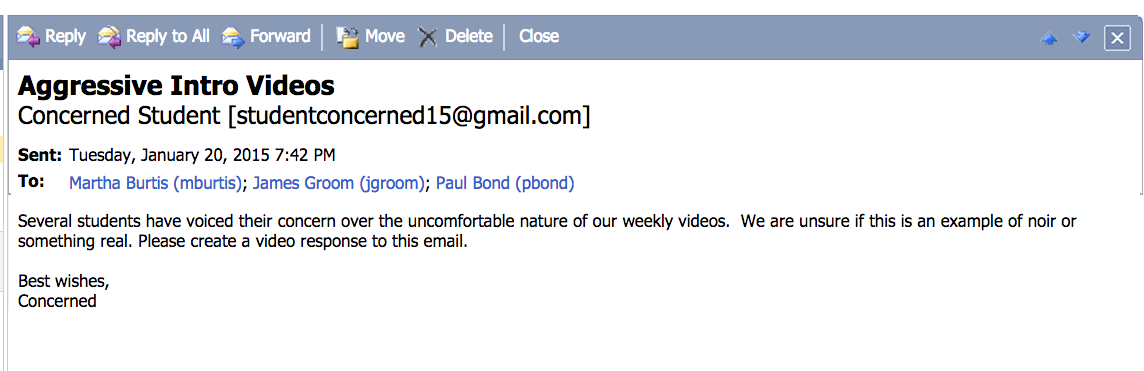
I got the following email this evening:
So, in keeping with the anonymous demands, I made my video response. Cliff notes: I have no idea what they’re talking about.
Response to the Concerned Students of Noir 106 from Jim Groom on Vimeo.
I got the following email this evening:
So, in keeping with the anonymous demands, I made my video response. Cliff notes: I have no idea what they’re talking about.
Response to the Concerned Students of Noir 106 from Jim Groom on Vimeo.

Pay attention to the dirty feet, hippie!
I saw Paul Thomas Anderson’s Inherent Vice (2014) last night. I enjoyed it. I just ordered Thomas Pynchon’s novel it was based on because I’m interested in how he adapted the original. I haven’t really been interested in Pynchon since undergrad. The Crying of Lot 49 is said to be one of his more accessible works, and it turned me off (not enough car chases and explosions 🙂 ). So the idea of struggling through works like Vineland, V., and Gravity’s Rainbow back in the 1990s wasn’t all that interesting to me. What’s more, I’ve been pretty tepid on Anderson’s work as well. I enjoyed Boogie Nights (1997) enough, but had no particular love for Magnolia (1999), hated Punch-Drunk Love (2002), couldn’t finish There Will Be Blood (2007) and found The Master (2012) moderately interesting, if a bit long and lacking tempo (something a number of his films suffer from in my opinion, including Inherent Vice).

But I come to Inherent Vice in a historical desert of good U.S. films, so I’m probably more forgiving than ever before. But beyond that, I’m co-teaching a noir-themed version of #ds106 this semester, so my interest in all kinds of noir is at a peak. And that’s part of what I liked about Inherent Vice, it was playing with all kinds of noir—drawing on neo-noirs like Robert Altman’s The Long Goodbye (1973), Roman Polanksi’s Chinatown and the Coen Brothers‘ The Big Lebowski (1997) as the canonical foundation of the genre, much more so than iconic classics like Double Indemnity (1944) and The Maltese Falcon (1941).

Does this make Inherent Vice somehow a neo-neo noir? You can see Larry “Doc” Sportello (Joaquin Phoenix) overtly channeling Jeff Bridges’ brilliant performance as the not-as-dirty hippie “The Dude” in The Big Lebowski. Sportello travels the same rehabs and 1970s L.A. haunts as Elliot Gould’s Marlowe in The Long Goodbye. He also investigates shady real estate deals, shadowy drug cartels, and the vertical integration of consumer dependence upon the monied elite, reminiscent of the untouchable corruption Jack Nicholson’s J.J. Gittes comes up against in Chinatown.

It doesn’t seem like you really need to go back to the older noir 40s and 50s noir. The focus of Anderson’s film—and I’m guessing Pynchon’s novel—on more recent noir suggests a kind of historical repositioning of the film genre. Paul Schrader’s “Notes on Noir” argues style is a more accurate definition of noir than genre, but in Inherent Vice the story is a historical container of the genre more broadly—working through so many of the tropes from which it derives meaning. It seems much more than a style in this regard. As Scott Leslie notes on Twitter earlier today:
@jimgroom yeah felt bad for people going to see it without a lot of background context, either film, literary or historical. Really needs it
— Scott Leslie (@sleslie) January 19, 2015
Inherent Vice provide an excellent reminder of just how much all narratives are intertextual, and constantly alluding, citing, and responding to one another. In many ways noir is a form of cultural literacy, and to understand noir over the last 90 years, is to learn about U.S. culture from within and without—it’s no coincidence the genre was most clearly articulated by a bunch of French cinephiles.
During the Depression in the U.S., a kind of cosmic fatalism seemed to have worked its way into the literature and film. You can see this in James M. Caine’s 1934 novella The Postman Always Rings Twice (which we’re reading this week in #noir106), as well as Billy Wilder’s Double Indemnity (1944), based on another of Caine’s classic noir novellas. Interestingly enough, Wilder was an Austrian Jew who emigrated to France and then the U.S. during the 1930s as Hitler came to power. His mother, grandmother, and step-father all died in the Holocaust. James Naremore, in his book More than Night, argues the “discovery” of film noir in post-war Paris is no coincidence. It was a city engulfed by the horror of World War II—a kind of existential ground-zero for Western Civilization. And many of the European emigres were the visionaries behind these Hollywood stories. From the very beginning noir was geopolitical.
That omnipresent fatalism in film noir turns its eye on new horrors in the later noir. Chinatown takes aim at power and capital, the 1930s water scandal it unearths provides an analog for the more contemporary corruption of Watergate and the Vietnam War. And by the time we get to the 1990s, the Iraq war is a media event, one which shapes how Lebowski understands his own world. He echoes Bush’s “this aggression will not stand”—which he watches while buying milk at Ralph’s grocery store—when he draws a line in the sand with the carpet pissers. The whole of Western Civilizations’ geo-political struggles (which we are still very much in the clutches of currently) are reduced to the lazy, ironic hero Jeff Lebowski who is truly “the man for his time and place.”

And this idea of a particular time and place through which noir continues to frame both the specificity of a moment, as well as the broader existential questions concerning our relationship to truth, power, and meaning is why I love it. This is why noir has increasingly become the preeminent genre for storytelling over the last eighty years. When it comes to dealing with the dark uncertainties where individuals and society interface, few genres do it better—as much as we love zombie films, they pale by comparison. In this regard Scott Leslie is right on, it takes some context to make sense of all this. Making noir the perfect frame for a #ds106 class. Why? Because #ds106 can’t simply be about learning particular technologies without a context, it must be about the context of technology in a particular time and place. In fact, technology is one of our darkest uncertainties as a culture right now: paranoia, surveillance, control, unilateral power, eroding rights, monied elite—need I go on? And originally I wanted this version of #ds106 to be about technoir, but that’s not enough. The net needs to be cast wider for the true creative capacity of a genre like noir to make sense.
Noir represents the spaces where individual agents (private investigators, detectives, and insurance agents) become at once representative of and estranged from institutional power over individual fate. By the time we get to Inherent Vice there seem to be no illusions that institutional corruption can be curbed. In fact, the LAPD detective, Big Foot (played brilliantly by Josh Brolin), has become paralyzed by the corruption of the institutional structure he works within. Whereas noir detectives and PIs were traditionally the human face of, and moral compass of institutions—in Inherent Vice they’ve become caricatures—militarized and extreme—with none of the complexity of James Ellroy’s boys in blue.
It’s as if the advice given to J.J. Gittes at the end of Chinatown has become noir gospel, “Forget it Jack, it’s Chinatown,” there’s not a damned thing you can do about it. But, in Inherent Vice, maybe you can do one small thing. Like salvage a relationship; rekindle a love affair. Sow some unassuming seeds of hope and compassion in a world gone awry. As noir it’s extremely modest in its aspirations—and that’s a sign of our times when it comes to power, money, and the like. We live in times where we waged global war for oil, we know the NSA is spying on us, we know the distribution of wealth is unjust, we known our politicians are lying to us. We know all this, and we don’t seem particularly concerned. It’s a distressing time for just that. And Inherent Vice provides no solutions. In fact, now that I think about it, it returns us to some of the more fatalistic noir of the 1930s and 40s. This is nowhere more apparent the when Sauncho Smilax (Benicio Del Toro) defines the title of the film in legal terms. Inherent vice is…
the tendency in physical objects to deteriorate because of the fundamental instability of the components of which they are made, as opposed to deterioration caused by external forces. All objects have some kind of inherent vice as a result of the baseline law of entropy.
So rather than a looking out to struggle with the external forces which characterize noirs like Chinatown, The Long Goodbye, and The Big Lebowski, this film is a turning inwards. A solipsism that obsessed with the fragile, unstable things we all are within this fatalistic cosmos of deep uncertainty. I guess this would explain all the gym subscriptions, yoga pants, and zealous faith. At the same time, in the face of the instability of the cosmos one small thing is accomplished by filthy-footed protagonist. A family is saved. A relationship is tenuous, but possible. In many ways it’s a film that embraces the macro-fatalism of noir and challenges it with a few moments of micro-hope 🙂 By no means a great noir, but when taken within the broader context of the genre it gives you some things to consider. Noir, it’s #4life
Just checking in to make sure everyone know that week’s one work is due this evening, no later than 11:59 PM. This will be the case each and every week, and I will not be sending these email reminders going forward.
Also, I will be posting at least one video each week in addition to the weekly assignment video to provide feedback, feature work, and generally reach out. This week’s can be found below:
I reference a few sites during the video, and I am including links to them below.
Well, that’s it for now, and be sure to watch the video and heed my advice before the clock strikes midnight.
I was hoping for a transportation metaphor, as per my last post, but when given lemons, invoke the Sand People!

Sand People rule
A couple of days ago Tim Owens tweeted about a new platform he was exploring called Sandstorm.
Who wants to play with @SandstormIO with me. Got it up and running on a server.
— Tim Owens (@timmmmyboy) January 16, 2015
Tim moves pretty fast, so it usually takes me some time to catch up on stuff like this. But when he quickly demoed what it does, I was really interested because it gets at how the web is changing in terms of hosting, micro-services, and infrastructure more generally.
Sandstorm is an open source hosting platform for personal instances of web apps. Users can upload and install arbitrary software. In addition to improving privacy and control, this is the only way to make Open Source web apps viable.
Effectively, Sandstorm is an open source platform that enables you to host open source applications that aren’t predetermined by more mainstream, highly controlled hosting software like CPanel. Through software like CPanel few indieweb apps can get distribution, effectively cutting them off from a user base. Sandstorm provides open source software that allows you to run docker containers with various applications—which are not limited to the LAMP environment===as well as enabling you to upload and run your own applications.
So, with Sandstorm you can basically provide an indie web distribution hub, kinda like the Merge or Dischord Records model for distributing alternative music. This approach provides the ability to start building a decentralized web hosting infrastructure. This is exciting for us, because this is exactly what we’ve been dreaming of at Reclaim Hosting for the last couple of months. In fact, we brought the great Kin Lane in to help us architect this approach. And what’s cool is that Sandstorm.io is just another indicator that this is a viable approach right now (or even the only viable approach), and we would be well served to follow our nose. So now what we’re really wondering is how much of this vision does the open source version of Sandstorm already take care of? And how much would we have to do to fit it into our model?
So, given Tim got the open source version open and running on a Reclaim Hosting server, I decided to start exploring a bit. And I was pretty impressed. You login (you have the option of using your Google or Github credentials) and immediately see a list of selected applications you can install, such as WordPress, Ghost, EtherPad, EtherCalc, MediaWiki, and several more.
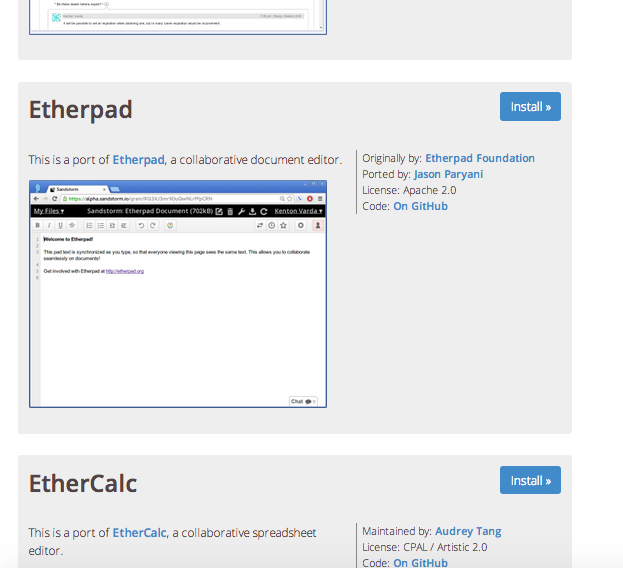
You click the “Install” button and you get a confirmation…

Once you do, your done. The micro-application is installed on its own container-based micro-server using Docker, or so I believe. And while you get an ugly URL out of the gate, you can map a domain on top of it.
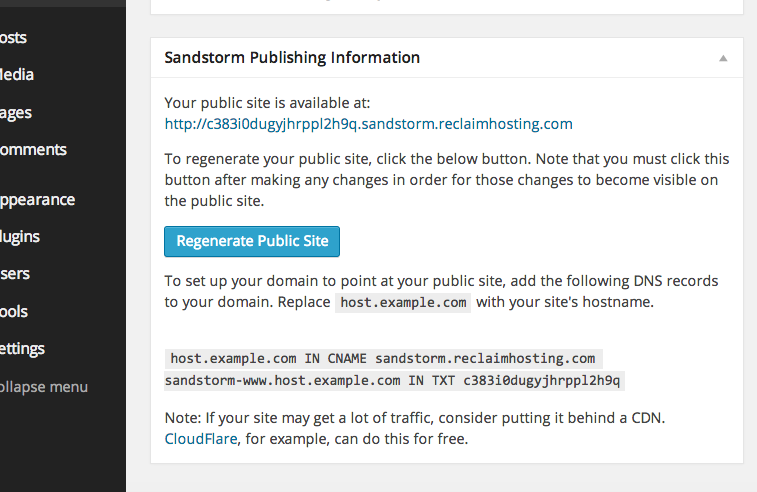
I mapped a ghost installation on ghost.jimgroom.net and it worked almost instantaneously.
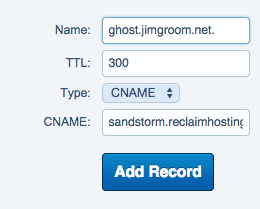

And as you’ll notice in the following screenshot, I have Etherpad, Ghost, and WordPress installed, and I was struck by how easy it was compare to the visual confusion and clutter of CPanel. This is the dashboard for a hosting account with three applications. Pretty sparse, and less is more. Right now I am mapping subdomains manually, but that is something we could automate pretty easily at Reclaim Hosting. Ad after that, voila! We can have a whole series of indie web apps for people to choose from, and enable them to install and manage their own applications using docker-deployed micro-instances. (I wonder if I said that right?)

So, everything I was speculating about in the last part of my presentation at University of Oklahoma is, in many ways, made concrete in a platform like Sandstorm. If you are interested in checking it out, go to http://sandstorm.reclaimhosting.com/ I think you should be able to login in, if you can’t let us know and we’ll get you access. You can alos demo this right on Sandstorm’s site as well.

What follows is a scripted draft of the presentation I gave Friday, January 9th at the OU TechExpo at the University of Oklahoma. Also, below is the abstract I was working off, as you can probably tell the two are often very loosely joined 🙂
This presentation will explore the importance of providing students, faculty, and staff with an innovative, web-based platform for owning, managing and migrating the digital work they create over the course of their academic careers. What’s more, this platform is not a vendor-driven product, but an ecosystem of open source applications that must be central to their critique and creation of the digital world. It’s the backbone for a broader, curricular-wide push for cross-disciplinary digital fluency. In essence, the platform undergirding the pioneering work of Domain of One’s Own at Mary Washington is the open web. More than a learning system or publishing platform, UMW Domains recognizes and codifies the importance of digital agency for each and every learner on campus, and provides the means of enabling this for each individual at scale. The impact of the global information network on our campus community is not imagined or inferred, it is intentionally designed and cultivated. Welcome to the digital liberal arts, and the emergence of the indieweb in higher ed. Can you grok the future?
This talk is building on, at least in my mind, the presentations I gave last year about Domain of One’s Own and the reclaiming of open, personal innovation toolkits at the university—all of which culminated in the EDUCAUSE Review piece, “Reclaiming Innovation,” I co-wrote with Brian Lamb (and Teddy Diggs 🙂 ). The argument was deeply rooted in the idea that much of the culture and technical possibilities undergirding the internet, and later the web, were part and parcel of academic culture. Begging the question why, over the last ten-fifteen years, have universities been in the odd position of buying back much of the innovation they’ve pioneered? There are many complex reasons, but we couldn’t resist highlighting the untold harms of a crack-like dependence on centralized systems for teaching and learning 🙂
For this presentation, the focus was far more on the possibilities of reclaiming that innovation, and how so many developments both technical and cultural—can we separate the two so neatly? Probably not—have been pointing towards another moment in which conversations around ownership, privacy, re-decentralizing the web, etc. are becoming more and more common. This talk was my first attempt towards building a cogent discussion of just these forces, and what they mean for campus culture, IT infrastructure, and the web more broadly. It wasn’t a complete failure thanks to the deep impact folks like Audrey Watters, Kin Lane, and Tim Owens have had my thinking about the limits and possibilities of edtech over the last two and a half years. Although, acknowledging all of the over simplifications, bad analogies, mixed metaphors, pig cannibalism advocacy, and technical inaccuracies are mine alone.
Part 1: “The Web We Lost”
“It’s not about the technology?” is a refrain you often here when discussions around the way technology is impacting our teaching and learning culture. And while it’s often intended to resist the fetishization of tech, which I think is very important, it can often result in a rather uncritical dismissal of just how dramatically technology is changing the cultural landscape we are working within, and has been for quite some time.
To try and make this point I want to share a clip from Orson Welles’s 1942 film The Magnificent Ambersons. It’s a film about the declining fortunes of an established Midwestern family, highlighting the social changes brought on by the automobile age.

Welles and Bogdanovich grocery shopping?
A few interesting points about this clip, it was framing this discussion about invention of automobiles almost 25 years after the automobile had been invented. And in an interview with Peter Bogdanovich years later, Welles had this to say about the film:
You see, the basic intention was to portray a golden world — almost one of memory — and then show what it turns into. Having set up this dream town of the “good old days,” the whole point was to show the automobile wrecking it — not only the family but the town.
This moment wherein a technology had such a dramatic change on the culture certainly provides an analogue to our own moment. 25 years after the invention of the web, we might still hear some of the very sentiments in that scene.
For all it’s speed forward, is the web a step backwards? Has it added to the beauty of the world? Or the life of humanity’s souls?
We might have different answers to these questions, I, for one, can think of many ways it has added to the beauty of the world and the life of humanity’s soul, but as Joseph Cotten’s character notes, regardless of what I think….
….the web has come. Almost all outwards things are going to be different because of what it brings. It will alter war, and alter peace. Our minds will changed in subtle ways because of the web. Did the web have any business to be invented?
Rather than begging the question of whether or not the web should have been invented, I think the more interesting question is what kind of web do we have 25 years after its invention?
A question a number of people have been asking, one popular example of just this is Anil Dash’s talk “The Web We Lost” at the Berkman Center in 2012.
In the early days of the social web, there was a broad expectation that regular people might own their own identities by having their own websites, instead of being dependent on a few big sites to host their online identity. In this vision, you would own your own domain name and have complete control over its contents, rather than having a handle tacked on to the end of a huge company’s site. This was a sensible reaction to the realization that big sites rise and fall in popularity, but that regular people need an identity that persists longer than those sites do
Audrey Watters, in one of her ten amazing top edtech trends posts, focuses on the IndieWeb (more on that anon) and quotes Arizona State University journalism professor Dan Gillmor on how…
We’re in danger of losing what’s made the Internet the most important medium in history: a decentralized platform where the people at the edges of the networks — that would be you and me — don’t need permission to communicate, create, and innovate.
And to quote Audrey Watters herself from her IndieWeb post:
Image credit: Alan Levine
The Open Web has increasingly become the Corporate Web, with powerful monopolies controlling key features like “search” and “social,” not to mention the underlying infrastructure that’s always been theirs – telecommunications, the “series of tubes” themselves. We have poured our lives into Internet technologies – our status updates, our photos, our messages, our locations, our fitness regimes, our movie preferences, and more. We have poured our lives into data silos, where our personal information is now mined, the value extracted from it by companies for companies.
 And even the inventor of the web himself, Sir Tim Berners-Lee, went on tour for the 25 anniversary of his invention to say “it’s time to re-decentralize the web.” He in many was calling for a bill of rights for the web:
Unless we have an open, neutral internet we can rely on without worrying about what’s happening at the back door, we can’t have open government, good democracy, good healthcare, connected communities and diversity of culture.
Something Berners-Lee said during a Reddit “Ask Me Anything” last year that was particularly striking and came during his response to a question about whether we can preserve the open web. He noted:
It is up to us. It is an artificial creation, as are our laws, and our constitutions . . . we can choose how they work. We can make new ones. Our choice.
 Which is particularly striking for me right now because I just got finished watching the HBO series John Adams, which is all about this very thing. Creating the reality we exist within (as well as the deep problems of golden age history), and in many ways challenges Welles’ vision of the automobile in The Magnificent Ambersons. It is not inevitable that the web will wreck the good old days. It’s an artificial creation, and we can reclaim agency in how it works.
____________________________________
Part 2: A Brief History of Academic Technology
So how has academic technology worked at universities over the last 25 years? George Siemens, who so graciously allowed me to use the following frame for this brief history before its publication (big fan!), breaks it down into four stages:
1) Computer Based Training and Websites
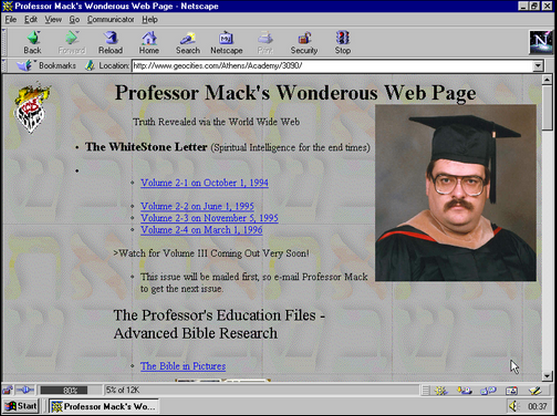
2) Learning Management Systems

3) Social Media, Portfolios, and MOOCs


For the purposes of this post I am abbreviating the text/slides I include here. This section of the talk was taken from my previous discussion of the ~spaces during the 1990s, the rise of the LMS circa 1999, the mixed reception/adoption of social media for teaching and learning at universities throughout the oughts, the explosion of MOOCs in 2011, and the concomitant fallout.
4) Distributed, adaptive learning, and competency models

For this fourth stage I reframed/interpreted Siemens’ idea of distributed and adaptive learning vision to coincide with part 3 of the talk, “Reclaiming the Web,” by discussing how UMW is the locus of an initiative supporting faculty, staff and students to re-decentralize control over their work. Domain of One’s Own at UMW as the example. I didn’t touch on competency models at all, but I want to revisit this in the next version of this talk.
____________________________________
Part 3: Reclaiming the Web

One of the immediate problems for setting up Domain of One’s Own was thank it really hadn’t been done before. This isn’t to say it “revolutionary,” quite the contrary, it’s trailing edge technology—web hosting had been around for over decade when we were running our pilot. What was revolutionary providing any and all students, faculty, and staff their own domain, as well as an “user innovation toolkit” to start exploring different open source applications that they administer and control.
This is an example of the the GUI Interface wherein the community can control their slice of the server, one way of understanding this is thinking of Domains and web hosting in relationship to a house and street address [I’ll spare you, dear reader, the awesomeness of this metaphor in this post, but you can explore it in all its grandeur here.]
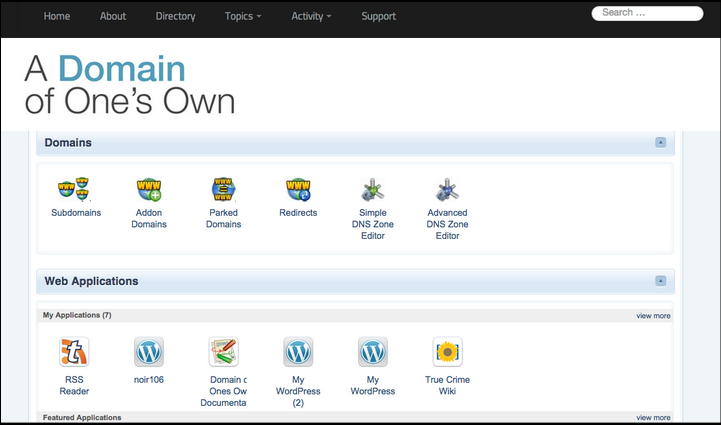
And part of the power of such an approach might be see more practically through managing and controlling your various resources online. Something Jon Udell discusses quite eloquently in his 2007 EDUCAUSE talk “The Disruptive Nature of Technology.” Using Gorden Bell MyLifeBits as one, extreme, example of someone who is archiving everything they have—every “lifebit” is being digitized and made searchable. In effect, he will have a comprehensive digital archive of his life–not unlike The Truman Show—although voluntary 🙂 Something which raides an important question, where are your lifebits stored? Who owns them? Do you want you digital photos, videos, writings, emails, etc.? Is that an archive that has some posterity beyond your own time here? If so, whose managing it if not you?

Gordon Bell’s Total Recall
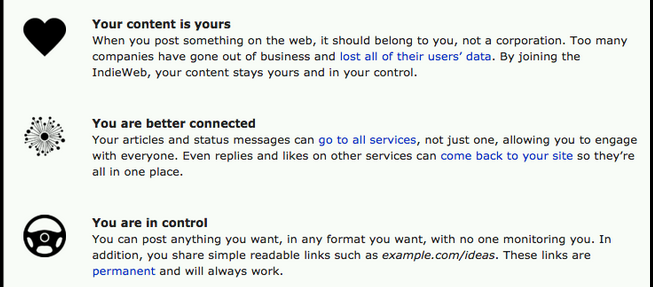
All of which dovetails nicely with a broader movement around these very ideas: The IndieWeb. and the best and most definitive framing I’ve yet to read is in this article from Audrey Watters, part of her year-end tech trends series. Essentially, the indieweb movement is focused on three principles:
And one of the ways at thinking about these principles technically, is through an approch they refer to as POSSE:

Or, “publish on your own site and syndicate everywhere.” An excellent example of which is the IndieWeb publishing application Known, which allows you to post to your own domain, and push out to various social media sites like Twitter, Flickr, Facebook, SoundCloud, etc.
One of the founders of the IndieWeb movement, Amber Case, who I actually realized was featured as part of the new generation of scientists in, I believe, National Geographic while standing online at a grocery store (Don Delillo was right!). Her exploration of the implications of technology on our idea of self is really powerful, and pushes us to think about some of the deeper issues that undergird the control of who we are online.

A self or identity that is produced through various participation architectures, the act of producing a virtual or digital representation of self by filling out a user interface with personal information.
Facebook and Twitter are examples of the templated self. The shape of a space affects how one can move, what one does and how one interacts with someone else. It also defines how influential and what constraints there are to that identity. A more flexible, but still templated space is WordPress. A hand-built site is much less templated, as one is free to fully create their digital self in any way possible. Those in Second Life play with and modify templated selves into increasingly unique online identities. MySpace pages are templates, but the lack of constraints can lead to spaces that are considered irritating to others.
And…
From earliest times, humans had tools like hammers that extended our physical self. Today’s technology extends our mental self. It’s changing the way we experience the world.
____________________________________
Part 4: Web Futures and the Resilience of Transportation Metaphors or, an Epilogue of Sorts
Amber Case echoes the questions we started with in this talk. Namely, how are our minds changed in subtle ways by new technologies? How do they challenge or reinforce some op our assumptions about identity? Furthermore, how does this impact who owns our data? I could just as easily have ended this discussion there, questions that initiatives like Domain of One’s Own are trying to engage by integrating digital fluency into the curriculum.
But one more thing before I go…transportation metaphors. While working on this talk I was struck by how well The Magnifcent Ambersons example with the automobile mapped on our own cultural moment with the web. What’s more, the brilliant exhibit at the Smithsonian’s American History Museum “American on the Move,” inspired me to think about the realtionship.

US 66 Sign from the Smithsonian Institute’s “America on the Move” exhibit
The Information SuperHighway is one common metaphor, and for many it was the metaphor used to introduce the Internet more generally. The web being the interface through which it became visible. In fact, in Howard Rheingold’s 1995 interview about the web on Frontline, this very metaphor comes up immediately.

And the transportation metaphors have persisted pretty consistently, take the following image to explain Net Neutrality. Even more compelling if you are from the Washington DC area given they recently introduced a pay-per-use toll road model for 40-odd miles of highway on the I-95.

In fact, it might be argued that the transportation metaphors power of explanation are in their immediate concreteness. Which might suggest why “The Cloud” is such a problematic, mystifying metaphor. Suggesting your stuff is out there “somewhere,” rather than being clear it is simply on someone else’s machine, not yours. The cloud introduces an obfuscation of the concrete, material realities underlying this technological revolution, which is exactly what the IndieWeb, Reclaim, Domain of One’s Own, etc. want to try and make intelligible.


Which brings me to yet another transportation metaphor which has been helping me to understand the changing nature of IT infrastructure right now. Docker, which explains its technology using the containerization analogy—which revolutionized shipping over the last 50 years—represents a powerful insight into how servers are becoming virtualized, portable, easier to manage, and potentially much, much cheaper. Not unlike what containerization did for shipping since the 1970s—after they were standardized and the US Navy backed this method during the Vietnam War.
All of which brings me to my companion video for the opening bit on Automobiles. Here is Frank Sobotka from Season 2 of The Wire sitting through a presentation on the containerization of the Baltimore Port, and it’s resulting impact on his union.
This talk is unfinished. But, fortunately, I’ll have a few more attempts to try and make sense of it. Particularly this last part, namely explaining Docker, containerization, the changing nature of IT, and it’s impact on edtech. But, I’ll have to save that for my next talk.
 I’ve had a month-long hiatus from blogging on the bava—which may be the longest ever—although I have been posting images, tweets, bookmarks, and more here. Fittingly, the latest incarnation of ds106 has started up, noir106, so I am getting back in the groove. I did today’s daily create, inspired by July Laszakovits take on the prompt.It’s a writing prompt, which is inline with how we will be running noir106 this semester, and here it is:
5 in 1 Story
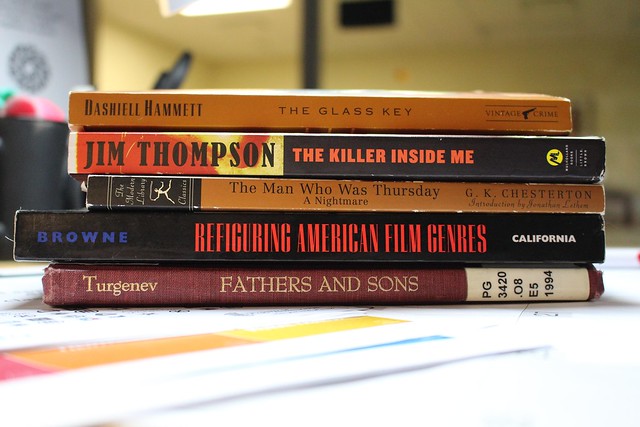
Grab the 5 nearest books around you. (Novels or textbooks, whatever story you’re wanting to make.)
Create a story from the following:
The first sentence on p. 1 of the first book.
The seventh sentence on p. 5 of the second book.
The first sentence of the third paragraph on p. 20 of the third book.
The fifteenth sentence on p. 47 of the fourth book.
The last sentence on the last page of the fifth book.Give it a catchy title!
This daily create was submitted by #wire106 internaut Lauren Brumfield—big fan!—so last semester and this semester collide in a creative explosion of cut and paste texts right away. So, below is my take on this assignment, and I am struck my how cool it is. I’ve read all the texts recently in preparation for class, and at least one for leisure—that would be the 19th century Russian novella 🙂
Green dice rolled across the green table, struck the rim together, and bounced back. I pretended like I didn’t hear him. “Quite so,” said Syme placidly, “a kind of screw! How simple that is!” Rather than raging against a fate that the audience has learned to accept, the female hero often accepts a fate that the audience at least partially questions. However passionate, sinful, rebellious the heart buried in this grave, the flowers growing on it look out at us as serenely with their innocent eyes: they tell us not only of that eternal peace, that great peace of “indifferent” nature; they tell us also of eternal reconciliation and life everlasting…
Book 1 : The Glass Key by Dashiell Hammett
Book 2: The Killer Inside Me by Jim Thompson
Book 3: The Man Who Was Thursday by G.K. Chesterton
Book 4: Refiguring American Film Genres, quotes essay by Linda Williams
Book 5: Fathers and Sons by Ivan Turgenev

Today has a bunch of significance for me. It’s the day I moved from Brooklyn to Fredericksburg nine years ago, it’s when the the first battle of Fredericksburg in 1862 resulted in one of the single worst defeats of the Union army (damn rebels!), and it also marks the birth of bavatuesdays back in 2005. It’s been a long run, with just under 2600 post (2591 to be exact) and more that 12,000 comments. It’s the most comprehensive archive of my thinking—for better or worse—that I can point to, and it’s become the site of one of the most compelling practices of my life: blogging.
I’ll be moving the blogging part of this site off WordPress over the break, and I hope to shut down more generally to archive some stuff and get out and see the world a bit. But as much as I try, it’s hard to quit the bava 🙂 Another significant event that happened today is that the old, beat up recliner that I’ve written more than half of those 2600 posts has been reupholstered, and as fate would have it got delivered today. Coincidence? I think not, a sign that there’s at least another 2600 posts in that chair.

Bava Blogging Recliner 2.0
I haven’t created any art for this anniversary, I am way too deep in my bathroom renovation for much of anything else until it’s done. But I can divide time by three and give you a blast from anniversaries past with this sweded scene from The Shining in honor of bavatuesday’s third anniversary.

Quite a balancing Act
I’ve been renovating my bathroom over the last month, and last weekend I finished replacing the shower valve. This is fairly minor work for anyone with some experience, but given I have none it was full blown plumbing for me. I was considering getting someone to do it because I have no experience soldering, and the prospect of sweating pipes stresses me out. That said, a few people suggested using push-fit plumbing connectors called Shark Bites. They require no soldering at all, just get the right pieces and you can connect your pipes like an Erector Set. I was fairly skeptical, so I spent a little time on a few plumbing forums and found a number of professionals and DIY folks alike swear by Shark Bites for certain jobs.

An Anatomy of a Shark Bite
They depend on air pressure to latch onto PVC or copper pipes, and as I foundout, they have quite a grip. I decided to try them out. I cut out my old shower valve and replaced it with a new one, using the seven or eight Shark Bites I bought to connect the valve to the hot and cold water pipes as well as the shower and tub spouts. With an investment of $70 in materials and a couple of hours time I successfully replaced the plumbing in my shower. What’s more, it doesn’t leak. Crazy.

My Shower Valve Shark Bites
So, while I was doing this I kept on thinking about RSS pull syndication versus API push syndication. Despite my best attempts to escape my day job through house projects, I can never truly resist a bad metaphor. The overhead of sweating pipes, which required disassembling the shower valve in addition to soldering, would have taken me at least twice as long to finish. What’s more, I probably wouldn’t have been successful in the end. I would have been turned off and decided to either abandon bathing all together, or pay someone else to do it. For many faculty, this is what happens when it comes to setting up pull syndication using FeedWordPress for course blogs (but most don’t give up bathing!). It’s not impossible, but it takes work and you have to know how to solder pipe, even if you understand how the basic plumbing of syndication works.
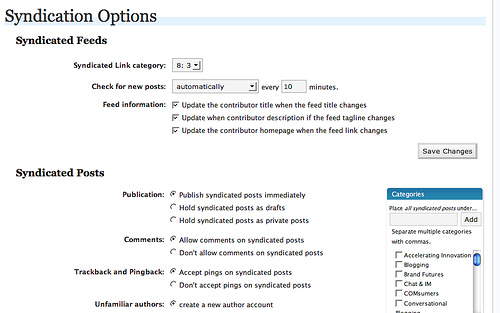
FeedWordPress Interface, anything but simple
But with API-based push syndication in applications like Known—much like the push-fit Shark Bite connectors—the process is far more streamlined. I can actually expect both faculty and students alike to manage their own syndication plumbing and install the various connections with the push of a button. What’s more, the conceptual reasons for these connections is not necessarily lost on them, they just aren’t being asked to do the soldering.
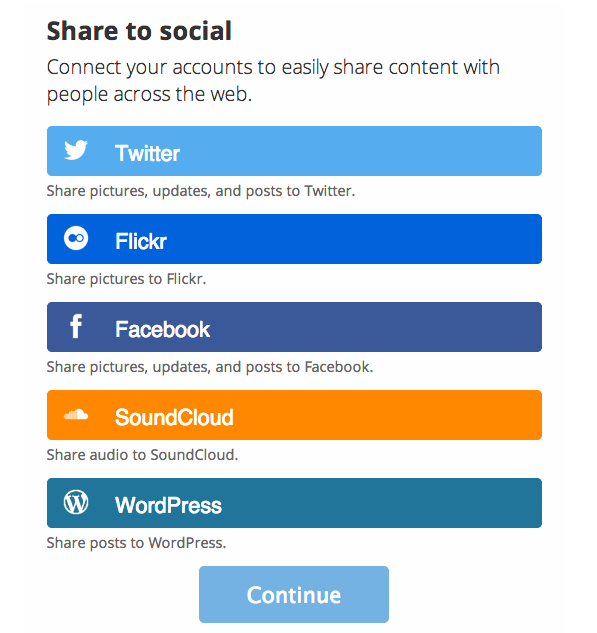
Known onboarding for API Push Syndication, Shark Bite simple.
It can be a fine balance between “build your own” and in-a-box solutions. But when it comes to syndication and making the plumbing easier for faculty and students to seamlessly manage, control, and aggregate their work—we can do a lot more to make that experience better. This is one of the things that really excites me about Indie Web applications like Known.
Another thing that I appreciated while demonstrating Known this morning at the Davidson Domains workshop is how much simpler it is than WordPress, which comes as a relief when trying to get a group of people to explore a new technology. It took me about 5 minutes to explain Known this morning, whereas the discussion of WordPress went on for more than an hour and we didn’t get much beyond creating posts and adding media. This kind of simplicity is part of the magic of an interface like Tumblr’s that Known is based around, and sometimes less is a lot more when it comes to doing your own plumbing on the web.
As I mentioned in my last post, the Chief Information Architect (Phil Windley) and CIO (Kelly Flannagan) of Brigham Young University visited UMW last week to learn more about the Domain of One’s Own project we’ve been running for the last couple of years. They have a really compelling vision for Domain of One’s Own that in many ways hearkens back to Jon Udell‘s broader notion of digital identity across all domains of society. They see domain’s across a spectrum that begins long before students get to BYU and long after they graduate. And this space isn’t just about their education, it’s a broader vision of a kind of personal interface for one’s online world that enables them to manage, share, and archive the various lifebits they accrue over time.
Thanks to Kin Lane’s white paper The University of API I had a pretty good idea of what Phil and Kelly have been up to at BYU over the last decade or so:
It takes a forward thinking IT group, that is aware of what has been happening across the tech landscape over the last 14 years, with APIs. This type of transition in thinking can be seen playing out at Brigham Young University with their over 250+ APIs….BYU is still just beginning to get a handle on what a centralized developer area will look like, let alone an organized and consistent approach to designing, deploying and managing APIs.
They have been working to create what they called a “University API” —a consistent, structured API across all the various systems to enable their community to access, share, and analyze a wide variety of data from across the university. It’s a pretty bold vision, and I had the pleasure of sitting in while they explained it to our IT group. I was blown away by how these two are rethinking the way in which we share data across the university, and the discussion helped me further grok the value and import of APIs more generally. (I’m getting there, Kin!)
What struck me as the day went on is that for BYU, Domain of One’s Own represents a model that provides faculty and students an access point for data literacy, agency, and broader control over what’s being provided by their University API. Not to mention the tools to innovate with that data. The domain is a personal API; a space where individuals becomes increasingly empowered to understand, manage, hack, and share the data that defines them.
Tomorrow Tim Owens and I will be talking with a group of faculty at Davidson College about their Davidson Domains initiative. Over dinner we were talking about how we could provide a broader context for the work we are doing beyond a specific Domain of One’s Own initiative. Don’t get me wrong, I love a good domain project. Schools like Emory, Oklahoma, and Channel Islands are showing the way. But I think it’s dangerous to suggest this is happening in a vacuum. And that’s probably why I’m digging the Indie Web movement, it provides a broader view of the cultural moment we find ourselves in, and why a Domain of One’s Own project might be relevant for all kinds of reasons—but also how it’s not any one thing either. I keep thinking a domains project needs to move well beyond UMW for it to be a success, but each one also needs to be its own.
What if we thought about universities doing domains projects, kinda like indie labels promoting unknown bands and a seeding a local scene. Domains could provide an infrastructure of support and promotion for the faculty, students, clubs, groups, projects, etc. that is all done in their own space. Reinforcing a DIY ethic inherited from punk. What if each school was known by the variety of it’s different approaches, ideas, and visions for what the independent web means.
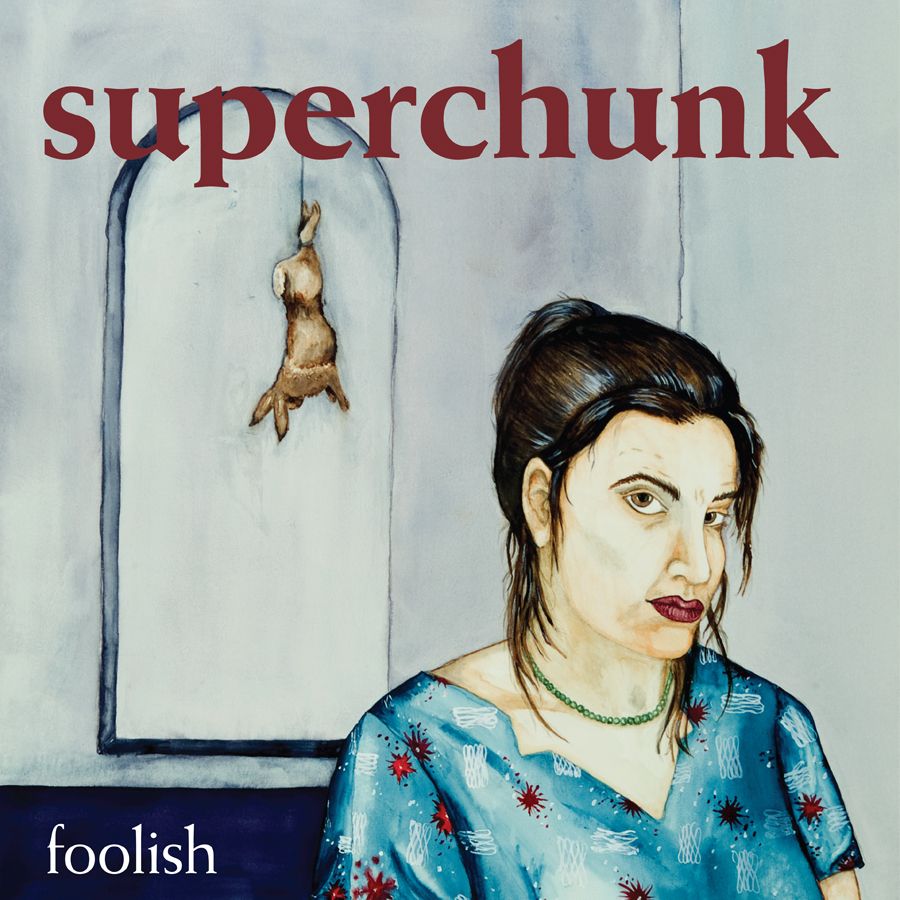
Which ultimately led me to thinking about Superchunk, a mainstay indie rock band that just so happens to be a home team favorite given I’m currently writing this from North Carolina. One of my favorite albums of the 1990s, Foolish, was Superchunk’s first full LP release on their own label Merge Records.
Merge is a label that over the past 25 years became a cultural resource that supported a wide range of bands not only locally, but from around the globe. Most recently Canada’s immensely popular Arcade Fire had a number 1 selling album on Merge. The cross-over in terms of what a platform like domains could do to promote a culture of critical thought, aesthetics, and empowerment is really enticing. An indie label suggests a certain amount of freedom from commercialization. It also highlights artist’s keeping control over their work, along with a sense of purpose beyond the major labels’ predominant logic of success driven by sales.
With the indie web—which probably finds its best representative in IndieWebCamp—much of what is highlighted is a people-focused alternative to the ubiquitous corporate web.
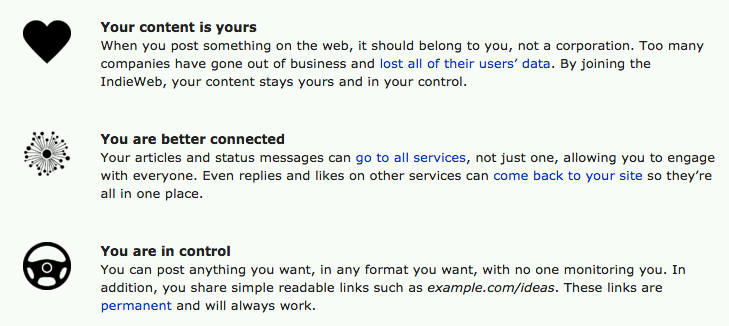
And you’ll notice how much the focus is on retaining your content, getting better connected, and taking control. A web that promotes a network of independent sites that each devise a vision and aesthetic that riffs upon a broader community, yet retains it’s sense of uniqueness seems a lot like a thriving indie scene, right? There would be no better place for something like that than a series of loosely connected, yet independent and self-determined university communities who want to cultivate a web of creative agency. Is it a coincidence Superchunk and Merge Records came out of the Raleigh-Durham area?
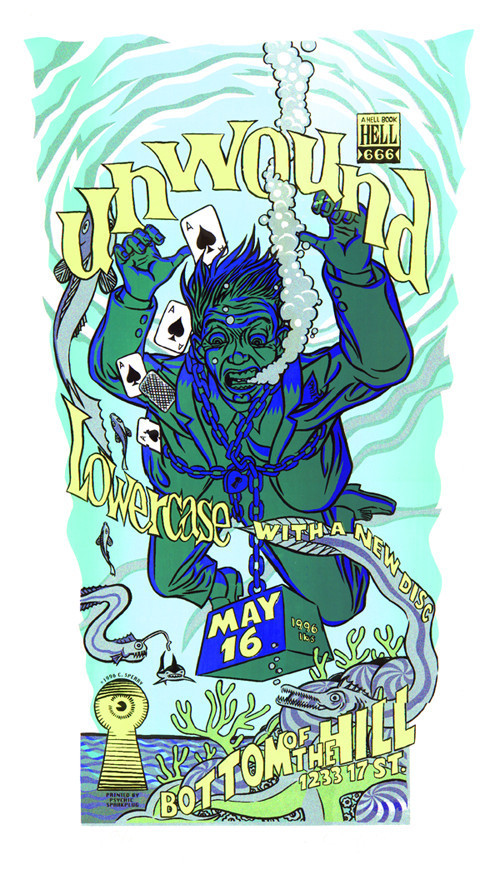
All this to say, the indie web provides a necessary frame for the why of domain of one’s own. The crucial piece is how you imagine what you are brining to campus. Is it just another system? Just another space to publish? Or is it a concerted movement to try and highlight, promote, and share the variegated work colleges and universities do as a community. Forging a sense of community is the hardest part of anything like this, but the key is we aren’t working in isolation. People are thinking about the importance of owning their work, publishing on their own site and syndicating elsewhere, maintaining the canonical URLs of their thoughts, images, videos, bookmarks, etc. and recognizing, to quote Ben Werdmuller, that the web is made up of people not services, and its time we start recognizing and celebrating that fact. And what better way than with a domain?

Find out more about me here.