Wire 106: S01E02 “The Detail”

Screen Shot 2014-08-16 at 11.25.19 AM

In preparation for this semester’s #wire106, Paul Bond and I started having discussions about the various elements of storytelling in the first 3 episodes of Season 1 of The Wire. Paul has already blogged his reflections on the visual elements of episode 2, “The Detail.” You can listen to our conversation about episode 2 here, but, once again, I’m not totally satisfied with the quality of the Google Hangout archive. We’ll have a better solution for the videos before classes get going.

Picking up on my discussion of episode 1, “The Target,” and the focus on a surveillance society in The Wire, I thought it was worth pointing out that motif would be ongoing. The following clip has Daniels and his crew heading into police headquarters, the scene cuts to an overhead shot from the perspective of a security camera, then back again. This establishes the fact that the watchers are also watched. A reality that is ubiquitous, as Paul notes when pointing out Avon Barskdale and his crew also have cameras strategically placed outside their headquarters at Orlando’s.

Another consistent theme we discussed in episode one, that also continues throughout the series is the paralleling of scenes, language, and relationships. In the following clip McNulty tells the judge “You missed a spot,” an aside about the mustard he got on his tie that is reprieve from the discussion of power relations, the rules of the game, and “what’s done is done.” In the very next scene the veteran detective, Patrick Mahone—whose effectively been retired for years—tells Michael Santangelo “You missed a spot!” when he’s mopping the floor. And when Santangelo retorts “why don’t you f**king do it,” Mahone notes “Seniority.” The ongoing personal dynamics mediated by institutional hierarchies and power relations weigh heavy in episode two.

The ongoing ruminations on power relations are means limited to the police force. In fact many of the most profound existential explorations of power and money can be credited to D’Angelo Barksdale. He’s truly a remarkable character, and this episode marks the first of many conversations in the pit that explore these themes. In the following clip D’Angelo, Wallace, and Poot talk discuss the hypothetical fate of the inventor of McDonald’s chicken nuggets.

The constant reflection back on the relationship between wealth, power and possibility constantly re-emerges, and the ongoing refrain is the game is rigged for those with money and power. Ronald McDonald exploits the ideas of others for his own “clowny ass” profit! Can the writing get any better than this? You think it can’t, but it will.

A scene that hits very close to home given what’s still unfolding around the Michael Brown shooting in Ferguson, Missouri is when the three knucklehead cops Herc, Carver, and Prez go into the projects at 2 AM to “crack some skulls.” Their brutality results in the blinding of a 14 year old boy and an aerial war with the invisible residents of the towers. It’s a haunting scene.

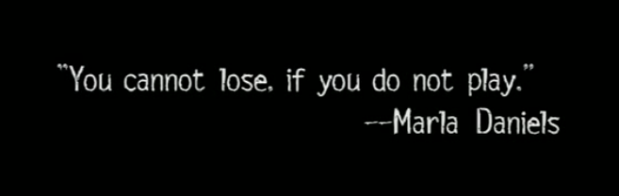
What’s more, Audrey Watters pointed me to an open letter David Simon wrote to the Police captain in Ferguson titled “The Endgame for Civic Responsibility Part iii” that frame the loss of accountability and closing ranks that is what follows this scene when Daniels provides Prez with cover and a story. Yet, it haunts Daniels, as the final scene of the episode suggests. The epigraph for this episode, attributed to Daniels’ wife Marla, provides one of the best articulations of how the game is rigged and advice on how to avoid it: “You cannot lose, if you do not play.” With characterization and writing like this, it’s not arrogance for Simon to compare this series to Moby Dick. The literary power of this series is one clear example of why this isn’t a cop show.

And while I am hung up on the literary and thematic links of the script, I think Paul does a nice job demonstrating how these themes are communicated across various media.

Posted in digital storytelling | Tagged , , , | 2 Comments

Surveillance Society

Images of surveillance from the first episode of season 1 of The Wire, “The Target.” I mentioned the prevalence of surveillance camera shots  in the first episode of The Wire in my previous post. Above are six GIFs capturing what I believe is every surveillance camera shot in episode one, although I have a sneaking suspicion I missed one. The idea was to make the GIFs look like a series of surveillance monitors. Not sure it worked, but I published them on Tumblr first to capture the effect more cleanly than I could in WordPress.

To create the individal GIFS I used MPEG Streamclip to capture the clips from the episode and export them as image stills. I then used GIMP to make the animations. You can find a pretty thorough tutorial for this process here. Starting to get into the ds106 groove!

Posted in digital storytelling | Tagged , , , , , | 8 Comments

Wire 106: S01E01 “The Target”

Andrew Forgrave’s #wire106 poster

In preparation for this semester’s wire106, Paul and I started having discussions about the various elements of storytelling in the first three episodes of The Wire. Paul has already blogged his reflections on the first episode of season 1, “The Target,” and what follows below are mine. Also, you can listen to our conversation about it here, but I’m not totally satisfied with the quality of the Google Hangout archive. We’ll be working on alternatives over the next week or so as the class gets going. I guess that’s why we’re starting early.

One of the things I did while preparing for my discussion with Paul is listen to David Simon’s commentary on “The Target,” and it nicely frames what he’s trying to accomplish more globally with this series, namely tracing various institutions’ effects on the people who work and live within them. We’re all compromised by these institutions, and at the same time must contend with them. The Wire is a meditation on this reality, tuned specifically to the modern, post-industrial cities of the U.S. Baltimore becomes the canvas—and leading character—on and through which this story is told.

Initially The Wire, particularly season 1, comes off as just another cop show. And Simon talks a bit about this in his commentary, he notes the surface resemblance to a cop shows merely masks something different. The cop show might pull people in initially, or even push them away—like it did me in 2002, but the series is not a formulaic cop drama. It’s an investigation into the idea of policing to the degree it tells us about our culture. In that regard, as Ryan Chernin’s essay “Hardwired” argues, The Wire has more in common with 1930s and 40s existentialism of hardboiled fiction than anything written for television in the last fifty years. And, as demonstrated in the following clip, Simon goes to great pains to both critique and diffuse the adrenaline-fueled, testosterone-laden cop shows of the last two decades.


S01E01-is The Wire a cop show?

Rather than this scene ending in some revelatory bust that sees the drug dealers busted and order restored, all the pomp and circumstance is for nothing. A couple of guns, one missed on the initial search, and an informant getting even with her man. It’s a scene where the action-packed image of policing is deflated—police work is not simply running around yelling at people with your gun out. It’s painstaking, thoughtful work that is often dangerous to the very institutions it is supposed to protect when done well.

This idea of police work comes up again and again throughout the series, and the premise of the whole first season—bringing down the Avon Barksdale’s drug empire—is a result of detective Jimmy McNulty wanting to do real police work. In fact, he is continually crucified for that very fact within the police department. The following scene features McNulty getting chewed out by his commanding officer Rawls for bringing the Barksdale case—and the attendant homicides—to the attention of his superiors. He’s made work and waves for everyone, and that is not making him popular. [As a rule there is a language alert for every clip from The Wire.]


S01E01-McNulty dressed down by Rawls

What’s interesting here is that when McNulty is listing the Homicides Rawls is flipping through index cards with each of their names. As Simon notes in the commentary, this is reducing murders to index cards. Murders don’t matter, only the “statistical suggestion of success” matters. High clearance = good, low clearance =bad. In other words, a data driven nightmare. And, as is often the case, shit rolls downhill and McNulty is taking one on the chin for trying to do real police work.

This scene is interestingly paralleled in the world of the drug dealers McNulty’s chasing. In the very next scene Avon Barksdale sits down his cousin D’Angelo to have a similar conversation. D’Angelo wasn’t doing his job, he created more work for Avon, and now he’s getting lit up. The idea that these two institutions have more in common than we care to admit is not necessarily novel. Yet the way the two scenes are mirrored to subtly tell that story while developing the characterization is. This theme will be developed through the first season, and McNulty and D’Angelo might be thought of as narrative doppelgangers in their respective worlds.


S01E01-D’Angelo Dressed Down by Avon

Another point that’s striking about this series is how relevant and prescient it is about our moment. From the very first episode the series invokes the political specter of the War on Terror after the 9/11 attacks, which at the time of the pilot’s air date were only nine months old—almost to the day. The following scene not only introduces the ongoing theme of an increasingly totalitarian state post 9/11, but also the omnipresence of everyday surveillance. This shot of a surveillance camera is just one of six in the first episode alone. The idea of being watched and controlled by forces outside your control is everywhere embedded in this series. Interesting point Simon raises in the commentary is that the bit about the FBI moving all their resources away from the war on drugs to counter terrorism was purely predictive—but turned out to be spot on. Almost like fictional investigative reporting.


S01E01-The FBI and 9/11

The final clip we talked about was the oddly placed flashback scene at the very end of the episode when D’Angelo sees the gunned down body. The flashback takes the viewer back to the beginning of the episode, in a very un-Wire moment, when the dead man was testifying against D’Angelo in court. This is odd because this series doesn’t pander to the viewer, it demands you watch closely and rewards you accordingly. Like a good novel, as Simon points out in the commentary. And that’s probably why Simon acknowledges his ambivalence about this scene, saying HBO pushed them to include it because they were worried the viewer would be lost. An interestingly reflexive moment where the entertainment industry—an institution that’s the invisible presence throughout the entire series—is compromising the aesthetic. It doesn’t happen again for the rest of the series, but it’s interesting how this moment suggests the pressures to contend with the institutions are ubiquitous.

State’s Witness Flashback

So those are the moments, themes, and clips that intrigued me from episode one. I can’t recommend enough listening to David Simon’s commentary—he provides a brilliant overview of how The Wire is more akin to Moby Dick than Cops. Delivering high art to television suing the Trojan horse of a cop show. But that’s not to discount the importance of the first season being a cop show, because as Simon notes that the crime genre is to contemporary post-industrial society what the Western was during the late 19th early 20th century. It reflects the deepest schisms in our society, the darkest realities of our culture, and the almost comical endurance of the American dream.

Posted in digital storytelling | Tagged , , , | 8 Comments

Teaching Without WordPress: Exploring the Known World

During our trip to Norman, Oklahoma to visit a bunch of tuned in and turned on Sooners (more on that trip soon) Tim and I were excitedly talking about our time in LA at the Reclaim Your Domain hackathon. One of the things the many things that came out of the hackathon for me was experimenting with the open source application Known. It’s being developed by Ben Werdmuller and Erin Jo Richey, and they were at the hackathon exploring how they might use this tool in education. Turns out much of the ethos around Reclaim Your Domain (own our content, take control of your online self, interrogate the web) gels neatly with the tenets undergirding IndieWebCamp.

A couple of things I like about Known:

POSSE: It instantiates many of the principals at the heart of Domain of One’s Own, particularly the IndieWeb Camp acronym POSSE –Publish (on your) Own Site, Syndicate Elsewhere. What’s push, it’s push rather than pull so it can begin to get at the idea of accessing the APIs of various social media silos like Facebook, Twitter, Flickr, SoundCloud, etc. and pushing out to them while controlling the original.

nowordpressIt’s Not WordPress: I mean this with the utmost affection. I love WordPress, and it could even be argued UMW has pushed harder than any other institution out there on its promise and possibilities for teaching and learning. In fact, we still do. But one of the things we realized when starting up Domain of One’s Own is that WordPress has become too central to our thinking—risking myopia. We owe it to ourselves to experiment with other tools and technologies.

A Distributed, Open Source Tumblr: One of the things that appealed to me immediately about Known is the simple, Tumblresque interface. Various content types, lightweight admin bar, frontend publishing, and a minimalist aesthetic. It’s everything I have learned to love about Tumblr, with the bonus of being open source and designed to capture a distributed network.


link-building-101-finding-web-mentionsDistributed Comments: Thanks to the developers in and around the IndieWeb movement, a nut we’ve been trying to crack with WordPress aggregation—syndicating comments—has been elegantly dealt with thanks to the Web Mentions protocol. A crucial element for connecting distributed communities is baked into applications like Known, which represent a whole new wave of web application.

15_1910In on the Groundfloor: Known is both clean and robust, and for a new application it’s extremely usable. This means we (Tim, myself, 60+ UMW students, and anyone else out there who wants to experiment) have the unique opportunity to team up with Ben and Erin to see if we can design the next generation edtech syndication hub.

We’re going live with Known for ds106 and tic104 this Fall, and I couldn’t be more excited to return to experimental mode. We needed it, and thanks to Tim, ben and Erin, we got it in spades. Jazzercise, bitches!

Posted in digital storytelling, Known, reclaim | Tagged , , , , | 4 Comments

Blogging from Behind

The title says it all, I’ve been blogging from behind lately. Ever since I hit the road for a lion’s share of July to Austin, Los Angeles, and Norman, Oklahoma I’ve been feeling the pressure to catch up. It’s often a good pressure, and I write on this blog for my own professional and personal sanity—it’s been a failure, I know.
giphy
Despite my best intentions, sometimes there just isn’t enough time. I’ve been involved in a wide range of projects that I’m really excited about:  Connected Courses, Reclaim Your Domain, OpenVA, and Reclaim Hosting. And my travel this summer was dedicated to three out of the four listed. Catching up on this blog would mean writing the awesome Reclaim Your Domain Hackathon in LA (although a few others far smarter than me already have so I should just relax and link). Starting to share the work we’re doing with Connected Courses to try and model and mentor teachers that want to explore designing an open, connected course this fall. Breaking down the Reclaim Hosting explosion that’s happened this summer with schools like the University of Oklahoma, CSU Channel Islands, Emory University, Southern Polytechnic State University, and Davidson College exploring Domain pilots. Exciting times!

And then there’s my day job where we’re pushing out Domain of One’s Own to the entire campus, souping up UMW Blogs by moving the database to Amazon Web Hosting, and settling into an awesome new building—the Information and Technology Convergence Center— which features some pretty kickass DTLT offices. In fact, much of this semester will be devoted getting used to a whole new cutting edge space to experiment with teaching and learning technologies.

Andrew Forgrave’s #wire106 Poster

And to that end, I’ll be co-teaching two classes with Paul Bond this fall. An online ds106 course at UMW that will be themed around David Simon’s TV series The Wire (read more about #wire106). Something else I’ll be exploring with this edition of ds106 (thanks to Tim Owens, Erin Richey and Ben Werdmuller) is teaching a course without WordPress for the first time in almost a decade!

We’ll also be re-visiting The Internet Course this semester. What’s cool about that course is I think we are ready to open it up, but in this instance students will be producing the course resources and sharing them openly online. So, rather than faculty focused videos on a specific topic, this experience will focus on the collaborative creation of curriculum and sharing what we’ve learned openly as teaching. I’m excited about this because it’s where my collaborations with Paul have been leading these last two years, and I’m pretty excited to see how this evolves.

So, that’s a bit of context for why I am a bit buried here, but the good news is the travel this semester will be extremely light. I’ve all but shut it down, and I’m truly thrilled that I don’t have a plane ride in my future for near on six months.

Posted in bavatuesdays, blogging | 1 Comment

OpenVA 2.0: October 18th, 2014

Below is the text of an email I recently sent out to all of the attendees at last year’s inaugural OpenVA conference. As the following email notes, this year we are doing things a bit different, focusing more intently on how we utilize out time together to build some momentum around getting some things done. It seems to have resonated with folks because we already have 75+ registrants in less than two weeks, and most folks on that email list are still enjoying the precious last moments of summer vacation. Read on for more details and be sure to register before we cap out at 150.

______________________________________________

Image Credit: EdCamp Fort Wayne

WE’RE BACK!!!

This Fall we are running a 2nd Annual OpenVA conference, but we have decided to change up the format a bit. As you may recall, the inaugural event held last October at the University of Mary Washington was a conference format that brought together educators, learning technology specialists and administrators to share innovative practices using open education resources. Since that time, the planning committee has remained engaged and they are enthusiastic about furthering the work in this area.

We have scheduled a follow-up event, to be held at Tidewater Community College on Saturday, October 18th. The event is free and open to all, and will focus on a relatively small number of existing projects in and around Virginia that feature how various universities are utilizing open content, infrastructure, and pedagogy to garner both grassroots and institutional support for sharing open resources and to promote institutional collaboration. Some specific projects include Tidewater Community College’s “Z-Degree” focused on affordable textbooks, University of Mary Washington’s Domain of One’s Own created to empower students and faculty to manage their digital lives, as well as looking at how various institutions are rethinking IT infrastructure in light of cloud computing. And that’s just a few of the projects and topics

What’s more, we want your projects too! We are interested in other innovative higher ed projects exploring open educational resources, open infrastructure, or open pedagogy happening around the state. Submit your example using the following link, and the committee will reach out for more details: http://openva.org/innovation/

This Summit on Building Open VA will features examples as well as gather input from participants during four focused discussion sessions with the purpose of developing recommendations for a statewide open resource strategy.

Please help in the promotion of this event among your colleagues.  We wish to attract faculty, administrators, legislators, librarians and learning technologists,

  • who have put together successful individual initiatives that they would like to expand or scale
  • who know, or want to know, how to support an Open educational initiative,
  • who understand the importance of an Open Initiative and want to get a better understanding of how ‘Open’ is currently being deployed throughout Virginia,
  • who believe in the promise of ‘Open’ but don’t know where to get started or how to sustain an open initiative once it gets started,
  • who want to learn how to form and write policy for open education.

Some event presenters will be invited by the planning committee based on its prior knowledge of their work and its relevance to the topics.  However, there is also an open call on the website for submissions so that the committee can learn about other examples and incorporate them into a robust schedule for the day.

The event website is:  http://openva.org/

Also, you can register for the event, which will be free of charge, here: http://openva.org/register-2/

If you have any questions, please let me know.

Thanks for your attention,

Jim Groom
___________________
If you want to end any further emails about OpenVA, send me an email and let me know. You can respond to this email or send a note to [email protected].

Posted in openva | Tagged | Leave a comment

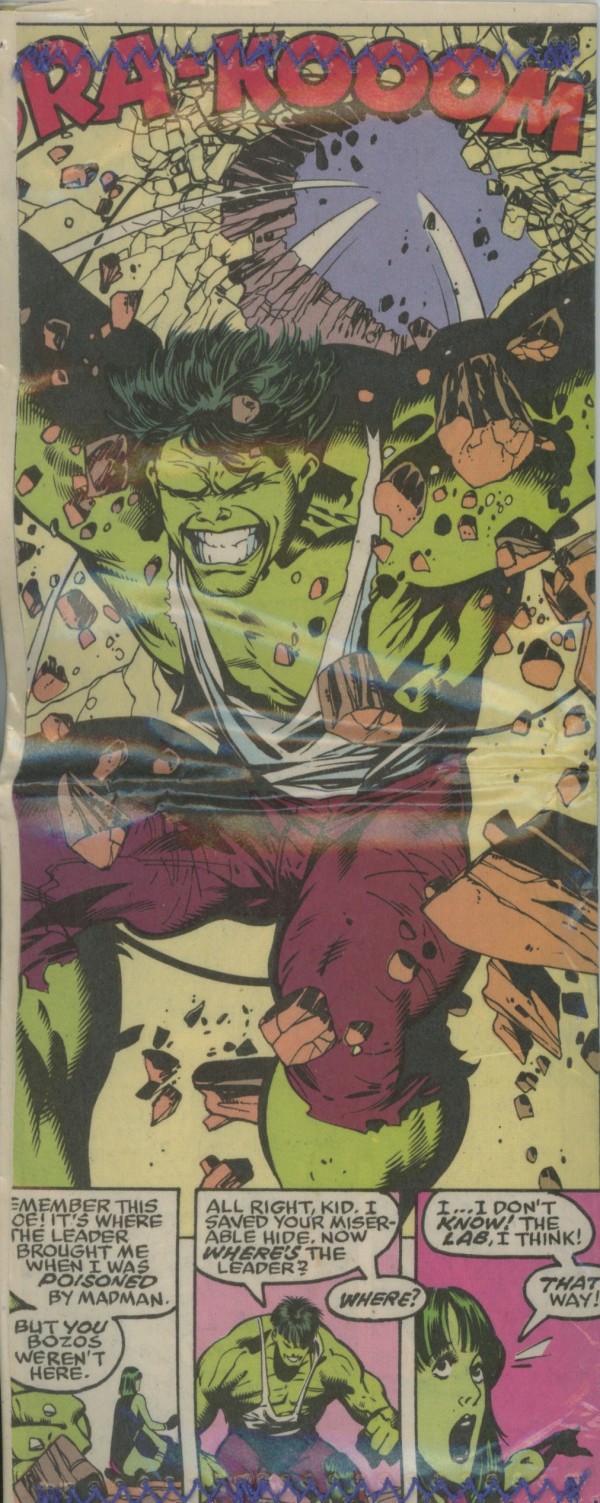
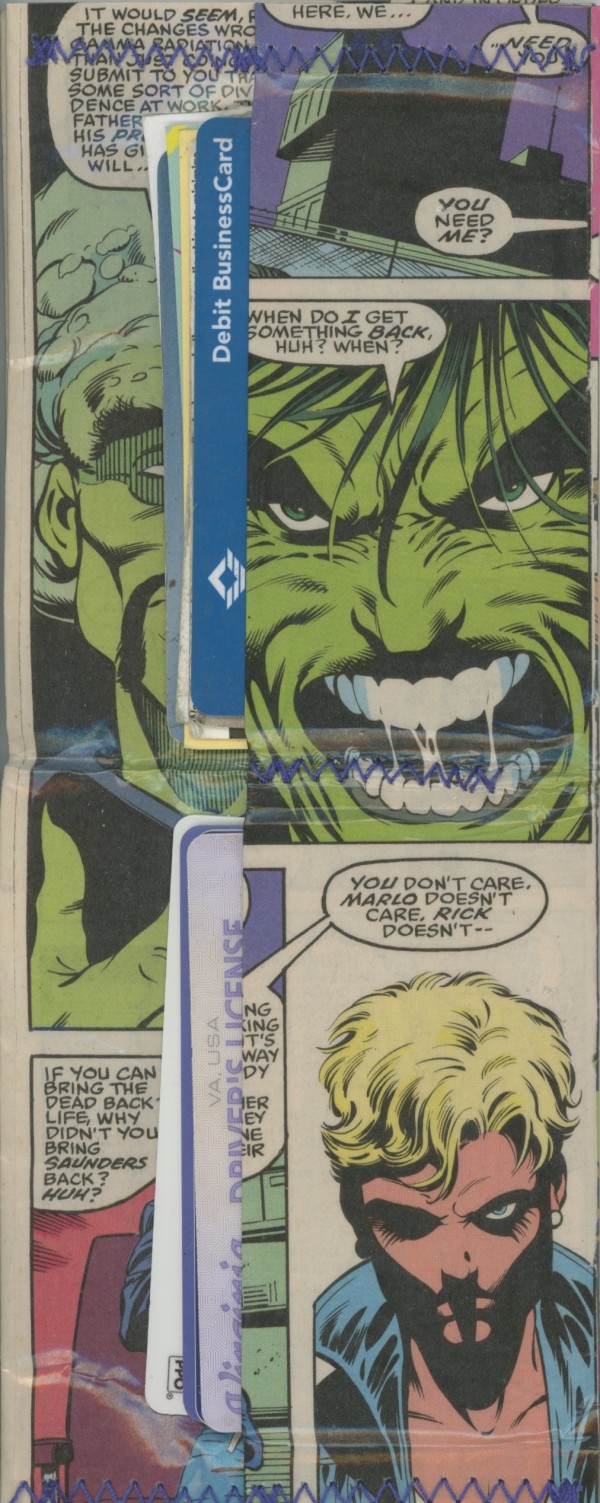
Puny Wallet! Hulk Smash!

I got a new wallet this weekend, and everytime I use it out to pay for something I get a compliment. That’s been foreign reality to me for a long while. And I enjoyed it so much I figured I would throw a couple of scans (thanks Patrick!) of my bitchin Hulk wallet on the bava blog to see if I can’t get a few more 😉

wallet_scans1

I bought it at a local Fredericksburg art studio called Ponshop. I discovered it while picking up my daughter from her art camp at the gallery. Once I spied this beautiful pop art creation I isntantly fell in love. There were a few others featuring different comics, but I couldn’t resist the Hulk. The designer of these awesome wallets is Leslie Brier, the same artist who ran my daughter’s camp. I can’t thank her enough for finally getting me compliments again. Who said art wasn’t practical 🙂

wallet_scans2

Posted in art, fun, pop culture | Tagged , , , , , | 5 Comments

My Vocabulary Loves Katexic Clippings

Screen Shot 2014-08-10 at 8.56.11 PMAbout six weeks ago I subscribed to Chris Lott’s daily email newsletter Katexic Clippings. It’s a compact, precise literary gift that contains a work (usually a short poem or excerpt from a longer work), a word of the day, and a number of interesting links. I love that Lott has dialed his online publishing back to email. And rather than that being a liability, I find I can wait to rip that hand-delivered electronic package open regularly. I find myself sometimes waiting for my clippings to come.

There’s a Tumblr site, but that doesn’t contain the actual newsletters, that’s just the various pieces—usually the poems or excerpts. The newsletter is the thing, and I think that’s what is so cool about what Katexic has done. It’s about the curation, representation, and sense of intimacy between author and reader. I find myself increasingly more attached with every new letter.

There’s something about the newsletter that seems personal, almost as if Chris is putting them together for me—although I know he isn’t. The links to what he’s reading turn me onto awesome stuff regularly, like today’s link to Reddit users summing up their first sexual encounters with a GIF. I find myself puzzling over each newsletter’s title, trying to find the loosely framed theme across the poem/excerpt, the word of the day, and the links out to the web. They often seem to work together to support the theme–which is a sign of how much work goes into each one. hand crafted emails at their finest.

Katexic is a good reminder just how intimate email still is. While it’s become associated with daily, repetitive chores as part of work life, Katexic helps liberate us from that assumption. I look forward to these emails, and I can’t say that about too many others. What’s more, I’m really taken with the word of the day. Words like syzygy, cockalorum, puteal, gloaming, celadon, and many others you probably never read keep me coming back for more.

I’m a huge fan of Chris Lott’s work, always have been. I wasn’t sure what he was up to when I discovered Katexic six weeks ago (via a snailmail card, mind you), but I’ve usually benefitted immensely from embracing his ideas and struggling with his work. If you’re looking for an excellent daily read delivered directly to your email, I highly recommend subscribing to Katexic Clippings.

As for the name of the newsletter, I think it might have something to do with David Foster Wallace. but then again, that’s just what email’s younger cousin the web tells me 😉

Posted in fun, literature | Tagged , , , | 5 Comments

#wire106 Comin’ Yo!

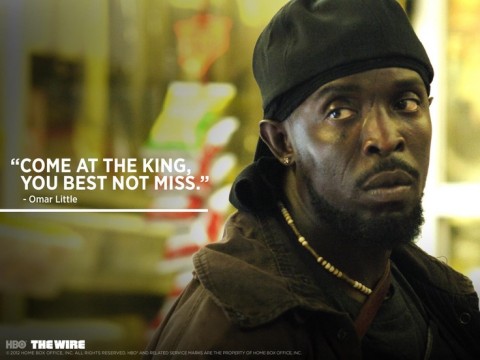
The video George Velestianos linked to in the above tweet gets at what #wire106 could be far better than my  last post introducing this fall’s #ds106. It’s all about “Omar comin'”!  Make Art, dammit, because it’s all in the game, yo! 

Also, for anyone interested—and this ofer may be limited to folks in the—you can sign-up for a free, 30-day trial of Amazon Prime so that you can binge watch the first few seasons to get yourself in #ds106 creating shape 🙂 See you in Hamsterdam, hippies!

Posted in digital storytelling | Tagged , , , | 3 Comments

Wire 106: Welcome to Hamsterdam!

324b412ae9e3b1d03df82d556740d455This fall I’ll be teaching a section of ds106 at UMW. I haven’t taught it in over a year, but the last time I did we themed the class around what might be the best TV series of all time: The Twilight Zone. We nicknamed the course ds106zone, and that five week online summer course was a major blast. Returning to the class this fall, Paul Bond and I decided to theme this semester around what might be the second best TV series of all time: The Wire.
The class will be fully online, and right now our section alone (there are two others!) has 36 students enrolled at UMW. That number will fall—as it always does—when students realize how much work they’re in for. The plan is to start the semester in medias res, in other words Paul and I will starting watching and exploring season one before the course gets going. We’ll be watching and discussing the first three episodes of season 1 next week, and episodes 4 through 6 the following week. This will help us get our rhythm, and also enable interested enrolled students at UMW and open online participants jump in over the next few weeks.  I already sent an email out to enrolled students with details, and this is my humble invitation to everyone else 😉 Next week we’ll start posting about the first three episodes of The Wire ds106-style. If you’re a fan of this show, would love to riff along with you. If you have never seen it, consider this your excuse to take a dive into one of the most compelling explorations of post-industrial life in a US city. Register your site for Wire 106 here, and welcome to Hamsterdam!
61aZ6bHS1ML._SL1005_

Posted in digital storytelling | Tagged , , | 8 Comments