Digital, Networked, Open

the-digital-scholarAs part of the faculty initiative around Domain of One’s Own at UMW, there are a whole cadre of faculty blogging about there process as well as reflecting on their reading of Martin Weller‘s The Digital Scholar. We are in the third week (you can see the weekly curriculum here), and we’re starting to dig deeper into both the book as well as a range of weekly technical topics that will ultimately represent a loosely compiled technical curriculum for a Domain of One’s Own freshman seminar that Martha Burtis has been pitching around the office—and something DTLT will propose this Fall for Spring 2014.

There are a ton of things to talk about in regards to the first five chapters of The Digital Scholar, but for me the “convergence of …. digital, networked, open” in relationship to the academy and the web is what we are experimenting with UMW (44). The Domain of One’s Own is very much about professors and student narrating their scholarly process online more than a brochure site, but at the same time it needs to bring one’s personality into the work they do more generally. Elizabeth Wade talks about the various facets of openness in regards to Weller’s work,  particularly in the convergence of professional work, but also your personal life. The blurring of that line is fascinating to me, and what is compelling to me about her take on this conflation is that people become the compelling part of the equation in regards to open. Who is sharing what about themselves—we can dismiss this as somehow less than scholarly, but at the same time I wonder if we will start to see the people behind the machinery as the most fascinating part of the whole enterprise.

I, for one, would have loved to have know more about the people I was to work with in graduate school before ever applying, or even a clearer understanding of the adjunct meat market graduate school was more generally. The whole process of becoming a scholar is premised on the personal as much as the professional, but little of that is transparent for a wide array of problematic reasons. I understand it would be impolitic for Martin to mention this in the book given his audience, but for me that is the real radical line of reasoning for open scholarship—a clear picture of just who the people behind the ideas ideas are, and what “such people” represent more tangibly as human beings. To truly be a digital, networked, and open scholar means that your work and life stand as a representation of who you are and what you believe, I think this is crucial when we start to talk more generally about digital identity, and part of being authentic means being there, inhabiting this space as not only a researcher, thinker and teacher, but perhaps more importantly as a person.

Posted in Faculty Initiative | Tagged , , , , | Leave a comment

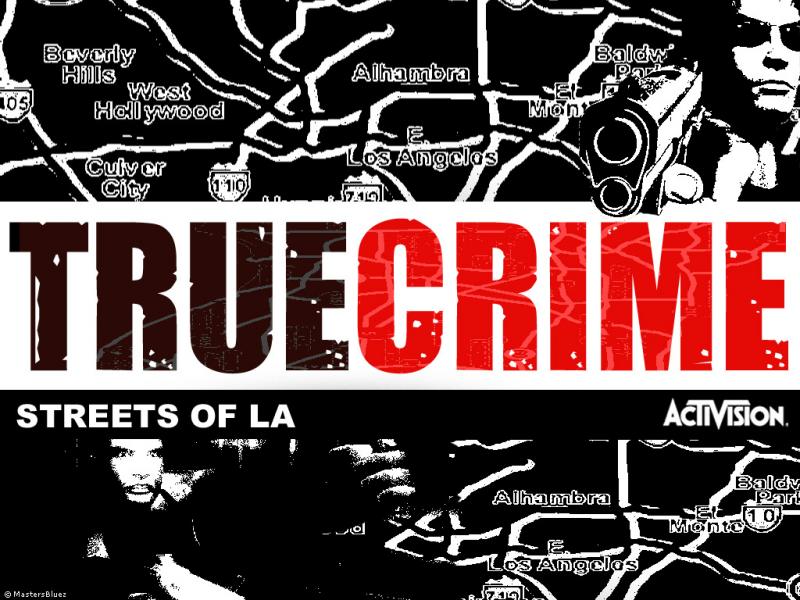
Coming Fall 2013: True Crime!

Update: Please note this course syllabus has been modified significantly. You can find the most recent version here. (8/24/13)

True-Crime-New-York-City-2-J1GEZEHAQ4-800x600
I’ve spent a fair amount of time proclaiming how awesome Paul Bond during last semester’s Hardboiled Freshman Seminar. But proclamations are one thing, taking it all to the next level is another, and that is what Paul and I will be doing this Fall when we morph the Hardboiled class into a survey seminar of 300 years of crime non-fiction in the U.S. It’s a course-de-force that will explore and analyze the cultural transformations of crime from the colonial period until now.

Paul has already posted some ideas for media-inspired assignments, and I’m psyched by the possibilities. And what’s really cool is that we just got the official go-ahead from the Freshman Seminar committee to frame two major assignments for the course as full-on produced television episodes. At mid-semester and during the final’s week we will  broadcast three live episodes (six in all) that will be created by three groups of five students (we may switch up groups after mid-term depending on the work relationships). The TV episodes themselves need to adopt a particular format and use it to frame specific research they have done, interview preeminent scholars in the field, as well as inject some creative takes and mashups on the literature we’ve read. I’m really excited about the possibilities with this. We alos are keeping the Wikipedia article research assignment as part of the course—a carry over from Hardboiled—and we hope to plan and execute this even better this time around.

We have an approved syllabus that we may still fine-tune and change-up a few readings (or even cull parts depending upon the timing), but I love the fact that UMW continues to provide a space to experiment with teaching and creating within a first year seminar experience. Take the jump for the full syllabus—it’s actually one week too many, so Paul and I have to talk about what we might cut, any ideas? [It just struck me while formatting the syllabus for this post that we could just as well end the class with OJ Simpson’s murder trial as we could the memoir on gang violence in L.A. during the 1990s. Hmmmm. Recommendations on all fronts would be appreciated 🙂 ]

Continue reading

Posted in True Crime | Tagged , , , | 4 Comments

Unclogging the bava

There have been some plumbing issues on the bava as of late 🙂

Unclogging the bava

Thanks to Tom Woodward for these GIF infomericals which builds on Michael Branson Smith’s homegrown collection and reminds me of what Brian Lamb said in our GIF session last week: at its best a GIF is a joke. I am tending to agree with that, and potty humor makes the joke that much funnier 🙂

Posted in fun | Tagged , , , | 5 Comments

How I Stopped Worrying and Learned to Love the GIF

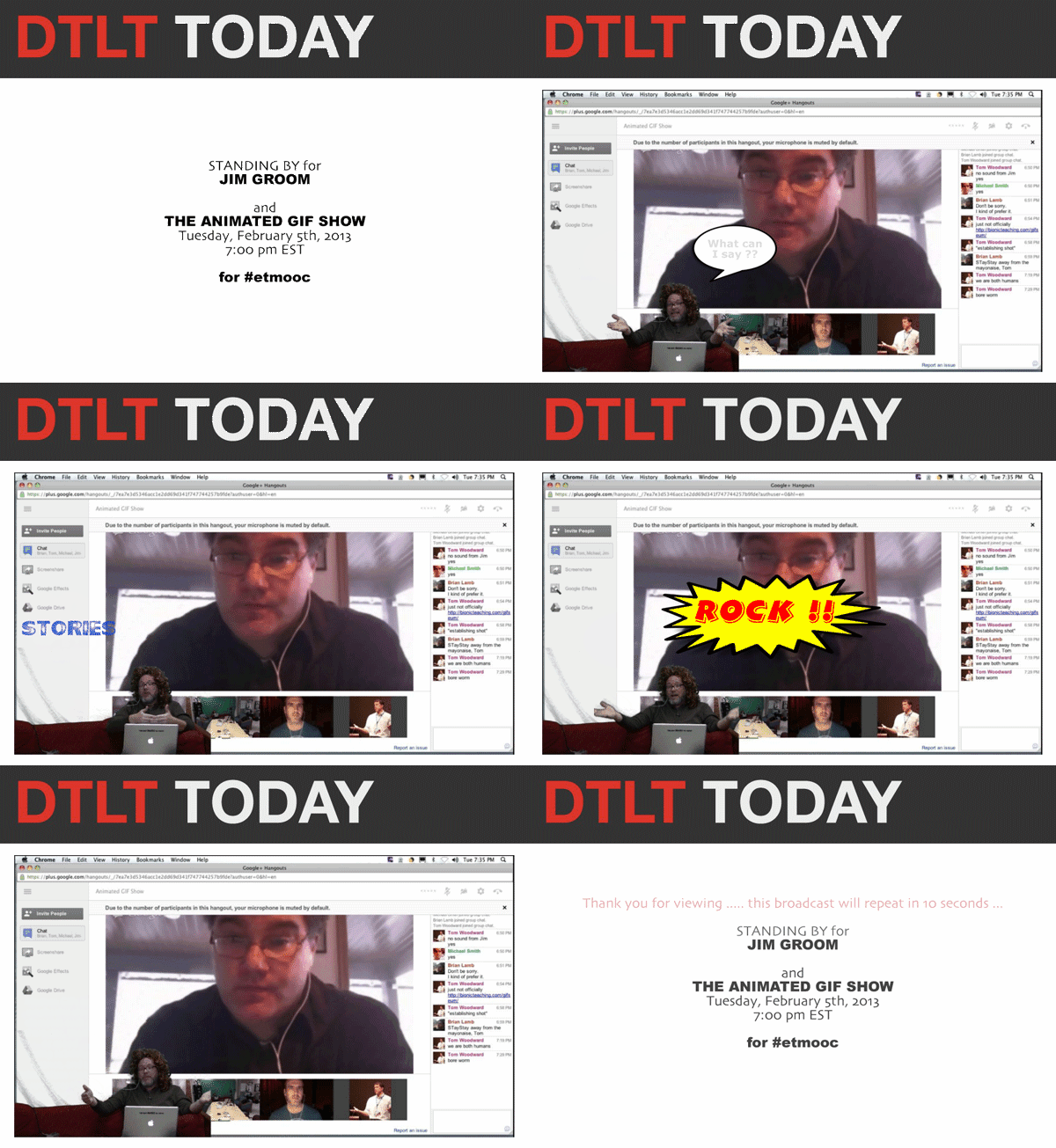
Before I say anything else, just take a moment to see how brilliant Andrew Forgrave is at GIFFing, his recent commentary on the Animated GIF Variety Show Tom Woodward, Michael Branson Smith, Brian Lamb, Zack Dowell, and I presented last night for the #ETMOOC is brilliant—mad kudos!

The Annotated and Recut Animated GIF version of The Jim Groom Animated GIF #etMOOC Special, by aforgraveThe Annotated and Recut Animated GIF version of The Jim Groom Animated GIF #etMOOC Special, by aforgrave

Andrew, in the GIF above, gets at everything I wanted to say but didn’t, however it only begins to scratch the surface of the ruminations, insights, and general awesomeness of our esteemed variety show guests. The session frames the role animated GIFs played early on in the formation of ds106 as an open, online community for digital storytelling. Tom Woodward’s discussion of the animated GIF as an early assignment that galvanized community around a manageable bit of creative experimentation underscores the dual role GIFs played in building a sense of shared purpose as well as pushing folks to experiment with the form as a way of telling a fragmented, connected story.


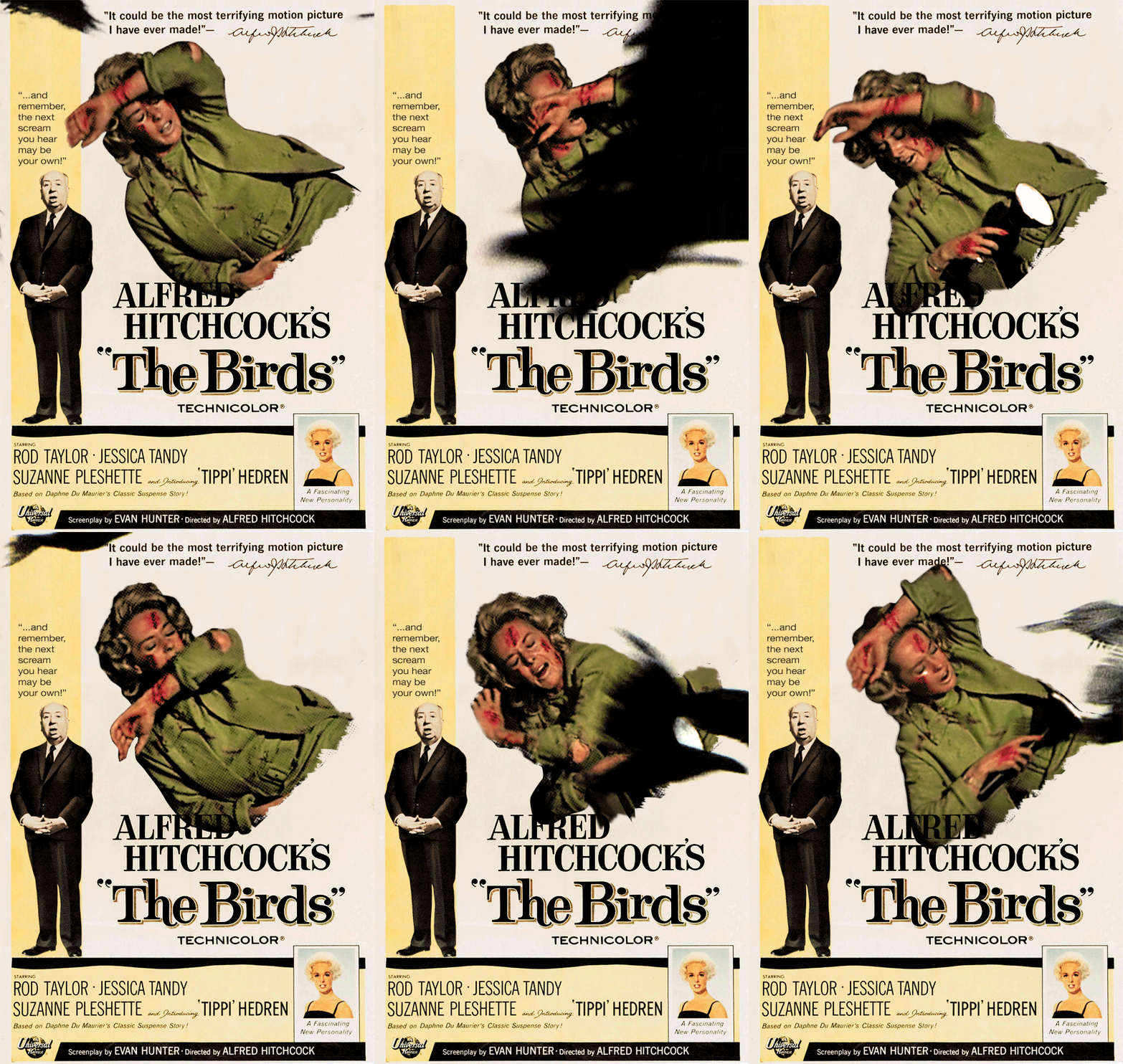
From there Michael Branson Smith gave us a tour-de-force of “History of the GIF” that frames its cultural emergence and the various types being eperimented with on the web currently. What’s more, Michael is also a hardcore practitioner, and his animated Hitchcock GIF posters are a model of the artform in my mind.


From there, Brian Lamb led us into a frame for thinking about GIFs as rhythms, loops, early film, autonomous artifacts, not to mention just plain old fun! A conversation which begged the question why aren’t GIFs more prevalent in advertising at the moment? As of now they seem to still be created and distributed by and for the people.


Finally, Zack Dowell created a series of links to compelling visions of GIFs as the single panel cartoons of the internet, GIFs in journalism, the memetic <tendency of GIFs, as well as GIFs as reactionary lacuna. Needless to say we got deeper than you would think, even if the artform seems impenetrable at times, almost like explaining a joke, to misquote Brian 🙂


All that said, there were some small technical issues on our side, and for that I deeply apologize for the lag and any sound issues, but the only solace I can take from those issues is we continue to expriment with repesenting in compelling ways and Blackboard sucks and should not be a part of anything open! 😉

If you want more on Animated GIFs, and there is much more, check out the following video which is a short animated history of the GIF (thanks Amy Burvall):

Shout out to Aaron Mueller for making his first animated GIF during the session, and making it awesome:

And Grant Potter‘s Strongbad/ds106 mashup GIF (awesome!):
strongbad

AnimatedfootprintsinthesandofBeachAlso, I would remiss if I did not thank Tom, Brian, Michael, and Zack for taking time out of the madness of the semester (that I can attest has gotten me supine and wailing) to do this with me—they made it awesome. Also, special thanks to Pete Rorabaugh for helping us organize and get everything together, he ruled. Finally, Tim Owens is the bestest ITS around, I can’t thank him enough for getting the video streaming setup and recording in no time flat (he even took the time to troubleshot the whole thing midstream from home!) —footprints! One thing people forget in the MOOC madness, it takes time and energy to do this stuff, and taking a moment publicly to acknowledge that goes a long way, thanks everyone!

Posted in digital storytelling | Tagged , , | 15 Comments

Domain of One’s Own Faculty Initiative

I’ve been crazy this last month, and the proof is in the blog archive pudding: only eighteen god damned blog posts for January. I hope February proves to be a bit easier on the bava, but, with that said, January has been pretty awesome. In fact, this week seems like, to quote the oft blogging Andy Rush, “a watershed moment in DTLT history.”  Why? Well, because for the last four days four members of DTLT and Mary Kayler, of the Center for Teaching Excellence and Innovation, have been running five cohorts with anywhere form 5-7 faculty talking about the details of both imagining and building their own domain. That’s right, the faculty initiative of Domain of One’s Own is up and running as of this week.

What’s been so magical about the whole process is coming into pur offices throughout the week to groups of faculty asking questions about subdomains, digital identity, Installatron, DNS, and more! It’s magic at DTLT right now, and the key is all about thinking at once conceptually and technically about the web.  What’s so satisfying for me, is that each and everyone of us is running our own faculty cohort and we are absolutely killing faculty development right now, 29 faculty participants from fifteen disciplines. Let me say that again, 29 faculty participants from fifteen disciplines! We rock.

Tim Owens has designed the Faculty Initiative site wherein you can see the curriculum over the next six weeks, what’s more each faculty member will be setting up there own space and sharing their posts in a syndicated space for faculty’s reflections on Martin Weller’s The Digital Scholar (we’ll be reading the entire book over the six week course) and beyond.  What’s more, we are all working on documenting the technical resources a faculty or student would need to get up and running with their own web host and domain.

And that idea of sharing openly what we are doing with the project and keeping in mind the possibility that others might be interested is immediately paying dividends. Emory University’s Writing Program invited Tim Owens and I to participate in the inaugural Emory Symposium on Digital Publication, Undergraduate Research, and Writing. Special thanks to Marc Bousqet and David Morgen from bringing together a brilliant array of folks together from Emory as well as numerous other universities like Georgia Tech, Georgia State University, and Kennesaw State University. It was a pleasure to meet folks I’ve been following online through Hybrid Pedagogy, like Pete Rorabaugh (whose work is amazing and recent post about the Emory symposium along with his own explorations in this space is more than worthwhile) and Robin Wharton (who may have solved FERPA 😉 ), as well as a host of new people like Rebecca Burnett (who was awesome!), Amy Goodloe, and Laura McGrath, whose remarks on Domain of One’s Own marked one of the coolest moments during my short time at Emory. Namely, academics from a wide range of disciplines might possibly converge on an conceptual framework like Domain of One’s Own to theorize and imagine as well as architect and build the future of the web. To quote McGrath’s paper “Remarks on the WHY of Publishing Digital Writing:

I’m interested in thinking about A Domain of One’s Own in terms of  “a sphere of thought and action,” to borrow my favorite definition of domain from the OED. How can we connect writing instruction, a domain as a digital “sphere of thought and action,” and “opportunities to apply digital technologies to solve substantial problems common to the academic, professional, civic, and/or personal realm of their lives”?

I love this whole idea of Domain of One’s Own as simultaneously a sphere of thought and action, and I really got excited to hear people not only interested in the idea, but working towards a theory of the possibilities for their respective disciplines. It’s funny how I always find myself connected to the CUNY Grad Center mafia, this time with Marc Bousquet—a thinker I greatly admire—whose push for imagining Domain of one;s Own as central to the writing curriculum at Emory University is not only flattering for us here at UMW’s DTLT, but truly invigorating. What’s more, it highlights a long history of experimentation and innovation that includes many people that are no longer at UMW, namely Gardner Campbell, Chip German, Patrick, Murray-John, and Cathy Derecki.  I can’t fully explain how fired up we are at UMW right now! “We’re making the myths, Morrison!”

Finally, I am a huge fan of E. David Morgen. And with that I will stop 😉

Posted in Domain of One's Own, dtlt | Tagged , , , , , | 4 Comments

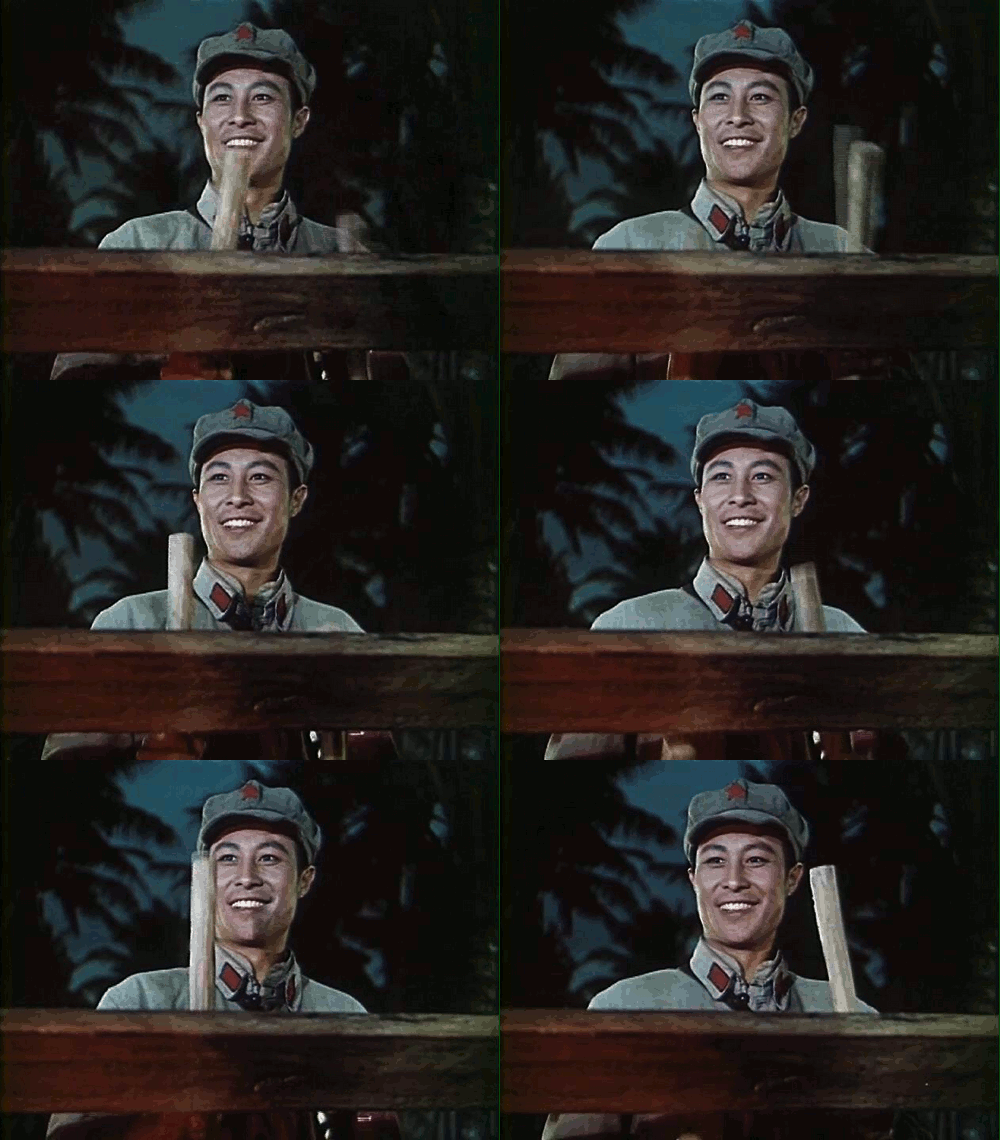
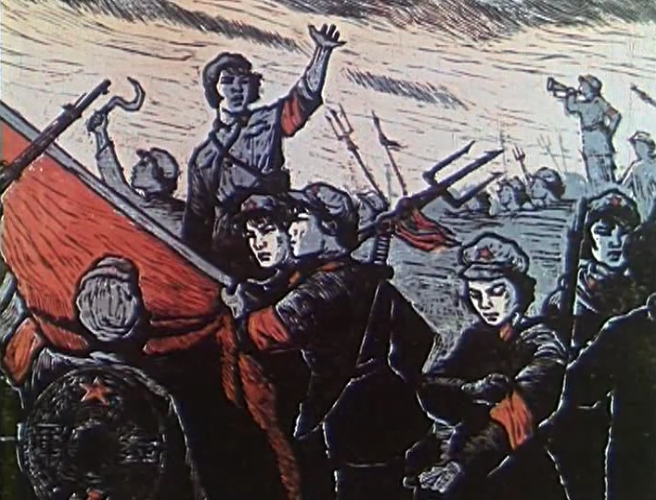
The Red Detachment of Women (1961)

Screen Shot 2013-01-27 at 4.46.53 PMThis semester Sue Fernsebner is teaching a Chinese History through Film class at UMW, and after looking at the syllabus I couldn;t help put take the course. I was in Los Angeles in the early 1990s during the apex of the 5th Generation film movement. I saw films like Raise the Red Lantern (1991) (which you can see in HD in its entirety here), Farewell My Concubine (1993), To Live (1994), and numerous other films in the theater. I loved the films—Raise the Red Lantern and Farewell My Concubine were an opulent breadth of aesthetic fresh air. I’ve remained intrigued by those films as a moment in Chinese history in which a culture was coming to terms with a very new approach to Communism, Capitalism, and a complex tradition of revolution that we’re still marveling about internationally. All made that much more current by the fact that the twenty years since those films were made has witnessed the emergence of China as economic superpower—a process those films were dealing with both indirectly through history as well as satirically through more contemporary tragic comedies like Ermo (1994) —which is also on the syllabus! Given that, I figured there would be no better time to study the history of China through its cinematic tradition—my favorite way to look at culture. Long Live the Communist Party Not only do I plan to attend the class sessions, read along, and blog about the films, I also want to start experimenting with ways of providing resources for film classes like this (there are far too few at UMW, but that is another post). Our idea at DTLT has always been that the work we’ve done with ds106 was not simply an edtech group going rogue, which we admittedly did, but always with an eye on bringing some of those experiences back to a wide range of disciplines. Film lends itself nicely to the work we did in ds106, and having a course at UMW being taught by a Chinese scholar who has done amazing work designing and running web-mediated discussions through blogs and beyond them for years, it seemed like a great opportunity to start experimenting in different ways. And while I have to admit that this idea is still unfolding as I write this, in my mind we might be able to start pushing the idea of criticism as an act of both appropriation and art—a flag flying revolution, if you will! chinawomensarmy_opt So, as an instructional technologist, how can I help this class get access to the very source code of the culture they are watching? How do we open up the film artifact itself to be written upon? What’s more, given the films are Chinese, the question of copyright changes dramatically. This past week’s film was The Red Detachment of Women (1961)—read a synopsis of the film on the course site—a Communist propaganda film that isn’t under copyright, just like all Chinese films post-1949, right? Isn’t U.S. copyright law an exploitative tool that enables the corporate elite to demand on-going ground rent from cultural objects? A way of locking us out of our mediated culture as a means of controlling us, if you will 🙂 That is one of the fascinating things about China right now, U.S. copyright laws are not enforced, and the idea of making the film shareable and giving students the ability to access a digital version they can hack to curate scenes, take stills, mashup, or just create a beautiful GIF is eminently possible—and legal. Hot dog! Add to that the fact that UMW now has a very snazzy and slick place to start storing that culture: UMW Media –who says grades don’t matter? —though the UMW Media development, again, deserves its very own post. So, I’m using this post to breifly talk about the film in light of the discussion we had this Wednesday night, while a the same time sharing out scenes, stills, and GIFs that struck me as memorable. I’ll try and go light on the commentary given how long-winded this post already is. The Red Detachment of Women is pretty awesome cinematically as far as propaganda films go, there are a ton of low angle shots (à la Orson Welles ‘ Citizen Kane and Leni Riefenstahl’s Triumph of the Willthat make our proletariat heroines both powerful and noble at once (see the flag flying GIF above, or the shots below for just a few examples). raincoat 11
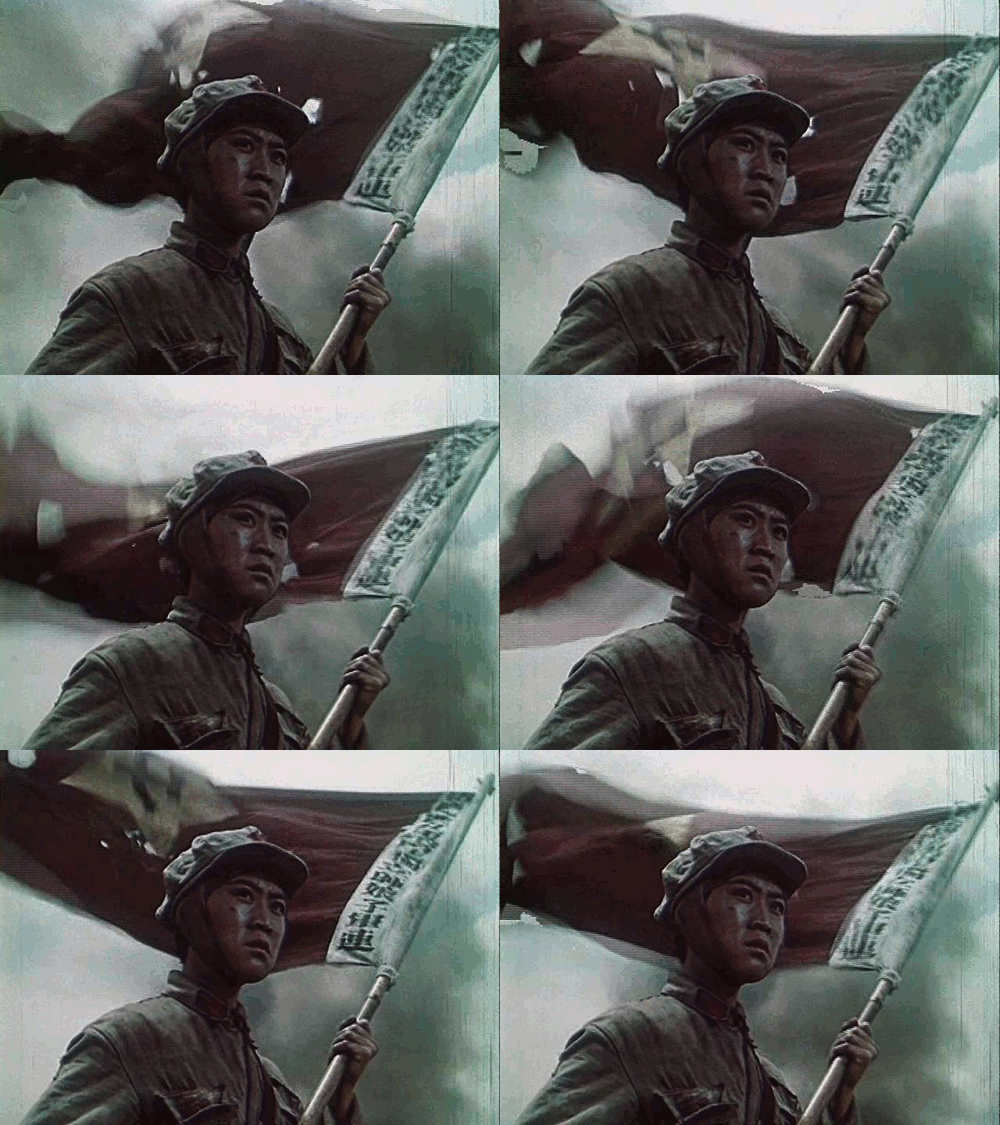
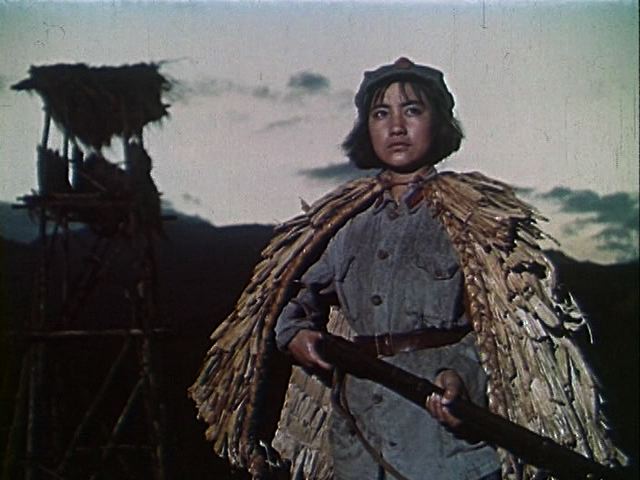
The filmic celebration of the working class has to first establish a diabolical ruling class, and that is done pretty effectively with the evil landlord NAN Batian, a character who was quite convincing despite his being a caricature.
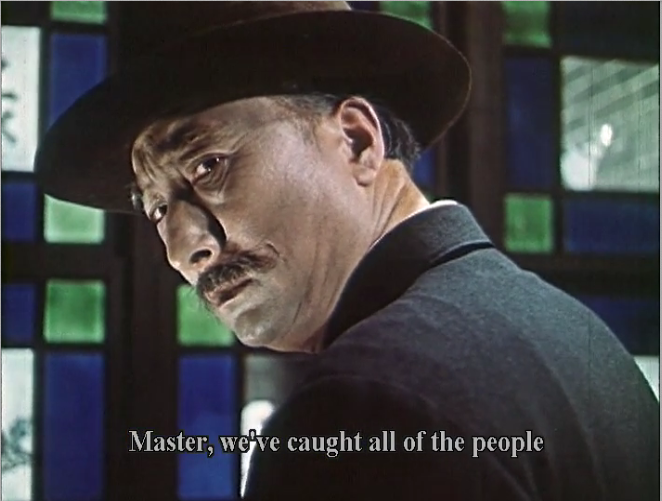
Nan Batian

The other thing the movie sets up quite well early on is the sense of hopelessness amongst the most populations most abject, i.e., slaves, servants, and  peasants. The sense of feudalism is strong. The film’s heroine, WU Qionghua, is a slave who refuses to live in chains, and has just been caught trying to escape her enslavement to NAN Batian as the film opens. As luck would have it, she encounters a communist party member passing as a rich expatriate, HONG Changqing, who points her to the communist camp on Hainan Island where she joins the Red Army and begins her education in revolution. On the way to the camp she encounters a woman who is a slave of another kind. In the following scene, Wu meets her soon-to-be-friend Lian and learns that at the age of ten she had been sold to a family in order to marry their dead son.  She is effectively “married to a ghost” (as Fernsebner put it very well), which was not necessarily an uncommon practice. The scenes ends with Wu saying “there is no way out,” which forwards the basic argument of the remainder of the film: the only way for the proletariat to escape the abuse of wealthy landowners that accompanies the feudalism of mainland China is a nationwide, coordinated class revolt.

Note: The following videos are loading from UMW Media and may be a bit slow  given how new that service is (and how big my videos are 🙂 ).  Any feedback on your experience with how fast or slow they are would be greatly appreciated. Alos, there should be an easy way to download them, let me know if you see that option.

Idol Marriage  Another topic that emerged in week’s class discussion was the idealized vision of communism in the film.¹ The pastoral montages of the Communist outpost/village transform the abject, brutal state of peasant labor portrayed early on in the film into a harmonios, communal family of sorts. The shots of schooling, washing clothes in the stream, giving each haircuts, parties, music, marriages, etc. are obviously “propaganda,” but at the same time they’re only doing what movies do best—creating a sense of desire in the viewer. An idea of something that you want to believe in, defend, and even die for—most U.S. commercial films are filled with the same kind of propaganda—just directed towards the engendering of capitalist subjects rather than communist. So to define the idea of propaganda film as political only when it is promoting  fascism (think Riefenstahl’s Triumph of the Will and Olympian) or communism is to miss the larger point of how most popular, commercial U.S. films are propaganda to varying degrees—we’re just to embedded within consumerist culture to make these distinctions. In tha tregard, the label propaganda film always seems problematic to me because it often is only pulled out to define films that support some political ideology other than capitalism (which is intentionally submerged within the rhetoric of desire—for which film to this day remains the perfect medium). While watching this film I tended to think it had far more in common with 1950s melodramas by Vincent Minnelli and Douglas Sirk than the U.S. World War II propaganda films of the 40s. (but more on that shortly) .

A Pastoral Montage of Communism And here are a couple of GIFs of the band playing at a communist wedding. For me, the idealized vision of communism within this film mark some of my favorite moments. What’s more, the release of this film corresponds historically with the fallout from the colossal disaster that was the Great Leap Forward—a communist plan for industrialization that literally left millions of peasants (the same people being idealized in this film) starving throughout the countryside.
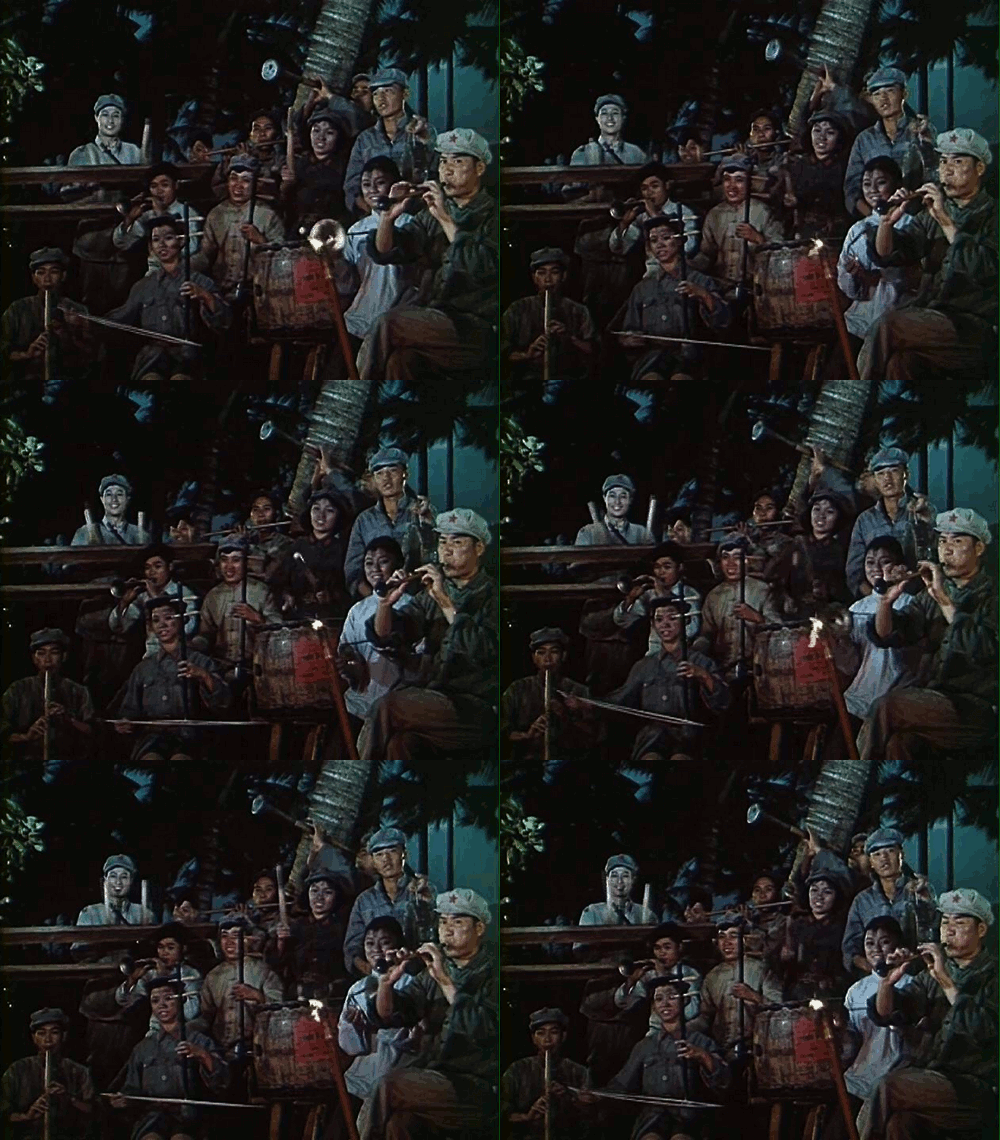
red_commie_band 01

The Red Army Wedding band

red_army_drums

HONG Changqing on the drums

Possibly my favorite scene, and one of the most confounding as well, is the “confinement room” scene where it’s suggested (not commanded, mind you!) that Wu reflect and atone for her selfish attempt to exact personal revenge on NAN Batian at the expense of the collective (as you might expect, the relinquishing of self for the greater good of the party is a common theme throughout the film).  What’s bizarre about this scene is the way in which sexuality, fulfillment, and communism become interestingly blurred. When Wu is reflecting on ehr transgressions she notes how quickly Hong has climbed the ranks fo teh Communist party to which Lian replies: “Can we conclude that men are better than women?” To which immediately discounts such a possibility—which frames an world of parity which is still deeply desirable.

Soon after, however, Wu notes that “Secretary Changqing [Hong] also teaches us lessons and punishes us. However, when he punishes us we are sincerely convinced.” I’m not sure how the translation is of this scene because my Mandarin is non-existent, but it seems to me with this translation to be a blatant acknowledgement of the relationships between power, propaganda, and desire. And in many ways this entire scene is about this triangulation, more specifically a power dynamic undergirded by desire for communism, which given the mise-en-scene is mapped on Wu’s ostensible longing for Hong as a stand in for the Communist party (who, interestingly enough, is a male in a positon of power) that find its object of immediate desire in Lian framed by the intimacy of them in bed together. The scene of Lian and Wu figuring out the key to communist enlightenment is overtly homoerotic, suggesting how much the best moments of communist propaganda in this film have everything to do with female empowerment and desire—which is what Douglas Sirk’s 19650s melodramas are all about 🙂  You can see the entire scene in the video clip below, but first check out this animated GIF wherein the intimacy and climax of the scene unfold:
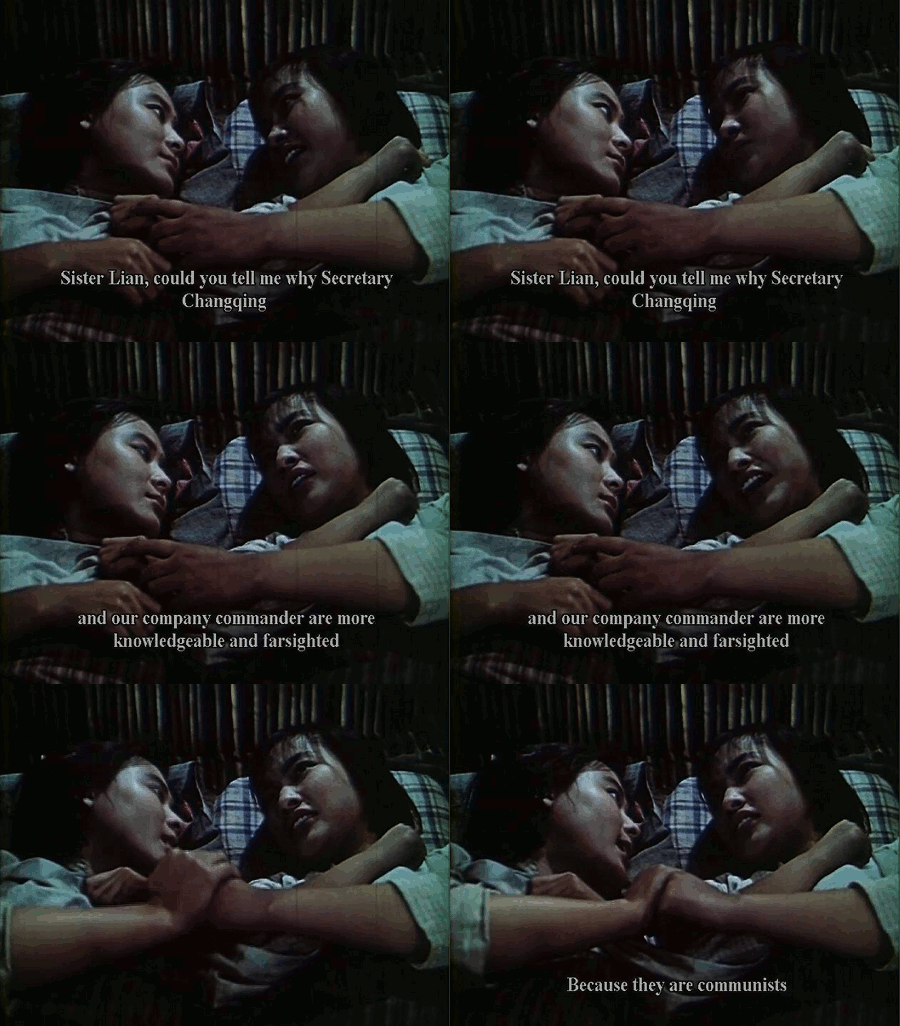
The Confinement Room

Another scene similar to the confinement room is when Wu is thinking about the ideology of Communism with Hong while they are studying the map together and Hong gives Wu a look into his own struggles with the rich, ruling class that killed his father for being part of a labor union. It is here that he teaches Wu that any proletariat can burn down one landowner’s home, but to change the society at its roots you need collective, class action to start a cultural conflagration (pretty good advice!) —the individual’s desires must be sublimated into a collective desire for equality. At what is most fascinating to me about this film is how much propaganda is portrayed throughout the film as an element of that desire—what seems a deeply effective approach to good cinema more generally, and an example of why what appears to be spoon-fed Communist doctrine is made far more complex by the interactions between bodies on the screen that intimate the desire behind the ideology—a tension of meanings and desires that make this much more than merely propaganda.

The Map Scene

As a final note, I kept thinking this film could also be a great remake for someone like Tarantino. The scene below, in particular, is an excellent look at the other side of revolution—violence, death, and the ultimate sacrifice. Something The Red Detachment of Women does not shy away from at all. I mean look at the following GIF, Wu is a badass Communist!
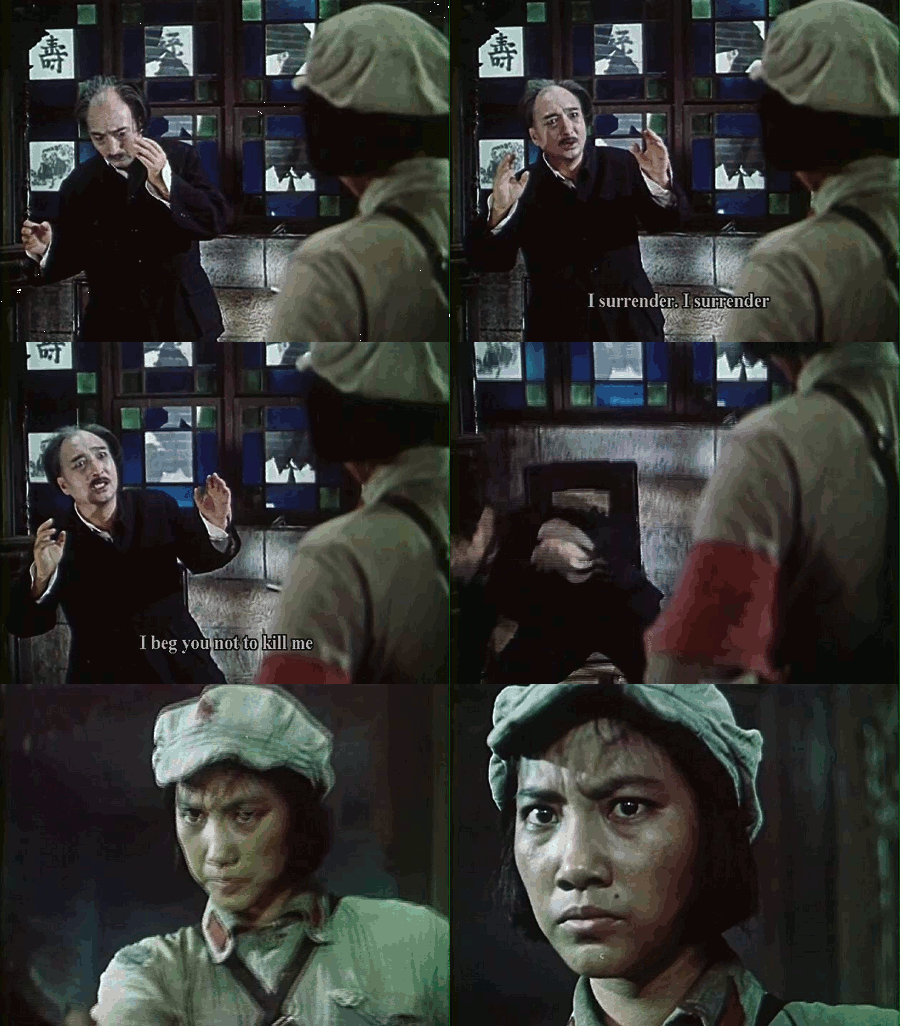
trdw_surrender Note

1. I really love how Fernsebner organizes the discussions in her class, everyone watches the film and then three students come to the front of the classroom to facilitate the discussion. She pops in and out of the discussion for clarification and to keep things moving, but the way in which the class responded to this format was really impressive to me. More than half the class talked, and they covered an impressive range of topcis and themes—I will be trying this format in the near future.
Posted in movies | Tagged , , | 5 Comments

UMW Blogs: It Won’t Stop Growing!

File this under arbitrary stats about UMW Blogs. The traffic on UMW Blogs has been really high out of the gate this semester, so I wanted to see what the first two weeks of traffic for the Spring semester looks like compared to the first two weeks of the Fall Semester. The increase is nontrivial.

So I submit this for your consideration.

During the first two weeks of the Fall 2012 semester UMW Blogs had 82,416 visits (61,745 unique) and 189,618 pageviews.

1st 2 weeks Fall 2012

During the first two weeks of the Spring 2013 semester UMW Blogs had 124,823 visits (98,079 unique) and 258,509 pageviews.

Screen Shot 2013-01-28 at 5.55.27 PM


One day I hope to  actually have an understanding of what any of this means, but right now I will interpret it as part of my general awesomeness.

Posted in dtlt, UMW Blogs, Uncategorized, WordPress, wpmu | Tagged , , , | Leave a comment

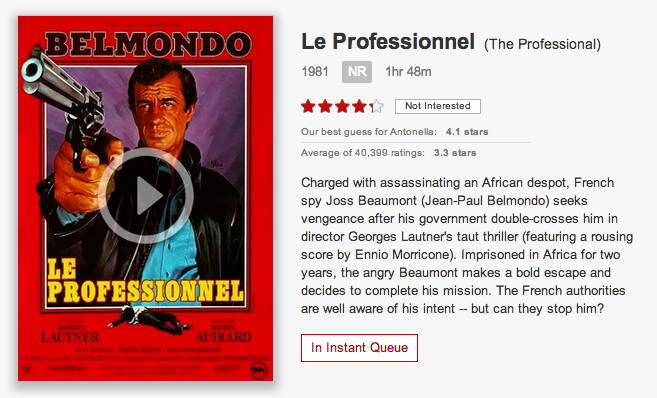
Le Professionnel (1981)

Screen Shot 2013-01-27 at 9.36.52 AM

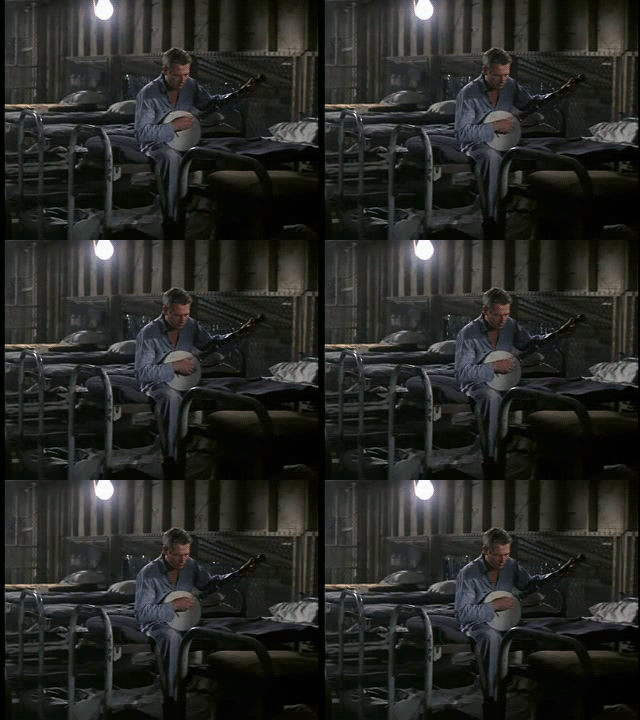
Anto and I continue our focus on French films, this time we moved from the early 1970s to the early 1980s, and I must admit that the 80s aesthetic is far cheesier—which is one of the many reasons I loved Le Professionnel (1981). The film is long and bizarre, it starts in the fictional African state of Mogwalabi, where the protagonist—secret agent Josselin Beaumont (Jean-Paul Belmondo)—is on trial for attempting to assasinate the country’s president. African post-colonialism anyone? The entire first 20-30 minutes attempts to place the viewer within an approximated African-perspective to varying degrees of success, but interesting nonetheless. In fact, the film reminded me a lot of First Blood (1982) and Rambo (1985) if you just inverted the chronological order of their release. Unlike John Rambo starting back in the States and then returning to Vietnam to exact vengeance for defeating the U.S. a decade earlier, Beaumont’s story starts in Africa only to return to Paris to seek vengeance on the agency that left him for dead. The ways in which the intelligent, paranoid political films of the 1970s morphed into big-budget action films about bad government during the 1980s is a fascinating rabbit hole, and Le Professionel is very much in that tradition along with such films as Capricorn One (1977), Alien (1979), Blow Out (1981), and Rambo to name just a few—there is a longer, more interesting list to be had.

What might have been most compelling about Le Professionel was what I imagined was a particularly French take on the genre. The French-speaking post-colonial African state that Beaumont escapes from seemed particularly interesting in terms of a conscious critique of the long history of France’s political exploits in Africa. But even more than that, I loved the particularly cheesy French one-liners that pepper this film (and as far as I can tell predate even Schwarzenegger by a few years). While eating a croissant in a typical Parisian cafe, our hero beats up a government agent for slapping his wife around during an interrogation. Once the fight is over and his adversary vanquished,  he shoots off this cheesy one-liner (which must have been huge in France at the time):  “The croissant is on my friend.” So good!  On another occasion our hero is being chased through a hotel by an agent he manages to elude and then throw into the room of a group of sheiks sitting down to dinner. Right after the agent slides through their meal, our hero peaks his head inside the room to tease: “Cous-cous with chicken!” Awesome.

I’m not entirely sure what to make of Le Professionel, I think I enjoyed it so much because it seemed to be a film that if I was 10 or 11 years old and had been born in raised in France, rather than the U.S., this would be what I would be blogging about nostalgically right now 😉 There was a sense of this film paralleling so many of the films I watched in the early 80s, but with some important differences in regards to the cultural context. I already talked about the African narrative of French colonialism, another instance of interesting differences might be the queer interrogation methods employed. For example, when Beaumont’s wife is being questioned, the commanding officer let’s a female agent forcibly seduce Beaumont’s wife for the information. A truly bizarre, sexually fraught scene that I can’t think of a real equivalent of in US cinema of that era, though that may be an issue of exposure rather than culture. Also, perhaps stereotypically, Beaumont has both a wife and mistress in the film whom he seems to love equally in their own way—what’s more there is no moral aspersion of his character for have a lover. It just is what French action heroes do! 🙂 As for Belmondo, not much of an actor in the end, but he is hot!

Another point about this film worth mentioning is that it features one of the great Ennio Morricone’s more famous songs, “Chi Mai,” which is far too emo for this film, in my opinion. That said, the song is hard to get out of your head, and once you hear it you’ll recognize it (listen to it below). In fact, it reached number 2 on the UK Singles Chart in 1981, how weird is that?

Finally, you can catch a montage of scenes from the film is your interest has been at all peaked below. What’s more, if you have Netflix in the U.S., or a good proxy elsewhere, you can watch it instantly. It feels good to finally find some interesting movies on Netflix’s Instant Watch, for a while therewe were dying. I think the key is trying to look for good, obscure movies and see if you can find one—once you find it and rate it (like we did with LeLouche’s Le Vouyou), Netflix makes some pretty decent connections for you around a theme. And films you couldn’t have possibly found through searching begin to emerge.

Posted in movies | Tagged , , , | Leave a comment

Damnable Bestialities: a Hardboiled Discussion with David Kernohan

Thanks to David Kernohan I finally got the opportunity to talk about some of the fallout of the Hardboiled class I taught last semester. It was a really fun class, and like ds106, the first time through a relatively new class like this—-I taught its proto-type at SUNY Old Westbury in 2001—is always a lot of stumbling in the dark. I’m still planning on writing about black capitalism as a theme that emerged for me in terms of research, the four Wikipedia articles the class worked on, as well as how amazing Paul Bond proved to be all semester long, but as of now the beginning of the semester has kept my pen at bay. This video is good because it begins to break that silence and remind me there is still much to write, document, and build on.

I really liked David’s interview style, four simple, hardboiled questions: What’s Hardboiled? How did social media integrate into your class? What’s next? And what advice you have for other faculty wanting to try something new?

It made the time relatively manageable at 14 minutes, and reigned in my tendency towards effusiveness and repeitition. I talked briefly about the course, which you can read more about here if you are interested. I also discussed how we used blogs, twitter, and Wikipedia over the course of the semester, and focused on the ways people like Paul Bond and Dr. Garcia made it permeable and open with their contributions. The emergence of the #emoboiled tag thanks to GNA is an excellent example of the power of an open, drive-by participant helping a class find its identity 🙂

All that said, Kernohan did catch me at a uncomfortable time when he asked me about future plans. Amongst other things, I’ve been thinking about Cotton Mather’s writing in the Magnalia Christi Americana, particularly Pillars of Salt, which features short narratives of the Puritan colony’s earliest criminals. The execution sermons were some of the earliest criminal narratives in the New World, and ministers like Cotton Mather made a career on them. The following excerpt is about the “damnable bestialities” of a farmer named Potter which ends in the execution of animals he violated. I also believe there was a discussion of cross-examining animals in Puritan courts when I first read Pillars of Salt, so I will look for that reference and make sure I am not talking out of school. (I included the clipping from “Pillars of Salt” about farmer Potter’s bestiality is below, if this sordid detour caught your interest.) This also feeds into a course on 300 years of True Crime I will be teaching with Paul Bond in Fall 2013 if it’s approved by the UMW Freshman Seminar review committee.  Regardless, I now need to apologize to Kernohan for talking about such barbarity as part of a presentation. “The Horror! The Horror!” Also, I need to brush up on my Mather a bit because I was a bit fuzzy on the details during the video, let me know if you want me to reshoot that part, David 😉

The final bit was advice I might have for faculty who want to experiment with social media. I liked this question a lot, and not only because this one was easy and has gotten a pretty consistent response from me over the last few years: pick a part of your course to experiment with, consider how social media might make it interesting, and experiment wildly on that one, focused thing. After that, revisit what you did and see what worked, what didn’t, and iterate off that. That might actually be useful to someone approaching all the hoopla for the first time. I like that. Simple is good.

As a postscript, I think edtech in general needs to move away from Google Hangouts, they might be simple, free, and easy, but they are staggeringly unwatchable. I understand the webcam aesthetic, I’ve seen the Numa Numa video, but I think for stuff like this it really kills my interest in the image, which is a shame. I’m all about producing something that you can be proud of these days, but more on that when we do the Animated GIF Variety Show, coming soon to a blog near you :).

Posted in Hardboiled | Tagged , , , | 1 Comment

1970s French Noir Double Feature: Un Flic and Le Voyou

If you’re looking for a good, theme-based double feature I have a treat for you, and if you have access to streaming Netflix in the U.S. (or can get your hands on a proxy) then you can get some instant gratification to boot. Anto and I have been digging on 1970s French crime films, in particular Jean-Pierre Melville’s 1972 film Un Flic which literally translates as “A Cop” (but keep in mind it was released in English as Dirty Money—the title we found it under on Netflix). The interesting thing here is that we had seen Melville’s Un Flic four or five years ago, but didn’t recognize it under the English translation Dirty Money, so we started watching it again, and just like the first time it was spellbinding.
The opening scene of the heist being setup and executed is beautiful (and is prominently featured in the trailer above), and if you haven’t taken the time to watch Melville’s films, I can’t recommend his work strongly enough, particularly Bob le Flambeur (1956), Army of Shadows (1969), and Le Cerc Rogue (1970). All four films are nothing short of brilliant. As for Un Flic, it features Alain Delon as the detective, Catherine Deneurve as the go-between femme fatale, and Michael Conrad as the club owner and criminal. The coolest thing about this film is Melville’s stark visuals and Delon’s ennui that comes from having seen it all before. There is a real sense of style and dignity after the fall from innocence in Paris during the 70s that is deeply compelling.

Le voyou 01

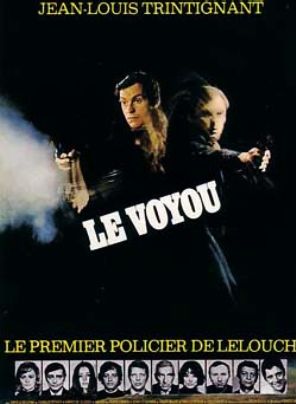
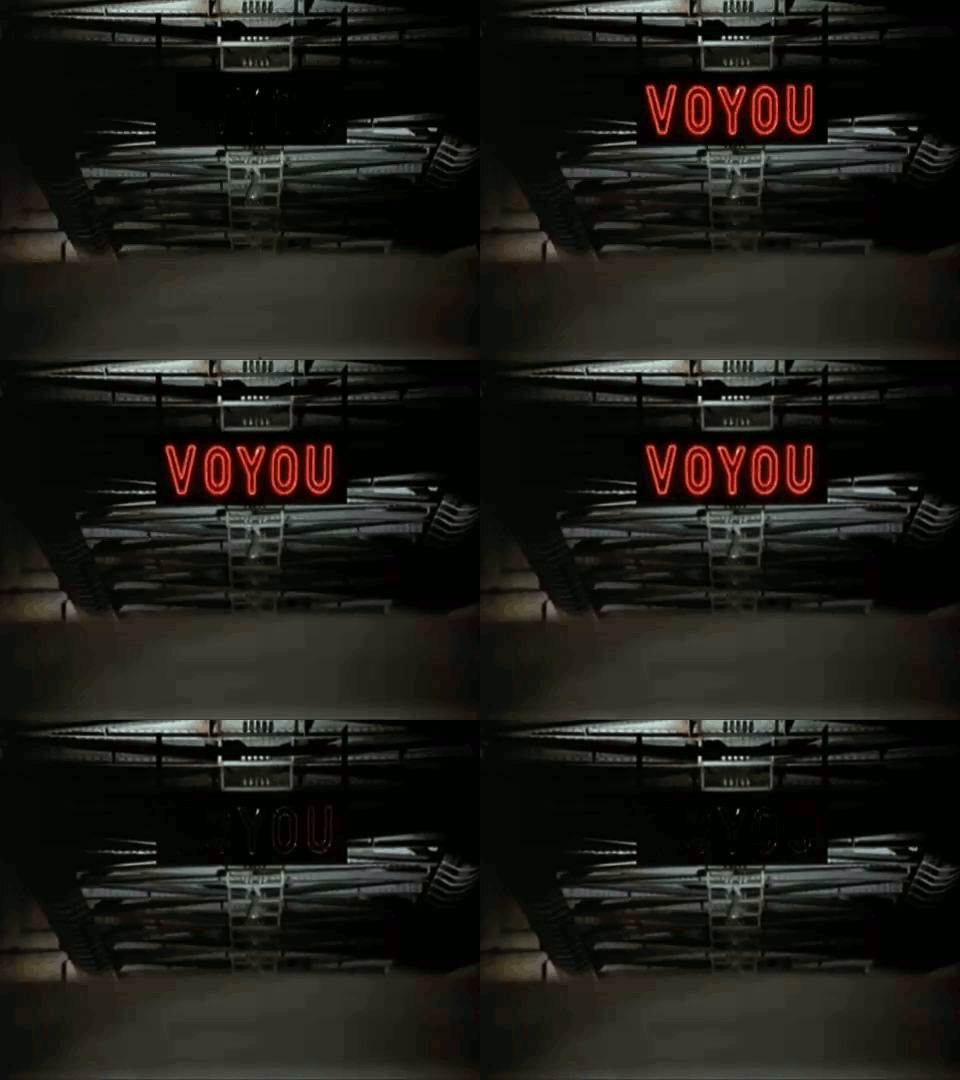
le_voyouSpeaking of Paris in the 1970s, Anto discovered Claude Lelouch’s Le Voyou (1970) (translated as “The Crook”) the next night after we watched Un Flic, and the two really help together brilliantly in terms of a glimpse into the wide range of approaches to noir-inspired crime films in France during the 70s. What I also liked about them was how different they were.

Unlike Un Flic, Le Vouyou was very much an upbeat and impossibly sunny crime film. Not only does it have the most bizarre opening sequence I have yet to see on film (watch it here), it refuses to let you get sucked into the idea of crime and criminals as necessarily tragic. Our hero/crook is Simon Duroc, a.k.a the Swiss for his criminal precision—played brilliantly by Jean-Louis Trintignant—is charming, likable, real and tortured just enough-but not too much.  He’s estranged from his lover and their child after 5 years in prison, and upon escape he brings his former lover back into his world by having her help him kidnap a struggling lower middle-class family’s 5 year-old child so that they can blackmail the bank where the child’s father works for a million dollar ransom by leaving the child’s fate in the hands of the bank. All of which would be a ridiculous storyline today, but works out seamlessly for “the Swiss” in Paris during the early 1970s.

And this 4 minute scene of the Swiss, his lover, and their associate driving around together after taking the bank for $1 million exemplifies the unique tone and approach to such a somber, dark theme in the most upbeat manner (the music is crucial throughout the film in this regard).

What’s more, the whole kidnapping—there can be few more horrific crimes in the mind of a parent—is carried off in a decidedly positive and  upbeat manner. This film refuses every stereotype of the genre, and is remarkably refreshing because the crooks are super cool, good looking, and they get away with just about everything. In fact, they escape from prison at least once, and I’d venture maybe even twice if I didn’t believe the film itself wasn’t simply having a moment of deja vu. The whole idea of taking a noir and making it an impossible fantasy of being smarter, cooler, and always two steps ahead of the police is a welcome change for me these days. I could watch a lot more movies where the impossible is actually possible, rather than feeding the ongoing media frenzy for impossibility and the end of humanity with such uplifting figures as zombies, survivalists, and psychopaths. That stuff just depresses me these days. If you want a break from the worst glandular media storm we’ve witnessed since porn in the 1980s, it’s time to check out Un Flic and Le Voyou (which can be found on Netflix streaming currently as Dirty Money and The Crook respectively). Enjoy!

Posted in movies | Tagged , , , , , | 2 Comments