Emma Mae, UCLA, and the L.A. Rebellion

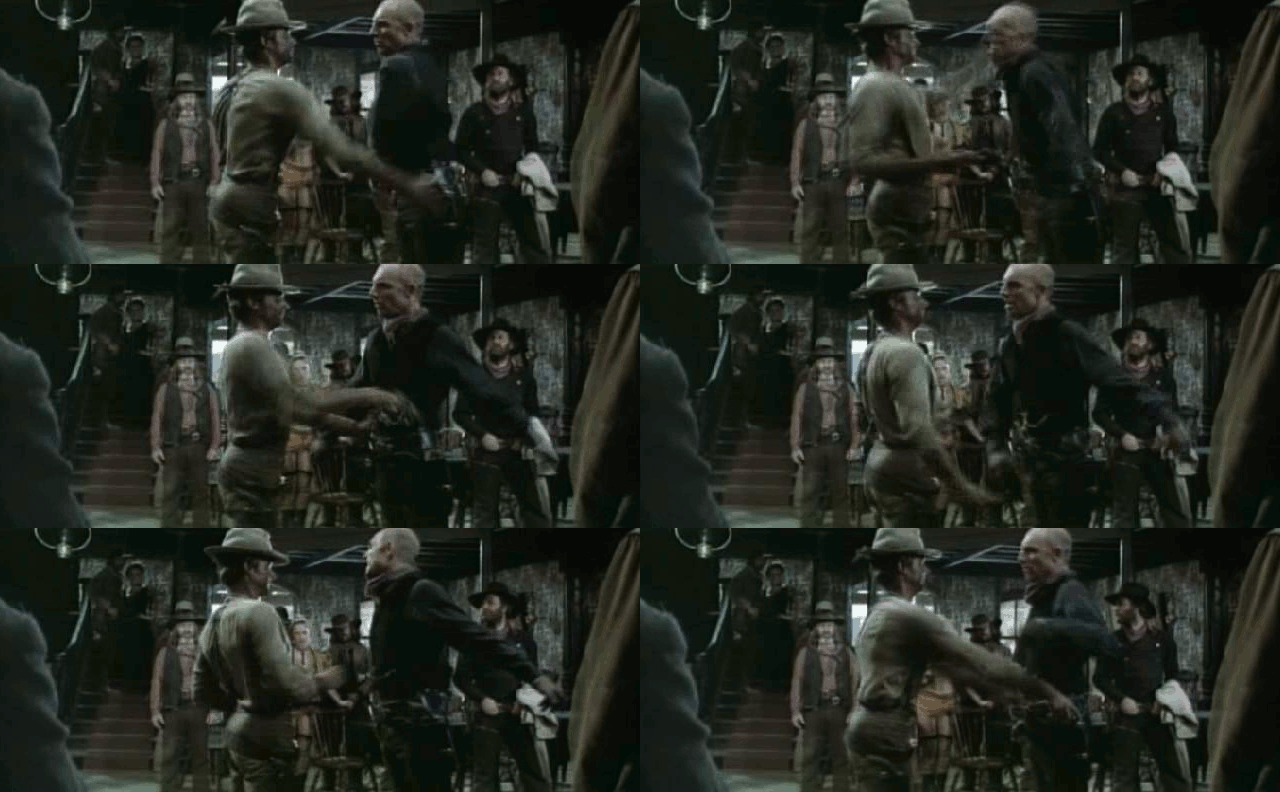
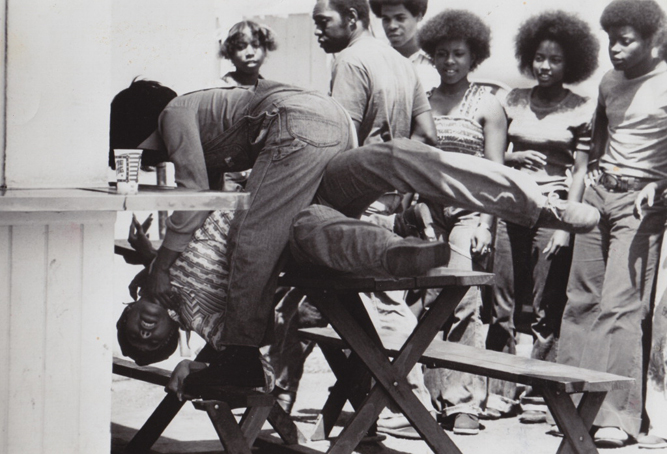
Image from Pacific Standard Time Exhibit on the L.A. Rebellion film movement.

Last night Alan Levine and I went to the Alamo Draft House on 6th street in Austin, Texas to see Emma Mae (1976) (a.k.a. Black Sister’s Revenge), ostensibly a run-of-the-mill Blaxploitation film—though truth be told there is nothing run-of-the-mill about good Blaxploitation. What started out as a brilliant movie going experience—and it was definitely that—became a powerful web-fueled trip through my time at UCLA in the mid-1990s,  as well as a much-needed spark to my love affair with film programming.  Moreover, through my web searching in relationship to this film I realized how blogging at UCLA’s Film School and beyond made the experience of the web that much richer!

But before I get to deep into my web odyssey around Emma Mae, it might be useful to talk a bit about the film and how and why it got me so excited. The film explores how Emma Mae, a country girl from Mississippi, comes to LA to live with her cousins after her mom dies. The film sets us up, as Jacqueline Stewart notes,

…for a Cinderella story, in which Emma Mae’s sophisticated, college student cousins mock her backward ways and she’s separated from her Prince Charming just minutes after they come together at a big dance.  But Fanaka reverses the formula. Emma Mae’s broken romance, and her L.A. family’s stumble from bourgeois status, forge a powerful sisterly bond virtually absent from Blaxploitation fare.

So while on first glance the film seems like straight-up exploitation—-and in some regards it depends heavily on the tropes of that genre—-it also resists it by breaking out of some of clichès. What struck me strongly while watching the film last night were the gritty sets that took place inside rundown LA projects, as well as the on-location scenes at Compton Community College—which is a setting close to my heart given I went to community college in Long Beach California in 1991-1992 before transferring to UCLA.*

Fact is, everything from the sets to the acting to the campy, yet compelling and heartfelt, performances suggested more than a slick, industry-driven Blaxploitation film but something more in line with an art-inflected student film, which when the credits rolled was quickly confirmed. The director, Jamaa Fanaka, notes in the credits that much of Emma Mae was filmed on location in Compton and also thanks “u.c.l.a”. and the Black Studies program at UCLA, the first of its kind that had only begun two years earlier in 1974.

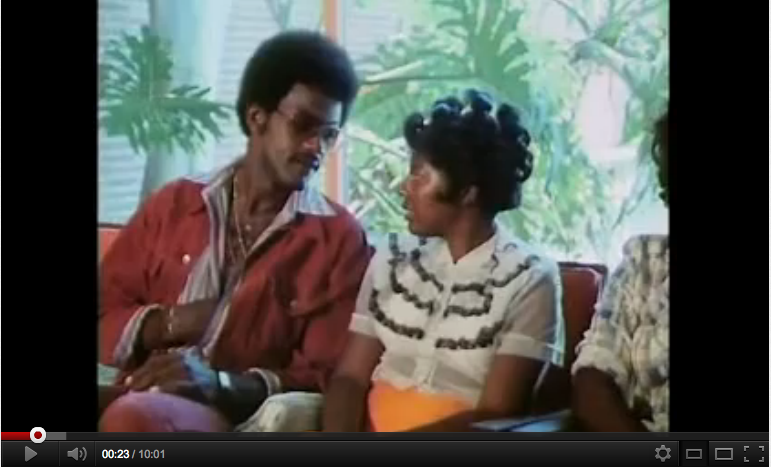
Those are just few facts that got me started on my web searching late into the night, but I would be remiss if I didn’t note just how entertaining Emma Mae remains. There are various Blaxplotiation-inspired fight scenes wherein the protagonist becomes all at once a wonderfully strong and camp character—something extremely difficult to balance but accomplished brilliantly by Fanaka. The video below highlights a number of the fight scenes from the film which demonstrate how funny and outlandish the film could be at times, and there were more than a few occasions last night that the audience broke out in hysterics—there was even a thunderous applause at the end of the film.
So coming out of the film last night not only was I thinking about what a treat it was, but I was also wondering about the nod by the filmmaker to UCLA in the credits, I am a proud alum after all. On the walk home Alan was searching around a bit on his phone, I was at a disadvantage for the moment, and found a number of sites through UCLA that talked about the film. When I got back to my hotel room and jacked into the web I quickly discovered that Emma Mae was not only a student film made by Jamaa Fanaka while he was attending UCLA, but actually only one of three films he made while a student at UCLA—which is mind-blowing! The other two are Welcome Home, Brother Charles (1975) and the prison film classic Penitentiary (1979), what’s more he also did an 8 MM short while at UCLA called “A Day in the Life of Willie Faust, or Death on the Installment Plan” (1972) which is about a herione addict and has been made available on YouTube thanks to the UCLA Film Archive and the L.A. Rebellion seminar taught at the UCLA Film School last semester, which has a wonderful course blog here.

One of the things I started to realize is that almost all the good information I was getting about Emma Mae and Jamaa Fanaka was from the UCLA Film School site/exhibit on a film movement centered at the UCLA film school during the 1970s termed the “L.A. Rebellion” by film historian Clyde Taylor. I was not only intrigued by this movement given the amount of time I spent at what was UCLA’s Melnitz theatre back in the early 1990s, but I had also sat in on a number of classes of the late Teshome Gabriel’s Third Cinema course, who came to UCLA as an instructor in 1974 during the height of the L.A. Rebellion movement. Turns out Gabriel, an influential theorist on Third World Cinema and post-colonial film (you can find a number of his articles freely online here), was there as professor Elyseo J. Taylor—the inspiration for many of the early members of  the L.A. Rebellion movement—was denied tenure. The reasons for his denial remain unclear to me given my cursory searching, but I would love to hear more about this if anyone out there knows more. Through his 1971 documentary Black Art, Black Artists Taylor helped articulate the vision of the movement by arguing how African-American Art was greatly under-represented, not to mention under-appreciated. He argued black art needed to be liberated from aping white mainstream culture. It needed to find new models, new inspirations, and an independence from the tyranny of the mainstream—much of what still defines the numerous films of the  L.A. Rebellion movement over its twenty year history.

So one immediate result of watching Emma Mae last night was I got a new found appreciation for the film school at UCLA where I spent a ton of time at on account of my girlfriend of the time, who was an undergraduate film student. I was used to hearing about famous alumni like Francis Ford Coppola, or even the more cult figures I identified with like Alex Cox of Repo Man fame, but the filmmakers of the L.A. Rebellion were relatively absent to my hanger-on eye. Although, it made not have only been me given that the first film retrospective of the L.A. Rebellion movement wasn’t until 1997 and was, ironically, hosted at the University of Chicago thanks to the work and vision of film professor Jacqueline Stewart—who was also instrumental to the more recent symposium at UCLA “L.A.: Rebellion: Creating a new Black Cinema.”

Pretty amazing how much information you can find about a film movement you previously knew nothing about in just one evening thanks to the web, no? I love you worldwideweb, what’s more I love universities and colleges that use the web to openly share the work their seminars, symposiums, archives, etc. are working on, that makes all the difference. What a huge boon sharing stuff like this is for people like me who are motivated to learn about a subject they are fascinated by. In fact, even during my days at UCLA I didn’t formally study film, but I spent an inordinate amount of my undergraduate career in what was formerly known as Melnitz Theatre watching and learning about the art of cinema thanks to great professors like Peter Wollen, Vera Dika, and Teshome Gabriel—open education at its best!

Which finally brings me to the magic of UCLA Film Archivist Jan-Christopher Horak posts about the Archive’s preparation and thinking about collecting, exhibiting, and preserving the L.A. Rebellion films. From his 2010 blog post termed “Forming History through the Archive” he reflects on the fact that the UCLA Archive has heretofore made no attempt to bring the movement’s films home:

In 2009, we decided to….begin a truly holistic research and preservation project, by bringing the “L.A. Rebellion” home.

As well as how that’s about to change:

It is the first time the Archive is not waiting passively for films and television to “walk in the door”, but rather is going out and saving a specific group of films we believe are important. We have assembled a team of scholars, filmmakers and professionals to research existing film and paper collections in libraries and archives; conduct and capture oral histories with participating filmmakers; collect film elements for conservation, restoration and exhibition; collect paper documents from filmmakers for the special collections library; publish a book which will contextualize the L.A. Rebellion and frame it in relation to its time period and parallel developments in film and the arts; strike many new prints for a massive retrospective exhibition in Fall 2011. We have received initial funding from the Getty Foundation, since the “L. A. Rebellion” film exhibition will be screened in the context of the Los Angeles wide art exhibition, “Pacific Standard Time.”

How cool is it that Horak is blogging the process and thinking behind one of the most extensive and important film archives in the world! What’s more, this group of academics, filmmakers, and students are shaping film history by declaring this group of films by these particular filmmakers matter, and here’s why. I love that! That is scholarship, and it is writ large on the annals of the web for anyone to intervene in, interrogate, or even help by pointing them to even more resources. In fact Horak has been blogging his progress on this project somewhat irregularly for the last couple of years. Here is another post about an unexpected encounter with Pam Grier at an under-attended screening of Coffy (1973). And last June he blogged about the preparations (notice this time on a UCLA Film School blog) for the “L.A. Rebellion: Creating a New Black Cinema” program, which ran from October 2011 through December 2011. And Horak blogged again in September of 2011 to note that they had discovered yet another filmmaker who should be considered part of the L.A. Rebellion movement:

Ijeoma Iloputaife, who uses the nom de plume Omah Diegu, was a film student from Nigeria at UCLA in the late 1970s and early 1980s. She produced several films while in school, including African Woman U.S.A. (1983), but her magnum opus is a personal documentary feature, The Snake in My Bed (1995), a Nigerian-German co-production.

So, after a seemingly “throw-away” Blaxploitation film I learn about an entirely new genre of films I need to explore that link me back to my alma mater and remind me just how powerful sharing on the open web is for all kinds of learning.

* Quick fact on this: as a California resident my tuition was $35 a semester for a 12+ credit load, which I could pay after a night’s work of bussing tables.
Posted in movies | Tagged , , , | 3 Comments

106 Movies (but who’s counting?)

Michael Branson Smith is awesome!

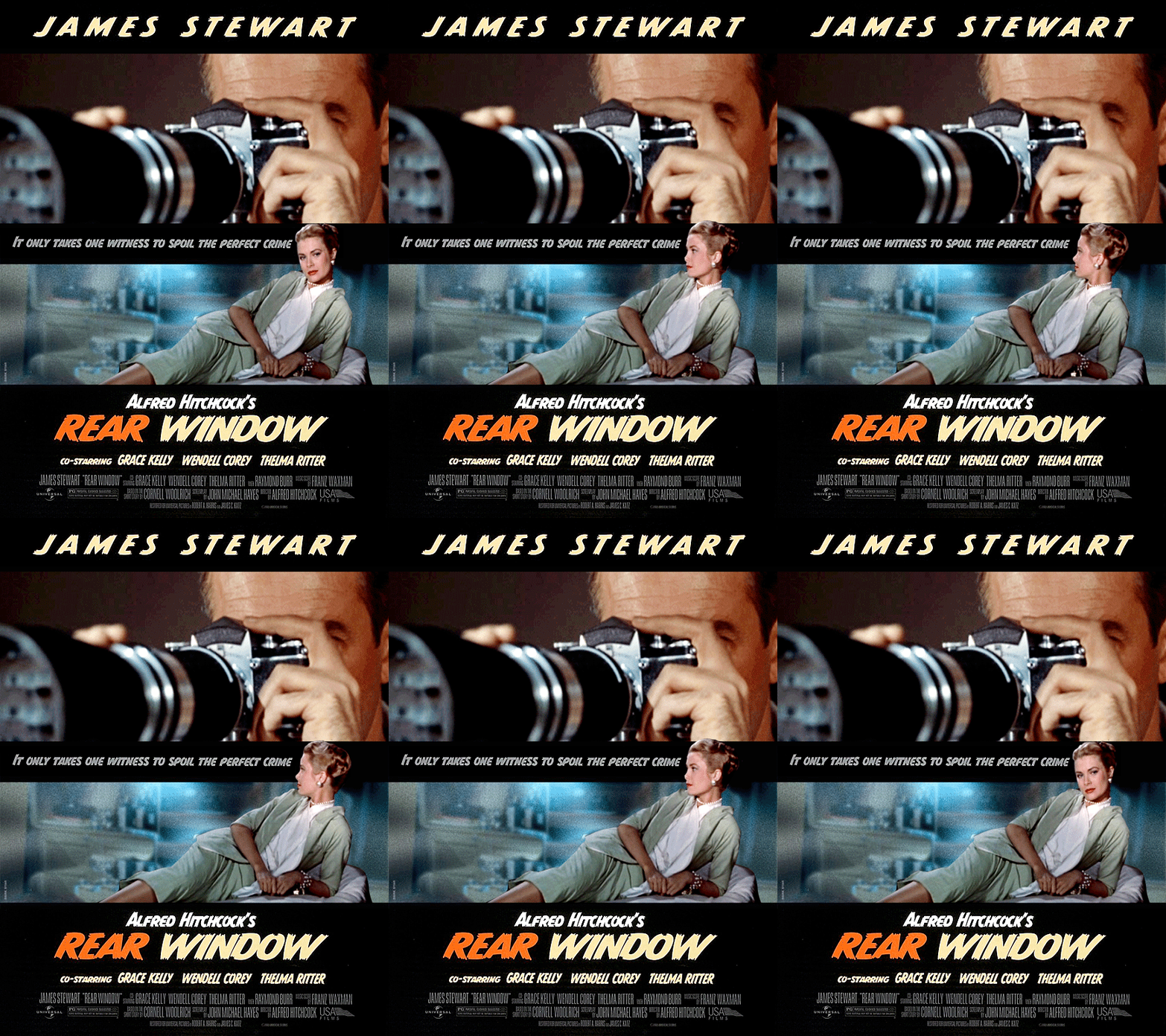
Since Alan Levine arrived in Fredericksburg we’ve been watching our fare share of movies. It couldn’t happen at a better time for me because I’ve been missing my movie blogging. Too much ds106 blogging makes Jack a dull boy. For me, there’s nothing better than riffing on film and sharing around the medium that still gets me most excited. So far we’ve watched four films (not to mention a number of HBO series episodes, which represent their own magic—but that’s another conversation) and we got to thinking we’d blog about the films we watch, but also trace the choices we make over time as a way of building on what we’ve already watched. We started with the parodic spaghetti Western [[My Name is Nobody (1973), that I already blogged briefly about here, and then Anto suggested Michelangelo Antonioni’s Blow-Up (1966), a classic, and the following night we ended up watching Alfred Hitchcock’s Rear Window (1954). What was remarkable was the deep thematic relationships between Blow-Up and Rear Window that Alan blogged about already here.

So, the idea came to us last night that we might be able to turn our watching into some blogging fun. What we are thinking is that we watch at least 106 films over the next year (but I hope it’s many, many more than that). And in order to track the distributed discussion and open up the experience, we figured we would try and syndicate all relevant posts for the various films using the tag 106movies to an aggregation site (not unlike ds106.us). What’s more, we’ll be working on ways of filtering posts by response to specific movies through related tags, categories, etc., but more on that we actually have a plan—-which will probably emerge half-way though. Hopefully the use of tags, categories, etc. will help us link related responses and start to build a nexus of discussion, relationships, and a general sense of how the experience evolved over time, i.e., which movies the community chose, why, etc. And as you may have guessed, there won’t be a pre-determined list, rather we’ll figure out ways to choose a film that relates to a previous film, genre, theme, etc., as we go—and that will hopefully be community driven—assuming there even is a community 🙂

As with any good, open experience, you come in and drop out of the process as you see fit. This would be about doing whatever interests you and leaving the rest. You can blog from your own space and we’ll syndicate and filter the work according to tags through you blog, twitter, etc. as a means to experiment with how we can use a central aggregation space as a way to help us come together around various films we watch and want to share with one another, talk about in more depth, make animated movie posters of, etc.

As you can probably tell at this point the idea is still a bit rough, but Alan and I will be sitting down next week working out a number of the details and I would like to invite anyone interested in working on the idea and design of such a site to let us know so we can bring you into the conversation. I know a lot of you who are reading this love film, and I hope that this might provide an occasion to push all of us to share that love together in a space where it might even turn on others to the power of the medium.

And finally, if you might be interested in playing along with this experiment stay tuned, more details will be following very soon wither on this blog or Alan Levine’s. I’m really excited about this not just because I love watching and blogging about film, but also because this provides an opportunity to experiment with a framework like the one we built around ds106 for a truly distributed, informal learning experience that is not necessarily attached to a classroom. I am taking my inspiration here from Chris Lott’s awesome Motley Reading experiment, but this occasion will center around films rather than books. So, what do you think? Any feedback? Want to play along?  Interested in helping us make this happen? Let me know.

Posted in 106movies, movies | Tagged , , , | 3 Comments

A Bird’s-Eye View of UMW

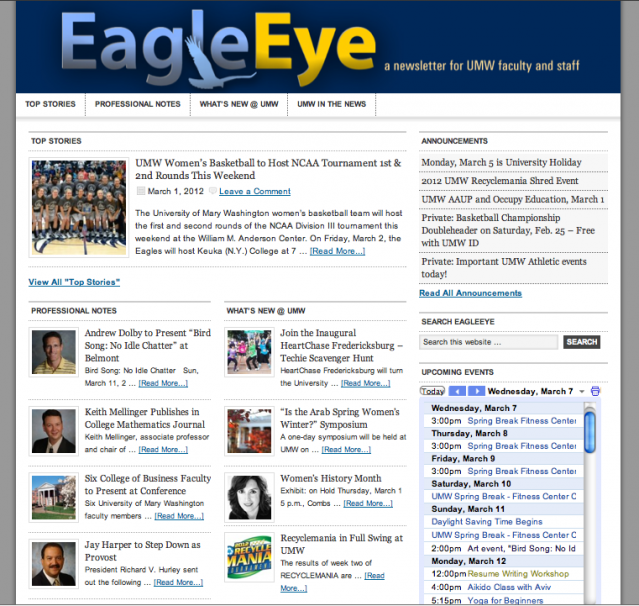
A year and a half ago Cathy Derecki and I sat down to talk about possibilities for taking the semi-annual “Faculty Notes”—UMW’s print-version of what faculty have been doing professionally—online. The idea we came up with was to make an online, weekly “Newsletter” (for lack of a better term) that not only features the work of UMW faculty and staff, but also shares top community stories, campus events, and more general happenings around the university. It would all be posted on the EagleEye site as well as emailed every Thursday afternoon as an HTML-based newsletter to all UMW staff and faculty.

A year and a half later EagleEye has become a community gem for fostering awareness of what is happening intellectually and culturally around UMW. What’s cool about the model we’ve set up is that anyone around campus can post information to the site. All you need is a UMW Blogs account—yes, this is hosted on UMW Blogs, but mapped onto a umw.edu domain :)—and request to be added as an author to the site. As of now we have more than 100 different authors and almost 1400 posts—which works out to almost 3 posts a day every day for the last year and a half!

What we effectively did is allow faculty and staff to login and immediately author and publish what they have been doing professionally as well as encouraging them to publicize events and happenings around campus (you can see the workflow here). And while faculty and staff were a bit reluctant to promote their work early on, after a few months of the weekly newsletter arriving in their inbox featuring the work of their peers it seemed far less a stigma of “shameless self-promotion” and much more a community good. Let’s face it, it’s a very beneficial thing that everyone in an intellectual community has a sense of what everyone else is working on. A quick way of sharing the work we are doing as well as promoting what is best at UMW is a bonus for everyone. What’s more, it is right inline with the philosophy that everyone loves to be featured, it is an important piece of recognition that universities need to foster within the professional community, and EagleEye proves to me that something as simple as a WordPress site can do that brilliantly.

Posted in umw, UMW Blogs, umw.edu, WordPress | 1 Comment

Behind Every EDUPUNK is a Miserable Sysadmin

I’m not sure the title of the post is exactly what Zach Davis said back in October of last year at the OpenEd conference, but I think Brian Lamb can confirm it’s pretty close in spirit. Zach Davis and Lucas Thurston have been sysadmining a lot of the work we’ve done at UMW since 2006 or 2007. From helping us move UMW Blogs from a Bluehost site to a shared host and again to a dedicated private server. All the while helping us make the system as solid and robust as it is up and until this day—at our current pace this year UMW Blogs will have had more uptime the 2011/2012 academic year then any other enterprise system at UMW. That will prove an amazing day if it works out to be the case.

What’s more, two years ago when I told Zach about my idea for ds106—which was to give every student their own web hosting account and domain—he was not only supportive of the idea but provided UMW students a space to sign-up for web hosting through Cast Iron Coding as a supported option. He all but volunteered to help that experiment take place two years ago when more than a few folks thought it was not only crazy, but a nightmare waiting to explode in my face. His help with that class continues right up and until just last week when ds106, like UMW Blogs, outgrew its beginnings on a sliver of shared server space at Cast Iron Coding (that I am still in arrears on).  It went from an experimental site for the open and online course last Spring to a full blown framework for aggregating blog posts, assignments, and daily creates. The pressure ds106 began putting on the server this semester as a result of its growth was a testament to how amazing the community around ds106 truly is. We moved ds106 to a dedicated server in the “cloud” that can automatically respond to intensive resource demands—which with more than 500 syndicated sites is a lot at this point.

I’m really proud of what has been accomplished with both UMW Blogs, and now ds106. It’s a real honor to see work started at Mary Washington become a model for other professors, students, and institutions around the world—even if in a very small way. But it would be unfair to not only recognize everyone who has made UMW Blogs and ds106 awesome—which is all of DTLT, the UMW faculty, administration,  students, and an extended open online network—but also to take a post (that started out as a quick “we moved the ds106 site”) to thank Zach Davis for eveything he has done. Not only did he get me into EdTech,  but has been dealing with the fallout of that fact ever since. Unfortunately there is little to no money or glory in being the sysadmin behind an over-celebrated punk. Zach’s the working class genius behind most of the work I’ve been a part of these last years, he’s the “get ‘er done” part of this relationship that has gotten little or no real benefits from the whole thing other than more than a few headaches, hacked servers, and annoying midnight emails from a very frantic me. But what’s been interesting for me is that when he supports me in something I want to pursue, or encourages a particular approach it usually  turns out to be gold. So, all this to say thanks Zach, you rock and are one of the few who can truly say “you made the bava!”

Posted in digital storytelling, UMW Blogs | Tagged , , | 7 Comments

An Electronic Leash: Working in the 21st Century

If you aren’t watching HBO’s Enlightenment, I highly recommend it. Anto started watching it a few months back, and I have been slowly sucked into it over the first 7 episodes, but episode 8 has made me a full blown fan. Laura Dern is brilliant as a middle-aged woman who is bouncing back after a nervous breakdown as a result of her life in corporate America. In fact, it’s a pretty relentless satire of working conditions of corporate America that has yet to stray into work place fetishism like The Office. In fact, the following two minute clip from episode 8 of Season 1 does an excellent job breaking down how the technology that Cogentiva—the corporation Laura Dern works for—uses is part and parcel of the role that capital plays in the shaping of technology as means of control. This explanation of the software and how it uses data as an electronic leash to choke workers is a nice counterpoint to the utopian vision of technology I want to live in (rainbows, unicorns). If you want more on this episode, there is a great write-up on the Av Squad blog here.

Posted in capital, pop culture | 2 Comments

Animated Comic Book Cover….I’m Free at last!

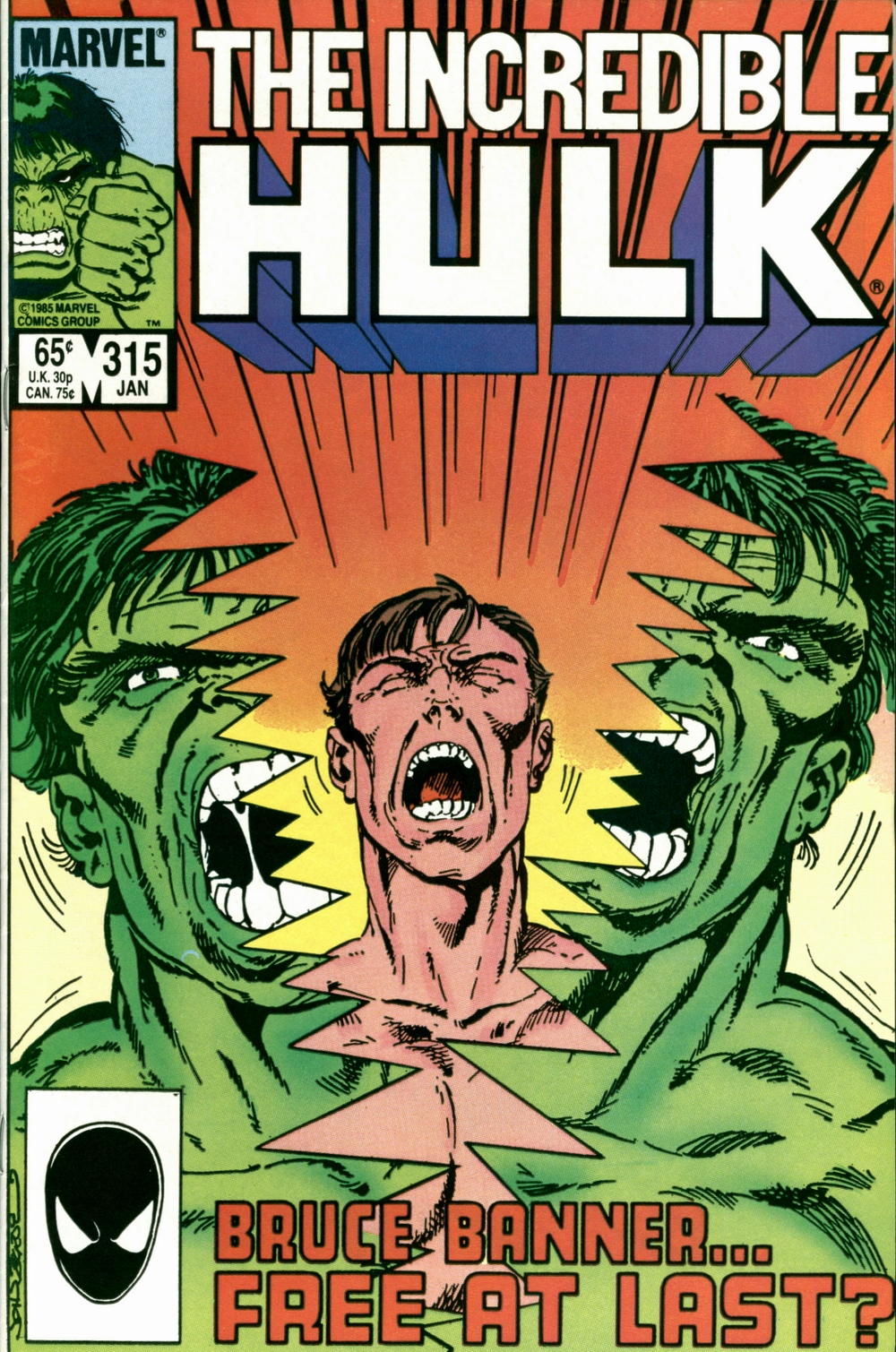
I’ve been reading a bunch of 1980s Hulk comics thanks to my time with Zach Davis out in Portland, Oregon—which I am still gonna blog! What’s more, I’ve started re-watching the Hulk TV series from the late 70s and early 80s—I saw this one as a kid, it was a big family event and it’s really interesting to re-watch. I find myself increasingly relating to the schizophrenia that is the Hulk, not to mention he is a my favorite tweeter in all his various guises. So, when I went browsing for Comic Book Covers to animate, I immediately wanted to pull something from 1980s Hulk. I happened upon this amazing comic from January 1986 titled “Freedom!”

In this issue Bruce Banner and the Hulk are finally separated into two different beings. As a result, Banner falls in a severe comma and is hospitalized right away. Meanwhile the Hulk, also unconscious, is taken away because SHIELD wants to get rid of him. But as usual Hulk goes mad and kills a bunch of the SHEILD henchmen and the doctor who sets him free feels bad and promises to kill him. I love this particular comic to because it’s a great profile of Hulk’s career as a superhero: no one trusts him, he’s a complete loose cannon, he kills indiscriminately, and you still can’t help but root for him. So, in honor of the Hulk—who reminds me a lot of Tom Woodward for some reason, another hero of mine—I decided I would animate the cover of “Freedom!” to complete what is for me the coolest ds106 design assignment ever: animated comic book covers.

I can’t take credit for the above animated GIF, so much of the work was done thanks to the patience and knowledge of Tim Owens and Alan Levine who walked me through their process for doing more complex animated GIFs like this. This one had a ton of steps, and I am going to write some notes below so I can have an outline of the process with the idea that I’ll come back after my trip to Austin, TX and do a more thorough tutorial for the sake of posterity.

So, here is the process, we had to isolate the two halves of the splitting Hulk and put them in their own layer. We didn’t select the red text or the Spider-Man Marvel icon when splitting the halves because they both were made their own layers, that were then locked together and place in the uppermost layer hierarchy so that they always appear despite the animation below them. After that we had to fill in the background with a new spectrum of colors that radiated out from a central point, mimicing the range of colors on the cover—this to fill in the holes left by the two halves of Hulk splitting. This was a new feature of Photoshop that Tim Owens taught me, as was the clone tool that is nothing short of amazing. I used the Clone tool to fill in the details of Hulk’s body as he rotates on the cover as well as to fill in Bruce Banner’s body in the middle. After I had cut out the two Hulk halves I filled in a lot of the Hulk’s green color in each of those halves.

After that, Tim and Alan explained how to select each of the halves and transform it by rotating the image off a particular axis point X degrees. I did this 7 times for each half at about 2.5 degrees rotation at the same angle. This was a bit painstaking, but it worked brilliantly. What’s more, Alan showed me how to control the animation process with precision in Photoshop that pretty much blew my mind. I will be blogging a comprehensive tutorial of how I did this animated GIF, so these scrawlings are really just notes I will use later to make the process I went through more precise and understandable.

I really appreciate the time Tim and Alan took to show me these details because I learned more about Photoshop in the three or four hours making this animated GIF than I have the whole time of teaching design in ds106. I guess when you really want to do something bad enough the learning not only happens, but is that much more enjoyable. Also, I now understand why GIMP is no Photoshop.

Posted in digital storytelling | Tagged , , , | 10 Comments

Eduglu Revisited: The Syndication Bus 2012

It’s been more than a year since I’ve really thought, no less written about, the syndication bus as it relates to ds106. For any of you who might be new to the idea of the syndication bus, it’s an approach to syndicating posts from various blogs or other social media sites into a space that can be filtered by tags or categories in order to help manage the flow of data so that it can be discovered, explored, and aggregated into a space that helps build community. On and off over the past 5 years I—as well as many others for much longer—have been obsessed with the idea of designing such a space. In many ways it’s the philosophy that undergirds the design logic that made UMW Blogs a syndication rich platform for aggregating course sites, study abroad blogs, clubs and organization sites, etc.

So, it’s interesting that George Kroner should tweet earlier today that a post back in 2007 contained a lot of interesting conversation about the idea of the syndication bus that really didn’t really mature until the last year—-which is something I hadn’t thought too hard about until he tweeted it. Fact is, if I can step outside of the black hole of time, energy, and love that is ds106 for a moment and think about something else professionally, anything else in fact, it would be apparent that we have started to approximate this syndication bus pretty effectively, cheaply, and easily for most folks who can install a vanilla WordPress blog—-which is pretty amazing when you think about it. As a technical framework ds106 is an impressive and fairly simple approach to enacting eduglu quite apart from any idea of a particular cult class. It really can be broken down into three simple elements at the moment—-with a fourth coming soon:

1) FeedWordPress to Syndicate in 500+ blogs to the main ds106.us site (the automation of feed aggregation still needs to be perfected to save time and energy).

2) Martha Burtis’s work to create an Assignment repository (much of it done with Gravity Forms as opposed to Google Docs in the old method).

3) Tim Owens’s The Daily Create site is cobbled together with freely available plugins, and documented here.

4) And still to be built is the remix engine that will frame a fourth space wherein students from the various classes participating in ds106 can remix each others work. More on this in another post.

If you go back to the post that George Kroner mentions above you’ll realize that a comment by Brian Lamb quoting George Siemens is the genesis of this syndication bus talk that the above elements are all in some way a reflection of:

…schools should be in the business of managing data flows rather than in supporting an end to end user experience. We can only dream what might result if the energy going into the campus-wide LMS’s would go into creating flexible and easy to use “syndication buses” or to addressing pragmatic instructor challenges to using the “small pieces” approach — things like student management tools, gradebooks etc. And what about providing the service of institutional archiving and data backups to mitigate the risks of using third party tools?

This remains, to this date, the tightest and clearest expression of what I have been working towards for the last five years, a message the Chronicle’s piece on my work really can’t articulate because it pre-dates EDUPUNK or ds106 or anything else that has me directly facing off with the LMS, BlackBoard, or some other easily polarized, relatively facile issue. The syndication bus is anything but a simple “for or against” the LMS argument, rather it’s an entirely different way for universities to imagine information, data, connections, and the teaching and learning enterprise as it interfaces with IT. This to me still remains the model I think we should be working towards, and that’s why it’s a bit discouraging for me to see the conversations turn almost entirely towards the idea of the unbound, institutionally liberated MOOCs that are becoming all the rage as the market is heating up (think Stanford, Khan Academy, Udacity, etc.).

As I note in a comment on George Siemens recent post here, while MOOCs represent a remarkable approach to new ways of imagining learning, they are anything but refined as of yet. And the whole idea of Massive in relation to open, online courses is still deeply problematic as an approach to teaching and learning—it’s far too easy to divorce yourself from the social relations that define the course. Rather than so quickly trying to capitalize on this wave and create the next set of branded, corporate delivery mechanisms for content, seems to me we should instead be working to cultivate and iterate through a truly social, interactive, and peer-to-peer based web premised on syndication, aggregation and open tools that seems to be in danger. They remain a threat to the heart of the open web by undermining the power of social interaction through turnkey, packaged content approaches to online learning that Stephen Downes outlines brilliantly at the end of this post/interview.

I’m all for continued experimentation with open, online courses that work, and the impetus to educate as much of the world as possible through open knowledge is something I absolutely get behind. But the fact is we still have a critical mass at brick and mortar universities and the move to the venture capital, startups for these badge-based universities seems a quick way for a few people to make a lot of money while simultaneously waging war on already underfunded public institutions. What’s more, it would seem to me downright stupid for the vast majority of educators and students to follow a path that is pretty nakedly framing its business model around a wholesale Wal-Marting of higher education through scale and reach, not through quality, interaction, and livable wages. The implications on society run deeper than just a poorly educated population, if that doesn’t cut deep enough. I can’t see how this will end well for the majority of us. If Candace Thille’s idea (not nearly powerful enough to call a vision) for online learning in higher education isn’t deeply horrifying to you in its ability to displace relationships and interaction that define an education experience with a strip mall approach to course design then you just aren’t paying attention. There are no shortage of people who want to gut higher ed in much the same way they have gutted K12—and they are doing a fine job of it, they don’t need our help.

So, what is getting me excited these days is that this vision that has been driving so many of us for the last number of years is taking on a new life here at UMW. We’re in the early planning stages of making these syndication buses—which is exactly what the ds106 site is when you think about it—a reality for “managing data flows” of students and faculty around UMW who will be managing their own data in their own spaces. The idea is to provide everyone with a domain, web hosting and a platform of their own from which they will create their presence, experiment with the tools, and and build on the experience—not unlike what we have done at the course level in ds106. In fact, what we are talking about is a campus wide realization of Gardner Campbell’s Personal Cyberinfrastructre across the university. Tim Owens outlines the idea of A Domain of One’s Own Rebooted, and given we have hundreds, if not thousands, of students and faculty who already use WordPress and manage their own domains on UMW Blogs, this seems the logical next step in further pushing the community to ownership of their digital identity. Fact is, UMW finds itself in a unique position to pull this off. Given the amazing work so many of our faculty do on a regular basis in this regard— it quickly becomes apparent that the infrastructutal, technical, curricular, and teaching chops are all aligned, it is a perfect storm and we are about to imagine the syndication bus on a level that makes the life of the mind of the university that much more present, tangible, discoverable, and preservable.

Who wants to head to a start-up? They don’t have the freedom to innovate in this way? The investment the state make in higher ed in Virginia is so that we can help shape a new model of thinking about teaching and learning in the 21st century that is not first and foremost premised upon profit and making a few people significantly richer than the rest of us, but rather about interrogating the digital culture we find ourselves immersed in so that we can better understand the implications for civilization and humanity more generally. That is why we work where we do. That ethic needs to not only survive, but procreate wildly—we’ve begun thinking theirs is the only way to go about our business when deep down inside we know it’s not.

Posted in digital identity, digital storytelling, eduglu, open education | Tagged , , , | 9 Comments

Some Sounds from my Past: Ordering Food on Long Island

When I was a senior in high school I worked for a Pizzeria in Freeport, Long Island called Raimo’s. They had awesome food—in fact, they still do because a quick search suggests they’re still going strong—and it got so busy back in the late 80s (1989 to be exact) that they hired me just to answer the phone for pick-up orders. I spent about four hours every friday night answering the phone, writing up tickets, and generally getting the pizzas, heros, etc., ready for pick-up. It wasn’t a particularly exciting job, but I liked talking to people on the phone and the meatball parmagian heros were to die for, so I kept coming back. Anyway, I used this scenario to do the “May I take your order?” audio assignment for ds106. I tried a thick Long Island accent, which was pretty easy for me, and my only issue was that both the person making the order and the person taking the order sound too much alike, which is my bad. Outside of that, I love the idea that the person taking the order challenges the other person on the quality of LI tap water—a source of pride on the Strongest Island. What’s more, being confronted on stupid things like this happened all the time to me in NY, and it never happened nearly as much to me when I lived in California or Virginia. Anyway, here is my take-out phone order from a Long Island pizzeria.

Doing that previous one made me think of another experience I had when I was younger on Long Island. There was an awesome Kosher Deli in town call Ben’s Kosher Deli that I used to ride my black and gold Ross Snapper to on a regular basis and get two plain hot dogs and a coke, right after purchasing a smurf from the nearby stationary store (which was called Stage, if any Baldwin, LI folks are keeping track). There was always the same old Jewish guy who ran the hot dogs and every time I ordered them and asked for the coke he would ask me in return, “How do you like the coke?” To which I would invariably answer, “In a can,” because I preferred that over fountain. And to this he would always follow with an emphatic question, “What are you Greek?!’ A joke I never got until much, much later, and still marvel how insane it was that he said that to an 8 or 9 year old kid for what seemed like years and I never got it and he never got called on it. So this on is in honor of him, who must have been Greek 🙂

All sound effects were gotten from Freesound, which specific credits listed below.
Sound credits:
“Restaurant Ambience” by Aftergaurd
“Hang Up” by Ondrosik
“Phone Receiver” by Percy Duke
Old Telephone Bell by fonogeno

Posted in digital storytelling | Tagged , , , | 6 Comments

Avarizia: a joke about greed, apples, and Italians

I always liked the “Make ’em Laugh” audio assignment which charges you with telling a joke in a language other than your native tongue. But rather than telling a joke in another language, I actually recorded Antonella telling a joke in her native Italian while at the same time contextualizing the joke for her audience. The most interesting thing about oral culture, and jokes in particular, is just how contextual, dialectic, and specific to a time and place they always are. So enjoy this joke about greed at the expense of the inhabitants of Val di Non,  a Valley just north of Antonella’s home town Trento, Italy.

Posted in digital storytelling | Tagged , , , | Leave a comment

Have You Seen Nobody?

Last night we watched the 1973 mock western My Name is Nobody. It’s a great spoof on the Western as well as a lovingly playful homage to Sam Peckinpah’s The Wild Bunch (1968). In fact, the amorphous “villain” in this film is a rag-tag group of 150 bandits that are referred to as the “Wild Bunch” throughout, and there is an equally insane shootout to end the film replete with slow motion deaths as an overt nod to Peckinpah.

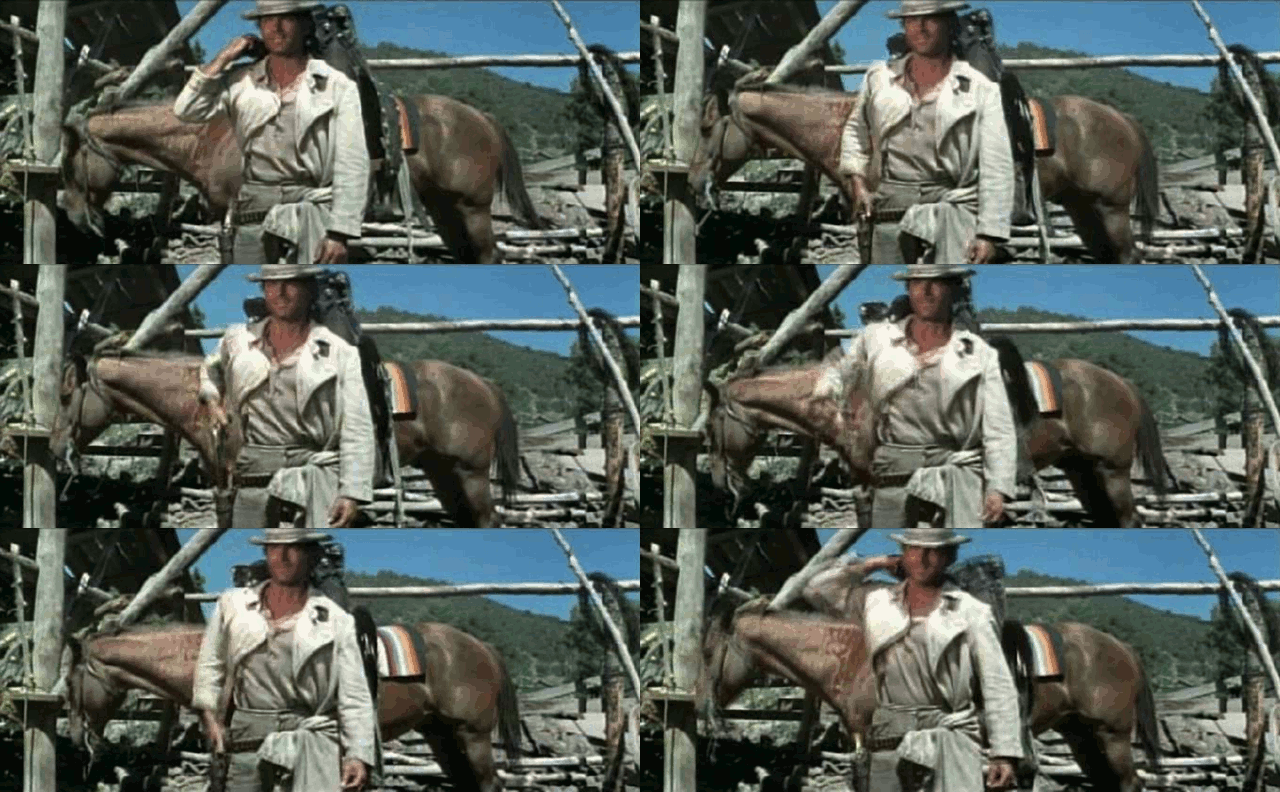
It’s also Henry Fonda’s last Western, and he remained one of the greats of the genre right up to the end—but for me it’s the Italian comedic actor Terence Hill that makes this film. His slapstick humor paired with bizarre moments wherein magical realism meets the Western by way of film speed manipulation makes him truly the fastest draw in Western film ever. And below is the celluloid proof in the form of animated GIFs.

So fast that saddle doesn’t even hit the ground.

Gun, Slap, Gun, Slap, Gun….
The other thing I always trip out on about European created Westerns is the way these films stand outside of history. And while My Name is Nobody is shot on location in the Western U.S. —there’s still this sense of it’s being outside of history, almost mythologic.  Not unlike watching some of the  Sword-and-sandal films that dominated the Italian b-movie industry before the explosion of the Spaghetti Western in the 1960s. Anyway, if you get an opportunity I highly recommend this one, it’s over-the-top Italian b-movies at their best, and Sergio Leone’s influence looms large on the direction and you can’t get Ennio Morricone’s soundtrack out of your head, as usual.

Posted in movies | Tagged , , , , | 5 Comments