
I Fracking Love UMW Blogs

It’s been a wild couple of years with ds106, and I love that little bastard. But sometimes too much fond affection on the baby blinds you to the maturing of your other kids, namely umwblogs. That environment is now 5 years old and has never been tighter, I’ve been blown away by how robust and steadfast it remains. What’s more, the traffic and usage are at all time highs. This week I’ve been enjoying a little UMW Blogs renaissance by picking a class or two and reading and commenting on some of the students’ work. Melanie Szulczewski’s Global Environmental Problems happened on my radar, and I started reading about everything from endangered national parks to water pollution to sustainability, but this post on Fracking by Kelsey Moxey was interesting to me (for more background on Hydraulic Fracturing go here). Kelsey really seemed to be genuinely working through the issues surrounding this practice, and while I’ve heard a bit about Fracking here and there—I even heard some people discuss the possible link between the recent earthquake in Virginia to widespread Fracking on the East Coast—I can’t pretend to understand the subject beyond a surface level (no pun intended 🙂 ). Given that, it was cool to jump into the comments of this student’s blog, let her know I’m reading, share a beautifully designed site illustrating the dangers of fracking with her, and watch a larger conversation unfold in her comments as a result. In turn, I got turned onto the documentary about fracking titled Gasland that I now have to check out. Everybody wins! So much good stuff is shared!

I realized that is what I have missed over the last two years of being sucked into the vortex of ds106, playing the community gardner of commentary, discussion, and interaction around UMW Blogs. It is remarkable to me how something so little as a comment goes such a long way in terms of discussion and reaffirmation of what we are doing at UMW. It has always bummed me out when people don’t take the little time it requires to comment on all the great stuff happening on UMW Blogs—I miss Shannon Hauser in this regard, she was the other great UMW Blogs commentator.

You want to build an intellectual community where students care and are interested in sharing online? You want to foster a culture of questioning, wonder, and comraderie? Well then, comment on someone’s work, give them feedback, and let them know you are reading. It’s actually a very simple equation that has led to the success of both UMW Blogs and ds106, it’s not rocket science, it is just the applied work and attention to other people’s ideas as demonstrated by commenting.

Posted in dtlt, umw, UMW Blogs | Tagged , , | 2 Comments

This Week in ds106: A Video Intro tour de force

Tonight I introduced my section of ds106 to the video section of the course. The assignments, videos, and resources referred to above can be be found in the assignment post for weeks 9 & 10 here.

I had a good class because I could stop pretending discussion is the only way,  and focus on things I wanted to talk about like how important Andy Rush’s video resources will prove the next two weeks, how amazing Rob Ager’s video essay analysis of The Shining truly is; why the first seven minutes of Fritz Lang’s M is magic,  a brief and imperfect overview of MPEG Streamclip, the wonders of the Internet Archive, and more. I love tour de force classes like tonight’s, but on Thursday we switch it up and everyone will be coming in with their laptops and some downloaded video footage ready to do a focused editing workshop. The stakes are high in ds106 over the next two weeks, intensive video work, but I am all about accommodation—so if you have time issues, etc., let me know.

Posted in digital storytelling, video | Tagged , , | 1 Comment

I’ll take the book with the shiny cover

I’m aware that a lot of folks read a lot of books on their iPads, Kindles, smart phones, laptops, etc. In fact, there’s a whole business and culture around the process that bores me to no end. And while I’m a big fan of books—I don’t burn half as many as I used too—I’ve been consistently underwhelmed by the next technology that is finally going to repackage the book for the web. In other words, the next technology that will effectively remediate the web for books. Don’t get me wrong, I fully understand it’s been happening for years, will continue to happen, and may one day even be remotely interesting to me when we finally realize the liberties and properties of the physical book are anathema to the web. And it’s those properties that represent part of why the book is beautiful and it’s own thing that need not be of the web—in fact it’s being of the web loses those properties while giving it new ones that alter it entirely—make it something other than a book, and often by way of control.

All that said, I don’t hate epubs, ibooks, etexts, or whatever, I just feel no attraction to them. Not only are they not books, they don’t have cool covers that inspire me, they don’t trace my physical being there through them in the same ways—in short they don’t excite me. And if that’s why we like the idea of our own space online that we can design, control and take some ownership of, I guess I feel there is no real corollary for books in this regard online.

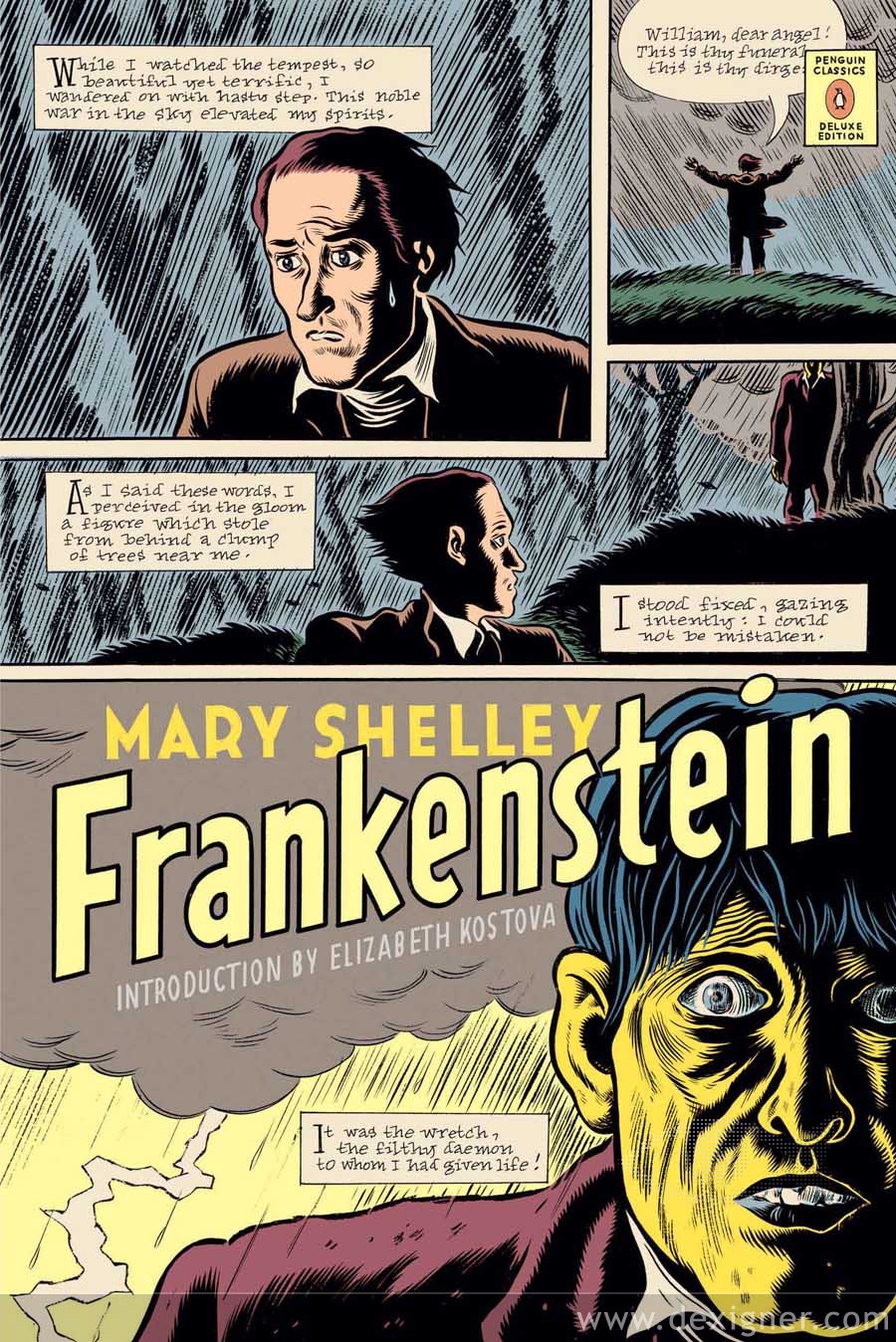
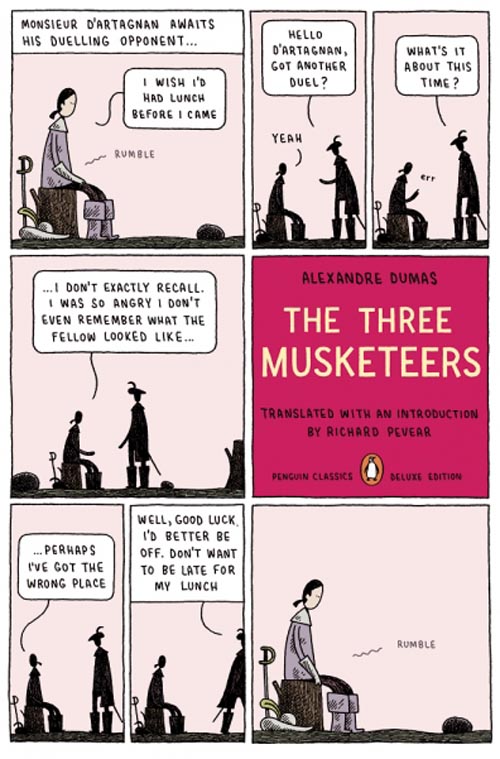
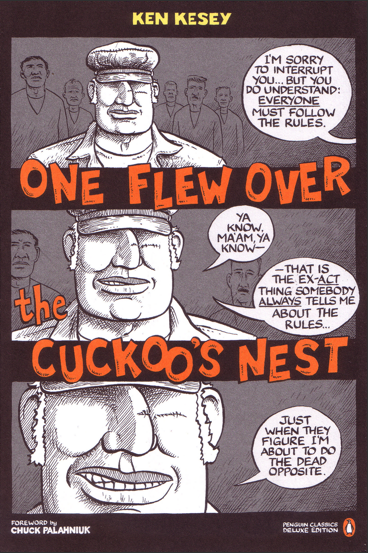
But all that aside, what this post is really about are the new Penguin Classics Graphic Deluxe Editions that are pretty wild. I guess Penguin also fears the physical book is endangered so they are going no holds barred with a number of classic book cover deigns, and I can’t say I hate the results. I mean check out this crazy ass design for Marquis de Sade’s Philosophy in the Boudoir Or, The Immoral Mentors.

That is a new take on the classic De Sade cover that gets pretty explicit. Reading a book like this on the subway has a completely different effect in your environment than reading that same book on an anonymous tablet that everyone else on the train has, replete with black protective cover and invisible corporate leash. But even if none of that  bothers you, then I would still recommend you check out the Penguin Book covers based on their rather wild design sense.

I was immediately struck by the framing of Voltaire’s Candide as a stick figure cartoon that actually tries to sample some of the books themes in order to bring the reader in as if it were an XKCD cartoon:

And here is a zoomed-in version of the cover that invites you read on as the extended Candide cartoon on the cover wraps up…

And what do you make of Penguin turning Mary Shelley’s Frankenstein  into a kind of EC Comics cartoon cover? I can’t help but thinking something bizarre is happening here, and I really dig it.

And what do you make of this The Three Musketeers bookcover?

And finally, the book that turned me on to this series: Ken Kesey’s One Flew Over the Cuckoo’s Nest. I saw this one in a book store in Reagan National Airport and was struck by the idea of presenting the book as a kind of graphic novel.

A few thoughts I had immediately is how fascinating it is that all of these classics are employing a rather radical new design approach that moves them away from a staid, abstracted idea of a classic, or even a cheap “see the movie” advertisement. The art reminds me of the best of pulp art both on and off the web from the last 100 years or so, and I really want to have these physical books because of their design. In fact, it’s their design that allures me. And while it may be a  gimmick, it’s no more a gimmick than the iBook or the Kindle experience, etc. But unlike them, they actually have something I can hang on too, I can share in physical space, and even imagine around as I am reading.

Posted in books | Tagged , , , , , , , , | 2 Comments

Cellular Storytelling

UMW Biology professor Steve Gallik has dreamed up a very cool approach for students in his Histology lab to share and comment on what’s under the microscope. Rather than purchasing expensive camera-ready digital microscopes, he worked with the UMW Teaching Center to purchase a few cheap digital cameras that can upload images quickly to the web so students can post them to a course site.

The resulting course site designed by the inimitable Tim Owens is a highly attractive, intensely visual course space on UMW Blogs that streamlines posting for students thanks to the Gravity Forms plugin (which is premium—what is happening to us!). What I love about this experiment is how beautiful the images of these mammal cells are, and how the students’ brief description coupled with the gorgeous images tell a story about the life and death of cells. Not only that, but it reinforces the idea that new approaches to storytelling with media cuts across all disciplines—it’s not an exclusive a concern of the humanities.

Posted in dtlt, umw, UMW Blogs | Tagged , , , | 3 Comments

We Want the Airwaves: ds106 Radio Shows, Pt 1

This past Tuesday night, section 1 of ds106 here at UMW (i.e. my section! 🙂 ) aired three group radio shows on ds106radio. As with the Spring 2011 semester, the shows were amazingly produced given  how little experience the students have with audio beforehand coupled with how little time they had to create a twenty minute radio show. I love it how UMW students rise to the occasion when challenged, and they rarely fail to impress.

You can hear the 1 hour 20 minute broadcast of the live radio shows and class discussion below: ds106 Radio Shows Section 1, Tuesday, March 13th

______________________________________________

The first group to broadcast was the AMCX Radio show that only featured half there show given they did a 30 minutes show (we were limited to 20 minute sections for the class broadcast). What’s remarkable about this show are the nuanced, detail orientated elements of NPR inspired, public radio effects integrated into the show. The Vice Presidential Bagman debate was quite funny, if a bit too long, and the search for detective Kim Droom featured just how powerful sound effects and setting can be for communicating effectively through audio. Like I said, it is amazing to see just how effective these shows can be with very little direct instruction and experience.

The next show was the JBC Mystery Radio that was deeply inspired by This American Life, and the first half of this show wove a brilliant psychological web of intrigue through sound that never divulged the mystery behind the mystery. It tooks place on UMW’s campus 30 years earlier, and you sat riveted by the audio wait to hear what everyone was reacting to only to be left wanting more. The introduced an expert who was there to explain the wide range of reactions to the mystery we know nothing about. And while it was a bit harder to hear  the expert’s advice during the second act at times, the quality of the show is evident. A tight script, impressive radio voices, and an overall original concept of a mystery that was well executed.

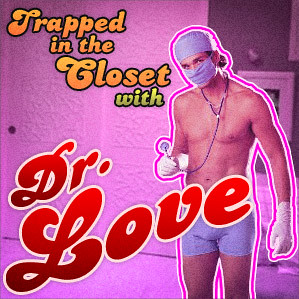
Finally, we ended the night “Trapped in the Closet with Dr. Love,” a call-in love advice radio show that framed itself as a satire of cheesy 70s call-in radio shows. Once again, the production value of the show was excellent, and the way in which they managed pacing, various narrative breaks, the bumpers, etc. was extremely well done. In the discussion after the show I was concerned that this show might have depended too much on stereotypes that re-enforce rather than challenging some of the ideas they were trying to poke fun at—even if unintentionally.

The discussion that followed was an important because it focused on what we should be doing here at UMW—openly discussing the issues that are potentially difficult or uncomfortable around creative expression. The question of when satire is successful or not was raised, and I tried to illustrate some of the potentially disastrous implications of bad satire, a sentiment Maura Monahan responded to on her blog after the fact quite powerfully.

In many ways this semester has been the best ds106 class yet in that the thornier issues around audience, creative license, creative limits, and constructive criticism, have all come into play. And I love it when the discussion that happens remains uncomfortable while at the same time challenging some of the ideas, experiences, and expressions we take for granted. If what we are creating is challenging everyone or making at least some of us uncomfortable I wonder if it’s worth the time spent on creating?

Posted in audio, digital storytelling | Tagged | 2 Comments

ds106: We put the Commie in Community

Image credit: Jack Mulrey’s ds106 Propaganda Poster

I’ve been thinking a bit about the power of an open community to change the nature of a class taught at a brick and mortar institution given the work I’ve been doing with ds106. There are more moving parts to this whole thing then I can get my head around, but last night while we were broadcasting a few of the student radio shows Rachel McGuirk and Annie Truslow had some pretty insightful comments about how the class changes the nature of how they create based on the open community—and the ability to bring these people into their work helps break down the geographical barriers that are all too often used to define the limits and “sacred space” of the classroom.

AMCX Radio Excerpts about ds106

What was interesting to me about Rachel and Annie’s comments were how they fit in with another discussion I was having with two ds106 Alumni (in fact they are UMW alumni now) Sarah Kountz and Megan McMillan. Sarah and Megan took the class in the Spring of 2011 right before they graduated (the first open online experiment), and they contacted me via Twitter (we still communicate there regularly) to let me know they would be around this week and would love to meet up. What’s more, they brought along Karen Ellrod who never took ds106, but has an intimate understanding of the course given the communal nature of the work for the class.

We sat down to talk about ds106 (what else would we talk about?) and I videotaped the conversation which I think starts to get at a point Mike Caulfield raised when we were talking on the phone a month or so ago about how important people who have been through a process or had an experience they can share (or continue to share) are to any community. The “elders” of a community, for lack of a better word, give it a vision and a sense of time beyond the arbitrary 15 week entombment of a course. In other words, UMW students like Sarah Kountz, Megan McMillan, Matt Martin, Charlie Rocket, Carlie Hampton, and many, many more are absolutely crucial to the idea of ds106 being about something more than just at class here at UMW.  Many of those listed are still doing drive-by assignments for the course, but more than that they are present and contributing via Twitter regularly.

So, anyway, the idea of community and an idea of culture and sharing that moves beyond the specific boundaries of a class is fascinating to me, and while invitation is crucial, I wonder if part of what keeps students intrigued isn’t also audience, feedback, and a connection to the actual place they spent a good part of their adult life at. One of the things that struck me about this conversation with Sarah and Megan was just how strong their draw to UMW was even after they graduated—and I have a very similar feeling about UCLA still. The power of the experience at college is what we need to communicate around, not the depersonalized idea of an educational brand.

Posted in digital storytelling | Tagged | 2 Comments

Tree of Life

Image of DDT Truck from The Tree of Life
Antonella and I watched Terence Malik’s The Tree of Life (2011) a month or so ago, and I haven’t been able to get it out of my head since. Whatever you make of the craziness of the creation of the universe narrative interludes or the abstracted narrative structure, this film is a work of art of the highest magnitude. Like another great modernist Franz Kafka who could project dreams in his fragmented novels, Malik can project the impossible essence of memory on film. The way in which he captures the life of a family in Waco, Texas with only the dramatic arc of the wonder and dread that is everywhere around us always is wild. Innumerable times during the middle of this film I found Malik had again and again tapped into this sense of experience and memory that I thought was my own—a deep, respectful sense of the flawed beauty of the human condition. There are so many scenes I can point to that illustrate this, but one which continues to haunt and buoy me at once is the following scene where a child drowns in a water hole while a whole community helplessly looks on. A possibility that haunts every parent to the bone comes true in this scene—and the setting is gorgeous, the camera watches the commotion in the swimming hole from behind the parents, and the scene gets burned on your sensibility.

I’m really not sure if this film worked on me so deeply because of where I find myself in my life—40 years old, three kids, doing as much damage as good I am sure—or because it works in the world of memory sans nostalgia. A space of being there that pretends to neither idealism nor desolation, a sense of being in the past with emotion, depth, and difficulty. In this regard the oldest son, Jack O’Brien (Hunter McCracken) was superb as was Mr an Mrs. O’Brien (Brad Pitt and Jessica Chastain respectively). The father-son relationship in this film ran deep for me, a haven’t felt as fragile as a parent after watching this since the night Miles was born. That’s the effect you want a film to have, when the emotional and spiritual psyche gets blown away you know something is happening there.

Posted in film | 2 Comments

The Digital Legacy of the 1980s: Super Mario Bros.

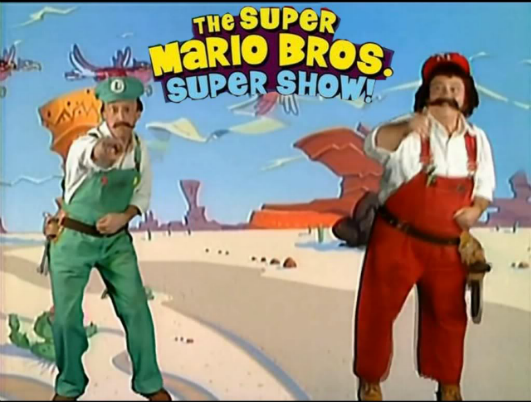
My kids and I explore movies and series on Netflix to watch on a somewhat regular basis. And while I’ve been underwhelmed by their live streaming library as of late like everyone else,  we recently stumbled upon The Super Mario Bros. Super Show! It’s a television series based upon Nintendo’s Super Mario Bros. (1985)—a game so popular that for more than two decades it remained the best-selling video game of all time—that splits it’s time between live action sitcom and animated episodes. The 1980s WWF wrestling legend Captain Lou Albano plays Mario and Canadian actor Danny Wells plays his younger brother Luigi.  What’s been trippy about watching these episodes are the special guests like Sqt. Slaughter, Lyle Alzado, and Cyndi Lauper—it doesn’t get much more 80s than that list.

Below is the episode guest starring Cyndi Lauper, who comes to Mario and Luigi in search of Lou Albano (love the play there).  I highly recommend the first two minutes of this classic bit of 1980s TV culture, so bad it’s good.

After watching this episode it hit me like a diamond through the forehead: that more than any other bit of popular culture from the 1980s the Mario Bros. franchise remains the most predominant piece of popular culture from that beautifully indulgent decade. How crazy is that? I would argue more than Michael Jackson or Madonna, more than Pacman or Donkey Kong (though that’s where Mario got his start 🙂 ), the Mario Bros. franchise remains the most potent popular culture strand to survive from the 80s—just look around you. The video games still sell like mad, kids from multiple generations identify with Mario, Luigi, Bowser, etc., the shirts sell at box stores like Target and Wal-Mart. And what’s craziest is that there is no sense of nostalgia surrounding it at all. Mario is not trapped in the body of Lou Albano anymore, rest his soul, but rather kicking ass across the Galaxy.

All this despite the cheesy TV series was produced (which my kids and I love by the way), the bad 90s movie was made, the innumerable throw away dolls were sown, and on and on and on. Mario as a cultural icon remains a fascinating thing for me, in fact one of my favorite video games of all time, Freedom Fighters (2003), is inspired by Mario Bros., but takes that cartoon fantasy world and transforms it into a kind of Italian Neo-Realist narrative that had me longing for the simple days of a cold war narrative in a post-9/11 Iraq War world (this too was a Mikhail Gershovich influence—he is very good!).

And while some will point to Star Wars (1977) as the paramount pop cultural phenomenon of the last 40 years I would have to agree, but also argue two things: 1) the Star Wars legacy jumped the shark in the late 1990s with the prequels and while it remains a monumental work of popular culture it’s momentum as a franchise was greatly impeded by Lucas’s inability to stop himself, and 2) Star Wars is very much rooted in 1970s culture—and it remains the legacy of pop culture for that decade most certainly—it does not have the same tractor beam-like hold on the 1980s.

But regardless, what is most interesting about this comparison to me is the iconic pop cultural artifact from the 1970s is a film while from the 1980s it’s a video game—it’s digital.

Posted in fun, video games | Tagged , , , | 1 Comment

The GraMar of Film

As we get ready to transition from audio to video in ds106 for weeks 8, 9, and 10 I can’t help but start thinking about what examples from various films I can use to demonstrate the grammar of cinema. What elements powerfully demonstrate a mood, capture a particular idea, invoke a feeling, and/or work deeply on our emotions. Even beyond the specific kinds of shots, cuts, and technical frames—how does this medium mean and be beyond the simple notion of a talking head in his or her room we’ve become acquainted with through YouTube?

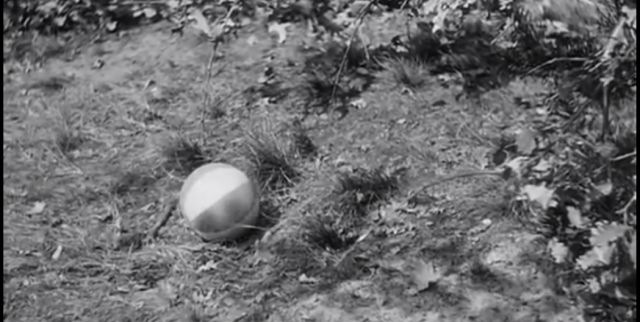
In previous semesters turning to early film for inspiration, examples, and a sense of the best elements of communicating sparsely and concisely with moving images that don’t overly depend on dialogue has proven useful. A favorite example that I got from a conversation with Mikhail Gershovich is the first eight minutes of Fritz Lange’s masterpiece M (1931), which may be one of the most brilliant opening film expositions ever. Watch the first eight minutes (to 8:03 od the video to be exact) below and think about how Lange uses the medium to communicate what’s happening without beating you over the head with a bat.

How does Lange create the tension in the opening scene? As opposed to spoon-feeding you with expository dialogue, how does he let you know what’s going on in the film? Where are the cuts? How is the tension mounted? How does he communicate the mother’s anxiety? And what do you make of that final montage the frames Elsie’s fate without ever revealing anything? Masterful.

And what’s more, the tale of the tape is there on YouTube for anyone to return to—it can be studied! You can get a sense of the pacing if you watch the timeline on Youtube, focus in on the cuts between Elsie walking home and her mother setting the table. You can pay close attention to all the non-verbal and atmospheric cues like the kids singing, the cuckoo clock, the ball, the balloon, the wanted poster, etc. There is so much more to happening in this film beyond the trap of talking head exposition that has become a staple of how we think of video today. Lange’s work in the silent film era becomes evident in this opening montage given how much is communicated so efficiently and effectively without extensive dialogue, and the dialogue and sound effects that are used—like the song and the cuckoo clock, an her mother screaming Elsie over the montage—heighten the tension and impact of the scene brilliantly.

When I was at UCLA in the mid-1990s, one of the film school professors, Fabian Wagmister, would have his undergraduate students create ten minute 16 MM films as their final project for the program without any dialogue whatsoever. The experiment was framed as a way of exploring and inhabiting the medium without depending on the crutch of dialogue.

So, if you were going to share a relatively short clip with a group of people to demonstrate how to use grammar of film to communicate efficiently an effectively, what would you recommend? I watched Terence Malik’s latest film Tree of Life (2011) an a few clips from that film come to mind—I may have to look into that.

Posted in digital storytelling, movies | Tagged , , | 12 Comments

200 Documentaries You Must See Before You Die

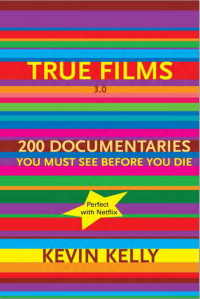
Meeting and hanging out with Keene Haywood was one of the highlights of my time in Austin this past week, and what’s more it even paid film dividends. Keene turned me onto Kevin Kelley’s True Films 3.0 or, 200 documentaries you must see before you die. It’s an amazing list of films that serves as a great resource for anyone interested in going on a documentary tour de force. Looking over the list I think I may have seen close to a third of these films, but the ones I’ve seen attest to how much I want to see the other 2/3rds. Check it out here. I hope to come back to this over time and document the films I have seen and haven’t seen as a kind of curation of the list, but until then enjoy.

Posted in film, movies | Tagged , , | 3 Comments