ds106: Stories In Our Digital Age

Three students in Jeff McClurken’s #infoage course, Ashley Lightburn, Joe Calpin, and Caitlyn Murphy, put together a ten minute documentary about ds106. I am obviously excited by the idea that students think this course is interesting enough to make a documentary about, and what they have put together has some amazing moments. But given this is a history class and the record of ds106 is being reflected in this documentary, I want to add my feedback to the work. You can see the post with both the documentary and the bibliography/notes on Ashley Lightburn’s blog here.

First, Ashley writes that Alan Dean started ds106 and I took over the additional sections of the class, which is not actually the case. The class was dreamed up by Jennifer Pollock-Wahl, and I believe she taught it once as a Summer class in 2009—and possibly again as a class in Fall 2009. After that it was taught by both Alan Dean and myself in the 2009/2010 academic year. I first taught the class in the Spring 2010, and I believe that was either Alan Dean’s first or second time teaching the class.

Also, Alan Dean gets a lot of screentime in regards to what ds106 might mean, but in effect Alan Dean never taught ds106, he taught CPSC 106. His coursework was all handled in BlackBoard and none of it is apparent for anyone else to see, what’s more he did not teach an open course—which is very much at the heart of ds106. So including him in this documentary without making any of this clear makes it seem as if he was part of the evolution of ds106 which is actually not the case at all.

What’s more, before the Spring 2011 semester Martha Burtis and I approached Alan to let him know how we would be teaching ds106 that semester as a means to both let him know our plan as well as to invite him to play along, to which he respectfully declined. In essence, whether or not Alan Dean believes our approach “focuses too much on the technology” misses the larger point that his voice would have been best played as one that didn’t necessarily agree with the whole open course, transmedia exploration approach of storytelling in ds106—which is not to be confused with CPSC 106. Given this I think a narration or some kind of clarification of where Alan Dean fits in the narrative of ds106 is necessary.

What’s more, the very life blood of the course, the open, online part where anyone can play along was only alluded to in this documentary. I understand the limits of time, but I can think of about 2 minutes that could have been edited out to talk about what is probably the most essential element of ds106.

Finally, what exactly is the story of this documentary? What does it say about ds106? It seems like a lot of interesting vignettes, and it certainly works well as a 10 minute trailer but the problem with ds106 is that it is open, online and complex. And research and attention to so many details would need to be paid to it to do it justice. Why not talk to me or Martha or anyone else involved from the beginning to get a clear sense of the class so that some of the obvious points of confusion could have been cleared up easily? Seems to be a little research and question asking up front would have made this a far better representation of the open, online experience that is ds106.

Apart from this, I really did love it 🙂
Posted in digital storytelling | Tagged , | 5 Comments

Who’s afraid of the big bad #sopa?

…I am! And in the latest episode of DTLT Today Boone and Wally Gorges lay out a pretty compelling case why anyone doing anything related to open education online in higher education should be too. Boone and Wally brilliantly talked us through some of the possible implications of the Stop Online Piracy Act (SOPA) should it eventually become the law of the land in the U.S. Boone’s post on the topic here led us to have him on the show, and I would take a page out of Boone’s book and encourage you to think hard about what SOPA might mean for the work you do online, whether you are in the field of education or otherwise. What’s more, get off your ass and do something about it if you believe it could potentially live up to even a fraction of the threat people claim.

Posted in copyright, dtlt, DTLT Today, open education, piracy | Tagged , , , | 1 Comment

A bava blog trailer

It has been a long time coming, but bavatuesdays finally has its own trailer/disclaimer thanks to the great Michael Branson Smith. I will include it here, but it will also remain in my sidebar as a warning to all who enter the haunted house of the bava blog.

Posted in fun | Tagged , , | 1 Comment

DTLT Today’s 100th Episode


I guess today is a day of milestones, not only has the bava turned six years old today marking my sixth year at UMW, but DTLT Today has cranked out its 100th episode—which is a pretty amazing feat.  When Tim Owens arrived at UMW’s DTLT in July of this year he brought his A-game, and he hasn’t stopped since. And Tim has a rare kind of A-game, it’s one that brings people together, gets everyone excited about what they are doing, and pushes everyone to do more. Between his WordPress design and development chops, his well-rounded and seemingly limitless technical abilities, the balls to challenge the field leaders, and unbelievably good nature—he is a top flight instructional technologist and he’s already making a huge impact at UMW. Oh, and did I mention he and George Meadows now have got us into MakerBots?

DTLT Today is his brain child, and since he got to DTLT he has brought Andy Rush, Martha Burtis, and I together in ways we have never clicked before. Doing a regular “tv show” is not simply about broadcasting, audience, or technology—though these all matter to some great degree—it’s about setting a tone and providing a space for DTLT, and by extension UMW, to share what’s happening with one another on a regular basis. It’s a vision for this group that can and will be abstracted out to the wider campus community. So, in short, the 100th episode marks a lot of amazing bits of sharing amongst this group over the last five months, but it also marks for me the introduction of an unbelievably awesome addition to DTLT—Tim “A-Game” Owens.

Posted in dtlt, DTLT Today | Tagged , , | 2 Comments

A minimalist bava anniversary

It’s a special day for the bava blog in a couple of regards. First off, bavatuesdays turns 6 years old today. I’m pretty proud of that fact, 6 years ago today I started my job as an Instructional Technology Specialist at UMW and I also started this blog—both of which are still very much with me. And it’s funny how much of who I have been at UMW for the past six years (UMW Blogs, EDUPUNK, ds106) has also been bavatuesdays—-the two for me have been almost indistinguishable, and very rarely did either seem like work.

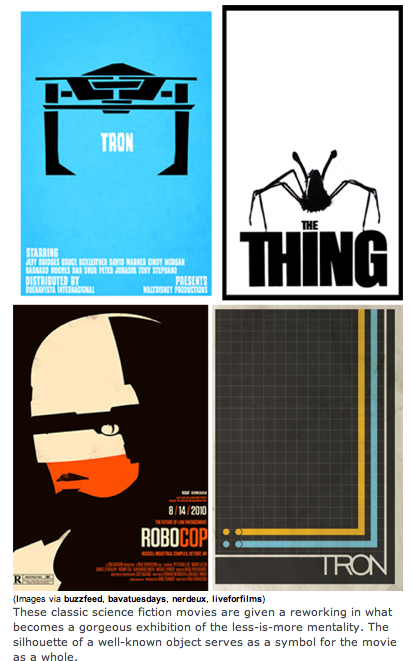
What’s more, today I had the particular honor of having my minimalist movie poster for John Carpenter’s The Thing featured on the Web Urbanist design blog alongside some awesome posters. Small things like this really get me excited, and remind me why I do this. It’s fun, it’s my own, and you never, never know what’s gonna happen.

And what’s even cooler than that is knowing that the smalls acts of creativity we commit to on a regular basis might result in new ideas, possibilities, and relationships. And perhaps Michael Branson Smith’s insanely creative and giving approach to everything he does online is just one more example of why I love this space. I mean check out his amazing minimalist poster for Deliverance!

Bring on ds106, it can’t come soon enough! Actually, a lot more on that idea coming very soon, but until then here’s to six years on the bava and all the beautifully irreparable harm it has caused me. Avanti!


Posted in digital storytelling | Tagged , | 5 Comments

Santa Claus was born in Fredericskburg


Yesterday was an interesting day in Fredericksburg in terms of ghosts, history, and Christmas. The fab fam and I went out to breakfast and then hit a park to let the kids run and play. On the way home we ran into a marching group of Civil War reenactors commemorating the 149th anniversary of the first Battle of Fredericksburg. These particular reenactors were the Irish Brigade, a Union Army group made up predominantly of Irish Americans that were devastated during the Battle of Fredericksburg—their numbers were reduced from over 1600 to 256—most casualties occurring on December 13th, 1862. We tagged along for the march which ended just a few blocks from my home at Marye’s Heights battleground wherein there was a commemoration for the more than 18000 casualties of the Fredericksburg battle….that’s right, more than 18000! What was wildest for me, however, was how enthralled Miles was by the whole thing—he really loves parades and reenactments it seems..

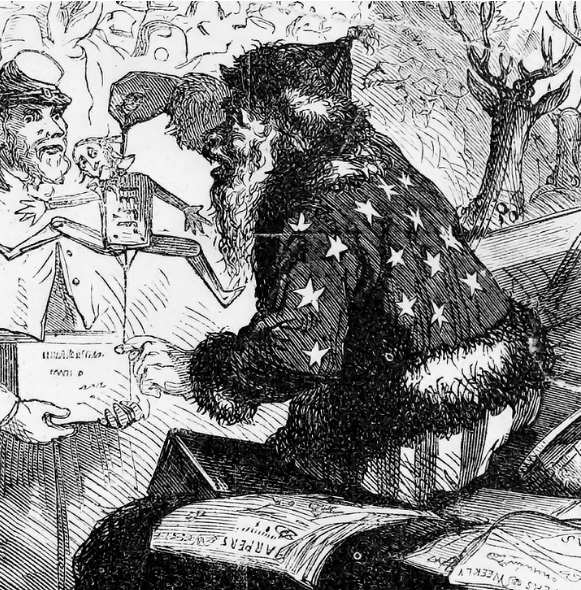
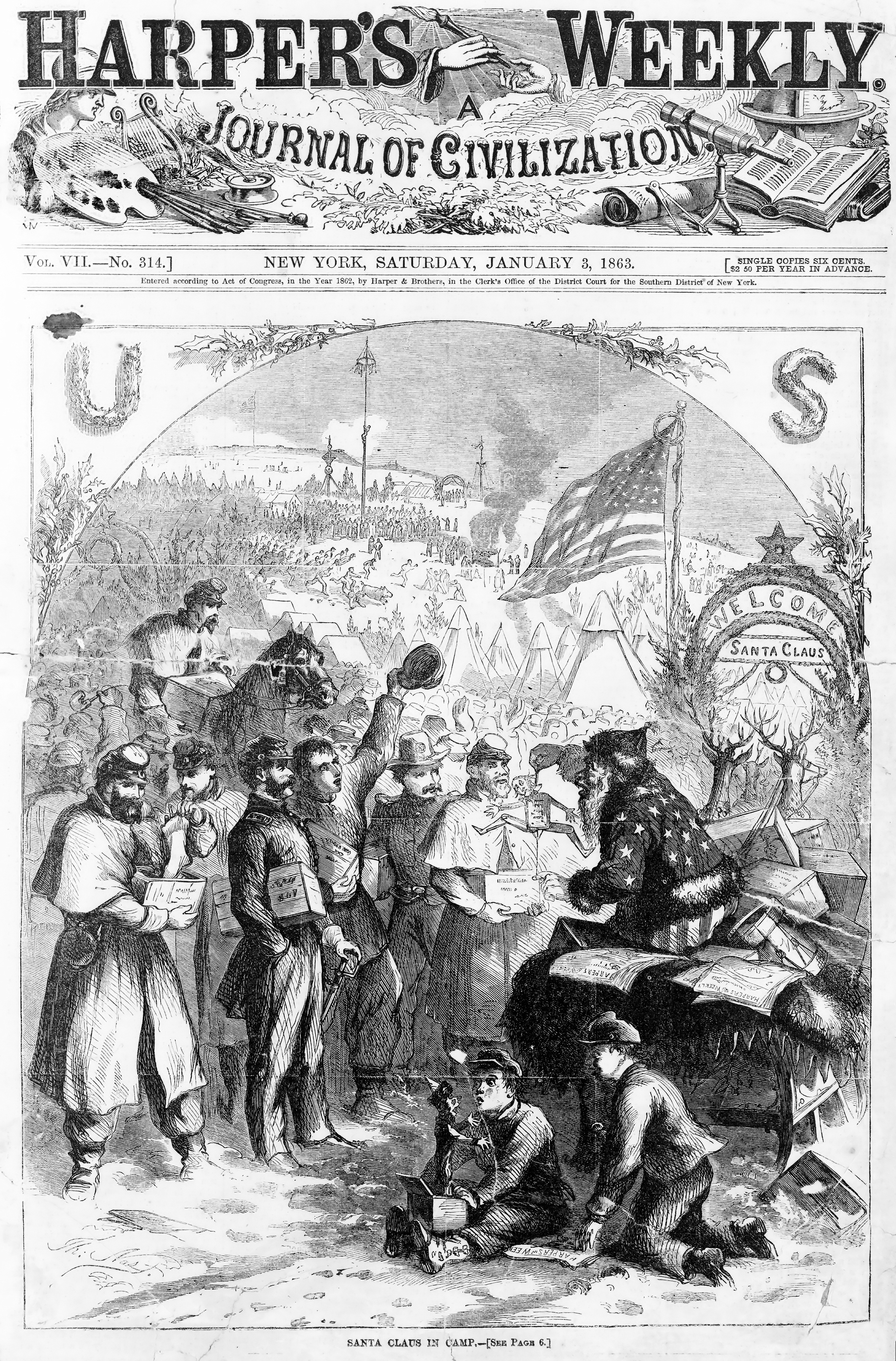
After that chance encounter with history, we headed over to Kenmore Plantation, which is one of the more famous historical sites in Fredericksburg that features a plantation house from the late colonial period that is pretty stunning. They were having a special tour highlighting the emergence of Christmas during the Victorian Era, and I learned a couple of cool things as a result. First and foremost, our modern vision of Santa Claus as an overweight, bearded man was illustrated by Thomas Nast for the first time during the Battle of Fredericskburg giving gifts to Union troops. In fact, the image was the cover of the January 3rd, 1863 Harper’s Weekly magazine. The first modern vision of Santa Claus that is still predominant in pop culture today. The image is also interesting in that it has Santa holding an effigy of Jefferson Davis being hanged. What’s more, Santa is wearing the colors of the Republic, he has a star studded shirt and striped pants that suggest quite clear which side he’s on.


Click on the image for a larger version
Nast went on to do a number of different illustrations of Santa Claus over the following years, and as the Civil War ended and the nation was re-united Santa went from his role as a Northern supporter to an inhabitant of the North Pole as a way of removing him from any overt North/South affiliations, at least within the States.

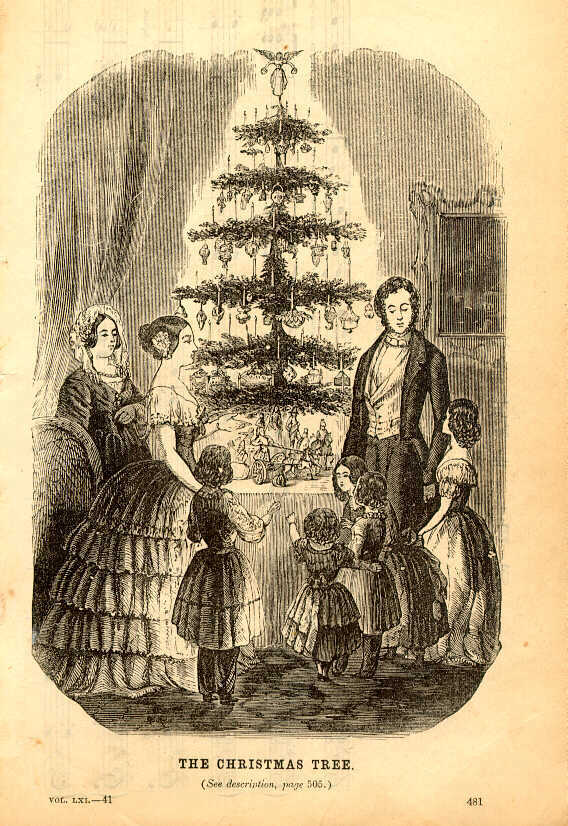
Another fascinating historical tidbit I picked up at Kenmore was the popularity of the Christmas tree in US culture was influenced to some great degree by Godey’s Lady’s Book. In 1950, they included a doctored version of a previously published woodcut of the British Royal Family around their Christmas tree. The republished image had removed Queen Victoria’s crown and Prince Albert’s mustache to remake the engraving into an American scene—an early historical photoshopping of the details to erase the royal elements to make it more palatable for American. The photoshopped version of the image of this family around a Christmas tree is considered by many the most influential promotion of a decorated tree as a widely accepted part of the Christmas celebration.

Posted in americana, Around Fred | Leave a comment

Fair Use of Images for Teaching, Research, and Study

Rene Magritte's "The Lovers"

UMW Art Historian Marjorie Och recently sent around this Press Release from the Visual Resources Association’s Intellectual Property Rights Committee that seems to take a strong stand in asserting a rather broad and liberal interpretation of the fair use doctrine as it pertains to using images for teaching, research, and study. The statement even encourages sharing!

Points 3 through 6 below are especially important for us here at UMW given that we are in the middle of creating the third iteration of an online exhibit for Marjorie Och’s Venice Seminar. And this Press Release becomes a welcome touchstone for how far can we go when incorporating reproductions of paintings, film stills, more contemporary images of Venice, etc.

Read the entire press release below.

PRESS RELEASE

December 7, 2011

Contact: Visual Resources Association Intellectual Property Rights Committee

VISUAL RESOURCES ASSOCIATION RELEASES STATEMENT ON THE
FAIR USE OF IMAGES FOR TEACHING, RESEARCH, AND STUDY

The Visual Resources Association, the international organization of image media professionals dedicated to furthering research and education in the field of image management, has released a Statement on the Fair Use of Images for Teaching, Research, and Study. The Statement describes six uses of copyrighted still images that the VRA believes fall within the U.S. doctrine of fair use. The six uses are: 1) preservation (storing images for repeated use in a teaching context and transferring images to new formats); 2) use of images for teaching purposes; 3) use of images (both large, high-resolution images and thumbnails) on course websites and in other online study materials; 4) adaptations of images for teaching and classroom work by students; 5) sharing images among educational and cultural institutions to facilitate teaching and study; and 6) reproduction of images in theses and dissertations.

This Statement on the Fair Use of Images draws from the academic community’s longstanding practice of relying on fair use for teaching and learning, and highlights one area – the use of images in theses and dissertations – where the Association believes the community should return to its previous practices of being more assertive. The Statement also relies heavily on recent fair use jurisprudence and aims to provide image users within the educational and cultural heritage communities with greater certainty when relying on fair use.

The Statement was developed by the VRA’s Intellectual Property Rights Committee, with the guidance of a Legal Advisory Committee of preeminent copyright scholars and legal experts, whose members include: Robert W. Clarida (Cowan, Liebowitz & Latman), Jeffrey P. Cunard (Debevoise & Plimpton LLP), Jackie Ewenstein (Ewenstein & Young LLP), Georgia K. Harper (Scholarly Communications Advisor, The University Libraries, University of Texas at Austin), Virginia Rutledge (PIPE Arts Group) and Jule Sigall (Associate General Counsel – Copyright, Microsoft; Formerly Associate Register for Policy & International Affairs, U.S. Copyright Office).

Maureen Burns, VRA President, noted the Association’s aims in producing the Statement: “An important aspect of VRA’s mission is to inform educational image users about, and to help form consensus around, best practices in the field of visual resources. These guidelines reflect a consensus (albeit largely unwritten to date) within the Association – and by extension the broader educational community – that the practices described within the guidelines are reasonable assertions of fair use. Our hope is that this document will help to ensure that images are robustly and widely used to facilitate uninhibited academic inquiry.”

* * * * *

For more information about the Statement, please visit the Intellectual Property Rights Committee page on the VRA website at http://www.vraweb.org or go directly to the document here: http://www.vraweb.org/organization/pdf/VRAFairUseGuidelinesFinal.pdf

Maureen Burns, Ed.D.

President, Visual Resources Association

Posted in copyright | Tagged , , , , , | 1 Comment

The World’s Craziest Educational Videos feat. ds106

I’m not sure the K12 Online Conference is over yet, and I’m also not sure where the discussion for that conference is taking place—anyone? But I did want to go ahead and share the entire 21 minute video we created for that session on the bava. The “we” I refer to is not simply my being polite or using the Queen’s English, rather it refers to the many awesome people who contributed to this video that I laid out in an earlier post.

So, if you are into masochism here is the 21 minute video that I can understand why no will watch—who watches 21 minute videos online anymore?

Posted in dtlt, presentations, video | Tagged | 4 Comments

Literary Journals class at UMW

The literary journals class has ben running at UMW since Spring 2007, and I’ve written about this course a couple of times before. The course was initially designed by Claudia Emerson, and the idea was to have the students break up into four or five groups and come up with an idea for an online literary journal and then see it through to an inaugural issue in 15 weeks. This means making a call for submissions, vetting the submissions, and creating an online space where it can all be experienced. No small task for a 15 week course, but in the six or seven times it has been taught every group has finished the course with a full blown online literary journal. Which I think is really quite impressive, and underscores what can be done accomplished the course of 15 weeks when you both push students and give them freedom.

For the last two semesters professor Michael McCarthy has taken over the reins of the course, and this semester’s crop of journals is really impressive. I tried to admonish them early on to stay away from prefab site creators like WIX—there was a move towards WIX last semester that I believe hurt the overall quality of the experience—and I want to say that that has pushed a number of groups to dig deeper in terms of the site design and user experience, but truth is all the credit really goes to professor McCarthy who has kept them on task all semester. This course is quite unique in that they work in groups almost the entire course, and so much of the work is self-directed—creating a series of milestones for the groups and keeping them on task and giving them regular and necessary feedback is crucial—and this semester’s journals are some of the best yet. Take a look for yourself.

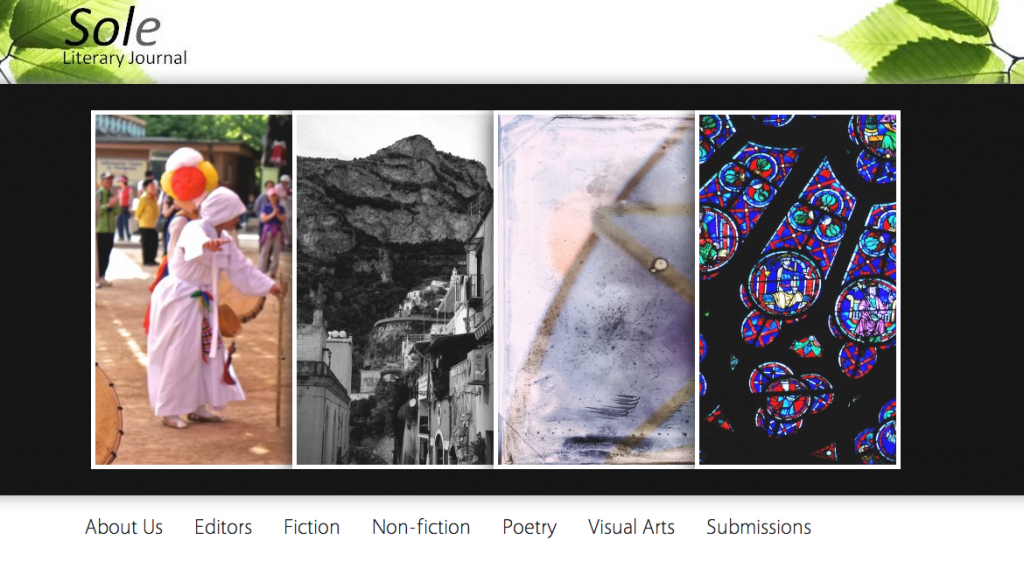
Sole Literary Journal

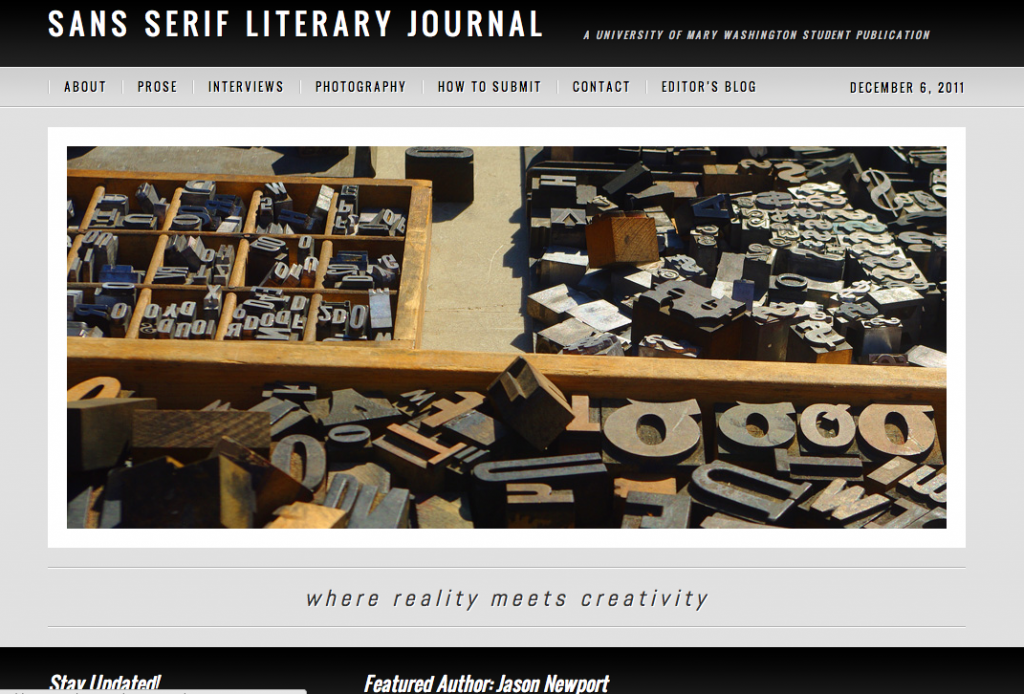
San Serif Literary Journal

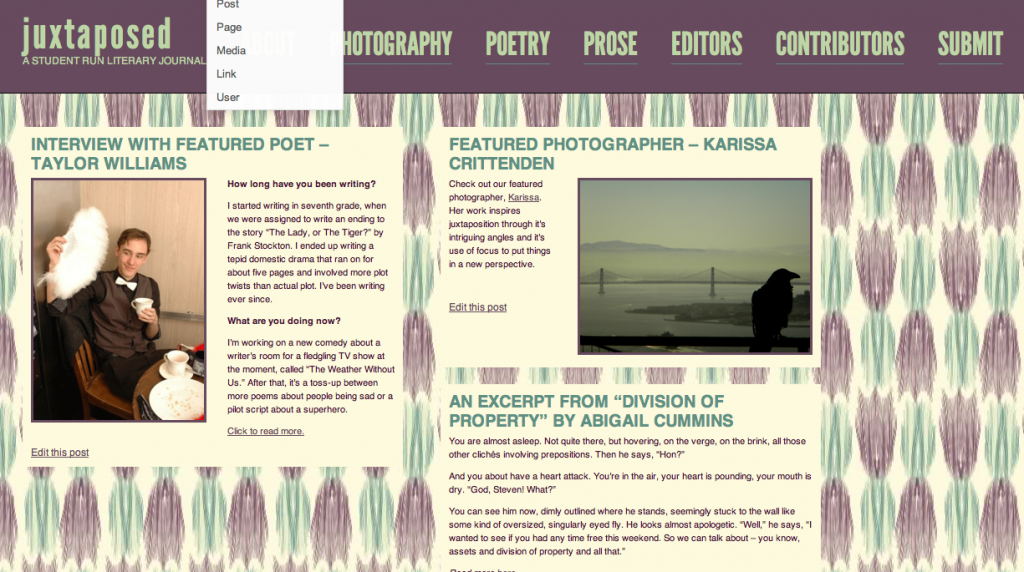
Juxtaposed Literary Journal

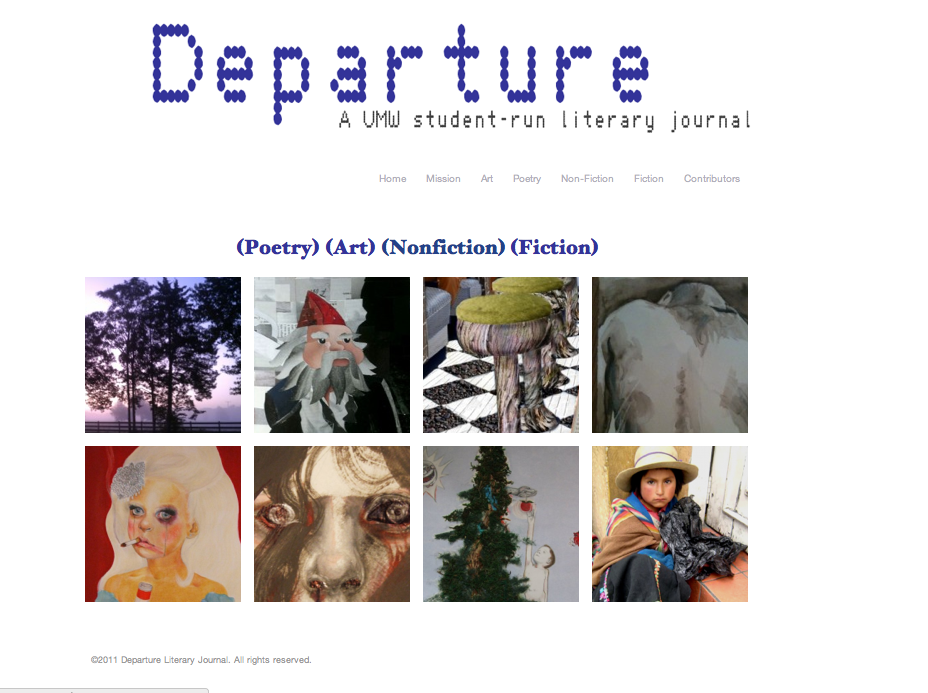
Departure

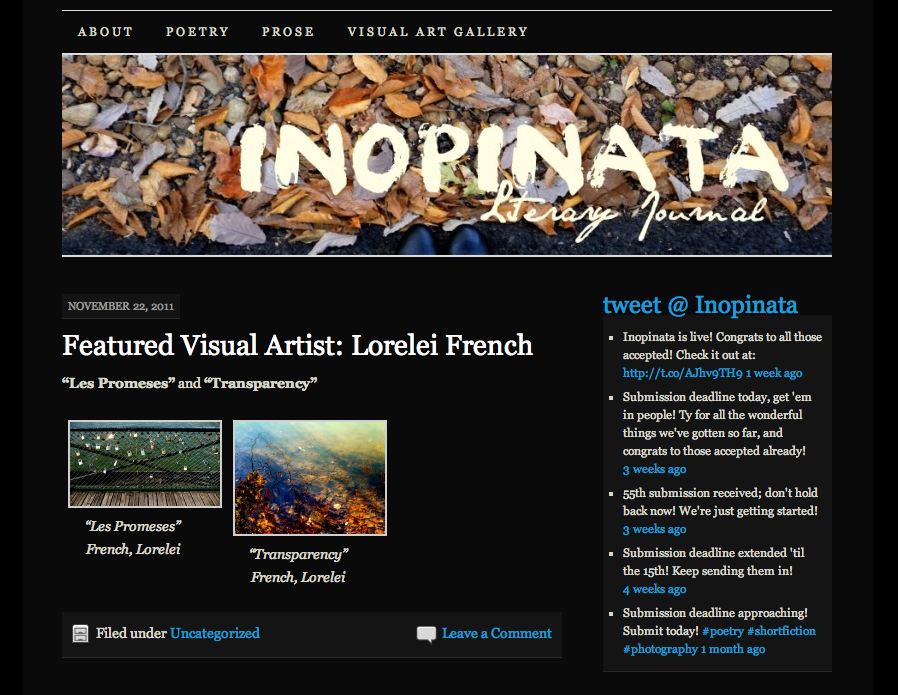
Inopinata Literary Journal

Posted in UMW Blogs | Leave a comment

EDUPUNK on Brazil’s MTV

EDUPUNK on Brazil’s MTV from Jim Groom on Vimeo.

Link to entire video on Brazil’s MTV site here

A couple of months ago Ronaldo Lemos contacted me for a brief interview for Brazil’s MTV. We talked about introducing new ideas of media into the classroom, re-thinking traditional nodes of institutional power, as well bringing a sense of one’s mediated cultural identity to what they do. I can’t say I sound all that smart given how eloquent and on point as Columbia university’s Daphne Carr, but I can’t help put find it trippy that I was part of a 15 minute pop culture sound byte on Brazile’s MTV because of a blog post I wrote almost 4 years ago. The web is a very weird and wild place, I do love it so.

Posted in edupunk, pop culture | Tagged | 5 Comments