Free All Sled Dogs

Image credit: Ralf ???????'s "Damon in front - Sled Dogs in Wallgau Bavaria"

Image credit: Ralf ???????’s “Damon in front – Sled Dogs in Wallgau Bavaria”

While editing the point-of-view video Miles took while he and his friend Ruggiero were sledding, I was thinking of a soundtrack. Given we were in Sud Tyrol I was toying with Kraftwerk’s fun fun fun on the “Autobahn.” Too slow. And then considered Depeche Mode’s “Never Let me Down Again.” Too British. And then I started thinking about the 3 strikes policy on Vimeo for uploading copyrighted material (and the fact I already have 2), I quickly reconsidered. I don’t exactly want to lose my Vimeo account just yet, so I started browsing around the Free Music Archive for songs with the term Sled in them. I found a band called Snowboarder out of San Francisco that has a song called “Sled Dogs.” I gave it a listen, and it was perfect. I added it to the video, and it is now a cinematic masterpiece of epic proportions, like everything I create.

Moral of this trite story? As much as I love to break copyright online, having the ability to quickly search and discover a perfect song openly licensed through the Free Music Archive was pretty awesome too. I still refuse to give into the licensing rhetoric entirely because so much of the pop culture material we are forbidden to re-use and critique is antithetical to a free-thinking culture. But for a brief moment it almost made me want to stop uploading copyrighted material, but then I got my wits about me 🙂

Posted in Uncategorized | Tagged , , , , | Leave a comment

Reclaim Records

The idea of Reclaim Hosting as a kind of independent record label for ed-tech is an idea I’ve been playing with since a talk at Davidson College more than a year ago. This past fall Adam Croom and I explored it further in relationship to Indie Ed-Tech as a movement, which was punctuated by Audrey Watters epic, aspirational post on Indie Ed-Tech in December. About the same time I was talking with Bryan Mathers about using the logo he designed for us, which I love.

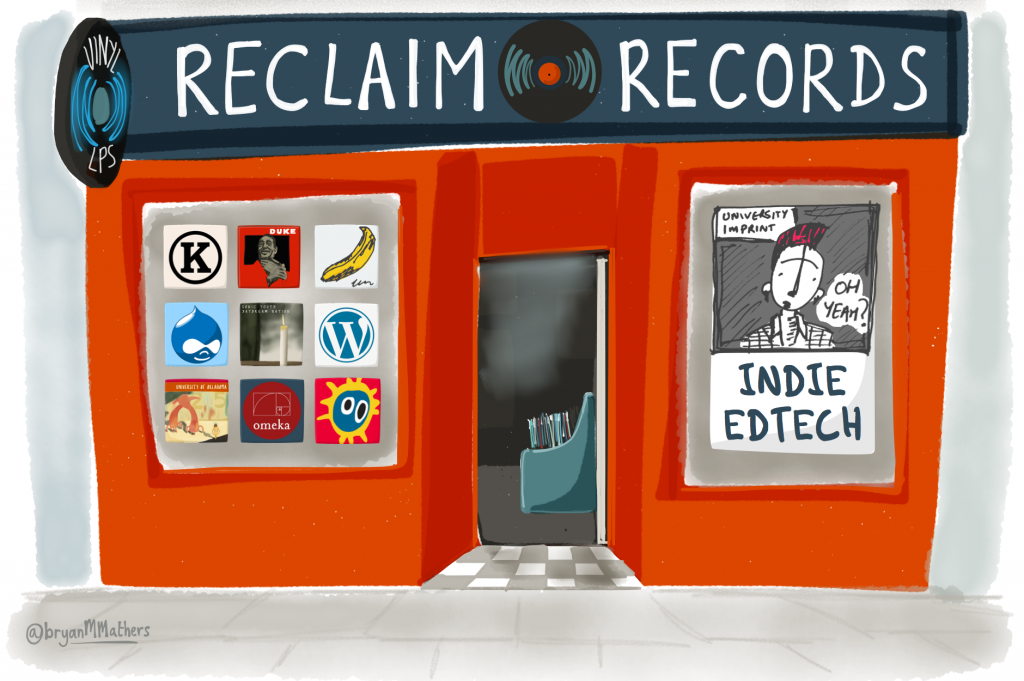
It’s pretty apparent from our new logo that we have decided to run with the whole independent Ed-Tech  idea. But when Bryan and I got to talking about the idea it expanded beyond just a logo or a label. I wanted a sense of physical space where you would browse and explore the work of others, not unlike a record store. So we started talking about a visual series that would establish a sense of a cultural hub for the various work happening around ed-tech. If we run with the independent music scene, one such place could be a venue where bands play (I’ll return to this at length in a subsequent post) and another could be a record store. I recently blogged about the band Unwound (a favorite from the 1990s) because Reclaim named a server after them—another Reclaim first! One of the videos I linked to in that post was a short of Unwound performing live at the San Diego record store Off The Record in 1997. A good example of a record store being both a distributor and venue for indie music. So what if we had a Reclaim Records? Maybe an establishing shot of the facade of the building, Bryan?

shop front

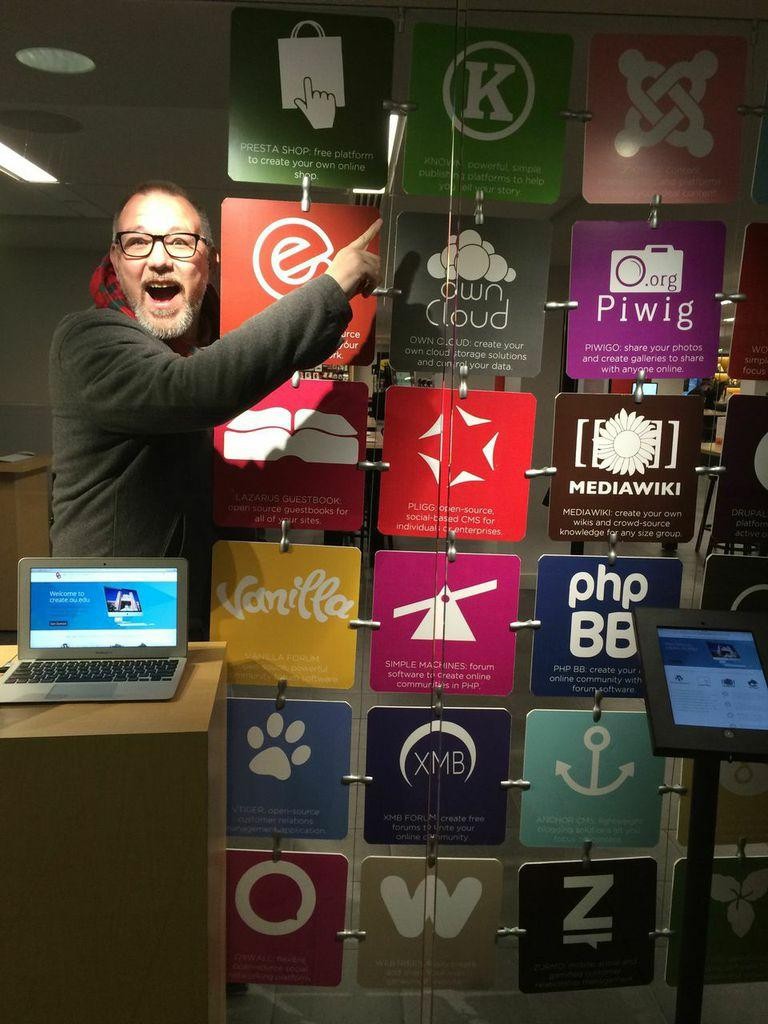
So awesome, what a cool collaboration we have going with Bryan right now. And you’ll notice the albums in the window, everything from Duke Ellington to The Velvet Underground to Sonic Youth to The Flaming Lips, interspersed with the various icons of popular open source applications used at Reclaim. An idea resonant of the window display for OU Create in the University One store at the University of Oklahoma.

Oklahoma University One Domains

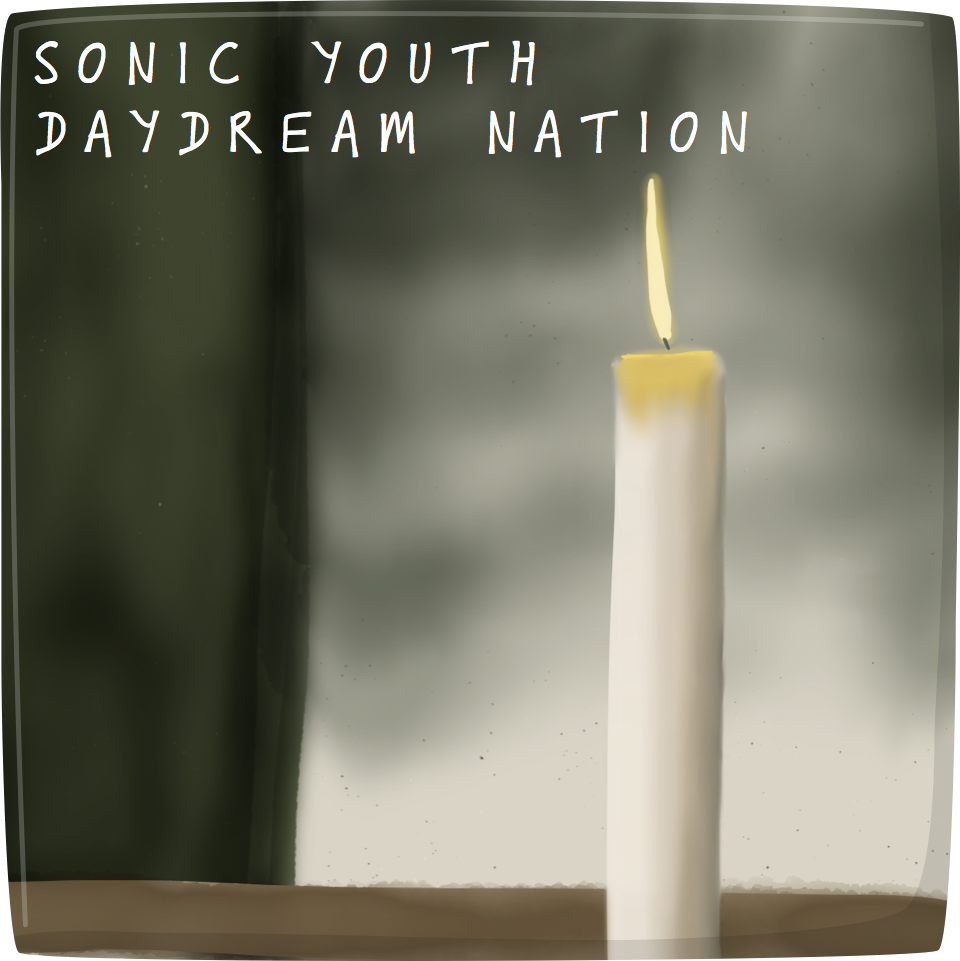
In fact, that window display in the Reclaim Records sketch Bryan did led us to start talking about the display not simply being representative of iconic applications or independent albums such as Sonic Youth’s Daydream Nation

sonic youth

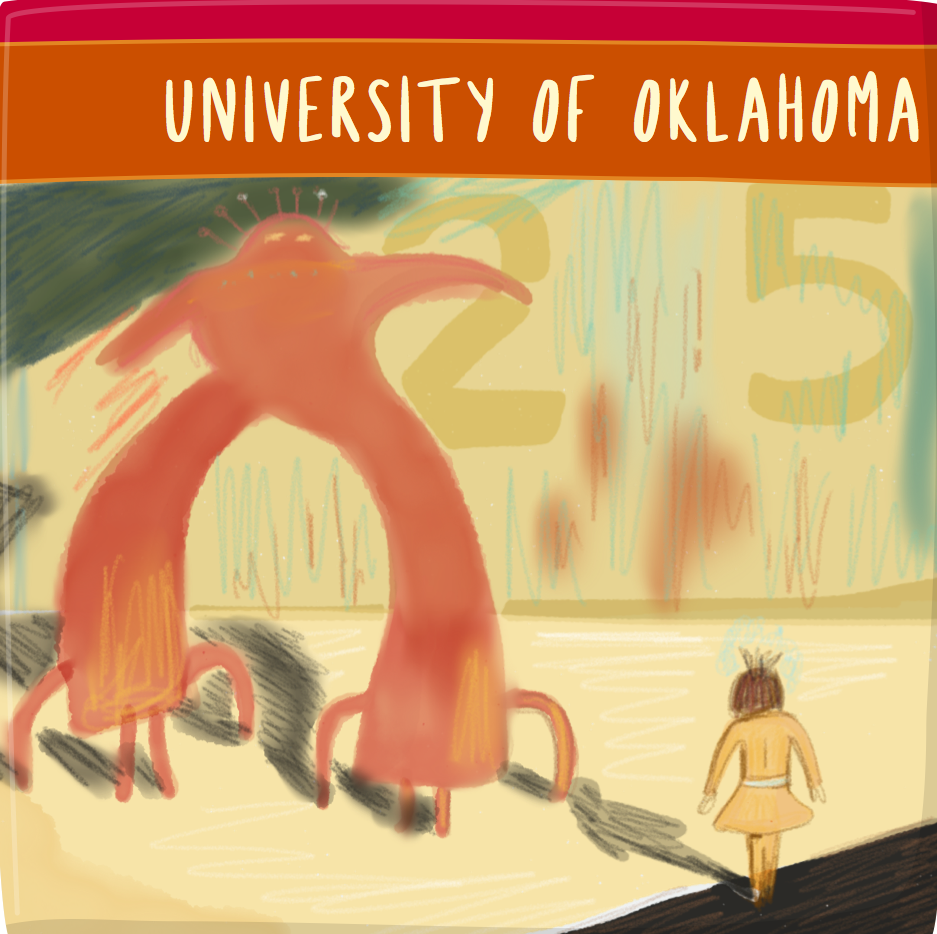
…but also as an expression of the independent, cutting edge work happening at various campuses. The idea being that Reclaim Records is a place that highlights the awesome work happening at various schools through a catalog of sorts. So, to stick with the example of Oklahoma, Adam and I have talked about the fact that The Flaming Lips are a local band from Oklahoma City, helping to influence and shape the alternative culture of the city. When visiting last January we went to check-out their art gallery/performance space The Womb in OKC.  So, while talking with Bryan about this idea, he mocked up an example of a cover of Yoshimi Battles the Pink Robots and re-titled it University of Oklahoma.

yoshimi

But simply imitating existing album artwork wouldn’t be the point, it’s the idea that interested groups, universities, etc. would submit their own catalog entry and artwork. What would a SPLOT album cover look like? What would BCcampus’s OpenEd album look like? What would Lumen Learning’s album look like? What would the ALTLab at VCU’s Rampages artwork look like?

Rampage_Video_Game

What’s more, Reclaim Records could even syndicate the awesome work happening in these various communities. Once again using OU Create as a model, what would if features blogs like This Week on OU Create were aggregated as part of a schools catalog at reclaim Records? Extrapolate on that and you have curated feeds from scores of universities that frame the work they’re doing based on principles, an aesthetic, and a broader sense of sharing their vision with a community. That’s right, a scene of sorts that asks ed-tech folks to imagine their work beyond the corporate labels of tools and products and inspire that work with a mission.

record stack

Such an approach could open up all sorts of possibilities for encouraging a community of experimentation, alternatives, and diverse approaches to the work we do. Not to mention building a broader creative approach to the work we do just seems like more fun. I love trying to push on this metaphor of an independent Ed-Tech scene of sorts. I understand all metaphors have their limits, but it’s the spirit of the work that grounds any movement—and if we approach it from a position of fun and creativity there is much to be gained.

Posted in reclaim | Tagged , , , , , | Leave a comment

Sunday in the Mountains

Bella Vista

I’ve been in Italy with my family for almost 5 months now. The time has flown by, probably because we’ve been having a blast. I’m really starting to get settled into my life here. In fact, pretty soon it might be hard to get us out of here. Yesterday we went to Val di Funes in Alto Adige, which is part of the Trentino-Alto Adige region. The Alto Adige province is about 20 minutes north of Trento, and Funes is about an hour north. Alto Adige is also known as Sud Tyrol, which is what the Austrians and Germans refer to it as. It’s an interesting border zone of Italy because they predominantly speak German, although the residents are often fluent in both Italian and German. You’ll get a gross got before a buon giorno every time.  The history of the province is fascinating: it was part of the Austrian-Hungarian empire but became part of Italy after World War 1, during the rise of facism Italy did everything it could to suppress the speaking of the German language in the region (the irony!), but during World War II after 1943 when the Allies had taken the Southern part of Italy, the Third Reich annexed the entire region back into Germany, only to return it again to Italy when the War ended. Lotta ins and outs, a very complicated case.

Odle Group

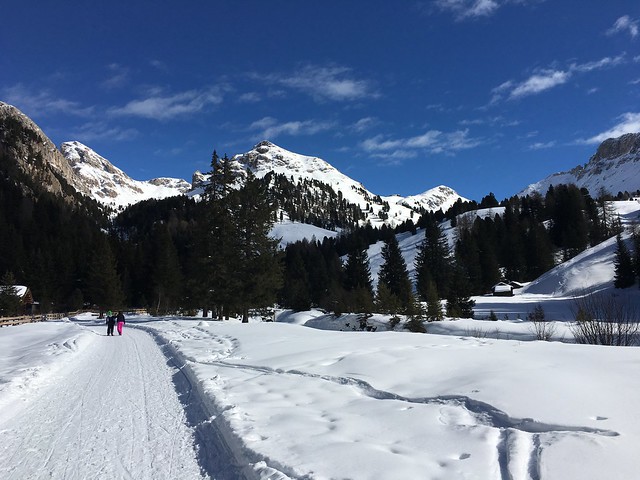
But we weren’t going to Alto Adige on a diplomatic mission, we were going to sled! Like Trentino, this province is famous for it’s mountains, and we headed to a group of Dolomiti mountains (a particular formation of mountains pictured above) called the Odle in Val di Funes. The spot was spectacular, and it caters to sledders which is fairly uncommon given the predominance of skiing. The trick was you had to hike up the mountain to sled down, no small task.

The long way up

But absolutely stunning!

Panorama on the way up

And I couldn’t help but play with the pano feature on the iPhone camera to try and capture and distort the natural beauty of the place:

Coming and going

Pano

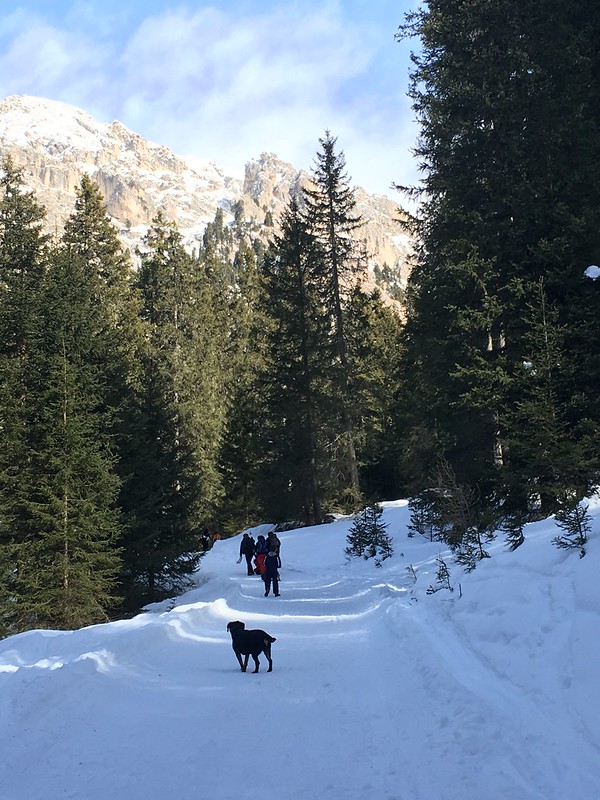
We even took Daphne dog, who has proven to be a great companion on our hikes in the mountains.

Daphne in her element

And once we got to the top, we had an awesome lunch at an Alpine hut—called a malga in Italian.

The malga

We got hot soups and sandwiches, and I highly recommend the canederli in brodo. It’s similar to Italian Matzoh Ball soup but with the  important difference that it is made with pork.

Canederli

After we enjoyed our meal, the requisite coffee, and a bit of repose—we started down the mountain. We only had two sleds because the $5 rentals were all gone, so we had to improvise. We split the two sleds across the five older kids (there were seven in all) for the first leg of the trip down. Tommaso trekked down with me at least part of the way, but more on that shortly. In a rare moment of faith in my offspring, I let Miles use the iPhone to record his trip down for his friends in America. I produced a sped up and slightly edited version of the video and embedded it below. It gives you a sense of how long and wild the ride down is, and this was only the first of two separate sled runs that are part of this trip—the second was even crazier.

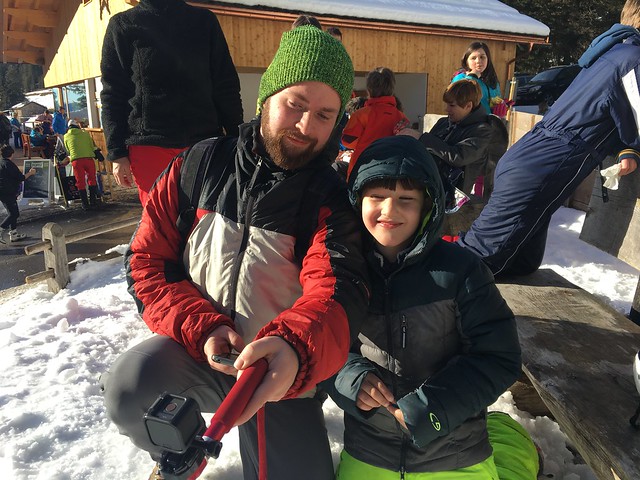
Tommaso was not thrilled that he was left behind, so half way down Anto asked a benevolent stranger on a sled if they would take him down a ways, which this awesome man gladly agreed to. His name was Alessandro, and he and Tommy became fast friends. They even took a selfie with a selfie-stick together when it was all over!

Selfie with Tommaso

Once we got down to our first stop we hung out for a bit, so Anto could explain the terrain to me.

Mapping with Anto

And the kids and their friends (the greatest part about being in Italy is hanging out with Anto’s friends and family!) could pause for a group photo.

The Three Families

We were now back where we parked the cars and started the hike. But the trail goes on for a while longer, and they now had sleds available for rent again (just 5 euros a sled). So we got another sled and then broke up into pairs: Miles and Ruggiero; Tess and Mathilde; and Tommaso and I. We then proceeded to head down the rest of the mountain on sleds where we would be met at the bottom—and that was freaking awesome. Barreling top speed down the sled trail singing Gangnam style with Tommyboy, I haven’t had that much fun in a long while. Unfortunately I’m not nearly as confident (or mendable) as Miles and Tess, so there’s no video of our ride down. You’ll just have to believe me on the awesome part. I do have some indirect evidence of how much fun it was though, Tommaso fell asleep on Daphne less than 5 minutes into the ride home!

A Boy's Best Pillow

Life’s very, very good in Italy. And nothing like a Sunday in the mountains to bring that fact into strong relief.

Posted in Reclaim Italy | Tagged , , , , , , , , , , | Leave a comment

In service to CUNY’s mission as a public university

This post is part of a new series I will be writing here on the bava that will be cross-posted to the CUNY Academic Commons News blog. That’s right, I have finally made it as a professional blogger. You think Reclaim Hosting was paying for my lavish mountain retreat in Italy? Hell no, I’m high rollin’ CUNY-style. There’s a history, context, and a few more bad jokes, but I’ll indulge all of that in a separate post about the gig, until then the bava blog abides for cash money!

A couple of months ago Jill Cirasella wrote a post introducing the recently launched Academic Works site on the CUNY Grad Center’s Library blog.

Why You Should Ditch Academia.edu and Use CUNY Academic Works

Academic Works provides an open repository for access to the research, scholarship and creative work happening around the City University of New York. I like this bit of the way they describe themselves, “In service to CUNY’s mission as a public university, content in Academic Works is freely available to all.” Service, mission, free, and open—add labor struggle and it’s perfectly rounded off to CUNY. What strikes me about this post, and what pulled me into the very awesome Grad Center blog, was the title: “Why You Should Ditch Academia.edu and Use CUNY Academic Works.” It may have been inspired by Kathleen Fitzpatrick’s great post reminding scholars about the limits of venture capital driven sites like Academic.edu, a topic which the Atlantic reported on a couple of months later this past December, noting that the academic social network was feeling it both from traditional academic publishers like Elsevier as well as from the academy itself, in this case referencing Fitzpatrick’s post.

In fact, Fitzpatrick is not simply throwing stones at Academia.edu—although I would have no issues if that’s all she were doing— she actually has led the charge at MLA to build their  own academic social network,  MLA Commons.  The Commons network links members of the Modern Language Association and provides an open source platform for scholarly communication and collaboration. Additionally, the network is connected with CORE, an open-access repository through which members can add their work, as well as share it  with other members of the network. In a rare moment of foresight in educational technology platforms, the MLA is working towards building a network outside of the venture capital-driven bubble.

So, what’s the punch line? Well, the MLA Commons is built on top of Commons in a Box, a product of the work and ongoing funding of the CUNY Academic Commons. What I have always loved about the edtech development work happening at CUNY—and why I jumped at the chance to join the team—is that for the last 6 or 7 years they have been experimenting, building, and investing in their open platforms. Recently the importance of this investment is coming into sharp focus as we begin to realize (yet again) the venture capital funded web is not operating in service to the CUNY mission referenced earlier. Let me repeat and play on that mission here once again for effect: “In service to CUNY’s mission as a public university, the technology that drives the Academic Commons is freely available to all.” This is true. What’s more, it is funded through grants and public monies which means they don’t sell your data, they don’t try and make you pay to promote your uploaded papers, and they won’t have to answer to profit-driven investors for the $17 million in venture capital that they’ve raised and are beholden for.  So, yeah, ditch Academia.edu, and start supporting a sustainable, local future for open access scholarship at you local institutions and professional organizations.

I have a lot more to blog about the CUNY Academic Commons, but I wanted to try and tie my first post closely to the mission undergirding a public institution like CUNY, in hopes that this will drive my future blogging for the Commons.

Posted in Citation Needed, It Came from the Bava, open education | Tagged , , , | Leave a comment

This is why we can’t have nice things in Virginia EdTech

this-is-why-we-cant-have-nice-things1
During my time at OpenVA one of the things I really wanted to see happen was various institutions around the state working together to share technical infrastructure. How could we think about scaling something like Domain of One’s Own for the VCCS? -or share that model with Virginia Tech or Northern Virginia Community College? Even beyond that, how could we rethink sharing machine images of various tools and applications these schools currently use to give all Virginia schools greater access to a diversity of educational technologies. A clearing house for educational technologies that might be inspired by and built on the model of something like AWS.

I moved on from OpenVA and UMW,  but it was pretty clear this was never really going to come to fruition in Virginia for a few reasons:

1) Virginia is not a system, there is no way to organize something like this centrally beyond good will.

2) OpenVA was from the beginning a political committee, and it increasingly became more so. And while there’s a lot of rhetoric about innovation and experimentation in politics, at the end of the day given a choice between supporting an experimental, multi-institution tech incubator and saving students money on free textbooks, the latter becomes a pretty easy choice. Particularly in a climate where tuition continues to rise due to lack of state funding.¹

3)  And if you are not saving students money, then your putting it in the pockets of corporations. There is a really bad precedent of the colossal waste possible when the state funds a collaborative tech initiative at universities in Virginia, it’s called 4VA:

The presidents of George Mason University, James Madison University, the University of Virginia, and Virginia Polytechnic Institute and State University organized 4-VA in 2010. Each university contributed funding to establish the 4-VA Office and hire staff. Mr. John Chambers, CEO of Cisco Systems, Inc., supported the presidents’ vision and sponsored a great deal of technology to seed the early projects. Virginia’s legislature continues to provide project funding. In late 2014, Old Dominion University became the newest member of  4-VA.

So, four universities—more recently a fifth in ODU–funded a series of CISCO video conferencing rooms at JMU, UVA, Virginia Tech, and GMU. This was Governor McDonald’s vision (remember that crook?) of HE and the corporate world working together. CISCO provided the equipment, and universities paid for staff and upkeep of that equipment. In 2014-2015 the state funded 4VA at the tune of  $3.6 million a year—60% of which went towards funding the infrastructure of the over-engineered video presence rooms at four of the biggest, wealthiest universities in the state.
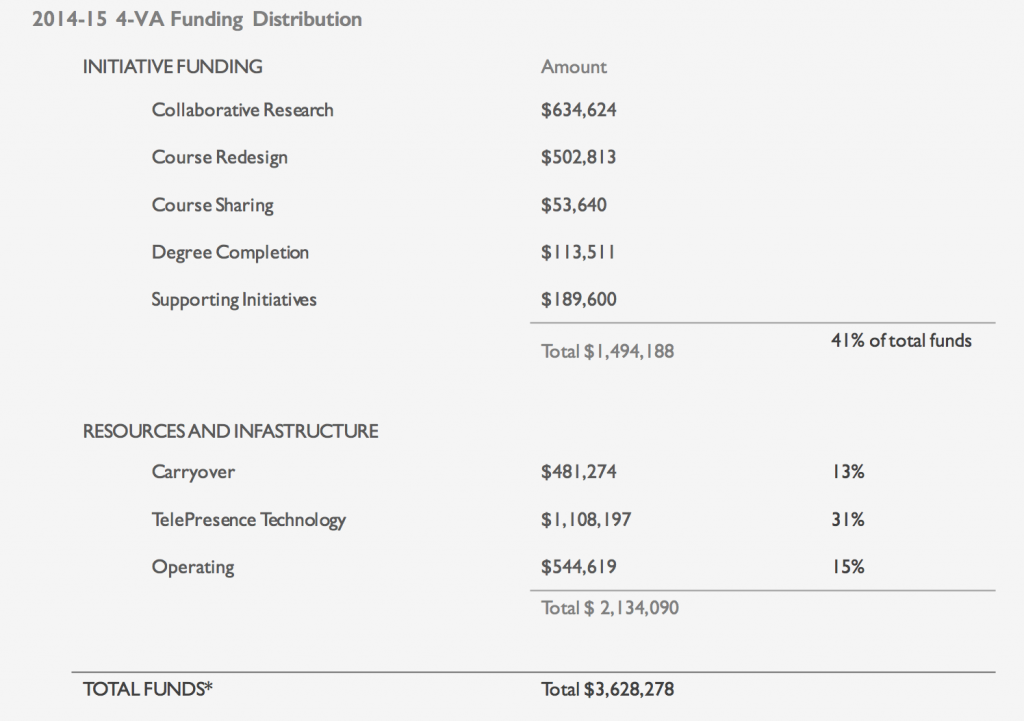
2014-2015 Financial Statement for 4VA

2014-2015 Financial Statement for 4VA (click image for full 2014-015 executive report)

In terms of impact. Video conferencing? Really? The program switched up to start providing grants and course redesigns, but even that was crazy. 15 course redesigns in the 2014-2015 academic year at the tune of $500,000, or $33,000 for each course redesign—those are almost MOOC-like costs 🙂 In short, 4VA was an brilliant example of how corporate and state collaborations ultimately become a drain on the taxpayer, and as much as $2 million in infrastructure costs squandered on technology you could reproduce well-enough with virtually free applications like Google Hangouts, Skype, or even appear.in. Hell, pay the couple of hundred dollars and get Zoom. This program has been funded since 2010, and at the 2014-2015 funding rate it would have cost the Virginia tax payers upwards of  $20 million dollars. What’s the return on investment? $2 million dollars in grants? Well, then you are only 18 million in the hole 🙂 What a joke.

This is why we can’t have nice things in Virginia EdTech.

But I digress, this post was about that original vision of sharing actually useful infrastructure and technology tools across the Virginia colleges and universities, and it turns out our neighbors to the south, North Carolina’s state university system, is trying something like this on for size. According to this article on Medium by Matthew Rascoff, the project lead for the University of North Carolina System, the UNC Learning Technology Commons

…is a system-wide effort to curate an annotated catalogue of digital learning products available for accelerated purchase by the 20,000 faculty members of the UNC system, and to build a community of educators who share (anonymized, aggregated) learning outcomes and user experiences with those products.

So, vendors could go through what they promise is a painless process of applying to add their product to this catalogue of available tools, and have faculty write reviews and share uses of how they are using the tools. The platform this process happens in, Learning Trails, was compared to Trip Advisor for edtech technologies in this EDuSurge article –effectively a technology purchasing commons for the North Carolina system. In fact, a tool to make the purchasing of edtech more seamless across the state, enabling the North Carolina University system to leverage their aggregate buying power to push down costs, which helps smaller campuses who may not have the numbers to negotiate a better deal. Dealing with UMW’s purchasing when trying to build a Domain of One’s Own was a lesson in how crazy that process can be, and streamlining that is more than welcome.
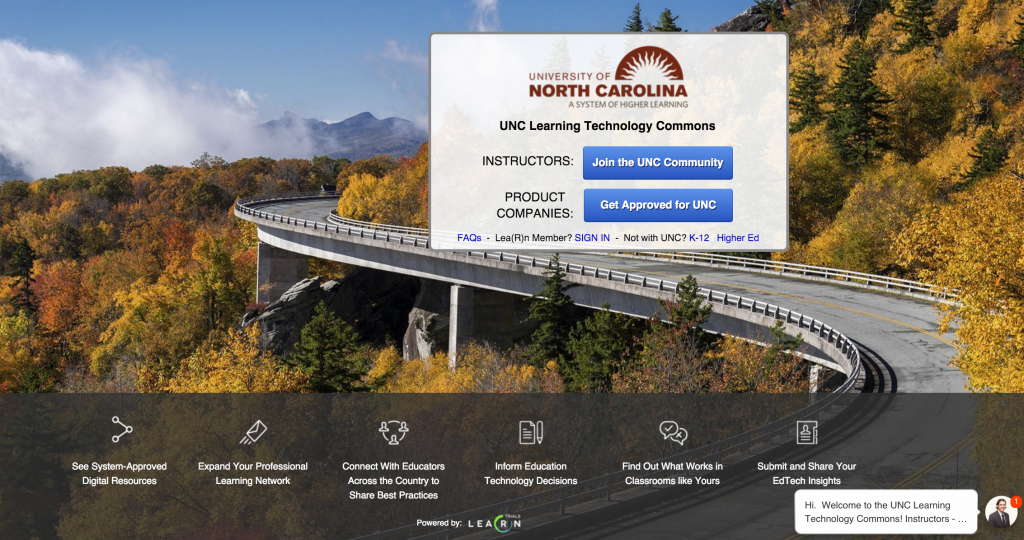
Screenshot 2016-02-18 21.28.19

One of the small victories Tim and I had as we were walking out the door of UMW was to finally get a campus contract for UMW with Amazon’s AWS, something the Virginia’s Governor’s office was interested in given they were exploring vehicles for purchasing AWS and were looking at our contract as vehicle for just that.² UNC Learning Technology Commons seems to be aiming to make that process more discoverable and streamlined, and that is pretty cool if they succeed. It would be nice if AWS was a service any school in North Carolina could access through such a system using a pre-negotiated rate and set of terms and conditions, which would enable the state of North Carolina to define more broadly the relationship they have with vendors around increasingly important questions like data privacy for students and faculty.

The idea of a marketplace for purchasing in edtech is not necessarily the sexiest idea when it comes to innovation and experimentation on the surface, but it could be a powerful mechanism for the faculty in the North Carolina system to create connections and share resources around the various tools they are using, as well as the why and how. What’s more, it could provide simple ways to spin up new infrastructures, both big and small, across the state to provide a more heterogenous ecosystem for edtech options. Interesting stuff, I might just have to go and add Reclaim Hosting to the UNC Technology Learning Commons because North Carolina needs us more than they know!!!

________________________________

  1. It’s hard to compete with cost saving arguments of OERs in the political arena. This approach has gained significant political capital because politicians can say “we’re saving students money on textbooks” while at the same time cutting funding for state schools. Folks will argue these are two separate issues, but I find that hard to swallow. Content truly is infrastructure for a contingent workforce 🙂
  2. You can have a rider on these purchasing contracts that enable other Virginia agencies to use this contract to get a similar set of terms and conditions that have already been vetted. In effect, it vets the vendor for the system, but there is no way to know this in Virginia unless you study the dark art of purchasing bureaucracy.

Posted in Instructional Technology, reclaim | Tagged , , , | Leave a comment

Changing Account Domains in WHM

Twice over the last two days I have gotten requests to change the domain of a web hosting account in cPanel. It’s enough steps that it’s not simple to tell someone how to do, and the fact is only server admins can do it. You need access to the Web Hosting Manager (WHM-the host of the hosts) interface to do it, so this tutorial is really for folks at various institutions (more than 30 now!) running their own Domain of One’s Own package, as well as anyone who happens upon it. Welcome!

For the purposes of this tutorial you will need access to WHM (the management console for a cPanel web hosting server) and WHMCS (the client and billing management system that sits on top of cPanel).

You can make the below changes in WHM or WHMCS first, the order you choose to do it will not effect the outcome.

WHM

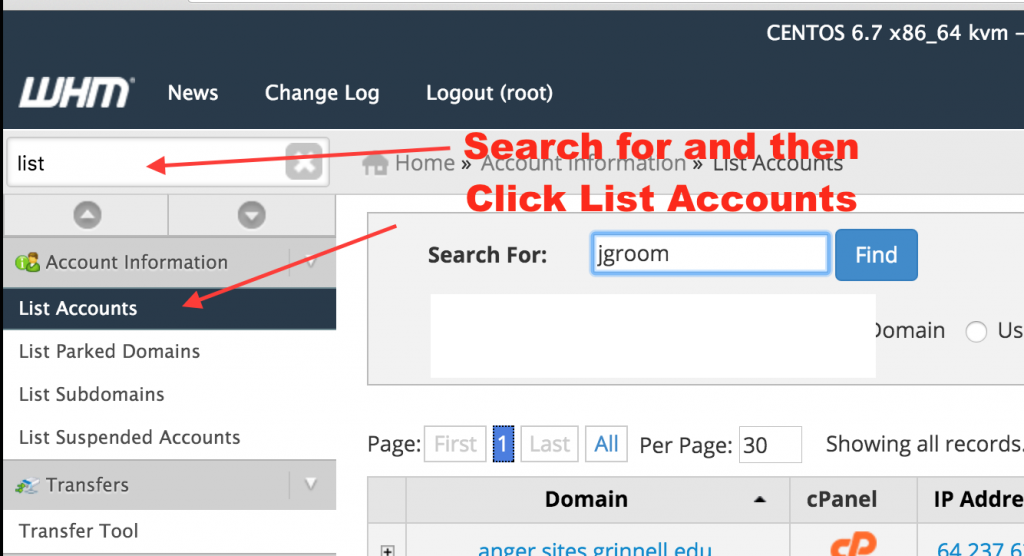
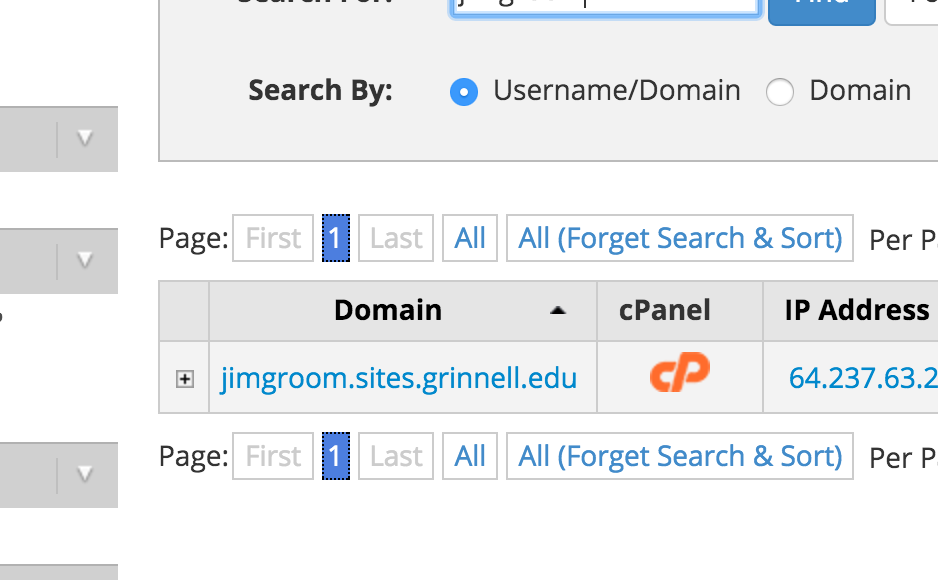
I start with WHM, once I am in there I use the quick search tool to find the List Accounts section. From there I click on List Accounts and search for my domain.
Screenshot 2016-02-12 16.56.10

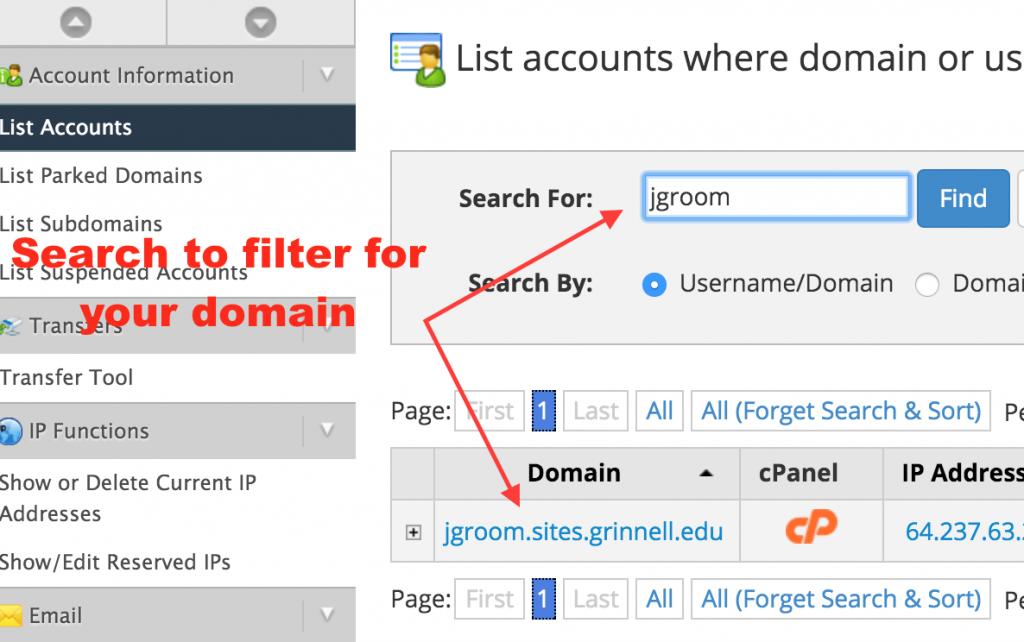
Once I search my domain the web hosting account I need to change the domain of will be filtered.Screenshot 2016-02-12 16.56.28

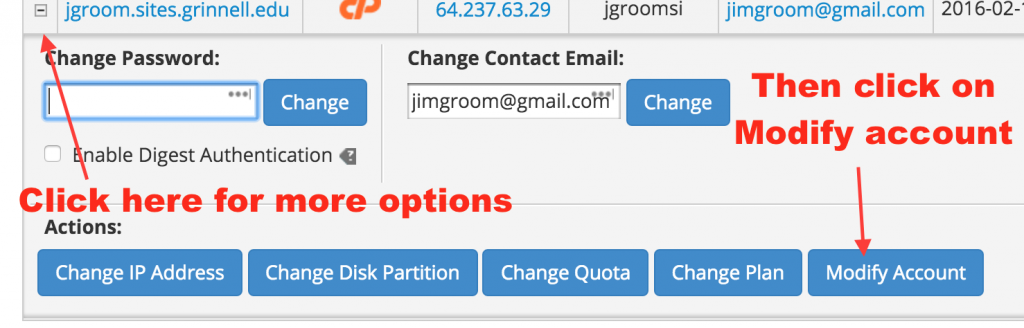
Next step is to click on the more options area (a + icon) to get the various options for modifying this account. The one I need to change the domain of the account is Modify Account.Screenshot 2016-02-12 16.56.45

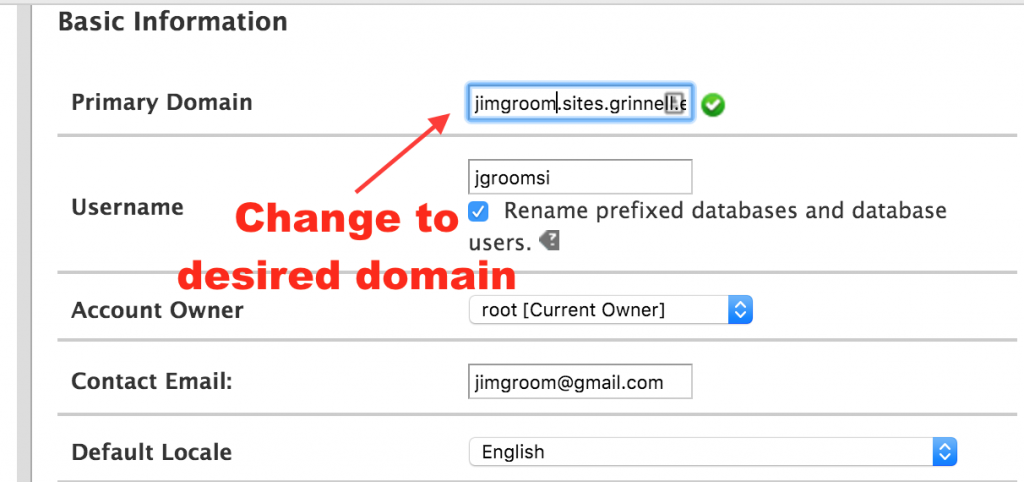
From there I will be taken to a screen with many of the account’s settings, including the first one: Primary Domain.

Screenshot 2016-02-12 16.57.02

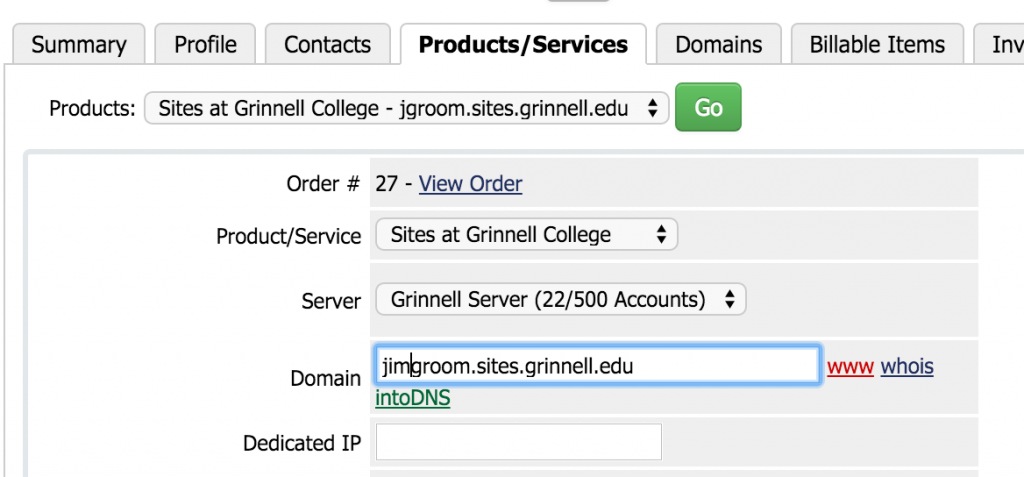
Change this field to the domain you want, in my case jimgroom.sites.grinnell.edu rather than jgroom.sites.grinnell.edu

Screenshot 2016-02-12 16.57.13

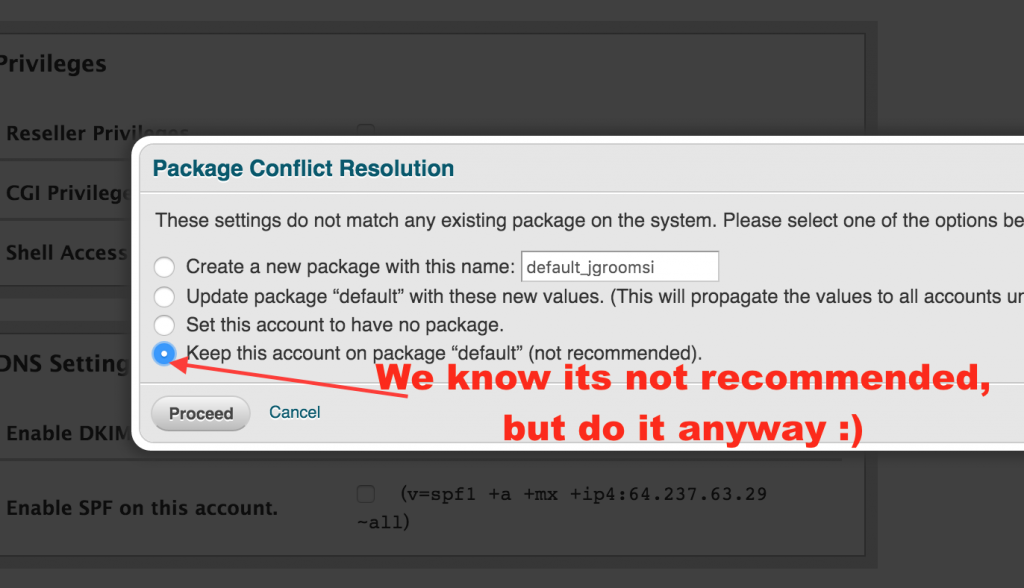
After that change the changes, and be sure to select the “Keep this account on package ‘default'” -even though it is not recommended-and click ProceedScreenshot 2016-02-12 16.57.25

After that you should be all done in WHM. It is important to keep in mind that when you change the domain for the site applications you have installed in the hosting account may still need to be updated manually. This goes for everything from static HTML files to databases, changing the domain of the account WILL NOT change the domain in the links of files and databases for any applications installed.


Screenshot 2016-02-12 16.58.52

WHMCS

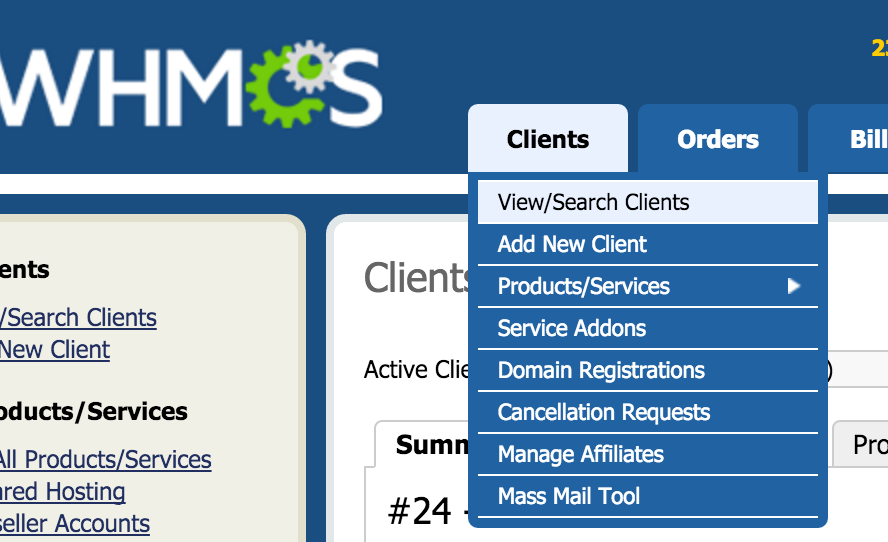
That’s all you have to do with WHM, and WHMCS is just as simple. You login and go to view/search clients and fine the account for the domain you want to modify.Screenshot 2016-02-12 16.59.19

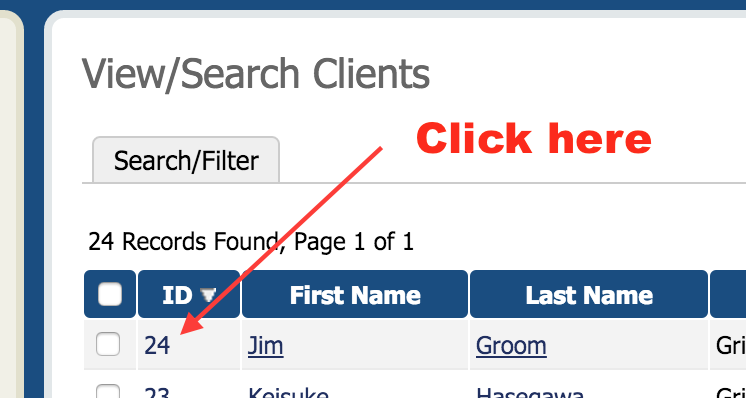
Once you do you click on the number next to the name to view the client’s account.

Screenshot 2016-02-12 16.59.35

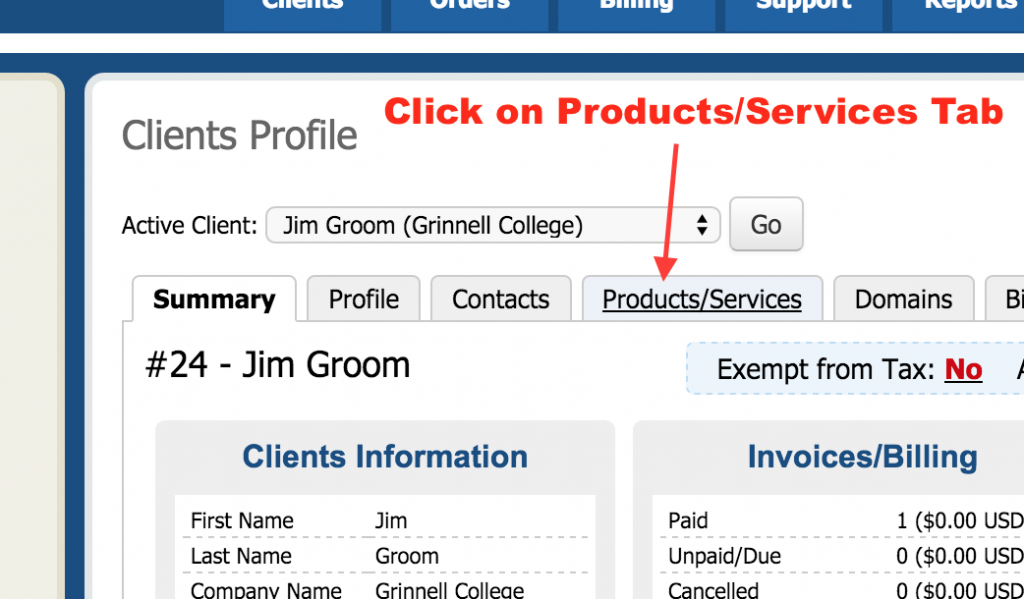
From there you want to click on the Products/Services tab in the client’s account.

Screenshot 2016-02-12 16.59.46

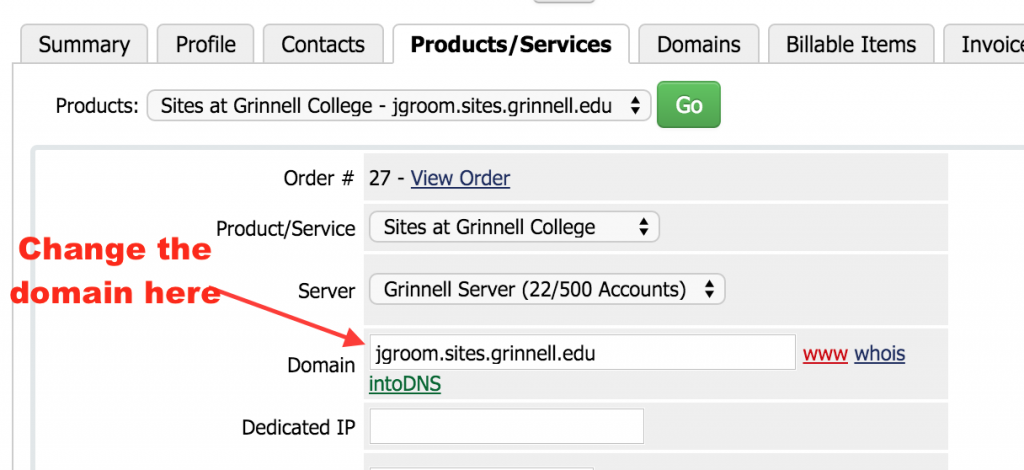
From there you will see the Domain field with the old domain.

Screenshot 2016-02-12 17.00.00

Change this to the appropriate domain and click save. Screenshot 2016-02-12 17.00.13

After that, your account should have a new domain, and you may (or may not) need to make the appropriate changes in any applications currently running on your hosting account.

Screenshot 2016-02-12 17.02.25

Posted in reclaim | Tagged , , , , | 1 Comment

Archiving with Amber

3595956498_31a2e646b2_z

Image credit: Paul Ritchie’s “Broken Web Connections? Welcome To 2009…”

I was reading John Johnston’s blog this morning (gotta keep up with my European peeps) and his post about fighting linkrot hit home. Every morning I wake up to an email letting me know a few more links on the bava have died, I pour out a little Louis and mourn the day. As of now I have 2,801 posts with 19,583 links. Of those links, 2721 are broken. That’s just about 15% of all the links on the bava lost to the annals of time. BASTARDS!!!

While I was reading John’s post about linkrot I was reminded of a conversation I had with Kin Lane and Tim Owens over a year ago about how Kin has a link archiver he programmed that preserves all the connections on his various sites by taking screenshot of links before they die. I was very jealous, because every morning I still wake up to the bava obituary of links in my inbox. So, when I read about the Berkman Center’s new tool called Amber that prevents just this kind of linkrot by taking screenshots of existing links I was fired up. What an awesome tool for them to build for folks. Inspired, I decided then and there to finally put a tourniquet on the bava link hemorrhaging. The fact that they have a WordPress plugin that allowed me to send the screenshots to an S3 bucket and the Internet Archive was that much cooler. It was dead simple to setup, and I feel like I just started down the road of preservation of my past thinking, the links to which will only get more fragile with time. Nothing like a little amber to preserve the action:

100-million-year-old spider attack captured in amber.

100-million-year-old spider attack captured in amber.


Posted in Archiving, AWS, WordPress | Tagged , , , , , , | 11 Comments

Repo Open

Alan Levine threw out a fun #ds106 assignment asking folks to rework the OER16 ticket to ride design poster, which I personally think is a great design.

Ca2TxU_UYAEvheB

Alan riffed with his own Beatle Mania take:

Alan Levine’s “Ticket to Ride” for OER16

And then I saw the venerable Tom Woodward played on the concert ticket theme, which came out well. Love to see the educational insurance salesman getting the band back together.

#OER16 TICKET

Mariana Funes took the whole think in a different direction with her movie poster take on the assignment.

https://www.tumblr.com/theds106shrink/139103836507/an-open-education-conference-i-am-attending-in

So I was thinking about the idea of ticket and was looking for an archival photo of a cop giving someone a ticket to play off thebrilliant  repartee between Walter Neff and Phyllis Dietrichson in Double Indemnity.

Phyllis: (Standing up.) Mr. Neff, why don’t you drop by tomorrow evening around 8:30? He’ll be in then.
Neff: Who?
Phyllis: My husband. You were anxious to talk to him, weren’t you?
Neff: Yeah, I was. But I’m sort of getting over the idea, if you know what I mean.
Phyllis: There’s a speed limit in this state, Mr. Neff, 45 miles an hour.
Neff: How fast was I going, Officer?
Phyllis: I’d say around 90.
Neff: Suppose you get down off your motorcycle and give me a ticket.
Phyllis: Suppose I let you off with a warning this time.
Neff: Suppose it doesn’t take.
Phyllis: Suppose I have to whack you over the knuckles.
Neff: Suppose I bust out crying and put my head on your shoulder.
Phyllis: Suppose you try putting it on my husband’s shoulder.
Neff: That tears it… (He takes his hat and briefcase after his advances are coldly rebuffed.) 8:30 tomorrow evening, then.

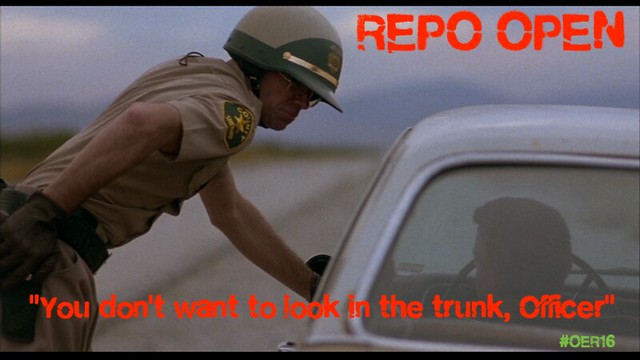
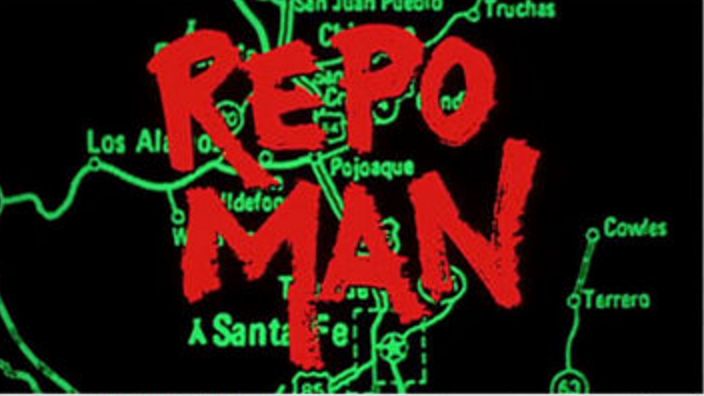
But, it was a bad idea because it was way too complicated and I couldn’t find any good archival images, but I did find this image from the 1984 film Repo Man. Given the whole Reclaim Code is inspired by Repo Man, and the play on repossessing/reclaiming made me think, hey, what if I turn this shot into the ticket to ride, or not ride. The title was immediate for me, “REPO OPEN” which is a great play on my talk as both a code repo, reclaiming the edge of open, and a bit of old fashioned capitalist repossession. The subtitle is a warning from the beginning of the film that the old man driving the car gives the cop. What’s in the trunk? Well, it’s never entirely clear in the film, kind of the MacGuffin driving the plot (something ds106 loves to mess with). But in this instance the cop opens the trunk only to get evaporated. What does it mean? I have no idea, but the aesthetic is right!

REPO OPEN #OER16

I could probably do something with the evaporation as well:

As for the making, it was pretty simple, I didn’t push myself all that hard to be honest. I grabbed the City Burn font from DaFont because it’s kinda spray painty, but not really close at all to the original Repo Man font which is a fail on my part.

Screenshot 2016-02-11 11.26.45

Beyond installing the downloaded font, I opened the image in Preview and just annotated the text and called it an assignment. 1 star for effort, 5 stars for awesome 😉

Posted in digital storytelling | Tagged , , | 1 Comment

Small Systems Integration

I’m not sure exactly what I mean by this. In fact, that very idea has me excited as a move towards see more small things happen. Small things is a theme I will be exploring this Spring, it resulted from a great discussion with the organizers of the AMICAL conference this year in Rome I’ll be speaking at. The focus will be on small things, a sense of post-MOOC taking stock of the valence of terms like massive/local, big/small (data), and  corporate/indie, the shape of the talk is not entirely clear to me though but I am taking Calvin Johnson’s advice and exploring E.F. Schumacher‘s book Small is Beautiful which posits the idea of Appropriate Technology. I’m excited by this talk, and I still have months to prepare. It really make s a huge difference when conference organizers take an hour of their time and talk to you about their community, their needs, and the general sense of focus and interest. I’m absolutely certain this talk will be the better for it.

And while the idea of small is bouncing around in my mind Tim Owens and I get on call with Jon Udell. One of the things he is thinking through right now is small systems integration. In particular as product manager for Hypothesis, how did Reclaim integrate web hosting into a universities identity management systems. Fact is, our work with providing universities a seamless, integrated service for web hosting on their campus is pretty awesome.  We integrate with several authentication systems used at various universities: CAS, Shibboleth, Active Directory, LDAP, and we joined InCommon, a federated ID management consortium through Internet2, to make the Shibboleth that much more seamless.

How do we do it? Well, mostly through WordPress plugins.  We wrap CPanel web hosting in a WordPress instance that enables us to use existing plugins to negotiate their various authentication systems. We still need to work with the campus IT and make sure we are getting only the user attributes they want us to have and we can then hand off that user to CPanel as an iframe in a WordPress page to provide a small, seamlesss integration of web hosting for a campus through single sign-on. However we feel about the push for single sign-on, it certainly makes provisioning and setting up web hosting around campus 1000x simpler, and that matters a ton. We’ve been having more and more schools use InCommon to integrate their Domain of One’s Own web hosting package. Once it’s up and working, it is beautiful. That said, Shibboleth is a complex beast and Tim has been digging in the last couple of months, and while listening to him talk to Udell yesterday about how Hypothesis might be able to provide schools like Oklahoma, BYU, Davidson, Emory, etc. might provide a more seamless, integrated solution for a campus to use their service for annotating across sites, LMS, courses, etc. is powerful is you are thinking about a campus tool available as a SPLOT. a simply tool for annotation you install through a WordPress container with pre-configured plugins integrated back to Hypothesis would be such small, simple, and useful edtech tool.

I realized these small system integrations that provide a user access to their work and federated across several services that ultimately feedback into a personal API is very much the trajectory of work the Domain of One’s Own need to follow. How do we start seamlessly integrating in small, focused ways to build a wider federation of tools that help us manage and control the discovery and narrative of who we are on line and off. I have to keep this in focus, and the opportunity to hear Jon and Tim go, which was my point to begin with, reinforces for me we are doing just that. We are in full create mode at Reclaim now and key folks are starting to come together and get this work funded and working right, which in terms demonstrates the power of providing a campus community alternatives that need not be massive, expensive, or singular, it can be small, cheap, and decentralized. I like this path, it may not win widespread appeal, but that’s all right, in fact it’s kind of the point.

Posted in reclaim | Tagged , | 1 Comment

Scenes from Trento

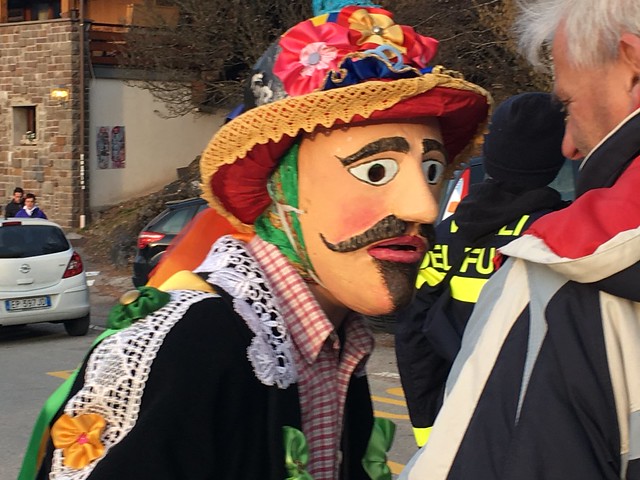
Yesterday was Fat Tuesday, and Carvnival is a thing here in Italy. Just this weekend we went to the small mountain town of Villaggio in a nearby valley. The folks who dress-up spent the entire day going from town to town in costume drinking eating and generally reveling until the grand ball that evening at the bottom of the mountain. The masks and costumes were quite stunning.

Carnevale: A More Colorful Anonymous

The Colors of Carnevale

Scene from Carnevale in Viaggio

Tommy Carnevale

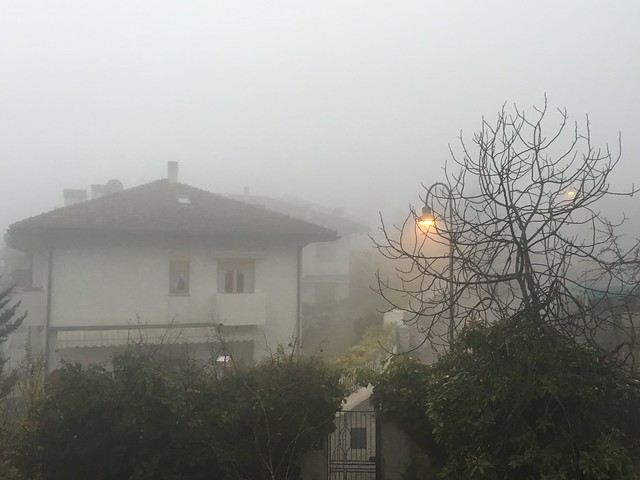
We stopped at the local Alpine Lodge and got some delicious minestra d’orzo. In fact, the mountain landscape dominates Trento, and it accentuates the weather patterns in some cool ways. The clouds can sit heavy on the valley, or the blue shy opens up endlessly. But recently we’ve had some intense fog.

Thick Mountain Fog

Anto’s gorgeous images of The baVilla are really Mario Bava worthy, it makes our domicile look like an 18th century vampire film or an Italy during World War I, an historical fought on this soil..

gate

Winter

Wintervines

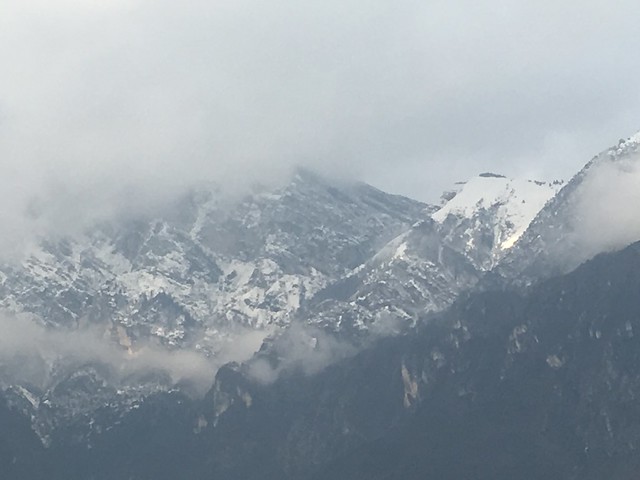
The weather has been rainy recently, which means a ton of snow on the mountains. A foot and a half this weekend, and even more yesterday.

Snowy Trentini Peaks

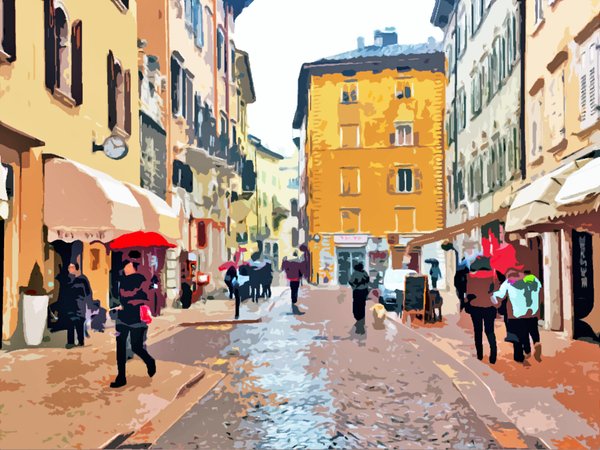
We spent the rainy morning yesterday hanging out in the city of Trento. I captured a shot from the morning of the gorgeous rainswept streets and posted it to Twitter. [Did I mention how much I love my new iPhone recently? I did it for the photos and videos, and that has been awesome.]

The Rainswept Streets of Trento

A photo that was immediately riffed on by @fxbghomes, whom I met at the FredX, and I simply love it.

CaxkDFeUcAApICx

I love the fact you can see Anto, Tess, and Miles n the lower right-hand corner.

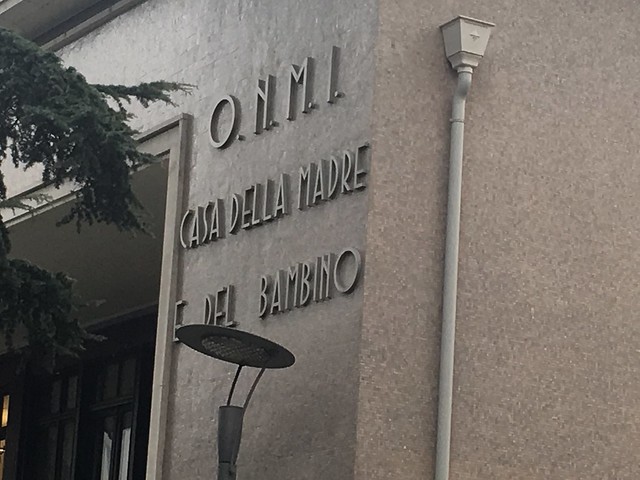
A walk around Trento is always fun, but the rainy, quiet end of Carnivale was quite awesome. Anto is always sure to point out various buildings, and it’s always interesting to see those made during the fascist period, they stand out. A fact that made me think about design, fonts, and fascism a la #ds106.

Fascist Font

The “House of the Mother and the Child” speaks volumes in many regards, but focus in on the tall, lean, declarative fascist font. And a bit further on the blacked out challenge to Blank Fascism.

Blank Fascism

Which leads us to the stores and Miles’s new obession: Dr. Who. Not a Whovian myself, but he’s working hard on me.

Dr Who Lego

And the walk through Piazza Dante brought the 14th century poet lording over his square in focus.

Piazza Dante

Piazza Dante doesn’t just feature the monument to the poet, but alos a duck pond, children’s library, and strange sculpture representing the typical Trento family from 2007.

Typical Italian Family

After that bizarreness,off to the library to take in their impressive John Fante holdings in the English section, right next to Faulkner.

John Fante and Faulkner

And speaking of Red Dagoes, I found this comic book series in his name:

DAGO: The Comic

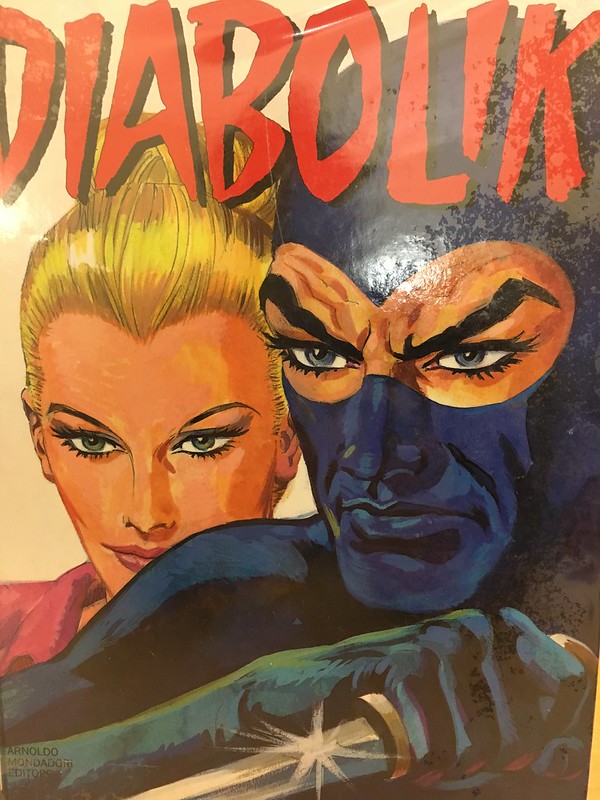
And of course no outing in Trento is complete without at least one or two Diabolik spottings—Italy’s favorite refined anarchic terrorist couple:

Diabolik: Italy's Dashing Anarchic Terrorist Couple

Diabolik: Un Amore Nuovo

We also discovered  new comic store that had us all very excited. Below is a #western106 bonanza of Tex, which could be Italy’s longest running comic.

Tex

And then my favorite random article in the store, a Sheriff Chuck Norris cap. I wanted it!

Sherriff Check Norris

And that’s some scenes from my life in Italy right now. I love it.

Posted in digital storytelling | Tagged , , , , | 3 Comments