
The Many Faces of Domain

Image credit: The Sydney Morning Herald's

Image credit: The Sydney Morning Herald

It’s going to take several posts to try and capture the unbelievable experience that was the Domain Incubator held at Emory University this past weekend—mad kudos to Pete Rorabough and David Morgen for putting on a stellar event. This post will try and capture an immediate take away from those two days, namely how many different approaches folks can take to Domain of One’s Own.

Several of the schools at the incubator were interested in Domain of One’s Own as an extension of the work already happening in their writing programs. As Brennan Collins from Georgia State University noted, thinking Domains pedagogically and developing faculty for integrating the digital into their courses is not unlike the Writing Across the Curriculum initiative that’s been around since the mid-70s. This struck me as an excellent approach, particularly since I had some personal experience with the movement as a Writing Across the Curriculum fellow at CUNY’s College of Staten Island from 2000 to 2003. Such an interdisciplinary frame for integrating digital approaches into the classroom gets away from the potential to relegate the digital to a specific discipline like “Digital Studies.” The digital is discipline agnostic, it contains them all!

Another approach that I’m deeply enamored of is Audrey Watters’s and Kin Lane’s “Reclaim Your Domain” vision. These two have their intellectual and technical understanding of the web so finely tuned at this moment that it’s a real privilege to spend time talking it through with them. And to be clear, Audrey’s keynote about Google’s nefarious practices and the moral imperative for reclaiming one’s online life is the best argument I’ve heard for this initiative bar none, watch it for yourself—you’ll see what I mean.

And their vision goes beyond just educational institutions, yet I think they both see this space as crucial to the ethos of their work. They point to a bunch of work already happening in the reclaim space such as Learning Locker, the Locker Project, IndieWebCamp, and Zapier to name a few, and there is definitely a sense that this space is started to emerge as an important alternative to fast food socail media. They’re on a mission to push people to think about questions of ownership of their online life and do everything possible to educate as many folks about why it’s critical to control their data. What’s more, they want to connect the technical pieces that makes it possible. I want in on all of this, this is the kind of educational evangelism I would gladly become a crusader for, and it doesn’t hurt that Audrey and Kin are the real deal. They’re laying down the cobblestones that will bring us to the beach, so to speak 😉

Another take away from the Domain Incubator is that there’s a lot of folks who are coming to this whole thing with a wealth of experience. One of the many folks I really appreciated over the two days was Clay Fenlason. He works as the director for Georgia Tech’s academic technology department, and he has spent a lot of time in the field over the last ten years so he knows of what he speaks. The best part is soon after the conference he started his own blog at unlearned.org and began firing off thought gems.

I’ll be talking about the “Middle Layer” post he wrote in my next missive on the incubator, but for this one I want to point to his “Two Deserts” post in which he talks about his own groups’ walkabout in the open source desert that was Sakai back in the mid-2000s. He eloquently captures his own journey trying to create an environment that embraces the web while at the same time engages as many community members as possible:

Around the same time I think I was going through a desert of my own. It started in a different place, in an open source community. There was this feeling, in the early days of Sakai, that the important thing was to put higher ed back in charge of its core mission, rather than outsourcing it to LMS companies. Never mind the design assumptions implicit in the software, we could work that out as we went. The important thing was that there was a community of people who really cared about the academic mission, working together. We would get to a better place eventually.

It was around 2008 that a few of us started to feel that it wasn’t enough, that simply wresting control of our technologies away from proprietary interests wasn’t enough to get us into a better place for online learning. Community source was a different way of doing software development, but it wasn’t allowing us to rethink the model or take on the deeper challenges and opportunities the Web presented.

I think those of us who drifted from the Sakai community were animated by ideas similar to those behind Domain – empowering learners as creators, engaging with the Web rather than walling ourselves off from it, unhooking human connections and networks from the administrative superstructure that gets in the way – but I think we ended up in a very different place. We ended up with an online platform that tried to facilitate these things for you. We call it the Open Academic Environment.

I love the narrative he provides of this journey through trying to find a way to create a better online space for teaching and learning. UMW’s DTLT has been on that same trajectory, and the challenge of balancing the coherence provided by prefab learning management systems (LMS) versus the freedom and possibilities of the open web is one just about any school considering Domains will confront. I’m glad Clay appreciated my harping on this point in my talk because as an educational technologist it’s impossible to ignore this tension if you want to bring Domain of One’s Own to your campus. UMW has made a choice to support the LMS as a baseline, but we continue to invest more time, energy, and evangelizing into open web technologies.

These various faces of Domains is how we start thinking more pointedly about how this platform, for lack of a better word, becomes integrally linked to cross-disciplinary curriculum and personal empowerment—so it’s just not another alternative to the LMS. It’s markedly different from that system, and no longer to we get trapped in the position of pitting one against the other and losing any momentum for alternatives beyond the monolithic solution.* The LMS does x,y, and z very well, but like Andy Rush noted, “You can’t shave your head in an LMS.”

Finally, the biggest take away in this regard was that it’s not all or nothing, Emory University is doing Domain of One’s Own with everything from a domain and web hosting to a Weebly account. And guess what, they both framed an experience that put the student in charge of their own work on their own space. I understand the limits of Weebly when we talk more literally about ownership, but what struck me is that the entire conversation shifted to personal spaces rather than centralized, institutional systems, and that move is not trivial. I’m not sure a domain and web hosting is the only way to skin this cat, and I think we have to be far less righteous in our work with students and faculty at UMW when it comes to exploring options like mapping domains on services like Tumblr, UMW Blogs, Google Sites, etc. There’s a deep tension there too, and I think that’s important. We need to push on the tensions and ask ourselves if there is any way to live a wrong domain rightly.

___________________________________________

* You could also argue Domains provides an opportunity to revisit questions of cohesion that encourages IT organizations to start rethinking their infrastructure. The affordances of push-pull technology has still been widely ignored in the IT systems we use, and our work might be the opportunity to start making inroads there. UMW is exploring virtualized servers through services liek Amazon Web Services in large part because of the work we started with UMW Domains, that does not suck 😉
Posted in Domain of One's Own | Tagged , | 1 Comment

Hitchcock Motifs

UMW Art History professor JeanAnn Dabb is teaching a Freshman Seminar on Alfred Hitchcock. Few subjects in this world are more compelling than Hitchcock’s films, and it’s hard to think of a better excuse to run a course blog. So, that’s exactly what JeanAnn did, and you can find it here: http://hitchcock.umwblogs.org. That’s right, a little bit of old school UMW Blogs to temper all this Domain of One’s Own rah rah rah 🙂

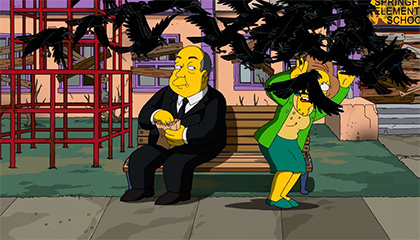
Hitchcock in the Simpsons

What I like about how JeanAnn ran this course blog is she had students write about different elements of Hitchcock’s films over the course of the semester. They captured the various motifs Hitchcock employed across his films and the innumerable homages to Hitchcock’s work by other filmmakers and in pop culture. They also wrote about his ongoing legacy (is Vertigo (1958) his/the greatest film of his career/all time?), as well as his impact on contemporary art. I love the various lenses she provides her class to think through the Master’s work.

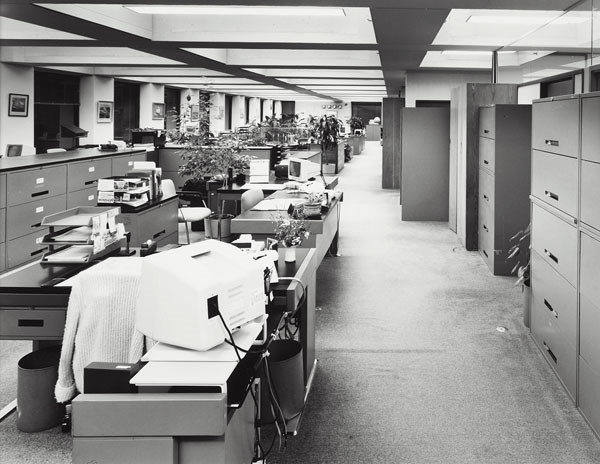
Stan Douglas’s recreation of the set of Marnie is a loop of a scene in which Marnie robs the office where she works. It’s reshot in a modern setting, with computers instead of typewriters, though it is in black and white rather than color. Read more by clicking on the image.

It’s really compelling stuff, and I have spent way too much time reading through the posts. My personal favorites are from the motif category in which students trace various recurring themes through his films. Various students’ posted about the ways in which Hitchcock subtly and brilliantly manipulates the viewer in his films. One can often find themselves in a compromised position as a result, which is illustrated brilliantly in this post about the “GunCam”— or the first person shooter perspective in Spellbound (1945).

GunCam: First Person Shooter from Hitchcock’s Spellbound

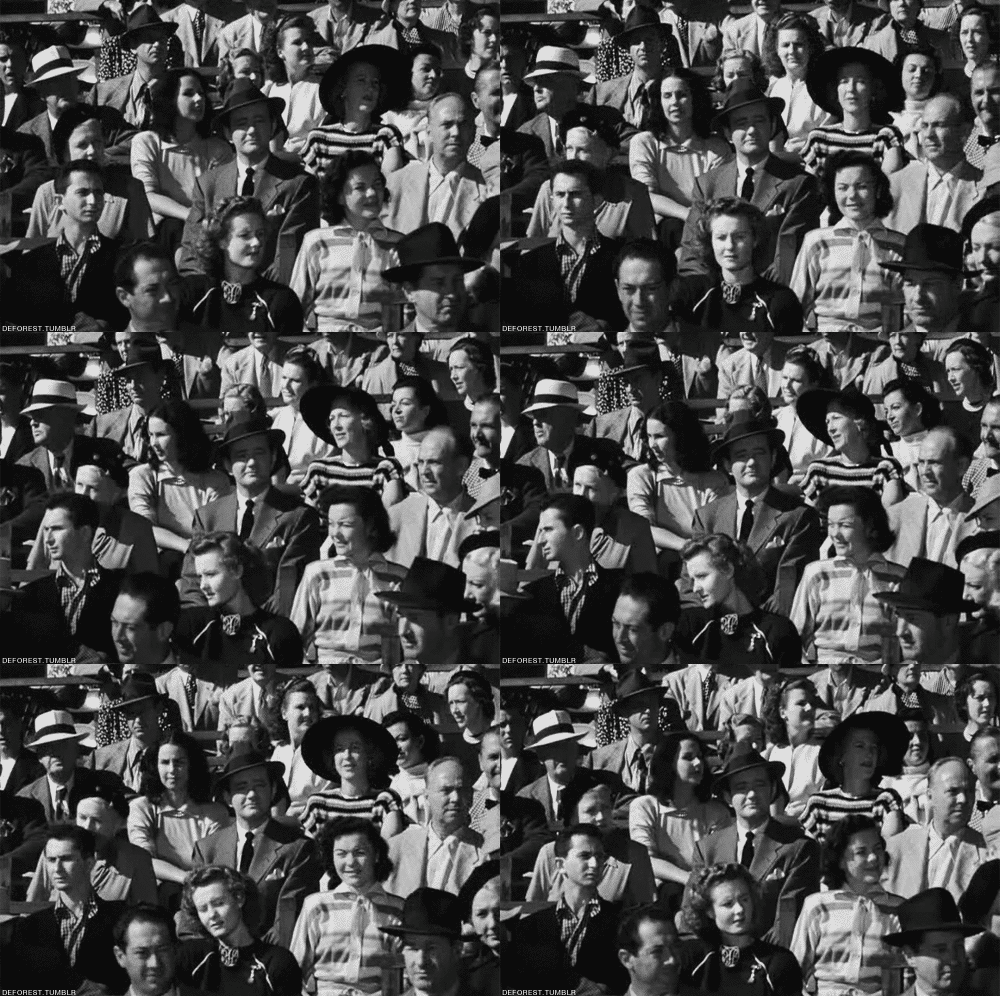
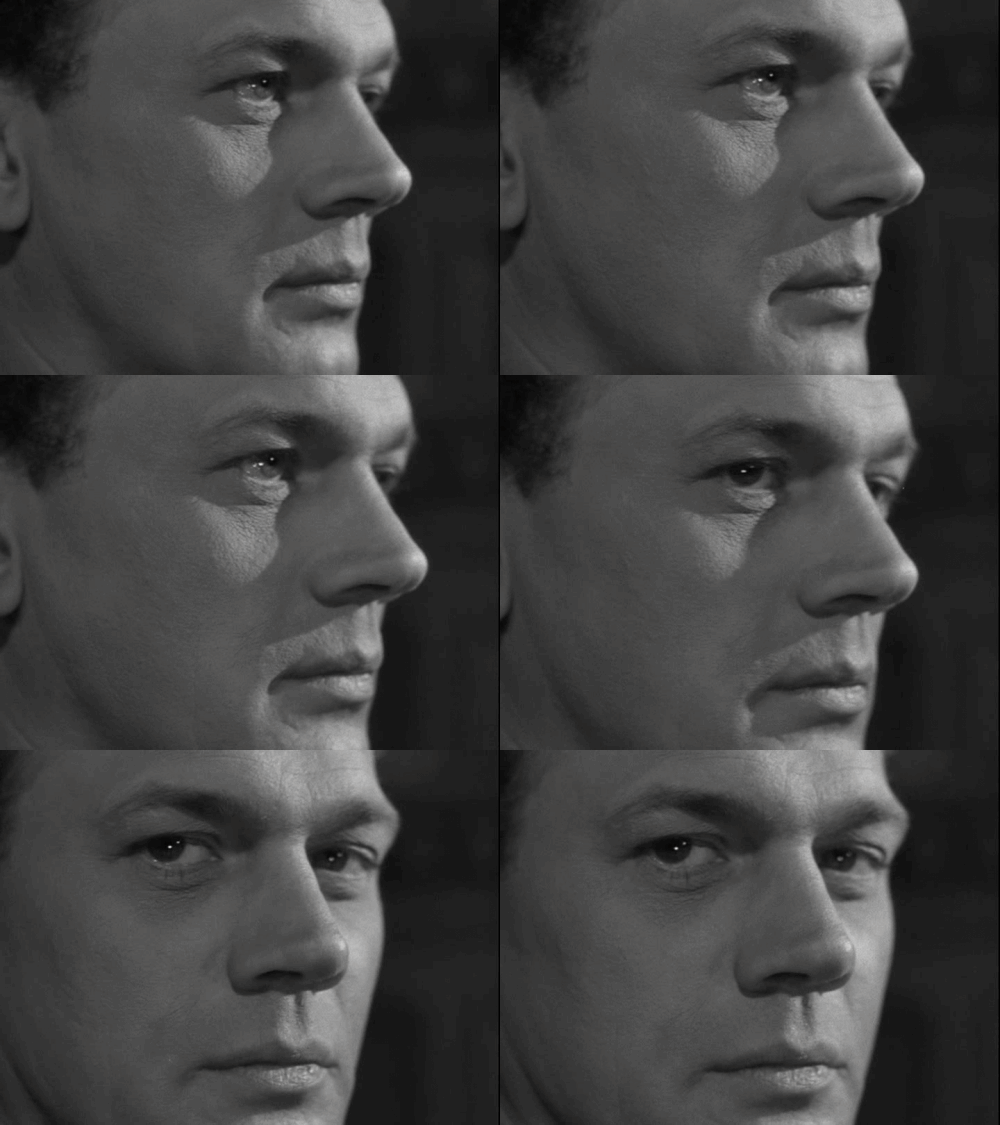
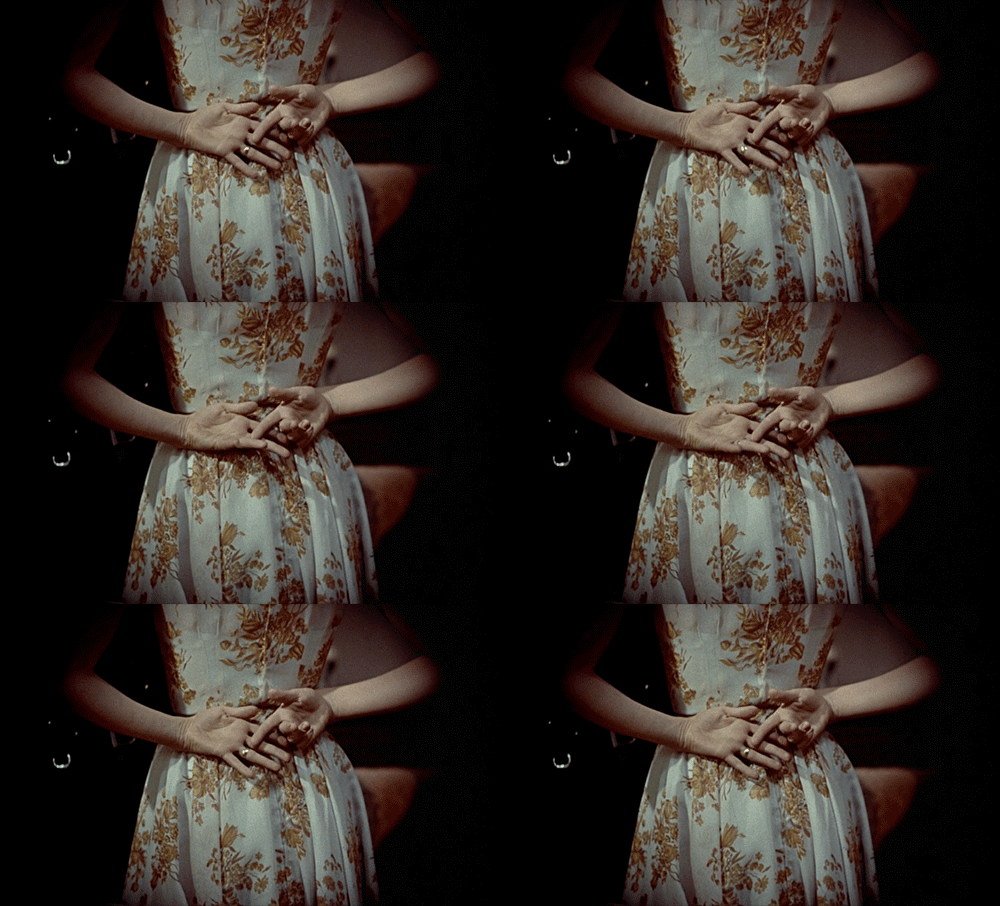
The post by Mrs. Atwater, “The Audience and the Film,” does an excellent job sharing some of the particular moments in which Hitchcock is breaking the fourth wall and acknowledging the audience’s role in the action.

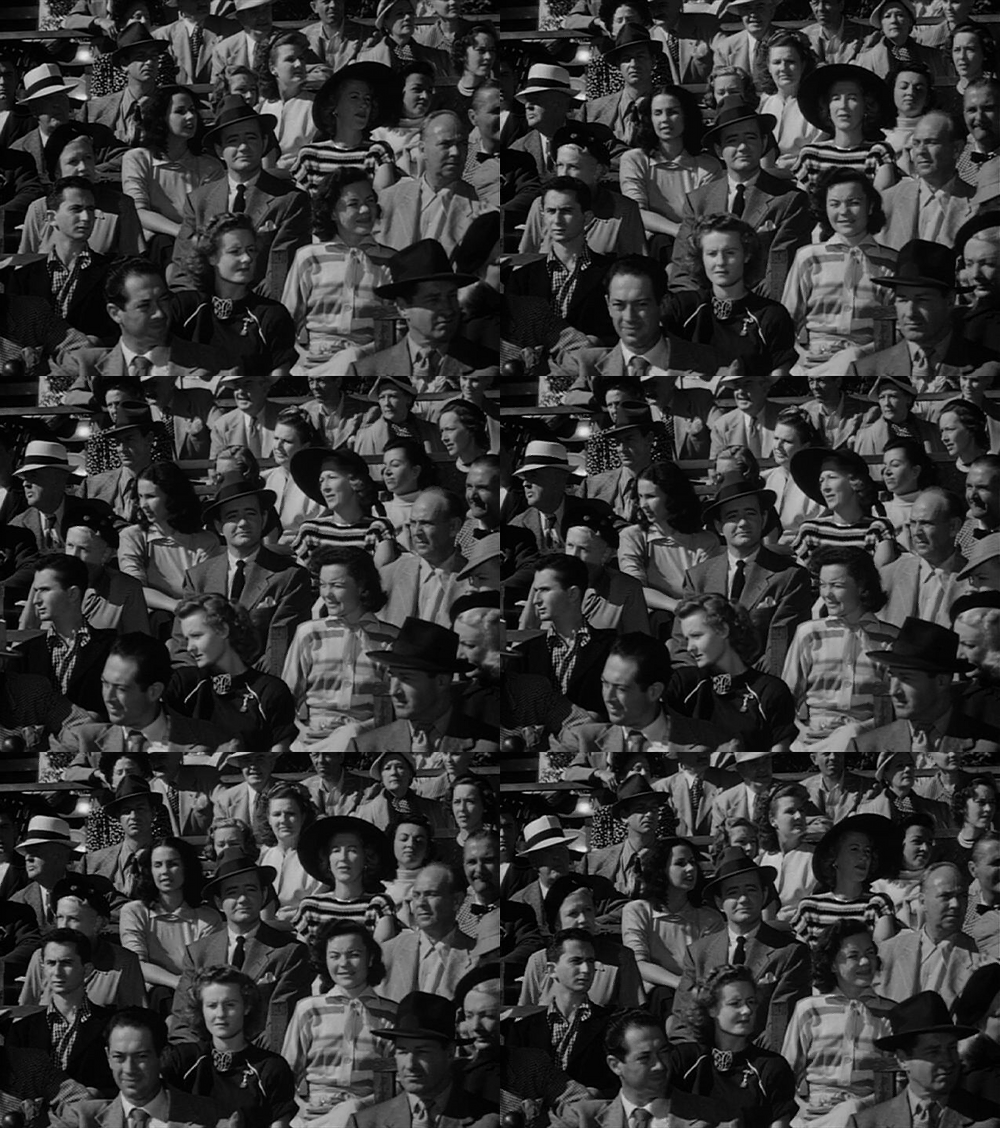
In Strangers on Train, Bruno engages the audience head-on as the other audience is seduced by the action.

Joseph Cotton breaking the fourth wall in Shadow of a Doubt

Grace Kelly in Rear Window communicating with the audience

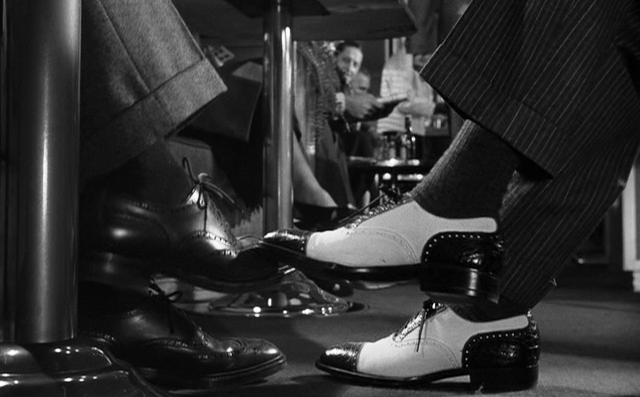
The motif of criss-cross in Strangers on a Train is the focus of another post, which uses screenshots and GIFs (a staple for film blogs now) to capture the various ways Hitchcock communicated his themes and motifs though this visual medium. As an aside, I love that one of the GIFs they grabbed from the web for their post was from my own blog 🙂

Criss-crossed traintracks in Strangers on a Train

Criss-crossed feet

Criss-crossed audience (a GIF furnished by the bava :))

And that’s not all, there are posts covering the motifs of stairs, tense drivers, and falls from high places, and the various posts really make for some compelling discussions about Hitchcock’s work. What’s even better is the web is an endless supply of inspiration and resources when it comes to film, and the students have not been shy at all about using them liberally when it comes to screenshots, GIFs, and videos.

Finally, one of the first student posts on the course blog was about an essay by Robert Stam and Roberta Pearson in the Hitchcock Reader wherein they discuss voyeurism in Hitchcock’s films. In particular, they refer to Jimmy Stewart’s line in Rear Window “like a bug under glass,” to frame the reflexive nature of watching in his films. This struck me because last year during the Mario Bava film festival Paul Bond and I were running the discussion of Bava’s debt to Hitchcock came up again and again. As soon as I read the line “bug under glass” it immediately made me think of the scene in Mario Bava’s 1971 Twitch of the Death Nerve wherein a bug is pinned and struggling.

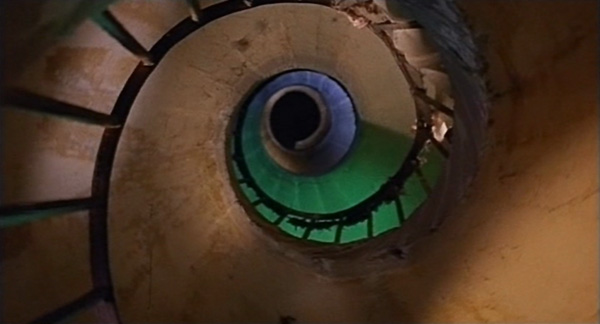
This shot certainly resonates with Stewart’s line, and throughout this film the viewer partakes in thirteen murders from the perspective of the unknown killer. A trick that would become stock over the decade with the rise of the slasher film. You can argue that Bava is quoting Hitchcock here, recognizing he’s about to create one of the most violently voyeuristic genres in film. But Bava wasn’t limited to obscure quotes and bugs for his inspiration from Hitchcock, he also liked Hitchcockian stairs a lot!

Stairs from mario bava’s Kill Baby, Kill!

OK, that was a lot of fun, but now I must get back to my flooding basement.

Posted in film, films, UMW Blogs | Tagged , , , , , , , | 4 Comments

The Internet: Knowing is Half the Battle

We’re in finals week right now, and the last bits of work for the Internet Course is wrapping up. Over the course of this semester eight different topics were covered by eight different student panels. Due to weather related scheduling issues the last of these panels dealign with the future of the internet were tasked with presenting their work in an alternative manner. Thanks to the genius of Meredith Fierro, they chose to present the various futures by playing on the 1980s “Knowing is Half the Battle” GI Joe PSA remixes. The rest is just awesome!

Below are five seven of the seven (I’ll update this post with the other two once they come in) GI Joe PSAs used to explain the possible future of the internet.

Alison Litvin‘s The Future of the Internet – GI Joe PSA Internet of Things

William Strand‘s “GI JOE PSA on the future of RFID chips
https://www.youtube.com/watch?v=V_l_ATijFms

Meredith Fierro’s “Self Driving Car G.I Joe PSA”

Jack Eaton‘s “GI Joe PSA 3D Printing”

Faisal Albellaihi‘s “Mesh Network GI Joe PSA”
https://www.youtube.com/watch?v=YK6_CYKhcmU

Demi Fulcher‘s “Google Glass GI Joe PSA”

Zack Goodwyn‘s “Bitcoin GI Joe PSA”

Posted in fun, The Internet Course | Tagged , | 4 Comments

The Sword of Damocles

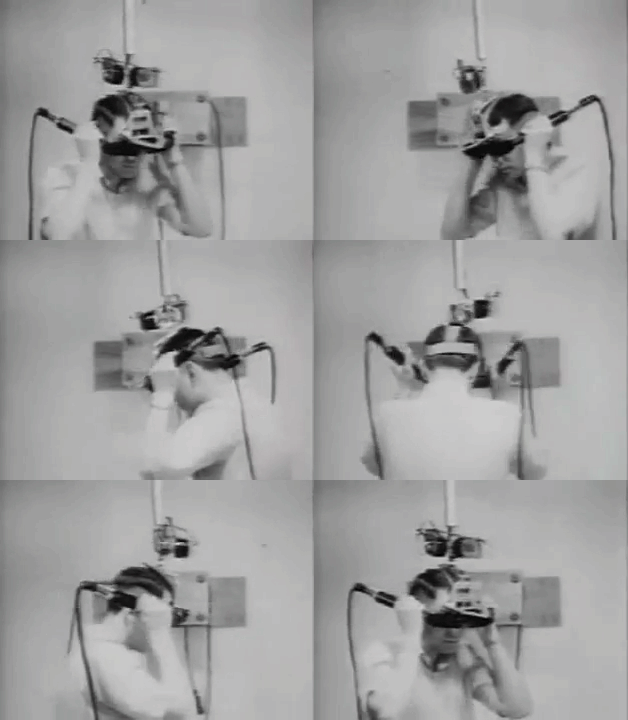
tumblr_n4ay1aQkB51qav3uso2_r1_400

Earlier this week, I covered “The Sword of Damocles”, the first pioneering example of virtual and augmented reality technology from 1968. Unfortunately I was unable to locate a visual demo of it at the time, but thanks to Thomas Richter, he sent me a link to a short video demonstrating it in action:

The above GIF, text, and video came by way of this post on the Prosthetic Knowledge tumblr. I followed up on a number of the documents linked in this post, and what struck me was that virtual reality was (like the mouse, the internet, video conferencing, online dating, etc.) yet another pioneering technology realized during the 1960s.

While reading through the documents framing out these innovation in graphic user interfaces I recognized the name of their author, Ivan Sutherland. from the 1998 history of the internet Where Wizards Stay Up Late that I read early this semester. So, the same guy who designed the Sword of Damocles had replaced J.C.R. Licklider as the head of ARPA’s Information Processing Techniques Office a few years earlier in 1964. It’s remarkable how small this 1960s world of techncial inventions and innovations was.

Crazy enough, these far out 3-D virtual reality glasses from 1968 were by no means the most important of Sutherlands creations. Five years earlier he created Sketchpad as part of his Ph.D. thesis at Harvard. Sketchpad represented a revolutionary approach to graphic user interfaces and human-computer interaction by “using an x-y point plotter display and the recently invented light pen.” Interestingly enough for the purposes of the Internet Course, Sutherland’s vision for Sketchpad was inspired by Vannevar Bush’s “As We May Think” and helped realize some of Licklider’s vision in “Man Computer Symbiosis.” Below is a quote from Sutherland’s 1965 paper “The Ultimate Display:”

The ultimate display would, of course, be a room within which the computer can control the existence of matter. A chair displayed in such a room would be good enough to sit in. Handcuffs displayed in such a room would be confining, and a bullet displayed in such a room would be fatal. With appropriate programming such a display could literally be the Ultimate Display Wonderland into which Alice walked.

A vision of computer itnerfaces as the ultimate in a virtual reality wherein chairs work, handcuffs bind, and bullets kill. This notion of the looking glass as ameans to define the idea of computer displays as an entry to another world is fascinating, and it was all right there in the mid-1960s. Amazing how these engineers were remarkably poetic and expansive in their discussion of what might have just been technology—I wonder how much of this has to do with the example set by thinkers like Licklider and Bush

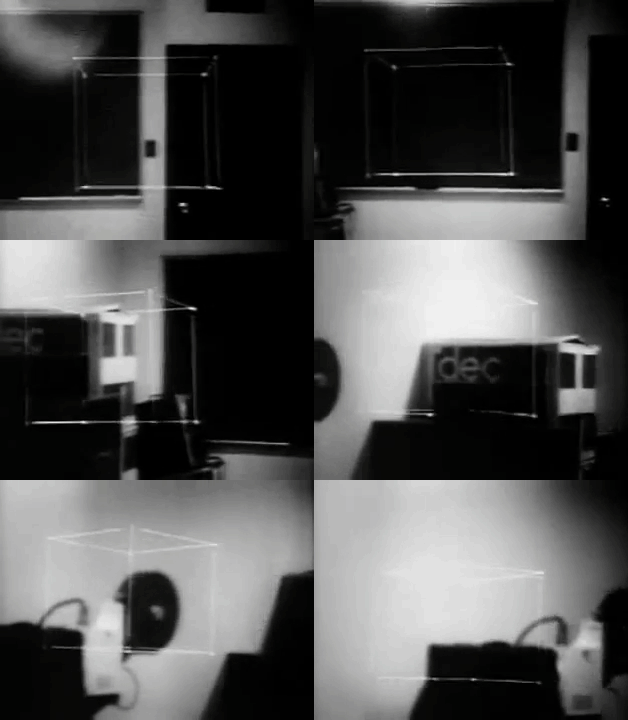
Another paper Sutherland authored in the 1968, “A Head-Mounted Three-Dimensional Display,” frames out the thinking and execution of “The Sword of Damocles.” While noting his findings with how folks experienced the 3-D headgear he noted:

Even with this relatively crude system, the three-dimensional illusion was real. Users naturally moved to positions appropriate for the particular views they desired. For instance, the “size” of a displayed cube could be measured by noting how far the observer must move to line himself up with the left face of the right face of the cube.

And that cube was real, well virtually at least. And as you can tell by the notes in this paper, Sutherland cites the work of Larry Roberts, the cheif architect of the internet, on several occasions in that paper. Particularly Roberts work on the Lincoln Wand at the Lincoln laboratory. Just like the internet, I’m finding these various inventions and creations were part of a more prevalent intellectual and cultural environment of creative approaches to what’s techncially possible at academic institutions with seemingly endless funding from the military-industrial complex.

tumblr_n4ay1aQkB51qav3uso1_400

Finally, during my search I found an oral history transcript from May 1, 1989 that featured Sutherland talking about his his tenure as head of DARPA’s Information Processing Techniques Office. He discusses the existing programs established by J. C. R. Licklider, his interaction with the research community, the budget, and the new initiatives started while he was there: projects in graphics and networking, the ILLIAC IV, and the Macromodule program. Interestingly enough, the oral history is part of a series of interviews recorded as part of a research project on the influence of DARPA on the development of computer science in the US. As I’m just wrapping up the first iteration of the Internet Course I feel like I’m only just beginning to scratch the surface of this unbelievably rich history.

Posted in The Internet Course | Tagged , , , , | 2 Comments

Cyborg Tactic

This post has been updated with two amazing animated GIFs by the ever brilliant Michael Branson Smith.wreckthecyborg tumblr_n4mgvxNBPi1rjkuv5o1_500

“The main trouble with cyborgs” she [Donna Haraway] reminds us, ”is that they are the illegitimate offspring of militarism and patriarchal capitalism, not to mention state socialism. But illegitimate offspring are often exceedingly unfaithful to their origins.”

A “Domain of One’s Own” is a cyborg tactic, I reckon. Kin to the learning management system. Kin to Web 2.0. But subversive to today’s Internet technologies and today’s educational technologies, connected as these are, as Haraway’s manifesto reminds us, to command-control-communication-intelligence.

A cyborg tactic, an “illegitimate offspring,” the Domain of One’s Own is fiercely disloyal to the LMS — Jim Groom and his team always make that incredibly clear. And I hope eventually too, fiercely disloyal to Google.

The Domain of One’s Own initiative prompts us to not just own our own domain — our own space on the Web – but to consider how we might need to reclaim bits and pieces that have already been extracted from us.

I can’t speak for the folks at Emory University or my UMW colleagues, but listening to Audrey Watters articulate such a brilliant, poetic, and precise vision of Domain of One’s Own as subversive intervention into the current state of the web may very well be the highlight of my professional life up and until this point. Cyborg tactics #4life! My only issue with the talk is that I have to follow it up tomorrow 🙁 But the talk is just the tip of the iceberg, talking with her and Kin Lane yesterday and today only gets me that much more impassioned and excited about preaching the reclaim word. I’m donning the frock for God, Country, and Domains!!!

Posted in Uncategorized | Tagged , , | 3 Comments

Post-Conference Sloan-C Interview

On Wednesday I had a discussion with Sandra CoswatteCathy ArreguinZeren Eder, and Holly Rae Bemis-Schurtz of Sloan-C about the presentation I gave at et4online conference . The interview covers a brief history of my beginnings in the field of edtech—which centers around having gotten a domain and web hosting in 2003. It moves on to my landing a job at UMW, as well as the long history of Domain of One’s Own (I’ve pretty much been doing this one thing in various forms for ten years).

There’s a bit of the video wherein I go on a tear about embodiment, philosophy, and the academic reality of domains that makes little to no sense, but when has that ever stopped me? Also, I guess that was part of the fun for me. We were all just rapping.  I think the point that is coming back to me again and again these days is just how powerful a platform like UMW Domains could be for empwoering faculty and students to control their work, while at the same time re-imagining curriculum across just about every discipline. A broader, integrated vision of what this project could mean for web literacy is really getting me excited.

Posted in Domain of One's Own, presentations, Uncategorized | Tagged | Leave a comment

What’s the Internet?

On Tuesday evening the Internet Course continued to blow minds and win hearts with another brilliant group presentation by Jack Eaton, Jack Hylan, James Roepe, and Will Strand. This group presented on the history of ARPANET, and let me tell you they were presentation ringers. They were throwing Jolly Ranchers to anyone who participated and seducing the class to pay attention with a $12 Chipotle gift card to the person who scored 100% on a quiz they gave.

But it wasn’t all about bribing the class to participate with sweets and burritos—-though that was remarkably effective. They also did a brilliant job presenting their topic. They created a compelling timeline of the history of the internet using TimelineJS.

Even better, they produced a video for the session wherein they asked random folks on UMW’s campus three simple questions in the following order: What is the internet? What is the world wide web? What is ARPANET?

The resulting video (featured below) is probably the most compelling argument yet for building out a more robust notion of web literacy into the curriculum. I highly recommend you spend five minutes watching the video they produced. It’s a telling document about how few students understand not only the history of the internet (à la ARPANET) but how the basics of how the internet work.

The Internet Course: WINNING!

Posted in The Internet Course | Tagged , | Leave a comment

Charizard

Image credit: #006 Charizard on DeviantArt

I’ve been enjoying some time off over the last four or five days hanging out at home with the kids and refinishing 80 year old windows, though not necessarily in that order. It’s been an eventful few days (picnic, lightening) and pretty much web-free. I like getting consumed in something else every so often, and spending hours scraping and priming window sashes, or replacing a pulley systems through a hidden access panel was just what the doctor ordered.

One of the coolest moments of this downtime was when my oldest, Miles, was at the kitchen table typing away on the computer while I was removing a window. He’s only started exploring the web during the last few months (we downplay it in our house), and I think the recent discovery has a lot to do with his intense passion for all things Pokemon. For the last few weeks he’s been using it specifically to track down cards he wants to get on Ebay and Amazon—kinda like a dynamic online catalog.

But this time was somewhat different, he was alternatively typing and asking me how to spell words.

So I asked him, “What are you doing, Miles?”

To which he replied, “Leaving a comment on an open forum. It’s pretty cool, dad, you don’t even have to log in.”

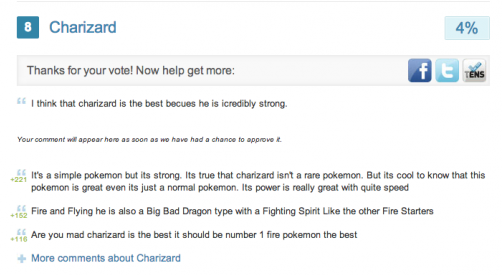
Open forums. No logins. It was as if we were speaking the same web language after just a few shorts months. He spinned the laptop around and showed me the comment he had made on thetoptens.com website. A site that has a top ten list for just about everything. The one he was commenting on was the “Top Ten Strongest Pokemon” poll. His choice was Charizard, and here’s the rationale he provided:

I think that charizard is the best becues he is icredibly strong.

He spells like his father 😉

This was his first comment he ever made on the web, and it was driven by his abiding passion for Pokemon. Beyond the catalog, the web provided a  space for him to communicate with an anonymous horde of others his strong feelings about Charizard, and that’s awesome. This is what it’s all about: a space to find out more about the things you love, share those discoveries with others, and make your opinions known, whether or not they are spelled correctly 🙂 Moral of the story: start them commenting from a very young age 😉

I want the web to be a place to augment my kids’ passions, not just another space to login to refill his lunch money or review for a test. And I think a lot about my role in shaping that a reality for them. Starting slow has been the foundation.

Posted in fun, The Internet Course | Tagged , | 2 Comments

Internet as Utility

Last night was yet another gripping installment of The Internet Course. Maddie, Matt, and Meredith presented their research on cloud computing. Turns out, just like with Online Dating, the history of this phenomenon is much longer than you’d think. The group started with a RSA animated video featuring Stephen Fry explaining cloud computing:

The punchline is that the video is a commercial for Databarracks, a British company that provides cyberinfrastructure solutions for businesses. What’s fascinating about the video, however, is the way it frames the discussion of cloud computing around the idea of the internet as a utility. The five minute video does an excellent job of moving the conversation back to the late 19th and early 20th century to talk about how services like the delivery of water and electricity became essential elements to run a society—the definition of a utility. This opened up the broader discussion of thinking about cloud computing as a means to start conceptualizing the internet as a utility that is essential to the way we run our society, a utility. Given that, does it need to be regulated like water and electricity (Enron anyone?) to avoid it becoming a market-driven commodity? Susan Crawford, former Special Assistant to President Obama on Science, Technology, and Innovation Policy, makes this point nicely in this interview:

We need a public option for internet access because internet access is just like electricity or a road grid. This is something that the private market doesn’t provide left to its own devices. What they’ll do is systematically provide extraordinarily expensive services for the richest people in America, leave out a huge percentage of the population and, in general, try to make their own profits at the expense of social good.

I love the idea of the cloud wrestled away from the buzzword culture of Silicon Valley and re-positioned as a basic utility we need to function as a society. What’s more, after the financial collapse in 2008 the lack of of any oversight and regulation in this space should be deeply alarming. If internet is bought and sold on the open market can we avoid the psuh for profit at the “expense of social good”? This is such a cool intervention into the cloud discussion I am used to hearing.

On top of that, the group brought in Douglas Parkhill’s 1966 book The Challenge of the Computer Utility which frames out a vision of how we might use a worldwide network to make financial transactions, pay bills, make purchases, and even do taxes. The very infrastructure that would not only become the internet three years later, but the vision of using it as a utility to manage the way we do business in the future. Thanks to this blog post I was able to grab a quote from Parkhill’s book, at least until I get my hands on it:

As time goes on we can expect that the local financial utilities will be interconnected to create a nationwide and eventually worldwide network that will permit a customer to make money-key transactions no matter where he travels. The range of services offered by the utility will also grow. Terminals, perhaps based on the expanded touch-tone scheme, will be made available to private homes, and these will be used not only for paying bills but also for preparing income-tax statements, making purchases, checking bank balances, maintaining up-to-the-second files on all household financial obligations and assets, and even consummating loans, buying insurance, and making stock-market investments.

It’s funny, when people talk about the cloud they immediately get technical and talk about server virtualization or refer to services like Google Docs, Netflix, Amazon Web Services, etc. All of which are examples of a broader move to a society increasingly dependent upon the internet as a public utility. That’s the cloud in a nutshell, and I love the way it refocuses the importance of issues like net neutrality and an open web!

I’m really loving #tic104 these days, and I am guessing from his latest post Paul is feeling similarly. Students have been driving the conversation on every topic throughout the semester, the conversation we had about the cloud and my re-conceptualize of how to think about it as a utility is because of this group’s research. That’s awesome, and thank you!

Posted in The Internet Course | Tagged , , | 6 Comments

Online Dating: the Movie List

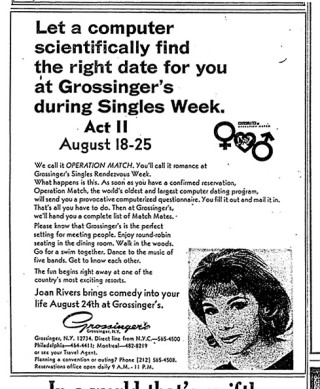
Last night the group researching online dating sites did an excellent job taking us through that world. In particular, they referenced an early computer dating service started by three Harvard graduates in the mid-1960s called Operation Match. To quote the 1965 Crimson Tide article about the service:

18s41aah4eoanjpgThey were aware that computers had been used to match people at special mixers and they knew that some companies in Europe were making a sizable profit from arranging compatible marriages through various technological means. “But what we wanted was something more permanent than a mixer, and more fun than a marriage bureau,” a member of the group recalls.

In the course of the conversation, the idea of a computerized datefinding service evolved. The idea excited Tarr, and with the help of Morrill, he went out to see what might be done about it. Dean Munro, a few lawyers and certain technicians at a computer firm all assured Tarr that the idea was feasible.

Using computer-generated data to connect people is not necessarily new, as this group pointed out, but the web brought it to a another level. During the course of their presentation they shared this 2009 or 2010 infographic about the online dating industry that has a ton of interesting facts. For example, 40 million people in the U.S. use online dating annually. That number in China is 140 million people. EHarmony claims 236 members are married each day. Etc.

The group is working on a timeline that will link back to their blog posts and provide a distributed history of online dating as their final project. Lauren Brumfield and Eun Jung Kim have been doing a fine job blogging their research thus far, and I am really enjoying their findings. Lauren even kicked off her research with a shout out to Meg Ryan in the 1998 film You’ve Got Mail. Which got me thinking during class last night, is there a top ten list of films with an online dating theme? Of course there is, this is the web after all!

So, here they are copied directly from this post on Yahoo!.

And no matter if you’re a fan of online dating or the whole thing creeps you out, these 10 films are sure to entertain.

  • Because I Said So: Diane Keaton plays Mandy Moore’s overbearing mother who is terrified her daughter will never have a healthy relationship. Diane realizes she might just be looking for some love and checks things out onlineWhat to Take Away: It’s never too late to find love.
  • Catfish: This startling movie is under the radar, but forces us to ask some very serious questions. It’s a documentary based on a NY boy’s online relationship with a beautiful girl who lives on a Michigan farm. What to Take Away: Ask yourself how well you really know someone you meet online. How much stock can you put in a relationship that takes place solely through technology?
  • Eurotrip: In this goofy and screwball comedy, a group of friends graduate from high school and take the ultimate overseas adventure to meet up with a gorgeous German girl he meets online. What to Take Away: Sometimes going the distance and being spontaneous is totally worth it.
  • Hard Candy: Ellen Page is a girl on a serious mission in this crazy thriller. After she develops a relationship with a dude she believes to be a pedophile, she attempts to bring him down. What to Take Away: Things are not always what they appear to be.
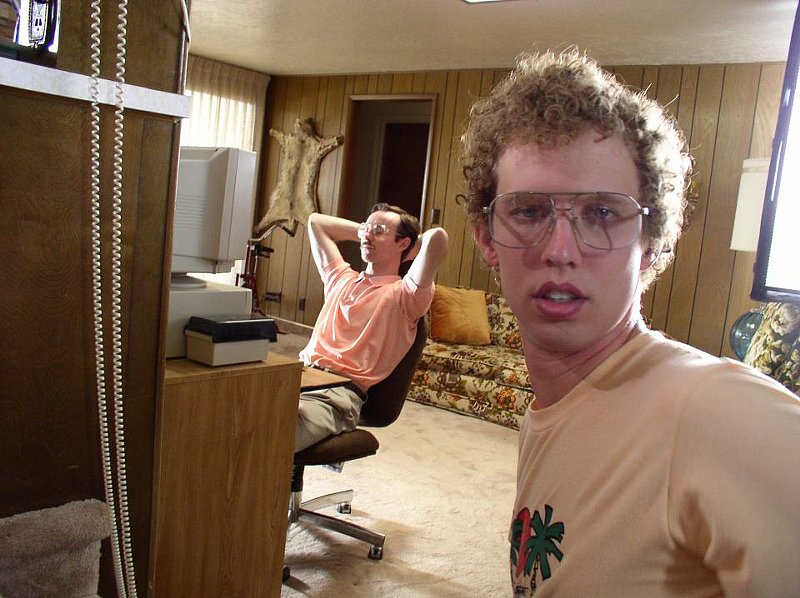
  • Napoleon Dynamite: It’s not Napoleon who finds love online. It’s his awesome brother Kipp who finds love online with LaFawnduh Lucas, who travels by bus to meet Kipp in person. What to Take Away: Everyone can find love. And I mean everyone.
  • LOL: Whether it’s through text, email, or online dating, this movie is a strangely accurate portrayal of the role technology plays in our relationships. What to Take Away: How much do you really depend on technology instead of face-to-face interaction
  • Must Love Dogs: After her sister puts her profile on PerfectMatch.com, Diane Lane goes on some outrageous dates before meeting someone great, who must love dogs, like John Cusack. What to Take Away: Despite the loads of crazy dates you may go on, it’s important to stick it out and keep trying.
  • Sex Drive: Josh Zuckerman plays a shy 18-year-old virgin who steals his brother’s car and goes on a cross-country trip with his two best friends in order to hook up with a girl he meets online. What to Take Away: Sometimes you need to go the distance to appreciate what’s been in front of you all along.
  • The Lionshare: After meeting on OkCupid, Matt and Jane decide to meet in person. After their first date, Jane invites Matty to her house and to her favorite BitTorrent site, The Lionshare. What to Take Away: All first dates may be a tad awkward, but you can’t push a true connection.
  • You’ve Got Mail: The quintessential online dating movie. This one dates back all the way to 1998. Meg Ryan and Tom Hanks meet in an AOL chat room and the rest is history. If you’re looking for an easy, breezy, and sweet romantic comedy, check this one out immediately. What to Take Away: Don’t judge a book by its cover – or reputation!

What’s not to love about the internet? If you will it, it is no dream!

Posted in Movie Lists, movies, The Internet Course | Tagged , | 4 Comments