Haunted Bricks: Trilogy of Terror

Haunted Bricks: A Triptych of Horror from Jim Groom on Vimeo.

Miles and I are entering our brick films stage. I knew it would happen at some point, and I’m really glad it has finally arrived 🙂 We used a Canon Rebel to take the shots—we have a lot of fine tuning to do and I now have my hands on a tripod—and played around with three different haunted scenarios using the Monster Fighters sets that are out now. Miles got the Haunted Castle for his birthday last week which was part of the inspiration for us to make this, the other part is we can’t have our neighbors showing casa bava up with their brick films—we have to get cinematic! We’re just getting the hang of it, but it’s really a blast to plan the scenes out together. I think we’ll be getting more elaborate pretty soon given how east the first run was. For now we just wanted to experiment with how much you need to move the figures to make it look convincing, and it’s less work than I imagined.

As for the technicalities, here’s a quick overview of our process. We got some good lighting and set up the lego sets on a table in the attic with full accessibility. We then took over 166 still images of all the different actions. When we finished with that we imported them into iPhoto, deleted the bad ones then imported the whole lot into iMovie. From there we changed the still duration from 4 seconds to .3 seconds for all stills and then tweaked the opening shots to last longer for an opening effect. Once we had the basis of three shorts films we broke them up with titles and then went to freesound.org to finish the film with appropriate sound effects. The film is very rough yet, Miles and I hope to get to the point where we are recreating scenes from classic horror and scifi from from the 70s and 80s 🙂 Parenting has been a lot of fun as of late.

Sound Credits:
Main Theme DJ Chronos’ Ambient Darkness
Monnie101’s Car screeching (Car_Stops_Breaks_Screech_Engine-Rev_by-monnie101.mp4.WAV)
Timbre’s Cartoon (rubber) catapult
Creativeheroes’ Hemlut Scream
Herbert Boland’s Footsteps (footsteps.wav)
Melack’s jumping (salt 1.wav)
Cognito Perceptu’s hammering 2.wav
Tomlija’s Horror Gate
Raubana’s body falling over (Body Fall Over.wav)
Freqman’s concrete blocks moving
jaide714’s sword hit.wav
Sea Fury’s monster 4.wav
Sofie’s Bat Sounds
TurtleLG’s Jail Door Closing (JailDoorClose.wav)
HardPCM’s Metal Chains (“Metal002.wav”)

Posted in Brick Films | Tagged , , , , , | 3 Comments

Tales from the Teaching Crypt: Education After Online

Image Credit: Grover Saunders made this Animated GIF during the presentation with Echograph (neat!)

Last week I had the distinct pleasure of attending James Madison University’s 9th Annual Teaching and Learning with Technology conference (you can find the video here). JMU has quite an instructional technology group, and continues to prove just how robust Virginia’s statewide expertise is in this realm. The EdTech group at JMU is doing some really impressive work across campus—the conference schedule certainly points to this— and I’m hoping some of their awesome work makes its way to Virginia’s Digital Learning Resources conference at UMW this coming March.

This presentation was one of my favorites in a long while, it was free wheeling as most are but it also focused more specifically on the questions of universities outsourcing their expertise, how to design for online education, and building a community online using animated GIFs 🙂 The theme of the presentation was the overstatement of the death of higher ed in the media currently and how we can start to shed some of the reactionary rhetoric and start returning teaching and learning innovation to the colleges and universities rather than corporations like Pearson. I cite Andy Rush’s awesome A Culture of Innovation video, and also frame the Domain of One’s Own project at UMW as a cultural evolution from UMW Blogs and ds106. I’ve intentionally been doing far fewer presentations that are much closer to home, and what has struck me as of late is that I have continually built upon an existing narrative of what UMW’s DTLT has been working on for almost seven years now. And each new project and idea becomes another piece to a larger philosophy of open, accessible, and engaged education mediated through the web. It’s been a real pleasure watching these various, and at times seemingly dislocated, ideas bloom into a full blown philosophy from which UMW’s DTLT operates.

One correction in the talk: I state EC ComicsTales from the Crypt was published during the 50s and 60s which is wrong, it was published from 1950-1955. My bad.

Also, here are the slides with links:

Posted in Domain of One's Own, pop culture, presentations | Tagged , , , | 3 Comments

Zombies, Pirates, and Copyright

Audio from Zombies, Pirates, and Copyright presentation

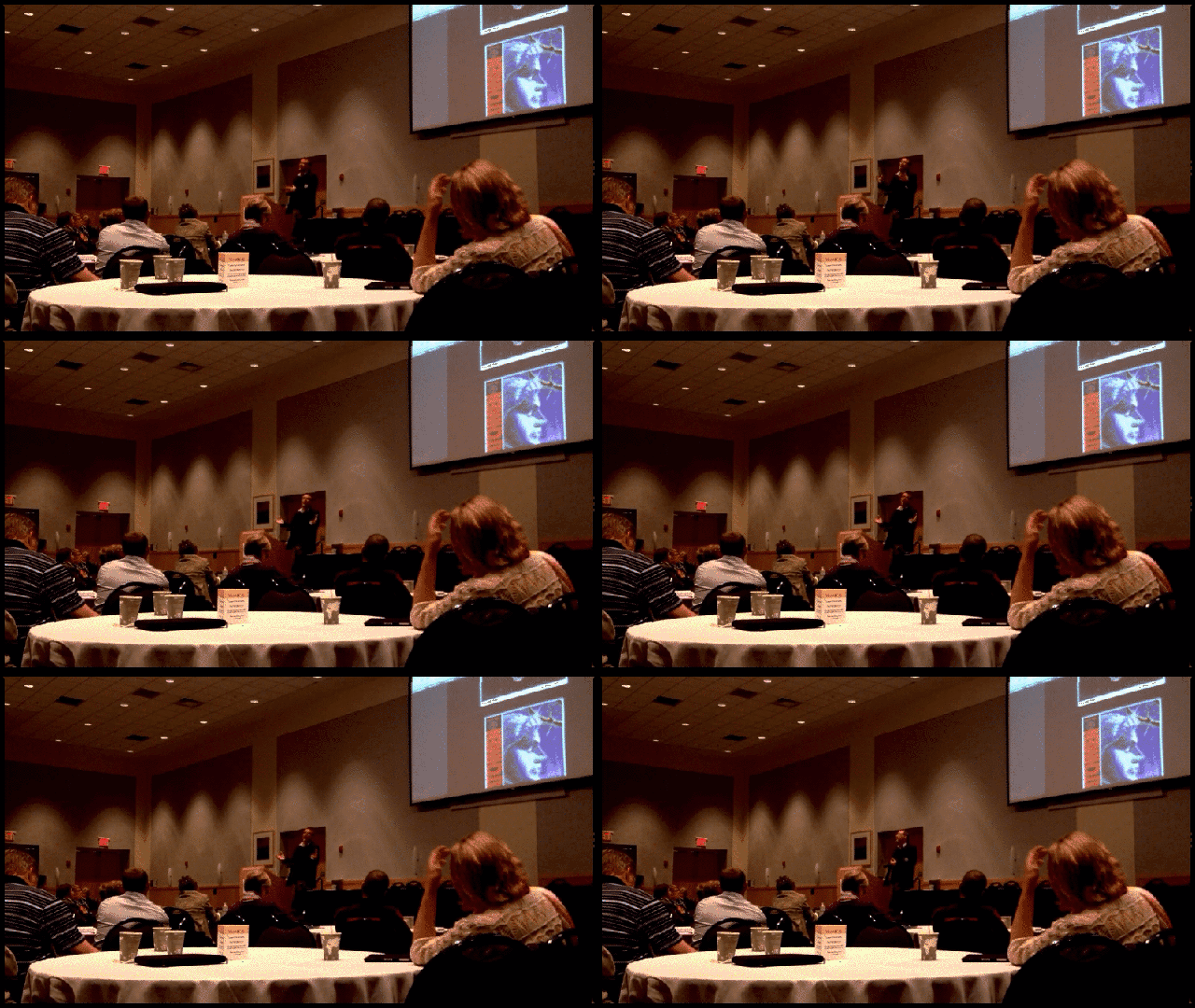
Last night I had the distinct pleasure of presenting on the convergence of three topics that fascinate me in light of our cultural moment: zombies, pirates, and copyright. All three are big both in Japan and on the internet :), and I wanted to see if a loose and fun cultural history of zombies and pirates as a way to think through the state of copyright currently might be a fun talk to deliver for the Speaking Center’s Octoberfest event—and it was! The frame for Zombies is born out of a personal fascination and a post I did a few years back on the bava (one of my all time favorites) titled “Zombie Labor.”

The general gist returns zombies to their Afro-Caribbean, colonial roots and frames it in relationship to race, slavery, and labor—the Haitian revolution as an instance of this struggle for liberation from the “white zombie.” The idea of zombies as mindless workers alienated from themselves—not necessarily brain-eating corpses—but also indicting the parasitic relationship of the masters that control workers and force them into enslaved labor is a powerful figure that we changes the more popular biological vision we have currently. You can argue that George Romero starts the recent frame and breaks with this Afro-Caribbean tradition in 1968, though he does preserve the question of race and colonial struggle with the main character and his demise at the end, echoing both the Vietnam War and the Civil Rights movement of the late 1960s. The film was delivered to NYC the night Martin Luther King, Jr. was assassinated.
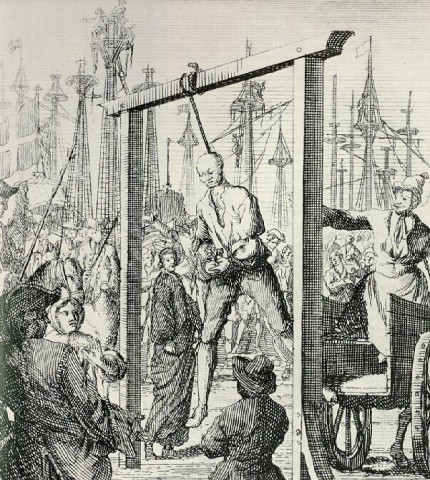
Part II, dedicated to pirates, frames a similar history of labor in which a band of proletariat revolutionaries challenge the existing terror of emerging, capitalist nation states. Historian Marcus Rediker articulates the three periods of the Golden Age of Piracy (from 1650-1730) in his book Villains of All Nations, Pirates in the Golden Age, which I discuss. In particular Rediker focuses on the moment after the War of Spanish Succession (1700-1704) which roughly lasts from 1716-1726. This was the moment wherein the pirates we most commonly identify in contemporary culture hail from. Figures like Edward Teach, more commonly known as Blackbeard, was captured by a group clandestinely commissioned by Virginia’s Lieutenant Governor Alexander Spotswood. A particularly interesting fact locally given we live right up the road from Spotswood’s colonial iron works and legendary home the Enchanted Castle (located in Spotsylvania County, named after his truly)—a space referred to regularly as Spotsy, or Spotsyltucky if you are feeling frisky. The most compelling point Rediker makes about the pirates of this era is the proto-democratic structure of the community, the unified voice of labor struggle, and the willingness to fight force with force. What is depressing is how brutally and swiftly this moment of piracy was crushed and any articulated challenge to dominant notions of global distribution and private property were crushed.
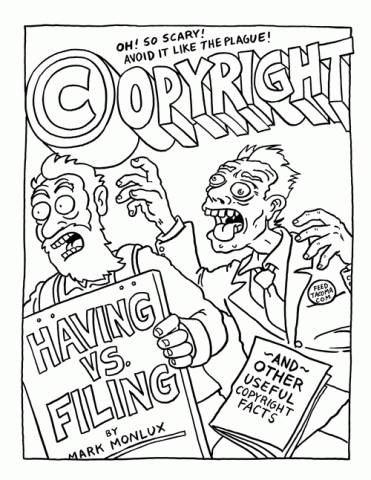
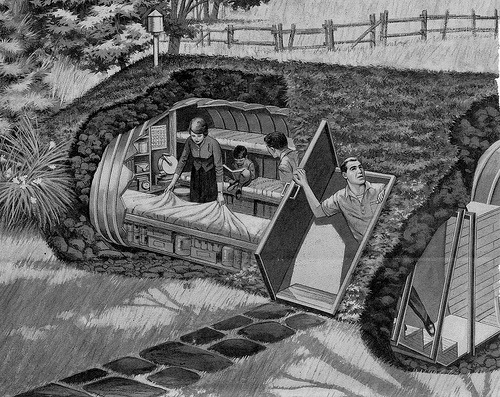
Image credit: Mark Monlux

Finally, I spent the last part of the talk trying to relate the cultural history of both zombies and pirates to internet culture using the laws of piracy in 1721. There’s still a sustained and compelling study to be done here to tie copyright in, but I have to take the next steps and spend some time researching the cultural history of copyright over the 17th, 18th and 19th century in the colonies and beyond. That would round this talk out brilliantly. What’s more, I taught a Summer class back in 2007 (an early online, open course that was pretty awesome) called “Discipline and Punish” (stolen shamelessly from David Kazanjian’s grad school class I took with him dealing with this topic) which dealt with these same issues through Michel Foucault’s theory of the emergence of new forms of crime and punishment that internalized the ideas of control and self-policing by reading the colonial literature fo the time, including Cotton Mather’s telling of pirate William Fly’s defiance at his hanging. In fact counterfeiting (or illegal copying 🙂 ) was a huge crime in the early Americas. This part needs the most work and I recognize that, but for me it was an amazing opportunity to get out in front of number of students (thank you Daniel, Haley, Will, Jessica, and all the others I don’t know the names of) and the ever awesome Jack Bales to present my ideas. Particularly given everyone not only showed up, but remained engaged, excited, and infectious to the bitter end! It was a great night, and reminded me how awesome it is to be a part of learning community on the ground. I’m really fortunate to be asked to do these things, and special thanks to Russell Michelson for thinking of me for this, I was honored. It’s been a great semester for reading, thinking, and trying to return to some literary theory, cultural critique and intensive reading and discussing of a wide range of texts. Always more to do, but in the end UMW has been very good to me in this regard, the space has embraced me as more than an instructional technologist, but also a thinker—and we all need to do that. We need to think of each other as thinkers because that’s what we need to be when we meet each other in that space, and I love it! It makes me miss Brad Efford 🙂
Posted in copyright, pop culture, presentations, umw | Tagged , , , , | 6 Comments

OpenVa: Open & Digital Learning Resources Conference

On March 7th, 2013 UMW will be hosting Virginia’s inaugural Open and Digital Learning Resources Conference. The theme for this year’s conference is OpenVA which will explore how Virginia’s public institutions of higher ed are confronting the possibilities and challenges of open educational experiences and resources.

What’s particularly cool about this conference is that it’s a state-driven initiative to bring constituents from all of Virginia’s public colleges and universities into a day-long dialogue about digital resources that will hopefully evolve into cross-institutional, collaborative projects statewide. Richard Sebastian, one of the many architects of the conference, notes as much in his post announcing the vent:

….finding a statewide solution to rising textbook costs was the original focus of this effort, the planning committee concluded that limiting this conference to such a narrow topic would be a missed opportunity….the hope is that an eventual outcome of the conference will be to create or identify statewide mechanisms that can support [open digital learning resources] in higher ed.

The move from solving textbook costs to re-thinking how we define and share digital resource more broadly across Virginia’s public higher ed institutions is crucial in my mind. It’s the perfect opportunity to forge new, cross-campus relationships, share resources, and build a framework of connections across institutions to start augmenting all the innovation happening in isolation around the state. I’m excited at the potential of this conference and I’ll be blogging its development on the bava as well as on the openva blog regularly for the next few months.

I would be remiss if I didn’t acknowledge our debt to the Open Education conference in imagining this conference. In fact, we modelled the OpenVa call for proposals on theirs almost verbatim 🙂

Also, the conference is free and open to the public, in keeping with the theme. So, feel free to register here and find out what’s good in Virginia’s edtech world. Or, if you are part of a VA public institution and you have something you want to share then be sure to submit a proposal before November 30th, 2012.

Posted in openva | Tagged | 3 Comments

Opened12: The Open Boat

Image credit: Audrey Watter’s “oepnedjam”

I wasn’t in Vancouver last week for Open Education 2012, but I was following the hashtag on Twitter pretty intently. It’s an amazing conference for a lot of reasons, but the following two videos shot by Novak Rogic on a boat in Vancouver harbor capture the spirit of the open education conference brilliantly. Some conferences approach the whole thing as a business endeavor, here is how you raid higher education for financial gain, or something along those lines. But what follows captures the other side of that relationship, here is a group of people jamming together to imagine and create something beautiful. The desire for real and lasting relationships is at the heart of education in my mind, and as I watched opened unfold from afar it occurred to me that this community aspires to nothing less than personal communion through the harmony of the spheres. There really isn’t any question what community I want to be a part of!

Posted in open education | Tagged , | 8 Comments

A Minimalistic Thing is Front Page Material

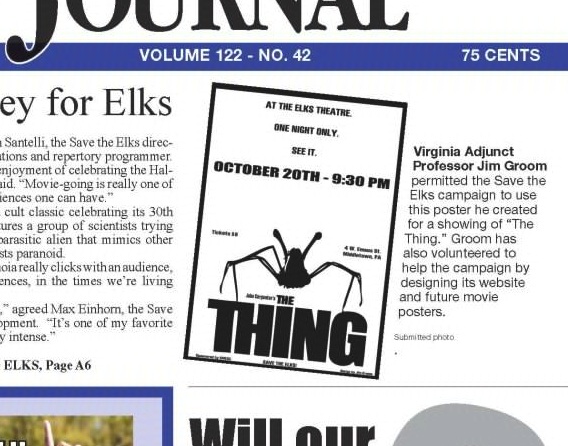
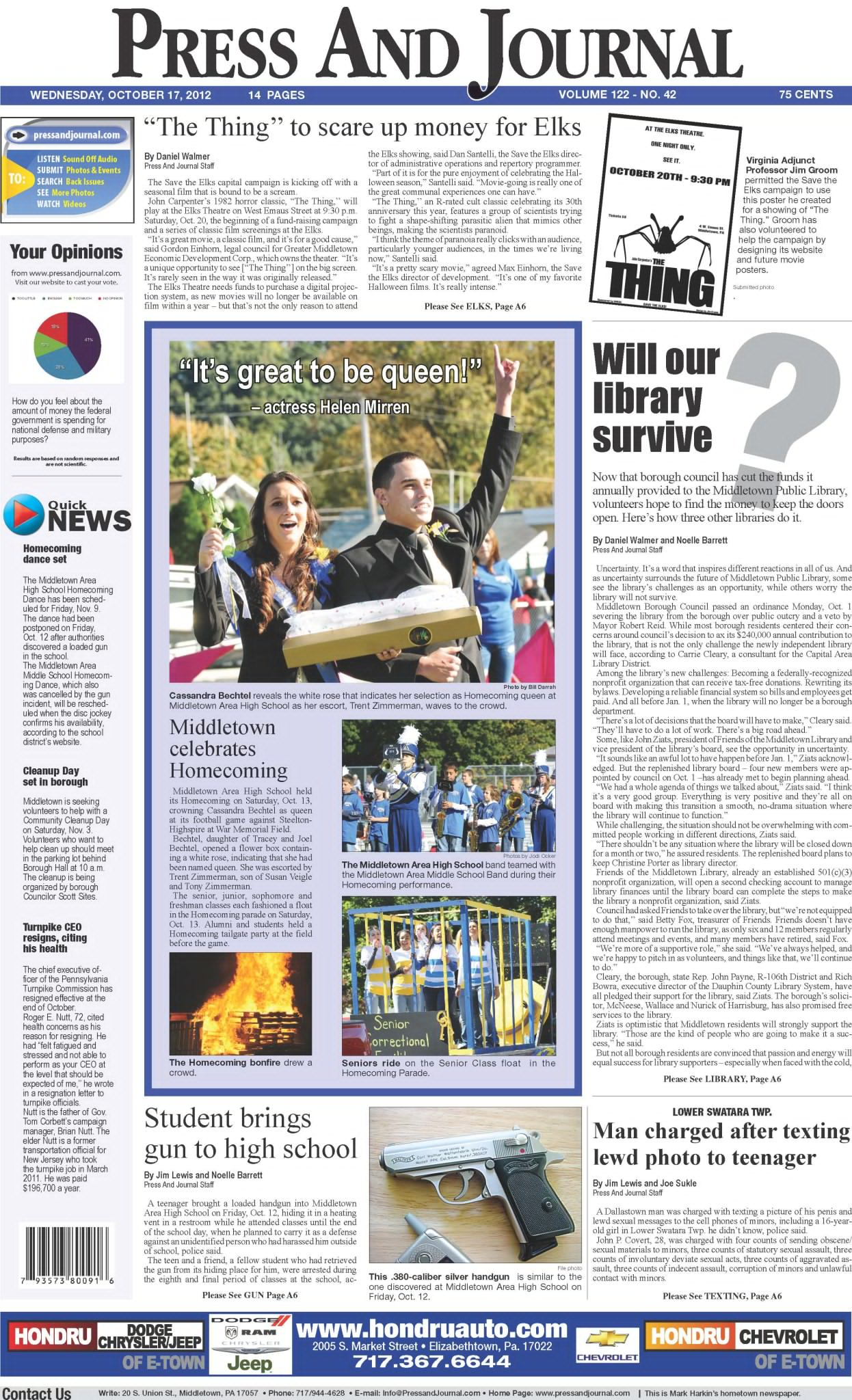
I didn’t make it up to Middletown, PA for the showing of The Thing last night to benefit the Elks Theatre that needs to raise money to convert its project equipment to digital—as do all exisiting theaters in the U.S. by the end of 2013. The conversion to digital raises larger questions and issues that the LA Weekly does a fine job examining in this article. Nonetheless, my poster was in full effect at last night’s showing from what I understand. What’s more,  it made the frontpage of the Press and Journal this morning. Awesome! I volunteered to help them design a site for the Save the Elks campaign and I’m planning on designing a few more minimalistic posters for the cause if time allows—which should be a blast. How cool, a throw away design assignment for ds106 find me modest fame and fortune 🙂

Posted in digital storytelling | Tagged , , , | 3 Comments

Working on casa bava

I’ve spent much of the last week working on my kitchen. We’ve been in our house for three years now, and all that time the kitchen has been a wreck. I was able to make almost the entire house livable before we moved in 2009, but ran out of time because Anto was pregnant with Tommaso and at some point labor has to give way to life! The kitchen needed a good work over, so given the time constraints we had to put it on hold. I thought I would get to it that Spring, or latest the following Fall but time flies when home repairs are crazy expensive and money and time are scarce. We finally had a contractor in this past Spring to rip up and replace the subfloor and clean up the walls (as well as add a window), but contractors get expensive quick so that couldn’t last. Finally, after a Summer of dreaming about it, I began the process of finishing the kitchen off myself: ripping out and rebuilding a closet, priming, caulking, and painting in preparation for putting down the backerboard and laying down ceramic tile. I’ll be floor sometime this coming weekend—you have no idea how good it will be to have a fully functioning and finished kitchen in casa bava.

I have to admit that sometimes I really like, and need, manual labor like this. When work is kicking my ass (and it has been) it helps to really focus and think for hours on end about a wide range of things. There is no music, no internet, no interruptions, no eating just work. It’s similar to my experience—more than 20 years ago now— of running long distances. I would think intensely about a number of things and really begin to feel outside of time. What I’ve been thinking about is what lies ahead for DTLT, but more on that in another post, my upcoming presentation (i.e. this  Monday!) at James Madison University’s Teaching and Learning Technology Conference for which I will be using The Tales from the Crypt aesthetic to discuss life after online education—playing with the concept of the undead while exploring the example of ds106 as a model.

After that, this Wednesday I’ll be presenting at UMW on another undead-related topic:

I’m excited about this presentation as well because it will be to a random group of UMW students that will be eating pizza! This will be a full-on lecture and  I will be focusing on the parallel cultural histories of zombies and pirates from the 17th and 18th centuries through to the 21st.  I’ll be making the argument that the return of both zombies and pirates to the forefront of internet popular culture over the last decade is in direct response to the outdated copyright regime of the twentieth century. I’ll be blogging both of these talks over the next couple of days because, alas, I won’t be working on the house for a bit after tomorrow. So, I guess I just wanted to capture what I’ve been doing over the past week. Think of this post as a kind of placeholder for all the blogging I’m doing in my head these days.

Posted in casa bava | Tagged | 3 Comments

Hardboiled: Mildred Pierce Discussion (Part 2) & Midterm

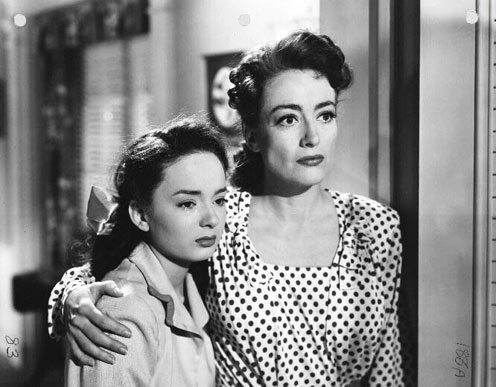
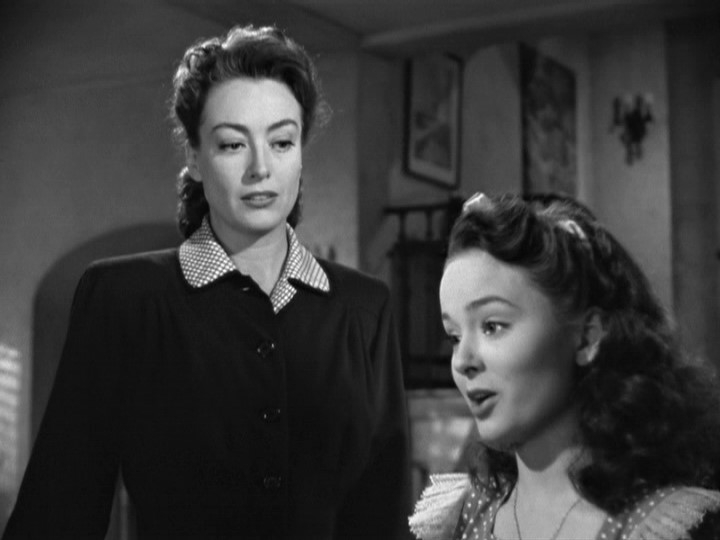
Mildred and Veda

Mildred Pierce Class Discussion (10-11-12)
The class discussion covering the second half of James M. Caine’s Mildred Pierce from Thursday can be found above. Oddly enough I forgot my marked up copy of the novel at home, so rather than freaking out I turned it back on the class. What passages were they marking up? What particular elements interested them? I like this strategy and I think am gonna forget my book more often 🙂 We spent some time discussing what a total bitch Veda is, which is requisite for this novel. Also, does it seem strange that Veda and Monty ride off together into the sunset with scott-free with possibilites, more money, and no regrets. Talk about rewarding the worst possible characters, what does this say about Caine’s worldview?

And while discussing the end of the film we moved to the famous film version of Mildred Pierce (1945) starring Joan Crawford to talk about how radically it differs from the novel in some very interesting ways (William Faulkner was purported to be an uncredited writer for this film). How does the film differ you ask? Well, for example, the film begins at the end with Monty being murdered. Say what? There was no murder in the novel. In fact, the entire film is transformed into a classic noir right down to the flashback narrative, shadow filled atmosphere, and hardboiled detectives. The only detective in the novel was the private investigator Mildred and Bert hire to look into Veda’s blackmail scam.

Speaking of the film, Maureen found this great scene from Mildred Pierce on YouTube which actually captures the spirit of the novel quite well, despite Hollywood’s push to transform it into a noir (which works quite well):

Another nice tidbit about the film was the fetishism of Joan Crawford’s unbelievable performance, which is the subject of Sonic Youth’s song “Mildred Pierce” and further highlighted by the video:

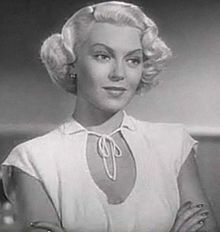
What’s more, Paul Bond blogged about how hard it is to separate Joan Crawford’s own biography from the film, which reminds me of Lana Turner’s crazy personal life, who is a femme fatale from another of Caine’s hardboiled novel turned famous film, namely The Postman Always Rings Twice. What’s more, as Lana Turner’s story goes Johnny Stampanato (a real-life LA mobster who makes an appearance in James Ellroy’s L.A. Confidential and The Big Nowhere) and Turner were having a violent argument when her 14 year old daughter stabbed Stampanato to death. The tangled web of Hollywood, literature, and crime!

Anyway, we wrapped up with discussing the midterm that we will have in-class on Thursday, October 18th. You can see some sample questions here, and be sure to bring a blue book, I will post the midterm online during the class for anyone who wants to have some fun.

Posted in Hardboiled | Tagged , , , , , , | Leave a comment

5 TV Hacking Films from the 80s

The other night I was re-watching John Carpenter’s prescient 1988 film They Live, it was as good as I remembered it was. But this time around something struck me besides the eery resonance with last year’s occupy movement, namely the TV hacking. A number of my favorite films from the 80s prominently feature TV hacking, which means that TV hacking films were far, far better than the computer hacking films from the 80s because computer hacking in the 80s was still way too nerdy. So, in an attempt to prove my point take a look at this illustrious list of TV hacking films from the 80s:

1. Simon (1980)

An Alan Arkin tour-de-force, this one is well worth watching. Here is the plot summary:

The Institute for Advanced Concepts, a group of scientists with an unlimited budget and a propensity for elaborate pranks, brainwash a psychology professor named Simon Mendelssohn who was abandoned at birth and manage to convince him, and the rest of the world, that he is of extraterrestrial origin. Simon escapes and attempts to reform American culture by overriding TV signals with a high power TV transmitter, becoming a national celebrity in the process.

At 4:17 is one of many Simon rants throughout the film, all done through broadcast TV hacking.

2. Used Cars (1980)

Brilliant scene from Used Cars where feuding used car lot owners create outlandish commercials to discredit the competition. This one uses broadcast signal intrusion during President Jimmy Carter’s State of the Union address—brilliant touch! Insane language alert on this one.

3. Videodrome (1983)

In a scene from Videodrome a technician discovers a pirated TV signal that is broadcasting snuff films. Go to 12:26 for the TV hacking scene. Also, the embedded video above is the full film on Youtube, and it ‘s good quality too! Another kind of hacking 🙂 NB: Videodrome remains one of my favorite films of all time.

4. Running Man (1987)

A group of revolutionaries fighting the doctored footage of both TV news and the life or death gameshow Running Man hijack the broadcast to show the truth! Go to 1 hour 22 minutes and 42 seconds for the moment the tech is laid out for us. Also, embedded video above is the full film on YouTube.

5) They Live (1988)

Once again, revolutionaries trying to educate the sleeping masses to the fact that a hostile alien race has taken over Earth and are doubling as the power elite, i.e. they are the 1% 🙂  To break the spell, the news broadcast-infused opium must be stopped! Go to 11:47 in the YouTube video above (which once again is the entire film!).

Man, that was a fun post!

Posted in Movie Lists, movies | Tagged , , , , , , | 6 Comments

Hardboiled Week 7: Mildred Pierce (part 1)

Mildred and Veda

This week we will be reading and discussing James M. Caine’s Mildred Pierce, one of three extremely influential hardboiled novels by this author—the other two being The Postman Always Rings Twice (1934) and Double Indemnity (1943, though serialized in 1936). What’s interesting about these novels is that all of them have film versions that are themselves classics, and represent some of the best examples of film noir of the 1940s. We’ve already watched Billy Wilder’s 1944 classic Double Indemnity, and we’ll be looking at a few clips from the film version of Mildred Pierce (1945) and  The Postman Always Rings Twice (1946) tomorrow.

One of the tensions we will discuss moving forward in this class is how film is informing literature during the twentieth century and vice versa. Particularly within film noir which is arguably the most enduring style/genre/idea to emerge during the golden age of Hollywood. In fact, all but one book we will read for the rest of the semester has a film interpretation, hell Mildred Pierce was turned into an HBO miniseries just last year. How do we start thinking about the role reading film plays in our understanding of the literature? How are film versions of these books interpretations? More on this tomorrow.

Additionally, I would like you all to start thinking about the role gender plays in framing out the narrative tensions in novel. Also, how do they reflect the moment in which the book was both written and read? How does Mildred compare to women we have read about or seen on film thus far? How would you start framing an argument around the role gender plays in driving the narrative? We spent some time in class last night looking specifically at particular passages from the novel that focus on the theme of gender; I would like you all to keep these and mind and starting highlighting your own for tomorrow’s discussion. I will be eliciting your readings of how the theme of gender is being explored in the second half of the novel. Read closely! Also, below is the audio from last night’s class, there are a few glitches, but it’s pretty clean overall, let me know if you have any issues or questions.

Mildred Pierce Class Discussion (10-9-12)

Posted in Hardboiled | Tagged , , | 2 Comments