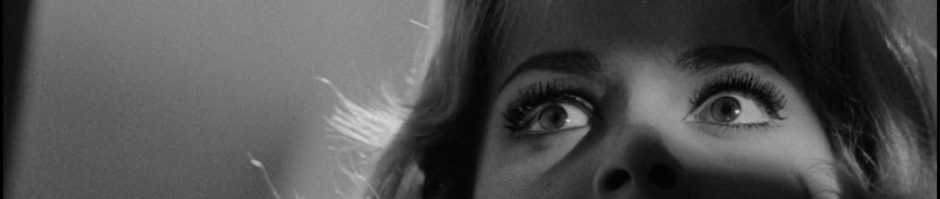

“It was pure in my heart”

This post celebrating Jack Kerouac’s hotness on UMW Blogs thrust me into a rabbit hole that it has taken me several hours to crawl out from. Back when I was an undergraduate at UCLA and worked at the great Audio Visual Services on that campus we delivered the VHS tapes, Laser Discs, and even a few DVDs to classes (along with the equipment to play them). One Laser Disc that came through AVS that I “borrowed” for a while was the 1985 documentary Kerouac, the Movie (a sweet surprise, the entire documentary is available freely on YouTube here).

The documentary is an interesting attempt to recreate the biography of Kerouac through his novels, and I definitely recommend it if you are a fan of Kerouac or want to learn more about the Beats. It’s narrated by Peter Coyote, and it features William Burroughs and Allen Ginsburg, as well as a wide range of people from Kerouac’s life. One of the scenes that seemed to get burnt into my memory was a 1968 interview he did about the Hippies on William Buckley Jr.’s television show Firing Line. Kerouac was bombed, what’s more he was insufferable: correcting other guests’ pronunciation of words; interrupting them with childish sounds and taunts; while generally dismissing everything they say out-of-hand. In other words, he’s a jackass. Broken down, far too old for his age (he was only 46 at the time) and just a year away from his untimely death. You can see the premature age from pain all over his face, seeing him in this interview is not unlike watching a train wreck. All that said, there is a single moment of beauty in which you can see, at least for a moment, a relic of the idealism that drove him there. When Buckley asks if the hippies had somehow polluted the purity of the Beat movement with their ideology, Kerouac responds “it was pure in my heart.” Amen. Embedded below is the full Firing Line episode which has the special treat of also featuring Ed Sanders). The Open Culture blog linked to excerpts from this interview back in 2009, and it is nice to see the whole thing has been uploaded to YouTUbe back in May.
Posted in literature, movies, YouTube | Tagged , , , | Leave a comment

“EdTech transmissions: We Control the Vertical and the Horizontal” at Maricopa College

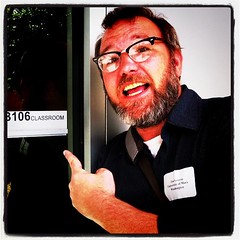
Image credit: Cogdog made me stop at all the 106 rooms

Back in May I was lucky enough to be invited by the good folks of the Maricopa College System (the largest community college district in the US)  to talk about edtech as a change agent in higher education at their 2011 Teaching and Learning with Technology conference. I focused my talk on a few things: UMW Blogs, Jon Beasley-Murray’s Wikipedia Experiment, and the MOOC (in particular #ds106) as potential examples of change that is currently happening on the higher education landscape. I have talked about UMW Blogs a lot over the last few years, and what was new in this talk for me was trying to explain ds106 (which I think I did a better job of at the Elon talk). What was cool about my freeform discussion of ds106 is that it marks one of the few times where the kernel of an idea emerged within a talk for me that went on to become something that I actually impelemented and thought was awesome. I had been thinking a lot about how I would do ds106 differently for the fully online, 5-week intensive Summer version of the course, and it is in this talk (as well as a series of conversations with Alan Levine over the few days following this talk) that I got the courage to go ahead with the Summer of Oblivion. The last 30 minutes of this talk (at about the 40:00 minute mark) I start framing my thoughts about MOOCs, ds106, and the possibilities for rethinking online learning with such a model—I even nail the vision I has been searching for in regards to Videodrome, Dr. O’Blivion and what it might all mean.

Finally, I sound like a salty dog sailor in this video because I had blown out my voice in Vancouver only a day or two before at the epic Norther Voice jam session at the Sanctuary. I still hold that up as one of the greatest experiences of my life, and between Vancouver with all the #ds106 maniacs and Arizona with cogdog, that 10 day trip back in May was OISOME!

Additionally, there is also a video available from the 45 minute Q & A after the talk which was a blast. From what I can remember, Alan and I spent a lot of time wondering why anyone would use an LMS —and saying something to the effect that “we don’t hate BlackBoard, but just feel better when it is not around.” 🙂

Special thanks to all the folks at Maricopa who made me feel right at home despite the fact I was highly self-conscious given how shot my voice was. And I would particularly like to thank Christy Alcaron and Eric Leshinskie for making everything so easy. What’s more, I have a separate post I need to write about the unbelievable edtech folks on the ground at Maricopa. They have come up with an extra-institutional professional development approach called the “cybersalon” which I had the distinct pleasure to partake in after the presentation—and I must say it’s brilliant, but more on that shortly.

Posted in presentations | Tagged , , , | 7 Comments

Shenandoah debuts online

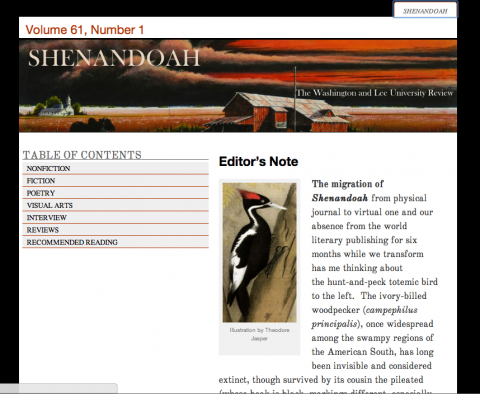
It’s official, Shenandoah literary magazine has made the move from print to online-only. What’s more, it just so happens that I was integral in the process of moving this journal to WordPress—where else could it go? Martha Burtis and I came up with a pretty slick architecture for making this happen elegantly and easily. I will be blogging that out over the next month in a multi-part series. But in the interim I highly recommend you check out the first online issue of Shenandoah and leave a comment. I’m personally a big fan of Steve Scafidi, so if you do know his work check out a number of poems from his forthcoming book Lincoln Poems—there is even audio of him reading the poems. And what I love about the new format of Shenandoah is that it is free available to anyone with an internet connection—therein is the true revolution.

Posted in Shenandoah | Tagged , | 4 Comments

Independent Domains – Thresholds to Teaching and Learning on the Open Web

A couple of weeks ago I had the distinct pleasure of delivering the closing plenary session at the Elon University’s 8th Annual Teaching and Learning Conference. Katie King, Ben McFadyen, and Claudia Sparks were awesome, and special thanks to Peter Felton for bringing me there and actually encouraging me to talk about ds106. The day was set up brilliantly, Ray Land gave the opening keynote in which he talked about “Threshhold Concepts and Troublesome Knowledge” (which you can see in its entirety here). His idea of “a pedagogy of uncertainty” went really well with the second half of my talk which was about the ds106 Summer of Oblivion, so I decided to steal it and use it in my closing plenary. The first part of my talk is an overview of what UMW has done with UMW Blogs and the seemingly endless potential for an open source, open access publishing platform to frame an online community of thought at a university. As you might have guessed, I have talked about this a lot over the last 4 or 5 years.

The second half of this talk was really the first time I had an extended period of time to think about and share just how trippy, frightening, and amazing the ds106 Summer of Oblivion class was for me. From about the 20 minute mark in this presentation until the 50 minute mark I try and work through some initial thoughts about what ds106 might be about, and how the Summer of Oblivion reinforced for me just how much the world of online learning is completely unexplored in terms of experimentation and a variety of approaches. This opportunity wouldn’t have been possible without the fine folks at Elon who were so cool in inviting me and letting me go hog wild, so thanks to them as well as everyone who helped make the Summer of Oblivion possible—I gave many of you kudos in the talk, but as always there are many, many more I missed.

Posted in digital identity, digital storytelling, presentations | Tagged | 1 Comment

Back to school at UMW (Blogs)

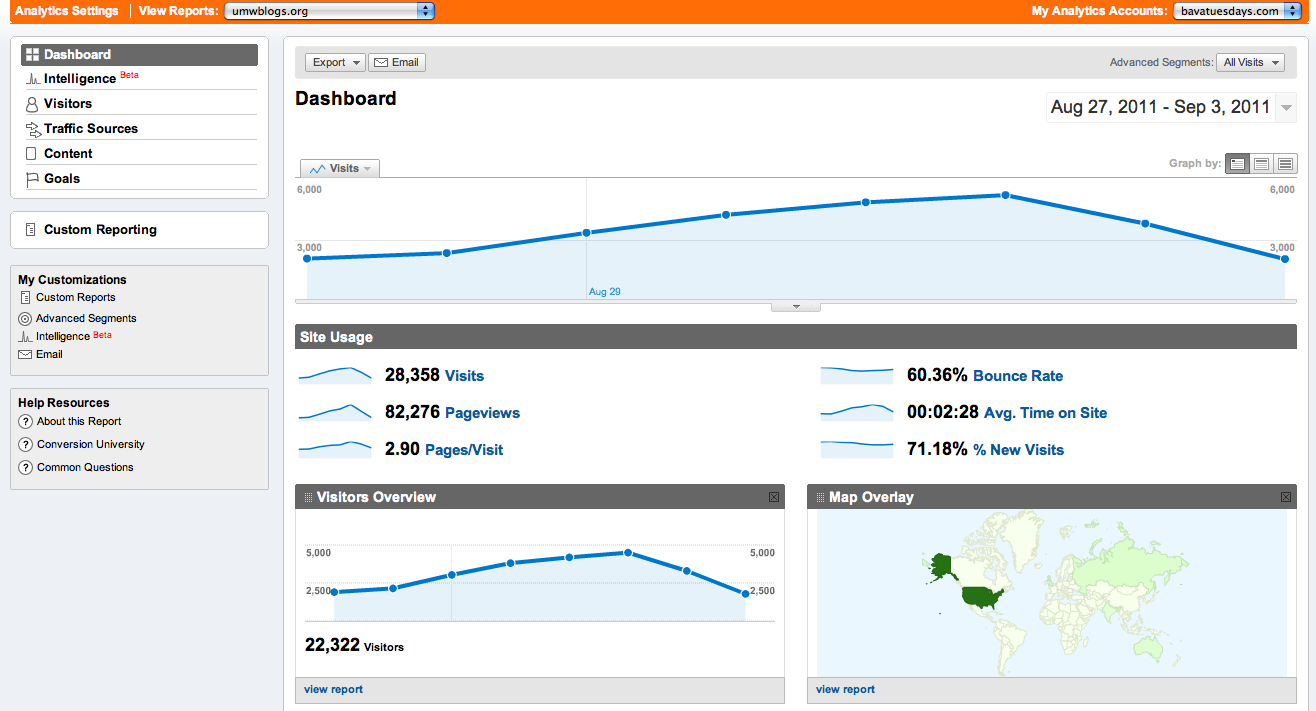
We just finished our first week at UMW—-it was an uncharacteristically late start for us. We are usually in week two or three by now, but I am not complaining because the extra spell before game time was nice. That said, the semester has arrived and UMW Blogs held up beautifully the first week (even though it got clobbered traffic wise). Martha Burtis did a site re-design which looks snazzy. What’s more, Martha re-themed the UMW Wiki to match UMW Blogs, which is something we plan on experimenting with and using a lot more this year. After the upgrade in early August, it seems like UMW Blogs has been rock solid. No downtime, and very little in the way of errors, crashing plugins, rogue themes, etc. The system is tight, and I am not afraid to say it these days. With more than 22,000 unique visitors during week one and over 82,000 page views—all I have to say is bring it on. UMW may be small, we may be relatively poor, but we are scrappy as all hell. What’s more we are open education at it’s best and least pedantic.

Posted in UMW Blogs, wpmu | Tagged , , , , | 2 Comments

A DTLT Today Weekly Round Up (9-2-11)

There were a ton of solid DTLT Today episodes last week. Tim Owens and I interviewed Antonio Vantaggiato on his work in progress (The Zen of Teaching) that interviews a variety of folks about the myths surrounding teaching, learning, and technology in our current moment. Add to that Tim and Andy Rush’s interview with UMW’s own Curtiss Grymala (resident WordPress Programmer) who under the visionary leadership of Cathy Derecki in University Relations has been re-imagining, re-coding, and re-designing UMW’s main website for WordPress.

What’s more, I sat down with Martha Burtis for an episode of DTLT Today in which we talked about the Online Learning Initiative being spearheaded here at UMW by the great Steve Greenlaw. Both Martha and I are on the committee, and in addition to both Martha’s incisively blogged thoughts about the state of online learning under the tyranny of instructional designers heretofore, as well as Steve Greenlaw’s last two or three posts in which he is framing his own course redesign, the tyranny of the contact hour, while thinking out loud about what a re-imagined high impact course (whether face-to-face or online) might look like (en fuego, anyone?). So, given UMW’s current state-driven initiative to experiment with online learning, Martha and I sat down to try and explore what it might mean to rethink online learning for the liberal arts experience.

Finally, my special friend Andy Rush and I sat down to talk about the DTLT media empire collective that has emerged over the last number of years. Starting with UMW Blogs, but focusing more on the “PGP” (or post-Grant Potter ds106radio era). The impact Grant Potter’s ds106radio experiment has had on the thinking and future of DTLT cannot be underestimated, not can how important a piece to the puzzle the addition of the great Tim Owens has been to get us there.

We have been playing hard with DTLT Today, there is no doubt about that. And while I was working with faculty all week I have been planting the seeds. I think I have two interviews with UMW faculty lined up for next week—if there is space in the crowded DTLT Today schedule. I am planning on interviewing Professor James Harding on the idea of Terrorism and how it has been defined post-9/11 given his work on the subject in his Post-9/11 seminar. What’s more, I am hoping pulitzer prize winning poet Claudia Emerson will sit down with us to talk about what she is working on currently. There is nothing cooler than listening to both these thinkers talk and imagine, and for me that is a big part of what DTLT Today is and will increasingly become. Also, we need to start getting the students and their work on there.

Finally, doing a 15 minute DTLT Today episode on a regular basis is kind of like a group video blog—and there can be no question just how formative this series has been in bringing the DTLT group together around ideas and having fun—both of which we do very well 🙂

Posted in dtlt, DTLT Today | Tagged , , , , , , | Leave a comment

Google+ I barely knew you, or deleting my Google+ account

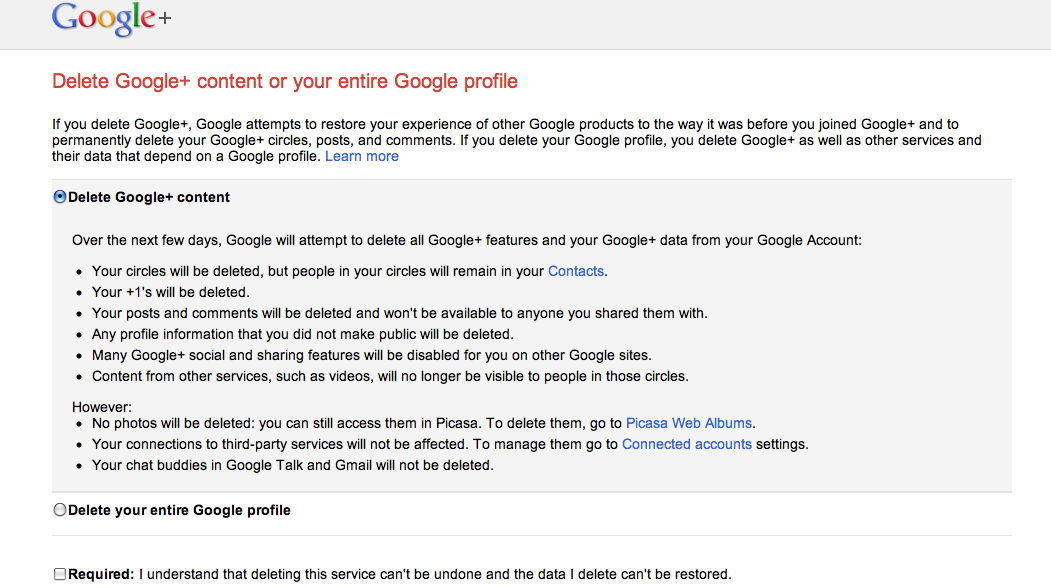
I fired Google+ today. No real moral outrage or grandiose theories about advertising companies owning our souls, though that is all absolutely true and I am already beyond the pale. But, in the end, I just wanted to pull a Nancy Reagan and “just say no.” No to another social network, no to another easy corporate solution, and no to a whole ton of people I really don’t know forcing me to categorize them. Despite all the blather about having layers (or levels) of people permissions on Google+, the circles really undo any sense of the organic web. Add to that I had 500+ folks in one or the other of those circles and I did little or nothing to get them there—they just flooded my inbox like invitation spam. It all seemed prefabricated, not to mention premised upon all the relationships of mine already established in Google services I used they had data mined (which makes it spam, right?), and ultimately it ended up feeling like a social get together in a commercial mall that was designed by Facebook but built and sponsored by Google. I know you can’t ever truly be free of all the demons, but it’s probably good policy not to get to comfortable with any of them.

All that said, to Google’s credit deleting my Google+ account was dead simple. I just found this post by Dave Winer (who has a much more thoughtful reasoning for opting out) and followed this link.

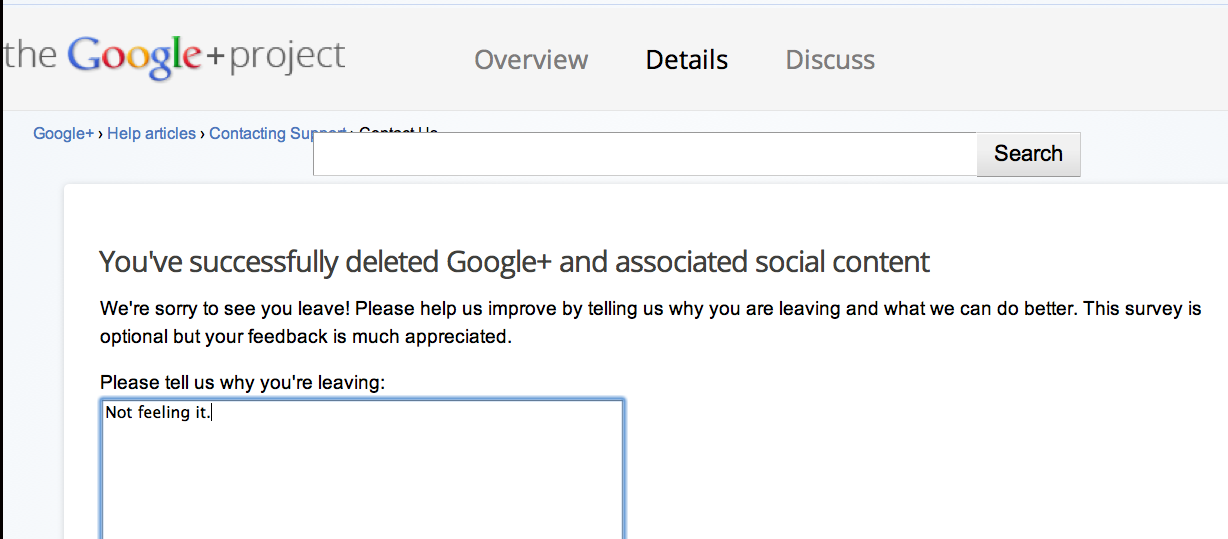
And below is the picture story of the break-up 🙂

Posted in google | Tagged | 7 Comments

4 Icon Cookie Challenge….the bava abides

Image credit: jennifer könig

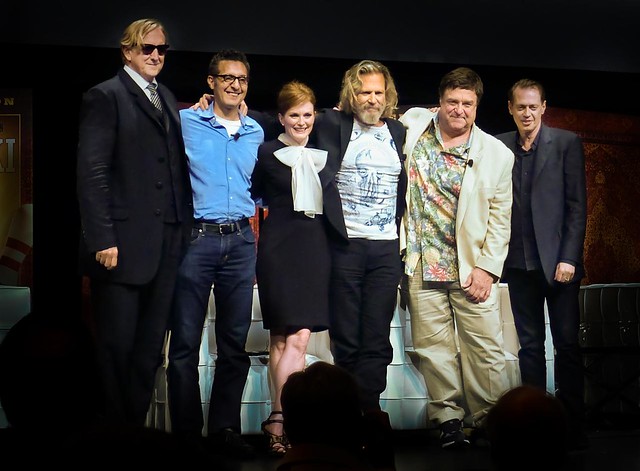
I just happened to stumble upon some images from the recent Lebowskifest cast reunion (the film was made over 13 years ago!!!). I’m an unabashed fan, so I got sucked down the rabbit hole. The images led me to the Lebowskifest site which led me to the livestream archive of the reunion, which is awesome. John Goodman seems like he is a psycho, and Julianne Moore actually got pregnant midway through the filming and refers to her son in the following video as the little Lebowski—I love that! And what’s even more awesome about the video is that the cast is just goofing on the film and having fun with the quotes that every fan goofs on amongst themselves. Surreal.

Watch live streaming video from thebiglebowski at livestream.com

I then searched on and ran across this image by Mauzygirl in the Big Lebowski Flickr group/pool that features an amazingly ornate batch of Lebowski cookies she made. They are amazing, so I got the idea of doing a 4 icon challenge ds106 assignment—but this time based on cookie designs. How cool would it be to have students bake these icons for this assignment?

Posted in digital storytelling | Tagged , , , , | 1 Comment

DTLT’s Corporate Cuddle Couch

This is why I love what I do and the folks I do it with. DTLT Today is a total blast, every EdTech shop should try this—it’s a great daily exercise for conversing, sharing, trust and thinking. Below is a republish of today’s episode in which the group cuddles up on the DTLT casting couch 🙂

In recent years we’ve seen the rise of a culture of acceptance with corporate vendor interests and a simultaneous decline of investment in the educators in the field and the schools they work at. The equation is simple: Take the money you’re handing to corporations and invest it in your own school system and people. We’ve got the whole group together to talk about corporate and personal culture and investing in people, not products.

Links we talked about:

Posted in DTLT Today | Tagged , , | 2 Comments

Personal, not corporate, expression

I came across a video interview on Democracy Now with Brewster Kahle and Rick Prelinger—two of the great open content pioneers of the digital age—talking about digital preservation, the Google juggernaut, and the home movie archive. One of the things that struck me during the interview was Rick Prelinger’s distinction between personal and corporate expression.

And home movies are astonishing, because they’re, as you say, personal, not corporate, expression. They’re individuals witnessing history, not simply great events, but also history of everyday life. And we’re building a home movie collection at the Internet Archive for all of us to compare, understand, experience, to reuse, and for the use of scholars. And we hope that this will really change the way that people look at film, because film is not just movies that you go to and pay 10 bucks to see. Movies are also the way we look at each other.

It seems obvious that studio films, most TV, etc. are corporate expressions, but all too often they seem other than that—they seem to be stories that may happen to be corporate funded—but not necessarily corporate expressions. But is that the case? When these corporate expressions are contrasted with the often non-linear, non-narrative form of the personal expressions in home movies the idea of the culture industry as defining a predominant sense of a capital-driven expression seems obvious.

How much of my nostalgia for video games, hollywood films, and the toys of my youth might be understood as corporate expressions? What’s more, at what point are they personal? Where is the in-between space of this idea in which the corporate expression becomes a deeply personal one without being a kind of necessary zombification of one’s creative soul? Is the idea of corporate overdetermined in this case? Then again maybe the idea of personal is? These are by no means new questions, but I love how the idea of the corporate versus personal expression as a distinction drawn by Prelinger brings these questions into a sharp light for the digital age in which the ability to create and share our personal expressions has never been easier or more commonplace.

The idea of archiving the everyday is what turned me onto the digital in the first place—but more and more I’m finding archiving is just another side effect of the possibilities implicit within the moment.

Posted in Uncategorized | 5 Comments