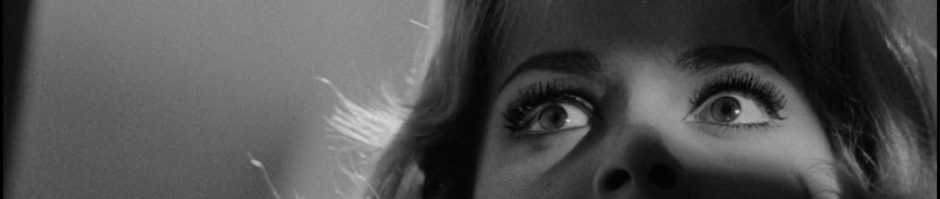
Raiders of the Lost Ark—Opening sequence

When talking about the opening to Sergio Leone’s Once Upon the Time in the West, I was reminded of the opening sequence that in many ways sealed my nearly thirty year love affair with film: the opening of Raiders of the Lost Ark (1981). Watching this sequence unfold in the dark light of the Baldwin Century movie theater was perhaps one of the greatest moments in my life. After I saw this scene, I immediately committed to stay for the second showing—and watched the whole movie through again. I’m not sure the second time was as good as the first, but I certainly know that from then on the character of Indiana Jones was forever branded in my imagination as the figure of all that was holy and right.

I soon after went home and asked for a fedora, leather jacket, and whip, and a decades long love affair was born. In fact, this scene from Raiders prompted me to buy my first film magazine—which featured the behind the scenes making of the film—and it was the moment I realized that films weren’t made sequentially. I couldn’t believe everything was pieced together and filmed out of order— I was sure they just started rolling the camera and the events unfolded somehow naturally. The whole concept blew my mind and nearly crushed the sense of magic I had attributed to the light on the screen up and until that point, but I guess that which does not kill your sense of wonder only makes it stronger.

Posted in movies, scenic | Tagged , , , , | 3 Comments

Spider-Man 1967, Episode 18

”Fountain of Terror”: Peter discovers that Dr. Connor is missing and travels to Florida to investigate. He encounters Cliventon, and chases him along with Billy Connor to his hideout where they find the doctor. Now, they must work as a team to defeat Cliventon and save the doctor! ”Fiddler on the Loose”: The Fiddler kidnaps Flintridge’s band, a popular music group. Spider-Man rushes to prevent the Fiddler from destroying the Flintridge’s music and get them back on the airwaves.

Posted in pop culture, television, TV | Tagged , , , | Leave a comment

The Breakfast Club—Bender in Closet scene

The late John Hughes will have no shortage of tributes, and there is a real sense amongst many of my generation that he helped define as much as chronicle what it meant to be a white, suburban middle-class teen in America during the 80s. And one of his strongest suits for me was that many of his best films explored the issues of class in a money obsessed decade. Granted that his films completely ignored issues surrounding race and ethnicity—unless you want to call Long Duck Dong a character. And while Some Kind of Wonderful (1987) holds a special place in my heart, his masterpiece is undoubtedly The Breakfast Club (1985), and in no small part thanks to the brilliant performance of Paul Gleason as the assistant principle.

And if there was one scene from any Hughes film I would quote, it would have to be the scene wherein Gleason brings Bender into the closet and threatens to show up later in his life and kick the living shit out of him. It’s a remarkable scene for many reasons: Bender visibly caves as the haunting music starts; Gleason’s character transforms from a buffoon to a truly harrowing menace; the whole question of inevitability as seen through social class rears its ugly head—perhaps more potently than anywhere else in a Hughes film. “When you’re caught up in your own pathetic life, I’ll be there…” It is one of the rare moments in Hughes’s 80s high school films where the comic veil is removed for a second, and the truly agonistic struggle of power and class (with the setting appropriately being a high school) rears its ugly head.

Posted in movies, scenic | Tagged , , , , | 6 Comments

Once Upon A Time in the West – Opening Scene

The opening scene from Sergio Leone’s Once Upon a Time in the West (1968) may very well be the greatest opening scene of any film ever. And I mean ever, I can’t even think of anything remotely close, save maybe the insane shoot-out from The Wild Bunch (1968) (a film which will be featured prominently in this series). In fact, the opening scene of this film is actually so good that it ultimately makes the rest of an excellent film seem anti-climactic. And while this film features Henry Fonda in his only role as a villain, which he plays brilliantly, and Charlie Bronson is an ass kicker with a harmonica, the opening scene is not only the greatest scene of any Leone film—which is saying a lot— but quite possibly one of the all time best. The only problem with it is that it comes too early in the film and doesn’t last long enough. Between the fly in the gun barrel, the plank wood train depot, the insane close-ups, and the impeccable pacing, this may be cinema at its most playfully gripping.

Hat tip to Luke Waltzer for sending in this request almost immediately after I tweeted the series. Which means I do accept requests, but they are run through a very stringent filter that only the best or worst scenes will survive 🙂

Posted in film, films, movies, scenic | Tagged , , , , , , , , | 13 Comments

Scene from Jaws: the USS Indianapolis

Think for a second about soliloquies in film, and then find me one that surpasses Quint’s narration of the shark infested horror of the USS Indianapolis from Jaws, you’ll be hard pressed. Jaws is a work of art of the highest magnitude, and the greatest aspect of the film has to be the casting of Robert Shaw as Quint, he is Captain Ahab writ large—something Gregory Peck could never pull off. In fact, if you atch enough Gregory Peck films you quickly realize he couldn’t really act—he’s too stiff and one dimensional. Which means Peck as Ahab in John Huston’s Moby Dick may be one of the bigger mistakes in film history, but that’s another story. And right now this scene is all about the great Robert Shaw!

Posted in scenic | Tagged , , , , , , | 5 Comments

Paris, Texas

Part 1:

Part 2:

While I am not a huge Wim Wenders fan, there are a number of scenes I could pick from Paris, Texas (1984), which I believe to be his one and only masterpiece. I could listen to Harry Dean Stanton tell just about any story, but hearing him tell this story about a jealous love gone mad was is a bit of film magic for me, and also hit very close to home back in the 80s and 90s. From his well-groomed hair to turning the chair around to the pure voyeurism of watching Nastassja Kinski slowly come to the realization of who is telling his this tale. Watching people struggling through the emotional minefield that is love and loss is maybe one of the hardest things to capture honestly on film—perhaps the only thing harder is good comedy—and this scene nails it like few others have. If you have any heart at all, it’s likely to be etched in you mind for a long time to come. And, for the record, if I didn’t choose this scene I would have chose the one where Harry Dean is washing the dishes and crooning in Spanish—that’s something special in its own right.

Posted in films, scenic | Tagged , , , , , , | 7 Comments

A conversation about faith, serendipity, and openness

Here is a little back and forth I had with Alec Couros which actually led to some interesting ideas and questions (at least for me) of the contemporary usage of the term serendipity as the premise for a kind of faith system of openness similar to Dickens’s idea of coincidence in his novels. A somewhat secular belief system in connections, chance, and some kind of beneficent fate. Serendipity may be the enemy! 😉 More seriously, this is a hacked together series of ideas I want to come back to in greater detail at some point, hence the capturing of it here, on my space, not twitter’s.

Jim Groom

jimgroom“Openness is as much a function of design as it is of any set of beliefs.” I said this in the UMW Blogs Story, it will frame my opened talk

Jim Groom

jimgroomhere’s the post, which on a re-read is a doozy: http://bit.ly/ST85R


 Alec Couroscourosa@jimgroom a bit of a chicken-and-egg thing going on there, which determines which? beliefs influence design/architecture or vice versa?

 Alec Couros

courosa@jimgroom or more directly, what do you see as the relationship between the two?

Jim Groom

jimgroom@courosa
I think some assumptions about openness can change as the architecture of the web does, making the design almost as important….

Jim Groom

jimgroom…as the philosophy. And I think openness can sometimes be stepped into, kinda like shit.

Jim Groom

jimgroomFor example, UMw Blogs a was not so much premised on openes as a doctrine, but rather as necessary extension of the application of education

Jim Groom

jimgroomIn other words, might we think of openness as a side effect of the new web that has been rhetorically transformed into its raison d’etre

Jim Groom

jimgroomThink about the combustion engine, it changed the built environment of a large part of the earth during the 20th century, scarring it deeply

Jim Groom

jimgroomYet the car remains one of the great icons of of freedom, liberty, and individuality—a veritable culture machine that poeticizes the road

Jim Groom

jimgroomHow can the happenstance of design not come to inform all sorts of cultural valences we couldn’t predict, yet often privilege the “verities”

Jim Groom

jimgroomOpenness has become such a verity, and by extension has become as fraught for co-option and commodification as the very road that enabled it

 Alec Couros

courosa@jimgroom For me,my beliefs have influenced edu.design,& as I measure student
success attr. 2 openness,it reinforces & extends these beliefs

Jim Groom

jimgroomHahahaha, now there are some late night tweets that no one will hear fall in the twitter forest 😉

Jim Groom

jimgroom@courosa But beliefs are conditional, and they themselves become emboldened by possibilities

Jim Groom

jimgroom@courosa Or even better than that, “Serendipity” becomes a kind of new faith system of openness, akin to Dickens’s turn to coincidence

Jim Groom

jimgroom@courosa
We believe that to give back is ultimately good, and will pay forward-promotion is the reward for sharing-there’s a faith system

Jim Groom

jimgroomWe built a religion on top of design principles, from that comes a philosophy of beneficent chance, aka serendipity-it all makes sense now

 Alec Couros

courosa@jimgroom Interesting point re:Dickens/parallels,pay forward &
coincidence,both values indicative of particular view of society;faith driven

Jim Groom

jimgroom@courosa Forgive my indulgence-I don’t get out much, And while what I said makes no sense, I just worked out a timeless theory

Jim Groom

jimgroomAnd to push forward with this idea-how do religions themselves adjust to the design challenges of their respective eras? How does education?

Jim Groom

jimgroomNobody tweets like the bava, NOBODY!

Jim Groom

jimgroomHate to go, but I have a bunch of tweets to hang on my “I love me” wall, thanks @courosa 🙂

 Alec Couroscourosa@jimgroom It’s always a pleasure Jim. from web

Posted in Uncategorized | 7 Comments

Nikolai Gogol’s Dead Souls

I’ve been burning through books during my vacation, which I’m finding a welcome alternative when I kinda unplug—although I’m not really unplugged, just kinda—and I am in the middle of Nikolai Gogol’s Dead Souls which is absolutely hysterical.

The biographical details behind the writing of the book is insane, and I recommend you click the link for the book title above to find out more, but I picked it up because I found the whole concept of a wannabe nobleman buying up dead peasants and using paper ghosts to build an empire is fascinating, and very much inline with the devilish spirits of the derivative market economy we have come to know and love in the 21st century.

Anyway, I might have more to say about that and the book in general, but I just wanted to give you a sense just how funny and far out Gogol’s narrator/author is in this novel, here’s a passage that attempts to describe the wealthy land owner Manilov, who in this scene is receiving the “protagonist” Chickikov (or the dead soul wrangler) at his home. Manilov is a brilliant creation, and much of that genius is framed by the author’s inability to describe him given his lack of character. It makes for me one of the funniest passages in a novel full of absurd comedy and wit that would shame even the likes of Beckett and Ionesco.

The two friends kissed each other warmly and manilov conducted his visitor into the house. Tough the time during which they will be passing through the hall, the anterooms and the dining-room is somewhat brief, we shall do our best to use of it to say a few words about the master of the house. But at this point the author must confess that such an undertaking is very difficult. it is far easier to depict characters on a grander scale: there all you have to do is to fling handfuls of paint at the canvas – black, burning eyes, beetling brows, a furrowed forehead, a black or fiery scarlet cloak thrown over a shoulder, and the portrait is finished; but these are all gentleman of whom there are a great many in the world and whom are very much like one another in appearance, and yet when you look at them more closely, you discover that they possess a great number of of the most elusive peculiarities – such gentlemen are terribly hard to portray. In cases like these, you must concentrate all your attention before you can force all these subtle and invisible traits to disclose themselves to you, and, generally, you have to train your eye, already expert in the science of uncovering the secret places of the heart, to penetrate more deeply.

God alone could say what Manilov’s character was like.

And that’s the point at which I broke down, you can can finish the paragraph here, you won’t be disappointed.

Posted in books, literature | Tagged , , , | 4 Comments

The other Jim Groom

I just got this message on Facebook:

Hi there, just wondering if you were the Director of Revenge Billy the Kid (1992)?

If so, I’m an author, and would love to chat to you about your work.

Kind regards.

Which reminded me that there is another famous Jim Groom, maybe not as rich and Google famous as me, mind you, but famous in his own right. The other Jim Groom is a British independent/cult filmmaker, most famous for Revenge of Billy the Kid (1992). After a quick vanity search it’s apparent that I’ve pretty much annhilated his presence from the first five page of Google, whereas just three short years ago he owned his online namesake. I love it when an upstart American brings the British cult film empire to its knees!

Jim Groom as told by Google

So I want to take this post to apologize to the other Jim Groom for the irreparable Google harm I’ve done him, and I’d also like to let him know that we can work out a mutually beneficial arrangement for jimgroom.net or jimgroom.org given the right price. Also, there’s an author looking to talk to you about your work 🙂

And let me ask all of you, do you know who owns your online identity? In three short years it could be a character as unsavory as me, protect yourself now, and start a blog god damn it!

Posted in Uncategorized | Tagged , | 7 Comments

Bigger than Life (1956)

The Media Funhouse has an excellent post that mines the YouTube archives for highlights of Nicolas Ray’s career. There are a number of his films I haven’t seen, like In a Lonely Place (1950) and Bitter Victory (1957) that I am adding to my queue currently. But most exciting for me comes from Ed Grant’s description of Bigger than Life:

Bigger Than Life (1956) is perhaps the ultimate statement on the American family in the Fifties (and an amazing template for The Shining, minus the violence),

Can you imagine that? A “template for The Shining, minus the violence”—this is now on my must see list, especially after watching the trailer.

And as an added insane bonus, check out the short film by Ray linked to at the end of the Media Funhouse post called The Janitor (1974)—let me re-iterate that it is insane! Note: Use the CC setting on YouTube to see the subtitles.

Posted in Uncategorized | Tagged , , , | Leave a comment