Take this #ds106 advice video

UMW student, Digital Knowledge Center employee, and #noir106 alumna Nora Forknail put together a pretty badass advice video for students thinking about taking the single greatest course known to humanity: ds106! I am cruising in the blog wake of Paul Bond, who already featured it, but it was so good I couldn’t resist. The video is in many ways part of a class tradition wherein students share some advice for those who will come after them, and I think the advice can double as a pretty amazing testament to the rigor of the experience, the value of the struggle, and the power of the community.

It is awesome to see some O.G. ds106 internauts like Spencer, Jessica, Emily, Chelsea, and Martha in the video. And I was equally struck to witness a whole crew of #4lifers I never knew. Which, for me, speaks to the fact that #ds106 was never a “personality cult,” it was a way of approaching a technical infrastructure that can empower students and faculty to both teach and learn together as a community. Of all the things I have been a part of, few things have remained so pure for so long—though Reclaim is on its way 🙂 Ds106 foregoes the rhetoric and theory of teaching and learning for the thrill of getting down to work and making some art. I’ve been playing the #ds106 hits for a long time now (more on that in another post), and it never gets old for me. Just good old-fashioned fun dressed up as a course.

Posted in digital storytelling | Tagged , , | Leave a comment

Installing and Customizing a Scalable WordPress Multisite with Linode’s StackScripts

I’ve been on a server admin crash course over the last 8 months or so, and I’ve been thoroughly enjoying myself. I have been fortunate to have the most patient and generous teacher I’ve ever studied under: the great Tim Owens. I truly have a deep respect for how much he has taught himself over the last 4 years, and trying to catch up with him gives me an even deeper appreciation of his mad skills.

One of the turning points for Reclaim Hosting this semester has been taking on large-scale WordPress Multisite instances for institutions. We jumped in with both feet when we took over the hosting of VCU’s Ram Pages—a beast I have written about recently. Tim did a brilliant job scaling this extremely resource intensive WordPress Multisite, and I was eager to try my hand at the setup. Luckily Reclaim has no shortage of opportunities, and recently the University of North Carolina, Asheville was interested in experimenting with a pilot of WordPress Multisite, so I got my chance to work through the setup with a brand new install.

This setup has a few moving parts, and I will take you through them in detail below, but one of the most exciting pieces of this setup—at least for me—is the fact it was built on top of a script created by someone else for a Linode server stack. Such recipes/setups scrips are called StackScripts, and they point to the real possibilities of creating flexible, custom server environments using virtual servers. This world is new to me, but the more I learn about it the more I am convinced we are on the cusp of making managing personal server architecture, infrastructure, and maintenance as easy as Web 2.0 made personal publishing on the web. I’ll be talking about this at length in just a few days at OER16, so we’ll see how that argument goes 🙂

As for this WordPress Multisite setup, we built on top of this StackScript by blueprintmarketing, which uses Nginx (an alternative to Apache), Varnish (HTTP caching), Memcached (memory caching), PHP5 fpm, and MySQL, This combination of technologies is optimized for heavy load WordPress sites, and it highlights the custom environment possible when rolling up a customized virtual server environment. What’s more, someone much smarter than me figured it out, and provided a script to make it easier to piggyback on their hard work. That’s pretty awesome, and I can’t imagine StackScripts (or AWS’s equivalent Amazon machine Images) like this wouldn’t be invaluable to individuals and institutions alike.

Installing a StackScript through Linode

In terms of the install, it really couldn’t be easier on Linode. You setup a virtual server, in this case running the Ubuntu 14.04 operating system. After that, you click on the Rebuild tab in the server’s dashboard—underneath and to the right of the configuration profile.
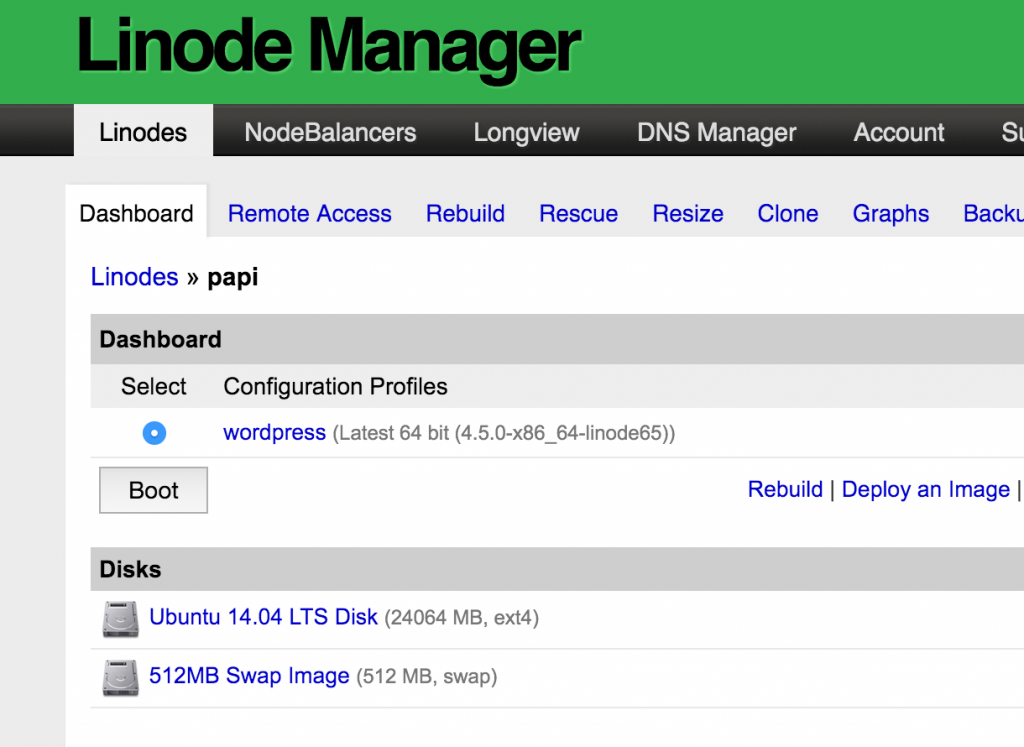
Screenshot 2016-04-13 15.58.09

Once you click eebuild you will get the following screen, click on the “Deploying using StackScripts” link to the right of the server options:
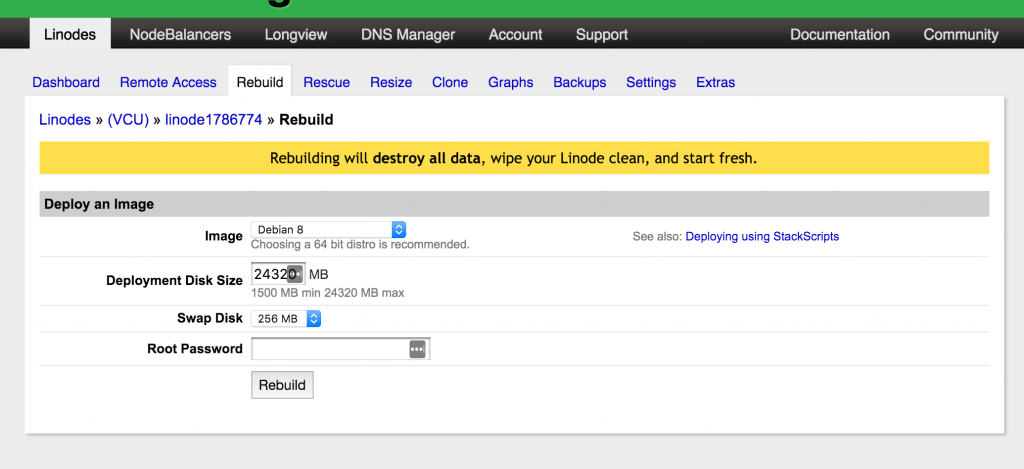
Screenshot 2016-04-13 15.51.58

From there you will be given a series of options to fill out, such as server’s hostname, username, password, etc. Your public ssh key is often named id_rsa, but you may want to make sure of that, or read this to learn how. If you are scrathcing your head about your server’s hostname, this is usually the name you assign the IP address. For example, in AWS’s Route 53 I pointed the server’s IP at personalapi.reclaimhosting.com (papi.reclaimhosting.com would have been shorter and easier, but you live and learn). The rest of the field refer to the domain you will run the WordPress on (in this example personal-api.com), WP username, password, admin email, MySQL details, etc.
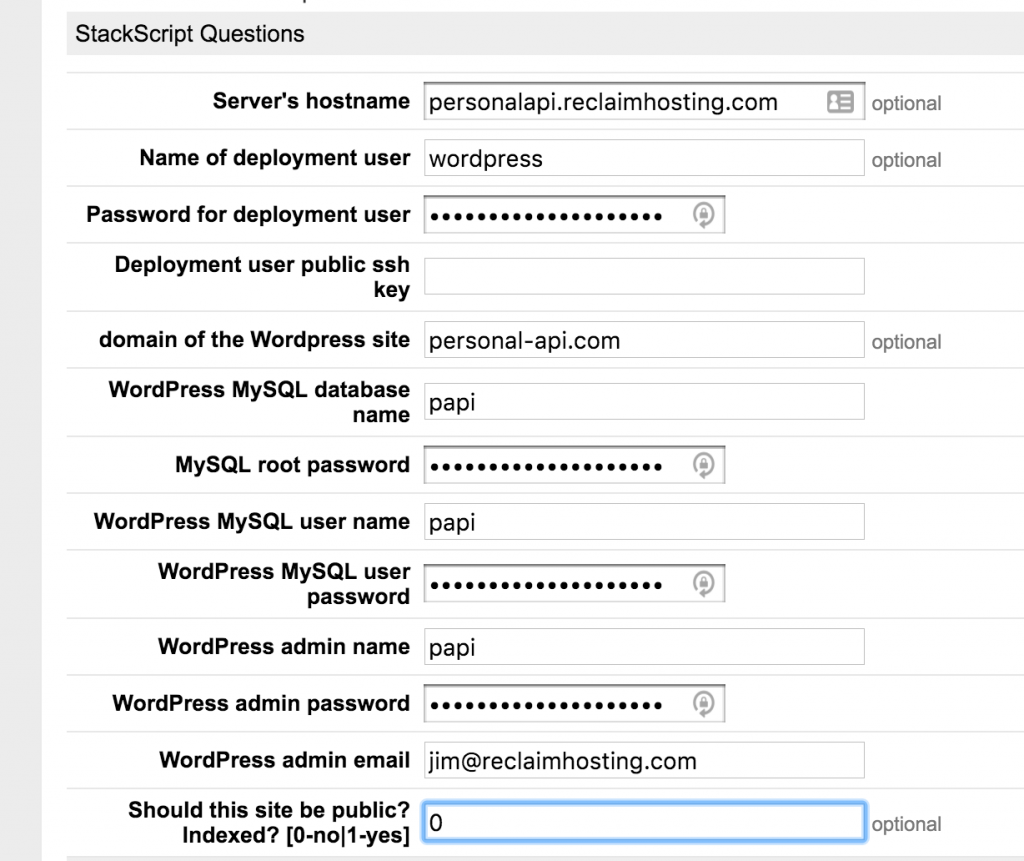
Screenshot 2016-04-13 15.54.57

After that there will be the details for your server:
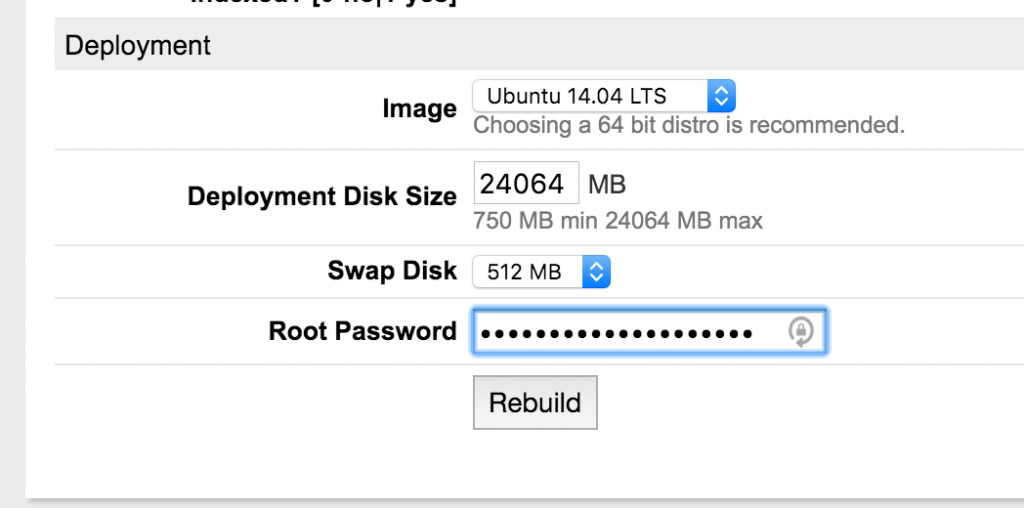
Screenshot 2016-04-13 15.55.52You should be good to rebuild the server at this point. And once you do and the new setup rebuilds, you will need to Reboot the server in order for the changes to take effect.

Setting Up DNS

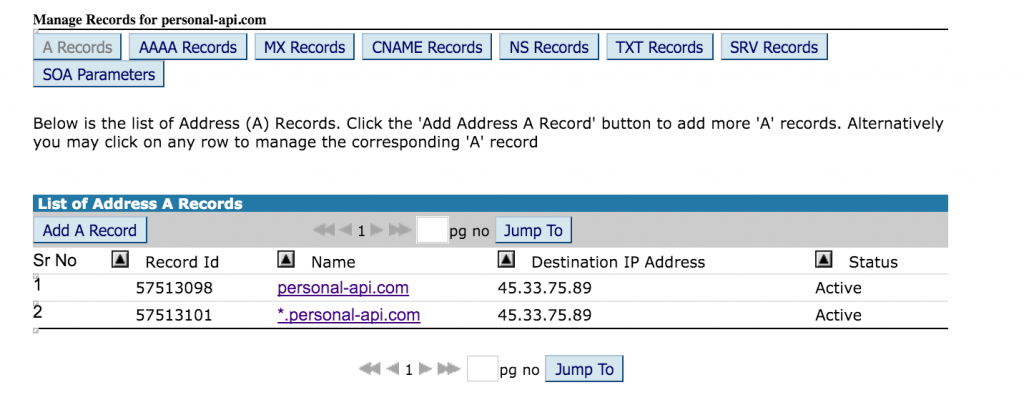
At this point you might also want to point your domain to the server. I needed to do a few things at Reclaim for this, so I figured I would share. I had to edit the DNS and setup an A Record to point my domain (personal-api.com) at the IP address as well as, as well as a wildcard A Record, or *.personal-api.com.
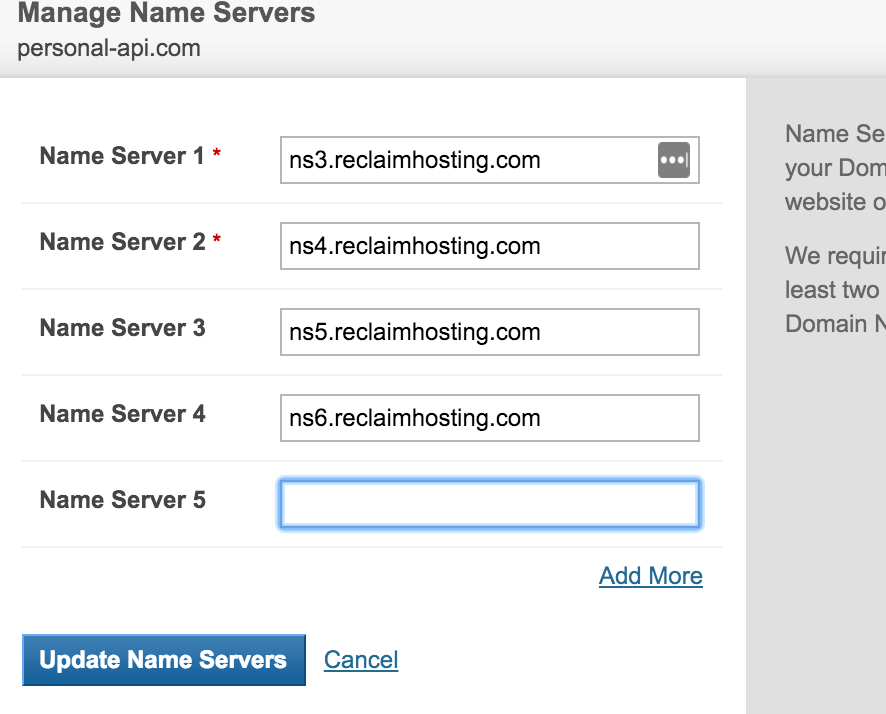
Screenshot 2016-04-13 15.43.15The other thing I needed to do is point the domain to nameservers besides ns1.reclaimhosting.com and ns2.reclaimhsoting.com, which are specific to our cPanel servers. I had no ideas about this one, so it was totally new to me. I had to point the nameservers for my domains to ns3.reclaimhosting.com, ns4.reclaimhosting.com, ns5.reclaimhosting.com, and ns6.reclaimhosting.com.
Screenshot 2016-04-13 15.40.39

After that, you should have a WordPress instance running on your Linode server with a custom setup built to withstand heavy loads.

Customizing the Setup

Screenshot 2016-04-13 16.01.27

In this setup, the WordPress install is located within var/www/wordpress

But there are a few customizations to be done. First and foremost, you need to make the instance a WordPress Multisite because out-of-the-box this is a single WordPress site. This is a fairly simple process, just follow these steps to allow the multisite and install the network. One difference you will find is there are no .htaccess rules you need to add given you are running Nginix. But you do need to copy and past the details into the wp-config.php file once you have created the network.

Pro tip: as a security measure, the admin for this application on the server is not allowed to be root. You can sudo su as root, and Tim pointed me to this tutorial for making it so you can sudo su once you’re logged in as the user to make root level changes as needed.

Nginx Customizations

Next up, you will need to edit the nginix configuration for this WordPress site:

nano /etc/nginx/sites-enabled/wordpress

Once you open the file, you need to add the following lines:

    index index.php;
    port_in_redirect off;
    set_real_ip_from 127.0.0.1;
    real_ip_header X-Forwarded-For;

     client_max_body_size 100M;

It should look like this:
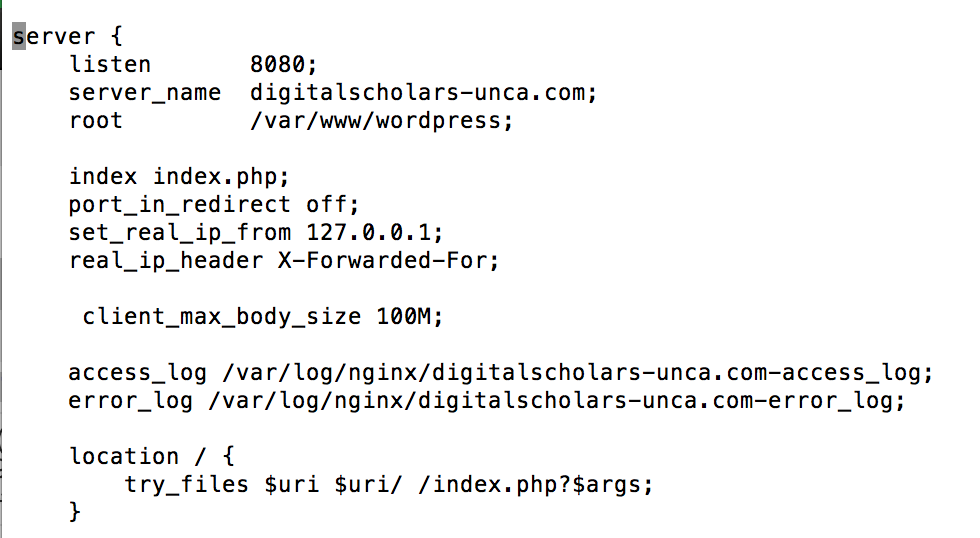
Screenshot 2016-04-13 16.22.02These lines will make sure that logs show the real IP addresses rather than 127.0.0.1, as well as increase upload sizes for files to 100 MBs.

Varnish Customizations

There are two other things we need to change in Varnish. The first to add a few lines to manage timeout issues. Edit the following file:

nano /etc/varnish/wordpress.vcl

From there, and the following three lines near the top:

    .connect_timeout = 3.5s; # Wait a maximum of 1s for backend connection (Apa$
    .first_byte_timeout = 60s; # Wait a maximum of 5s for the first byte to com$
    .between_bytes_timeout = 60s; # Wait a maximum of 2s between each bytes sent

It should look something like the following:

Screenshot 2016-04-13 16.27.24

And while you are in the file you need to make one more change. Delete the following lines:

if (req.url ~ "^/$") {
        unset req.http.cookie;    
    }

The save and exit the file, and run:

service varnish restart

Setting Up Email 

The final piece for me was setting up email for this WordPress Multisite isntall. I used this awesome tutorial from Digital Ocean to setup Postfix on my Ubuntu server. Postfix is a free, open source mail transfer agent, and it gets the job done quite nicely. The only additional thing you may need after setting Postfix up on the server is an SMTP service to send the mail. We recently moved to Sparkpost for this, and once you verify your domain using DNS TXT records, you get an API key and add the settings to you Postfix configuration file. You can find a good tutorial for these settings here.

And I think that’s it. I write a post like this as a tutorial for myself because I know I’ll come back to it again and again because I can’t remember shit. And there is always the off-chance someone else out there needs the level of explanation I do, though I imagine most sysadmins wouldn’t need anything quite this pedantic. All I can say is: ONE DAY!

Posted in open source, reclaim, sysadmin, WordPress | Tagged , , | Leave a comment

Battle the Corporate Ogre with Beat Happening

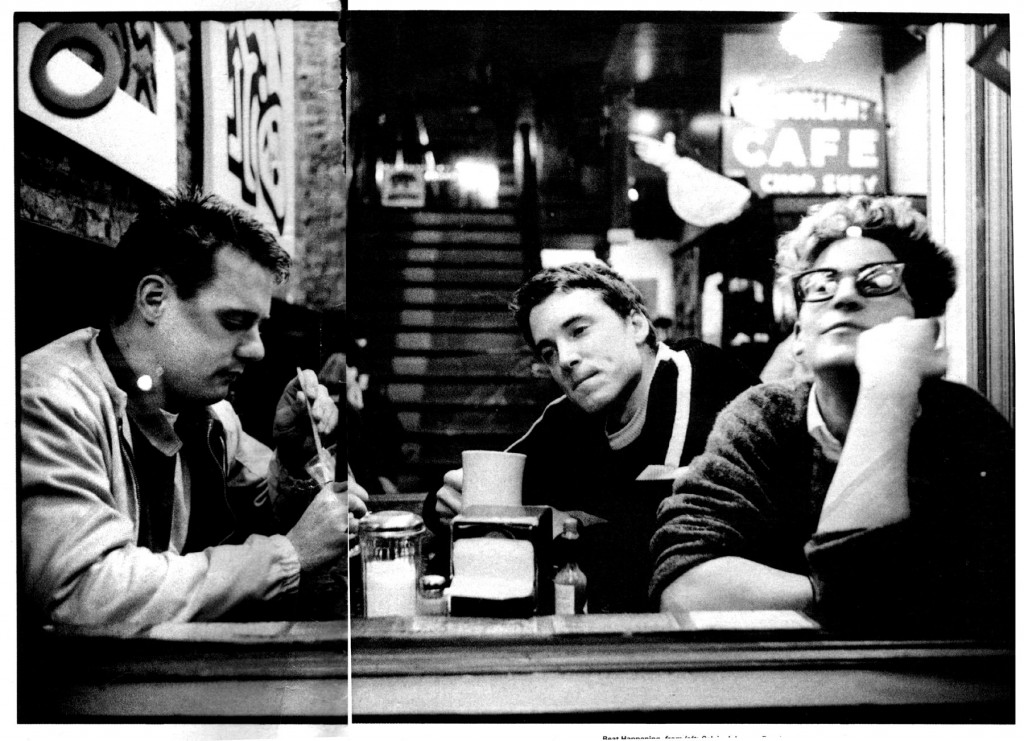
Beat Happening

We here at Reclaim Hosting have released yet another server into the wild in honor of Olympia, Washington’s pathbreaking independent punk band Beat Happening. The thing that was so special about Beat Happening is, as Michael Azerrad astutely notes in his book Our Band Could be Your Life, the crucial role they played in “widening the idea of a punk rocker from a mohawked guy in a motorcycle jacket to a nerdy girl in a cardigan.” They pushed against the violent/masculist tendencies of the genre, and framed an alternative within the alternative. A true sense of independence that would become the foundation for a special brand of lofi music during the 1990s.

In fact, band member Calvin Johnson founded K Records, a fiercely independent label that both promotes and distributes the music of bands from the NorthWest and beyond. Their motto: “exploding the teenage underground into passionate revolt against the corporate ogre since 1982.” Alongside Candace Peterson, Johnson also organized the International Pop Underground Convention in 1991, a week-long, anti-corporate music festival highlighting all-women bands. The transition from hardcore punk to post-punk indy was at hand, and this convention helped galvanize the independent movement of the 1990s that would be defined by bands like Bikini Kill, Sleater-Kinney, Unwound, Built to Spill, and Yo La Tengo to name a few.

Simply put, there is so much to love about Beat Happening, but I think their music tells the tale best. Try “Indian Summer” off their second album Jamboree:

https://www.youtube.com/watch?v=M7KNRC8SSAw

And my personal favorite, at least these days, is “Hey Day” off their third album You Turn Me On.

Also, the new server is pretty good too! How could it not be, think of its namesake. So sign-up and battle the corporate ogres of ed-tech with Reclaim Hosting!

Posted in reclaim | Tagged , , | Leave a comment

Glitching Waterfall

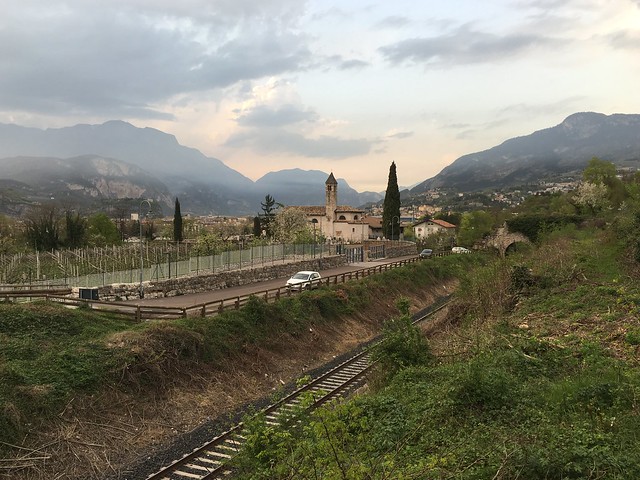
The above photo is of a spot along a path right below our house on the way to Anto’s mom’s house. It’s a gorgeous path, and I have photographed it a few times since I got here.

The Path

The Path

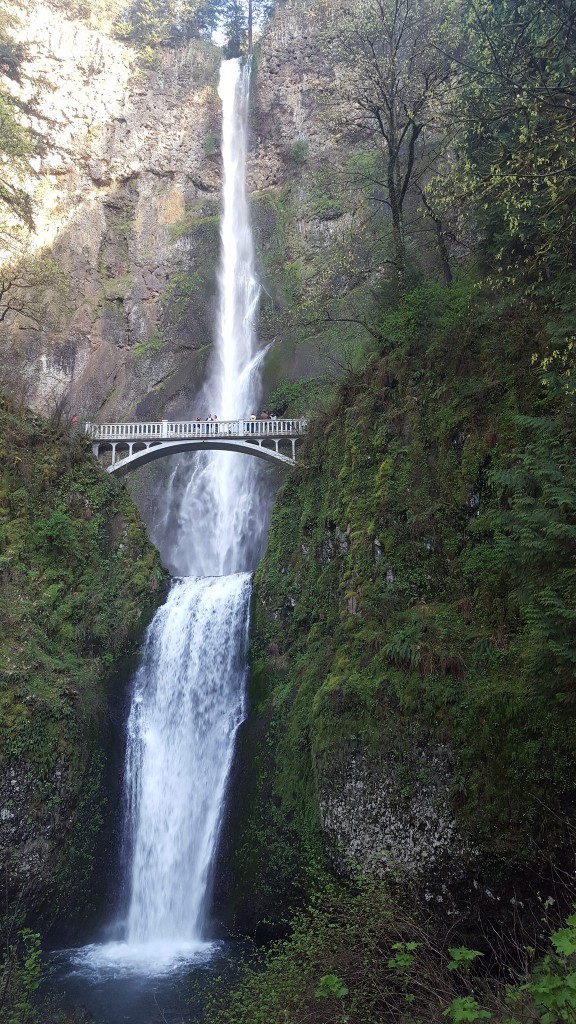
About half-way down there is a small waterfall, in many ways the polar opposite of the Multnomah Falls, I have this referent point thanks to an image David Wiley posted from a hike he took the other day.

26029567810_18da880de6_k

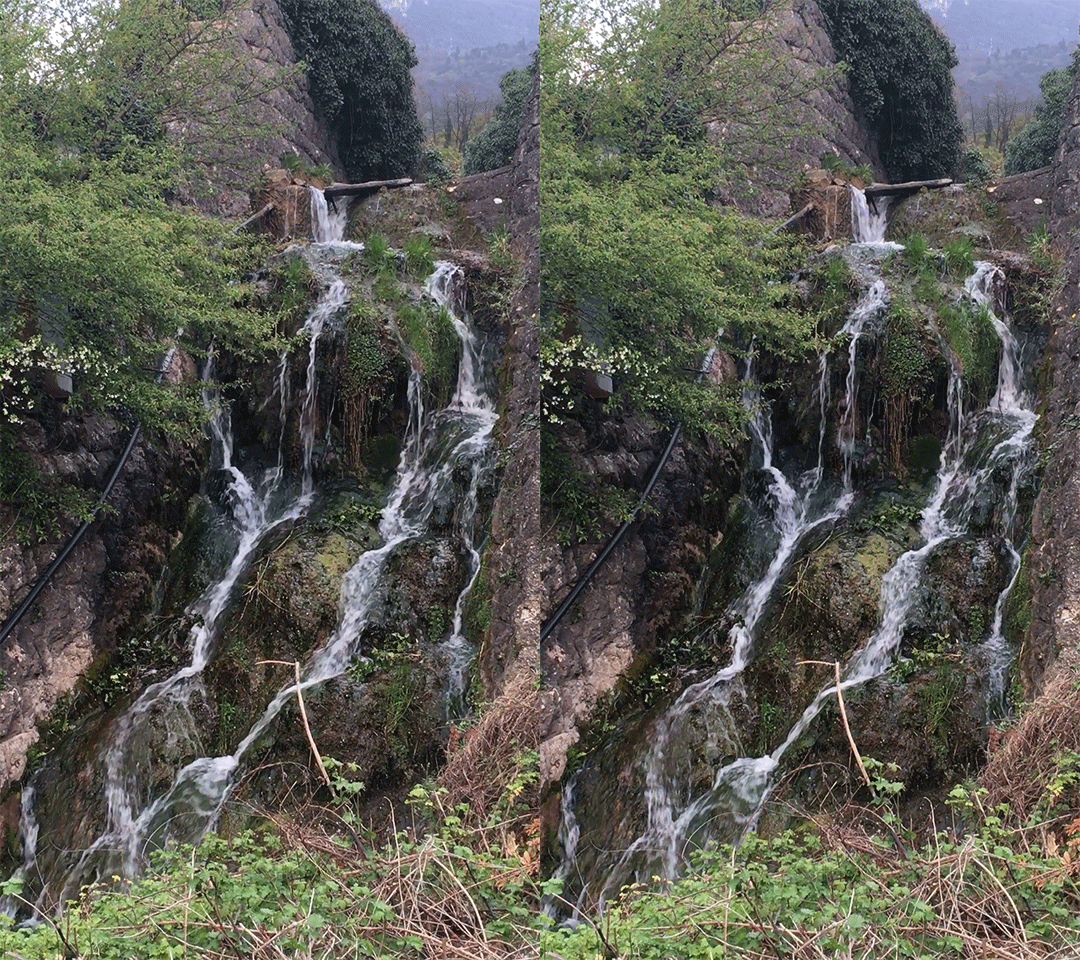
I took this 4 second video the other day with the idea of making a GIF.

The only problem with it was I am a shaky jake, so the GIF moves and it doesn’t work so well. So, I decided to limit it to two frames only to get rid of the shake.  I was thinking it would create a stereo effect GIF. And while it does to some degree, it think of it more as a glitched waterfall—constantly stuck at a certain point not able to actually flow. A fascinating thought about nature—it can’t really glitch digitally, if that makes any sense.

waterfall_stereo

It is a good reminder that every time you set out to make a GIF it’s a quick lesson in photography and motion. But the thing that keeps me coming back is the fun.

Posted in digital storytelling, fun | Tagged , , , | 4 Comments

Three Things

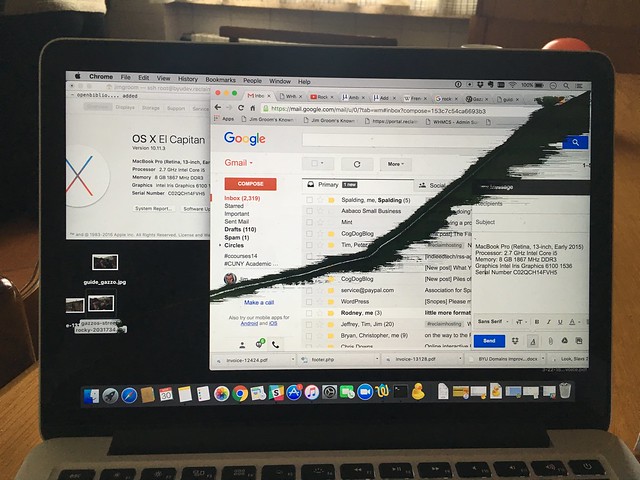
Thing 1: In mid-September of last year I got a new computer in anticipation of my imminent departure from UMW. It was a 13″ Macbook Pro, and my first retina screen—I’m a fan. Two weeks later while visiting BYU I dropped that computer and cracked the screen. It was a heartbreaker.

That's no glitch

It wasn’t covered under warranty, so I was pretty much screwed.

Thing 2: On the day of my departure for Italy in early October I was tasked with getting myself and two cats up to NYC from Virginia by 8:00 PM to catch a flight to Milan. I planned on leaving at about 10 AM so I would be able to meet my sister in Long Beach, Long Island to give her my car and get a ride to JFK. At 9:30 AM while caging up the cats I discovered Clyde was missing. WTF! Cogdog and I spent the next two hours searching hi and low to no avail. At 12:30 I decided to bite the bullet and leave to NYC with a huge hole in my stomach.


Luckily no one is more clutch than Shannon Hauser, she found the cat, and took care of him for the next month and a half until we figured out how to get him to Italy.

Thing 3: As I was waiting in the airport security trip after a haggard, rain-drenched drive from Virginia to NYC after leaving our cat behind I realized that I lost my tooth. WTF! The day before I finally got my implant after six months of dental work. I was racing against the clock so I would be able to use my dental insurance through UMW, and I got it done right before the wire. And then, it must have fallen out while I was eating pancakes and sausages in an airport diner, and I must have swallowed it. As they say on the internet: #FML!

The whole theory of things happening in threes seems to apply in this case. Things were already crazy enough for me in early Fall with the move to Italy, but adding these three things took a bit of a psychic toll at the time. None worse than the cat, though.

So, I write this post after having finally fixed all three things. In late November we flew Shannon to Italy with the cat. That was the most important one for me, the bava leaves no cats behind!

Almost a month ago I finally got the tooth my dentist sent to me back in October implanted here in Trento. That was a relief because I wasn’t sure if in the intervening 6 months I had damaged the implant’s stem.

And just yesterday I finally got my computer screen fixed. This in many ways was the one that took the greatest daily toll on my life. I was effectively working with half a 13″ computer monitor for almost 8 months. I got used to it, but that was simply by building in a series of extra steps to constantly move my web browser around the cracked screen. But it is very nice to have my full screen back, even if it was punishing on the wallet.

So three major problems that happened around the time of my coming to Italy have now all been sorted. So, time to deal with the latest breakage, my glasses.

But I have my eyes on a new style, and I am pretty excited to embrace the brave new world of big, rimless glasses again!

Posted in fun, Reclaim Italy, Uncategorized | Tagged , , , | 6 Comments

Reclaim the T-Shirt

GIL64000-600x600Yesterday we opened up the Reclaim Store for the first Reclaim Hosting t-shirt to date. I’m sure there will be more, but this is our first, limited edition run that will only be open until next Friday, April 15th. After that we’ll place the order and send the shirts out to folks, along with some other goodies. As Lauren noted in her blog post about the t-shirts, we are doing this run is to celebrate the launching of Reclaim Hosting’s new aesthetic on the site.

Screenshot 2016-04-09 08.52.26

I couldn’t be more excited about the creative work Bryan Mathers has done for us, and as Martin Weller reminded me yesterday, that relationship happened almost a exactly a year ago in Barcelona:

In fact, he even had visual evidence of the very moment Bryan was drawing our logo 🙂

I have to admit I am totally loving this project. Deep down I have a whole lot of used car salesman and marketing douchebag in me, I work hard to repress these impulses. That said, it has been a blast to be able to roam free and imagine a metaphor for Reclaim Hosting that captures the spirit—and what I am hoping is the reality for folks who host with us—of our services. We provide a small, specialized approach to hosting in the context of education. We focus on an ethos of empowerment and back it up with stellar support. And while we by no means limit our customers to the realm of education, we recognize that’s our strength and we play to it. I’ve had no shortage of satisfaction working with Tim and Lauren to build Reclaim Hosting into a small, targeted business folks can and do rely on, and I think the imagining of an aesthetic/metaphor and the framing it around an ethos has given me by far the most joy. Reclaim Hosting #4life!

Posted in reclaim | Tagged , | 3 Comments

Licensed to Read

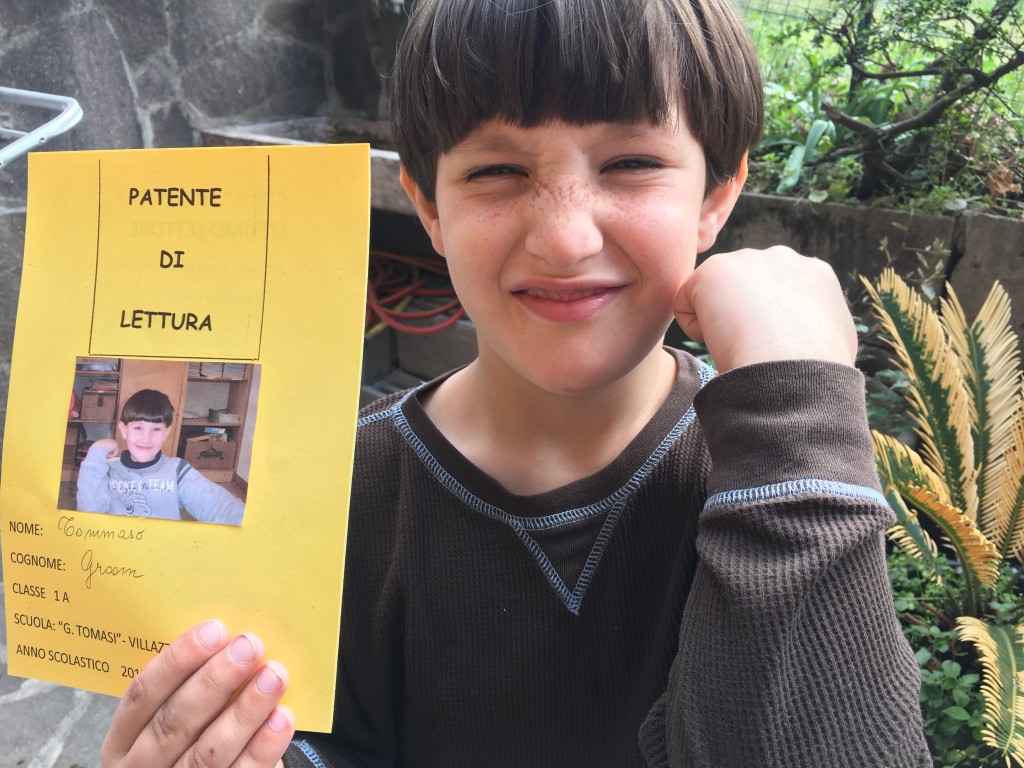
One of the coolest things about being in Italy has been watching the kids acculturate, and that’s been nowhere more apparent than in the language. Of the three, Tommaso may have had the most Italian name, but he was certainly the least fluent in the language. Lucky for him he’s young. In no time he went from speaking very little to being all but fluent. It was wild, it took about two or three months at most. What’s more, he learned to read and write in Italian, so in many ways his English is becoming his second language 🙂 Just the other day he came home with a Patente di Lettura, or a “A License to Read.”
2016-04-07 13.34.43 HDR

[As an aside, I love the almost mirror like pose of the picture within the picture. This was not planned.]

In fact, I’ve been experiencing some linguistic osmosis through my kids. I understand far more than I did 6 months ago, but my speaking is still pretty horrible. This has to change, I know—but I’ve been busy taking pictures and posting them to Twitter 🙂

Viaggio a Villa Contarini

Speaking of which, a recent day trip we took with friends to Villa Contarini in Piazzola sul Brenta reinforced how wild this new reality is. Villa Contarini is referred to as “little Versailles” and it’s a 16th century Villa that is nothing short of breathtaking. Whether the original design was the work of the history’s most important architect, Andrea Palladio, is up for debate, but I was impressed nonetheless. I’ll save the details for another post, but upon approaching the gates I was immediately struck by the statues of Perseus hold the head of Medusa. As a fan of the original Clash of the Titans (1981), this was almost as good 🙂

Viaggio a Villa Contarini

The fact that places like this will soon seem normal to my kids is a pretty wild thought. I remember watching For Your Eyes Only (1981) on VHS, so sometime after 1981—maybe 82 or 83—and telling my brother I wanted to be James Bond. [I really did idolize Roger Moore.] At a certain point during the film, probably after my constant declarations, my older brother told me in his matter-of-fact style, “You can never be James Bond because you can’t speak any other languages.” I was crushed! 

Never mind that this happened during the scene when Bond was scaling a cliff to access a remote island Grecian villa—something I also couldn’t do—the fact I didn’t know any other languages seemed far more daunting. So, while my kids are mastering Italian and being introduced to German (it’s a trilingual school, but they already have the English fairly well set), I constantly think they can at least be British Secret Agents with a license to kill if worse comes to worse.

Posted in Reclaim Italy | Tagged , , , | Leave a comment

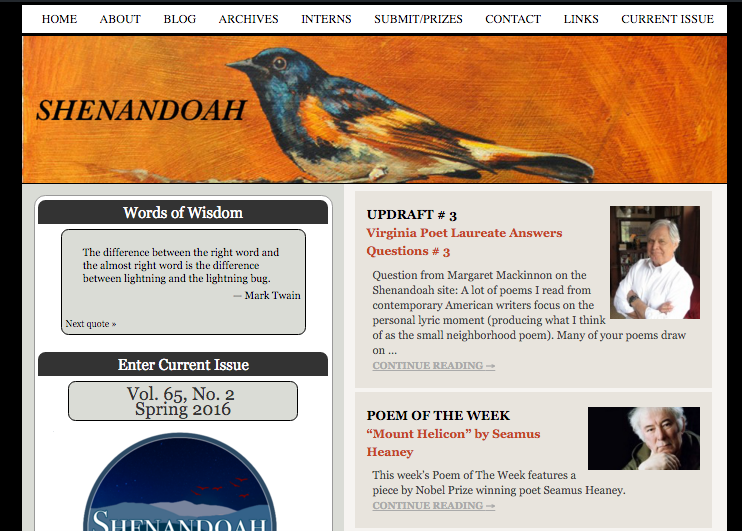
5 Years of Shenandoah Online

Screenshot 2016-04-07 23.37.58

Shenandoah

One of the projects I started working on more than five years ago was bringing the Shenandoah Literary Magazine online. I got the gig thanks to the late and very great Claudia Emerson, who I had been working with on a literary journals class at UMW. Many smarter than me can speak to Claudia’s legacy as a poet, but I can and will testify to what an awesome teacher and person she was. I miss her regularly.

Claudia Emerson

Claudia Emerson

In the Summer of 2010 I started working with Rod Smith, the editor of Shenandoah, and he agreed to move the journal to a WordPress multisite instance that Martha Burtis and I designed. Screenshot 2016-04-07 23.15.43

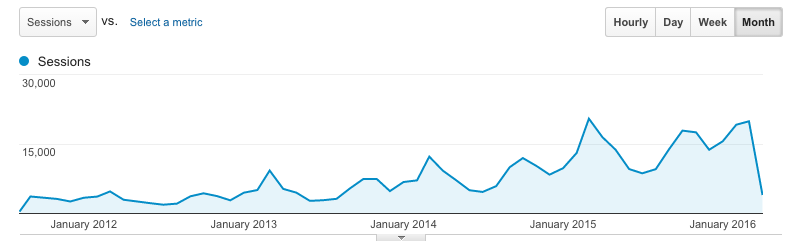
Five years later it’s still going strong, in fact it has steadily been picking up traffic since 2011 when it first took the plunge online. What’s more, I have a very agreeable relationship with Rod. We work pretty well together, and I think we’ve made a fairly good team. I enjoy managing the site so that he can introduce a new cadre of Washington & Lee University students to the journal each semester. These students help bring some excellent writing  to the open web gratis. It also keeps me connected to the work I did with Claudia for the literary journals course. That was the most praxis-oriented course I’d ever been a part of, and I loved it. We had four or five groups of students per class that were tasked with both conceptualizing and creating a full blown literary journal in less than 15 weeks.

My own teaching was greatly influenced by Claudia’s willingness to experiment and explore, and after we ran the Literary Journals course together for a couple of semesters I got the offer to teach CPSC 106 (what would soon after forever be known as ds106!). In a strange convergence, at the same time I was working on Shenandoah’s first online issue, a bunch of us got the idea to bring ds106 to the open web as well. And while my work with ds106 and Shenandoah has been very different, in my mind they are deeply connected. So early this week we pulled the trigger on the tenth online issue signalling the fifth year of Shenandoah online. Time flies when you are populating the internet with both high and low CULTURE!!!

Posted in Shenandoah | Tagged , | 2 Comments

A DH Start-Up Grant Dynasty

S1463-wide-1
This is cross-posted on the CUNY Academic Commons News blog as part of the Citation Needed series I am writing there.

My time at the CUNY Grad Center during the late 1990s is pretty closely associated with the New York Yankees dynasty from 1996 through 2000. Three world championships in a row (four in five years), and while the Yankees are easy for the haterz to hate on, that squad played like a team and it was a beautiful thing to witness. While the rest of baseball was doping for the home run title, the salt of the earth bombers like David Wells, Scott Brosius, Tino Martinez, and Orlando “El Duque” Hernandez were playing amazing baseball—and that’s just to name a few. It was one of the great teams in baseball history. For a moment sports provided a glimpse into the realization of transcendence through collaboration, the art of working together to make everyone better, except maybe the Mets 🙂

It’s interesting because it makes you wonder about teams. Adam Croom from the University of Oklahoma recently wrote a great post on this very topic, “On Teams ‘Of Tech and Learning’.”  He reflects on how the Teaching Excellence Center at OU is coalescing into a formidable group that’s forging deep inroads within the broader campus community. And it made me think about the “Digital Dynasty” that’s been happening at the CUNY Grad Center for a long while now. All of which crystallized for me while reading the following news item:

“Beyond Citation: Critical Thinking About Digital Research,” a project that is part of GC Digital Initiatives, has been awarded a highly competitive National Endowment for the Humanities (NEH) grant.

It is the GC’s third consecutive student-generated NEH Digital Start-Up Grant winner, and the second to begin in the Digital Praxis Seminar, a course focused on introducing Graduate Center students to digital scholarship.

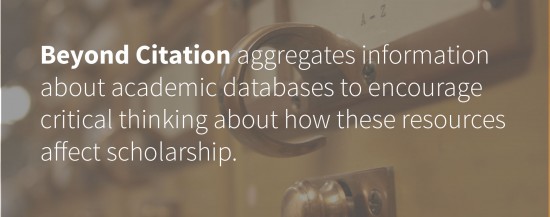
The project was the brainchild of Grad Center student and film and video archivist Eileen Clancy, which burgeoned into a broader faculty/student collaboration with several other grad students and Faculty member Steve Brier. Beyond Citation provides a critical set of resources that help inform faculty and students alike about the undergirding logic and assumptions the drive the databases they use for their research. From their about page:

Beyond Citation is a pilot research platform that gathers information about academic databases and other digital research collections to enable scholars, librarians, and research enthusiasts to get a better sense of their contents, structure and search mechanisms.

While still in its early stages, what’s compelling here is that we have a resource trying to deconstruct and lay bare the limits and possibilities of the vast network of databases that purchase, index, and serve up a vast amount of academic research.

beyondcitation-image_03

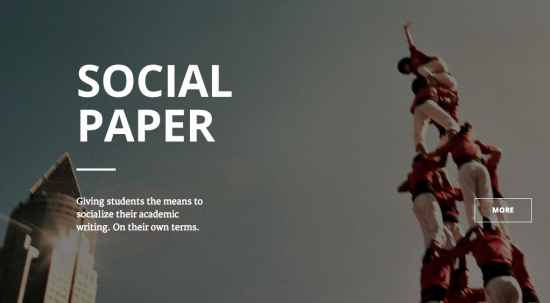
More generally, what’s wild about the above press release (and project) is that this is the third NEH Digital Start-Up Grant winner from the Grad Center for three years in a row—two of which were born of faculty/student collaborations in Steve Brier’s and Matt Gold’s Digital Praxis graduate seminar. The other project was Social Paper, the 2014 NEH Start-Up grant winner was conceived of by doctoral students Erin Glass (English) and Jennifer Stoops (Urban Education) in collaboration with Matt Gold. Marilyn Weber recently wrote a post on this very blog about “Social Paper in the Classroom,” it comes highly recommended as a more detailed overview, but let me pull here from the source, “Social Paper is a non-proprietary socialized writing environment developed by and for the CUNY Academic Common.” In other words, as part of the CUNY Academic Commons grad students and faculty can share their papers with specific groups or more openly for comment from others. The vision of social media meets the dissertation workshop.

socialpaper

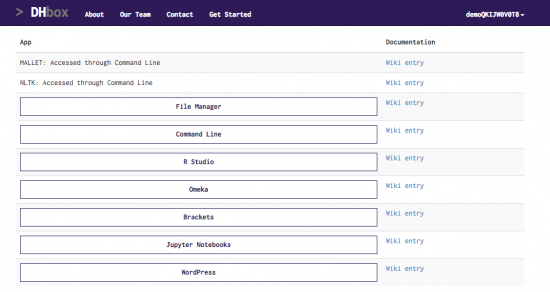
The 2015 NEH Start-Up grant winner from the Grad Center was DH Box. This project is particularly fascinating to me because when I’m not blogging for the CUNY Academic Commons, I run an awesome web hosting company geared towards supporting folks in higher ed. I am deeply interested in providing faculty, students and staff their own digital sandbox to explore various tools like Omeka, WordPress, Scalar, Known, etc. What’s more, becoming more literate about how these tools work and what they mean for the future of scholarship, citizenship, and identity is crucial to the academic mission. So, I was pretty blown away to see how dead simple DH Box has made getting Grad Center faculty their own cloud-based instances of applications like Omeka, WordPress, R Studio iPython Notebooks, and more.

Screenshot 2016-04-06 22.59.14

The project reminds me a lot of Sandstorm’s work around the virtualized personal cloud, and it is just another brilliant example of the consistently amazing work being produced as part of the Digital Initiatives at the Grad Center. A DH 3-peat!

And now for my awkward transition back to my opening analogy with the Yankee dynasty of the late 1990s 🙂 One of the things that struck me when watching the Yankees in 1998 was a sense of the whole as greater than any one player—a reality that would return during the scourge that were the A-Rod years. CUNY’s digital work since 2009 has been built upon the foundation of a community; the CUNY Academic Commons is in many ways “The House Ruth Built.” It has provided a space where the sense of CUNY as a broader digital academic community is palpable, inviting faculty, staff, and students alike to not only imagine but try and build the digital tools they want to use. Not nearly enough schools dare to dream this big, and in this sense there is a Digital Dynasty going on right now at CUNY’s Grad Center, but it by no means stops there…that’s in many ways just the tip of the tremendous iceberg that is the City University of New York!

Posted in Citation Needed | Tagged , , , | Leave a comment

The Future of Metaphors Past and Present

Last Thursday the great Bryan Alexander invited me to be a guest for his Future Trends Forum. It was worth it if only just to be on the receiving end of this all to kind introductory blog post. It was particularly gratifying because Bryan is one of the earliest inspirations for me as a blogger. When there was something called an edublogosphere Bryan’s blog Infocult was both a model and source of inspiration for the bava, although never quite an edublog—which may have been its greatest strength. His approach was fairly simple: write often about everything you find compelling, and over time a digital narrative will emerge.* Few sites have done this better than Infocult, and when it comes to chronicling the narrative of fear and loathing mainstream media has used to frame the web it’s the authoritative resource. Plus, you get more than your fair share of severed feet.

Image credit: CogDog's "Friendly Guy with an Axe"

Image credit: CogDog’s “Friendly Guy with an Axe”

So having Bryan ask me to join him for a discussion was a real treat, and what I found myself coming back to again and again is the power of metaphors to try and make the brave new world of technology that is everywhere defining us more comprehensible. Two of the ideas I threw out were the ways companies like Docker use the metaphor of shipping containers to explain how infrastructure is becoming more and more portable. Containers were fresh on my mind after running the Networked Learning Hot Seat forum session on just this topic. This metaphor seemed to click for a few folks. I also held up the site IFTTT to try and explain APIs. Thinking about the way IFTTT makes integrations and connections between applications seamless, from which I jumped to the idea of the film The Taking of Pelham 1 2 3 (1974).

tumblr_lnj2kyeqdZ1qhj9zeo1_500This idea of a control room where all the various trains on the various train lines running within the NYC subway system are scheduled, coordinated, and managed is almost incomprehensible. This was my metaphor—granted it breaks down quick—of trying to explain how something as complex as the management of one of the world’s largest public transportation system is managed seamlessly behind the scenes through a series of exchanges. This might be how we think about what APIs do to connect the growing infrastructure of data across various sites, with IFTTT being the one with the clearest examples of such an exchange, such as share Instagram photos on Twitter.  I kinda love leaving a trail of mixed metaphors from past and present that don’t entirely work, they are more indicative of my flawed thinking than anything else, and there is value in that, right? 🙂

I also talked Domains, Reclaim Hosting, and IndieEd”-“Tech. In fact, the conversation was a bit of a blur which means I had a blast and was very much present in the moment. I really do love just talking about anything and everything, and I have to thank Bryan for providing the occasion. There will be a video of the session if you are a glutton for post-facto punishment, and I’ll be sure to include it in this post once it’s available online. Until then, Bryan put together a Storify of Tweets from the session that provides an interesting perspective on the discussion.

________________________________________
*Digital in this regard referring to the nonlinear, linked relation of ideas, an concept that was crucial to the emergence of the ideas behind what a digital story for ds106 could be. We relied heavily on Alexander’s theorization of what digital storytelling in the age of  digital/social media is which is framed brilliantly in his book The New Digital Story Telling.

Posted in presentations | Tagged , , , | 2 Comments