.htaccess file in Home Folder

I was recently migrating an account from InMotion Hosting to Reclaim (why yes, we do provides free migrations). InMotion uses cPanel, so that usually means the migration will be dead simple. But for some reason after I had migrated everything the site was still not resolving. I discovered this when I went to import the existing WordPress site into Installatron. The import failed and I got the following error:

! PHP for the selected domain has failed. Installatron is unable to install to a domain where PHP is not working. Error code: 2; HTTP code: 200

This is usually an .htaccess issue, so I deleted the existing .htaccess file in public_html to no effect. I then searched high and low on the web to find a solution, but nothing doing. I remember Tim talking about a similar issue he had, when he discovered, purely by chance, there was another .htaccess file in the home directory that was preventing the site from loading given it was requiring a different version of PHP. I checked the home directory and sure enough there was an .htaccess file there calling for a different version of PHP. I deleted the file and the problem was solved.

I leave this here as a breadcrumb for the next person who has this issue but can’t find the solution for the life of them. Sharing is caring 🙂

Posted in reclaim | Tagged , , | 2 Comments

Eye Popping Eye Guy

On a while yesterday, I tweeted out an image of a figurine that I have had for almost two decades. I found it in the garbage on the streets of Brooklyn back in 1997, and I thought it was about the trippiest thing I’d ever seen. That said, I had no context for it, and hence had no idea what it was.

Well, strange things happen when you throw stuff into the context engine that is the web. The first reply I got back suggested it was Dr. Opticus from the Saturday Morning cartoon Karate Squad.

https://twitter.com/ungodlyracket/status/715204669551874049

As is my wont, I was blown away.

I quickly declared victory given my fact-checker was out to lunch. “The web giveth, giveth, giveth…” Yet, in this instance it gaveth nonsense because there is no Dr. Opticus nor does there seem to be a Saturday Morning cartoon called Karate Squad. [All of which kinda makes me love Or Current Resident, did they just make it up to fuck with me? I hope so.] And that’s all right, because the web still giveth. Alice Campbell swept in with some sweetness and light providing the actual referent: The Mighty Morphin Power Rangers.

She even found the original packaging for me with the full, quite literal name: the Eye Popping Eye Guy.

51smZ8CwY3L

Thanks Alice, you rule. And after almost twenty years of staring into the eye-filled void the veil was lifted in ten short minutes. Many eyes 🙂

Posted in fun | Tagged , , , | 1 Comment

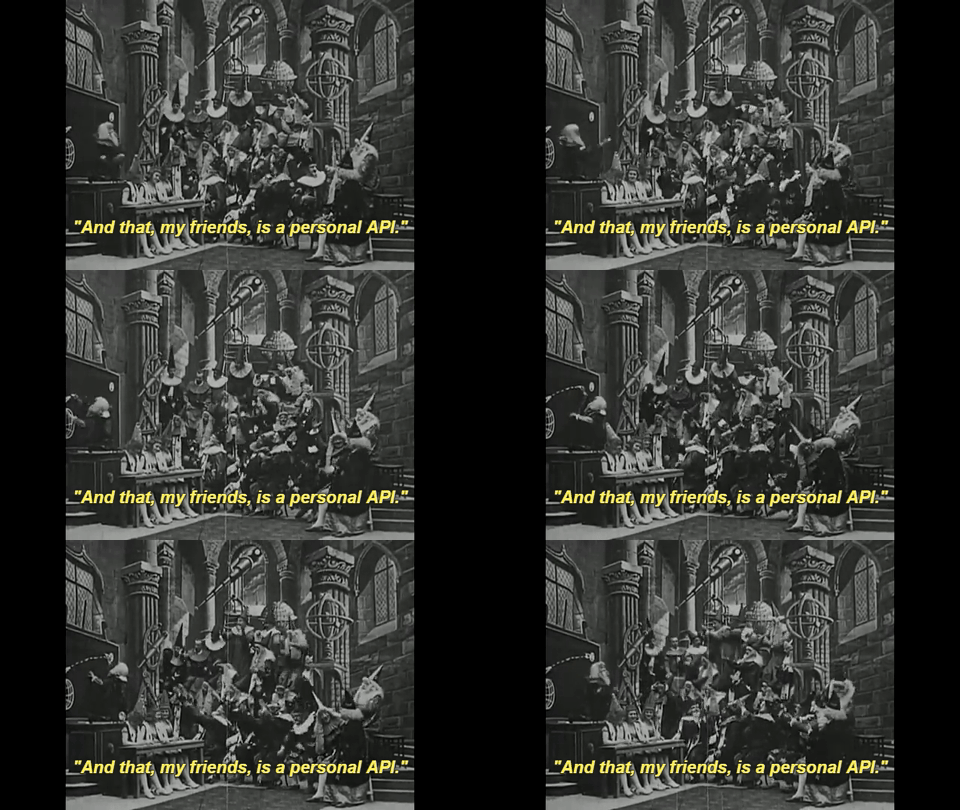
And that, my friends, is the Personal API

GIF thanks to the great Sunset Terry!

GIF thanks to the great Sunset Terry!

A couple of days ago the Programmable Web wrote an article about the work BYU is doing to give students more control over their data. The idea undergirding this is the concept of a personal API, what exactly that means remains in a certain amount of flux, but Tim Klapdor does a pretty phenomenal job capturing some of the core principles, and I quote:

  • a way to claim sovereignty over our own identity online
  • a first step towards independence
  • a way to create distributed systems
  • it provides a system for choice
  • it could create an enhanced form filler
  • improves transactional behaviours online
  • allows users to assign a death to data
  • backend for creating of my own operating system
  • fix the problems of the web
  • mechanism for us to make decisions about the web
  • it will be foundational to the “next web”
  • it needs to be accessible

What’s more, BYU’s CIO, Kelly Flanagan, frames the Personal API (PAPI) as part of their institutional approach to managing personal data at BYU in this epic post on Indie Ed”-“Tech.

…giving people a personal API and letting them control their data, doesn’t mean that they get to control the university’s data. A PAPI lets people control the data that is theirs. For example, their phone number is their data. Their grades, on the other hand belong to the University. In addition, if students exercise their right to not authorize university access to needed personal information, the university is not obligated to fulfill the desired student request. University policy and process must still be followed.

Fact is, the personal API becomes a means of re-thinking the ways in which we empower our communities to manage, maintain, and control their personal data as part of the life-long learning process. It is a truly radical way of re-thinking the foundations of centralized IT, and I’m really excited the work BYU’s IT department is doing in this regard is gaining some traction. It is remarkable. And the institutional vision is reinforced by at least one student’s vision, Andrew Rikard, of what the personal API could mean for him:

At the core of the personal API is the radical mission to put control over data (and its access) in the hands of students. This is both a pedagogical act and a creative opportunity, informing students that they can access their own information as well as create interfaces to do with that data what they please. It gives them a seat at the tables where the edtech powers sit, moving them one step closer to a status of equality rather than that of a passive consumer.

I love the way in which APIs become one way to try and understand and empower literacy and fluency around data in higher ed and beyond.

Add to this a recent post by George Kroner, the LMS fan fiction god, who was post about “A Flexible and Personal Learning Environment” turned me onto this study from the Netherlands about what this digital learning environment might look like. What’s so cool about all of this is that the time might be right to explore what these new learning environments might look like, and while I totally heed the great D’Arcy Norman’s words of caution…

I do think any API architecture worth its salt would ultimately disassemble the LMS once and for all 🙂

Posted in indieedtech | Tagged , , , | 6 Comments

Revisiting Rocky

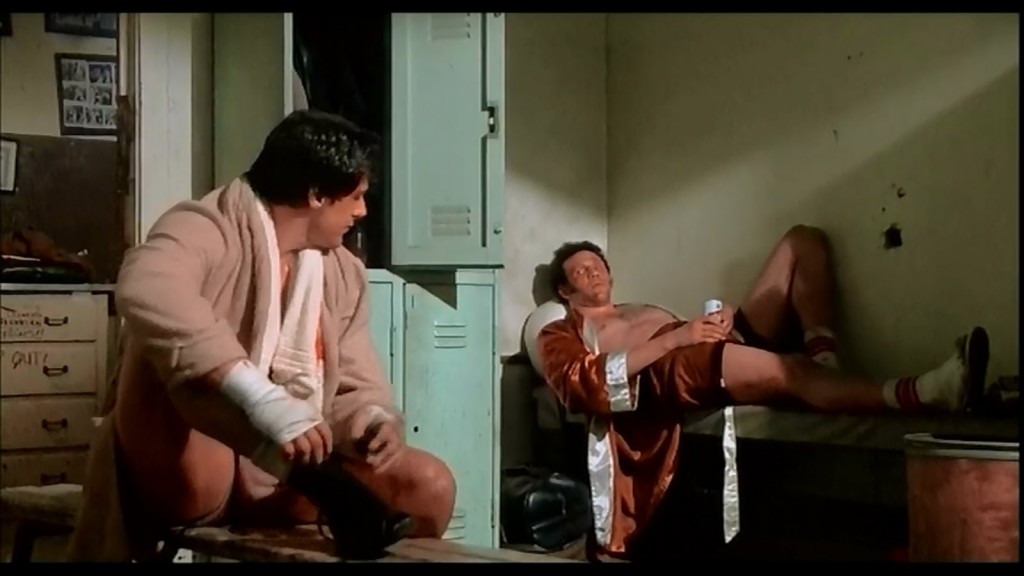
On the Lufthansa flight from Frankfurt to Dulles almost two weeks ago I found myself in one of the tighter, more uncomfortable seats I’ve had on an airplane in a long while. Anything resembling sleep was out of the question, and it was way too tight to work on my laptop, so I really only had one choice: watch movies for seven hours! I’m not complaining. That said, the selection on Lufthansa was weak (much like the flight experience), so I decided to work my way through the Rocky series given I hadn’t watched the first three for decades. I was prompted by the fact I saw Creed recently, but unlike Martin Weller and too many others I was entirely unimpressed—though I do love Martin’s new film blog!

maxresdefault

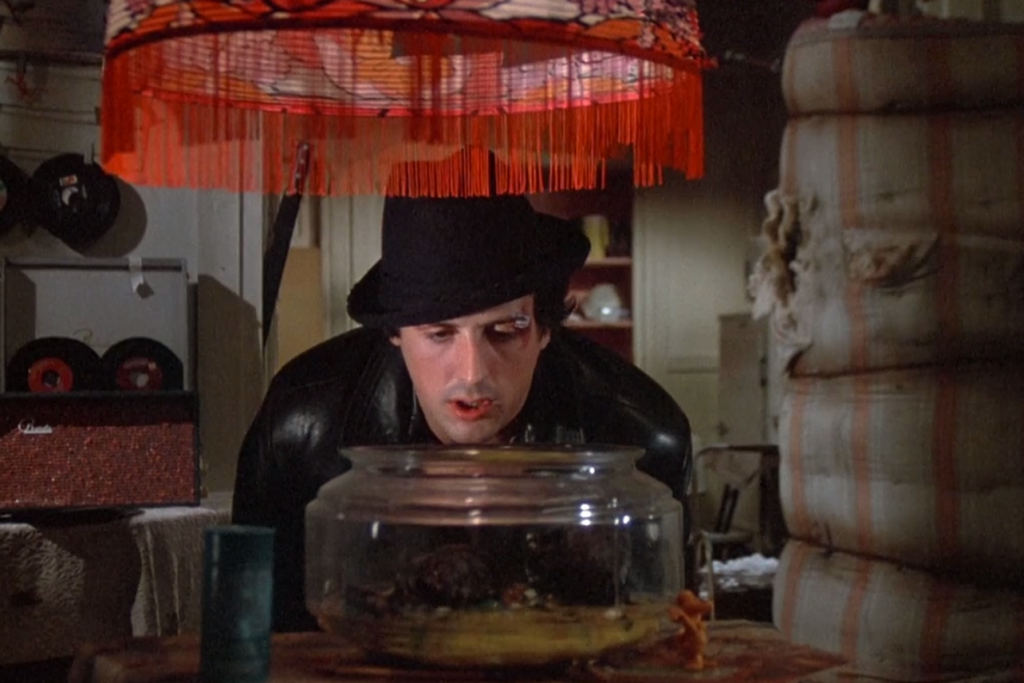
The first 28 minutes of the original 1976 Rocky blew my mind. I wasn’t prepared for how gritty, slow, and lofi European it all seemed. Everything from the opening scene featuring the skid row boxing match between Rocky and Spider Rico up and until (but not including) the moment Rocky lectures a young neighborhood girl on self respect could easily be mistaken for a classic of the French New Wave. It was a wild experience, I was like what the hell, why has Rocky talking to his fish in that abject apartment for 15 minutes now?

my-first-time-rocky-1

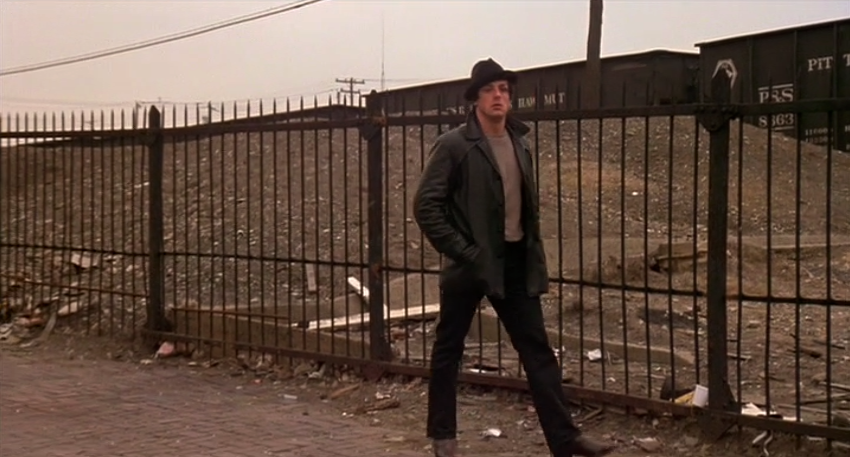
And the scenes where Rocky is working on the mean streets of Philadelphia as muscle for the loan shark Anthony Gazzo (played by the late, great Joe Spinell). The grit of inner city America captured on film during the 1970s is wild, and while not necessarily specific to Rocky, there is a sense of this film truly being of another era forty years later.

Picture-131

There’s one scene where Gazzo actually pulls out his inhaler while talking to Rocky, what a brilliant, small character detail that made me wonder if I wasn’t watching a Kitchen Sink drama from Britain during the 60s. The fascination with the street life, Rocky as an actual character, and the grit of urban America makes the first 30 minutes of this film truly riveting.

gazzos-street-rocky-2031734

The next 60 minutes are what everyone else remembers, and by no means terrible compared to Rocky II (1979) and Rocky III (1982) —neither of which is worthy of mention in the same sentence as the original.  The idea of being given a shot, the fact that this loser can become a somebody, etc. I think what struck me most about the second half was how Rocky only had 5 weeks to train for the fight! And how awesome Apollo Creed looked dressed up as George Washington and Uncle Sam.

2A21B2EF00000578-3145431-image-m-42_1435733196636

In fact, I feel a connection with Carl Weathers given we both went to Long Beach City College (as did John Fante). And while he went on to the NFL and then Hollywood fame and fortune, and I became a lowly blogger and edtech, we have a fairly similar physique 🙂 And while I am particular to the first 30 minutes of the movie, Apollo Creed as World Champion and savvy businessman who gets carried away with his own PR genius makes him an equally fascinating character. Apollo provides the tension that holds the second half together, born on by the simple fact he can’t see that he’s running headlong into an epic underdog upset. Fact is, 40 years later, Rocky was even better for me than it was in 1976. Unfortunately, the sequels and follow-ups seem that much worse.

Posted in movies | Tagged , | 1 Comment

The View from Here

T

The view from the bava home office

I’m pretty happy today. It doesn’t hurt that it is a glorious day here in Trento, Italy, and the Spring is slowly creeping back into this mountain detachment. But that’s not the only reason I am feeling good these days, I am also digging the energy brewing online amongst folks I call friends and colleagues. There are a lot of potential vectors to follow, but let me start with Kin Lane‘s project wherein he created a “simple, client side RSS aggregator that runs 100% on Github.” There has been no shortage of love for Kin after the IndieEd”-“Tech Summit at Davidson College (as it should be), and I came across this project thanks to this post featuring the “Allow Cross Origin Access to Feeds” plugin whipped up  by Tom Woodward in order to enable Kin’s RSS aggregator to work on WordPress. Love that, people making small stuff that might be useful to others, and in turn others build on top of it.

Room with a Croom

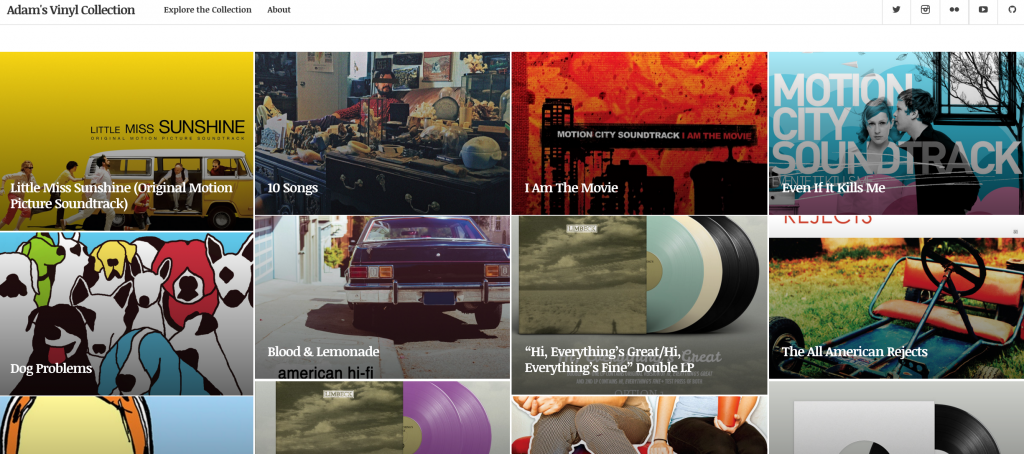
In fact, that reminds me of another source of joy for me on the web over the last few days. Adam Croom shared out an awesome blog post about “A Vinyl API of One’s Own” in which he seamlessly tied together his engagement photos, his love affair with vinyl, and the idea of personalizing APIs to relate to something that means something to him, namely a record collection. He pointed to the site Discogs that is trying to build the most comprehensive database of music on the web that other can contribute to. And guess what, they have an API! So cool, and it reinforces the idea of truly making the API personal by linking it to something you care deeply about.

Cool right, well it doesn’t end there. That crazy bastard Woodward wasn’t done yet (what a roll he is on)! Tom read Adam’s post, and figured it would be an interesting experiment for him to see how Adam might get his data out of Discogs and into something like WordPress:

Adam had information in Discogs. He wanted that information in WordPress where he could control it. I had never heard of the site, let alone seen it’s API. But it well documented and it took me a few minutes to realize I could get all the data I needed without even needing to authenticate.

From there a small, focused plugin was born, and Tom is getting ever closer to code mastery. But it doesn’t end there, Adam reads Tom’s post, marvels at this brave new web with such people on it works. He then built his Vinyl Subdomain site thanks to some help and inspiration from a fellow traveler.

vinyl.adamcroom.com

vinyl.adamcroom.com

This all makes me happy because it’s good. People sharing stuff they care about. Focused energy for understanding and creating something, what could be better? I think Audrey Watter’s resistance to defining Indie Ed”-“Tech too specifically is right on, let it breath. Let others run with it, just make sure it is not a few things….

Ed-tech need not be exploitative. Ed-tech need not be extractive. Ed-tech need not be punitive. Ed-tech need not be surveillance. Ed-tech need not assume that the student is a cheat. Ed-tech need not assume that the student has a deficit. Ed-tech need not assume that learning can be measured or managed. Ed-tech need not scale.

And when I see this exchange between Tom and Adam I am buoyed to no end by would it is and can be. Of all things I enjoy online, there is nothing better than being part of a small, passionate community coming together for the simple fact that it makes my online life more fun. Totally selfish, but also totally awesome.

Posted in indieedtech | Tagged | 1 Comment

She-Devil with a Wallet

On my way out of Fredericksburg yesterday I stopped off at the Art Gallery/Studio Ponshop to pickup up a new comic wallet. Almost two years ago I bought the Hulk wallet there, and I was due for an upgrade. I love(d) my Hulk wallet. I could repair it with scotch tape whenever there was an issue (lofi!), and it lasted far longer than I thought possible. So why not keep the tradition going?

This time around I decided on a wallet featuring a scene from the new Red Sonja series by Gail Simone. I wasn’t familiar with the series, and Red Sonja is new to me, but I just loved the panel where Red Sonja is completely uncomfortable in the dress while one of her attendants marvels “You look a goddess,” to which she responds, “Well. It itches.” So good! Turns out the woman rebooting Red Sonja, Gail Simone, came to prominence in the late 90s thanks to her web comic Women in Refrigerators, which highlighted the ways women comic book characters were being serially disempowered in order to raise awareness and challenge the trend. Given Red Sonja has become one of the more overly sexualized female comic figures—bikini armor anyone?—it’s an interesting reboot for Simone. The things you learn when you buy art!

Another cool thing is that by searching the terms “you look a goddess” and “Red Sonja” I found the comic the panel was taken from thanks to Google Books. It’s from the 2014 Red Sonja: Queen of Plagues.
Screenshot 2016-03-25 12.53.38

And working through the issue there are some pretty intense moments. This panel comes right before Red Sonja beheads one of the men who stabbed her king-killing friend in the back.Screenshot 2016-03-25 12.52.00

I am digging my new wallet, and I may have to dive deeper into this reboot of Red Sonja. In fact, it reminds me I also need to explore the whole world of Xena, especially given former student Anna Rinko has been doing amazing things with her Xena obsession by way of the mashup. It may be time for me to get down with some swords and sandals, I am in Italy after all!

Posted in art, fun | Tagged , , , , | 2 Comments

Lo-fi Ed”-“Tech

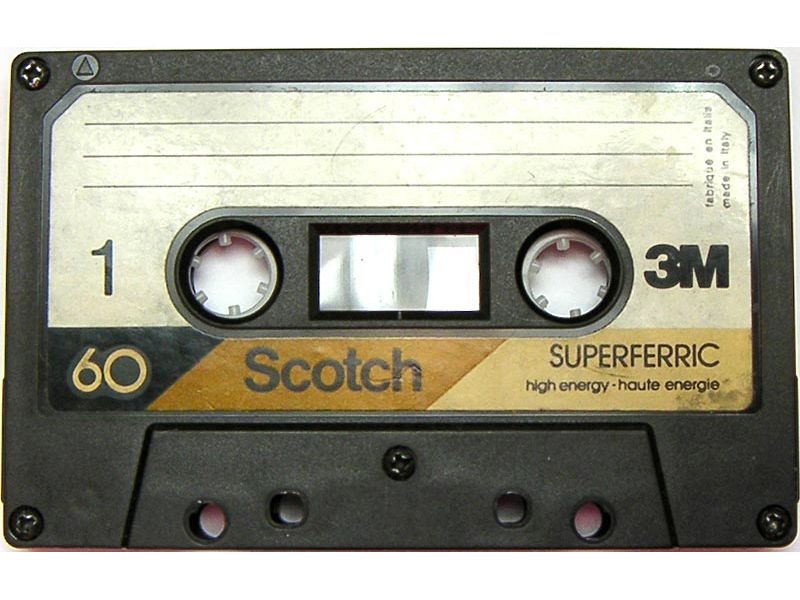
Cassette-tape-pic-970-80

I was having a chat with Cynthia Davidson about possible applications for helping her students create HTML webtexts for the Kairos Journal. She ultimately ended up pointing me to HTML5 UP, an awesome set of HTML5 templates. It’s brilliant when a question
ends with another tool in your ed”-“tech arsenal. But it didn’t end there, Cynthia also pointed me to Karl Stolley’s Lo-fi Manifesto for the web. In fact, the article I am linking to in the recent issue of Kairos is actually a 2.0 revisiting of the Lo-fi manifesto which was originally published in 2008, a fateful year for music metaphors in ed-tech [*cough* EDUPUNK *cough*].

I was particularly struck by the frame of Lo-fi when writing for the web given how far we’ve been pushing the idea of Independent music and Ed”-“Tech as of late. One of the bands I have been really struck by is Beat Happening, which formed around the idea of lo-fi music production in the early 80s. Calvin Johnson has talked about being inspired by E.F. Schumacher’s Small is Beautiful and his idea of appropriate technology as a reason behind his formation of the K Records label around cassette tapes—cheap, lo-fi recording technologies. Tools for recording and distributing shows bands played at living room parties for a small community of 30-50 people. K Records and Beat Happening became worked hand-in-hand to define the lo-fi sound, aesthetic, and independent distribution ethos in early punk, and played a crucial role in the explosion of indie music during the 90s. A telling event defining this shift between punk of the 80s and the indie scene of the 90s was the 1991 International Pop Underground Convention organized by Johnson in Olympia. Cool, right?

So, how might Lo-fi web production work? Well, Stolley lays it out in technicolor. I am quoting an entire portion of his paper, and I recommend you read the whole thing here, but this bit really is awesome.:

“Lo-fi” describes a limited set of production technologies that people creating digital work should strive to command. As an acronym, LOFI outlines four principles of digital production that are essential for the advancement, extension, and long-term preservation of accessible digital work:

  • Learning: Yes, all technologies and all acts of production require learning. Obviously. But lo-fi learning is deliberately sought out with each act of production. That is the only way it can be sought out, as the full range of problems comprising any consequential act of production is unlikely to be satisfactorily addressed by the content or timescale of any one course, book, or tutorial. Learning must both scale and transfer from individual lines of code to entire lifespans of digital production approaches.
  • Openness: Direct engagement with source code and media elements is a hallmark of lo-fi production. All components of a digital work must be available for inspection, revision, and extension outside the scope of any one device, platform, or piece of production software and any one creator. Like learning, openness must scale across time and space, including especially customization and repurposing by readers and end-users.
  • Flexibility: Lo-fi production technologies are inherently limited: there’s nothing much to click or tap around on and discover. Flexibility emerges from the thoughtful application of lo-fi technologies, not from a feature set embedded in an interface. As primarily acts of writing, lo-fi production establishes research and imaginative problem-solving as the central means to reach diverse audiences equipped with an endless variety of conventional, mobile, and assistive devices.
  • Iteration: The hefty investment in learning something new is rivaled only by the investment of time in creating the first draft of a digital project, regardless of how far short it falls of the idea that originally inspired it. This is the most elusive element of digital creation: revision without penalty. Although difficult to recognize on shorter timescales, a key benefit of lo-fi production techniques, supported especially by version control, is slow and steady improvement of existing work as well as experimentation and parallel, alternate approaches to production. (Emphasis on slow and steady; there is little to be gained from the adjective rapid that often modifies iteration.)

Whether or not you choose to embrace lo-fi technologies, lo-fi principles are a useful heuristic to evaluate the production technologies that you bring to your own digital work, and to that of your classroom if you have one. Of all the lo-fi principles, iteration is the most consequential: It emerges from the sustained pursuit of the other three—learning, openness, and flexibility—even as it ensures that the other three remain an integral part of digital production.

To try and add to that would be putting a hat on a hat. And while I remain a WordPress junky, I just love the ways in which the above principles return us to some core principles of the web and ask us to think hard about how we embody them in our online discourse. In fact, I do think the folks at Indie Web Camp espouse similar values and the rise of applications that eschew databases for a flat file architecture suggests the Lo-fi principles might have wider adoption and appeal for many. The music metaphors just keep on giving an giving for Indie Ed”-“Tech 🙂

Posted in indieedtech | Tagged , , , , , | 3 Comments

The Personal in Indie

Against my better judgement, I’ve been temporarily expatriated from my heavily guarded mountain compound in Italy to slum amongst the Trump loving scum in the U.S. God I hate this country! But enough about the King, let’s talk Indie Ed”-“Tech. This past weekend a bunch of folks descended upon Davidson College to talk about a series of ideas and possibilities that have been percolating in the field of educational technology for a few years now. Special thanks to Adam Croom and Kristen Eshleman for making it all possible through adroitly organizing and focusing our time together.

2016/366/79 Best Binary Literary Tattoos in the Universe

There is a lot to talk about, and luckily many people have already done it far better than I can, so let me take you through a brief review of the event literature thus far. In terms of primary resources, Audrey Watter’s talk“I Love My Label”  which kicked-off the event was phenomenal—I will return to it at the end of this post—but that’s an awesome starting point.

IMG_7830.jpg

Kin Lane  followed Audrey with a workshop on APIs, and the site he created at “The Personal API and Indie Ed”-“Tech” is a veritable treasure trove of resources about how APIs inform the discussion of Indie.

IMG_7832.jpg

Alan Levine wrote the first reflective post on the event because he’s the last of the Bloghicans, and it was cool to see how Kin and Audrey’s indie magic has begun to get the dog inspired—the blog wags the tail.

Adam Croom at the Mic

Adam Croom was next up with a 3-part opus on the event, highlighting the ways Audrey and Kin framed Indie Ed”-“Tech, the all-day Design Sprint, and finally a post on futures and funding. If Adam Croom’s blog hasn’t become a staple for you yet, I can only wonder why. The work he and his team have done at Oklahoma with OU Create is quickly becoming the stuff of Ed”-“Tech legend. UMW may have invented Domain of One’s Own, but OU is perfecting it. Wanna know what one flavor of indie ed”-“tech looks like? Just take a peek at their group, empowering a community, highlighting the awesome work, pounding the pavement, doing class visits, touring the campus, and bringing the good word to the people. The proof is always in the work. An indie ed”-“tech spends her life getting into tense situations.

Tim Klapdor framed the encounter as the beginnings of a journey to explore the protean idea of Indie Ed”-“Tech, the becoming of a creative, exploratory process from which a culture may emerge and grow—an opportunity the MOOCs never got because they quickly became an over-hyped silver bullet to solve the world’s problems. Klapdor’s idea that “Indie Ed-tech is infrastructure that supports scholarly agency and autonomy” is brilliantly stated, and he goes on a bit of a tear from there:

Indie represents an alternative vision for how technology might operate in education. The Indie mindset challenges and changes the existing power distribution and dynamics that are often at the heart of the issues we face. It emphasises networked rather than centralised practices and the relationships built through collaboration and cooperation. It empower users by allowing for greater choice, diversity and individual representation and expression.

Those vegemite sandwiches are no joke!

But that’s not all, no, that’s not all! There’s more, and this time the reflections come from a grad student in Education at BYU Olga Belikov, whom I first met 5 years ago on #ds106radio thanks to Bryan Jackson (as an aside, his recent post on Taylor Swift songs rules). So, a high school senior from Vancouver in 2011 is now researching and writing about indie edtech—how awesome. She wrote two posts, one about Audrey’s “I Love My Label” keynote and another about Kin’s Personal API workshop, read both. Pull quote:

Indie Ed-Tech to me is about equity, about accessibility. It’s about working against the institutional culture that precludes those who want to learn from doing so by limiting their access to knowledge.

And…

Technology isn’t an industry disruptor in education, it enable networks that we could never have dreamed up before. My romance with ed-tech began with my experiences that led me to see the capacity that technology has to create connected learning environments. We have that capacity to create distributed knowledge networks and indie ed-tech can enable these networks. Even within an intimate gathering of few individuals at Davidson, I was able to see my pre-existing learning networks clash and grow.

I’m getting verklempt over here.

And then that hack Watters was at it again, not only did she lay down the gospel, but she resurfaced for a homily in her post on the weekend framing what Indie Ed”-“Tech need not be:

Ed-tech need not be exploitative. Ed-tech need not be extractive. Ed-tech need not be punitive. Ed-tech need not be surveillance. Ed-tech need not assume that the student is a cheat. Ed-tech need not assume that the student has a deficit. Ed-tech need not assume that learning can be measured or managed. Ed-tech need not scale.

And last post I have read was by Tim Owens’ reflections on the weekend.

In The Time I Got My Coffee, I Bet Tim Owens Answered Three Helpdesk Tickets

You can play to an audience of your peers in a living room and that in and of itself can be its own reward. We need not have stages filled with passionate fans, it’s perfectly acceptable to build small, tight-knit communities that are personal and intimate.

And…

I’d hoped that whatever we imagined possible we could make equitable and accessible by resisting an urge to have it be any one big thing. A modular approach to Indie Ed-Tech is, in my eyes, absolutely necessary.

And…

Questions remain about sources of funding for innovation, but personally I’m less concerned about that than a deeper drive to continue building a powerful community that can contribute to this space in greater ways. This event reinforced for me that the conversations we’re having are absolutely relevant.

Those Reclaim Hosting people are smart!

The Great Tom Woodward

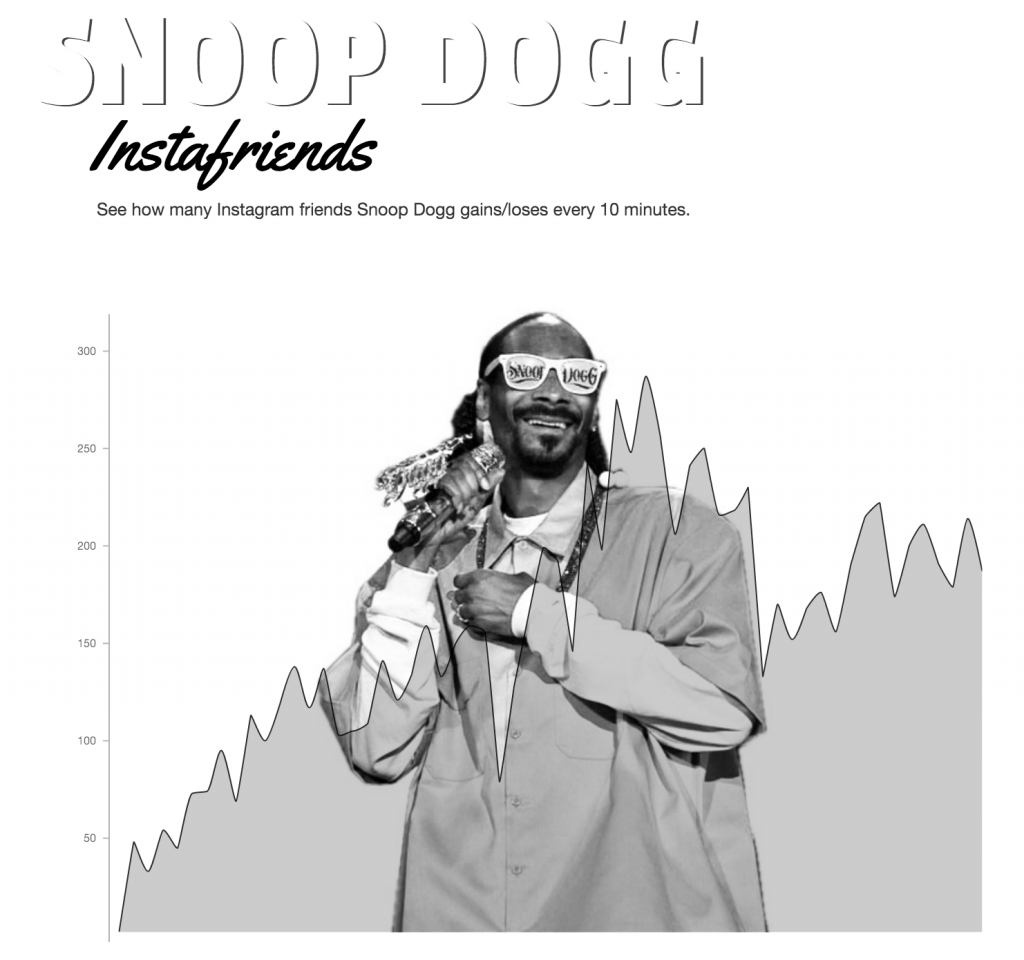
I think that’s my recap of the literature thus far, but this post is already too long so let me try and be brief with my own take aways from the weekend. An Indie Ed”-“Tech anything as well as the API to go along with it has to be personal. And I mean this in the Tom Woodward sense of the word, which is Alabamese for weird. If whatever you are doing doesn’t get you excited, it’s probably not all that personal. Tom Woodward’s Insta Snoop
is for me a model of the personal API. Insta Snoop looks “at Snoop Dogg’s Instagram followers and plot their change very 10 minutes.”
Screen-Shot-2016-02-29-at-8.41.38-PM

Tom grabbed the data from Snoop’s Instagram and mapped it to a Google Spreadsheet to map the scale of celebrity social media follow rates. This is a fascinating form of data/digital literacy, it is intensely purpose, and it makes APIs and data interesting. It’s a riff, or a song, or a story. It’s playful and thoughtful at once. It gets us away from coming up with a spec to define a thing. That will and should happen, but if we start there we are doomed.

The other point that really blew my mind this weekend was Audrey’s reframing of the whole idea of “personalized learning” as an algorithm to make everything the same was nothing short of masterful recasting of the current data-driven nightmare in ed”-“tech to challenge the idea of personalized being sold presently:

Like all sorts of industries, music and education alike are now supposed to bow to the new insights discoverable thanks to “big data.” Algorithms and analytics will “personalize” our world, we’re told. The problem, of course, is that the algorithms and the analytics also make everything sound the same. That’s the business: a neoliberal mirage around “choice.” Standardization. A familiar and managed image. Profiled. Labeled.

Her whole riff on how the music industry, and by analogy education, is pushing towards creating and predicting some imaginary “perfect song” effectively demonstrates how our obsession with data is removing any sense of personalization from the experience.  I particularly love the poles of personal between Tom’s Insta Snoop and Audrey’s Insta Hit. Both strike me as so sharp, so creative, so insightful, and so full of desire to stop the madness.

_____________

I stole all of the above pictures from both Tom Woodward and Alan Levine’s Flickr streams unless otherwise noted 🙂


Posted in indieedtech | Tagged | 1 Comment

Hosting VCU’s Ram Pages

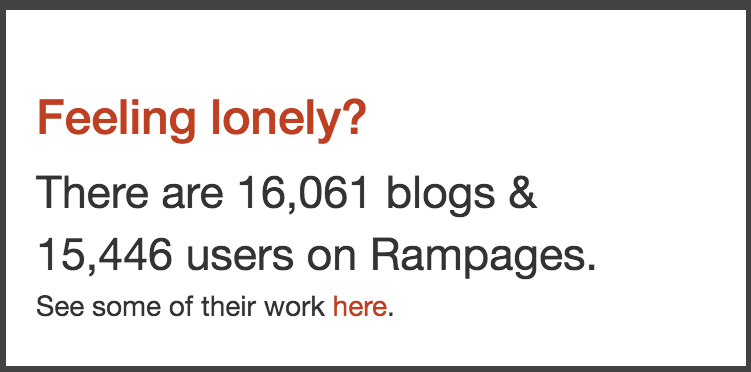
Screenshot 2016-03-17 08.31.07 Reclaim Hosting has been hosting VCU’s Ram Pages as of the beginning of the Spring semester. It reinforces for me there is nothing Tim Owens can’t do, another yet another example of the powerful ripple effects of #ds106 on edtech. We’ve been loath to proclaim victory too soon given what a beast Ram Pages is. And I thought we had a blogging revolution at UMW! In two short years Ram Pages has been home to over 16,000 blogs for 15,500 users. That’s nothing short of mind boggling. Tom Woodward—in his quiet, self-defacing way—has built and managed a blog empire at VCU’s ALT Lab, and over the last 6-8 months Tim and I have been trying to figure out how the hell we would migrate it cleanly given it can grow at intervals of 1000 users any given week.

Screenshot 2016-03-17 08.30.57

We (royal for Tim) moved it over Christmas vacation on to a beefy Linode instance running Ubuntu, Varnish, and Nginx after sharding the database to 256. Yesterday we finally got the second backup solution working, which in addition to nightly snapshots we now have file-level, off-site backups through R1Soft Licenses (more on that in another post). This may be one of the largest, most active academic blogging systems in higher ed, and it is a real source of pride that we’re hosting it. And I saying this knowing full-well it is a total jinx [crosses fingers]….it’s been rock solid so far. Don’t ever question the power of Reclaiming!

Posted in reclaim | Tagged , , , , , , , | 1 Comment

Networked Learning 2016 Hot Seat: Clouds, Containers, and APIs, Oh My!

pB0VXKq

Starting this Sunday I will be part of a week long Hot Seat forum discussion put on by  Networked Learning 2016. I was approached with this opportunity after my presentation at Eden 2015, thanks to Maarten de Laat and Jeffrey Keefer for slumming with the bava. My pitch was to focus the week on something I have been fascinated with for a while now, the return to transportation metaphors to describe internet infrastructure. Back in the mid-90s we had the “Information Superhighway” to explain the web. A decade later we moved to “the Cloud,” and more recently have come back down to earth in the form of shipping containers thanks to Docker‘s brilliant metaphor for what many believe to be the next evolution in computing infrastructure.

6a00d8341c630a53ef015391422b9f970b

So, my idea was to use the travel metaphor, or lack there of, to lead a forum discussion around how we think about web as one way into getting people thinking through and discussing some of the technical realities that undergird the web. One of the strengths of starting with metaphors are at the same time their limits: they are destined to breakdown. Perhaps in these breakdowns the week’s conversation will gain momentum, but that may be wishful thinking on my part 🙂 It could just get convoluted!

LA_freeways_violet


Anyway, I posted my introduction, as well as four topics ranging from “The Web as Automobile” to “Before there were containers, there were clouds!” to “The ABCs of APIs” and finally “The Virtualized World of Containers.” The Hot Seat starts Sunday the 13th, and I was in there cleaning up my typos and the like when I noticed I got a taker for one of the topics almost immediately. The respondent noted that the cloud metaphor seemed quite appropriate, and didn’t really see the value of a transportation metaphor in this instance. I was sold, I loved the format. Where has discussion been all my life on the internet? 🙂 I think my response was a bit over eager, plus I invoked the 2014 cinematic masterpiece Sex Tape to make my case.  I’ll reproduce my entire response below.
_______________

Wow, thanks for jumping in so early—this is exciting! Before I respond to your excellent point, I have to come clean here and say I just tidied up the topic a bit given my proclivity for typos and the like.

I think this idea of the cloud as anytime and anywhere to any device storage is right on. The interesting point you may is the where, what or how is not all that relevant to you. You just need to know that it is backed up somewhere else—but that in many ways is the limit of the cloud metaphor, you have no real conceptual idea of how anything is working. What’s more, it starts to become this broader, nebulous sense of cultural anxiety where we begin to invoke as a kind of technological apparatus working against us. A terrible, but telling, example is a Hollywood film that came out in the fall of 2014 called Sex Tape*. The premise is simple, and I’ll quote Wikipedia here:

Jay and Annie Hargrove are a married couple, which, after having two kids, have sex at every opportunity. After Jay struggles to get an erection, Annie suggests making a sex tape. They film themselves having sex in every position listed in *The Joy of Sex*. When done, Annie asks Jay to delete the recording, but he ends up instead inadvertently synchronizing the video to several iPads the couple had given away over time. After failing to get it out of the cloud, they set out to get back all of the gifted iPads, leading to a series of awkward encounters and close calls.

While a pretty obvious example of the limits of Hollywood’s imagination, it’s interesting how the cloud here becomes an over-sexed white, middle class American family’s worst nightmare. The cloud has taken revenge, through the various cloud-connected mobile devices we use regularly, and they ultimately find themselves trying to destroy the data center with the web servers where the videos have been sent to prevent this tape from going viral. The movie’s entire plot depends upon two things: 1) the viewers shared anxiety that something like this could happen to them, and 2) a certain technical ignorance about what’s actually happening and how it can be solved. In the end, the couple tries to destroy the web servers only to be caught and told they could have just sent an email to have the video removed. Again, the crux of the film being no one understands the cloud:

I know this is a long-winded response, but what struck me about this film’s response to the cloud in popular culture is the way in which the actual metaphor seems to support a willed sense of ignorance as to what’s happening with our data, a reality that is equally scary given that far worse that some imagined Sex tape would be the fact that through these cloud based services we are being tracked and our data mined and sold. I think back to an olde metaphor popularize in the early days of the web: the information super highway. That figure gave you an idea of how things moved, and in some ways it remains far more useful as a figure than the cloud.

________________________________________

Needless to say crickets. I think I scared my sole respondent away with my over zealous response—bordering on internet needy. But I have to admit it, it felt good. So if you want to witness me spinning the most ludicrous arguments from the worst films possible using tired metaphors to explain the new infrastructure of the web, I think this Hot Seat may be for you.  So, catch you later!

blue-thunder-mcdowell-catch-you-later-2

Posted in docker, Networked Learning Hot Seat | Tagged , , , , | Leave a comment