Reclaim’s Daydream Nation

Spirit desire.
– “Teenage Riot,” Daydream Nation

Last week we christened yet another host node server at Reclaim Hosting (Fugazi filled up quick!), this one was named after NYC’s indie rock pioneers Sonic Youth. It was interesting timing because the first school we got setup was NYU—their Library will be running a pilot web hosting service for their community through Reclaim. Last week was also when Audrey Watters released the aspirational Kraken that was her post on Indie Ed-Tech. It’s a brilliant follow-up on her year-end post about the Indie Web in 2014. I read the post several times while listening to Sonic Youth’s Daydream Nation (I recommend the experience), and what struck me is the strong, brilliant chorus of aspiration—a desire to challenge what’s peddled in the pedant realm of the possible, a bending of the very genre of what ed-tech is, was, and can be. And no one sees that spirit of desire more clearly; articulates what we can’t hear more soundly; or sings the story of our field better. #NOBODY!!!

…indie ed-tech underscores the importance of students and scholars alike controlling their intellectual labor and their data; it questions the need for VC-funded, proprietary tools that silo and exploit users; it challenges the centrality of the LMS in all ed-tech discussions and the notion that there can be one massive (expensive) school-wide system to rule them all; it encourages new forms of open, networked learning that go beyond the syllabus, beyond the campus. It’s not only a different sort of infrastructure, it’s a different sort of philosophy than one sees promoted by Silicon Valley – by the ed-tech industry or the (ed-)tech press.

We may fall, but not without giving those bastards everything we got!!!

It’s an anthem in a vacuum on a hyperstation
Daydreaming days in a daydream nation

Posted in indieedtech, indieweb, reclaim | Tagged , , , , | Leave a comment

Domains as Ground Zero for the Struggle over Agency

BYU’s Bold Plan to Give Students Control of Their Data

BYU’s Bold Plan to Give Students Control of Their Data

I was really pleased with Marguerite McNeal‘s article in edSurge on Brigham Young University’s Personal API experiment. It can be hard to explain (at least for me), but she does an excellent job providing an accessible frame for the project by looking at it in terms of students finally being able to manage and control their own data. I think the following paragraph summarizes the idea behind a personal API as clearly as anything else I’ve seen:

A personal API builds on the domain concept—students store information on their site, whether it’s class assignments, financial aid information or personal blogs, and then decide how they want to share that data with other applications and services. The idea is to give students autonomy in how they develop and manage their digital identities at the university and well into their professional lives

The idea of autonomy in relationship to our personal data puts the discussion in a far broader context, and its immediacy is anything but academic. That said, I think it’s telling that a number of universities have been pushing hard to bring the importance of controlling your data to their academic communities. BYU’s work around the personal API is a really exciting early attempt at what this might look like. I could listen all day to Phil Windley talk about what he calls “sovereign source identity,” an idea he credits to fellow Long Islander and UMW grad (we met at UMW though) Devon Loffreto:

“We want to teach students that this isn’t the only way identity happens online. They can create their own,” Windley says. This fall BYU introduced its Domain of One’s Own pilot to 1,000 student and faculty participants. But offering personal Web spaces is just the beginning, Windley says. “Domains help students understand their personal identity. The next step is understanding your personal data and how you control that.”

Absolutely right! And Adam Croom—who has been going gang busters with University of Oklahoma’s Domain of One’s Own project OU Create—frames this argument along the lines of a negotiation that should be taking place but isn’t:

“It’s the idea that tapping into one’s data should be a negotiation that the student gets to make,” says Adam Croom, director of digital learning at the Center for Teaching Excellence at the University of Oklahoma (OU). “Why can’t I manage what apps tap into my data, whether that’s the learning management system or the bursar’s office? Why aren’t there terms and conditions for students to understand who has access to their data?”

Another article I found alongside this one, thanks to the Cassandra of Ed-Tech*, was the article in Education Week proclaiming 2016 will be “The Year of Agency.” If that’s right—and I hope it is—that means more an more universities will need to start rethinking their infrastructure, and APIs have helped BYU and University of Oklahoma do just that. And so much of that work has been make possible thanks to the tireless evangelism of Kin Lane who has provided a vision of what APIs can be for Higher Ed. One we desperately needed.

At the same time, giving students, faculty, and staff more control over their data will not be without some serious struggle. A response to this article published today on EducationDive illustrates why giving students control over their data might be an issue for some:

Schools are tracking student movements around campuses, incorporating data about how many times they visit the library or the tutoring center into performance data, merging that with student information system and learning management system data, and then developing predictive models to help counselors and students themselves. Giving students access to their own data is one thing, but letting them block others from seeing it is a different beast that could derail retention efforts.

Derailing retention? It’s strange to see the idea of allowing students to decide who gets to see their data, for how long, and why as somehow antithetical to keeping them? There is a joke in there somewhere. Fact is, the realities behind the learning analytics applications that have been relentlessly tracking student’s personal data may very soon be coming to a head. I would bet there has been little to no transparency about what student data universities are tracking, and whom they are sharing it with. Hell, I’m sure a number of universities aren’t even aware themselves of what data these third party applications are collecting. The idea that someone empowering students to opt-out of these unilateral relationships with various technology vendors is somehow preventing them from doing their job is demonstrative of just how much of the job of teaching and learning they’re offshoring to third-party technology solutions. And I won’t even get into the insane idea that tracking a student’s movement around campus is a sound academic counseling strategy.

Reclaim Hosting was born out of a movement that is grounded in the principle of empowering students and faculty to take control of their teaching and learning. And as Phil Windley notes, understanding who has access to their data and how it is being used will be ground zero for that struggle if we are, indeed, entering the year of agency.

_______________________

*I found this article thanks to the all-knowing, all-seeing Audrey Watters, who linked to it in this week’s Newsletter. You’d think given I was quoted in this I might know about it, but Audrey actually reads the web—all of it—unlike me 🙂

Posted in reclaim | Tagged , , , , | 12 Comments

Reclaim the Portfolio

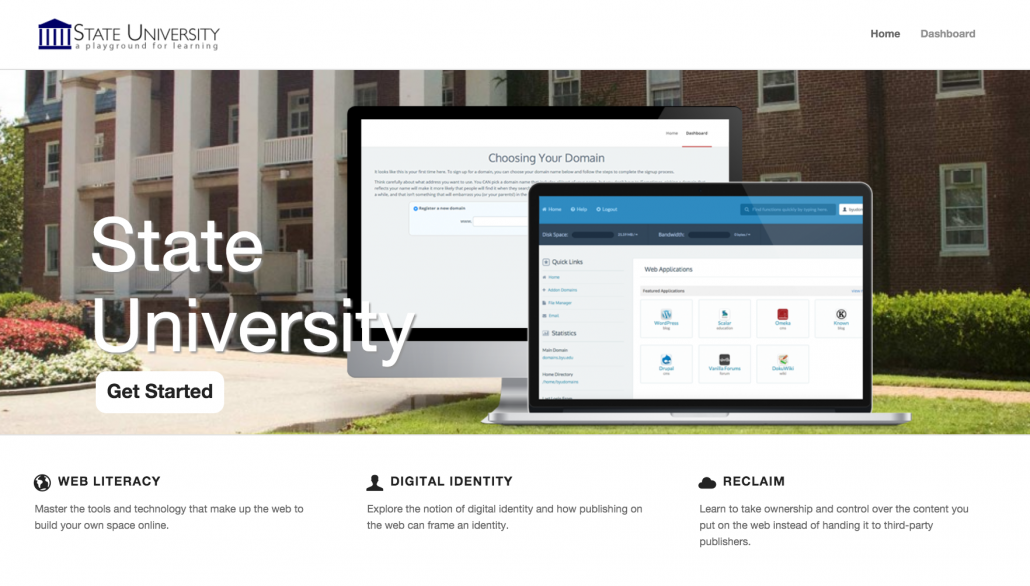
A university contacted me earlier this week to see if we had anything their faculty might be able to play with in terms of portfolio solutions. Tim Owens created the amazing State University as a demo site for anyone interested experiencing what a Domain of One’s Own package would be like. I took the opportunity to create a couple of quick tutorials and borrowed a couple more to showcase how one might imagine web hosting in terms of a portfolio—Documentation December in action! Below are the first wave of resources I created on the Reclaim Hosting site here. I plan on regularly updating this page with more focused resources given this quick guide is focused specifically on customizing WordPress after taking you through the minute and a half it requires to get an account and install WordPress. Damn we are good!
______________________

appboxKeep in mind that Reclaim Hosting is first and foremost a web hosting platform that allows students, staff, and faculty to build their digital presence online. In this regard it is by no means limited to portfolios, you can use it to create anything from course hubs to research sites to personal blogs and much more. At the same time, it provides several applications commonly used for portfolios in higher education, such as WordPress, Omeka, and Mahara to name just a few. What you get in a portfolio from Reclaim Hosting versus specific portfolio tools like Digication, Chalk & Wire, etc., is choice and possibility. You are not limited to a specific, proprietary system; you can customize your portfolio with thousands of freely available themes and plugins; and, finally, you have access to software that is popular, portable, and affordable.

In order to get a sense of how Reclaim Hosting could provide a portfolio solution for your university, we have created State University. StateU provides the opportunity to experience how getting access to a domain and web hosting would work at your school.

Screenshot 2015-12-17 14.51.19

Signing-Up at StateU

The following video will demonstrate how easy it is to get up and running with a domain and web hosting on StateU.


Continue reading

Posted in Documentation December, reclaim | Tagged , , , | 4 Comments

Sending Mail from a Forwarded Email Address (Gmail)

Immediately after my last post for “Documentation December” on Forwarding Email in CPanel, I got a question about whether you can reply to messages sent to that email from the forwarded address. This is possible, and I will try and document the process with several email providers, but I’ll start with Gmail because that’s the one I use.

_______________________
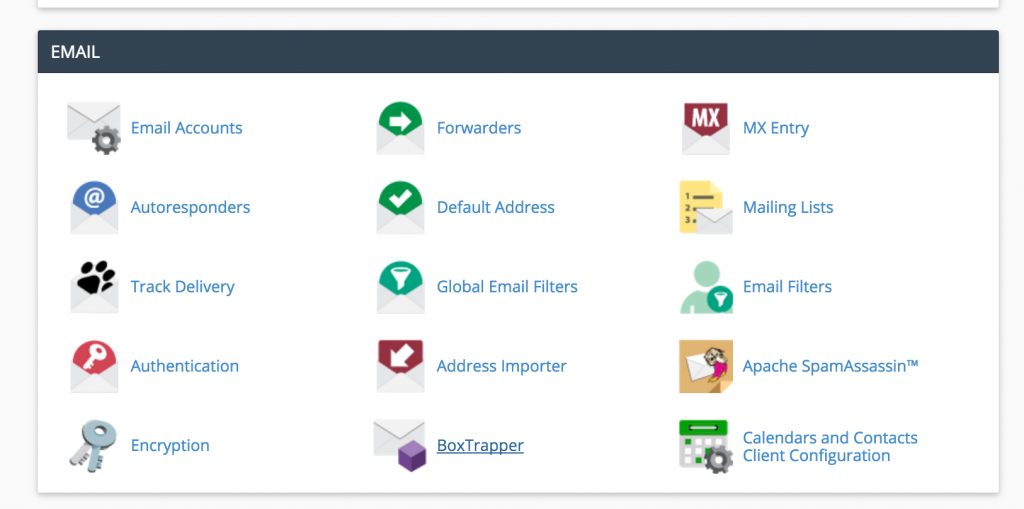
In order to send email from the forwarded address [email protected], I need to create an email account. This is not the case if you simply want to forward that email address to another account, but if you also want to send or reply to mail with this address you need to create an account. Click on the Email Accounts link in the Email section of CPanel.

Screenshot 2015-12-16 14.49.07

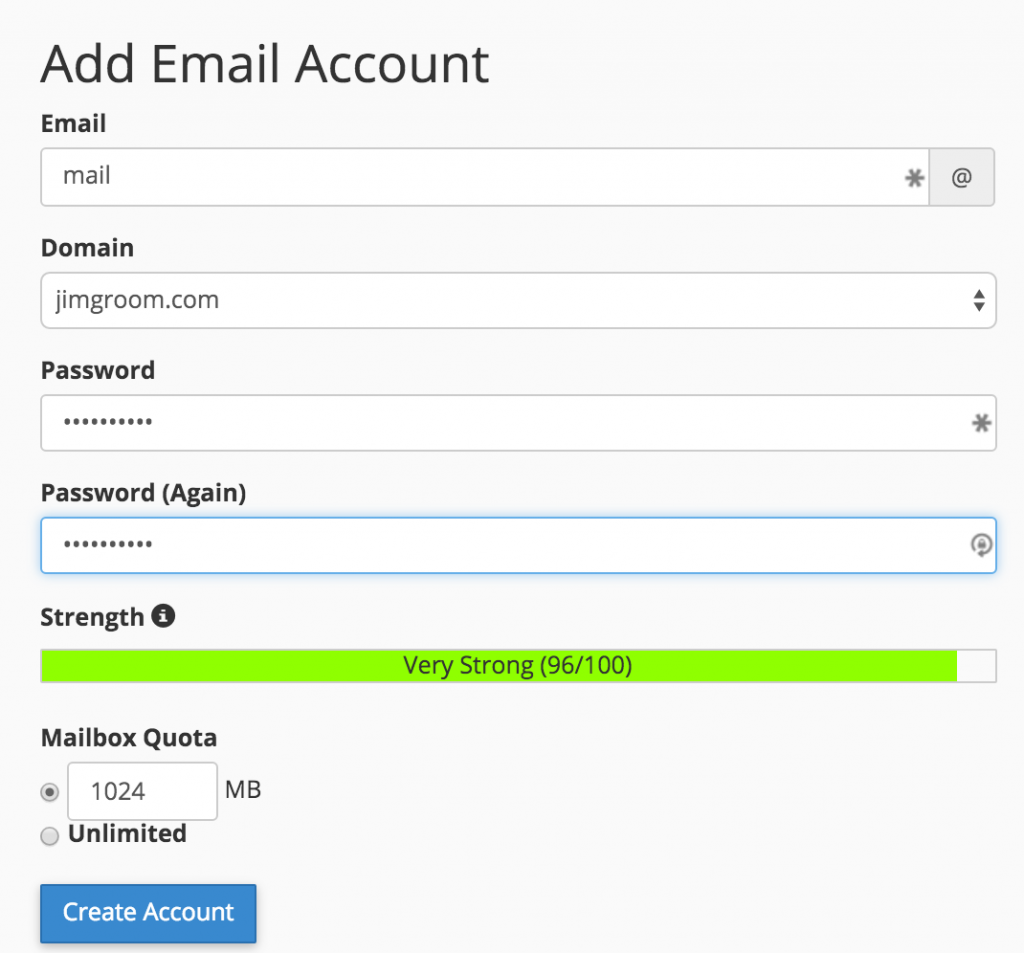
At that point you need to add an email account, and below is an example of how you can fill out the fields and then create the account. Keep the email quota low because you don’t want this to be storage, you will simply be using the email settings for this account to send them through Gmail.

Screenshot 2015-12-16 14.48.43

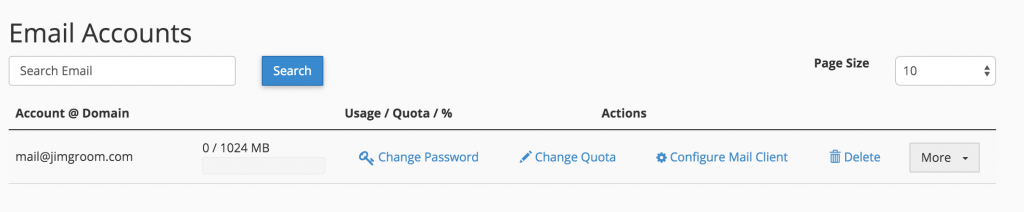
Once the account is created you will see it listed under Email Accounts.

Screenshot 2015-12-16 14.48.16

Click on the Configure Mail Client link to get the settings you will need to add to Gmail. The settings you will need are your username, password, incoming server and SMTP port. Once you have those you are ready to head over to the Gmail account you’re forwarding this email to and go to Settings.

Screenshot 2015-12-16 14.49.30

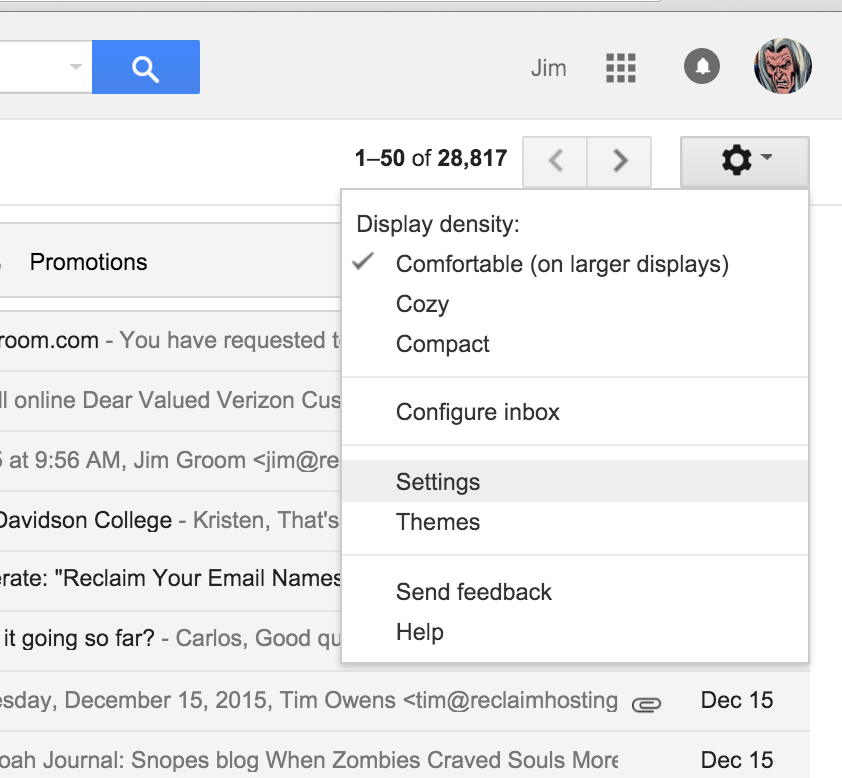
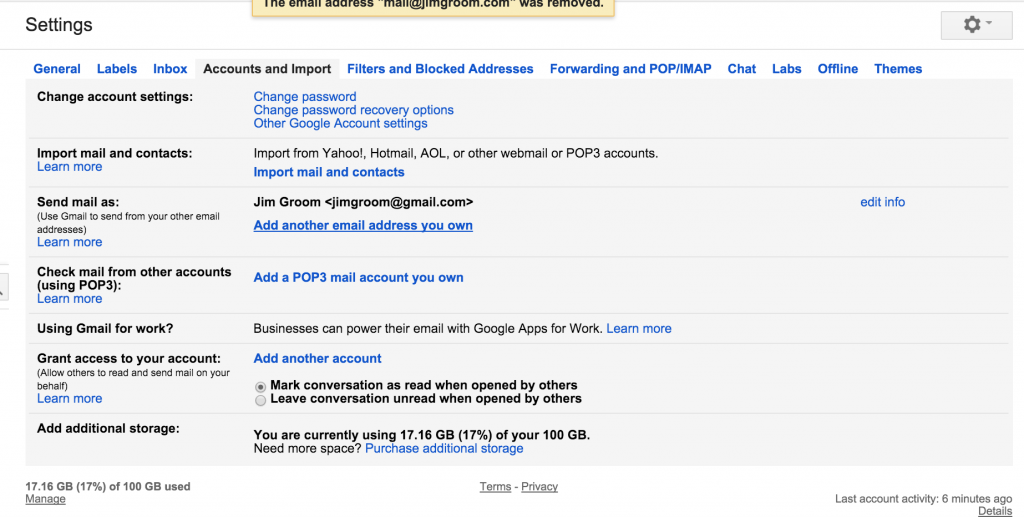
Once in settings, go to Accounts and Import and look for the Send mail as option. Then click on Add another email address you own.

Screenshot 2015-12-16 14.50.16

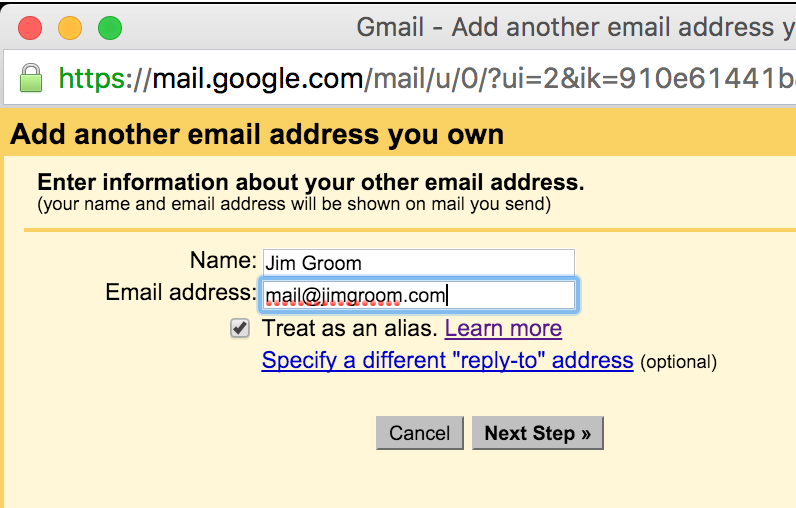
At that point you will see the following pop-up window, and you can add your name and the email address you are forwarding to Gmail. This should be the same email as the account you just created.

Screenshot 2015-12-16 14.50.33

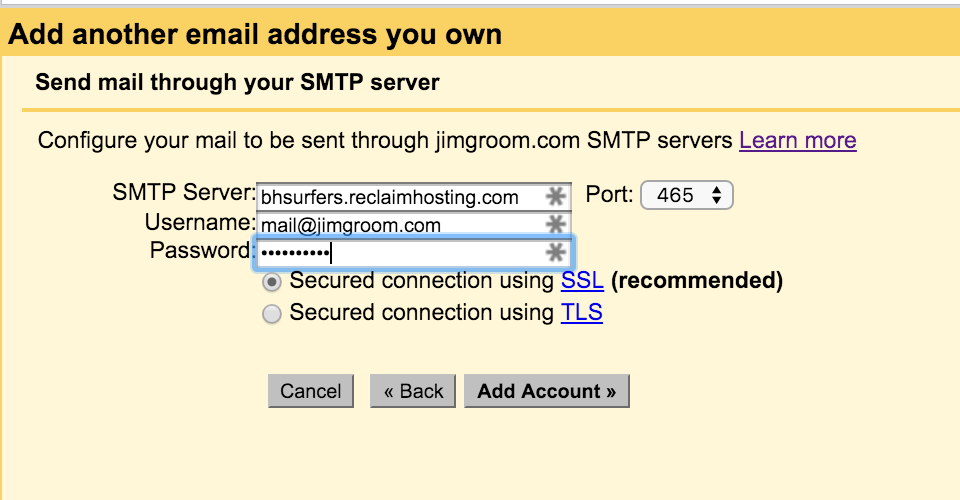
After that, add the incoming mail server/port info, your username and password. Also, be sure you choose the SSL connection.

Screenshot 2015-12-16 14.51.08

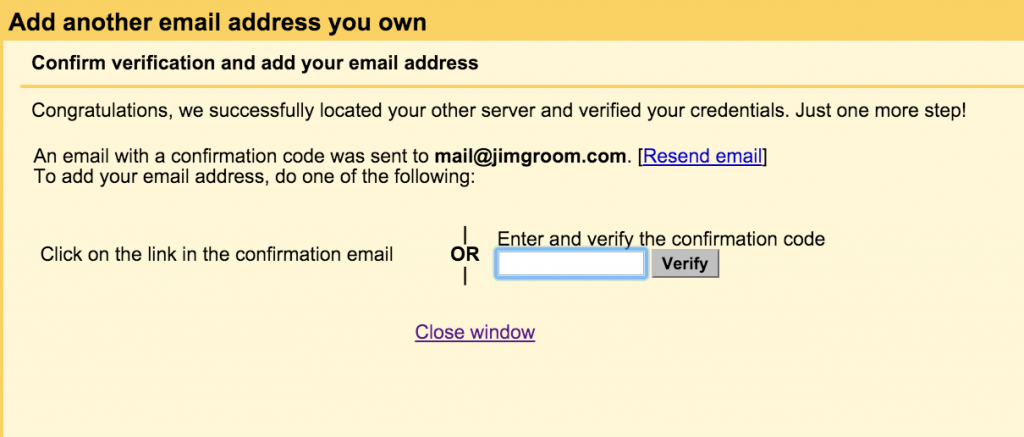
You will then be sent an email with a code that will verify the addition of this email account.

Screenshot 2015-12-16 14.51.20

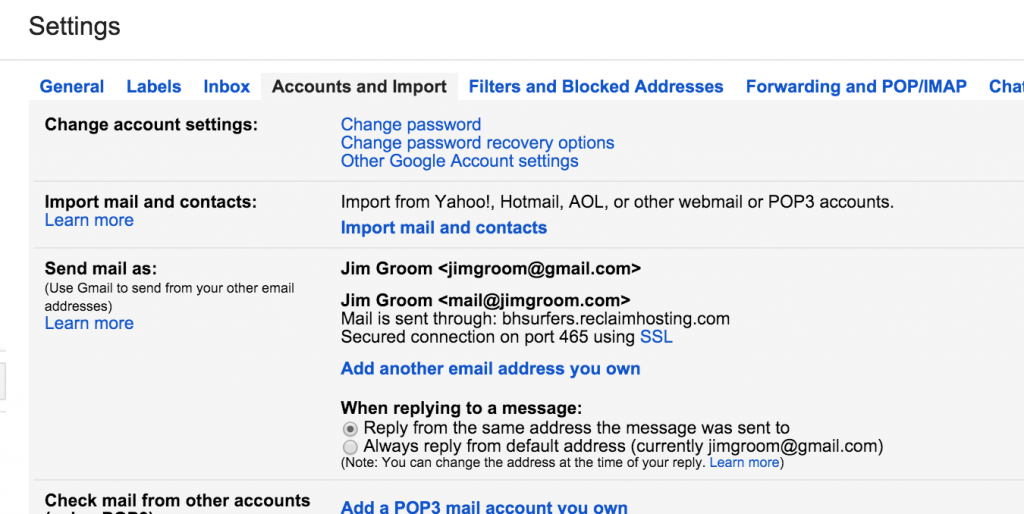
After that, you will see the additional email address in the Accounts and Import tab. I recommend selecting the “Reply from the same address the message was sent to”  if you don’t want to worry about manually selecting the From field for each email you get. It’s a lot less mental overhead that way.

Screenshot 2015-12-17 09.36.10

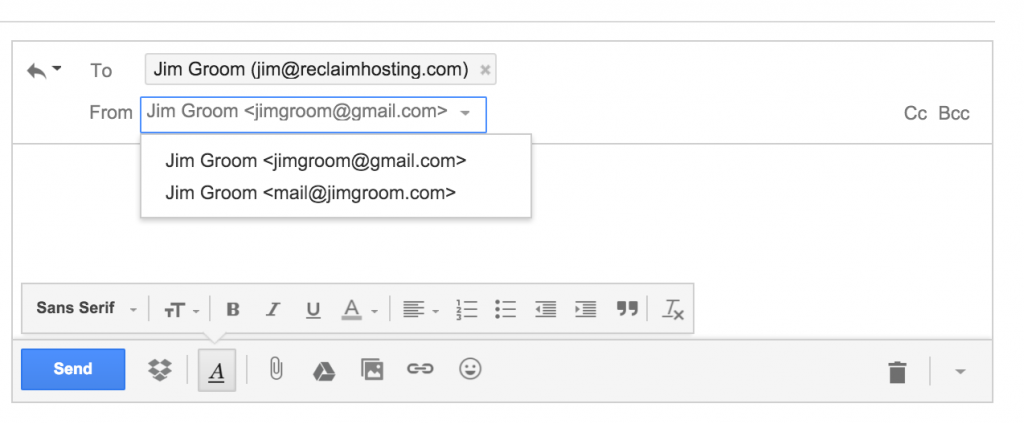
After that, you will see the additional address available in the From: field of your Gmail account. Screenshot 2015-12-16 14.53.06

And that’s all she wrote.

Posted in Documentation December, reclaim | Tagged , , | Leave a comment

Reclaim Your Email Namespace

I’ve been working on some tutorials for “Documentation December” at Reclaim Hosting. One of the simpler, albeit powerful, tools available through CPanel is Email Forwarding. This enables you to create an email address using you domain, such as [email protected] or [email protected], etc. You can create just about any email address you want off of your domain. What’s more, you can forward any and all mail to that address to your Gmail, Hotmail, AOL, Yahoo, etc.

Why forward mail? Shouldn’t we RECLAIM THE EMAIL!  In an ideal world, absolutely. But in reality managing your own email via CPanel is a royal pain in the culo. It’s a lot of overhead, and the spam management can take over your life. There may be a better solution in the near future, but in the meantime at least you can reclaim an email namespace like [email protected]. And if even if there isn’t a solution in the near future to hosting email more easily, you should still be able to carry you email address seamlessly from service to service.

Anyway, here’s how….

Forwarding Your Email

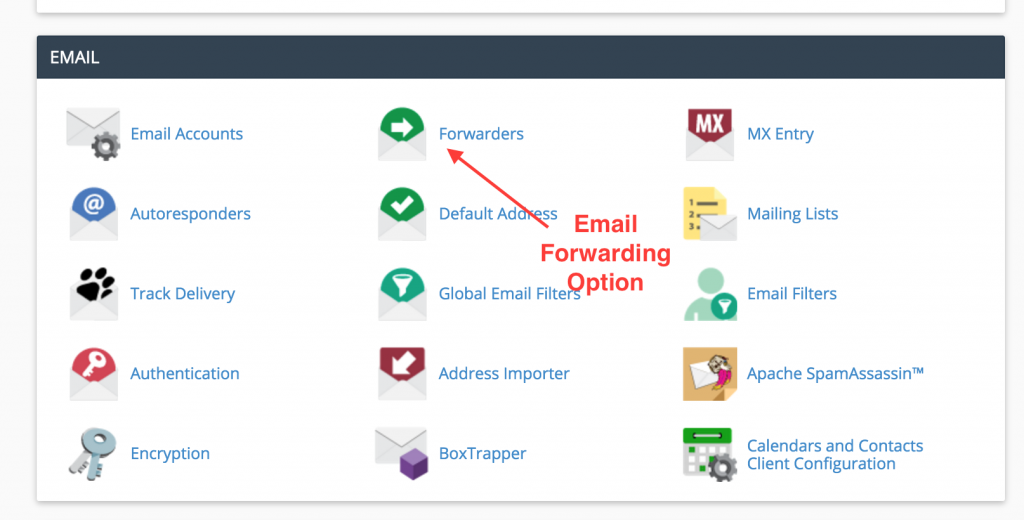
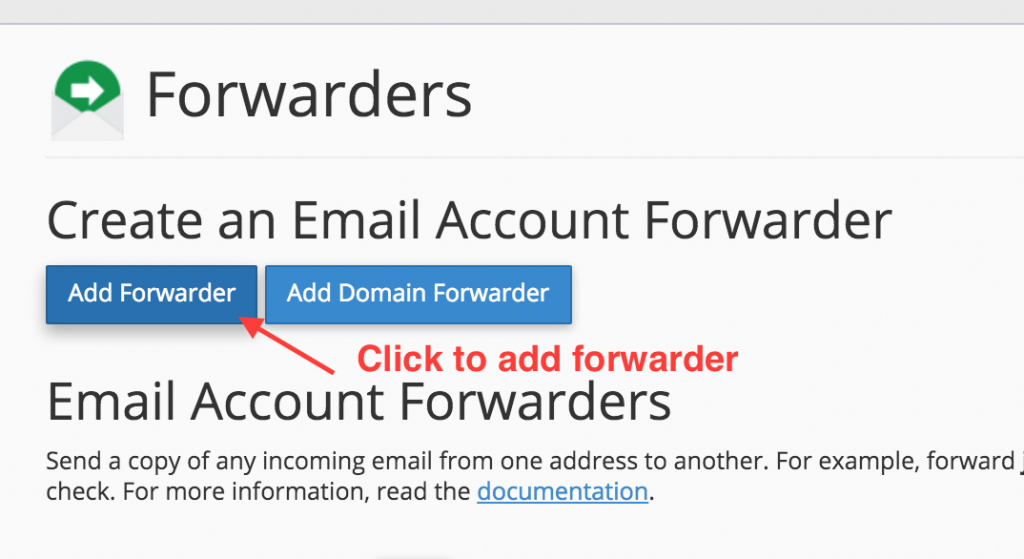
Under the email section click on the Forwarders icon.

Screenshot 2015-12-15 17.11.04

Once there, click on the “Add Forwarder” button.

Screenshot 2015-12-15 17.11.32

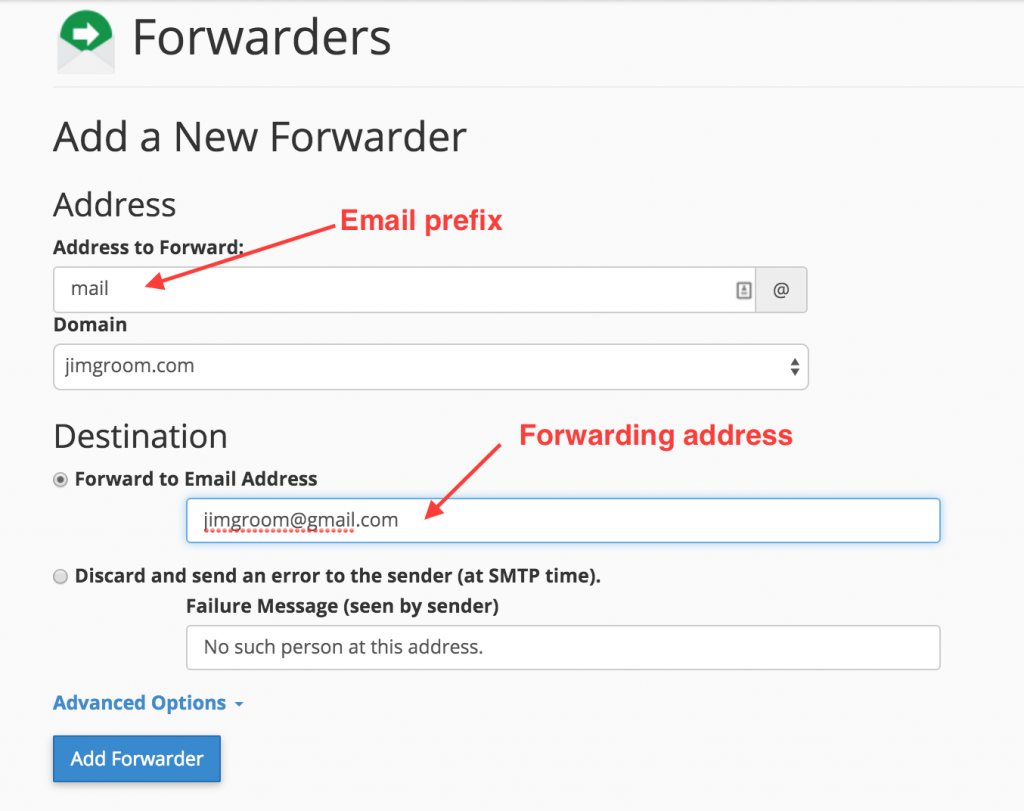
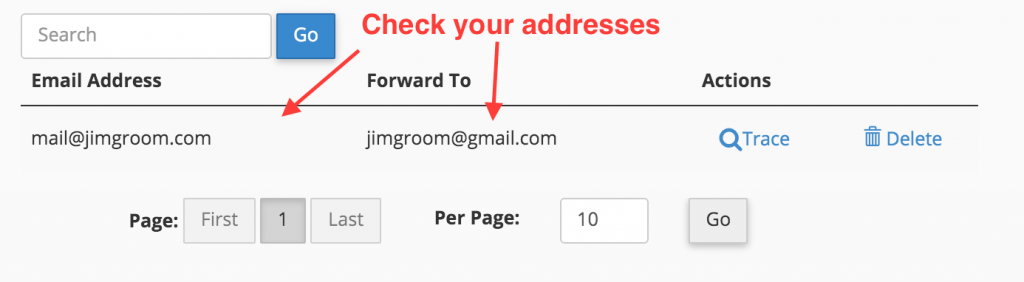
Now you can choose your email prefix, such as mail, support, help, etc. and then add the email address you want this email to be forwarded to. The click “Add Forwarder.”
Screenshot 2015-12-15 17.12.17 After you added the Forwarder, you should double check your addresses, and you should be all set.

Screenshot 2015-12-15 17.12.49

Posted in Documentation December, reclaim | Tagged , , | 4 Comments

Let’s Get Physical….Virtually

giphy

I spent part of Sunday transferring an account from Bluehost to Reclaim Hosting for Amanda Regan. Migrations are a service we provide free of charge for folks, and as Tim once noted, “a good migration can be very therapeutic.” Migrations are particularly nice when the losing host is on CPanel like Bluehost—it makes for a fairly seamless transition using the “Restore a Full Backup” tool. What was particularly interesting to me about this migration was what I was actually moving. Sunday was the 10th anniversary of my blog, and one of the things the bava provided me initially was a refuge from my Ph.D. work. While moving Amanda Regan’s various sites, I realized that she was using her site(s) to share her Ph.D. work in History at George Mason University. In particular, from 2013 to 2015 she was a Digital History Fellow at the Roy Rosenzweig Center for History and New Media.

Screenshot 2015-12-15 09.53.49

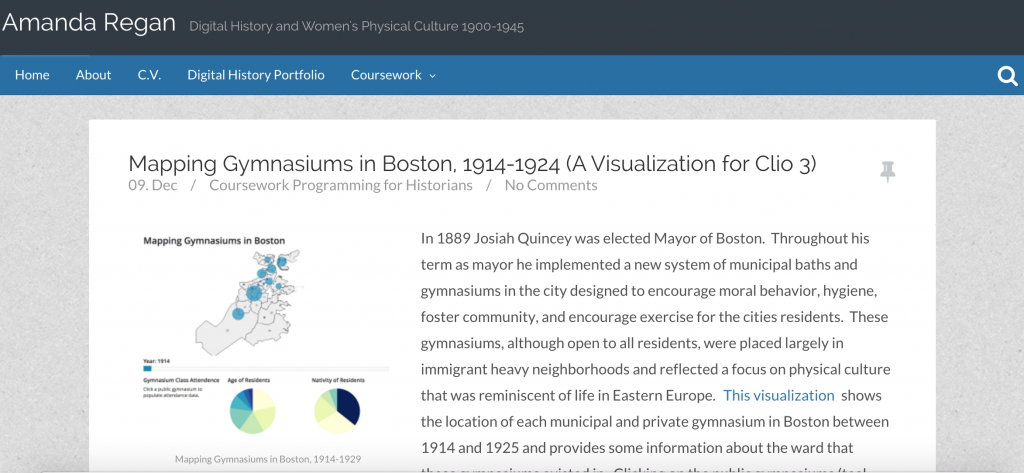
Amanda Regan’s Academic Portfolio

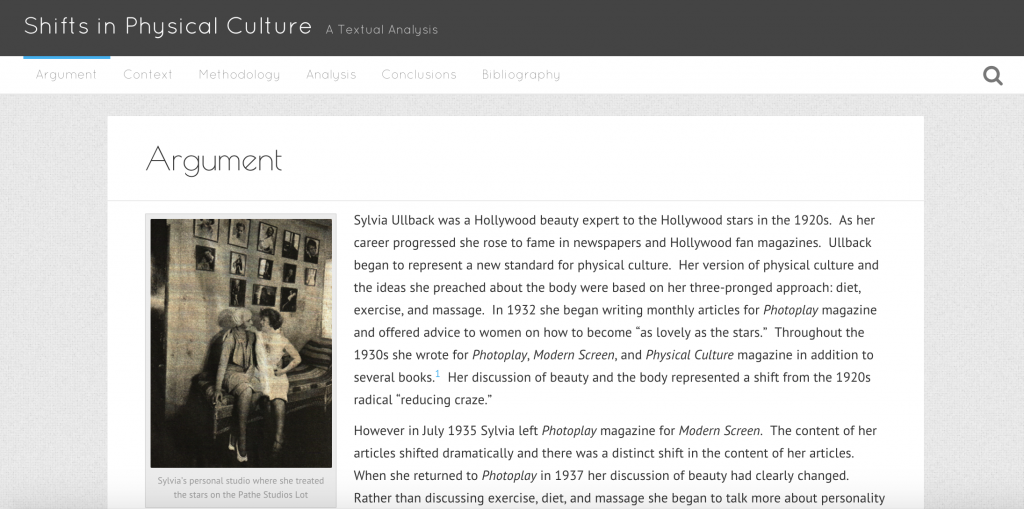
Her main site highlights her research into the rhetoric and realities behind physical education in the early 20th century through mapping and visualizing data; narrates her process of restoring digital photos; provides tutorials for new digital history tools like Dat; as well as providing an in-depth look at her coursework as a grad student at GMU. It’s a beautiful vision of the value of narrating your work while moving through higher ed, and it provides a nice ballast to all the energy I expend on blogging being extra-academic. Amanda has built a remarkable portfolio of her work as a digital historian, and she’s only in the third year of her Ph.D. But her work doesn’t end with a blog, she also manages an Omeka install wherein she shares her research on Mining Physical Education by way of an exhibit. What’s more, she has various sites dedicated to specific programming projects and courses. For examples, this WordPress site providing a textual analysis of Sylvia Ullback articles on physical culture in the 1930s Photoplay magazine.

Screenshot 2015-12-15 09.57.50

Shifts in Physical Culture Textual Analysis

It’s nice to see a rising scholar’s work as open, accessible, and discursive from its very inception. A personalized professional space for tracking your thinking over time, and sharing it openly and often for maximum network effects. What might have seemed radical a decade ago just seems smart and thoughtful today.

Posted in reclaim | Tagged | Leave a comment

10 Years at bavatuesdays

Today marks the end of my 10th year blogging on the bava. That’s almost a quarter of my life. I’ve said it before and I’ll say it again: starting and maintaining this blog regularly over the last 10 years was the single best thing I’ve ever done professionally.

I’ve exorcised many a professional demon on this blog, and hatched a few as well. With almost 3000 posts and more than 13,000 comments, the bava has become part of a larger collection of ideas I’ve shared with so many folks who helped shape them. It’s an amazing archive of my less than amazing thinking. And despite having always been a terrible writer, I have always wanted to write. Good writing takes talent and dedication. I never really found the talent part, but this blog helped me tackle the dedication bit. But then again, it’s only ever aspired to the status of b-blog, so the writing hsa always been held to a strict standard of less-than-great.

The bava continues to provide a space entirely free of the constraints of academic and professionalized writing—things that immediately freeze both my brain and my pen. Something as simple and unassuming as a blog has proven absolutely liberating for my work, and has continually fueled my passion for helping folks take control of their own personal spaces on the web. A see the bava as the most virtuous of cut-rate circles.

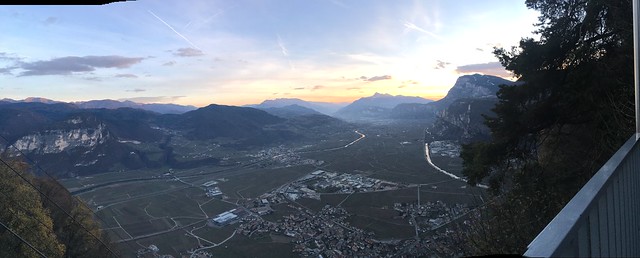
10 years on, as I sit perched high above the internet in my reclaimed Italian Villa perusing the valley from whence I climbed, I can only say this: “IT WAS ALL WORTH IT!”* But no time to gloat, I have some blogging to do 🙂

Panoramic View from Mezzocorona

________________________

*Thanks for that, Scott Leslie. 🙂

Posted in bavatuesdays | Tagged , , , | 3 Comments

EDUPUNK: It was pure in my heart!

The moment above when a drunken, disassociated Jack Kerouac tells William F. Buckley that the Beat Movement was pure in his heart is a moment for me. I have written about it on the bava previously, and it strikes me as a moment of lucidity in what is an otherwise comical mess of an artist at once alienated from and consumed by his own creations. When Alan Levine provided me the opportunity to participate in the Mockumentary he made about EDUPUNK. As soon as he asked I knew I would be quoting Kerouac. I just can’t help it, I just love how he epitomizes the washed up spirit of a movement that has long since moved on or burnt out.

And Alan notes in his post, “Jim did the part of looking back it with a bit of bad taste for the way the spirit got mis-appropriated (was there acting or not?).” Fact is it’s a bit hard for me to mock EDUPUNK because while I always found it playful, it was never ironic for me. The creative joy of critiquing and refusing a system should not be underestimated. And when it doesn’t end at critique, but actually transcends the problematizing and tries to create an alternative—however illogical, unsustainable, and/or counter-productive—then at least we tried to build something. EDUPUNK started as a playful reaction, and I have certainly been guilty of taking it too seriously at times. But one thing is for sure, it was never cynical: it was pure in my heart.

Posted in edupunk | Tagged | Leave a comment

“The Internet is the most basic form of the punk rock revolution”

smallisbeautiful1973I highly recommend this interview from back in 2008 that Ian Svenonius conducts with Calvin Johnson of K Records, Beat Happening, Halo Benders, and Dub Narcotic Sound System and more. The discussion starts with Johnson talking about how the work he has done with independent labels was inspired by E.F. Schumacher‘s book Small is Beautiful which posits the idea of Appropriate Technology:

…it is generally recognized as encompassing technological choice and application that is small-scale,decentralized, labor-intensive, energy-efficient, environmentally sound, and locally controlled.[1]

K Records was made possible in part by the viability of the cassette tape as a cheaper, more intimate technology in the early 80s, an approach Johnson traces to this idea of appropriate technology. Trying to produce and record an album of a bunch of friends making music that maybe 30 or 40 other people was next to impossible with vinyl. To make an album, Johnson explains, you needed to press at least 1000 records for the production process to make economical sense. But that also assumes you could sell 1000 records—it becomes to assume mass. But cassettes make recording for just a handful of people not only possible, but extremely affordable. What’s more, it becomes a much more localized, independent, and decentralized process. He then goes on to suggest that K Records was also inspired by Smithsonian’s Folk Ways Records label. Rather than focusing on public relations and promotion, they focused on documenting and sharing the creative process—a deliberate choice that belies an ethos and an aesthetic.

peanuts_article

When asked if he sees himself as the leader of the International Pop Underground, he answers there is no leader, rather it’s a decentralized, amorphous, amoeba-like entity. Then moves on to an inspired riff (9:21) about drawing from one of the most “radical and forward-thinking” artist of the 20th century: Charles Schulz. He cites the world of Peanuts as a true underground that’s lived in and created by the kids, a world that adults have no place or authority. But goes on to add a true underground is still within the real world and can’t escape its problems. And this is why, he continues, it must always re-invent itself to deal with those issues. Ending the whole bit with, “the best thing about creative work is that there is no hierarchy.” Amen.

Towards the very end of the interview (26:10) Svenonious wonders, given how arduous the production process is for capturing music,”Why don’t people just sing to one another?” A off-handed remark that Johnson turns into a brilliant moment in which he posits: “That’s what the internet is.” By sidestepping the whole production process they’re singing directly to one another while making it available instantly all around the world. A technological development that he sees as “the most basic form of the punk rock revolution.”

What an awesome interview, and damn Calvin Johnson is smart. So much to think about.

Posted in indieedtech, indieweb, reclaim | Tagged , , , | Leave a comment

Domain Mapping on Squarespace

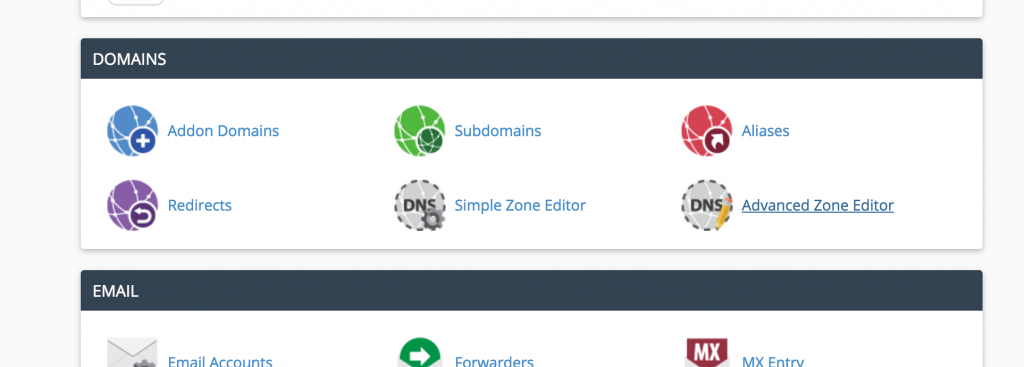
Building on the domain mapping documentation I am putting together for Reclaim Hosting (my last post took you through Domain Mapping on GitHub), this post will take you through how to point your domain to Squarespace. After you connect your domain over at Squarespace (they provide a good tutorial for that process), a new panel will open providing you the records you need to enter into the Advanced DNS Editor at Reclaim Hosting so your domain can be pointed correctly to Squarespace.

Screenshot 2015-12-02 12.24.20

Advanced Zone Editor in CPanel

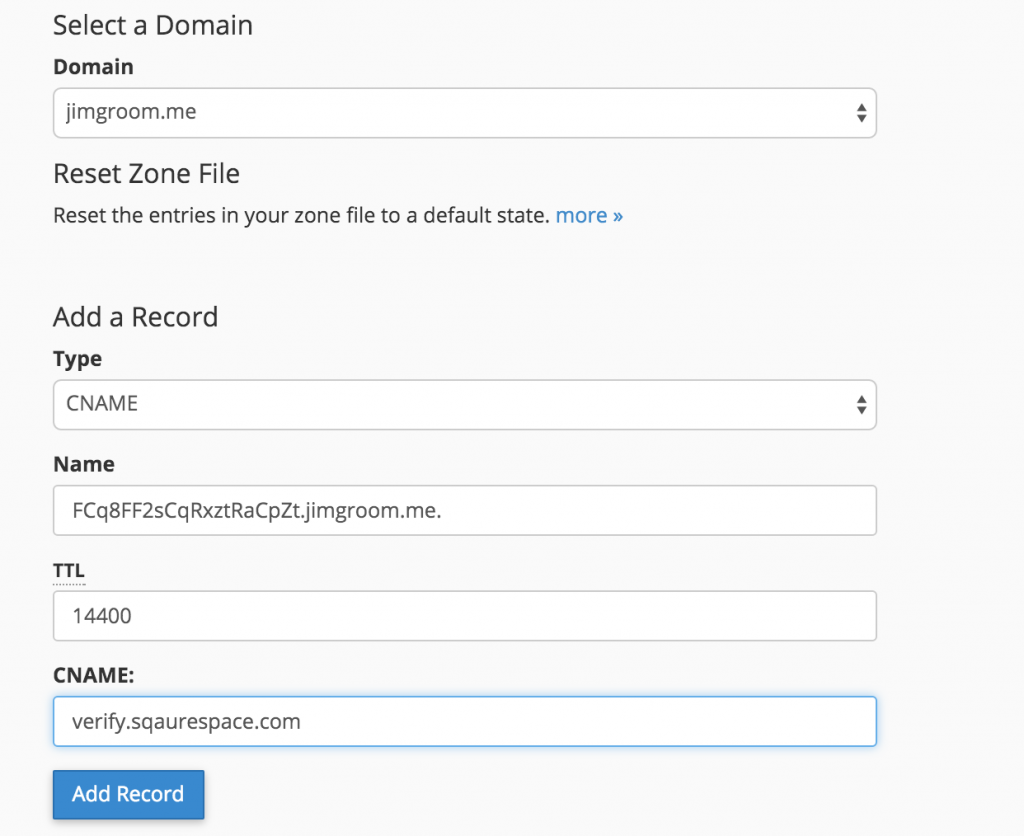
For Squrespace you need to create two CNAME Records and four A Records. The CNAME records appear to be used as a way to verify your account. You can see an example of the two I created below. Keep in mind the Name field for the verify.squarespace.com CNAME will be have a unique code in front of your domain. What I have listed below for the Name field will be a value Squarespace will provide.

Screenshot 2015-12-11 14.41.26

CNAME required for mapping to Squarespace

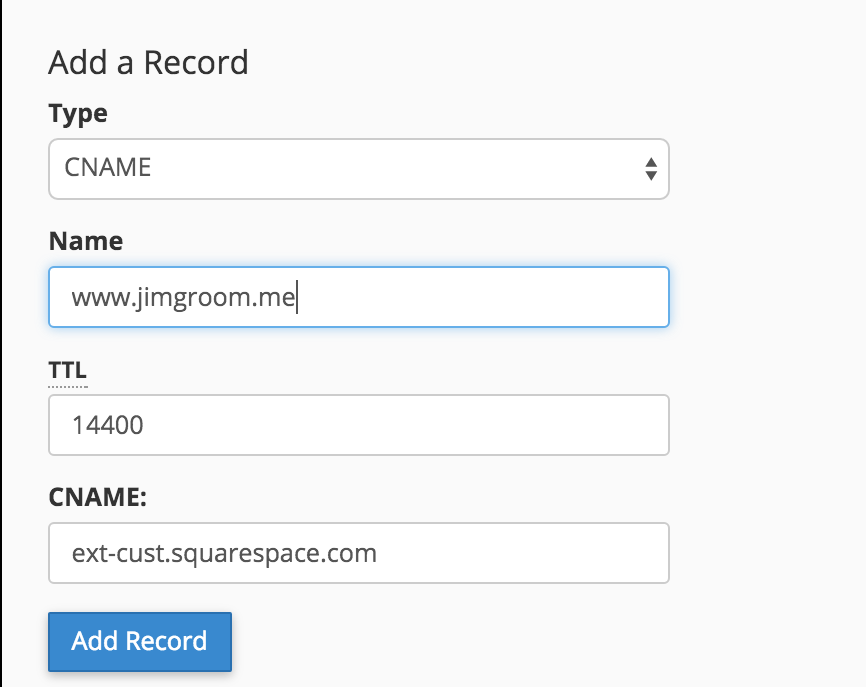
The second CNAME you create will have www.yourdomain.com in your Name field.

Screenshot 2015-12-11 14.38.15

CNAME required for mapping to Squarespace

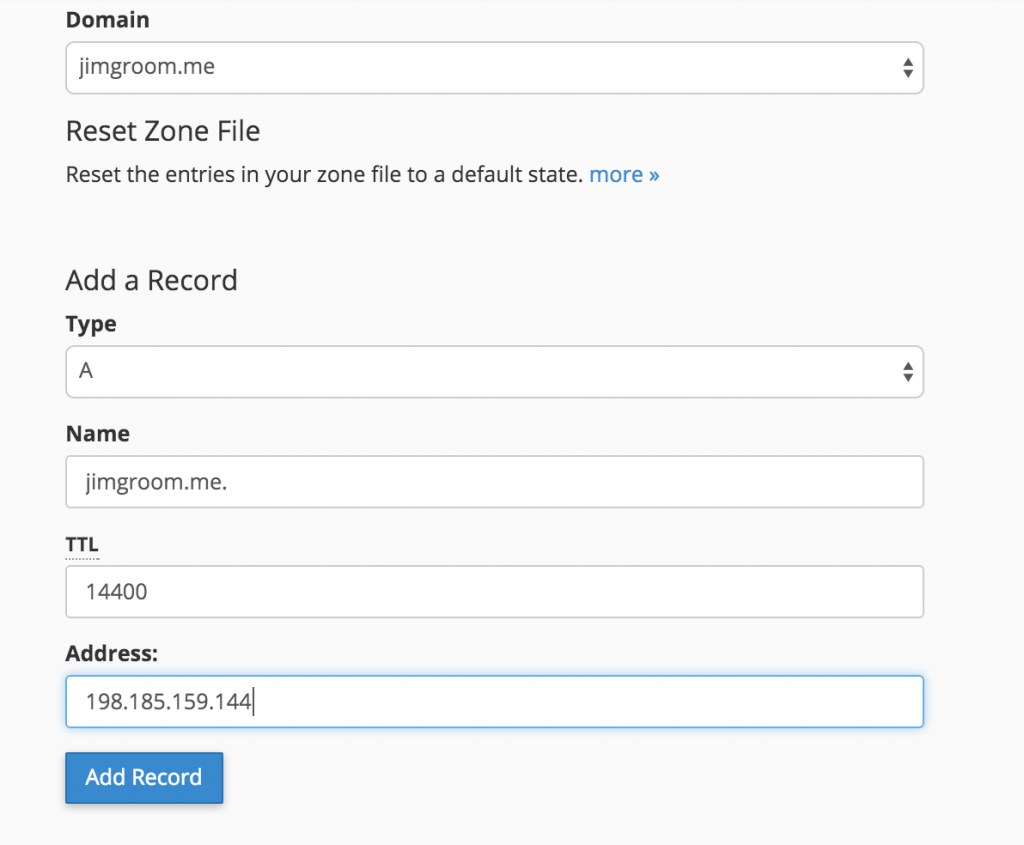
You will then need to add four A Records pointing to four different IP address that Squarespace provides you.

Screenshot 2015-12-11 14.43.08

1 of 4 A Records required for mapping to Squarespace

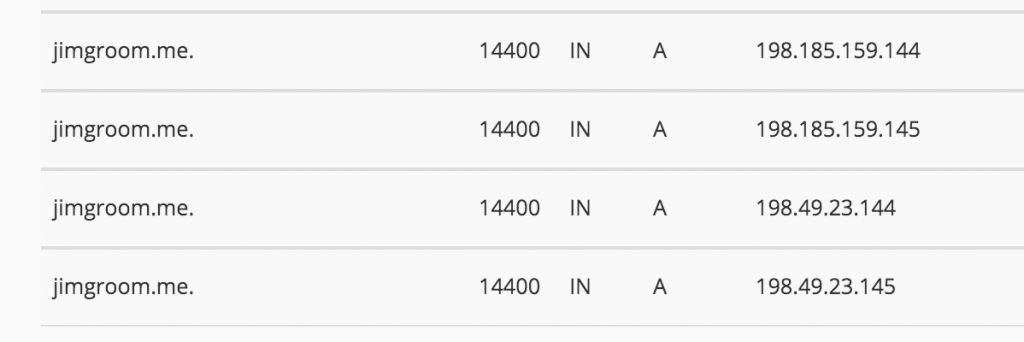
Below is a look at the four A Records I created for this domain.

Screenshot 2015-12-11 16.13.53

The 4 A Records your need for mapping to Squarespace

That should be all you need to get your domain mapped to Squarespace. I have never seen a service use both CNAME and A Records (not to mention 6 all told) for one domain, I imagine  they are building in a lot of redundancy, which is not necessarily a bad thing, just a bit more work at the point of setup.

Posted in Documentation December, reclaim | Tagged , , | Leave a comment