True Crime Course Wiki

torso04

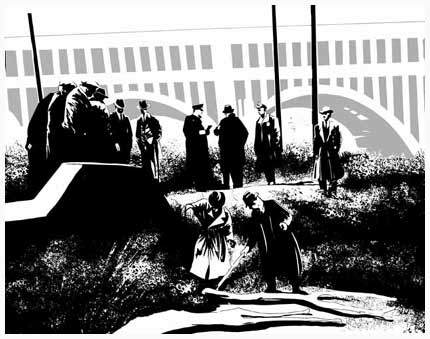
Image from Brian Michael Bendis and Marc Andreyko’s Torso

I’ve been a bit quiet on my blog about the True Crime course Paul Bond and I are teaching, which is a shame because it is a total blast. Luckily Paul has been doing most of the heavy lifting on his blog, and teaching along side him is a real treat. This week we looked at Brian Michael Bendis and Mark Andreyko‘s graphic novel Torso (2001), a gripping, illustrated account of Cleveland’s torso murders during the 1930s. The text is a documentary account of Eliot Ness’s attempt to clean-up the corruption in Cleveland, using the fictional frame of two hardboiled detectives. The work is in the vein of Alan Moore’s From Hell (1999), but far more compelling given its brilliant noir minimalism and integration of documentary resources such as newspaper articles, photographs, etc. It also subtly weaves in various personal accounts of the barbaric murders occurring regularly over a four or  five year span in Cleveland’s lakeside shantytown—a neighborhood of forgotten, itinerant souls that were a product of the Great Depression.

One of the coolest things about the last nine weeks  has been witnessing how the Truecrimers have documented much of their preparation for leading the course discussions using the True Crime Course Wiki. Each week an alternating group of three students collaborate to frame the discussion they’ll be leading about the texts, and that is all laid out in the respective wiki article for each day’s reading(s). Bridget Johnson, Melissa Westfall, and Morghan Smith did a solid job this week on the Torso article as well as the articles on H.L. Mencken’s “More and Better Psychopaths” and Joseph Mitchell’s “Execution.”  They’re effectively using this space to aggregate information about the authors, historical context, summarize the text itself,  frame broader thematic issues, ask relevant questions, and link to various resources on the web.

What I really love about the wiki is that over time the format of the presntation gets fine-tuned and further honed as a result of it being a public, open space. They can (and do) view each others work, take note of how it’s being organized, and generally build better resources on top of what’s come before. Truth be told, the presentations and the use of the wiki was rough the first few weeks, but as of week nine the students are doing a far better job running the class, collecting valuable resources, and sharing what they’ve learned each and every class. None of it’s perfect yet, nor will it ever be, but it’s remarkable how much more comfortable they are with taking control of the class, and their learning, in nine short weeks.

Posted in True Crime | Tagged , | 1 Comment

Renaissance Ruins: Local, Web-Based Phenomenon

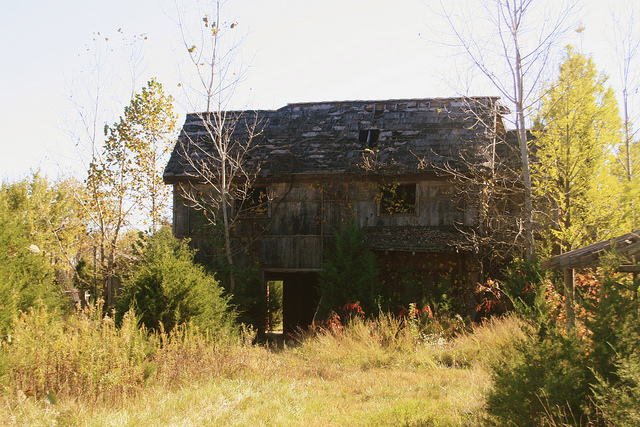
Image of Abandoned Virginia Renaissance Faire
Turns out the Renaissance Faire ruins making the rounds on the internet over the weekend are literally in my backyard. [You can find out more about its history here.] You have no idea how bad I want to film a parody of Game of Thrones using this location now that I know it exists. And how did I find out it exists? Well given I’ve lived in Fredericksburg for almost eight years now, you would think some local, clandestine source turned me on to this local treasure, right? Nope. I had to learn about one of this areas most fascinating, forgotten gems I’ve yet to find here from this tweet by Ben Rimes who’s a colleague who I never met who happens to live in Michigan. His link led me to this Flickr group.

So, what does it mean that I discovered such a seemingly localized gem from a non-local source who has never even been to Fredericksburg as far as I know? I’m not exactly sure, but it reinforces just how potean the web is. While we usually frame it as a global network that seamlessly scales for billions of people all over the world, I find it’s ability to remain intensely local and intimate is what keeps me coming back. I think the global versus local characterization of the web is part of the problem. Seems to me its genius is it can be both at once when it’s premised on the social. Whatever the case, I regularly feel as if my world, no matter how localized or generalized, has consistently been made richer as a result of these personal connections that truly seep into my built environment, no matter the state of its disrepair 🙂

Below are a set of images on Flickr of the Renaissance Ruins:

Additionally, here are two videos that provide a look across the pond of time to this remarkable place outside time but thorughly negulfed by nature. The first is an overview of the space, while the second video takes you through a quick tour of one of the abandoned buildings.

Overview of Renaissance Fair Site including Boat from Jim Groom on Vimeo.

Renaissance Fair Thatched Building from Jim Groom on Vimeo.

Posted in fun | Tagged , , , | Leave a comment

School Pictures

Tommaso #4life

In Puerto Rico last week I gave an extemporaneous presentation about how I got into blogging. My blog origins were only tangentially related to education, I was first and foremost a blogfather. I started blogging to understand the birth of my first son Miles. It took me at least a year to adjust to the simple fact that I was a father, and I use that space  to work through the uncertainty of that new reality in a playful, adoring way. It was very fun. After the idea that I was a father #4life sunk in a bit, my blogging energy was re-directed to my day job, which resulted in the bava.

This site has pretty faithfully chronicled my professional work over the last eight years, but has also been an oblique doorway into my personal life. Be it my kids, my love of toys, movies, and random crap I discover online, and much more. Within this blog there’s an archive of eight years of my thinking, nostalgia fits, and general understanding of where I’m at in life. I value this record, and more and more I’m wondering how to preserve it in some coherent fashion, along with the innumerable other digital media I’ve amassed over the last two decades. How can we organize, share, and archive all the things we’ve created, collected, and curated in a relatively comprehensible fashion?

When we were talking about personal archiving during the Reclaim Your Domain discussion last week the idea of that a number of people would probably quickly see the need of collecting, collating, and preserving their digital lifebits for psoterity—a family heirloom of sorts. This is not vanity, it’s legacy. This is the whole reason I started Planet Miles back in 2004, I wanted a space to preserve the fleeting moments of my kids infancy. I want a place to capture what is now just a pixelated memory. I wanted him to know how crazy that moment was for me, and how much it challenged me at the core of who I am. I want Miles, Tess, and Tommaso to know how much I love them, and the preservation of these memories is just one part of a whole emotional infrastructure, but it’s an important one.

The school photos of my youngest son Tommaso came this week, and I was once again reminded just how much the digital trail of all these details is part of a larger personal  archiving project that in some way guarantees a future for these moments beyond me. That’s one of the ideas at the heart of Reclaim Your Domain, an online space wherein you can start backing up your various, fragmented digital resources on the web, ensure they don’t go away, and start abstracting the various memories you’ve collected into a coherent, accessible space beyond a external storage drive. This is not limited to photos of one’s kids (although this is what sells me on it) but can also be to a whole range of an ever increasing set of digital resources that will tell the tale of a life as well as accomplish the million quotidian tasks of sharing that are a result of it.

More and more I’m thinking Reclaim Your Domain would be an exercise in imagining what a Federal personalized digital hub might look like (I owe these imaginings to the great Kin Lane).  I can think of a number of problems with talking about the personalized digital token in the same breath as federal, but I can also think of a million reasons with the federal government completely abdicating thsi responsibility. That said, there could always be another way.

Posted in reclaimopen | Tagged , , , | Leave a comment

Reclaim Your Domain: Honing the Vision

I have a ton to write about because this past week was pretty intense. The Minding the Future event on Monday, OpenVA on Tuesday, travel to Puerto Rico on Wednesday, a workshop at the Universidad del Sagrado Corazon on Thursday (alongside Gardner Campbell and Alan Levine), capped off with a TEDx talk Friday morning. Amazingly everything went pretty well and like Brian Lamb notes with uncharacteristic optimism (his may not last 🙂 ), I’m about as optimistic about the field of EdTech as I’ve been in a long while.

This may be a myopic vision taken more globally, but I’m not necessarily working at 30,000 feet. I’m on the ground alongside a group of people who together are trying to make a difference in the distributed spaces within which they live and work—and in that regard I’m truly optimistic. Here at DTLT we’ve kept the course, remained true to a shared ethos (as Mike Caulfield points out brilliantly here), and we’re starting to reap some of benefits of that. All that said, this post isn’t about any of that. Fact is, I’m going to need several separate posts to try and cover the various events listed above to try and explain this optimism. this one won’t begin to cover any of those events.

This post is about yet another event we had earlier this week with a number of the participants in Minding the Future. We were lucky enough to have Audrey Watters, Kin Lane, Davide Wiley, and Alan Levine in town last Monday, and we took the occasion to revisit the idea of Reclaim Your Domain that Audrey, Kin, and I started mapping out at M.I.T. in April. This is an idea I think has a lot of potential, and both Audrey and Kin remain interested in the possibilities—so we took about three hours Monday morning, along with Tim Owens, Ryan Brazell, Andy Rush, Scott Lockman, Bill Smith, Martha Burtis, Robin2Go, and Shelley Keith (in my organizing haze I forgot to tell Tom Woodward, but thankfully he still caught the tail end of the discussion).

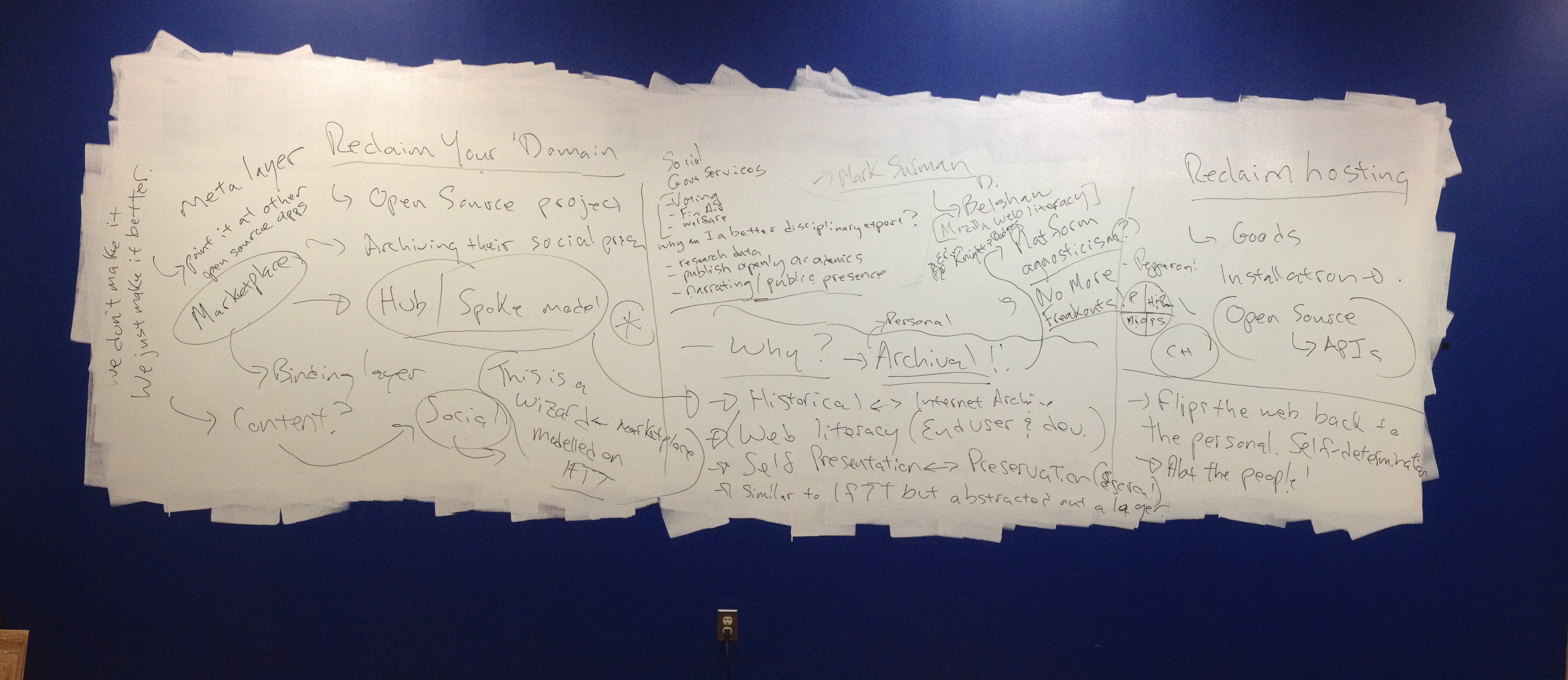
The rest of this post will be an attempt to try and capture some of what we talked about (unfortunately there was no recording), interpret some of the scribblings in the image above, and generally ask for feedback, clarification, and correction from anyone who was there, or even folks who were not!

Reclaim Your Domain: A Breakdown of the Discussion
Reclaim Your Domin whiteboard

The discussion started with me setting up the three different parts of Reclaim that have begin to emerge. As well as hedging about the name, which Wiley scolded me for, can you believe that?! Anyway, the first branch of Reclaim is Reclaim Hosting. This is a hosting service that Tim Owens and I spun up as part of the Shuttleworth Fellowship that gives faculty and staff affordable hosting and domains so that they can begin to explore with establishing their web presence, or bringing their presence on a distributed set of third party applications into one space they control. We talked about the idea of packages using Installatron to enable people to create quick, customized installs. For example, a portfolio package through Installatron for WordPress, or a customized syndication hub for WordPress, etc. The possibilities are myriad, but this is first and foremost affordable hosting that could scale to the institution level to not only support students and faculty, but also entire institutions that can’t run this internally for whatever reason. It’s basically DTLT’s effort to package up the work we’ve done with DoOO and provide it to any other educational institution that’s interested. This branch of reclaim is fairly stable right now, and while the other two branches will serve to buttress and augment this branch, in many ways it’s the most straight forward of the three.

The second branch is Reclaim Learning, and this is the social, community branch of Reclaim. Here we’ll be focusing on how we can start to bring a community of folks together to start sharing their work. How are you using your various spaces to build out your course site, what are people teaching, could this be a place to share tutorials, approaches, and more generally create a space where open, distributed EdTech can happen. A place where faculty and students alike can come to get help, ideas, and a sense of what it’s all about. This is all about bringing folks together to help one another. How this works and what this looks like is not entirely clear to me, but it has a lot in common with what we are trying to do more generally for the state of Virginia as part of OpenVA, so this is an ideas many of us will be coming back to. We didn’t spend too much time on this part last Monday, but that’s because most of our energy was focused on the final element.

The third and final branch, Reclaim Your Domain, is where Kin, Audrey and I started six months prior, and I think we started getting a much better idea of what this is all about. This part of the puzzle is an open source project that basically enables you reclaim, archive, synchronize, and personally centralize your distributed, online presence on the web. This is the idea that started the whole thing, grounded in work D’Arcy Norman and Boone Gorges started a while back. I think we started to fine tune this, we’ll be creating a meta-layer application that will enable you to have an API marketplace (something Kin Lane has been conceptualizing and proto-typing) for a wide variety of web services (i.e. Twitter, Facebook, WordPress.com, Flickr, YouTube, Vimeo, etc.) that will allow you to archive, synchronize, and seamlessly move your data between a variety of storage spaces (i.e. your web host, Amazon S3, DropBox, GitHub, etc.). What’s more, each of these will have a slick wizard (like the awesome open source profect OpenPhoto is doing with Trovebox) that will enable you to do this easily and have context specific interface that will also educate folks on what to do, how to do it, and why it’s important. Inline knowledge, so to speak.

The idea came up that the interface for accomplishing this would be similar to If This Than That but abstracted out a layer.

During the discussion David Wiley pushed a bit harder on why this is even important, you can see the beginnings of that list list in the center of the image:

  • Historical Internet Archive
  • Web Literacy (End User and development)
  • Self presentation and preservation
  • Flips the web back to the personal, self-determination
  • About the people, scaling the possibilities of the individual to more easily control their small piece of the web

The idea came up that this would lead to no more freak outs, if there is another Posterous-like shutdown or if Facebook changes their terms for the millionth time you don’t to freakout again. You have agency, you can simply pull your data out. What’s more, with the API marketplace in play that we were talking about, you could convert your Posterous data into a Tumblr, WordPress, etc. Now the hook into these various applications is something we talked about at length, and I am going to leaver the specifics to folks smarter than me, but as I understand it this will provide an interface to hook into those various applications—an open source, self-hosted control panel for managing your online presence.

One of the points that Kin Lane brought up tin terms of the larger why was that web literacy is crucial and he used the domain he is (was?) working in, the Federal Government, as an example. To negotiate anything from voting to financial aid to welfare to health care you will need to be web literate. As more and more of these social services go on line, the more we will need to understand how these spaces work, have access and control over this data, and ensure that we’re working to educate the folks who need to know how it works most. I loved that idea, and it abstracted well beyond education. In that regard, reclaim your domain is bigger than that—it is starts to possibly frame a blueprint for a kind of federal digital strategy on an individual basis—something like this has to be coming sooner or later. All of us want some way to start thinking about how we will manage, archive, and share the digital resources we have been creating, collecting, and sharing over the last twenty years, and this will all get more important as time goes on. In many ways this branch of reclaim the most exciting to me.

As far as the web literacy part, Audrey mentioned that Mark Surman and Doug Belshaw are already working with this at Mozilla (as I am sure many folks are) and it’s time to start reaching out and making those connections. What is their approach? How can we use it? help build it? Etc. Luckily Alan Levine will be going to a Mozilla event in London next week, and we can start that relationship sooner rather than later.

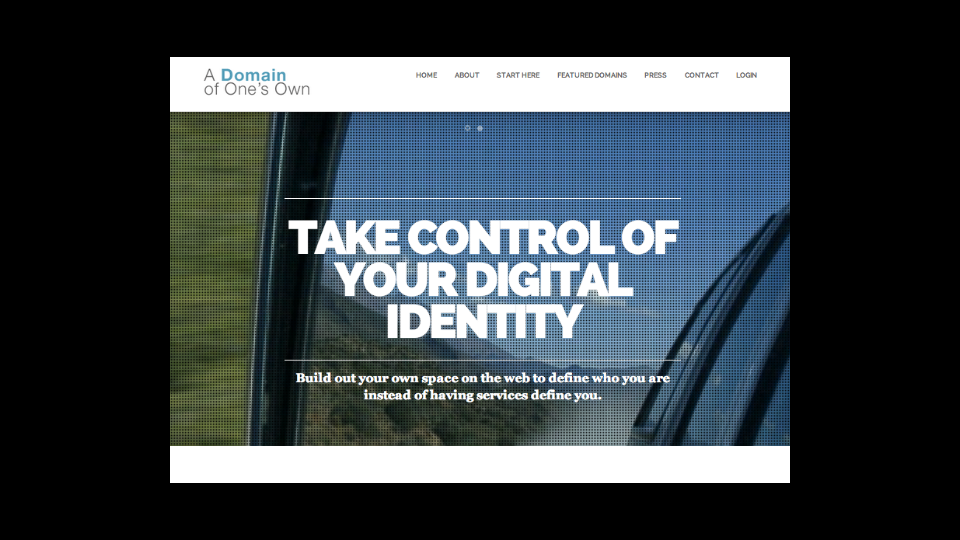
In the end I guess this is why I feel hopeful, I feel like there is a possible plan that abstracts out beyond any one tool or our narrow domain of education, yet allows us to hone in on the processes and projects we are already part of. Reclaim Your Domain is in many ways born out of Domain of One’s Own in my mind, but in this context it is far broader, in both its appeal and potential to promote principles of the open web, empower users to gain a deeper understanding of those principles, and, most importantly, inspire us within the edtech field to start thinking beyond our domain in order to make it that much better.

Posted in reclaimopen | Tagged , , | 12 Comments

Domain of One’s Own: Notes from the Trailing Edge

Domain of One's Own by @jimgroom #TEDxUSagrado #viznotes

Image credit: Giulia Forsythe’s “Domain of One’s Own by @jimgroom #TEDxUSagrado #viznotes”

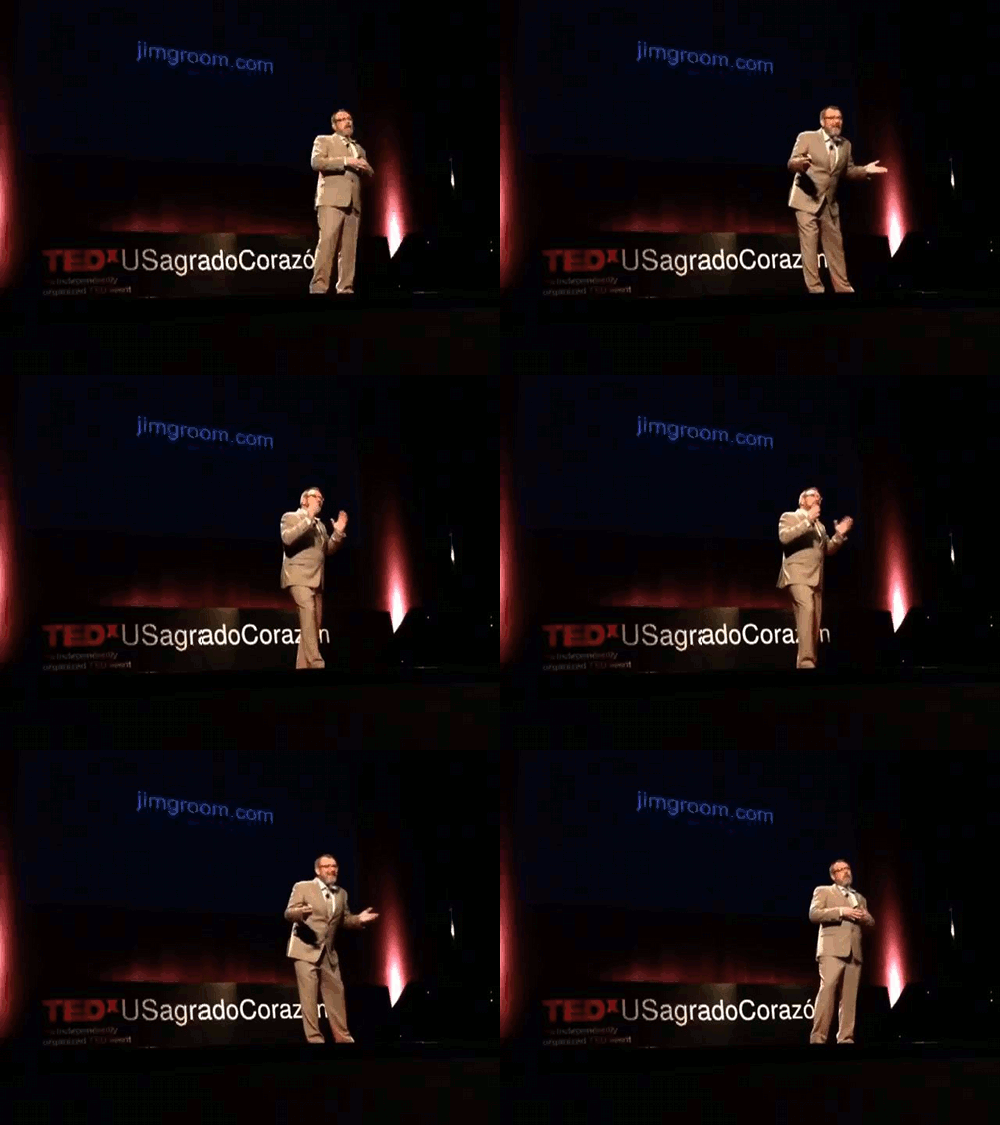
This morning I was fortunate enough to present at the first university sponsored TEDX event in Puerto Rico hosted at the Universidad del Sagrado Corazón and organized by Antonio Vantaggiato and Doribel Rodriguez. It was a remarkable event, and bit of a UMW/ds106 homecoming given I was joined by the likes of Gardner Campbell, Alan Levine, and Giulia Forsythe over the last few days.

My presentation was based on the idea of “trailing edge” technologies and the open web that Jon Udell blogged about last week. The basic idea is that the innovations Udell’s become known for weren’t necessarily cutting edge technologies, but rather a series of old gold web-based technolgoies and  open formats that have been around for a while (just like Grant Potter did with the technology behind ds106radio). In fact, there’s a lot about what Udell is saying about the trailing edge approach that is enabled by the open web that is true about ds106: blogs, wikis, GIFs, ds106radio, etc. But, alas, this 18 minute presentation didn’t touch on ds106 given it couldn’t begin to do it justice.
jimgroom_tedxsagrado 01

As far as how I thought the talk went, I think the energy and excitement were there, and I refused to go by a script, as usual, but I had written this one out in advance—something I rarely do—and I think the written version was better than what I presented. I tried to rehearse it enough times before I went so that what I wrote would become natural, but given this was a brand new presentation, and I hadn’t presented it before, I omitted quite a bit of what I wrote down. I also think it was significantly less than 18 minutes, but I’m not certain of that.

Presenting to a crowd like this is both a rush and a bit alienating because you can’t really see anyone. I tend to work off visual cues and body language in the audience to get a sense if what I’m doing is connecting, that was impossible for me this morning. I have to believe my presentation suffers as a result because my energy feeds off the response either way. What’s more, I aim my talks to entertain first and foremost, but this one was a bit more serious and not nearly as playful as my last TEDx in NYC. I might rethink that in the future if I ever do a more performative presentation with this kind of format. Anyway, below are my slides as well as the original script I came up with.

TedXuSagrado_1

TedXuSagrado_2

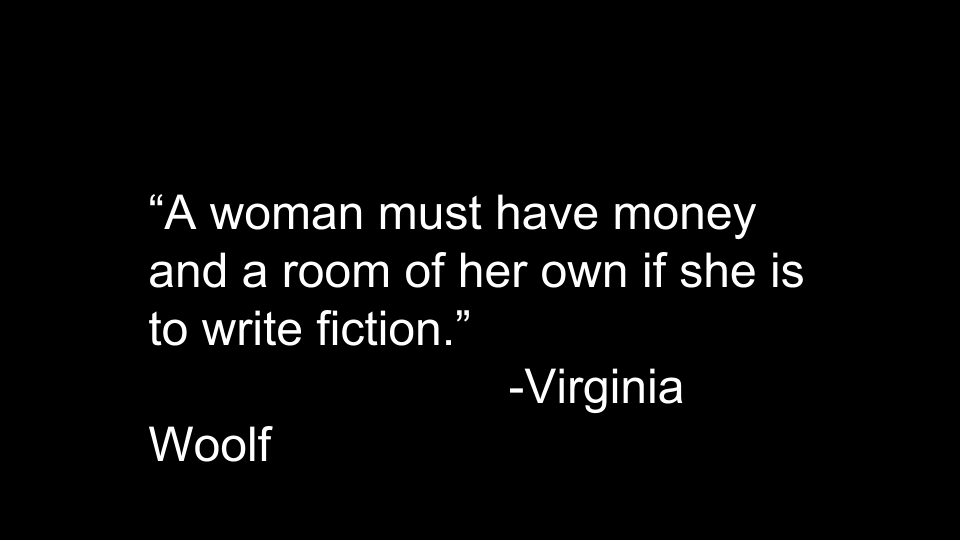
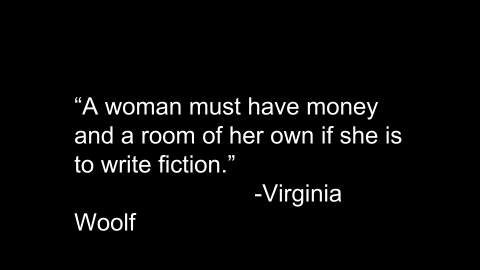
I’m not sure if anyone got the oblique allusion, but It’s a nod to Virginia Woolf, in particular the argument in her extended essay “A Room of One’s Own,” wherein she argues that women writers need both a literal and figural space within a literary tradition dominated by men.
TedXuSagrado_3

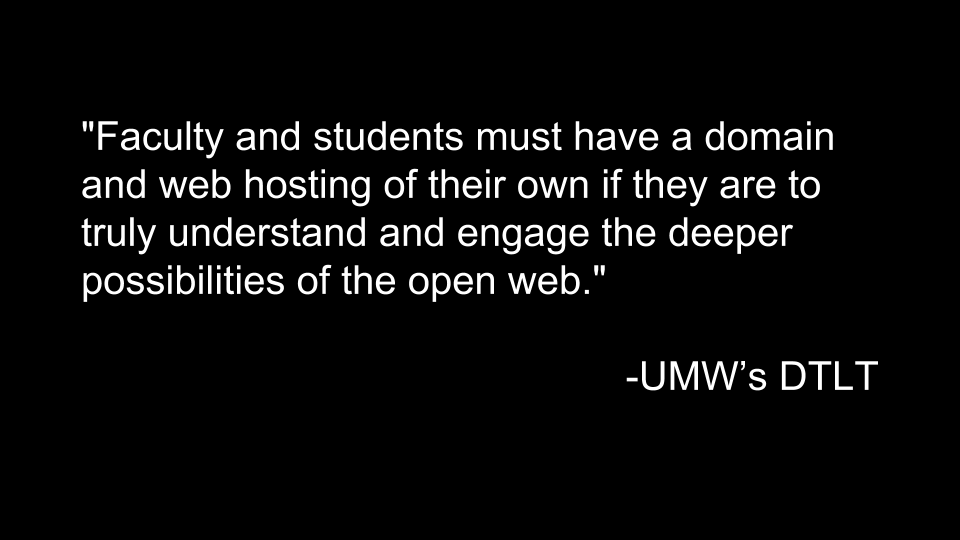
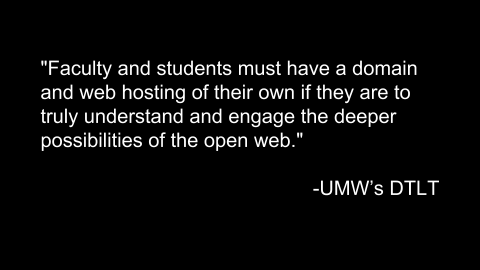
The group I work with at University of Mary Washington (the division of Teaching and Learning Technologies) has both borrowed and modified this idea, with all apologies to Virginia Woolf, to refer to an online space that is both virtual and real.
TedXuSagrado_4

And that’s exactly what UMW is doing, we are offering every student and faculty member their own domain and web hosting. Now let me be clear about what I mean by a domain?
TedXuSagrado_5

A domain is both a quotidian and metaphysical at once. Quotidian in that it acts as an address and metaphysical in that it’s the act of naming something. The prospect of bringing new knowledge into being on the web.
TedXuSagrado_6

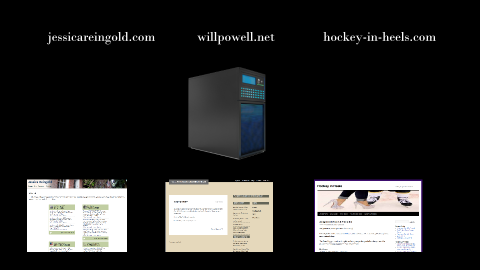
What do I mean by web hosting?

TedXuSagrado_7

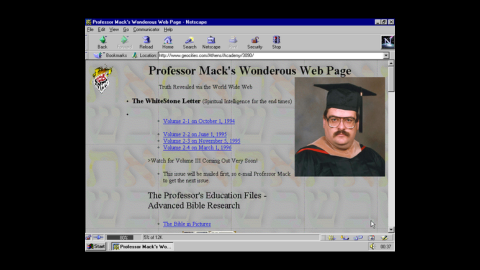
And while the possibilities have grown exponentially with open source applications, I’m not here today to share a particularly novel idea or to “blow your mind” with thing you could never have imagined otherwise. We’ve had some version of personal publishing for a long while now…
TedXuSagrado_8

And even the amazing affordances of commodity web hosting are not all that new—it’s been around for more than a decade even though it still seems radical to most universities. In fact, I imagine many of you not only recognize the value of having these spaces, but already have them yourselves.

And before before we started DoOO our students and faculty did as well.
TedXuSagrado_9

So what I am here to communicate this morning is that our various educational institutions (K12, secondary, post-secondary, etc.) have no real way of engaging its community in those spaces, no less helping them understand the rich possibilities there.

TedXuSagrado_10

Fact is, often times the IT infrastructure at institutions of learning and beyond are far too monolithic and inflexible to embrace what the web is, no less who we are on it.

Which is truly a shame because rather than being thought of as a threat to what’s possible.
TedXuSagrado_11

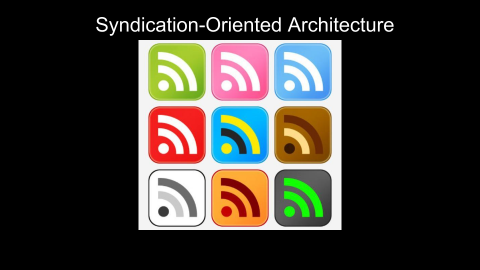
A forward thinking IT infrastructure (which would be fairly loose, fast, and cheap using open standards of syndication) would work to connect these various individuals into a network, creating serendipitous connections that taken together reflect the rich tapestry of who the people are that make up any institution.
TedXuSagrado_12

Mention of rainbows and unicorns goes over flat, I think, it was even animated 😉

TedXuSagrado_13

As a technologist and long-time advocate for the open web Jon Udell noted in a recent blog post titled “MOOCs need to be user innovation toolkits” many of the ideas and innovations he’s best known for happened on the “trailing edge” of the web, rather than the leading edge.
TedXuSagrado_14

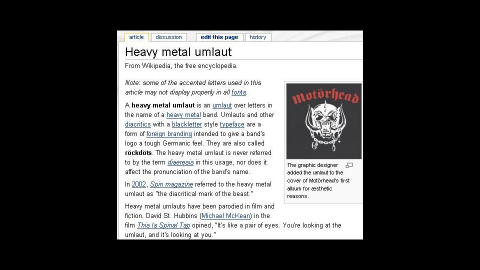
He notes that his early work with screencasting in 2004 and 2005 was using tools that had long been available to capture video of software in action. What he demonstrated is how it could be powerful for communicating with others, and that’s when it took off.
TedXuSagrado_15

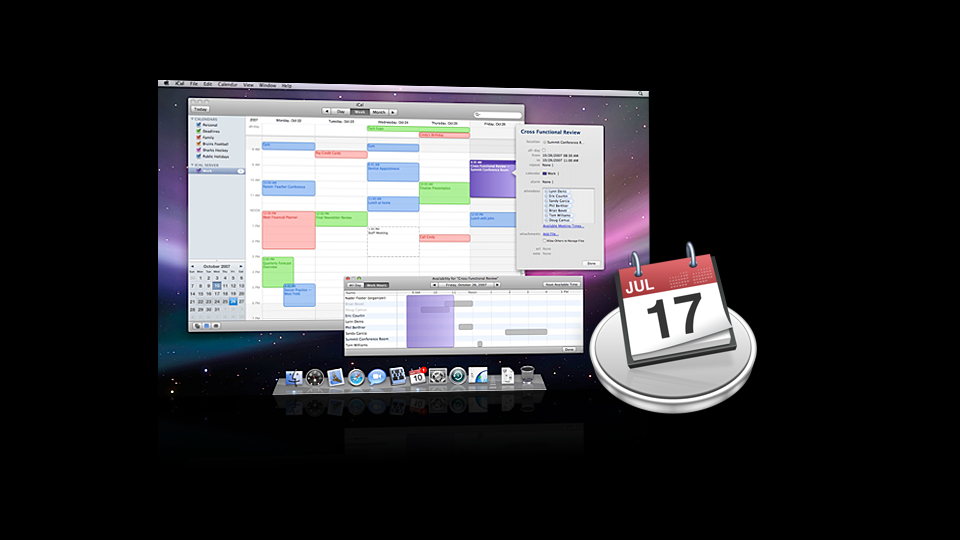
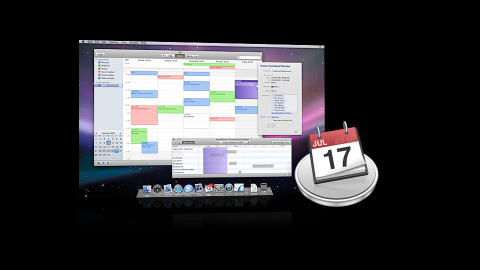
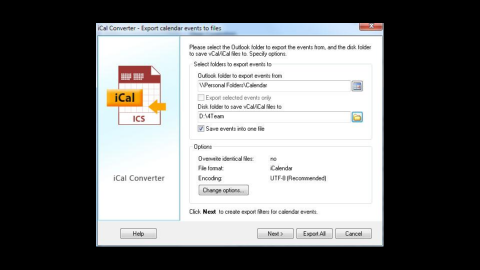
The work he is doing now to aggregate iCal feeds (not the Apple product but a file format that enables internet users to send other users calendar requests) is yeoman’s work that is trying to get institutions and individuals to think more closely about how they can better share what’s happening through accessible calendar feeds that have open standards.
TedXuSagrado_16

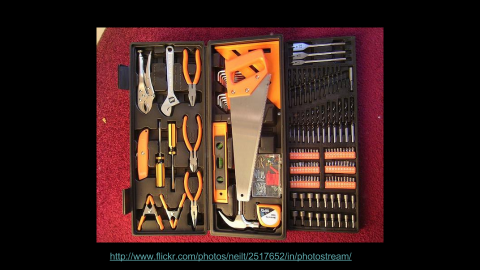
He notes the reason he keeps finding novel uses for these trailing-edge technologies, because they are not closed, disposable products or services, but rather they are “User Innovation Toolkits” which is a phrase he borrows from Eric von Hippel’s book “Democratizing Innovation.”
TedXuSagrado_17

And which gets at the idea that the web is not the sum total of the next monolithic innovation from Silicon Valley, but rather a series of small, distributed revolutions that occur as we, the people, adapt and extend these products and services as a result of open standards the web is premised on.

TedXuSagrado_18

This is exactly what UMW’s Domain of One’s Own is philosophically grounded in. Giving every student, staff, and faculty their own User Innovation Toolkit so that they can fully understand the principles of the web. Interrogate its limits, and extend its possibilities.
TedXuSagrado_19

In many ways Domain of One’s Own is also on the trailing edge, for more than 15 years universities and colleges have given faculty, staff and students a place to understand the web—even if in a relatively limited capacity.
TedXuSagrado_21

Remember when universities had “Tilda Spaces”—those arcane webpages that no one would update for six years? Few universities even maintain these spaces any more, and have have done little or nothing to update them so that they reflect the possibilities of the web today, no less thinking about how they might be crucial for teaching and learning.

TedXuSagrado_22

It’s a lost opportunity!

TedXuSagrado_23

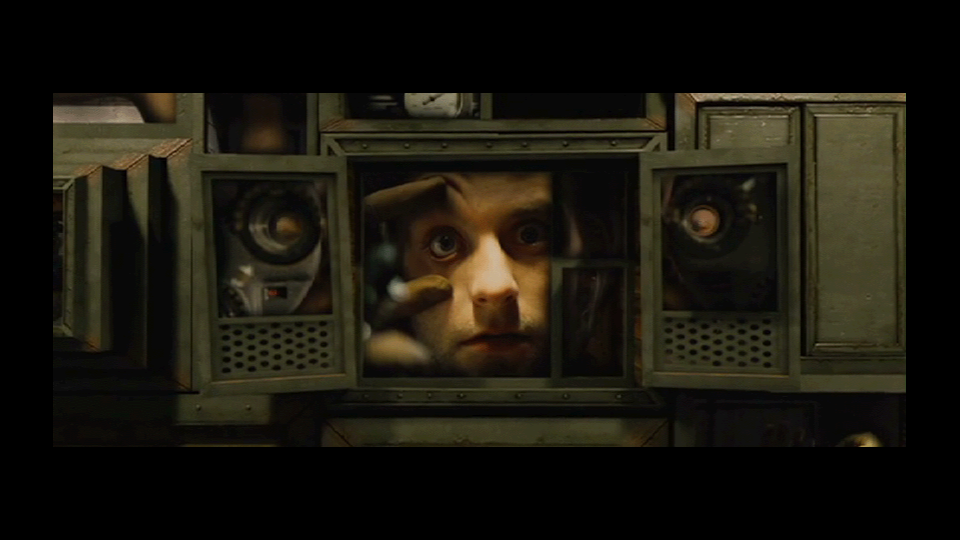
For me that is what Domain of One’s Own is, an effort to update these spaces, rethink them in light of today’s open web. Give people more than just HTML editing privileges, let them install a wide array of applications, understand how web servers work, and struggle with DNS in addition to HTML.
TedXuSagrado_25

Let them explore the innovation toolkit, let them build things we could only imagine, let them dream in electric sheep. To quote Gardner Campbell’s “Personal Cyberinfrastructure,” isn’t it time we let students, faculty, and staff alike become “sysadmins of their own education?”

Posted in presentations | Tagged , , | 4 Comments

ds106 Assignment Bank 2.0

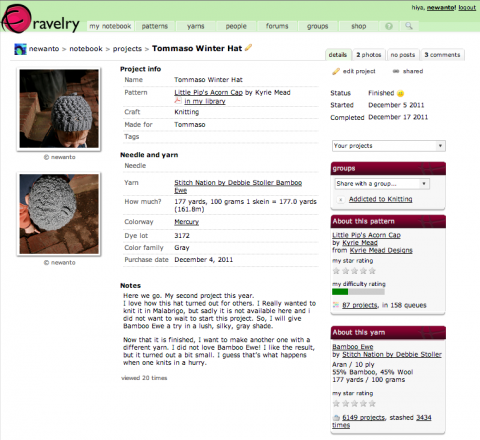
Ravelry ScreenshotI couldn’t resist the 2.0 designation for the new ds106 assignment bank given that kind of thing is at its nadir in popularity 😉 More than a week ago Alan Levine took me through the new assignment he’s been designing for ds106. I have to say it is pretty rad, and the work he’s done developing this theme is interesting on a whole number of levels. But what struck me most during the walk-through is how he’s taken this opportunity to abstract out the kind of design thinking that’s at the heart of an open, distributed course like ds106, while at the same time materializing it in a WordPress theme that will give anyone the ability to customize their own assignment bank.

For a couple of years I’ve been meaning to write a post about the relationship between the ds106 assignment bank and the knitting community site Ravelry. I think I had conversations with Martha Burtis about Ravelry in early Spring 2011 when she was designing the alpha version of the assignment bank (am I making this up Martha?). Either way, the relationship between the assignment bank and Ravelry came up again during the Q&A of the presentation I gave at the University of North Florida. Like the ds106 assignment bank, Ravelry enables knitters to submit a particular pattern (similar to an assignment in ds106) for others to knit. It has its own page, and you can see who has knitted the pattern, browse what they’ve done, get inspiration from their variations, and even get tips on how they did it.

Like the ds106 assignment bank, the sense of connection emerges around the shared object of desire which in turn enables the emergence of a community. Ravelry is an excellent example of how such a site can foster community, and it’s definitely something more education designers should look to for inspiration. Where ds106 diverges from Ravelry is it’s not centrally controlled, rather it’s a distributed, minimalistic, and syndication driven version of the knitting community.

What’s so cool is that the theme Alan has created captures the essence of a site like Ravelry for building community. The Dog has materialized good community design in a WordPress theme that has immediate applciations for education as demonstrated by ds105, but also has a far broader appeal. I think this is demonstrated by the fact that his example in the demo for the “things” (a generic term for assignments, patterns, etc.) was a series of  food recipes. You want to see the design thinking behind ds106 that proves the work we’re doing with this class can be abstracted to a wide range of disciplines and various contexts? Watch the following video, and behold the greatness that is CogDog!

Posted in digital storytelling | Tagged , , , | 2 Comments

UNF Could be Your Life

#unfisMore than a week ago I had the pleasure of spending two days on the ground at the University of Northern Florida (UNF) in Jacksonville, something I alluded to in my last post about sharks. One of the things I will say off the bat, and I’ve mentioned this before, is how nice it is to do a presentation after you’ve had some time, albeit brief, to embed yourself in the community. I spent the entire day before my presentation getting to meet numerous groups on campus. Everyone from the crew at the Center for Instructional and Research Technolgies or CIRT (the closest thing to DTLT on campus, and there were many similarities), the folks at Information Technology Services (ITS), a number of very cool faculty over lunch, the tech folks in the library, as well as the Computer Science department. It was an intensive day wherein I got an impression of the community and the issues they’re working through.

Like most colleges and universities right now, UNF is working on a strategy for integrating online learning into the culture of their campus. And what I really loved about UNF, is they’re doing it right. They’ve invested in a number of people (the CIRT is a group of 16 full-time positions!) that are both supporting faculty and experimenting wildly. They have a really interesting approach, they have roughly eight folks working with the LMS, designing course experience, transitioning folks to online, etc. and the other eight supporting faculty with whatever they want to do. They are doing both, not either or.

What’s more, the two sides of the shop seem to work together, share their respective approaches, and undertand their work as a broader unit is to support teaching and learning for the university. Add to that a well-trained cadre of student aides that do most of the basic LMS support, and you a happy group of folks. For a campus of 18,000 students they really have an unbelievable wealth of support and experience. Between Erin Soles, Michael Boyle, David Wilson, and Deb Miller there’s forty years of localized experience and institutional knowledge alone, and I often think that fact is overlooked when it comes to staff.

The ability for a group like this to stay together and build and identity focused around people over time is crucial, and UNF has that in spades. I can’t say enough how solid a base of instructional technology they have there, and I really believe it’s going to bode well for them moving forward. On top of that, it doesn’t hurt that they have a great advocate and visionary for what’s coming in the Dean of the Graduate School Len Roberson. What I’m learning from trips like this is that great groups don’t necessarily happen due to resources alone, but as a result of a group of people that have put in their time, share a philosophy, have resources to invest in people, have an excellent track record of supporting faculty, and can work with someone in the adminstrative brass who can and will advocate for them. These very stars have all aligned at UNF.

Interestingly enough, Andy Rush pointed out that UNF is hiring a new Director of Academic Technology, a positon that liasions between CIRT and ITS and will have a crucial role in making sure the misions and visions of instuctional technology and information technology align more closely. It would be an exciting place to work, and I can speak from first hand experience that the people are first class.

As for the First Annual Innovation Symposium, I was more than honored to be selected as their first invited speaker for an event that features the innovative work with teaching and technology that’s happening around campus. It’s an event that will continue to showcase faculty work, which suggests another thing they’re doing right. For my part, I spoke to the fact that we’ve only just begun to imagine the possibilities of online learning, using ds106 as both an example and one possible model. I was surprised how responsive most folks were, and thanks to encouragment from David Wilson I even spent some time talking about the possibilty and disappointment that was EDUPUNK—a first for me when it comes to presentations.

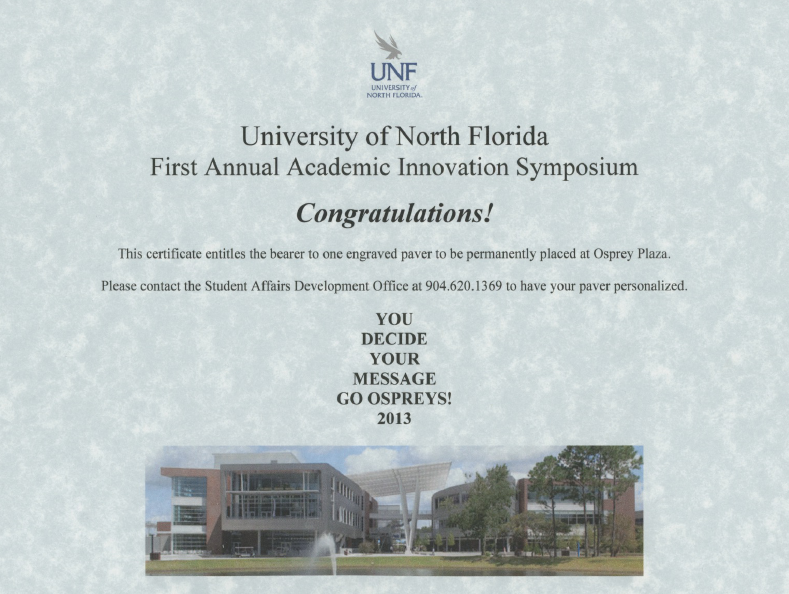
So anyway, you can see the slides here, and I think there may be a video out there somewhere as well—-or it maybe coming soon. One last thing before I end this rather long post, at the end of my presentation I was awarded a paver that will be placed on the walkway outside their unbelievably gorgeous student union:

UNF Paver Nobody

How cool is that! My first paver, but I’m sure there will be many to follow. As Ryan Brazell suggested, maybe I should have it read #NOBODY! Thanks UNF, it was a blast.

Posted in presentations | 4 Comments

Mary Lee You’re Too Close to Shore

When I was at the University of North Florida last week (an awesome experience I’m planning on blogging) I had the pleasure of hanging out with the folks from the Center for Instructional & Research Technology. One of the things I noticed as soon as I walked in their offices was a Replicator working away. Donatella Schianomoriello was experimenting with the wonders of 3D printing, and it just so happens she had recently printed a Great White Shark’s jaw. I was blown away—and whiel remarking about my love of all things shark, Mike Boyles showed me a site I haven’t been able to stop thinking about since: the OSEARCH Global Shark Tracker.

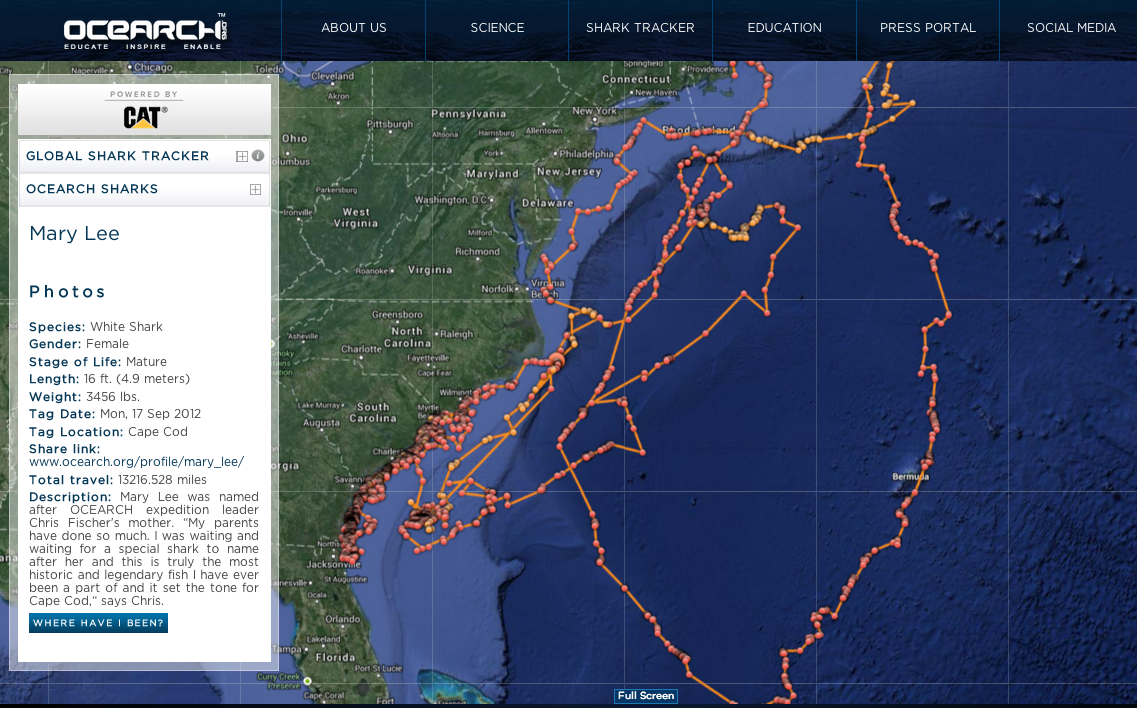
This site actually tracks a host of sharks around the world that have been tagged by this non-profit organization. It’s an amazing research resource because it actually allows you map where a specific shark has been. For example, the Great White Shark below is a 16′ and 3500 lbs. shark that’s been tagged more than a year ago. Her name is Mary Lee.

Mary Lee Great White Shark

What’s remarkable about this tracker, as Mike pointed out, is that it not only gives the shark’s current location, but tracks everywhere she’s been since being tagged. The following image demonstrates her path up and down the Eastern seaboard and all the way out to Bermuda since last September. It’s amazign to see the pattern she is following.

Mary Lee Shark movement

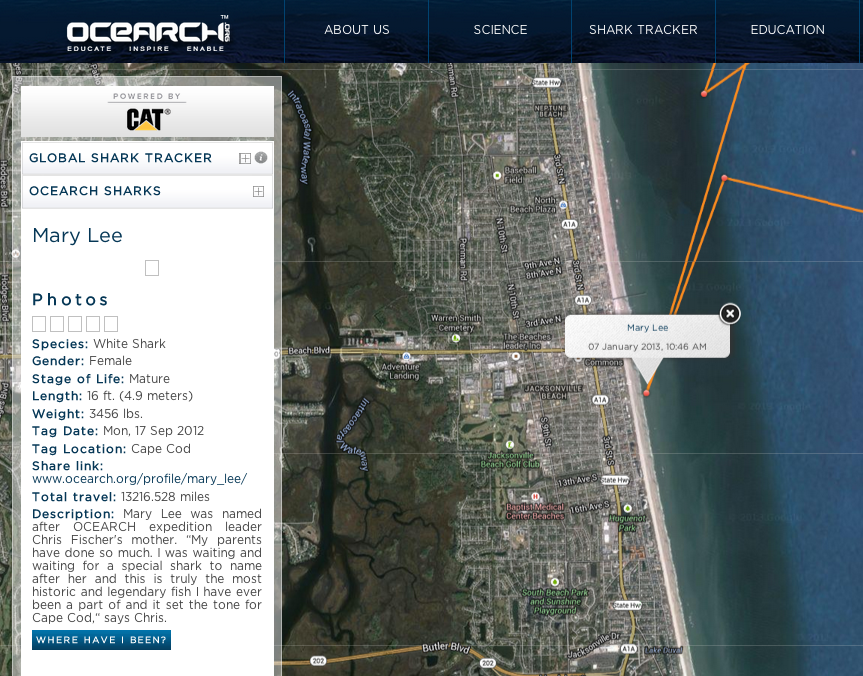
But what Mike pointed out to me that actually blew my mind was just how close this shark was to the shore of Jacksonville, Florida on January 7, 2013. Take a look for yourself.

Mary lee Jacksonville

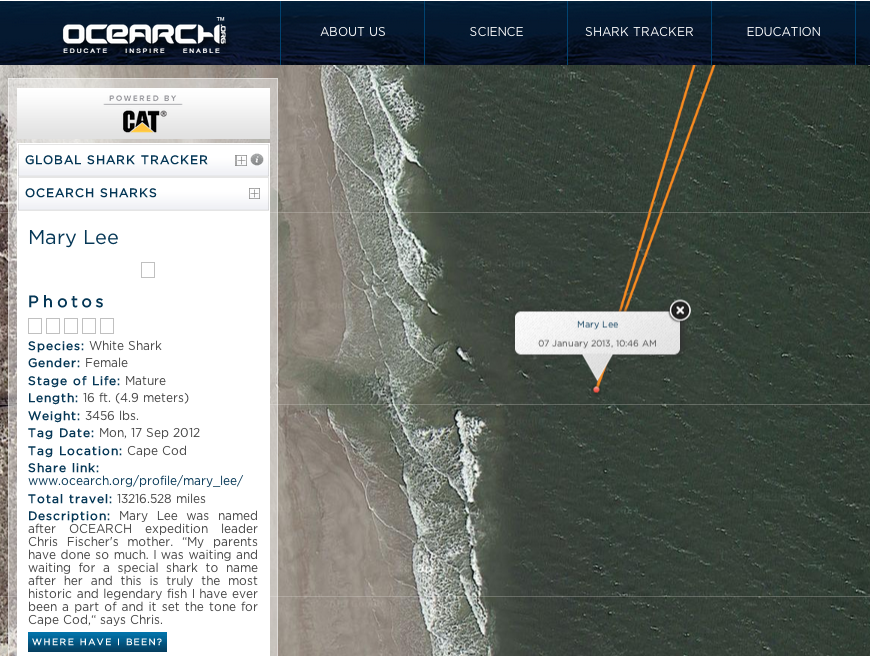
Actually, take an even closer look!

Mary lee Jacksonville close-up

That’s some frightening shit right there. And as I was talking about this today in UMW’s Makerspace with Andy Rush, he noted I should teach a class on the cultural history of Sharks, which reminded me of the “Intermediate Shark Genres” from McSweeney’s. All this to say, sign me up! If someone would be crazy enough to let me teach this class, I would have a total blast. Years and years of fear, love, and compulsion set loose on one class! I have to start working on the syllabus!

Posted in fun | Tagged , , , , | 9 Comments

ds106: It’s All About the Trailing Edge

Batman ds106 ValentineI recommend you go read Jon Udell’s post “MOOCs need to be user innovation toolkits” in its entirety, but I want to reproduce almost half of that post below because it nicely captures an approach to educational technology many of us have embraced for a while now.

Thanks to the philosophical foundations of the Internet — open standards, collaborative design, layered architecture — its technologies typically qualify as user innovation toolkits. That wasn’t true, though, for the Internet era’s first wave of educational technologies. That’s why my friends in that field led a rebellion against learning management systems and sought out their own innovation toolkits: BlueHost, del.icio.us, MediaWiki, WordPress.

My hunch is that those instincts will serve them well in the MOOC era. Educational technologists who thrive will do so by adroitly blending local culture with the global platforms. They’ll package their own offerings for reuse, they’ll find ways to compose hybrid services powered by a diverse mix of human and digital resources, and they’ll route around damage that blocks these outcomes.

These values, skills, and attitudes will help keep a diverse population of universities alive. And to the extent students at those universities absorb them, they’ll be among the most useful lessons learned there.

I love the way Udell so precisely encapsulates a movement in edtech away from predeteremined learning spaces provided by the LMS, one which will result in “a series of hybrid services powered by a diverse mix of human and digital resources” that fortunately inspires a third approach rather than the the all or nothing mentality often framing the conversation around MOOCs. What’s more, his idea earlier in that same post about his own professional focus on “trailing-edge technologies” (finding novel uses for technology that has been around for awhile) reminds me a lot of what ds106 has done with blogs, syndication, animated GIFs, TV and radio, etc. All old technologies cobbled together in a novel way to inspire a new approach. There’s nothing new under the sun, which is why the LMS dressed up in MOOC clothing is so infuriating to a number of us. So rather than understanding something like ds106 being understood as a bold new innovation, what if it were accurately described as a novel re-purposing of trailing edge technologies that have more to do with fostering an open, distributed, bilateral, and creative community by any means necessary—but preferrably by both using and aping those afforded by the open web.

Posted in digital storytelling | Tagged , , | 3 Comments

All Aboard!!!

hurley_small_2

UMW’s President Rick Hurley

More than a week ago the President of UMW, Rick Hurley, published a piece in The Huffington Post explainging how and why UMW was “Getting Aboard the Hightech Train.” What’s crazier than anything, is why it’s taken me over a week to blog about this article! What’s wrong with me, this is an article in which UMW’s president openly acknowledges that the Division of Teaching and Learning Technology is essential to the future of UMW. More than that, he publicly says things I think are totally awesome, such as the following:

…about eight years ago, the University of Mary Washington created a Division of Teaching and Learning Technology and staffed it with the brightest, most creative people we could find. At the time, a lot of schools were investing in software, in learning management systems, programs and platforms. But we invested in people. We wanted them to be our braintrust, to work with our faculty to find interesting and innovative ways to use new and emerging technologies in their classes.

This is what DTLT has been working towards for almost a decade now, and we seem to be at a point that this investment is being cosnidering not only sound, but enough of a success that it is beginning to frame a significant part of UMW’s identity. The acknowledgement that one of the the best investments UMW has made in terms of technology over the last decade has been in finding and cultivating the best people possible to work with their faculty is a message I’m more than proud to highlight on the bava—a space that has been an independent record of that very thing 😉

Once upona  time DTLT had been holed up in its own R&D bunker working with faculty and dodging bullets hoping we wouldn’t suffer a direct financial hit and be razed altogther. And now, jsut a few years later, we’re a model for what’s possible. And while I recognize fate is fickle and things can change on a dime, I’d be lying if I didn’t acknowledge this is a great moment for our group, and hopefully an even greater moment for what’s possible in edtech at universities more broadly. Turns out experimentation and close faculty relationships are valuable, and may even be a model that others can emulate. What’s more, it might also be important to enable a group to shape its own identity rather than handcuffing them to a predefined set of  enterprise systems and overlying architected “tech requirements.” Ultimately, when all is said and done, it all comes down to some larger vision of what and group of people are trying to do. What are we trying to accomplish at UMW, and how is a group like DTLT helping in that endeavor. And when your president can lay that very thing out for the world so clearly, something good is happening:

We want our students to be thinkers and doers, to be analyzers and synthesizers and integrators and coordinators. Working in the digital space fosters that growth. We also want our students to be good citizens of their nation and of the world, and the web is becoming a key place – maybe the place — to practice such citizenship. When one of our students writes something in a blog about Venice and someone in Italy responds, that’s the essence of citizenship.

Says our Martha Burtis, special projects coordinator for teaching and learning technologies: “This notion of community and collaboration and public knowledge and sharing is really the core of a liberal arts education. These are the values we care about.” I agree.

That’s right, DTLT is on fire. Some folks warn us that we are now in the spotlight and with that comes a certain amount of scrutiny. All I can say to that is bring it on, we haven’t been hiding in the shadows for lack of conviction. We believe in what we do, we know it is valuable, and we also know it can and will make UMW a better university. Thanks President Hurley, now let’s make some history!

Posted in dtlt, umw | Tagged , , , | 1 Comment