Academy Fight Songs Sung by Rebel Grrrls

We’ve been hard at work at Reclaim Hosting getting ready for the Fall 2017 semester, and it is officially upon us.  We have setup and rolled out two new shared web hosting servers last week in honor of two groundbreaking punk bands: Mission of Burma and Bikini Kill. We have been working through the 80s hardcore punk scene for a few years now, and Mission of Burma was a terrible oversight, so it was time to fill that gap, and with Bikini Kill we are pushing into the post post-punk movement of the early 90s (our only foray into that territory thus far is our Unwound server).

https://www.youtube.com/watch?v=DXkZI7WZWOo

There are few better punk anthems than “Academy Fight Song,” and if you worked in higher ed for as long as we have, few songs age better than this one. Enjoy it as you start the new semester, and if the emboldened Nazi movement in the US has you worried, remember that Burma were not afraid to link currents of exploitative religion with fascism* in “New Nails,” which is probably better remembered as an early example of a guitar-driven sound/noise that would re-emerge years later with bands like Sonic Youth.

Mission of Burma were in many ways a short-lived dream vision of the future of post-punk. A loud, experimental punk band that explored the lines between anthems and noise, culture and resistance—and unfortunately broke up well before their time. That said, their influence on the post-punk scene is undeniable. Their first two albums Signals, Calls, and Marches (1981) and Vs. (1982) seem like they could have been made yesterday, they both remain fresh, relentless, and relevant. So, if you are new to Mission of Burma and are looking for some music to study by this semester, those to albums will serve you well.

In terms of relevance, few bands in the last 30 years seem more relevant today than Bikini Kill. This Pacific Northwest band exemplified the Riot Grrrl scene of the early 90s, a movement often associated with the beginnings of third generation feminism. Their hard sound was married with in-your-face lyrics attacking patriarchy, misogyny, and racism.  “Rebel Girl” may be there best known work—and the Maoist video of dancing women soldiers may be one of the greatest cultural appropriations of all-time—but there is no shortage of songs that hit you like a punch in the face around all these issues and more. “Feels Blind” slowly builds to a methodical, pressing song that builds to a crescendo of Kathleen Hannah’s attack of a world that has taught her nothing as a woman.  She has had to do it all herself, a vision of punk DIY culture taken to a new level of identity politics. 

In fact, Bikini Kill made a point of creating women-centric shows that carved out much needed space in a male dominated music scene. Front-woman Hannah would confront hecklers at shows†and a long overdue intervention into the punk rock band demographic was finally being charted. Bikini Kill (as well as the Riot Grrrl movement) were not to last much beyond the mid-90s. Bikini Kill disbanded after 7 years, and for many the Riot Grrrl mission of female empowerment was being co-opted and re-branded by engineered acts like the Spice Girls. That said, the music remains, and it’s power and punch is no less impactful as it was in the early 90s, and sadly the calls for gender equality and empowerment have aged very well 25 years later. 


*Even if they did misappropriate a quote from Herman Göring for their other hit anthem “That’s When I Reach for My Revolver.”

† Much in the spirit of Fugazi’s Ian MacKaye, who just so happened to produce their first album.

Posted in reclaim | Tagged | 2 Comments

Building Capacity at Reclaim

Image of Centipede High Scores taken by Lauren Hanks

It’s taken me 2+ years, but I’ve finally beat my bosses on this list. ? pic.twitter.com/AWY1yJmqcE

— Lauren Hanks (@brumface) August 8, 2017

Yesterday Lauren tweeted that she has taken control of the coveted top spot on the Reclaim Hosting support leaderboard. Beating me is easy, but topping Timmmmyboy is no small feat. Lauren has been working double duty the last 3 weeks given Tim has been on a European vacation and I’ve been traveling and hosting over that same period. This last month was a really good test to gauge whether Reclaim can flourish beyond its co-founders, and I think we have found our answer.  We have built capacity over the last two years, and Lauren’s brilliant work last month is a testament to just that. I do not think anyone hosting with Reclaim has seen a dip in the excellent service they expect, and at the same time Tim and I have been able to let go of certain things these last few weeks.

I think this is a really excellent sign for things to come. If Reclaim Hosting is simply about Tim or I it will ultimately fail, it needs to be about a group of folks working towards a common goal both within our company and beyond. Lauren has become a core figure of Reclaim Hosting, and watching her continually exceed any and all expectations while at the same time soaking up the seemingly endless combination of technical challenges supporting web hosting represents has been very cool.

Meredith Fierro recently started part-time with us at Reclaim as a support specialist, and she has been following in Lauren’s footsteps patiently working through issues, taking on various challenges on a daily basis, and building capacity at Reclaim. And for me that has been the key because we are showing no signs of slowing. Yesterday may have been one of the busiest support days on record, and the semester is nowhere near full swing.  We could not have had Lauren come into her own at a more crucial time.

While not a science, I think a couple of things may have helped us build capacity more recently:

  • Independence – I think the biggest piece of this is Tim and I do not micromanage. And while we are there for any and all questions, we trust that folks will do the research and figure out possible solutions on their own. And when that avenue has been exhausted we’re ready to jump in. That sense of self-sufficiency and confidence is a huge part of building capacity. And with someone as capable as Tim at the support helm it’s easy to rely on him for all answers (I know I did that far too much early on), and breaking that over-dependence has been crucial for my own learning.
  • Trust – When we bring someone on there is an implicit trust, and it has been particularly easy with Lauren and Meredith given we knew and worked with them at UMW. Who they are is a big reason for why we hired them, the technical skills (which they both had when we hired them) are far less important in my mind. It is amazing what people you work with are capable of when you trust them.
  • Shared space – This may be controversial, and it might even seem hypocritical given I live and work from Italy, but I think having a shared office space this year has been a very good thing for Reclaim. A shared physical space for tackling issues, sharing solutions, and building relationships has some real advantages.  I love Slack, and as a distributed business tool it is quite powerful, but a cool office space to work together can be hard to substitute online for building a team. Part of my experimentation with Reclaim Video is to see if I can actually inhabit that space more physically, albeit virtually—if that makes any sense.
  • Fun – It has been a busy year, no doubt, and it will only get more so in the coming months. But building in the capacity for play and fun is crucial. Designing the office space has been work, but it was also a lot of fun. Same goes for the conference and design work for Reclaim and Rockaway. We also had a blast last year in Portland as a group, and I think keeping a sense of play with the work we do is crucial, although not always easy when doing support. We do this to some degree, but I think we might even be a bit more intentional here, although planned fun is never fun. Anyway, this one is half thought through.
  • Possibility – I think a real strength of Reclaim right now is a sense of possibility. We are all filled with hope and optimism around the work we do. We all see its relevance, and while I am focused on building capacity at Reclaim in this post, I think that same concept extends to the folks who host with us.  We are working to building digital capacity for faculty and students all around the world, and that is not nothing. Lauren and Meredith are in at the ground floor of this process, and together we are all shaping Reclaim’s future with the work we’re doing. It also means our job today may not be our job tomorrow as we continue to grow and explore what’s possible.  I believe the work really matters, and that makes me dangerous: I am a true believer #4life 🙂

All that said, we still have much to work on.  We are starting to explore development work,  and one of my personal weaknesses has been project management and organization—an ongoing debility I suffer from. That said, we are working with Lauren on trying to get this under control because I think this could be a crucial part of our work moving forward given how amazing the community work Tom Woodward has been doing the last couple of months for Georgetown and Davidson—more on that shortly. So this is an area we are presently working on, and I think that’s been the lesson for me these first four years of Reclaim: building capacity is a slow and steady process, but once it starts to materialize the payoff is awesome. What’s more, knowing all this makes it possible to start accomplishing the broader mission of helping build digital capacity in higher ed keeps everything grounded in the work—which will hopefully speak for itself.

Posted in reclaim | Tagged , | 2 Comments

Scenes from a Saturday in Melbourne

Writing a post to sum up my time in Melbourne would be far too daunting—even for such a formidable blogger as il bavalino. So, I am going to do two things: break up my posts and try and capture the day through embedded Tweets. I’ll provide some brief context, but I will say here that my first Saturday in Melbourne was a real treat. I got to meet up with folks I just broke bread with in Oklahoma at Domains 17, namely Tim Klapdor and Keegan Long-Wheeler, as well as finally meeting long-time friend Rowan Peter IRL—a perennial favorite ever since the beginning of ds106radio

The day started with breakfast on the Yarra river at the Boatbuilder’s Yard. Tim and Keegan joined me, and from there we took a walk on the promenade and ended up at the Australian Centre for the Moving Image (ACMI), which was a total treat. There was a special exhibit focused on the Aardman animation studio, and it was impressive. I loved all the dioramas and sets from the movies, and I was struck by how amazing that place would be to work. It made me very excited about Reclaim Video for some reason 🙂

https://twitter.com/jimgroom/status/888836987351834624

Beyond the Aardman exhibit, the fixed collection of the ACMI museum (which is free) was amazing, and it was the perfect setting to finally meet the great Rowan Peter. They had a reproduction of the “Last of the V-8s” from Mad Max, which was worth the 20 hour flight alone.

But beyond that, they had so many cool little nooks featuring movies from Australia and beyond. This bit on Muriel’s Wedding, one of my favorite independent films from the 90s, drew me right in.

The project room/installation wherein the light and shadows that make film possible were materialized through an interactive exhibit was probably my favorite single part of the museum.

Rowan Peter and I had some fun performing for the camera in another exhibit which captured and augmented your movements in some creative ways. 

And random bits about color and sound were accessible and truly intriguing. There was a whole bit on all the times the Wilhelm Scream was used in popular films. The ACMI museum blew the AMMI museum in NYC out of the water. It was thoughtful, tightly constructed, and really engaging.

After the museum, Rowan took us to the Library where we met Tess, the guide of our walking tour around Melbourne. It was a 3 and a half hour epic tour of the city, and it was a great introduction to the city. One of the things I noted throughout the day about the city was how impressive and varied the Melbourne sky was over the course of a day.

On our walking tour we saw the 8 hour day monument, commemorating labor rights and the birth of the 8 hour day, which was proudly brought to the world by Melbourne.

We also got a look at a ton of street art from around the city.

I really enjoyed the Gallerias we saw on the tour which featured mosaic floors installed by Italian craftsmen during the Melbourne gold boom in the late 19th century. They held up beautifully.

When the tour ended (I think we walked close to 8 miles) we met Joyce Seitzinger and Mark Smithers for dinner and the fun continued.

It was an amazing day, between the world class movie museum, a solid hike around a gorgeous city, and a regular influx of great company I could not have asked for more from my first day in Melbourne. But Melbourne was not done yet, so I definitely have more to post, but that first day was the best day!

Posted in art, film, fun, museums | Tagged , , , | Leave a comment

An Unlikely Tradition

Comic Wallet from Ponshop

Strangely enough, I have developed a bit of a tradition around the most unlikely of things: my wallet. Every year for the last 3 years I have been changing out my wallet for a new one. It started with the Hulk wallet I bought back in 2014 at the Ponshop in Fredericksburg. It is made out of old comics and then laminated. It started to fall apart after I moved toitaly, and I lamented the impending loss. But as luck and work would have it, I returned to Freddy on business in January of 2016 and updated my wallet with a panel from Red Sonja-once again thanks to the Ponshop. This June ,when I was back in Fred Vegas briefly before the Domains conference, I once again found myself at the Ponshop procuring yet another comic wallet. It has become a thing.

Comic Wallet from Ponshop

Why? Well, because I really like them, But beyond that, more than anything I have had over the last few years, they have proven to be an amazing conversation piece. Folks always ask me about my comic wallets, and I always love talking about them. The wallets have proven be be an extremely effective catalyst to brief connections around pop culture, something I really value. Anyway, the most recent wallet is awesome, but I have no idea what comic it is from, any folks out there have an idea?

Posted in fun | Tagged , , , | Leave a comment

Let’s Get Small: SPLOTTING the Future

I am winding up my time in Australia today and I have a ton of things to write about between the awesome people I’ve met, places I’ve seen, and things I’ve done. But before I try and work through those, I wanted to capture what I  tried to communicate (and in turn learned) during my time at both Deakin University and Charles Sturt University: namely small is beautiful.

I’ve talked about this before at the AMICAL conference in Rome last Spring, but this instantiation was a bit different given I was asked to focus specifically on WordPress. It has been a while since I have gone purely WordPress, but I found the opportunity really refreshing. I wish Tom Woodward would have published his brilliant posts “What is Rampages? Part 1 and Part 2”  a few days earlier cause I would have just given Deakin those links and walked away. These posts contain a remarkably wide range of academic sites using WordPress in a host of different ways. And  those two posts by Tom both encapsulate and reinforce the point I was trying to make: WordPress is an amazingly protean publishing engine that can provide a wide range of amazing teaching and learning tools. Folks like Tom, Martha Burtis, and Alan Levine conceptualized and built various tools for ds106 that embodied that spirit: the assignment bank, the daily create, blog aggregationin[SPIRE] (designed and created by ds106 students Linda McKenna and Rachel McGuirk), etc. In fact, Alan just wrote about his most recent packaging of the Daily Create as the Daily Extend, and as he notes so well in that post:

I always find value in creating small, low stakes challenges that encourage people to try new tools or creative techniques. I still find great reward in populating the DS106 grandaddy site – today is it’s 2026th consecutive daily create (“Shatner a Song” I dare ya), going strong for more than five years. Companies and tech fads have Gartner hyped and fallen in that span.

In fact, Alan’s work packaging up WordPress as an aggregator hub, Assignment Bank, and image and writing SPLOTs on Reclaim Hosting’s demo site StateU inspired and fueled my workshops at Deakin University. And while folks were keen to play with StateU and explore cPanel, the takeaway was that they wanted SPLOTs.

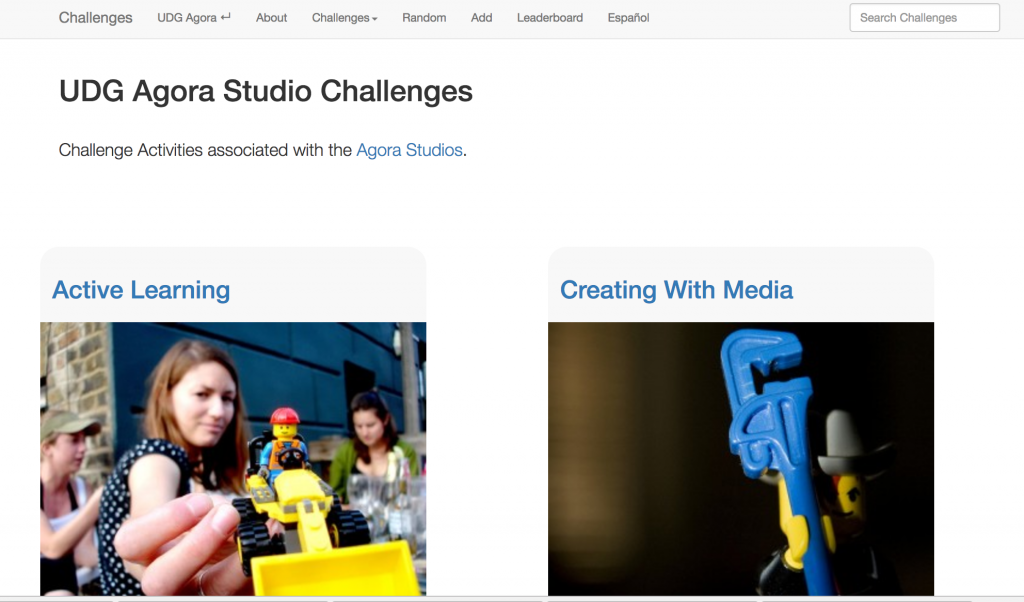
They wanted what was behind Brian Lamb and Alan Levine’s playful acronym SPLOT — is it “Smallest Possible Learning Online Tool”? I’m not sure, but I am sure that it provided a missing piece for folks. They don’t want the blank canvas of a newborn WordPress site. They don’t want to be faced with a “Hello World!” post. In fact, they don’t even want to hear the word WordPress. They just want a tool that helps them accomplish a fairly simple task that, in turn, helps them create a focused community-driven, engaging assignment. This is at least part of what Brian, Alan, Nancy White, and Tannis Morgan did with their amazing work with UdG Agora project—the funnest OpenEd initaitive I have seen in a long while.

I have heard Brian talk about the SPLOT several times over the last year in convincing fashion, but this is the first time I stepped into his shoes and dug into the idea more deeply. Folks were excited, which, in turn, made me excited.  I felt like my time at Deakin revolved around the idea of using pre-defined templates for small, focused teaching tools and portfolio sites as a way to roll this out more broadly, as well as to start scaffolding the WordPress adoption without calling it WordPress.

What’s more, Deakin is already working on ways to integrate WordPress deeply into their LMS using LTIs, so having tailored tools like the SPLOTs embedded with their LMS was of immediate value in their eyes. Also, the idea of separating instances of WordPress multisite so that one can fill the needs of SPLOTs while others the needs of portfolio sites (clean URL, choice around plugins and themes, as well as possibility for domain mapping) helps push beyond the need for one monolithic WordPress instance.* What’s more, the SPLOT sites become fairly disposable within the LMS, which is kind of cool in some ways. We talk about the NGDLE as all these pre-approved LTI integrations, but Keegan makes a compelling case for a simple embed code and re-direct from the LMS. If SPLOTs are easy, small, and generalizable enough, they can be used across many classes, and you can start to provide a selection of these tools to any interested faculty right within the LMS, or beyond it.

So, in answer to the leading Tweet, I think we can begin to not only find, but also build, our own web tools that allow us to focus on new and exciting ways to explore teaching and learning at the course/unit level. Mike Caulfield recently wrote about a “minimum viable public project” in which a course experimented with Pinboard, and how that served their humble purposes brilliantly. So much of its success was because it was simple, and it tried to avoid too much tech overhead. Along the lines of the minimum viable teaching tool, SPLOTs could provide a similar experience wherein technologists and faculty can actually quickly prototype simple tools that integrates these very pieces with little more than a form.

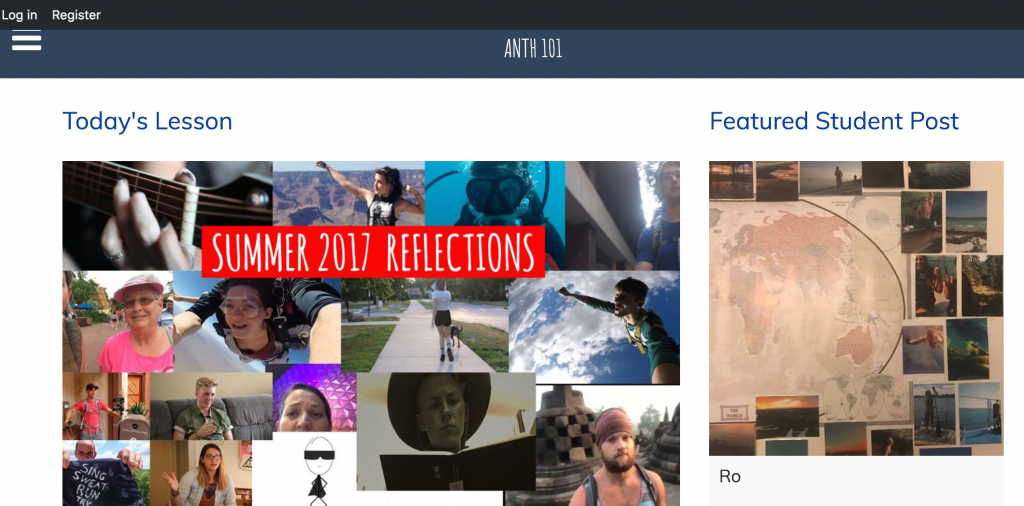
In this regard, the work Tom Woodward is doing with Michael Wesch on Anth101 (another site I showcased) is at its core just that. A WordPress site using BuddyPress to focus a community around 10 SPLOTs. Given it’s Wesch issues of scale, integration, and aggregation come into play so I won’t pretend it’s dead simple, but the idea driving it is—and that is a large part of its brilliance.

So, my time working through these ideas with the good folks at Deakin helped me come to a much clearer idea of what I would present at Charles Sturt University later that week. That 30 minute talk was called “Small is Beautiful” -and the message was just that. Avoid systems and over-engineering wide-scale integrations and focus on dreaming up and designing a few small tools with faculty for their classes. And, as luck would have it, Alan Levine (the SPLOTfather) is coming to Australia in November, so I imagine more than a few schools in Oz will be interested in hearing a lot more on this topic. In fact, it would be a coup to get folks like Alan, Brian, Tannis, Tom, and Martha together to talk about SPLOTs and work with various instructional designers and faculty to imagine the possibilities. Anyway, after this trip down under I am a believer, and plan on doing all i can to help promote this work!


*At least at Deakin, integrating WPMS into the LMS sacrifices the domain URL to course code demons.  Sites for portfolios have domains that reflect a series of numbers and letters rather than any sense of identity. This is where I still believe the domain name matters.

Posted in presentations, WordPress | Tagged , , , , , | 4 Comments

Reclaim Turns 4

This week Reclaim Hosting turns 4 years old. That’s something, isn’t it? This year has been a really good one. We brought Lauren on full time, hired Meredith, designed and opened an office/co-working space, started a second web hosting company, ran a conference, and more than doubled our business for the third year in a row.

It’s been crazy and awesome all at once. The coolest part about this milestone (the exact date is July 23rd -but for some reason I insist on July 28th in my head) is that we are truly world wide this week with Tim in Europe, myself in Australia, Lauren holding down Reclaim HQ in Virginia, and Meredith at an undisclosed location on vacation. Reclaim Worldwide, indeed.  Here’s to 4 more and then some!

Posted in reclaim | Tagged | 1 Comment

Last Futures: From Web 2.0 Utopia to Platform Capitalism

I am presenting at Deakin University in Melbourne, Australia in about two hours, and I have been working on my talk pretty diligently over the last 24 hours. It will work in a bunch of my favorite topics such as UMW Blogs, ds106, Domains, and more, but this will be a bit different (or maybe not) given I have been encouraged to speak specifically to what is possible with WordPress. I have been a fairly unapologetic fanboy of WordPress for the last 12 years, so that won’t be hard—plus it is constant source of pride to have picked the winning horse early on 🙂

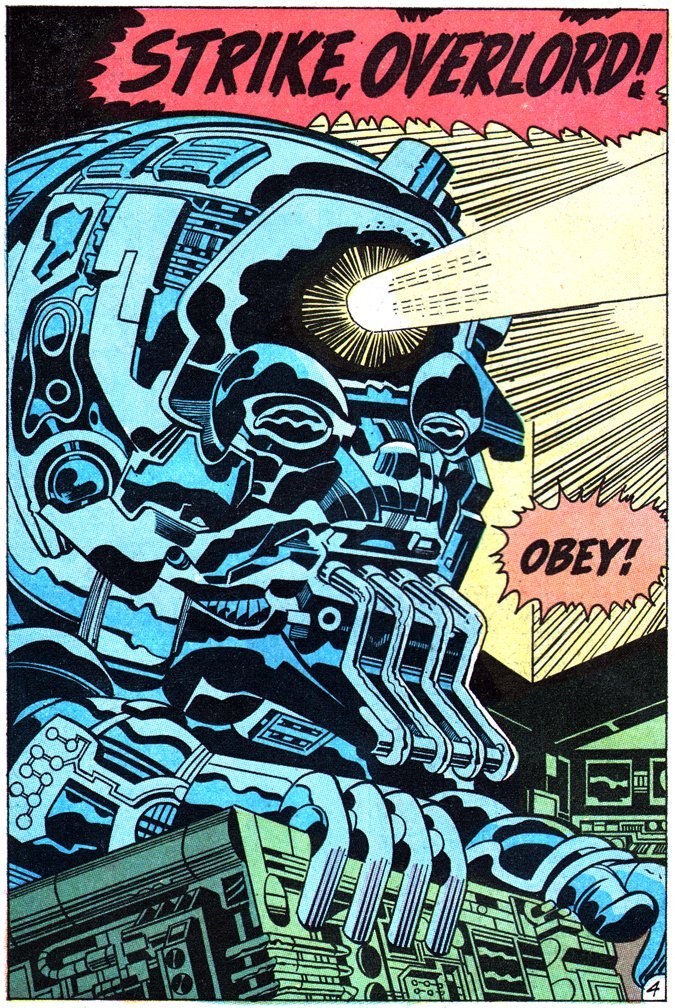
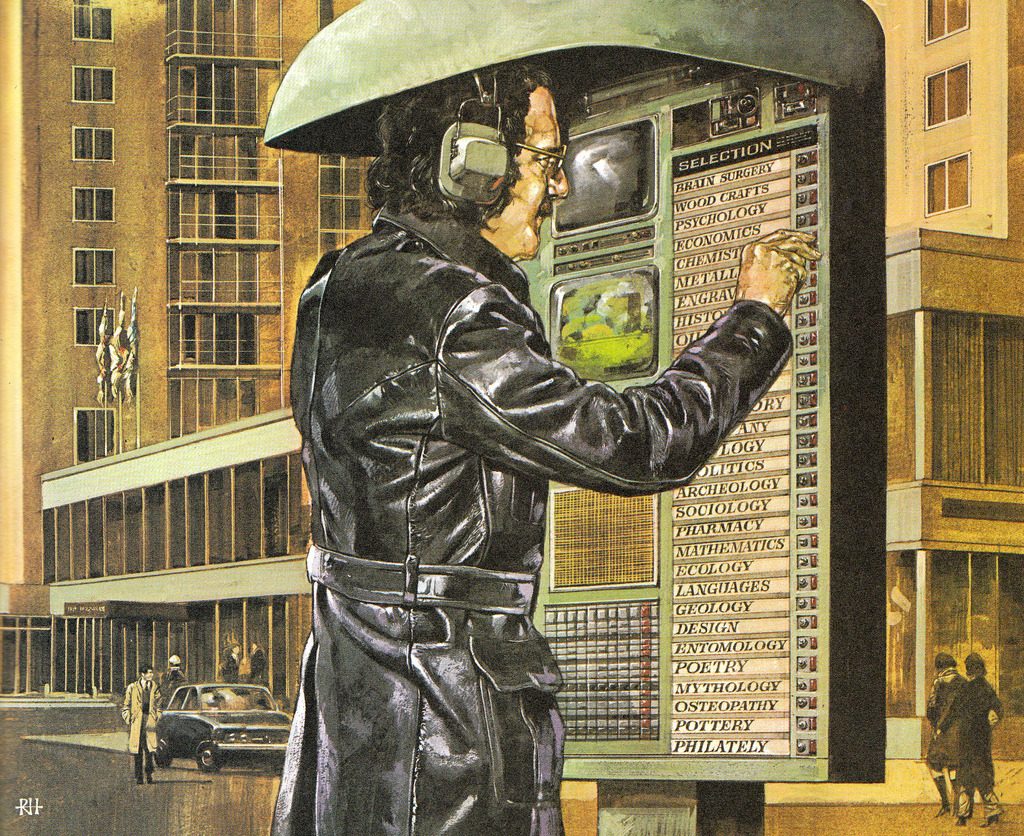
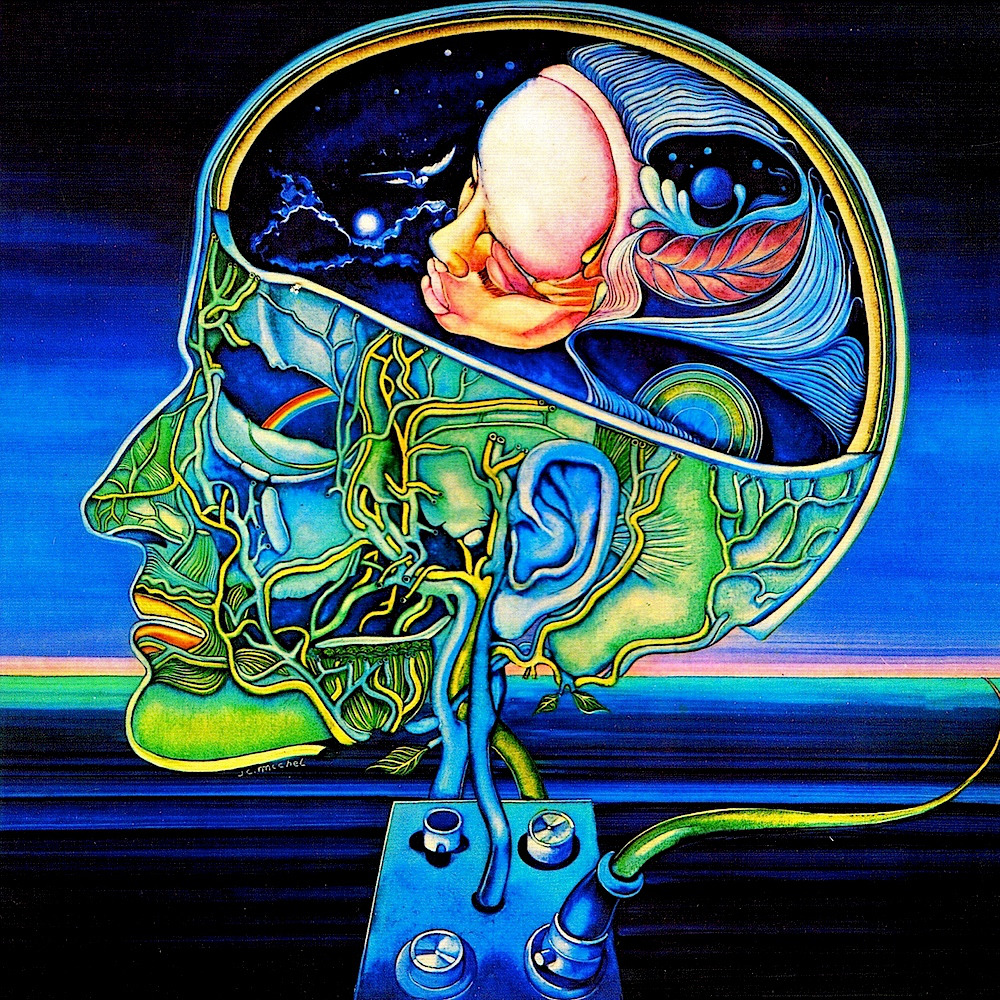
In fact, while thinking about the work that I’ve been a part of over the last 12 years (and stumbling around the internet) I found a pretty useful aesthetic analogy to help make the shift in edtech sensible for a community exploring the open web for teaching and learning at this moment. It started with wanting to use images from the 70s Sci-fi Art Tumblr to bookend my presentation. This blog is one of my constant inspirations these days, and it struck me how easy it was to map the current anxieties around edtech onto just random recent images, such as surveillance:

https://twitter.com/Yanguas1976/status/887813394438422529

Virtual reality:

Control:

Sustainability:

Behaviorism:

Etc.

These awesome visuals mainly focused on a kind of dystopia or conflict, whereas the utopian visions of that era is a bit harder to find on the 70s Sci-fi Art, which led me to search for the utopian aesthetic of that era, which resulted in the discovery of this book review in the Guardian by Andy Beckett of Doug Murphy’s Last Futures. The article tagline dragged me in and made the immediate analogy I was looking for about Web 2.0 and its aftermath:

How the shining architectural optimism of the 1960s and 70s has ultimately produced buildings such as supermarkets, open-plan offices and other spaces of control.

This immediately made me think about Audrey Watter’s ongoing crusade as Cassandra for us in ed-tech to understand the transition we are going through, as well as Chris Gilliard’s recent piece in the EDUCAUSE Review, “Pedagogy and the Logic of Platforms” that spells so much of this out so beautifully, Brian Lamb’s reading of Gilliard’s piece (amongst others) frames it well:

Critics such as Gilliard, Cottom, Audrey Watters articulate a wider sense that the web has not only failed to achieve the breathless utopian ideals of a space in which traditional power relationships would be challenged, it is increasingly a mechanism for power to exert itself in ways that were unimaginable until recently. Higher education seems resigned to accepting the fundamental logic of surveillance capitalism as it stands, without asserting competing values or working to address its ill effects.

This is our moment in ed-tech, a far cry from the breathless utopia I felt possible in the early stages of Web 2.0, and turns out the spaces we thought we were building for open, expansive teaching and learning were being re-engineered for “personalization,” which is an edtech code-word for mining personal data from students and faculty alike. And this subversion of utopian visions to serve consumerism is exactly what Murphy’s Last Futures seems to argue in the transition from the utopian dream of the 60s and 70s architecture movement to the hijacking of that vision for the late logic of capital:

During the 80s, most of the utopian architectural schemes of the previous two decades were so quickly forgotten or derided – “Nothing dates faster than people’s fantasies about the future,” sneered the art critic Robert Hughes in 1980 – that it was almost as if they had never existed.

As an early Web 2.0 proponent, that hurts.

The flexible, socially responsive sort of building first conceived by progressive postwar architects lives on … but it has mutated into the supermarket, the open-plan office, the distribution warehouse – not usually spaces of liberation but of control.

So, this book review opened up an interesting historical analogy for how utopian vision expressed through architecture in the 60s and 70s quickly became the model for capitalist platforms in the 80s and 80s. For me it’s a striking analogy that helps me understand our own moment on the web a bit more clearly, the realization that the utopian vision of open education and community spaces for learning would quickly become the sites of corporate control in the not too distant now.

Anyway, that is where my thinking is for this talk, we’ll see how it goes, but it is a good reminder how crucial aesthetic are for me to make sense of any of this. Might be why Bryan Mathers’ recent NDGLE art is featured so prominently in my slides today 🙂

Posted in presentations | 3 Comments

The LMS is dead, not unlike God: thoughts on the NGDLE

I am working with my favorite collaborator, Brian Lamb, on a position paper for a conference at the Open University of Catalonia this fall around the topic: “Pushing the boundaries of Higher Education: challenging traditional models with innovative and creative practices.”  This is my early contribution, and Brian will follow soon which will fine tune some of the critiques here as well highlight interventions from various folks.

I have been talking a bit about the EDUCAUSE Next Generation Digital Learning Environment (NGDLE) paper from 2015 in my talks recently as a one possible vision of how  loosely coupled publishing platform connecting various tools could be one way to imagine the power of what Kin Lane defines as the Personal API, which frames the importance of getting individuals more control over who and what has access to their online data. The learning management system (LMS or VLE in the UK) remains central to the future of the NGDLE despite our best efforts and judgement, and there is a lot of promising thinking around decoupling the pieces, looking at more cohesive integrations through LTIs and APIs, and generally acknowledging there may be life after the LMS, which for many of us who have been waiting for any such sign for 15+ years—that alone is almost enough. The bar is very low in edtech.

I’m pretty tired of LMS bashing; it has pretty much run its course. I still enjoy it from time to time, but I don’t get nearly the thrill I once did back in 2008 or so. Now it’s just kinda depressing. In fact, Leigh Blackall’s recent post on the process of adopting the LMS Canvas at his University captures this pretty well. How long have we been saying this? These discussions make me feel long in the tooth, as do most things in edtech these days. In fact, I was pleasantly surprised by Keegan Long-Wheeler’s presentation at Domains17 wherein he adeptly demonstrated how you can do use LTI integrations from within Canvas. It is premised on two simple tools SSL (via Let’s Encrypt) and Canvas’s redirect tool. The idea being a faculty member can effectively integrate all sorts of small pieces loosely joined cohesively through the LMS.

It builds beautifully on top of Jon Udell’s post from almost a year ago wherein he shares his experience of the LMS while building an app for Hypothes.is, In short, the LTI ecosystem spared him the work of doing a deep dive into the Ruby on Rails framework (what Canvas runs on) to get the Angular framework (what Hypothes.is runs on) talking to one another—the LTI made this possible by simply working like an embeddable script. Yet, for all the promise, there are few examples of anything like a robust integration of various tools from around the web. As cool as these possibilities demonstrated are, they amount to little more than an embeddable script in an LMS post—far from revolutionary in 2017 unless embedding YouTube videos in a WordPress post (achievable more than 10 years ago on the open web) is the end all, be all of future digital learning platforms. I understand much more is possible around the LTI specification, but given there is scarcely a decent tool for integrating WordPress (the most popular publishing engine on the web) into the Canvas ecosystem, I would argue the promise of the LTI is far greater than its adoption and actual use in the two years since the original NGDLE paper was published.

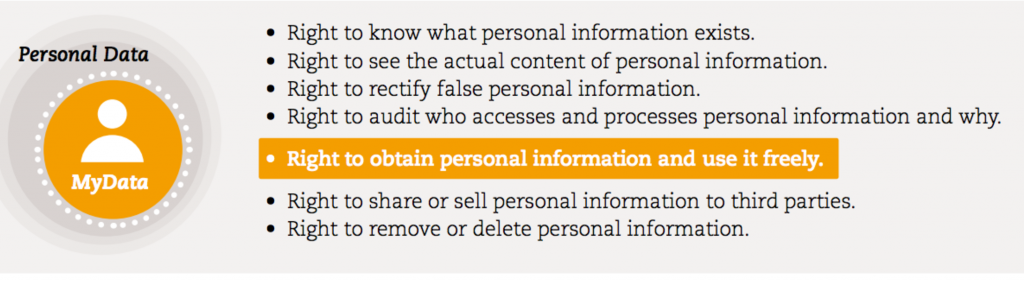
So, what’s the provocation? Beyond the less that overwhelming examples of integrations, my major issue with the vision laid out in the NGDLE article from 2015, was its disregard for how the data supposedly being shared between these systems was being used (and potentially abused) by the various parties involved.  Fact is, many of the services focused on personalization and analytics are third-party, commercial services that depend upon data collection for their business model. This opens up a series of very important questions and issues that are effectively glossed over by that article (not to mention the recent follow-up this month that dedicates an entire issue of EDUCAUSE Review to the NGDLE two years on).  This stands in stark contrast to a another model for integration of personal data across various systems. The white paper “My Data: A Nordic Model for human-centered personal data management,” authored by Antti Poikola, Kai Kuikkaniemi, and Harri Honko, deals with the same issues facing educational institutions dealing with the NGDLE, but the vision is broader and the focus is not so much on the institution as the individual. It represents the closest thing I have read to a kind of bill of rights around online data:

This model invokes Jon Udell’s discussion of what a personal cyberinfrastructure might look like, and how we would begin to control and manage our personal data in relationship to various entities on the web. In his 2007 talk on the “Disruptive Nature of Technology” he talks about the problem of cohesiveness in the LMS. And while 10 years later he may have a glimmer of hope thanks to technical integrations, what has become of critical importance  in the interim is how we manage and control our hosted lifebits (those digital bits we share across various platforms on the web). This question remains crucial, and it is very much the focus of the MyData paper, whereas the NGDLE paper glosses over any discussion of individual privacy, the ethics of collecting student/faculty data, as well as the negotiations around control over one’s personal data. Herein lies the increasingly central issue of edtech, nay our broader digital culture, and  is laid out brilliantly by Chris Gilliard’s recent “Pedagogy and the Logic of Platforms,” the most recent contribution to EDUCAUSE”s New Horizons column edited by Mike Caulfield:

The fact that the web functions the way it does is illustrative of the tremendously powerful economic forces that structure it. Technology platforms (e.g., Facebook and Twitter) and education technologies (e.g., the learning management system) exist to capture and monetize data. Using higher education to “save the web” means leveraging the classroom to make visible the effects of surveillance capitalism.

I think the MyData vision of a “human-centered personal data management” approach gets to the heart of what Udell was talking about in 2007 with an eye towards understanding the evolution of these platforms to “capture and monetize” data as Gilliard points out. There is a need for an intervention in the unchecked collection and integration of data across these platforms given data is “the new oil” lubricating the machine of surveillance capitalism.

The NGDLE approach highlights the possibilities of personalization, but plays down the fact it’s premised on the collection of data to create predictive analytics engines by third-party interest. A huge issue for questions surrounding privacy and owning one’s data. This is where one of recent articles about the NGDLE published in the July 3rd issue of EDUCAUSE Review highlights the a particular rhetoric surrounding this still emergent platform. The article in question, namely Stephen Laster’s “Tearing Down Walls to Deliver on the Promise of Edtech:”  

While integration might seem to be the concern of IT departments, in truth it has serious implications for teaching and learning. Technologies that live within closed systems create roadblocks for students and instructors as edtech is used to accelerate learner success and faculty efficiency. The free flow of identity, rostering, and learning data, harnessed in service of confident learners and caring faculty, is what allows technology to move us along Bloom’s journey toward mastery learning.

Amongst calls for open standards and a general sense of the limitlessness of transparency, something I generally agree with, it does trouble me when the Chief Digital Officer for McGraw-Hill Publishing is calling for a radical openness when it comes to the “free flow of identity, rostering, and learning data.” One of the travesties of the term open has been it seemingly uncontested goodness when it comes to edtech. I’ve certainly contributed to that problem, but when we are talking about openness of identity and learning data in relationship to students within systems that, despite the hype, have materialized next to nothing—this sounds more like a plan to make sure those various interested parties gain unbridled access to personal data within the NGDLE—the very opposite of the MyData approach being floated in the Nordic Model.

In fact, I think the LMS is dead, not unlike God. The ritual goes on and its re-invented in small, pointless ways to garner a new set of interests and values, it won’t go away, but it also won’t deliver on any of the Silicon Valley-informed Utopian promises outlined in 2015.  Rather, in a worst case scenario, the NGDLE offers a way for institutions to more easily extract and share their learning community’s personal data with a wide range of sources, something that should deeply disturb us in the post-Snowden era. But the real kicker is, how do we get anyone to not only acknowledge this process of extraction and monetization (because I think folks have), but to actually feel empowered enough to even care.

Posted in Uncategorized | Tagged | 10 Comments

The Moodle Fighters Suck!

But damn they look good!

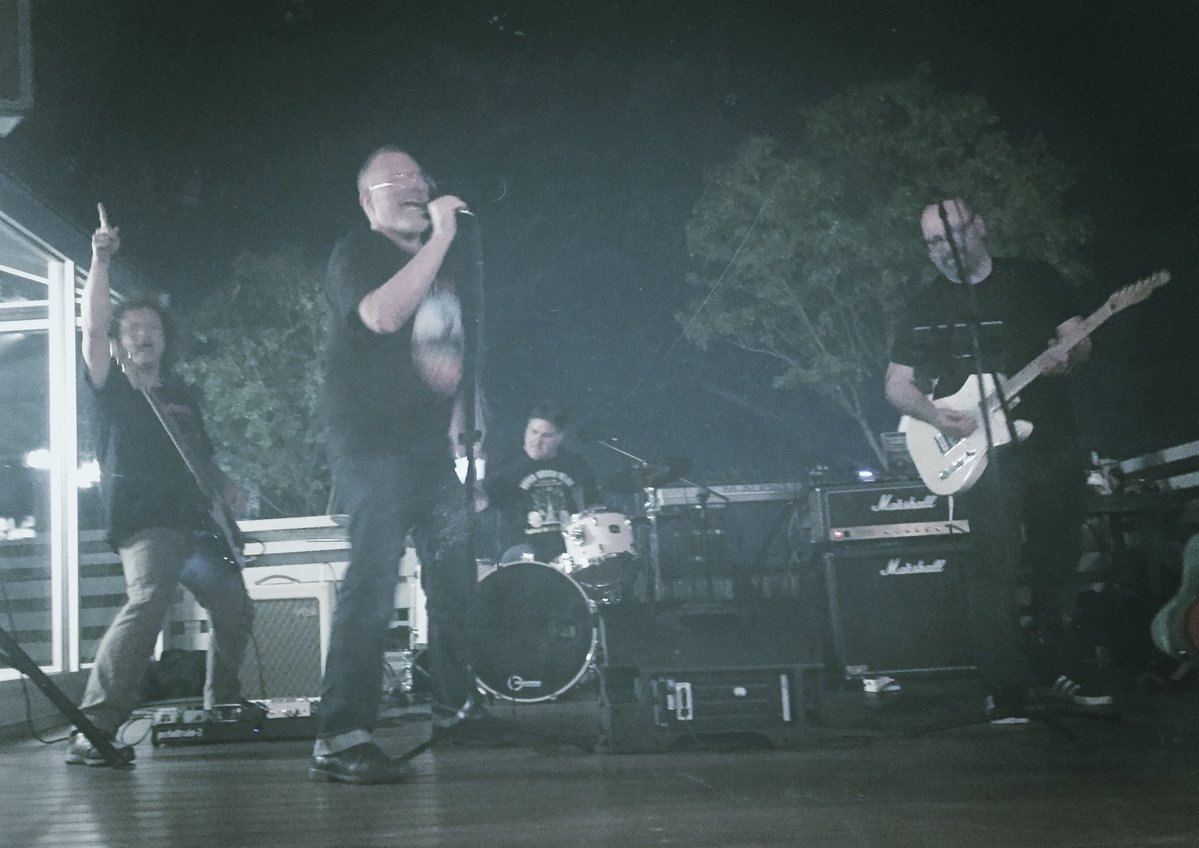
This is the Moodle Fighters (at least some of them): Grant Potter, pictured above rocking the bass, along with Brian Lamb on drums and Mikhail Gershovich on guitar (as well as Luke Waltzer—not pictured here)  made up part of the splinter group from other bands like The Dead Moocmen (who were headliners, but pulled a no show) and Blackboard Sabbath. 

I’m not gonna mince words here, this band sucked. They had a couple of moments like “The LMS is Here To Stay” and “The NSA Took My Data Away” (brilliant work, Grant Potter), but I have never been part of a band that cleared a rooftop bar so quickly—granted I’ve never been part of a band period. I mean here is the before picture of the party that was starting to getting rolling with the DJ Dr. Jones:

Within 5 or 6 songs there were maybe 10-15 of the original 50, and by song 11 or 12 the place was all but empty save the band and a few hardcore “fans.”  I’m not sugar-coating this, we were bad. We failed hard. Even a layup interlude like Tim Owens and I doing “Hell is for Children” Karaoke with a 90s LA Gangster rap bed (created by the great Mark Snyder) flopped. It was ugly. 

That said, Daniel Lynds classed the joint up a bit, and I caught that on video!

Also, to be clear, I loved the whole thing. As noted, I never did play in a band before, and while we were excruciating, I wanna do it again very soon. Also, I do understand this was very indulgent. But with a month before the conference date and less than 40 people registered, I figured the whole conference was going to be a bust and figured we might as well go all out in the fun/indulgence department. As it turns out the conference was anything but a bust with over 80 folks showing up contributing to an overall amazing vibe—turns out Domains17 was a blast. That said, it was far from perfect (and Lauren did highlight some elements in her critique), but her organization for this conference was amazing and if Reclaim is part of running a second one—it will be in large part thanks to her brilliant work. That said, I think many folks think band was one of the elements on the cutting board, but let me say it here in public:over my dead body, punks!  I like that it was a colossal failure: alienating the audience, being unable to hold a tune, and inspiring folks with disdain for one’s solopsism hardly seem reason enough to do something as rash as cut the live band  🙂 And next time we’ll make sure the band practices, we promise.

In fact, there is even a new band we may be able to coax to come out for a second conference (if there is one).  With the recent release of their charting single “Tilde Space,” I think the Wrecklames would make an awesome headliner!

In a time of austerity, a little indulgenceto imbue some sense of culture in higher ed’s edtech scene seems important, wouldn’t you agree? I want more of this, not less.

Posted in Domains 2017, reclaim | Tagged , , , , | Leave a comment

An Integrated Domain at THETA17

I already wrote my post-mortem on the THETA17 conference in New Zealand this May, so I do not have all that much more to add. But given they recently shared the images and videos from the conference, I grabbed a copy of the video (which consists of audio and slides) as well as some images taken from my “An Integrated Domain: Visions of a Connected Future” talk. Far from perfect, but there are some moments 🙂

And a few images from the talk:

THETA17 Keynote "You want some of this?"
“You want some of this?”

THETA17 Keynote "One pound per second, per second"
“One pound per second, per second”

THETA17 Keynote "Whhat do you want from me?"
“What do you want from me?”

THETA17 Keynote "Is anyone out there?"
“Is anyone out there?”

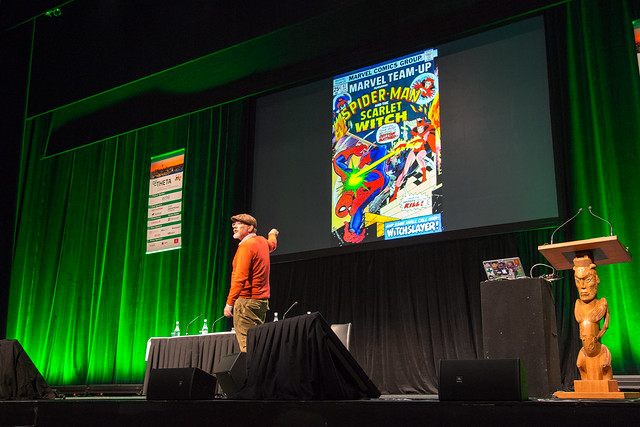
THETA17 Keynote "Witchslayer"
“Witchslayer”

Posted in presentations | Tagged , , , | Leave a comment