When i was a kid on Long Island we used to go to the stock car races at the Freeport Speedway every 4th of July for a good part of the ’70s. It was a lot of fun, we used to watch the smash-up derbies, the full-blown car races on a 1/5 mile track, that was pretty fast and furious. I have fond memories of the Freeport Speedway, and in 1983 in closed it’s doors for good, and sat idle for almost a decade before it was bulldozed and became—what else?—a box store. A treasure of a track and a relic of the 50s that in many ways was a home for the custom car culture of that era—the DIY community that represented the industrial equivalent of our hacking culture now.
So, this next toy is extra special to me, because what I associate it with more than anything is the Freeport Raceway, and the look on my mother’s face during the demolition derby—there was a genuine feeling of excitement and the small time nature of it made the whole thing that much more visceral. I still carry with me the image of us on those bleachers listening to the buckling metal and the wailing engines digging in for another joust. There is something liberating in watching things smash apart.
And Kenner’s SSP Smash-Up Derby toy was the realization of a 6 year old kid’s idea of America’s 200th birthday. I mean I so closely associated the 4th of July with the Freeport Raceway, and it just made sense that there was a Spirit of ’76 themed Smash-Up Derby set, what cold make more sense?
But more than that, this was a bitching toy. You got two American flag-themed, ripcord-driven cars, along with two sturdy ramps. My brother and me would line up on either side of our living room and crash these suckers for hours. It was a blast, and as the commercial below suggests, they really did crack up. This is not the fake crack of today’s toys whee an open hood and slightly ajar door conservatively approximates a crash, this was broken axles, missing wheels, amputated doors—the real horror show you expect from a head on collision.
This toy will always be indelibly linked with the lost legacy of the Freeport Speedway, as well as the smiling excitement that place seemed to animate in my mom.
In one particular part of the memoir, Beah talks about being freed by a band of angry villagers thanks to a few rap cassettes he learned to mime and dance to, with songs by Run DMC, LL Cool J, Naughty by Nature, among others. A skill that grants him reprieve from their vengeance for horrific acts he sanguinely narrates his part in. Like the following: “We walked around the village and killed everyone who came out of the houses and huts.” Or: “After every gunfight we would enter the rebel camp, killing those we had wounded.”
How very cool is this, “just a little video to talk about the music in the book.” Exactly, why not? And cut some relevant footage on top of it, and what we have a cultural frame for the reading that is both alive and creative all at once. Bully for you!
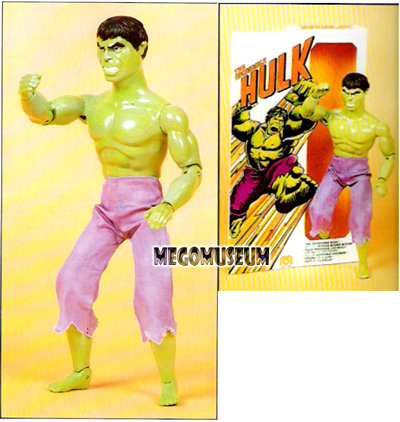
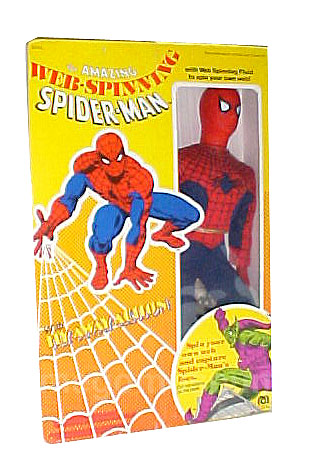
The Mego collection of marvel and DC figures was epic, and I blogged about Mego’s The World’s greatest Super Heroes 8″ figures in last years’ 1102xmas series. But this time around I want to talk about the 12″ figures, in particular Hulk and Spiderman. Mego came out with 12″ figures of both the Hulk and Spiderman (and later Captain America), but as always seems the case, the 12″ figures were never quite as popular as the 8″ (or smaller) figures. Why is that? Well, my theory is simple: all the cool accessories (like the Hulk Van) were made for the smaller figures. Turns out that 12″ figures were really just showpieces, just think about the 12″ Star Wars figures—there was no Death Star or Land Cruiser to play with. Now, with that said, the Mego Hulk and Spiderman figures were pretty awesome in their design, and Hulk’s outfit is kind like a martial arts getup. What’s more, if you look at the Hulk proto-type 12″ figure, it is remarkable how thin he looks. In fact, the Hulk 12″ prototype looks a lot like Bruce Lee. I mean see for yourself below:
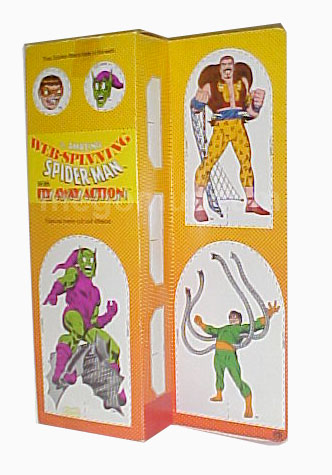
What I remember clearly about the 12″ Spiderman figure more than anything else was the box. In particular, the cut-outs of the super-villains on the back. Features like this made the toy, box art is a lost art.
But, as always, i think the commercial was my favorite memory of this toy. I was every boy, in every commercial playing with every Hulk there ever was.
Going though the Mego Museum this morning I came across this amazing set of action figures I never knew existed until now. Introducing Mego’s Super Pirates.
Just think about it, 8″, full poseable super pirates? And according to the box, the are the “world’s greatest” -sign me up. But sadly I think this is a toy I probably want more in retrospect as the eight year old I want to think I was rather than the eight year old I actually was. I was knee-deep in Star Wars figures when I was eight, and rightfully so. I was a kid of my time. I mean pirates didn’t really get sexy in popular culture until Napster, and then finally Johnny Depp blew it wide-open with the cartoon movie version of a romanticized vision of these scoundrels. What I want to see is a movie and/or novel about the real terror both of the pirates, and the subsequent terror in capital’s smack down of them. Kinda like Blood Meridian, but for pirates rather than scalp hunters. Is there such a book or movie?
Thanks to professor Larry Hanley I just discovered this CFP that contains the term “zombification of highered” (I have included the entire CFP below) How awesome is that? What’s more, they are now teaching Zombies 101 at the University of Maryland, Baltimore (thank you, @tripst3r). I mean I really need to teach the Zombies/Pirates class at Mary Washington, but I’m afraid that the powers that be here are still to afraid of the gruesome truth.
And so the question of whether or not the Zombie has jumped the shark is moot, because that had been more than apparent after Lucio Fulci’s 1979 classic Zombie II, wherein the zombie literally jumps the shark 🙂
If you were a kid in the late 70s or early 80s, chances are you spent some time with Tomy’s Wonderful Waterful Basketball. Fact is, it was everywhere you turned during that period. And thee is a good reason for that, it was a lot of fun. A simple underwater basketball game you could play against someone else, easy to maintain, fun to play, a model of efficiency and design.
I must have gotten my first one of these in 1978 or so, but it is one of those toys that you keep getting. It was cheap enough that you could easy break it and quickly get another, but at the same time it was one of those toys you actually played with for extended periods. A worker’s toy through and through.
Well, it’s that time of year again, the time wherein we start pulling out the decorations of our minds and gearing up the imagination for Xmas, which we all know is right around the corner. So given how much fun I had last year, I’m gonna ty this madness again. 110 toys until Xmas over the next 110 days (the math probably doesn’t work out, but who’s really counting?) Nobody like the bava, and it’s time we started having a little fun around here. What’s more, serendipity plays some real role in one’s impetus to return to the web and fill it with our personal goodies. And this bit of inspiration came today in the form of this post on the “Coffee for Two” blog.
The description and image of the legendary old gold toy Fuzzy Pumper immediately returned the rush that was an everyday experience with the 110 Days to Xmas posts last Fall and Winter, and I just couldn’t resist. It also goes to show me that I’ve only just begun to scratch the surface of this archive of my imagination. And damn, Play Doh toys that grow hair, doesn’t get trippier than that. Check out the video to see just how truly crazy such a toy can be. This is a classic, and great way to kick of the new season.
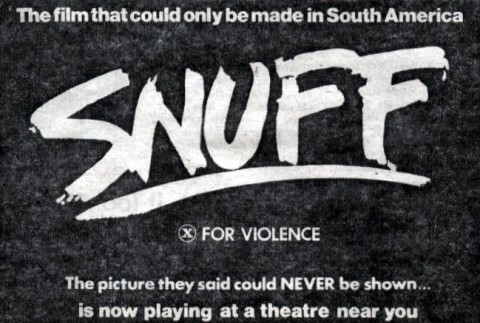
I just found this awesome post on the Temple of Schlock blog featuring a series of reviews about the 1976 splatter film Snuff, that was marketed as if it was an actual snuff film. I’ve never seen it, but after this movie poster, how can I resist?
I wonder how the South Americans feel about this ’70s exploitation ad campaign!
While it’s September, any calendar following fool knows that Summer ain’t over for another couple of weeks, and what better way to reflect on one of the best Summer’s for me in a long while than talking everybody’s favorite denizens of the deep: sharks.
I mean, I love sharks—and I love them because I am so god damned afraid of them. Just this June and July while swimming and playing with my kids in the Atlantic Ocean off Montauk Point I couldn’t get the idea out of my head that they were there with us. Stealthily watching us with those reversible black eyes and untold rows of teeth, waiting to strike. And that made the ocean that much better, not some sterile experience that has become the standard for family fun—but the potential for a real, live blood bath. Not that I want one, but I do want to know it is still possible.
And when I see videos like the following one I found on the internet —along with the sheer volume of insane shark videos on the internet—it remains a strong barometer of just how strong the seduction of the shark fetish started in the ’70s has had on our culture for 35 years now.
How crazy is this guy Chuck Patterson’s “Me my shark and I”? Not only does he see a Great White the day before, but he realizes he forgot his camera so goes to the same spot at the same time the next day to catch him again. What a beautiful nut!! People like him, not corporations like Google and Apple, make the internet magic.
While I was swimming around the internet trying to spear more stuff about sharks, I found this crazy Wikipedia article that provides a List of fatal, unprovoked shark attacks in the United States. And what’s crazy when you look at that list closely, is that in 1916 Jaws did live on the Jersey Shore, chomping 4 people in less than two weeks. Crazy! One of the other interesting things I discovered from this list, and I’ll have to double-check it before I get too confident in NY waters, is that there has never been a fatal shark attack off of Long Island. I guess that’s why it’s the strongest island, while on the other hand Florida and California are veritable smorgasbords—and North Carolina ain’t no slouch either—damn Bull Sharks!
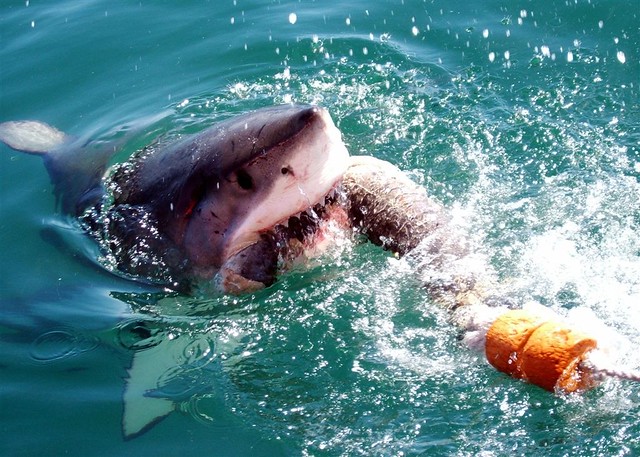
And then there is the flying Great White sharks of South Africa…
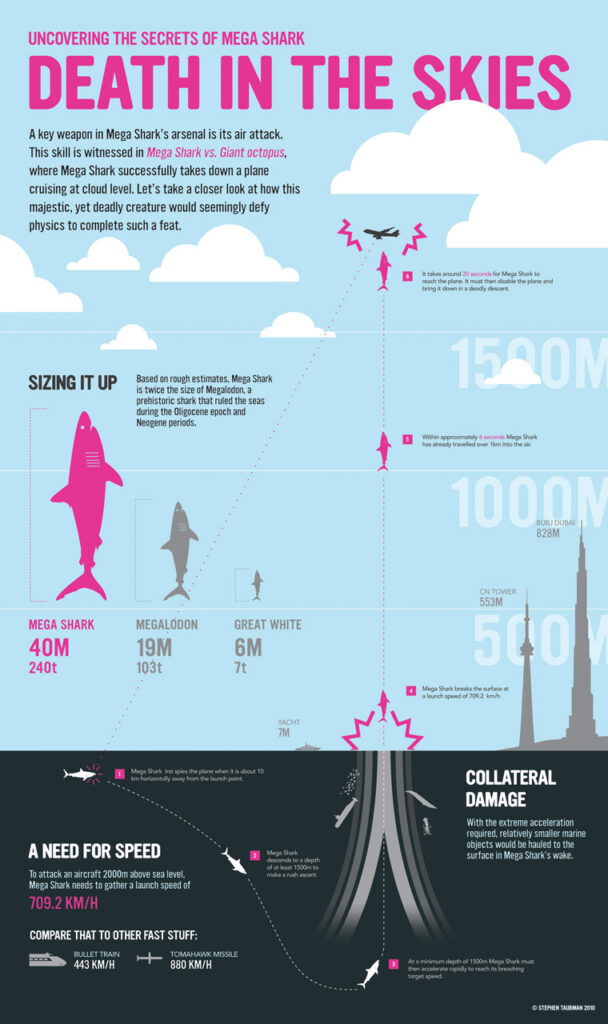
That gave way to this comical take off in Megashark…
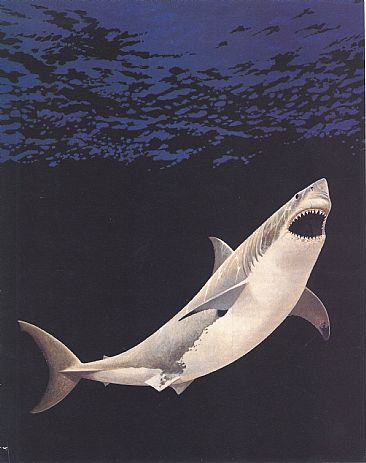
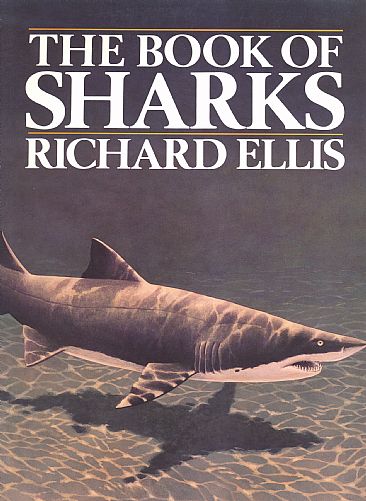
All of this makes me nostalgic for the time when I was serious enough about my Shark fetish that I had applied, and been accepted, to study marine Biology at the University of California, Santa Cruz (a well known haunt for Great Whites, just ask any surfer at Steamer Lane). I was minutes away from going, but then a love changed my path irrevocably. And while I don’t regret a thing for that relationship and my time at UCLA were both formative and indelibly shaped me as an adult, I do think back to those days in 1991 and 1992 when anything was possible for me, and I would spend my time poring over the art of Richard Ellis.The Book of Sharks was my favorite book at the time, and while going to junior college in Long Beach, California (which was an amazing experience in its own right, and one I need to post about—the California public higher education system was still a very beautiful thing in the early ’90s), I would study his loving portraits of the various types of sharks. Pausing over the haunting image of the Great White heading to the surface, just imagine the legs that he has keyed into. But being sucked in my the beautiful image of the Sand Tiger Shark on the cover, the way in which the water diffused sun reflects on this beasts back is gorgeous. And the scene reminds us just how shallow that water is.
And all this brings me around to the first day of class for the Digital Storytelling course this semester when I tried a little experiment. I basically asked every student (all 28 of them) to tell me a 30 second to a minute long story from their Summer. And, interestingly enough, they not only did it, but it immediately told me so much about all of them. Who they were, how they communicated a story, what they were interested in, what they weren’t, etc. It was a great opening exercise, and it many ways sets the tone nicely for the course, because this is what will be expected of them throughout the semester, albeit through a variety of modes and mediums.
So, building on this, one of the students, told her story about the fact that she watches and re-watches Jaws every year before her and her family head out to the beaches of North Carolina, as a way to build up anticipation and get in the mood for the always already present possibility for carnage 🙂 Well, her story ultimately ended on a nit that she spent her days at the beach collecting shark teeth, tons of them, real, live physical artifacts that in many ways materially symbolize the multi-level, serrated points of our fear. So, inspired by her story, and connecting with it on a deep level for all the reasons I tried and illustrate above, I posted one of my favorite stories of all time, the classic monologue by Robert Shaw in Jaws in which he brilliantly narrates the sinking of the U.S.S. Indianapolis, and the subsequent shark-inspired horror that ensued. At the same time, I asked the students to share an example of a story from pop culture or literature that remains with them and why. How is this story somehow representative for them?
Well, that self-same student, Sarah Manual, who told the story about collecting shark teeth on the beach, posted a response to my rather quick and paltry post about this scene, examine it closely, and through her copious external research on Jaws, explained quite brilliantly why this scene was not only the best in the movie (which I agree with) but also in many ways saved the filming of it. Here it is, in here own words from her own blog:
Still, I learned about this scene and how particularly difficult it really was to shoot. Not only was this scene rewritten by several screenwriters and actors, but it was emotionally draining for everyone to execute, especially Robert Shaw who had the daunting task of representing every man who survived the U.S.S. Indianapolis. Anyway, so here’s what’s so incredible about this scene. We see absoutely nothing, and yet, the scene is chilling. All the viewer sees are the expressions on three men’s faces. This one scene, the documentary revealed, was what gave the entire movie real hope, because up until then it seemed like nothing was working. Scenes on the ocean were impossible to shoot, the mechanical shark NEVER worked, and the director, producers, and actors were constantly threatened by deadlines and overspending. This scene changed all that. It was the breath of life in a drowning film. After this scene was shot everyone felt renewed, and began to believe in the film.
What makes this scene so representative of the movie is what made the movie work so well. Due to malfunctioning mechanics and pretty bad special effects, there wasn’t really a lot of footage of the shark. This happened to be a real blessing in disguise for the movie. Quint’s monologue here proves that what we don’t see is actually more frightening than what we do see. The unknown is always scary; that’s why no one likes the dark!
And check out Sarah’s blog, deep sea horror all the way, and once again the ability for your own space to reflect your own interests remains paramount for me on the web. More than that, I could’t ask for a better way to start this semester, right off the bat, this is what blogging is all about. This is what we do, and this is why it is not only important, but fulfilling. It is where we tell our own story.
I’m getting pumped up for ds106 this semester, and I am ready to bring it right along side them with the baba, because if you ain’t in it too, than what the hell are you talking about? This Reverend practices what he preaches.
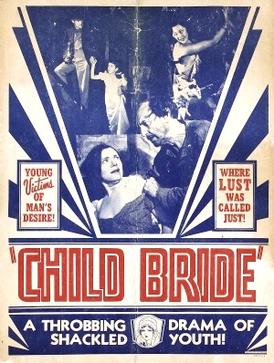
So, I recently got the latest issue of Filmfax (my favorite magazine in the world) and it was a good one. As soon as a I got it I was heading directly for the article on Peter Hyams’s NASA conspiracy flick Capricorn One (1978), but I got sidetracked by Paul Holbrook’s article about an exploitation film from 1938 called Child Bride. I think it was the sub-title that grabbed me: “A THROBBING DRAMA OF SHACKLED YOUTH!”
Paul Holbrook does a wonderful job talking about the making of this exploitation film from the 30s which was actually trying to cash-in on the moral panic surrounding Eunice and Charlie Johns in 1937. You see, Charlie Johns was 22 and Eunice Winstead was nine. And with their marriage Eunice became “the youngest American girl married in the history of marriage statistics.” When the marriage was picked up by the press, the Tennessee newlyweds became national celebrities, and it proved to be one of the most outrageous topics of 1937. In fact, Life magazine took exclusive images of them at their home, and even featured the confrontation between Charlie Johns and Eunice’s teacher when she was switched in elementary school as part of their Private Lives series in the August 23rd, 1937 issue (you can read it by clicking on the image of Eunice to the left). And if you want more about the elementary school switching, you can read another article on the same day from Time magazine here. And for more on this, read the article exposing Child Marriage in Time‘s February 15, 1937 issue titled “What God Hath Joined.”
So, with this as the backdrop, “one of the most notorious exploitation films ever made, a weird cinematic oddity unlike any other film shot in the 1930s” gets produced by Raymond L. Friedgen. And as Holbrook points out:
Exploitation films had dealt with narcotics, perversion, sex hygiene, and all kinds of other things movies were not supposed to show but which people secretly wanted to see anyway. These roadshow films were produced quickly and exhibited in only a few theaters at a time, often accommodated by a lecturer who spoke who spoke out against whatever evil was being presented and sold educational literature warning of its dangers.Because they were made independently and never distributed through the standard theater chains, they were not under the jurisdiction of the Production Code. The films were free to show topics that would get any other film in trouble and pulled from circulation.
This nice, taut frame for the exploitation film circuit frames beautifully how morality can be the most subversive distribution channel. By promoting these films as a morality tale railing against some vice or social issue, it could simultaneously get away with visualizing some of the most illicit visions of the day. And this in many ways is what makes the film Child Bride so controversial, even to this day. And despite the scrolling moral that starts the film to “Abolish child marriage,” by the time the film is ready for release the child marriage laws in Tennessee and other states had already been changed due to immense social pressure. So, what you have is social issue film without an issue. Or, rather, it’s own issue. What makes this film so controversial is a swimming scene that features brief nudity of 12 year-old actor Shirley Mills, as well as her double Bernice Stobaugh. Nudity was a staple of this exploitation films, but child nudity, if even brief, became its own issue as the film re-circulated under various different titles over following decades. In 1958 Child Bride appeared in theaters again, and, as Holbrook notes:
By the ’60s, Child Bride‘s underage skinny dipping scene led to its brief screening in the grindhouses of San Francisco as an adults-only film. Bernice Stobaugh Ray, Shirely’s swimming-double and life-long Christian, heard about that and says she was in a meeting of church women one afternoon in the 1980s when the pastor tried to begin a discussion by asking if any of them had ever one anything outrageous. Bernice raised her hand and said, “I was the double for an actress in a porno film once!”
There was an uneasy silence, and the preacher switched the topic.
Man, articles just don’t get much better than this one in Filmfax, filled with interviews and repleted with images and spot-on writing about a classic from the exploitation canon. And what’s more, the article mentioned Child Bride was in the public domain, so on a goof I googled it (though I was sure to add the year and movie so the FBI doesn’t show up at my door) and voila, guess who has the full version for free streaming or download? That’s right, the venerable Internet Archive has the full film, all one hour and two minutes of Child Brideright here.
is an ongoing conversation about media of all kinds ...
Testimonials:
Generations from now, they won't call it the Internet anymore. They'll just say, "I logged on to the Jim Groom this morning.
-Joe McMahon
Everything Jim Groom touches is gold. He's like King Midas, but with the Internet.
-Serena Epstein
My understanding is that an essential requirement of the internet is to do whatever Jim Groom asks of you while you're online.
-James D. Calder
@jimgroom is the Billy Martin of edtech.
-Luke Waltzer
My 3yr old son is VERY intrigued by @jimgroom's avatar. "Is he a superhero?" "Well, yes, son, to many he is."
-Clint Lalonde
Jim Groom is a fiery man.
-Antonella Dalla Torre
“Reverend” Jim “The Bava” Groom, alias “Snake Pliskin” is a charlatan and a fraud, a self-confessed “used car salesman” clawing his way into the glamour of the education technology keynote circuit via the efforts of his oppressed minions at the University of Mary Washington’s DTLT and beyond. The monster behind educational time-sink ds106 and still recovering from his bid for hipster stardom with “Edupunk”, Jim spends his days using his dwindling credibility to sell cheap webhosting to gullible undergraduates and getting banned from YouTube for gross piracy.

 When i was a kid on Long Island we used to go to the stock car races at the Freeport Speedway every 4th of July for a good part of the ’70s. It was a lot of fun, we used to watch the smash-up derbies, the full-blown car races on a 1/5 mile track, that was pretty fast and furious. I have fond memories of the Freeport Speedway, and in 1983 in closed it’s doors for good, and sat idle for almost a decade before it was bulldozed and became—what else?—a box store. A treasure of a track and a relic of the 50s that in many ways was a home for the custom car culture of that era—the DIY community that represented the industrial equivalent of our hacking culture now.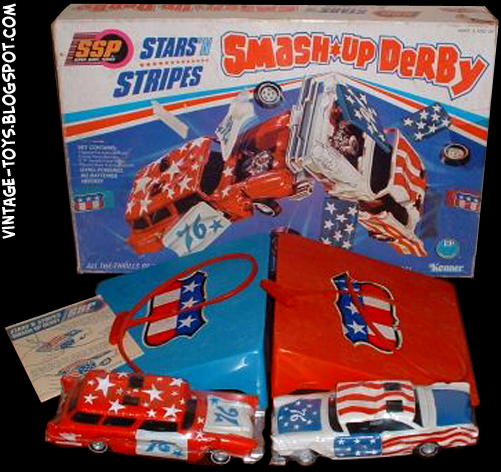
 Mara Scanlon’s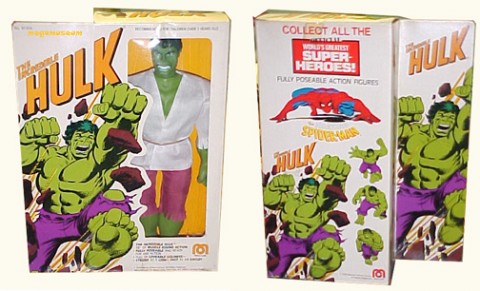


 Thanks to professor


 So, I recently got the latest issue of Filmfax (my favorite magazine in the world) and it was a good one. As soon as a I got it I was heading directly for the article on