What Richard Scarry has to Teach Us About Domains

We’ve been rolling out Domain of One’s Own this year at UMW, which means  DTLT has been busy introducing it to faculty and students. I’ve been working on an anology over the last few months (I’m not sure it reaches the figurative height of mataphor) to try and help people understand how a domain and web hosting works. It would be easy for faculty and students to liken UMW Domains to getting a site on UMW Blogs, but part of the problem with that is they would miss out on so much of the power, freedom, and possibility Domain of One’s Own offers.

So, here is my analogy that everyone at DTLT makes fun of me for, but that’s just because they’re jealous they didn’t think of it first 🙂

Image Credit Rowan peter Peter Rowan

To start, a domain is to web hosting as a street address is to a house (domain:web hosting :: street address: house). In other words, just like a street address, a domain is an abstracted locator that points a visitor to a web server (or your virtual house) wherein you do your online living. In this analogy the server is like the house you live in. People can find it through the domain name that points them there, but the space where you create subdomains, install applications, repair databases, etc. is the web hosting. More specifically, it’s a user-friendly interface that allows you to manage your slice of shared server.

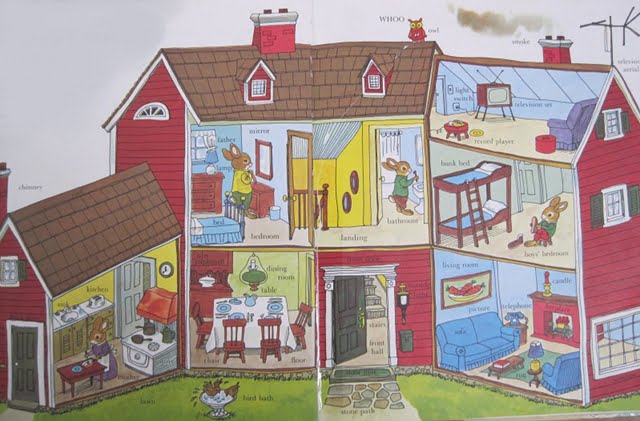
Now, some of you might be saying, “Yeah, yeah, yeah, we’ve heard that analogy before. Big whoop!” Well, first of all, screw you! And second of all, I’m not done yet! Here is where the analogy get’s all Richard Scarry on you. What does a house consist of? That’s right, rooms. And why does it have different rooms? Exactly, to meet the specific needs of living. You don’t sleep in the kitchen and you don’t micturate in the living room, right? Right. Each room has it’s particular purpose, and it provides a sense of structure and order to living within a house.

scarry_rabbit_house

As the above cross-section of the Rabbit Family’s house demonstrates, each room has a specific use: you sleep in the bedroom, cook in the kitchen, brush your teeth in the bathroom, etc.  The house is made up of various rooms in which your live.

The same thing might be said about your online domain and web hosting. Through the web hosting account you can partition off your domain into various “rooms” that are utilized in different ways.

mydomain-com

By using subdomains you can create a series of rooms within your “online house” so that you can install specific applications to accomplish various things. For example, you can create the subdomain photos.mydomain.com and install an image mangement application like Zen Photo to store and share your digital photographs. You can use files.mydomain.com to manage and store your documents online with OwnCloud. Why not create the subdomain rss.mydomain.com and install the RSS reader application Tiny Tiny RSS to follow all your favorite bogs. Are you an exhibitionist? Try exhibit.mydomain.com for an Omeka install. Have a picture of your cat and/or bad politics to share? Create blog.mydomain.com for a WordPress install and tell the world about both. These subdomains enable you to organize your online space by installing a variety of applications for your various reasons. It’s once you realize this that you can truly begin to occupying your own domain.

myhouse_gus

Admit it, you are blown away!

Posted in Domain of One's Own | Tagged , , | 17 Comments

Bad Day on the Midway

GIF Credit: "Meet the Residents" Tumblr

GIF Credit: “Meet the Residents” Tumblr

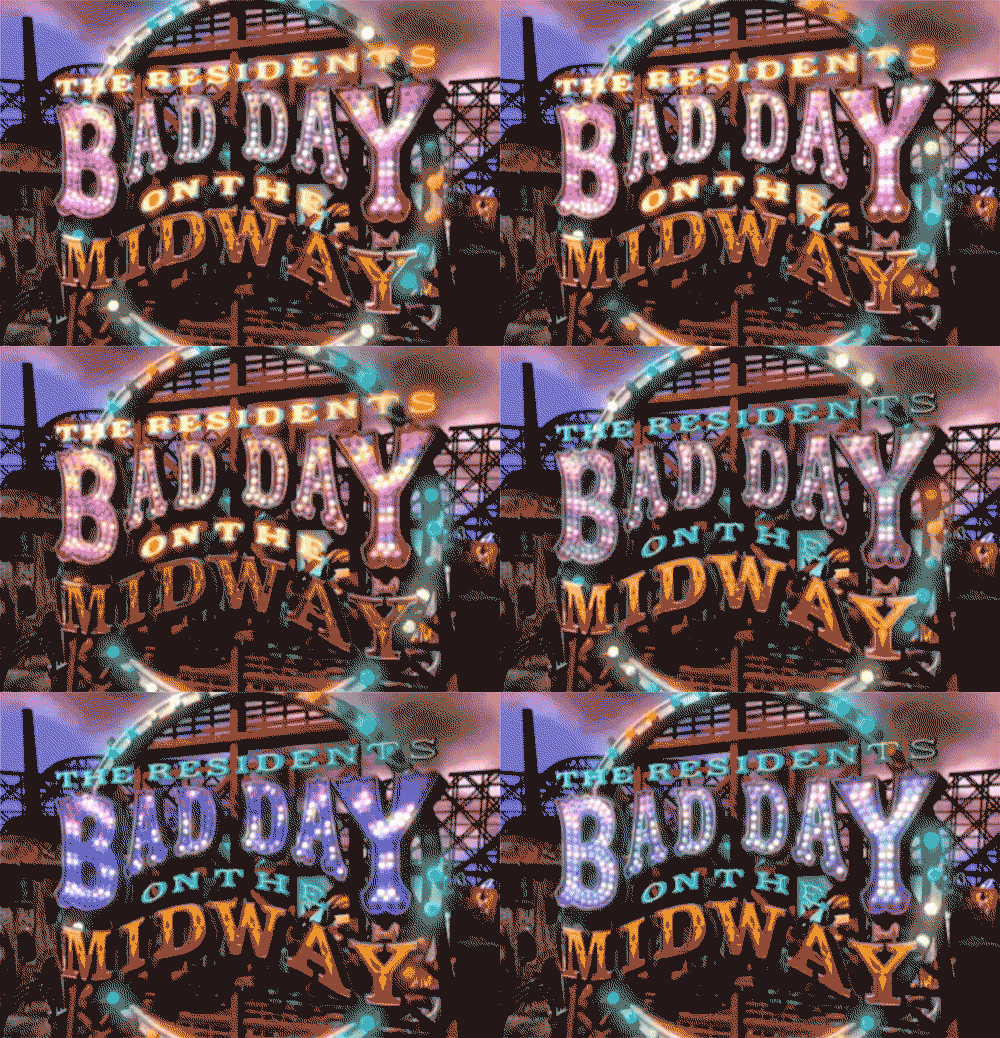
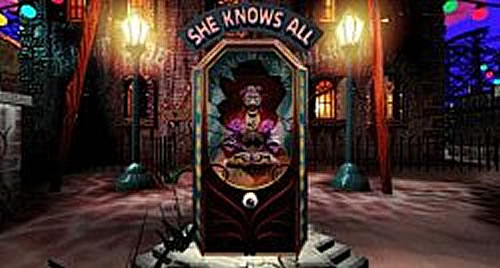
After exploring Will Crowther’s early Interactive Fiction game from 1976, I somehow found myself thinking about The Residents’s interactive CD-Rom from 1995 Bad Day on the Midway. This was a crazy game, and it is one of the multi-media experiments from that era that has stuck with me. It’s somewhere between a game, art, and insanity. The interactive animation by the late Jim Ludtke is inspired. In fact, the game was optioned by Ron Howard for a proposed  series that would have been directed by David Lynch. It fell apart, but that’s one of those pop culture alternative history scenarios one could get lost in. The aesthetic of this game reminds me a lot of Bioshock, and I really wish someone would update this game so it could be palyed as a seaamless world—it is so beautiful.

Bad Day at the Midway She Knows All

In 2001 The Residents’ released a ten-minute video of the game as part of their Icky Flix DVD. The following video, which i think is from that DVD (am I wrong here?), gives you a sense of how compellingly expressionistic the world they created was, as well as how amazing an update could be 🙂

The Hardcore Gaming 101 review does a great job describing the scenario and talking  a bit about the game play:

You begin the game as Timmy, a young boy visiting a crumbling amusement park known as Midway. But Timmy doesn’t see a pathetic locale where everything is falling apart, but rather a world of wonder, with his thoughts appearing in written form at the bottom of the screen. He loves talking to the mechanical fortune teller, killing communists at the shooting gallery, and riding on the Marvels of Mayhem merry-go-round.
……
You are welcome to play out the game as Timmy, but where the story gets really interesting is when you begin jumping from person to person and seeing the game through their eyes. When you encounter another character, an eyeball cursor appears and allows you to switch your viewpoint. There are other video games where you possess characters, like Messiah and Geist, but in this game you aren’t simply riding the characters’ bodies; you actually become them, seeing a different set of thoughts and having very different experiences.

Jumping from character to character and playing the game as someone besides Timmy seemed pretty wild at the time. It underscored there was no particular goal to reach or treasure to acquire, but rather it was far more concerned with the experience of being there.  It focused on interaction and observation of the world around you, inhabiting other subjectivities, which was later accompanied by a certain amount of discomfort given you could “become” a serial killer or a nazi sympathizer. It was  an experience that pushed the interactive, immersive games of the mid-1990s into some trippy territory, kinda like the dark, b-side of Myst. In fact, like the Myst Reader books back in the mid to late 1990s, Bad Day at the Midway was turned into a novel only year or two ago. How bizarre is that? Updating CD-ROMS to novels is all the rage!

I’ve been using the expression “bad day on the midway” ever since I first played this game to suggest when an activity has gone terribly wrong. I’m not sure if the title is an allusion to something else, but it’s become part of my very linguistic being. Anyway, I’m gonna see if I can get my hands on this game and play around with it again. I miss little Timmy’s adventures on the Midway!

Posted in fun, The Internet Course, video games | Tagged , , , , , | 6 Comments

Early Computer Gaming and the Open Net

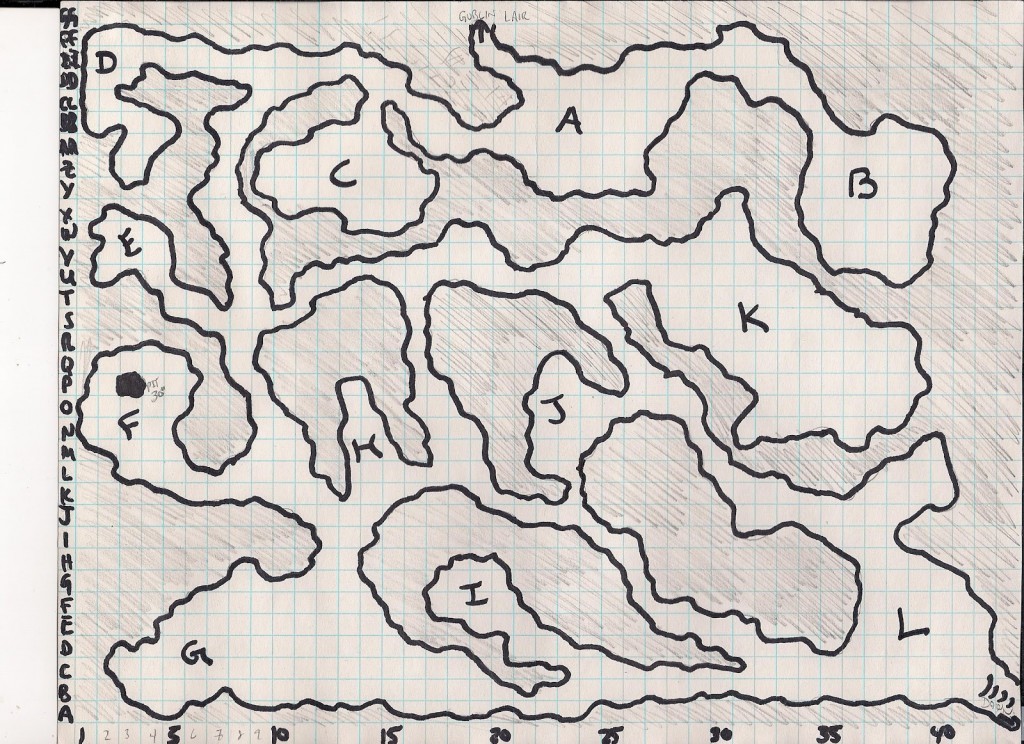
Into the Mouth of Cave Madness

Into the Mouth of Cave Madness

One bit from Katie Hafner and Matthew Lyon’s Where Wizards Stay Up Late I found particularly interesting was a section of the chapter on E-Mail titled “Adventure and Quasar: The Open Net and Free Speech.” It featured Will Crowther, who was one of my favorite characters from this history of the internet. Earlier in the book he’s described as a brilliant computer programmer who had some eccentric working habits:

Crowther was quiet, easy to work with, and when it came to writing code, he was downright inspiring. He was also [Severio] Ornstein’s good friend and rock-climbing companion. Crowther seemed to concentrate best while hanging from door frames by his fingertips, doing chin-ups. And he was known for his mathematical doodling. While others passed the time at lengthy meetings by drawing squiggles and curlicues, Crowther filled his page with a thicket of differential equations. (98)*

And once he was done “hanging” around the office focusing his ideas, he would sit down and code for intensive intervals What’s not to love about Crowther? His code was described as “the leanest anyone who had worked with him had ever seen.” He worked alongside Dave Walden programming the packet processing for ARPANET. In 150 lines of code they had figured out the kernel that would launch the internet (100). I love this stuff, so already Crowther seemed pretty awesome to me. But when you marry that to the fact that in 1975/76, while going through a divorce, he used his recent passion for Dungeons and Dragons to program an interactive fiction game called “Colossal Cave Adventure” to connect with his young kids sublimates him to another level 😉

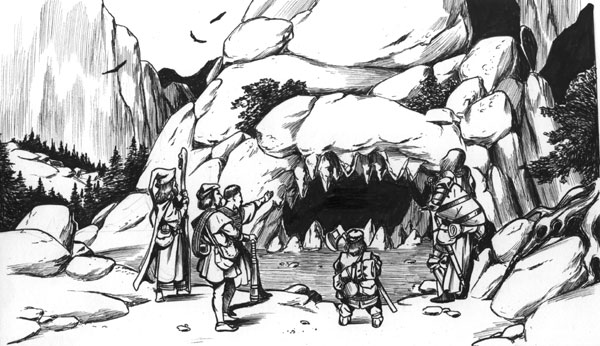
Crowther was an ardent cave explorere, and his wife Pat had achieved renown among cavers for having been part of a small group that discovered the first known link beteen the Mommoth and Flint Ridge caves in Kentucky….Crowther was the cartographer for the Cave Research Foundation. he used his off-hours to plot intricate subterranean maps on a BBN computer. In early 1976 Will and Pat divorced. Looking for something he could do with his two small children , he hit upon an idea that united Will the Programmer with Willie the imaginary theif: a simplified, computer version of Dungeons and Dragons called Adventure. (206)

Goblin Caverns

A Cave Map from Dungeons and Dragons

This story seems like the convergence point of modern nerd culture in so many ways. Programming, Dungeons and Dragons, and spelunking. According to Crowther he wrote the game over the course of a few weekends, played it a bit with his kids and colleagues and then left it paritally finished as his spirit was increasingly tapped by the divorce. Nonetheless, others found it and distibuted it and the game started filtering through the networked community. Crowther was approached by Don Woods, a Stanford graduate student in Articial Intelligence, and asked if he could refine the game to which Crowther was more than happy agree.

When Woods had finished his contributions to Adventure, “he created a guest account on the computer at the Stanford AI Lab to let people play, and swarms of people logged in. Adventuture spread like hula hoops, as people sent the program to one another over the network” (207). What I liked about this whole story was how the authors tie the passion people had for this game, which inspired a whole generation of games like the Atari 2600 Adventure as well as the interactive fiction game Zork, to the features of an open network . The open collaboration and free distribution of Adventure captured an ethos that helped this game flourish, and it was made possible because of the open network that was the internet:

Adventure demonstrated the appeal of an open networking culture. And the emphasis on openness grew with time. There were few closed doors on the network, and a free-spirit prevailed in people’s attitudes about who could come and go through them, and for what purposes….ARPANET was official federal government property, but network mail was being used for all manner of daily conversation. (208)

It’s not surprising that E-Mail was the killer app of the early interet because it provided a sense of community in early network culture. It’s also not surprising that the passion driving some of the best demonstrations of open sharing in the early network came in the form of a computer game—an immersive experience based on a port of a popular role playing game that people were pasionate about. It’s funny how much this history paralles so much of how internet culture still operates.

For a more detailed look the cultural history of Adventure take a look at Dennis Jerz’s article in the Digital Humanities Quarterly “Somewhere Nearby is Colossal Cave: Examining Will Crowther’s Original ‘Adventure’ in Code and in Kentucky.” I think this topic would make an interesting investigation for a group of students in The Internet Course. I can see it now, “the cultural history  off network gaming!” I’m just full of ideas on the bava this weekend for all the work the students could do 🙂

* All citations are from the 1996 hardback Where Wizards Stay Up Late printed by Simon & Schuster.

Posted in The Internet Course, video games | Tagged , , , , , , | 9 Comments

Network Randoms

EmreI’m just about finished with Katie Hafner and Matthew Lyon’s 1998 1996 history of the creation of the internet Where Wizards Stay Up Late. I’ve been enjoying it thoroughly, and while I was familiar with much of the general history presented, it’s the details and anecdotes that I find truly compelling. For example, in the first week or two of The Internet Course the term hacking came up as one of those protean terms that has various meanings depending on the context.

What’s more, in early tech culture hacking was associated with innovative approachs to a programming challenge rather than nefarious behaviour attributed to cyber criminals. Hafner and Lyons talk a bit about this when discussing how email, the application which would help popularize the internet, was a hack.

Using the ARPANET as a sophistiacted mail system was simply a good hack. In those days [the early 70s] hacking had nothing to do with malicious or destructive behavior; a good hack was a creative or inspired bit of programming. The best hackers were professionals. Meddlesome and malicious network users, which were virtually none at the outset, were first referred to as “network randoms” or “net randoms” or just plain “randoms.” It would be another decade before hacking would be given a bad name.

I love the early terminology of hackers as “randoms,” it seems much more gentle in its criticism. Whereas hacker paints a much starker image reminiscent of Jason Vorhees with a butcher knife machete 🙂 I’m hoping a few students from The Internet Course investigate the cultural history of the term Hacker over the past fifty years or so. The term has recently been regaining its original connotation of inspired re-thinking of traditional problems. At the same time it’s also a term which is liberally employed when suggesting technology can fix any and all of our social ills.

There are a quite a few gems like this in this book, and I’m gonna try and blog them before they slip away.

Posted in digital storytelling, The Internet Course | Tagged , , , , , | Leave a comment

IMPs of Internet History at UCLA

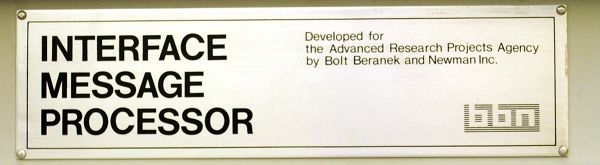
Interface_Message_Processor_Front_Panel

On Wednesday I saw this tweet from Miriam Posner announcing that one of the pioneer developers of the internet, Leonard Kleinrock, was going to lead her students on a tour of the site at UCLA where the internet came to life.

I was immediately intrigued because I’m co-teaching a course on the internet this semester, and I just read all about the conceptualization and development of the ARPANET during the 1960s. Kleinrock’s name was constantly mentioned thoughout the 1998 1996 history Where Wizards Stay Up Late. He was an enginnering professor at UCLA and his colleague and good friend Larry Roberts, director of ARPA in 1969 and principal architect of ARPANET, was influenced by his work analyzing communication networks and tracing the problem of data flow in networks. Kleinrock received a contract from ARPA to setup the Network Measurement Center which in 1969 would be the home of the first Interface Message Processor (IMP) —one of four machine that started the internet.

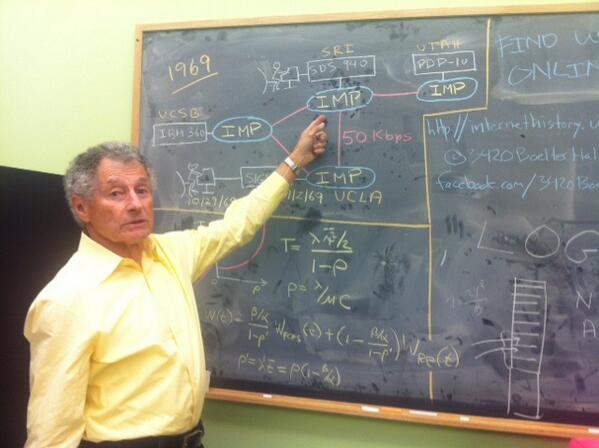
Kleinrock and the IMP at UCLA

What’s so cool is that Miriam not only shared the fact so that I could get excited and share this with my class, but she took pictures of Kleinrock with the IMP UCLA’s Boelter Hall that made the first connection with Doug Engelbart’s Stanford Research Insititute. In the following image you can can see Kleinrock explaining how the IMPs at UCLA, SRI, UCSB, and U of Utah connected four distinct computers amongst these institutions.

Kleinrock explaining IMPs and ARPANET

The beginnings of a technical infrastructure that has fundamentally changed the way the world communicates in 50 short years. The reading I’ve been doing on the history of the internet has been a most enjoyable rabbit hole to fall down. As we’ve switched focus in the Internet Course from the history to the technical details of how the internet works, I’ve been tripping out on the emergence of the window through which most of the world would come to know the internet: the world wide web.

I was actually at UCLA in 1994 when I first browsed the web, and I remember the Computer Science student (his name was Andre) who got us all hooked up to the web and showed us the ropes. At one point he noted that the internet “started at UCLA.” I wasn’t exactly sure what that meant at the time, but I thought it was pretty awesome when I actually saw what it translated to in terms of warez sites 🙂  I  worked at Audio Visual Services in the basement of Campbell Hall (room B-125 to be exact) which is on the other side of campus from where the internet was turned on in Boelter Hall, but it’s my own small piece of personal history with the internet that Kleinrock helped make possible.

I have to be honest that I have a certain amount of irresponsible nostalgia for those days more generally, and the early web in particular. And that nostalgia is only fueled by tour-de-force posts like this one written by Alan Levine about his edtech adventures at Maricopa during the early 1990s. Not only that, Cogdog’s recollections of the early 1990s demonstrate beyond a shadow of a doubt that he truly is the edtech archivist par excellence!

I love this stuff, and I can’t thank Miriam enough for sharing the experience. It reinforces that understanding the web’s history remains vital to its future. And, coincidentally, it provided a unique opportunity to illustrate to several faculty I was showing Twitter how such networking tools open up a world of possibilities for augmenting the academic experience.

Posted in The Internet Course | Tagged , , , , | Leave a comment

Teaching BitTorrent by Way of Snow Ball Fights

Rick Mendenhall, Jeff Scott

Image credit; The Eye’s “Images from our perpetual winter weather”

After I wrote this rather emo post about my teaching woes as a result of last Thursday’s class, the follow-up session on Tuesday was awesome. The “How It Works” panel did a phenomenal job of leading the class through a series of discussions about how the underlining technology of ARPANET worked, what TCP/IP means, how TCP it’s different from UDP,  and much more (Maddy even told this geeky Computer Science joke about UDP). Paul and I both concurred it was what we were hoping for when we dreamed this approach up, and all it took was me finally shutting up and letting them run the show.

Unfortunately this panel wouldn’t get an encore performance because UMW was closed today due to a snow storm. This is the second class meeting cancelled so far, and I feel the pain of colleagues who have had even more classes cancelled due to the weather this semester. UMW History professor Jason Sellers wrote about his last minute efforts to save from missing a second full week of one of his courses by running the discussion through Canvas.

I was in a similar predicament, so on Tuesday night I warned the Internetters that if class cancelled we would route around this problem, much like the internet routes around obstacles. Plan b was to have each of the panelists create a 3-5 minute video in which they explain how a particular technology works. Once they do this, they were to tag it “snowday” and the videos would show up on the frontpage of the course site by 6 PM. After that, the rest of the students would have 24 hours to have a distributed discussion of the seven videos through the comments.

Now, I understand that for some this might not necessarily “replace” the experience of a panel of students discussing how internet technologies work in a classroom. Nonetheless, if you’re flexible and use some of the tools at your disposal, you might get something different but equally instructive. Like, for example, the following four minute video Lex Adams created to explain how BitTorrent works to the rest of the class.

Lex reinforced for me just how powerful a good metaphor is at explaining a concept to someone who might feel like they have no context (it’s what my edtech career has been based on). I asked each of the panelists to make a video, be creative, and incorporate the theme of snow. The last element being a fun limitation that I hoped would inspire some novel approaches. In the case of Lex it did just that. He used the example of a snowball fight to explain the difference between how FTP and Torrent file transfers work. It was a pretty brilliant metaphor to start getting people to work through two radically different ideas so that they can begin assimilating a somewhat esoteric techncial concept.

This, in turn, got me thinking  we should consider building something like this into the course. The use of metaphor to explain how a particular technology works opens the door into the technical details. Once the interest is piqued you can provide links that send people out to various defintions, examples, etc. Additionally, I tend to think that crafting a precise and memorable metaphor to explain a concept is the best possible demonstration that you truly understand what you are talking about.

Posted in The Internet Course | Tagged , , , | 6 Comments

Agile EdTech

Yesterday morning I met with UMW Computer Science professors Karen Anewalt and Stephen Davies to discuss possible platforms for an online course they are offering high school students in Virginia. In particular, they were wondering about the open source platform EdX runs on. I had no experience with the platform, and told them I’d take a look at what was involved in setting up a sandbox.

I have to admit I wasn’t so sure I would be able to do this easily, which is probably the feeling that drives most EdTech shops to say no to stuff like this out-of-hand. At the same time, DTLT has always had success remaining open to alternatives (not to mention it makes what we do fun). In fact, it’s kinda who we are; our narrative is based on the idea there’s more in heaven and earth, Horatio, than you can dream of in the learning management system. So, even if we couldn’t get an instance of EdX software up and running in our externally hosted LAMP environment, I was pretty  sure I could reach out to my network and find someone who had an instance up and running that we could get access to. 

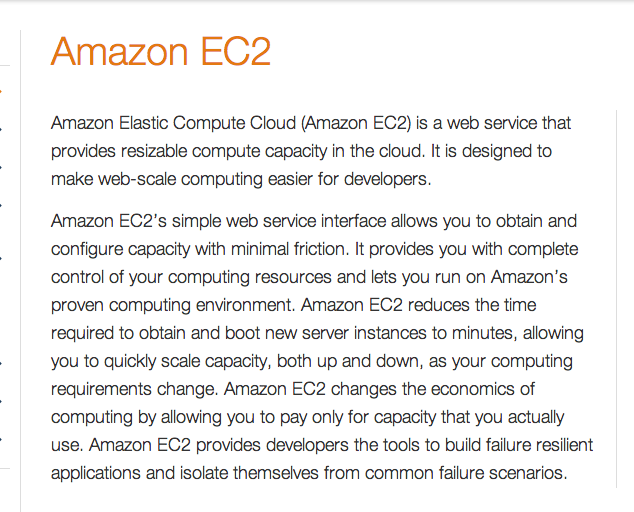
Amazon Ec2

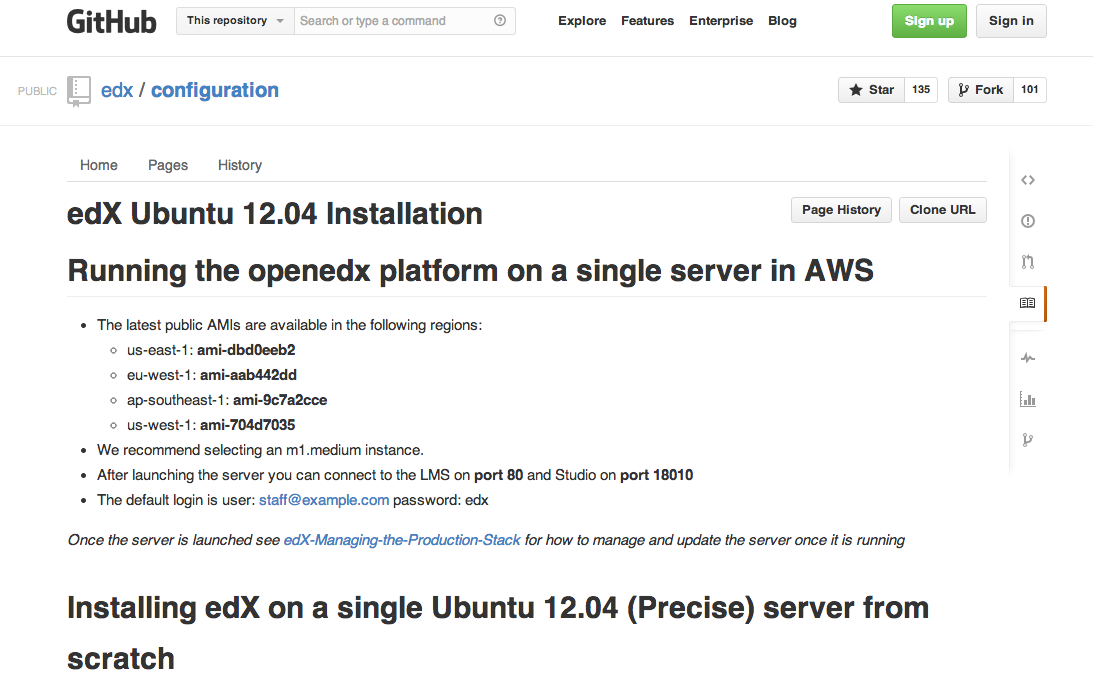
Turns out I didn’t have to go either route because I work with Timmmmy Wonder. I consulted with Tim about EdX and he checked out their GitHub configuration page and realized there was an instance of EdX available as a community AMI ( or Amazon Machine Image) on the Amazon cloud service EC2. Within minutes Tim configured and installed a test instance of EdX’s open source platform and mapped it onto a domain that our faculty could access within half-an-hour of our meeting. Wow, I thought script installers for web hosting were easy eight years ago.

EdX GitHib

So, we’ll run that instance for a few days and let the faculty explore the application. When they’re done we’ll shut it down—all at the price of a few dollars. How crazy is that? It works equally well for DTLT, UMW’s IT department, and the faculty because we can all get a sense of this application without dedicating too much time to a pilot install. That may ultimately happen if there’s interest, but for the time being an instance on Amazon EC2 is more than enough.

That’s agile EdTech. Don’t default to no when faculty come to you with alternatives. Provide quick and cheap possibilities to explore what’s available. Spend more time talking about how they’ll use it rather then worrying about the technical requirements. That will all come in time if the application makes sense for what they are trying to do. I am amazed how much this process seems like the next level of the web hosting experiment DTLT did back in 2004/2005.

Posted in experimenting, Instructional Technology | Tagged , , | 19 Comments

Archie, Veronica, and Other Old Gold Technologies

veronica-from-archieI’ve been having a lot of fun recently exploring old school technologies as part of The Internet Course I’m teaching alongside Paul Bond. Paul wrote an awesome post a couple of days ago investigating the file-sharing protocol Gopher. I’ve been doing some preliminary investigations into early web authoring initiatives as part of various universities’ online services from the early 1990s onward. There’s some really interesting stuff there, and that will be the focus of a follow-up post sometime this week and hopefully a presentation I give about old school university personal publishing spaces sometime soon. I was planning on talking about this at the Domain Incubator rescheduled for later this week in Atlanta, but I’m sorry to say Tim, Martha, and I won’t be attending because it has been cancelled yet again due to weather. Can you imagine an event cancelled twice in two weeks for winter weather in Atlanta? What are the chances? My heart goes out to David Morgen and Pete Rorbaugh, it really sucks.

Anyway, this post is a brief look at some of the remarkable primary documents Andy Rush gave me yesterday when he heard me musing about some of those early university web publishing spaces for the community. You see Andy Rush is old gold: he remembers, he was there. What’s more, unlike the rest of us, he saved the paper handouts people gave him about the web from 1994-1997 🙂 And I am oh so glad he did.

The first document I read yesterday was “Entering the World-Wide Web: A Guide To Cyberspace” by Kevin Hughes. Remarkably enough, Kevin Hughes is one of only six World Wide Web Hall of Fame Inductees. He might very well be considered the original edtech pioneer of web technologies having created one of the first campus web sites for Honolulu Community College, including a virtual tour of a campus museum. What’s more, his guide for understanding the World-Wide Web is a fascinating historical and cultural document.
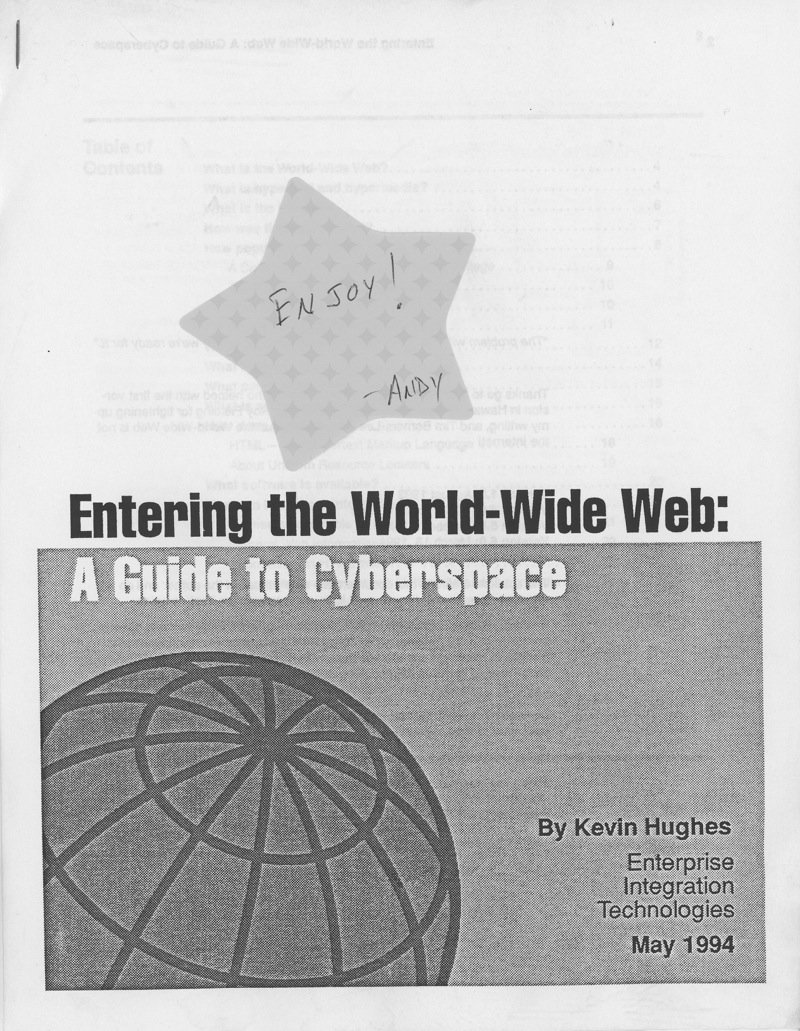
entering_the_world_wide_web_kevin_hughes

A scan of Andy Rush’s photocopied and stapled version of Kevin Hughes’ “Entering the World-Wide Web: A Guide to Cyberspace”

One of the bits from this guide that struck me right away was from the “How was the Web created?” section wherein it talks about how in 1992 Tim Berners-Lee “continued to speak on and evangelize the project”.  Even though it makes total sense that he would have to evangelize the web, at the same time it’s almost bizarre to think that was necessary from our historical vantage point. Just twenty-two years later the web seems so naturalized for us as a cultural artefact.*
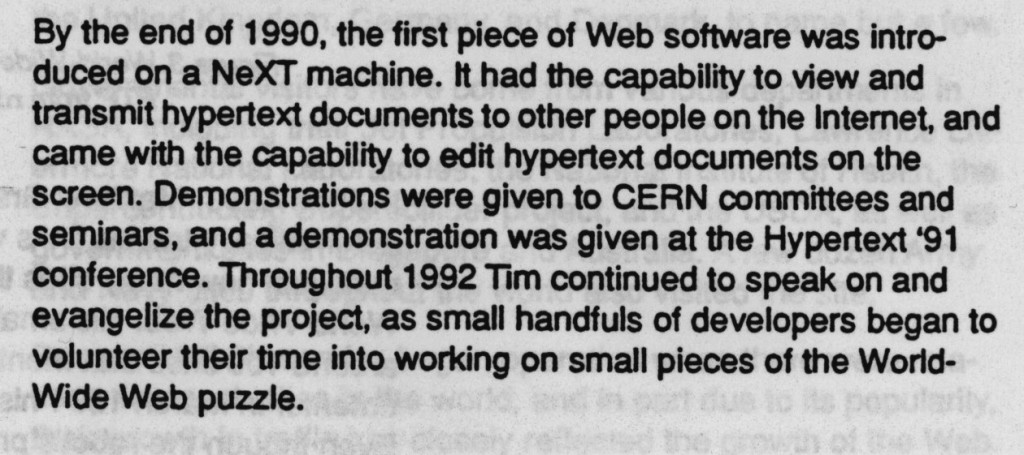
how the web was created

Another fact that reinforces Paul’s post about gopher holes was the traffic comparison (in bytes, mind you) between the two protocols between December 1992 and March 1994.
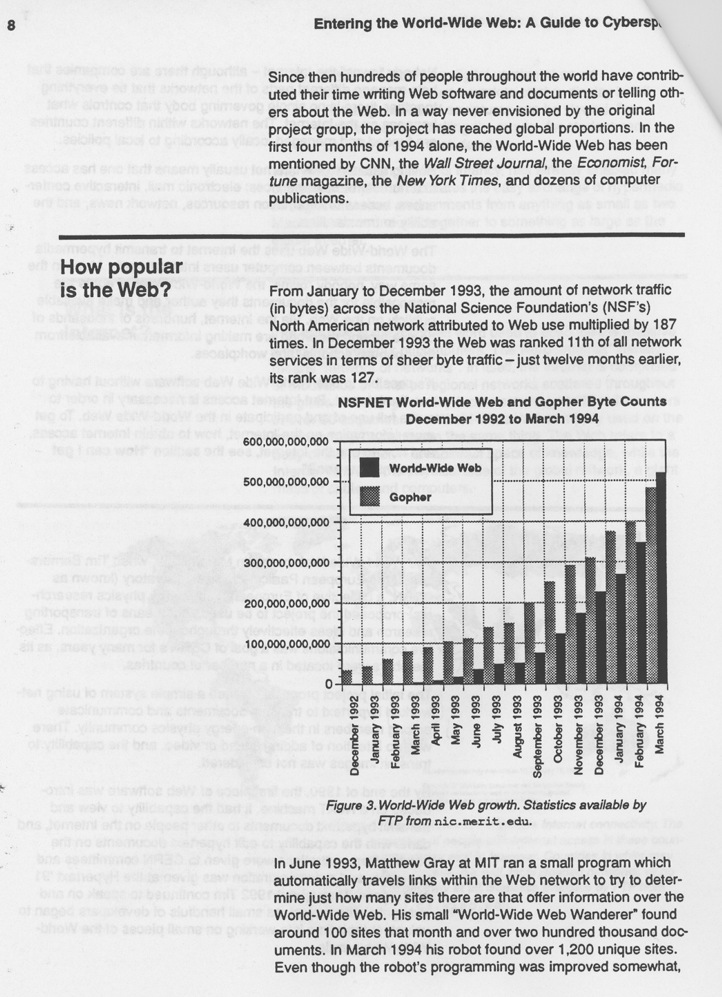
gopher_traffic

The web came on strong in very little time, although Gopher was only about two or three years old at the time. In May of 1994 Brian Pinkerton of the University of Washington ran his program called “WebCrawler” which found “over 3,800 unique Web sites.” What’s more, Hughes estimates the number of active users of the web around 250,000 to 500,000 in Spring of 1994. Twenty years later and that number is well over two billion? Wild. There is much more goodness in this guide, and I plan on exploring it in more detail over the course of the semester.

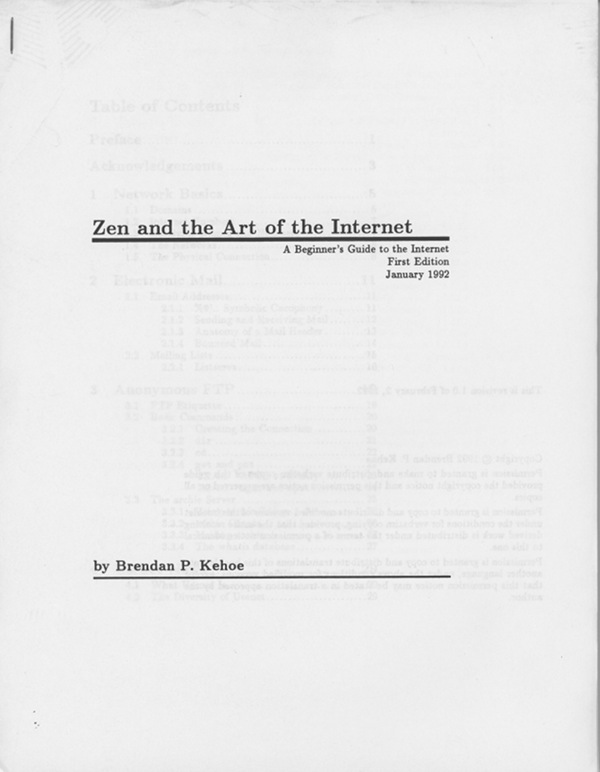
Another document Andy gave me was Brendan P. Kehoe’s Zen and the Art of the Internet: A Beginner’s Guide to the Internet.
zen_and_the_art_of_the_internet

Kehoe’s guide is crazy because it introduces an internet without the web—IS IT EVEN POSSIBLE!! He provides an overview of a whole range of possibilities from Electronic Mail to Anonymus FTP to Usenet News to Telnet. The section of this guide about Usenet is incredibly funny in that Kehoe can’t hold back his utter disdain for this  “news community.” Both of these guides are kinda like how-to zines for the intenret in the early 90s. It’s remarkable how many of these protocols and possibilities before of the emergence of the web have moved into internet oblivion. For example, the archie server was created by….

A group of people at McGill University in Canada….It was originally formed to be a quick and easy way to scan the offerings of the many anonymous FTP sites that are maintained around the world.

….

Currently, archie tracks the contents of over 800 anonymous FTP archive sites containing over a million files stored across the Internet. Collectively, these files represent well over 50 gigabytes of information, with new entries being added daily.

The archie server automatically updates the listing information from each site about once a month. This avoids constantly updating the databases, which could waste network resources, yet ensures that the information on each site’s holdings is reasonably up to date.

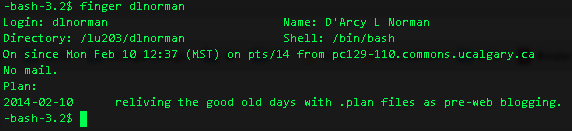
This talk about Archie reminded me there was another early search engine for Gopher files (Gopher isn’t even mentioned in Kehoe’s 1992 guide) named Veronica, which I thought was pretty cool in a pop culture kinda way. So Archie searches FTP files and Veronica searches Gopher files, easy enough to remember. D’Arcy Norman turned me onto “early blogging” using the finger protocol (an unfortunate name in many ways) which, unlike Gopher, made it into the Zen and the Art of the Internet guide.
BgIycf7CMAAb_fE

Another early Unix software that gets mentioned in this guide is Talk,  a chat program that was eventually superseded by IRC.

As you probably can tell, I have fallen into a “wormhole” of sorts with all of this, and Im having a blast. Speaking of which, the Zen guide also references some early cultural milestones of the internet, such as the Morris worm created by Robert T. Morris. This was one of the first viruses to be distributed on the internet. And the Zen guide discusses the details, which I’ve heavily excerpted below.

On November 2, 1988, Robert Morris, Jr., a graduate student in Computer Science at Cornell, wrote an experimental, self-replicating, self-propagating program called a worm and injected it into the Internet. He chose to release it from MIT, to disguise the fact that the worm came from Cornell. Morris soon discovered that the program was replicating and reinfecting machines at a much faster rate than he had anticipated—there was a bug. Ultimately, many machines at locations around the country either crashed or became “catatonic.” When Morris realized what was happening, he contacted a friend at Harvard to discuss a solution. Eventually, they sent an anonymous message from Harvard over the network, instructing programmers how to kill the worm and prevent reinfection. However, because the network route was clogged, this message did not get through until it was too late. Computers were affected at many sites, including universities, military sites, and medical research facilities. The estimated cost of dealing with the worm at each installation ranged from $200 to more than $53,000.

So awesome, and this is just the beginning of my travels through various moments of what I hope becomes a class that evolves into a broader cultural history of the internet. It’s five weeks into the first semester of teaching the class now, and I am starting to get visions of what the Internet Course might be.

__________________________________________________

*One thing to keep in mind is that the online version of the “Entering the World-Wide Web: A Guide To Cyberspace” only contains two sentences in about “How the web was created?” versus the four paragraphs in the May 20th, 1994 version of the printed guide Andy gave me. Not sure if there are other versions on the web, but this is a heads up to that discrepancy.

Posted in The Internet Course, Uncategorized | Tagged , , , , | 5 Comments

TIC104: Learning from Internet History

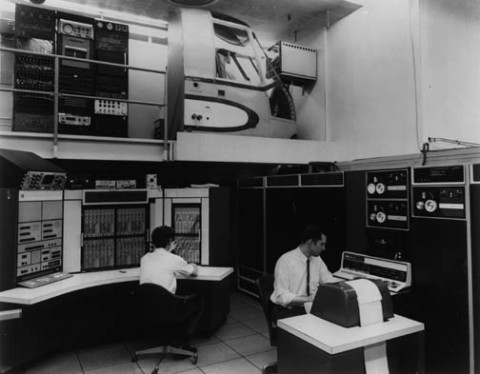
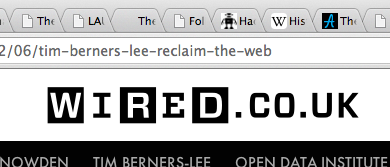
pdp-10This week in The Internet Course we started discussing the topics the class has been researching, summarizing, and conceptualizing for the first three weeks. Five students made up a panel that talked about the History of the Internet from J.C.R. Licklider and the development of ARPANET through Web 3.0—if there even is such a thing. It’s an interesting moment to talk about the history of the web when it’s creator, Tim Berners-Lee, is calling for us to reclaim the web from corporate monopolies and nationalized centralization (maybe that’s Web 3.0).

Screen Shot 2014-02-08 at 3.05.40 PM

On Tuesday evening the students did an excellent job of framing the establishment of ARPANET. They introduced some of the foundational elements undergirding its emergence. Licklider’s Man-Computer Symbiosis article that helped an entire industry re-imagine itself as more than building calculation devices, the establishment of computer time-sharing, and the invention of packet-switching networks (invented by both Paul Baran and Doanld Davies separately during the 1960s). They also covered the various applications for which the internet was imagined: as a re-imagination of the postal service (Donald Davies, National Physics Lab, UK); a decentralized communciations network that could trigger a counter-strike in the event of nucelar attack (Paul Baran, Rand Corporation); and the rather pragmatic need to have various machines talk to one another over a network (Bob Taylor, ARPA).

The fact that the internet was born from several distinct thinkers during the 1960s at roughly the same time is fascianting, and even better is they all converged and collaborated at the end of the decade to focus on accomplishing the herculean engineering feat of building a the beginnign of the internet: ARPANET. It’s a remarkable story, and ehen we teach this course again I’ll recommend making sections of the 1998 1996 history Where the Wizards Stay Up Late required reading (thanks Alan). The panel did the early history of the Internet justice, which was very cool given they based the discussion entirely on their own research and resources. What’s more, Lauren Brumfield ended with a provactive question that led to some excellent discussion: was the internet the greatest invention of the 20th century? Suggesting other possibilities to cosnider: the car, the theory of relativity, the airplane, the atom bomb, etc.

On Thursday the panel was reconvened  to discuss the history of the internet from the 1970s onward. We covered quite a bit during class, but one of the issues we ran into is I hijacked the panel. Facilitating a panel does not mean taking it over 😉 We seeded a few questions and subjects worth covering in an email before class, but when I pushed the questions back to them and there was anuncomfortable silence for even a minute I took over. I knew I was doing it, at the same time it was hard to stop. The push to make sure we “cover the history” seemed somehow more important that facilitating a discussion in the course which, done well, would be far more generative. How long have I been doing this? You’d think I would know better.

Paul and I have been working hard this year to restructure our courses to focus around students regualrly sharing what they’ve learned by running the sessions fairly regularly. It worked quite well in the True Crime course last semester. At the same time, it’s still hard for me to let go. I find it so easy to slip back into the role of taking control and framing the history for them, partially from excitement and partially from a necessary discomfort I want to resist. I struggled with that on Thursday night when we discussed the various internet protocols that emerged during the 70s and 80s, as well the various stages of the web, i.e. Web 1.0, 2.0, and the ellusive 3.0.

So, rather than crying over spilt milk, we asked the class at the end of the session how we can make the panel approach better. What’s awesome is they let us know. Here are there tips that we are incorporating for next week when the “How It Works” panel discuss the technical infrastructure of the Internet:

  • Provide specifics about the topic we want covered in the panel
  • Provide a space (such as a Google Doc) where panelists can share some thoughts/ideas  they want to cover
  • Make sure the panelists share their discussion questionwith the class to invoke broader participation (publish those discussion questions for everyone before the panel)
  • Stop intervening! Let it flow, we can always cover issues that are missed as the class proceeds, make it about discovery not coverage (I kinda intuited this one 🙂 )

I’m happy with this, and I think it’s solid advice. I love the way we are running this course, and I have to let go a bit and have faith that experiments in a course like this are valuable and necessary. That said, I’d love here from anyone enrolled in the course who has more advice or feels differently abotu any of it. Teaching is the greatest thing in the world, but it can sure be hard sometimes.

Posted in The Internet Course | Tagged , , , | 3 Comments

The Afterglow of Kilobyte Age Art

I came across the keynote presentation Bruce Sterling delivered at the transmediale conference wherein he discusses the afterglow of internet rubbish that is the basis of some of the most interesting digital art of our moment. His talk ranged far and wide—which is why they rule—covering web surveillance, corporate concentration, and the realities of the web we inhabit that are themselves temporary. The future afterglow of discarded data is the leftovers of who we once were and what we once did online.

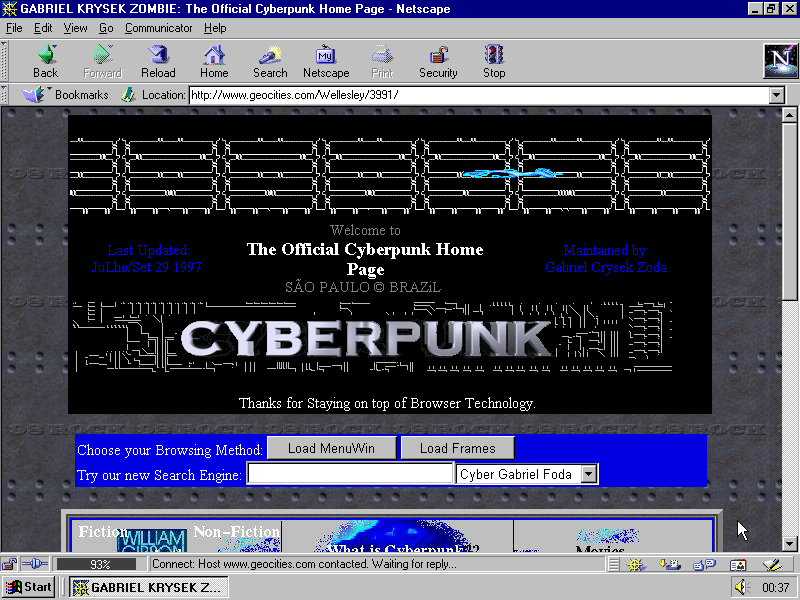
My favorite part was when he mentions Olia Lialina’s and Dragan Espenschied’s One Terabyte of Kilobyte Age Geocities archival art project. I’ve written about this before on the bava, and Sterling’s framing it as an example of the afterglow is awesome, it points to the fact that the history of the web is both rubbish and art at once—mementos from an arguably transformative moment in time on a site that was one of the earliest planned communities on the web. What was a cool coincidence was that on the same day I found the video of Sterling  the One Terabyte of Kilobyte Tumblr posted the following screenshot:

Cyberpunk Geocities Site

Something which Bruce Sterling picked up on and tumbled as well. It’s interesting because during The Internet Course I taught last night, one of the students was arguing, in terms of web history, Geocities was very much Web 2.0—easy, community driven, and place to create. Not sure about the easy when I used it in 1995 (although it was easier), but the idea of Geocities as a space to actually code a bit on the web and forcing you to understand some basic protocols like HTTP and FTP was a reality. It’s also crazy to be thinking of Geocities as part of the Afterglow, it’s recent history but art at the same time, the relics of a moment I see in my Tumblr on a daily basis are some of the most compelling images in my dashbaord. I can’t help but think about that moment, the afterglow of a web which has changed and will continue to change. It’s not necesssarily the beginning or end of anything, and that’s actually reassuring sometimes.

Add to the strange lattice of coincidence that also holds together the unvierse of Repo Man yet another thing: today is the one year anniversary for the One Terrabye of Kilobyte Age project. It’s all connected.

Posted in art, The Internet Course | Tagged , , , , , , , | 1 Comment