More on Upgrading to WPMu 1.3

As I already noted previously here, we have upgraded UMW Blogs to WPMu 1.3. Everything went smoothly on the surface, save for one rogue widget plugin I mentioned in the previous post. Well, as time goes on, other issues have emerged that are easily fixed but raised some interesting questions for me as I searched for the solutions.

Let me start with the relatively straightforward issue first. Certain themes, in this case the venerable MistyLook was encountering the following error after the upgrade:

“Warning: array_key_exists(): The first argument should be either a string or an integer in …/wp-includes/category-template.php on line 176”

Seems that certain changes in the categroy-template.php file are incompatible with this theme. There may be others, so I am doing a pretty thorough search, but so far I have found no other issues. The fix for this issue can be found in this forum thread, and I found that the fix recommended by farseas worked like a charm.

The above issue was pretty straightforward as is the fix, the next issue is a little more problematic for me because it raises some questions that I believe are pretty important to an open source community. I got an e-mail from Martha this afternoon letting me know that the Userthemes plugin (an essential one for us) was throwing a 404 error. I checked this plugin on the upgrade to make sure it was working, but I didn’t actually try and edit a theme, I just looked at the tab in the WPMu site admin area.

My grave mistake, this plugin depends on the theme-editor.php file, which to my great surprise is no longer a part of the source code of WPMu, which I searched on the WPMu trac here. Realizing this and now a bit concerned, I did a google search for the file name “theme-editor.php” and found the following ticket (#480) which suggests that this file is unnecessary for WPMu because it poses a security risk and has therefore been eliminated from the source code. Huh?!

What’s interesting about this ticket, however, is the brief discussion that follows. I think it is important so I will re-post it here:

RavanH: Is the file missing on purpose? If so, people should warned that plugin UserThemes? depends on the file and they should keep the one from a previous install. The 1.2.5 version seems to work, but haven’t tested fully.

Donncha: Yes, it’s missing on purpose. There is no reason why a theme should be edited through it. That User Themes plugin is a security risk if I’m reading the description at http://wpmudev.org/project/User-Themes it appears to allow any blog admin to edit the themes. As some comments on that page point out, those themes are PHP and you’re just asking for trouble installing that plugin!

RavanH: ok, i will have to stick with the old theme-editor.php then…
I can relate to the risk involved when the system is used for public sign-up. but please, let me assess the risk i take myself. to be clear: i am not working with wp_mu as a public service but only with a limited set of people that can be trusted to operate carefully when maintaining their blogs. is wp_mu only supposed to be used for free and unlimited sign-up???

Donncha is a programming maven, and the work he has done on WPMu is remarkable to say the least. At the same time, I have to say that I agree with RavanH to some large degree here. We are using the Userthemes plugin on a case-by-case basis, and it is really important for many of the sites we are doing in the controlled environment of UMW Blogs. Shouldn’t we be able to take risks with the application if it works for us? I think so.

Nonetheless, the fix is pretty easy, just get an old theme-editor.php file from the WPMu archived version and upload it to the wp-admin directory. Then replace the following line of code:
wp_die( "The theme editor is disabled" );

to this

if((get_option('ut_use_user_theme') == 0) || (get_option('ut_enabled') == 0)){ wp_die('Either you have not been granted permission from the site administrator to access the theme editor OR you do not have a usertheme as your active theme, theme editor will die while a system theme is active.'); }

This should work for the short term, and I hope possibilities like this for WPMu aren’t all dependent upon outdated hacks that are in and of themselves security risks.
Posted in plugins, UMW Blogs, WordPress, wordpress multi-user, wpmu | Tagged , , , , , , | 6 Comments

When We Were Kings (1996)

I just saw a clip from the documentary When We Were Kings on the Open Culture blog featuring the late Norman Mailer talking about the epic George Foreman vs. Muhammad Ali fight in Zaire. After partaking, I couldn’t resist re-blogging it. What an awesome documentary, I particularly like the part (not included in this clip) when the late George Plimpton claims that Ali is the author of the shortest poem in the English language: Me/We.

Posted in film, YouTube | Tagged , , , , , , | 2 Comments

WordPress Rich Comments! Plugin

The Rich Comments! plugin is by no means essential, and the code is still in its infancy. But its one of those plugins that I dig because it is ajaxy, unneccessary, and maybe even irrational given that we still don’t have a good way in WordPress, and the blogosphere more generally, to keep track of the comments we leave in various places. Despite all of this, check out the comments below for a demonstration of how this plugin allows for you to easily embed Flickr images and YouTube videos into the comments of your blog by simply grabbing their URL. You may even want to test it out.

Update: The Flickr part of this plugin, but you don’t use the static url that ends in jpg, just the URL where you find the image in Flickr, something like this: http://flickr.com/photos/umwcentennial/592828305/

The YouTube part of this plugin is not working, seems that the API is not translating very well, here is the error message I got on a video I embedded in a comment a few weeks back successfully:
Fatal error: Call to undefined function domxml_xmltree() in …/wp-content/plugins/wp-richcomments/services.php on line 61

I’ll have to look into this and report it to the plugin author. I guess if a plugin that depends on third-party services isn’t constantly updated it quickly becomes irrelevant.

Posted in plugins, WordPress | Tagged , , , , | 2 Comments

Collaborative Google Maps

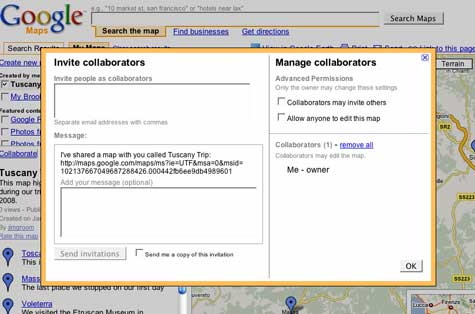
I have been creating a Google Map for my recent trip to Tuscany (still in its infancy), and while doing so I realized that Google’s My Maps now has a collaborate feature that allows you to add other users to the Map to help build it. This was a long time coming in my opinion, but glad to see it has arrived.

Google Maps Collaborate

I was also pleased to find that they are now including an embed link using an iframe. Google is pretty good about following the Web 2.0 golden rule: make it easy to re-use. And an embed link is often the best solution.


View Larger Map

Posted in google, Italy, maps | Tagged , , , , | 1 Comment

UMW Blogs Upgraded to WPMu 1.3

Well, it took long enough, but UMW Blogs is now running WordPress Multi-User version 1.3. We had to be a bit more careful with this upgrade because we are now supporting close to 800 blogs, so I actually took a page out of Patrick’s book (since I am on vacation and have had some down time 🙂 ) and set UMW Blogs up locally on my MacBook Pro –there’s a good tutorial being released currently for PC users here–but I used the M(ac)AMP option, and if I get a chance I’ll blog how I did it. It may be too soon to say, but thus far every thing seems to be running quite smoothly.

I did run into one issue that I think might be useful to others doing an upgrade. While the upgrade to 1.25a had some error messages dealing with vestigial multi-user plugins (or sitewide plugins that had been built into the core code), I had a similar error message for a regular plugin that was using widgets but was not compatible with WPMu 1.3x. The error message I received on one particular site running an incompatible plugin was as follows:

Fatal error: Call to undefined function wp_get_current_user()

and the file effected was

wp-includes/capabilities.php on line 446

If you see this error, chances are one of your plugins that also provides a widget is incompatible with the latest version of WPMu, keep in mind that it isn’t necessarily a mu-plugin as I found out after some trial and error. Also, read more about the details on the WPMu forums here. The particular plugin that caused the issue for me was a regular old plugin, in this case wp-contact, and once I deleted it the issue (what was only borking one blog) disappeared. What’s frustrating a little bit is that if you don’t have a good sense of the plugins you have made available on WPMu, you may have a hard time tracking down the culprit, which could be vexing.

On the bright side, this update fixed the Flickr Photo Album plugin’s uploading issues. So now when you install this powerful plugin (which you can see in action here), your uploading capabilities are no longer compromised -very cool. Moreover, there are a host of great new features with WPMu 1.3 as told by the WP Assist site (thoughts in italics added by me):

  • Better admin controls for the signup page. It can be disabled in various ways. (This is key!)
  • Upload space functions have been fixed. (I like it.)
  • The signup form is now hidden from search engines which will help avoid certain types of spamming.
  • Profile page now allows you to select your primary blog.
  • Database tables are now UTF-8 from the start.
  • If you’re using virtual hosts, the main blog doesn’t live at /blog/ any more.
  • The WordPress importer now assigns posts to other users on a blog. (This is huge in my opinion)

What’s more is that we now have tags to work with. The possibilities for tags working alongside categories will be integral to several projects I have talked about with a couple of professors for next semester, and I really can’t wait to start playing around with them. But that will have to wait until I return from my vacation within a vacation, four days in Tuscany starting tomorrow. Ciao and Happy New Year!

Posted in plugins, tags, UMW Blogs, widgets, wordpress multi-user, wpmu | Tagged , , , , , | 2 Comments

Mary Washington Centennial on flickr

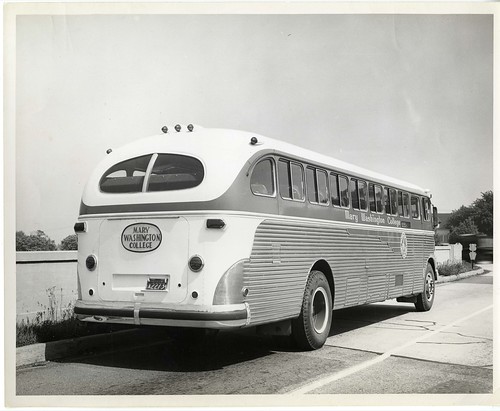
UMW’s centennial is on the Flickr bus!

MWC Bus on the Road

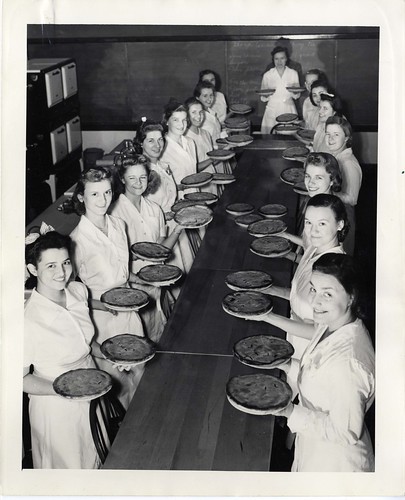
As 2007 comes to a close, the University of Mary Washington’s centennial year is set to begin. There has been much preparation for the centennial festivities, and the occasion has in many ways helped the university to focus on the importance of a digital memory for the institution more broadly. The Division of Teaching and Learning Technologies has found itself working alongside several other departments (such as the UMW Libraries, Publications, Public relations, and various others) to create a digital archive of images for the centennial celebration, which is now up and running and can be viewed here.

Jerry Slezak astutely managed this project, and he and the rest of the committee are responsible for all the heavy lifting. I just waited patiently as the archive became more and more robust with images and metadata to push for a little Web 2.0 flare.

Pie Making

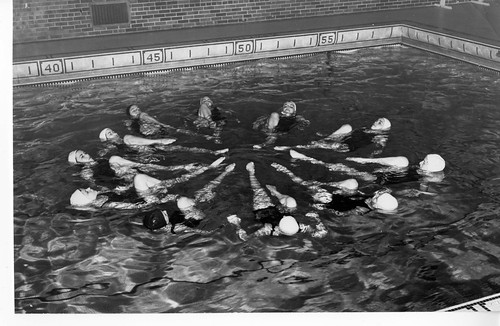
With the committee’s approval, we are trying a little experiment with a number of the centennial images we have scanned. We have almost 1,000 images in the UMW Digital Archive, which is effectively an extension of the library catalog for digital resources. We are now taking images from this larger collection and making them available on the UMW Centennial Flickr site. Each time we make a new image available to the public on Flickr–which is a regular occurrence–it is blogged through the UMW Centennial Photo blog (proudly powered by the world famous UMW Blogs 😉 ).

Now, one might ask, “Why three times the work? Why put it in a digital archive/catalog, upload it to Flickr, and then blog it?” Fair question, and I would answer in response, “Because it’s an experiment, Hondo.” In fact, it has been a rather quiet experiment that has been going on regularly for almost three months now. Since the middle of October we have been regularly releasing images from the centennial collection to the public on Flickr, then simultaneously blogging it on the UMW Centennial blog. There are now 54 images available to the public and, if all goes well, this daily five-minute tradition will continue throughout the centennial year.

MWC Synchronized Swimming Club

The logic behind utilizing a more sophisticated archive, Flickr, and a blog is that by putting these images on Flickr and subsequently blogging them, they become that much more easily found through search engines like Google. In turn, the Flickr images and the blog posts all link back to the original on the official UMW Archive which enables people to find the originals with all ther pretinent metadata through different avenues.

So, if you are working under the assumption that a large amount of Mary Washington alumni are going to search for information about the centennial on Google and that we want the work that has been done to be prominent, then the Flickr account and the UMW Centennial blog afford this visibility. When doing a search for UMW Centennial on Google both sites show up in the top ten.

And while I am increasingly convinced that is quite important to make the fine work being done at UMW more visible for those interested, the larger reason behind this experiment is to make these images available to alumni so that they can connect with the centennial experience no matter where they are. Whether by commenting on images or even sharing some of their own memories with us through Flickr comments, the blog, or by joining the UMW Centennial Flickr group (which would additionally allow them to share their images with us!), the diasporic lumni of Mary Washington can be a part of the celebration using freely available digital tools.

I’m not sure how this experiment will turn out, but thus far we have over 2,000 views on the UMW Centennial blog alone — and the centennial year hasn’t even started yet. The next year will surely tell whether or not the extra work was justified, but I have to admit that even if it didn’t bear fruit it has really been a ball being able to see so many of these unbelievable photographs.

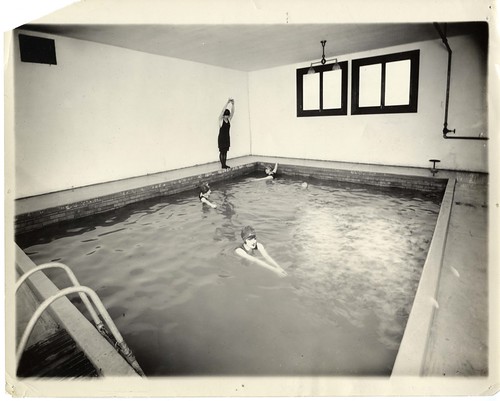
I mean who knew there was a pool in the basement of Monroe Hall back in the day?

Monroe Hall Swimming Pool

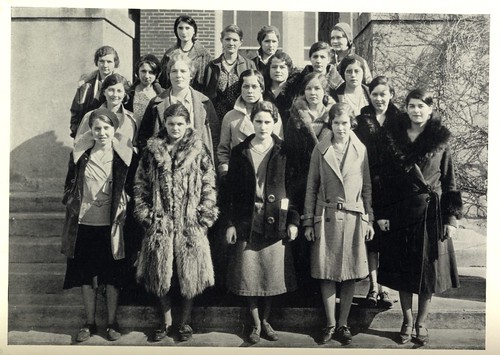
And how could the Raccoon coat worn by a proud member of the Grammar Group in 1931 not fascinate me?

Grammar Grade Group 1931

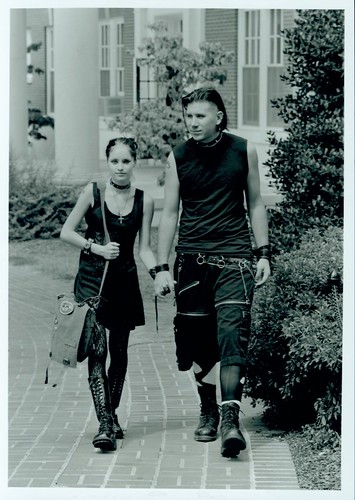
Or a more recent vision of Goth love on campus?

Student Couple Walking on Campus

I mean, c’mon, a project like this is unbelievably enjoyable. What’s more fun then spending a few minutes each day trying to imagine what was, while simultaneously wondering what might be?

Posted in Flickr, pictures, UMW Blogs, umw centennial | Tagged , , , , , , | 3 Comments

Graffiti: Reading Cultures on the Wall

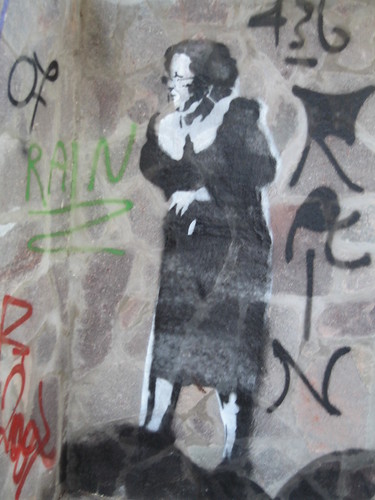
One of the things I enjoy about Italy is the graffiti. It is often very entertaining, if not as elaborate as the fine art found on the subway cars in NYC during the 1980s. In fact, graffiti in Italy has a long cultural history dating back to the Ancient Greeks and the Romans. Here is an entertaining bit from wikipedia on the subject:

The Romans carved graffiti on walls and monuments, with examples surviving in Egypt. The eruption of Vesuvius preserved graffiti in Pompeii, including Latin curses, magic spells, declarations of love, alphabets, political slogans and famous literary quotes, providing insight into ancient Roman street life. One inscription gives the address of a woman named Novellia Primigenia of Nuceria, a prostitute, apparently of great beauty, whose services were much in demand. Another shows a phallus accompanied by the text, mansueta tene: “Handle with care.”

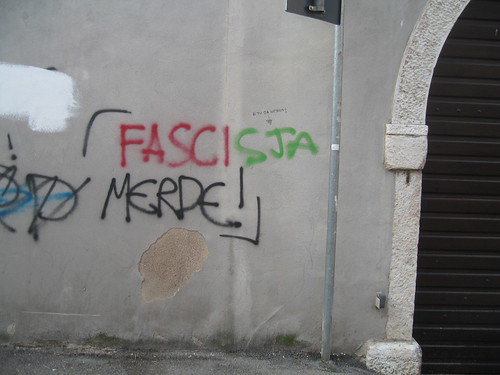
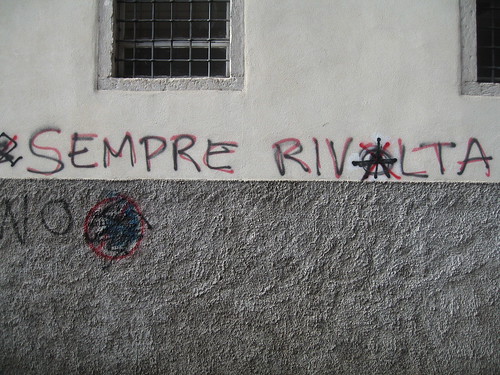
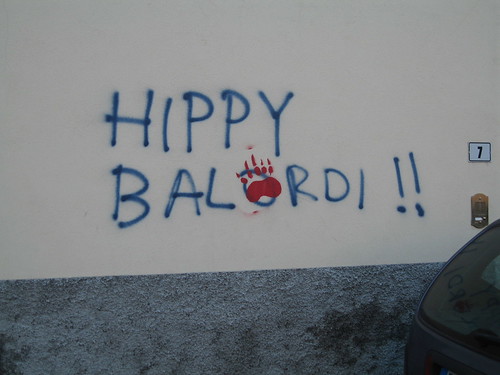
So, in honor of this tradition I have captured some more recent inscriptions on the walls of beautiful Trento, Italia. I haven’t seen any anti-US (or should I say anti-Bush — let’s hope the two aren’t so easily conflated) sentiments covering these ancient walls on this trip thus far, which is interesting because that was pretty much all the graffiti there was in 2003, 2004, and 2005. Nonetheless, the few political slogans I have found thus far have been just as much fun…

Fascist Shits!
Fascist Shits

Always Revolt
Always revolt

And my personal favorite…

Hippie Freaks
Hippie Freaks!!

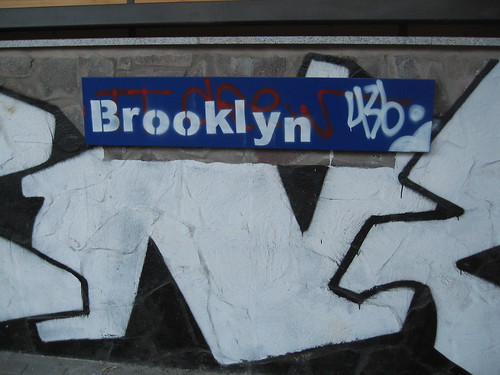
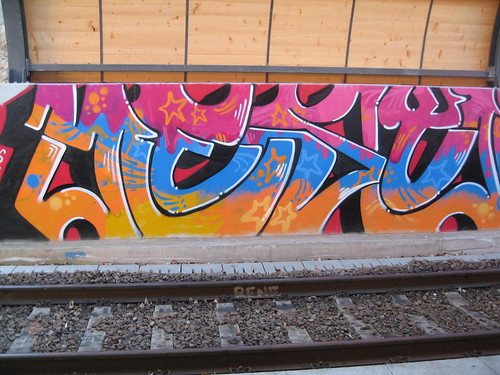
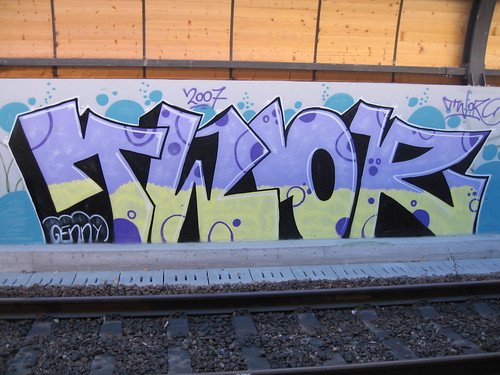
The above examples represent the more overtly political and far less elaborate forms of grafitti, by far the most common. Interestingly enough, however, a brand new commuter train station in Trento (San Chiara) right below Antonella’s family home has some elaborate, Brooklyn-inspired graffiti that reminds me a bit of home.

Brooklyn in Trento
Brooklyn in Trento

NYC Style Graffiti in Trento

NYC Style Graffiti in Trento

Bombing Tools (The Valsugana Bomberz Style)
Bombing Tools

NYC Style graffiti in Trento

I don’t know why I get excited when I see NYC-inspired graffiti accentuating a small, local train station in the Italian Alps. Is it just unchecked nationalism (or is it metropolitanism in this case?), or might it be the strange notion that US popular culture might have some interesting intersections that move beyond (or at least adjacent to) global capital in these dark times.

Posted in images, Italy | Tagged , | Leave a comment

Am I a Community-Based Learning Network Specialist?

I find myself coming back to this question a lot as the semester has come to a speedy close. Having a bit of time to reflect on some of the work we accomplished at UMW this semester, I keep on wondering why I feel my job has changed. In fact, on the surface it hasn’t changed a bit. I work with faculty to think through the possibilities of various technologies in their courses, while also researching and experimenting with various open source tools that may have a bearing on the academic work of UMW, in short an Instructional Technology Specialist. As an added bonus, I have been able to present some of these experiments at conferences, while at the same time blogging just about everything I can get my hands on.

So what’s so different? Well, I don’t know precisely, but I found that this semester I was focused much more on stewarding a community of sorts than thinking about all the technology tools available. I have been less and less interested in discussions of how Facebook, Twitter, Drupal, WordPress, etc., may change education (though I still follow and engage them regularly), and much more interested in watching a community emerge from a simple blogging pilot. Much of my fascination with this position in the first place was premised on exploring ways to communicate about things that interest me. And, as it happens, blogs, wikis, video, audio, images, and other modes of discourse in this virtual space fascinate me to no end. Blogging was my entrée into this world, and the community of people who I follow regularly convinced me of the unbelievable intellectual power of such a distributed learning network.

Ironically, however, the community I physically work within initially seemed a bit more abstracted. While I knew exactly what innumerable virtual colleagues like Brian Lamb or D’Arcy Norman were thinking about or imagining at any given time, I couldn’t begin to fathom what a majority of the faculty and students I encountered regularly were doing in class.

That reality shifted dramatically for me this semester because of UMW Blogs, but not as an example of a particular technology tool but rather as an experiment in community building. Now this may sound ridiculous coming from me, WordPress fanboy extraordinaire, but at the end of the day WPMu was one way to skin this cat. And while I have acclaimed its strengths vociferously, I am certain that the true power was in engaging the community, which DTLT as a division can take partial credit for while the other part is reserved for switched-on UMW faculty at large.

As part of this team, my self-appointed mission was to see this publishing platform through to its illogical extreme. I spent most of this semester reading the UMW Blogs sitewide posts, comments, and pages RSS feeds in my Google Reader, commenting on seemingly innumerable posts, and featuring blog posts I thought were fun or interesting (loosely borrowing from Stephen Downes, who uses his OLDaily to frame his thoughts and reflections on happenings within the EdTech community on a regular basis, creating an extremely effective and powerful hub of information). I while this approach to the community on UMW Blogs was not overly systematic, I had a quite controlled community with which to share my ideas and opinions. And because I am not necessarily interested in the role of judge, I used my constant scanning of the community as a way to continuously remind people on UMW Blogs that I was reading and thinking with them, and there is no question I got back far more than I gave. So, what’s my role? Is such a job sustainable? I worked with more faculty than ever this semester and far more students than I could heretofore have imagined. I didn’t come offering expertise in any one area, but commented on their work with encouragement, excitement, and enthusiasm, all of which was genuine. I was taking everything I had gained from the EdTech blogosphere and channeled as much as I could of it into UMW Blogs.

More than that, it has been some of the most enjoyable labor I have ever exerted earning a living up and until now. Tracing thoughts from one blog to another that range from uneven to incoherent to intensely thoughtful to wildly creative to downright brilliant. I read about as much as I ever have before (albeit differently), watch more online videos, and spend more time writing than I have for any other job. As a college grad this was kind of my dream position, right? “Read a lot of interesting stuff, watch videos, look at images, make connections and discuss all of these things nicely with others.” Who would pay you to do that? Well, perhaps next to nobody, but for those working in a university setting generally, and in instructional technology more specifically, the possibilities have never been more apparent to persuade, create, promote, foster and steward such dynamic academic community-based publishing platforms. So, in the end I wonder if it was ever really a blogging pilot or just an ongoing exploration of the possibilities of imagining the changing nature of community-based learning networks in the 21st century. So sometime soon, if all goes well, I may have to change my job title but, then again, why? — for, to bastardize Kierkegaard, to label what I do is to negate it.

Posted in experimenting, UMW Blogs | Tagged , | 2 Comments

Portare fuori il cane…

…or “Walking the dog” Italian-style.

The extent of social services runs deep in Italy. And I had the opportunity early this morning to experience to what degree a civilized social system can make the quotidian chores of life easier and more pleasant. Take, for example, walking the dog, a relatively simple process that most folks in a wide variety of cultures are familiar with. But let me ask you this: does your local municipality provide you with state-of-the-art doggie bags for the more sensitive parts of any dog-walking trip?

Here in Trento, my first household charge was to walk my in-laws’ dog, appropriately named “dogie” [sic]. I found this chore to be far more pleasurable and civilized than most of those folks I see in the US doggedly trailing after their canines with the old re-usable plastic bag from the local grocery store chain. Take a look at what style and sophistication the region of Trento provided me with this morning free of charge.

Italian Dog Bags

Italian Dog Bags

Ahh, the bella vita in Italia.

Posted in Italy | Tagged , , , | Leave a comment

Watched Airplane!…

…in preparation for the trip to Italy tomorrow, which will begin with eight hours on a plane with two small, riotous kids.

I wonder if our captain will prove so engaging? Off color I know, but without question some of the best lines ever captured on film.

Posted in film, fun, movies | Tagged , , , | 4 Comments