ds106 Summer Session: Camp Magic MacGuffin

Image credit: Summer Camp

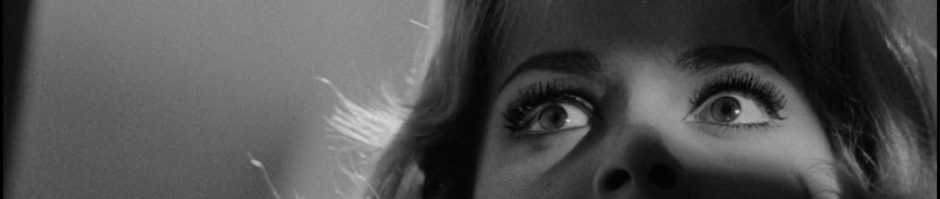
As Alan Levine has already blogged, ds106 is running again this Summer and it should be a blast. It’s a 10 week session being co-taught by Martha Burtis and Alan, and it promises to be insane. There’s a Summer Camp theme (Camp Magic MacGuffin) inspiring this iteration which promises that your stay will be prove cool and comfortable over a 10 week session rather than being crammed into 5. I’ll be taking the class as a open, online camper myself because I have a lot of creative catching up to do, I’ve been wanting to focus intensely on my image and video editing skills—and there’s no better time than the Summer for such fun.

The class is fully online and it starts May 21st, so if you’ve been considering doing something fun and creative this Summer it might be a good time to signup for ds106 and see what happens. No pressure as always, but this is gonna to be a fun, intimate cohort and it’s an excellent opportunity to learn a lot, share more, and loop into a community of creative energy. If and when you register on the ds106 site be sure to select the Camp Magic MacGuffin affiliation and include your blog URL, twitter handle, etc. in the profile fields. Once you’ve done that, they’ll be sure to loop you in on the action as the Summer fast approaches. Hope to see you at camp in a couple of weeks.

Posted in digital storytelling | Tagged , , | Leave a comment

The Educational aPOPcalypse in 25 Animated GIFs

Image credit: “Westbrook Train Wreck (LOC)”

It”s been a busy week closing up this semester’s ds106 course, but I figured I should blog about my TEDxNYED presenting experience before it fades into memory for good.

I was trying to experiment wildly with this one because I had the impression that what made TED talks at all interesting was that they were presented in a compelling fashion, to that end I created 25 animated GIFs that I would use to animate my talk. It’s no surprise to any regular reader of bavatuesdays that I love me some animated GIFs, but this presentation choice was also premised on the brilliant location of the conference at the American Museum of the Moving Image in NYC—which is in many ways all about the animated GIF. The whole museum is steeped in the 100 year, popular culture that brought us to the aesthetic of the internet—so much so that there was an exhibit dedicated to the animated GIF in the lobby! Seeing this I was even more hopeful my presentation would resonate. I have a lot more to say about the museum, but I’ll save that for another post.

I think my presentation went pretty well in the end, but not because it was necessarily good or insightful—in fact on those counts it was average at best. What worked was a sense of being there with the audience, a connection that was pretty awesome and that I still get goosebumps thinking about.
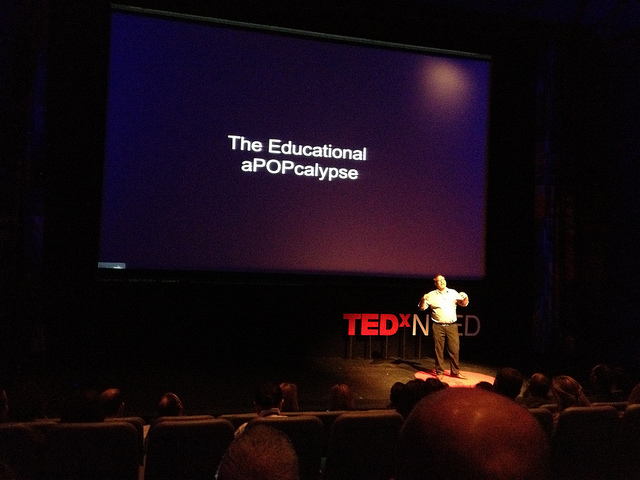
Image credit: Mikhail Gershovich’s “Jim Groom presents…”

But that is a bit abstract so let me try and lay it out for you. I had my 25 GIFs cued up in a Google Presentation and I was given a remote and told to go out there and break a leg. Only problem was my slides wouldn’t move, I was trying to move them while simultaneously dancing on stage in hopes that someone in the control room would bail me out, but after what seemed an eternity or two (which in reality was a minute or so) I dug in and realized I had to make my point without the slides. I was kind of excited about getting over the potential meltdown; it was pretty scary for about 10 seconds there, I was making no sense and obviously flailing. And just as I started to get a rhythm and do the presentation through my own acted out versions of the animated GIFs my slides came back to life. Now by that time my whole narrative was thrown off almost entirely, but at the same time the audience’s generosity was palpable. I could feel they wanted to laugh, they wanted to encourage me, and they wanted to have fun. They were sympathetic to my flailing, and the potential nightmare of the experience turned into a pretty amazing connection with a faceless group of people in a darkened auditorium that taught me something about the idea of performing, being there, and speaking to, not at, a room. I’m pretty sure none of this will come across on video, and the train wreck that it was is the train wreck that it will be for most on the outside looking in, but at TEDxNYED last weekend there was a truly kind and open audience that embraced the chaos and as a result we had a number of laughs over a 9 or 10 minute span—I cut it a bit short to stay the bleeding.

A few things I loved about the event was the venue (AMMI rocks!),  the opportunity to experiment with the craft of presenting, and an occasion to hang out with the great Mikhail Gershovich (who was amazing!) in the AMMI exhibits during the afternoon (more on that soon!).

What follows are the 25 animated GIFs along with a  brief explanation of my points. This presentation really wasn’t delivered this way, but I will try some version of this again, and I am putting it here as both a way to credit all the GIFs as well as a way to keep the resources all in one place and accessible. Take the jump for the GIFs….

Continue reading

Posted in digital storytelling, pop culture, presentations | Tagged , , , , | 12 Comments

UMW featured in ELI’s 7 Things about New Learning Ecosystems

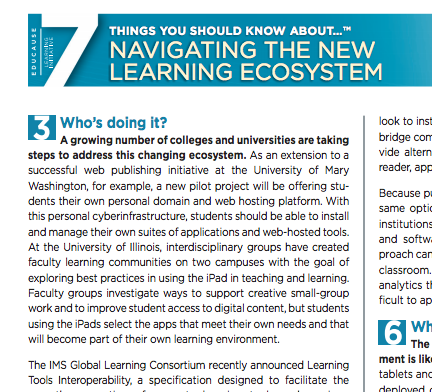
UMW is featured in this month’s Seven Things You Should Know Series by ELI focusing on Navigating the New Learning Ecosystem. What’s interesting is that this is not the first time UMW has been featured in the 7 Things series, in fact it’s the fourth time since 2009. We were featured in the article on PLEs, WordPress, and MOOCs —and that is certainly cool and I am excited and all that. But what confounds me is whenever UMW staff and faculty submit presentations to ELI’s annual conference we seem to be on the pay-no-mind list. If we’re the innovators ELI seems to regularly have said we are again and again for the last three years—and I think we are all that and more—then start showing us a little love.

UMW is kicking major ass in the Instructional Technology field right now—and has been for years, no circling the drain here—and the Domain of One’s Own is going to turn it all up to eleven. If you want to spotlight a university CIO right now, turn your eyes to UMW’s Justin Webb who has the vision and willingness to experiment with all this and actually make it happen at Mary Washington. Is ELI looking for a Rookie of the Year instructional technologist? Get a load of the work Tim Owens has done to bring the pieces for a domain of one’s own together for this to be a more than just a dream—all this while balancing live video streaming on the cheap and makerbot madness! There is a new Sheriff in town when it comes to instructional technologies, and her name is UMW’s DTLT. RESPECT OUR AUTHORITAY!

Posted in dtlt, experimenting | Tagged , , , | 2 Comments

The 7th Voyage of Sinbad

On Saturday, May 5  at 2 PM The 7th Voyage of Sinbad (1958) is playing at the Library of Congress, Packard Campus in Culpeper, Virginia and Miles and I are going to see it. That’s final. I just called to make reservations, and this blog posts stands as a testament to my steadfast dedication to all things Ray Harryhausen, plus it is time to hand the love of animated monsters down the line.

Posted in movies | Tagged , | 3 Comments

Civil Rights Leader James Farmer’s UMW Lectures Online

“The James Farmer Lectures: Group Portrait 1” by ModernSelkie on Flickr

More than five years ago I started working with UMW’s archivist Carolyn Parsons to try and digitize James Farmer’s video lecture series recorded here at UWM in 1983. The lecture series was pretty awesome, and it basically revolved around James Farmer, one of the greatest orators of the 20th century, re-telling his compelling experiences as a civil rights activist in the South during the 1960s. I dropped the ball on that project a long, long time ago, but thankfully for everyone Jeff McClurken’s and four of his students in Adventures in Digital History class didn’t.

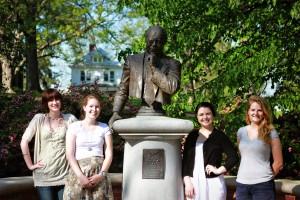
Laura Donahue, Michelle Martz and Caitlin Murphy and Kelsey Matthews archived, transcribed, and contextualized 13 of Farmer’s lectures from 1983. What’s more, they’ve created what is arguably the single best resource site I’ve yet to see on UMW Blogs: http://jamesfarmerlectures.umwblogs.org/

The vertical hold on the VHS tapes with the first 4 lectures were in such bad shape that they’ve been shipped out for professional preservation, however the audio has been captured and archived. The other nine videos are working perfectly, and I recommend you do yourself a favor and listen/watch to this legendary figure talk about Civil Rights during the 60s—it is truly amazing stuff.

Posted in umw, UMW Blogs | Tagged , , , , | Leave a comment

Sarah Kountz is a ds106 Kung-Fu Master

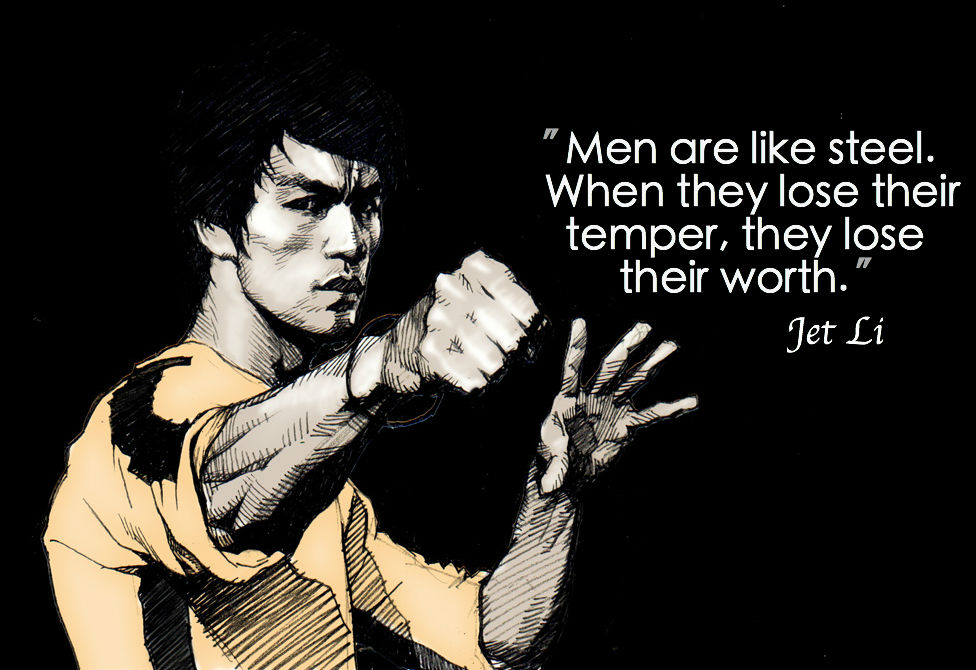
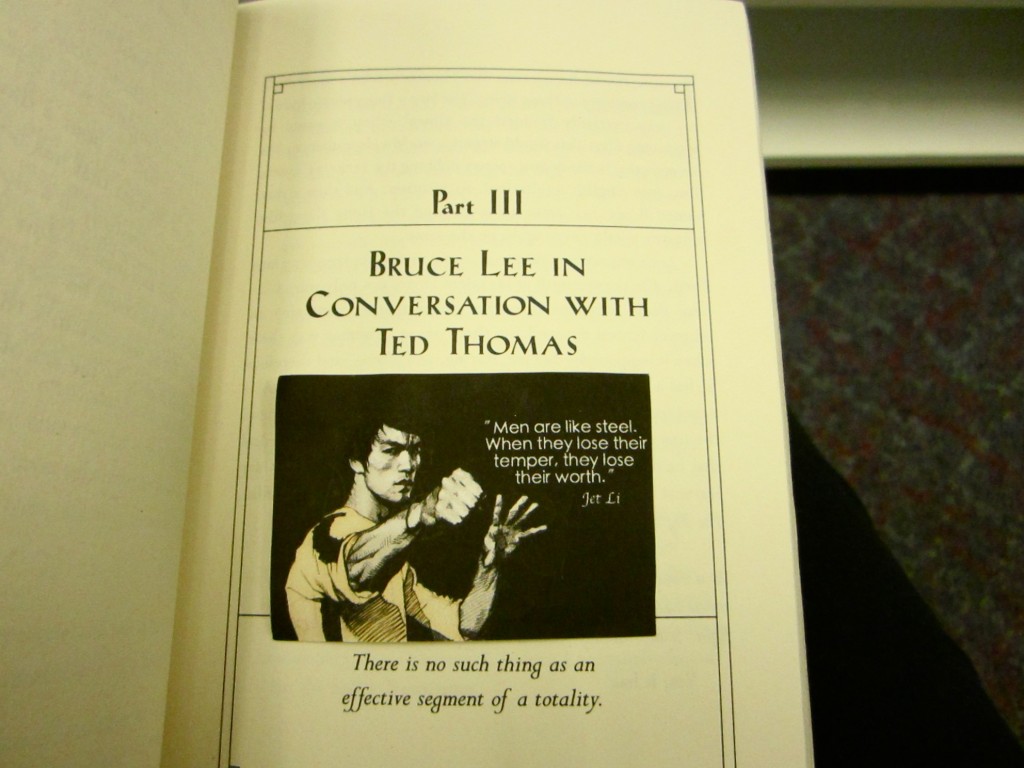
Sarah Kountz may be the most consistently creative student I’ve yet to see in #ds106. The class has been over for her for more than a year, but she keeps on going with regular assignments of awesome. Take a look at her post yesterday in which she attributes a Triple Troll quote by Chuck Norris to Jet Li (in honor of it being his birthday) and prints it out alongside an image of Bruce Lee. The kicker (no pun intended) is that once printed out, she placed it in title page of a shelved library book about Bruce Lee in hopes that someone will discover it sometime.

Isn’t this brilliant? Incorporating physical acts of creativity in space for others to discover is an amazing twist on the online creative culture movement right now, and I love the implications.

Posted in digital storytelling | Tagged , | 1 Comment

Proto-MOOCs Rock!

Steve Kolowich of Inside Higher Ed wrote piece on #ds106 titled “Proto-Mooc Stays the Course”, and what I enjoyed about this article is he actually took the time and energy to try and get his head around the multi-headed hydra that is ds106. In the original conversation Tim Owens, Alan Levine, and I had with Kolowich the focus was on the Kickstarter but he got more and more intrigued by the whole enterprise of ds106 as a community as well as an alter-ego to the venture-capital driven MOOCs.

As a result this article wrestles with with capturing the spirit of the course which is very much about a communal design for a course that does erase power, but rather draws attention to its limits. What’s more, it incorporates the voices of George Siemens and Dave Cormier for a more nuanced idea of what these “proto-moocs” are all about and where and how they started. What’s more, it helps re-affirm the idea for me that we’re doing this as a community—and I am referring not only to Siemens and Cormier, but also Downes, Wiley, Couros who experimented wildly with the concept back in 2007 and 2008—and while folks may and shouldhave disagreements, different approaches, and varying levels of patience for popular culture :), it’s been quite a rich and rewarding community for me to be a part of, and it would be impossible to learn from and build upon any of the work that’s come before if they all didn’t share the process so freely and openly—which for me is still at the very heart of what makes the edtech field great. It’s been a special moment to be part of this field, and I am more than proud of what this radical little sliver of the open web is doing right now to re-imagine education. Now if you were to ask me if it’s “For better or for worse?” I would say that still depends to some degree on us, or maybe I would just refer you to Brian Lamb’s blog ;).

Posted in Uncategorized | Tagged , , | 1 Comment

Endings and Possibilities: Life after ds106?

Tonight marks the last time I teach ds106 officially at UMW for a while. I’ve taught it six times in two and half years, and it’s become more awesome than my wildest dreams. At the same time, it’s time to “step aside” (at least from the role of instructor, I can never leave the community—it’s #4life) and let others experiment wildly on a theme. ds106 is nothing if not a course that needs to be re-appropriated, remixed, mashed up, and re-imagined. Martha Burtis and Alan Levine are ready to take it to the next level this Summer in a 10 week course starting May 21st and I’m locking in for the ride.

I really want to be on the student end of the equation this Summer. I’ve been focusing so much on organizing and keeping up with the class—which I failed at a bit this semester—that I haven’t been creating stuff, learning new skills, and generally practicing what I preach. I’m looking forward to engaging both the UMW students and the open community without some of the administrative overhead, but more importantly I want to have a bit of creative fun this Summer.

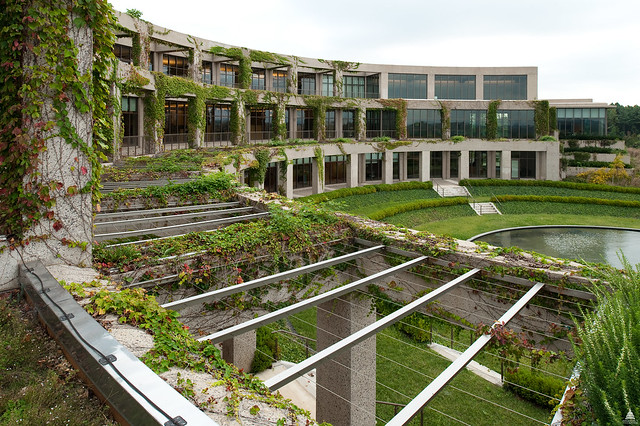
Image credit: "Packard Campus for Audio-Visual Conservation" by USCapitol

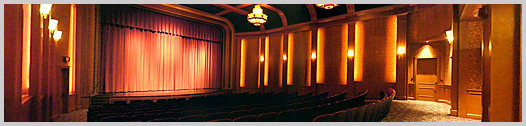
I’ve also been thinking a lot about an open, online film class in UMW’s American Studies program (or maybe somewhere else?) that I want to teach next Spring and I think it’s high time I did the legwork over the next few months. The rough details of the class are as follows: teach an online class about film history, aesthetics, programming and archiving in conjunction with the Library of Congress’s Packard Campus for Audio-Visual Conservation just 40 minutes down the road in Culpeper, Virginia. The class would examine film history, genre study, as organize a few scheduled classes on site at the Packard Campus to meet with their archivists, copyright folks, programmers, etc. All the discussions around the films, history, genres, etc. would be done in the open and online, and the idea would be for the class to build up to programming an entire month’s worth of films in conjunction with the LOC Packard Campus Theatre (if they agree, which is still a very big IF). What’s more, each of the students would present on a particular film in front of a live audience before the the movie starts. How sick would that be? It is still a pipe dream, but I can dream, right?

Just thinking about the rough outlines of the course, I dig the way in which the online and physical are interfacing in ways that seem more focused on seeing and doing specific things in physical space while preserving the discussions for the distributed, online venue—kind of an anti-flipping of the course experience 🙂  You can get a sense of how varied and immense the audio visual archives are by just glancing at this month’s schedule here, this next month alone they have Solaris, The French ConnectionAndrei Roublev, The 7th Voyage of Sinbad, and much more—they have everything!

Posted in digital storytelling | Tagged , , , | 10 Comments

Dawn of the Dead and Road Warrior Animated GIFs

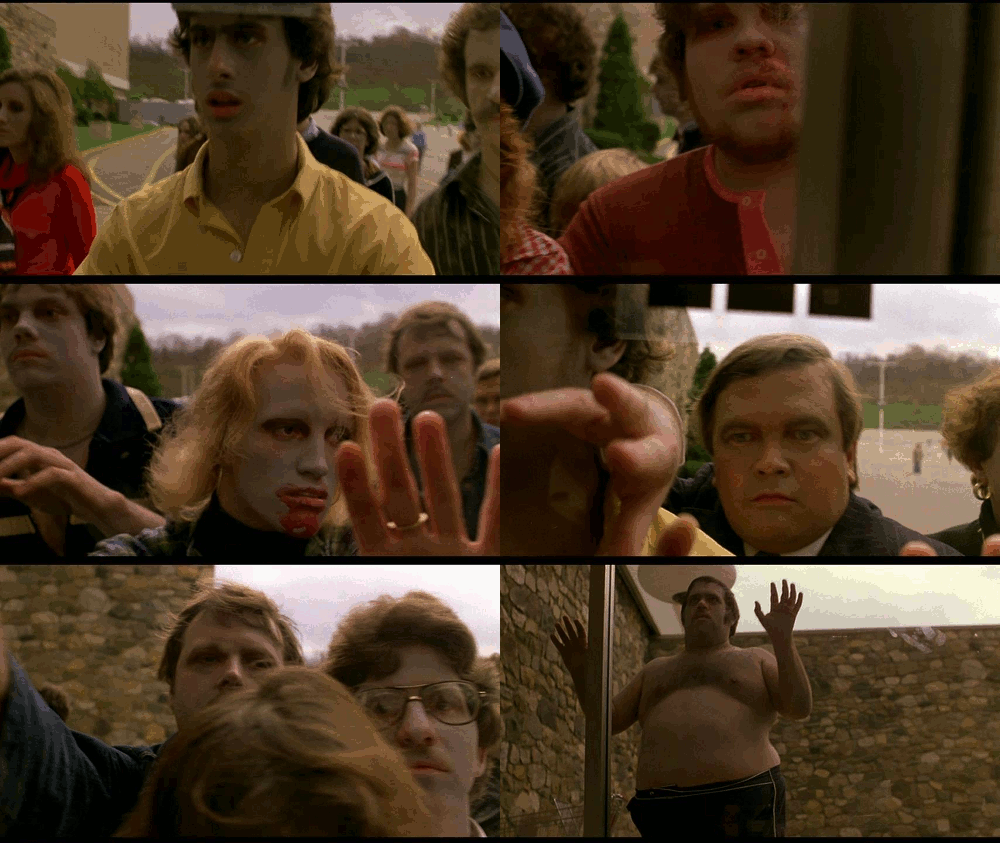
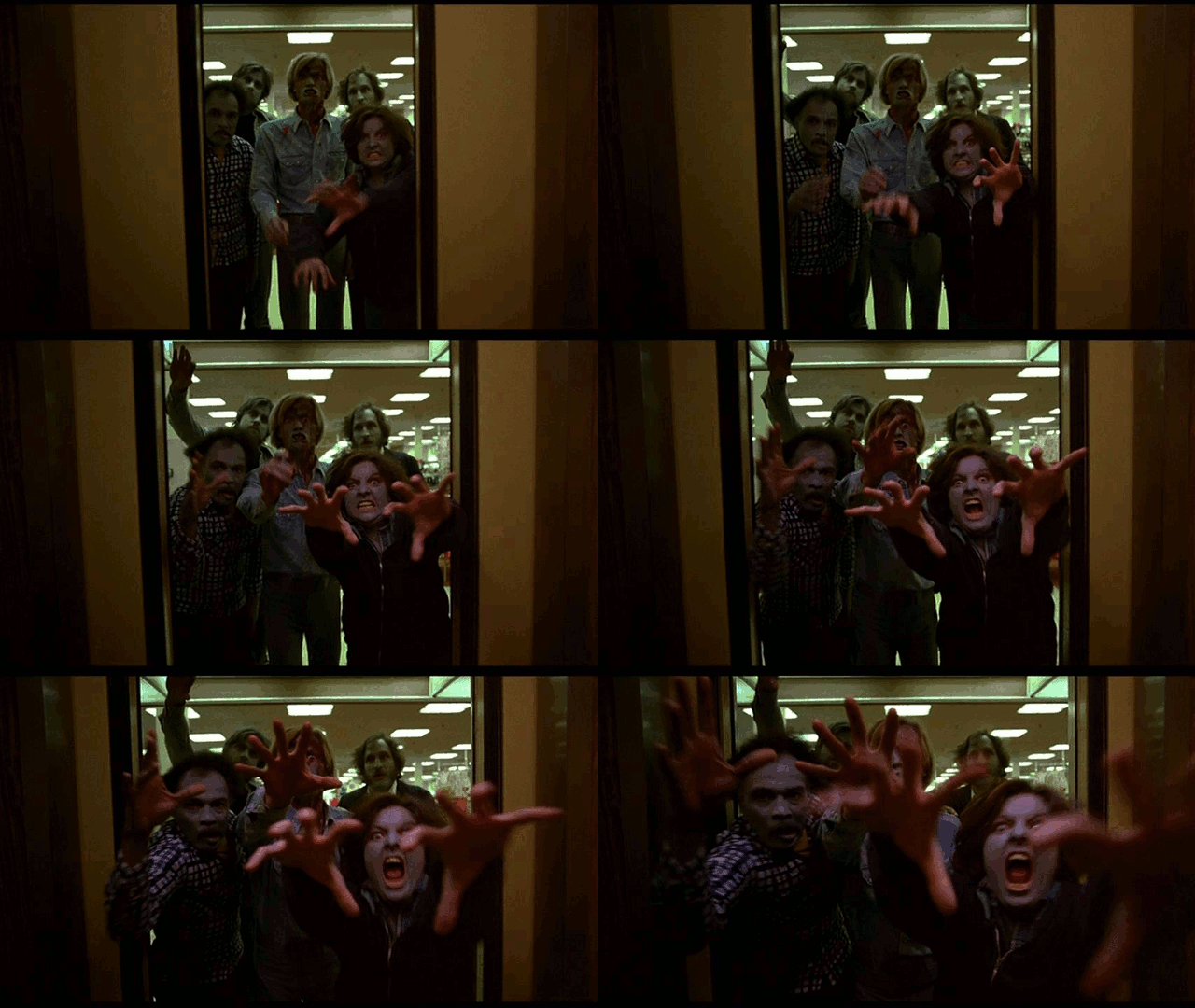
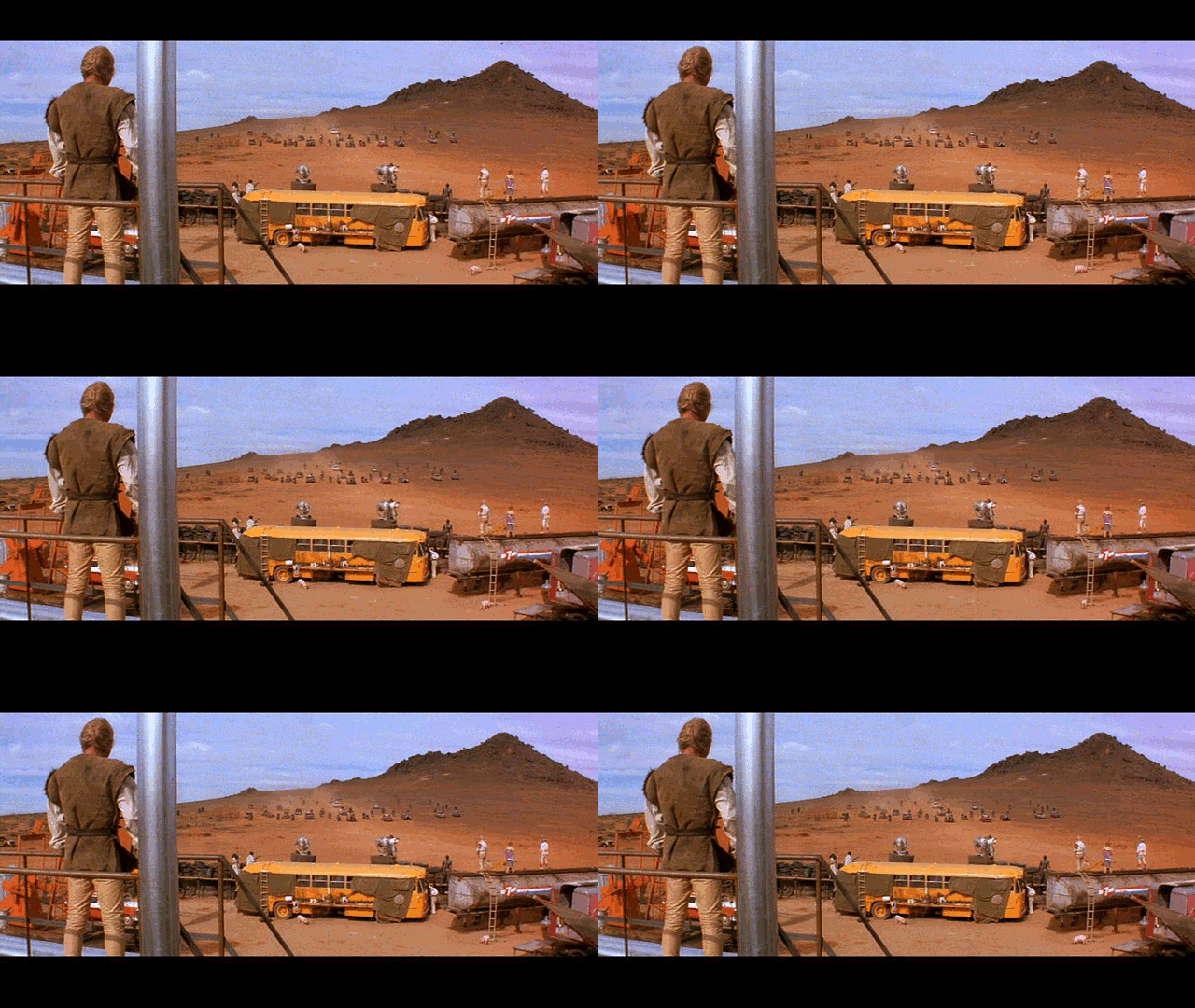
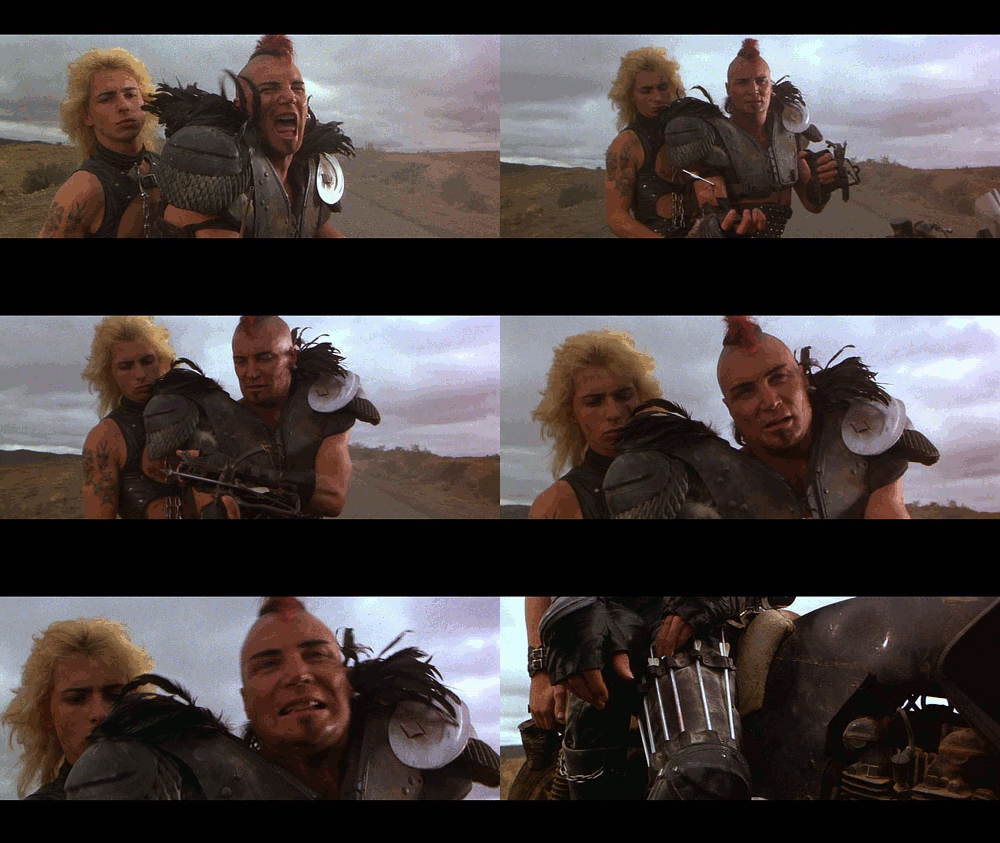
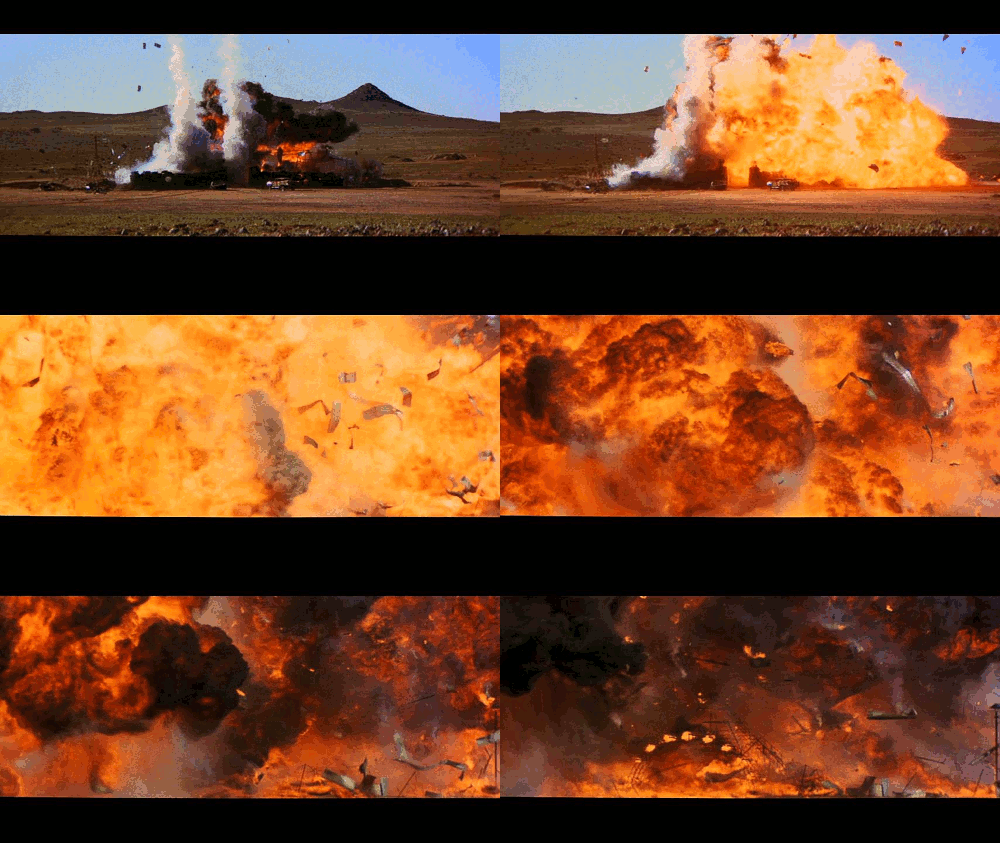
I’ve been working on a presentation for TEDxNYED that is all animated GIFs—25 in all. I’ll be publishing an annotated version of the presentation here sometime time for feedback, but before I did I wanted to get the GIFs I made last night out on the web because they are jsut that good 🙂

Here is a few from Romero’s 1978 Dawn of the Dead:

And now a few from Mad Max 2: The Road Warrior:

So, do you think you can guess what at least part of the presentation is about?

Posted in digital storytelling | Tagged , , , , , , , | 5 Comments

This Week in ds106: Mashups, Remixes, Fan Fiction and Archiving

This Week in ds106: Mashups, Remixes, Fan Fiction, and Archiving from umwnewmedia on Vimeo.

I spent the penultimate class session of this semester’s ds106 talking about remix culture before YouTube, a la Jonathan McIntosh’s article I discovered today. During class we touched on everything from Vidding to Slash Fiction to Media Fandom and more. I regret not focusing on Negativland’s work, and I wish I would have had a wee bit more time to pontificate, but the semester got away from me this year. I’m not too worried in the end, however, because so much of what is produced over the course of the semester is a form of fan fiction, and it seems a bit silly at this late hour to belabor the point academically.

A couple of points hit on in this video for UMW students looking for the Cliff’s Notes edition:

  • You need to get an account on UMW Blogs and create a placeholder blog for your import. Something like bavatuesdays.umwblogs.org. See about minute 35-40 of the video above wherein I start talking about the process.
  • If you need to catch up on comments and participation, you will get credit if you submit work that inspired you to http://inspire.ds106.us (do it!)
  • You need to set up a meeting with me sometime next week, sign-up on the wiki page here.
Posted in digital storytelling | Tagged , , , , | Leave a comment