The inimitable Andy Rush (a.k.a. EduRush) and I have been working diligently to create a whole slew of screencasts documenting the new interface for WPMu 2.6. We’ve finished a whole bunch of them over the last week or so and published them on the now official UMW Blogs Screencasts site, so below is a list of the ones we have created. They’re all under a Creative Commons license, and while they’re currently published as SWF files, we will be uploading them all to Blip shortly. Keep in mind that these screencasts are specific to the UMW Blogs installation, but they still may prove useful for anyone who wants to point people to a quick overview of the administrative backend, the changes between versions WPMu 1.3.3 and 2.6, and a very tab-specific discussion of the how to manage a WordPress blog.
Now the difference between Andy’s screencasts and mine are easily discernible: he is the consummate professional and I’m the consummate hack. Andy’s are brief, no-nonsense, and precise poems, whereas mine are meandering, overly long, fraught with missteps, and bad jokes (the Overview of the Comments tab is an excellent example of this). That openly acknowledged, I really enjoyed this process because it forced me to approach this application, which I’ve inhabited deeply for almost two years, from the perspective of a novice. What I discovered along the way are some issues that I need to focus on to make UMW Blogs that much easier.
For example, I expected the screencast that provides an overview of the Design Tab to be straightforward and simple, yet I found that working with a wide array of themes, widgets, plugins, and dsader’s Userthemes is not always as simple as I preach. Take the fact that if someone changes the theme, they may lose the Meta login sidebar element that could totally throw off someone who is not familiar with the application.
Additionally, whileDSader’sUserthemes Revisited plugin is a huge asset for UMW Blogs and I love that he has developed it out, it also presents a potential difficulty for users. Specifically because Userthemes shows up in the Design tab for everyone and anyone that has their own blog. And while only people who are enabled by an admin can hack their theme, anyone can still activate Userthemes and effectively lose the functionality of the built-in theme viewer.This could potentially confuse someone who activates a theme through Userthemes, and then deletes that theme and returns to the theme viewer they won’t see anything at all. What happens is that the system themes have effectively been disabled. It would be nice if when a user deleted a (or all) themes activated through the Userthemes subtab that they could once again access the system theme through the themes subtab. (This has all been fixed in the revisited version which DSader had told me about and I thought I had upgraded to, but alas I was wrong as usual –the plugin is fully loaded now!).
Additionally, the relationships between sidebar widgets and plugins in WordPress is not as clear as it could be. When new users activate a plugin they often have to know to go into the Settings tab to configure the plugin and, quite often also need to drag a plugin-specific widget into the sidebar for the functionality to appear on the site.
Now don’t get me wrong, I love the fact that WordPress demands that users explore the possibilities by providing them a place to experiment and play with the application. And I wouldn’t sacrifice that for a clean experience by any means. That said, these screencasts helped me see some of the obstacles I had been overlooking for people who are coming to this application fresh, and I have to start working on ways to keep the possibilities all the features it provides while making the interface rabbit holes hard to fall down.
A couple of months back I happened upon the American Museum of the Moving Image’s Moving Image Source, which is an online publication featuring articles about film, television, video games, actors, and more. The posts are written by critics and scholars from around the world, and the wde range of writers who all bring various perspectives to the online journal captures a certain amount of wonderful unpredictability. You never know what the next article will be about, and I like that a lot.
In fact, It has been a ton of fun reading the articles, and my only complaint is that I wish you didn’t have to login to comment; I just can’t seem to get up the inertia to fill out another sign-up form. That said, I spent an hour or two on the site tonight fling rom article to article, and while I have a bigger post brewing about Annette Insdorf’s article “Seeing Doubles,” I got quickly pulled into a series of interesting articles through simply browsing the last two months worth of articles, which amounts to 44 posts—wow! that’s an impressive amount of good content being solicited by and published through a museum site on a regular basis! Is there another museum that is doing anything half as ambitious in terms of openly publishing so man fresh and compelling articles from scholars and critics?
Well, while I’m at it, below is the tale of the tape from the two hours tonight I spent reading articles about everything from queer cinema to black exploitation cinema to avant garde and the mashup to The Wire and Balzac. Now there’s some range I can dig on.
I really enjoyed Sam Adams retrospective look at Derek Jarman’s career titled “Look Back in Anger.” Particularly the discussion of the complex poetics of the politic in his The Last of England (a film I saw back in the early 90s at a Jarman retrospective at the Nu-Art theater on Santa Monica Blvd in beautiful Los Angeles, a magical theater where I saw many a great film—I actually saw a midnight showing of Spider Baby there—but I’ll return to the Nu-Art in some other post). Adams points out the poetic ambivalence in this masterpiece beautifully with the following quote:
The Last of England, known at one point under the working title Victorian Values, was a blunt attack on Thatcher’s promise to restore the mores of an earlier time. But the movie is not reducible to a one-sided polemic. Jarman’s vision of a bombed-out Britain, a landscape of industrial wreckage and blood-red skies, is founded on an unspoken and only briefly glimpsed ideal of an unsullied past, most poignantly realized in the footage of Jarman’s grandparents, filmed before he was born. In mourning a past Jarman never knew, the movie surpasses even the party of Thatcher in its idealistic vision of a bygone time, even as it rages against the country’s rightward drift. No wonder one of his Jubliee collaborators called Jarman “a radical Tory.”
Also, Ed Halter’s “Recycle It: A look at found-footage cinema, from the silent era to Web 2.0” is an interesting discussion of the history of re-mixing and re-using found-footage is awesome. The article has some great links to various historical footage and resources, and it even links out to the Duvet Bros. classic re-mix Blue Monday, which Halter describes as follows:
A masterwork of this postpunk moment is the Duvet Brothers’ Blue Monday (1984), which sets images from the Thatcher-era miners’ strike to the tune by New Order, turning the forlorn synth-pop love song into a lament for a people’s broken relationship with its government.
An excellent overview for thinking through the political, social, and avant-garde roots of the mashup.
Additionally, there is an entire series of articles being publishing on the Moving Image Source about The Wire. And given my marathon viewing of all five season in June and July, I indulged in the scholarly press 🙂 Nelson George’s discussion “Across Racial Lines” is an interesting article that examines the art of writing race in the TV series The Wire, and argues, rightly I think, that it may very well be the single best protracted discussion of race in a mini-series since Roots.
Dana Pollan’s article “Invisible City” compares The Wire to the literary universe of a Balzac novel, a comparison that is both accurate and useful for thinking about the series. I think the discussion of Balzac and The Wire hits the mark, and gets at the de-centered, vibrant universe that characterizes that series. Unlike Pollan’s initial comparison in this article which juxtaposes the final scene of Straw Dogs and the final scene in season 1 of The Wire, a relationship that is completely lost on me–and I am a huge fan of Peckinpah’s Straw Dogs. An example which highlights some of the less impressive tone of the writing in several of these articles. They’re often trying to throw in these relations, allusions, and connections that sometimes work and sometimes fail, but rarely have a kind of animated voice behind them. A site like this is invaluable, but it also illustrates some of the key differences between blogging and critical and scholarly writing, and I have to say the latter might benefit from some stronger opinions, zealous affectation, and a few more far out comparisons—so more bava bravado in the mix perhaps?
There’s also a series articles/videos that provide a voice-over analysis of the title sequence for The Wire produced and writeen by Andrew Dignan, Kevin B. Lee, and Matt Zoller Seitz. The first video “Extra Credit, Part 1” starts out kind of stilted and unimpressive for the analysis of the titles for Season 1, but get increasingly looser and more compelling by the time you hit the second and third season titles analysis. And by the fourth and fifth they’re on top of their game. You can find all of them here, and they are well worth watching. The authors hit the mark on numerous points about the show as told by the titles, and bring some fascinating readings of the various details packed int the credits that are easily overlooked. I love this example of a very close, well argued visual reading of the title sequence, great stuff.
…I would be going to WordCamp 2008 like the great Alan Levine, but being only a bava—which in fact is not only the surname of my favorite film director but also Italian for drool—I’m not. So, after reading Alan’s recent call for examples of WordPress in education I tried to add my 50 cent, but Alan’s blog was intentionally blocking my long, link-filled comment of utter genius because he is petrified of the Reverend’s wrathful range, as one should be.
But never fear faithful reader, for the Reverend has got his own publishing platform, and can make the good word know the world round. That’s right folks, “I’m comin’ up, comin’ up, so you better you better get this party started.” So, with no more saccharine fan fare, here is my addition to Alan’s call for examples that was maliciously blocked to keep the right reverend from making it clear that education is where WordPress is poppin’ like no other field. And if the folks at WordPress don’t start paying us mind, we’re going to make a mass exodus to LiveJournal very, very soon! Transcript of my aborted missive to the dog follows:
All right, I have couple of things for you dog.
First, the current ground swell of universities adopting WPMu for all kinds of cool things. Here is a list compiled by Mario A. Núñez Molina, and stolen by the bava:
Literary Journals with WordPress by Pulitzer Prize winning Claudia Emerson (who rules!). Below are two examples of a possible seven:
http://ecollective.umwblogs.org/
http://noncejournal.elsweb.org/
(Some background on this project here: http://bavatuesdays.com/nonce-journal/)
Steve Gallik’s Lablogs and Data-Blogging (a wonderful example of WP as Lab Notebooks)
http://connect.educause.edu/blog/gbayne/educausenowshow5p2pupdate/47047
Some background on this project here:
Marie McAllister’s Eighteenth Century Audio site, which basically has students recording themselves reading poetry, then uploading them to Librivox and linking to them in this WP Blog:
http://ecaudio.umwblogs.org
(Some background on this project here: http://bavatuesdays.com/eighteenth-century-audio-a-wordpress-social-site/)
Jeff McClurken’s work with Digital History: http://digitalhistory.umwblogs.org
I particularly like this one for it really is a site with no search functionality, yet still effectively acts as an easy engine for finding over 100 historical markers:
http://fredmarkers.umwblogs.org
The now graduated UMW student Roblog, whose blog is an ideal example of a student portfolio:
http://roblog.umwblogs.org
And Brad Efford, whose blog is an example of just how amazing students are with this stuff (he was also part of Gardner’s Film/text/Culture experiment mentioned below):
http://blogs.elsweb.org/nsftmfx
Just about everything Gardner Campbell has done with blogging (you’ll agree with me there I’m sure):
http://miltonsummer08.umwblogs.org/
http://intronewmediastudies08.umwblogs.org/
http://rocksoulprog.umwblogs.org/
Gardner’ grand experiment which I think is one of the best yet. Basically students used each others blog posts throughout the semester as research and fodder for their final papers, which were written as posts, and used trackbacks as attribution and quotes. Brilliant
Here is one for the strange WPMu bugs division. I had tested the upgrade to WPMu 2.6 for UMW Blogs pretty thoroughly, but there was one small thing I missed. Which manifested itself as an error message, shown below, every time I tried to upload an image or document.
Warning: strpos() [function.strpos]: Empty delimiter in …./public_html/wp-includes/wpmu-functions.php on line 1586
Given that uploading images and documents is not an insignificant feature for UMW Blogs, I was a bit concerned. So, I searched high and low on the forums and elsewhere for a solution, but all to no avail. Finally, I asked the ever great Zach Davis of Cast Iron Coding fame—whose stint with me in grad school has gained him nothing but an endless stream of code questions for over three years now—if this was a problem with the .htaccess file given this fix for the issues with uploading images on WP 2.5. But given it was a PHP error it seemed unlikely, or so Zach informed me 🙂 So, he did me an ace and looked at the code and asked me the following two questions:
Zach: Have you set an option for upload_filetypes?
Me: Yes, jpg jpeg png gif mp3 mov avi wmv midi mid pdf rtf doc xls ppt docx xlsx odt ods swf m4v
Zach: Is there a trailing space or a leading space?
Disco! There was a trailing space in the Upload File Types field in the Site Admin–>Options tab. I got rid of the trailing space and the upload error went away. Now that is code diagnostic prowess, two questions and my problem was fixed, it would have taken me all night and I would have sacrificed those wee hours of blogging bliss too. But, I was spared the knife again thanks to my betters. One day I will learn how to read PHP code, but until then I’ll just have to hail Zach!
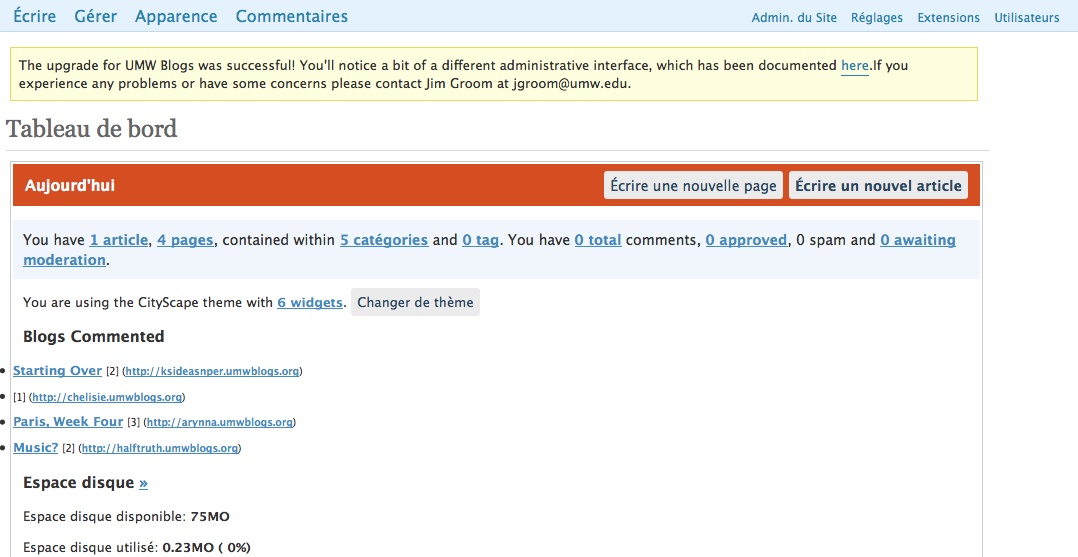
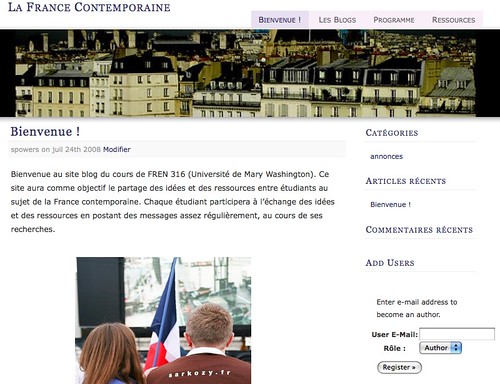
Recently I have been working with a French professor who had been playing around in Blogger, and was thinking abut using a blog in his class. I got to see some of the finer features in Blogger, and I really liked the fact that this professor could choose the default language for administrative backend and theme. So after we talked, I decided to see how easy or hard this is for WPMu given I had never tried it. Well, it’s simple to have one WPMu install support different default languages on a blog-by-blog basis.
Here’s how…
Create a languages folder in in the wp-content folder.
Once I found the languages I was interested in—Italian, French, Spanish, and German for now—I went to the WordPress download site and got a copy of the latest download in each language. For example, here is WordPress 2.6 in Spanish.
Once I downloaded it, I went to the wp-content/languages folder in the WP 2.6 files in Spanish and grabbed the following file es_ES.mo.
I then proceeded to grab a similar set of files for Italian ( (it_IT.mo)), French, (fr_FR.mo), German (de_DE.mo), by going to the 2.6 download for the latest WP install released in that language.
After you collect the *.mo files for the languages you want, copy them into the wp-content/languages folder created on your blog and that’s it.
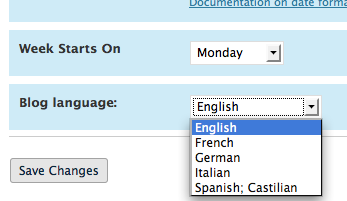
You can now select the default language for any given blog from one of five options in the Settings–>General tab.
Blog language Options
Everything should be this easy 😉 The Hery-Dev blog has a plugin that simplifies this feature by including a series of language flags in the tab logic of the backend. There are a few things I don’t like about this new plugin as it stands now:
It gives you no way to return to the default language (in this case English) once you’ve selected another language
It doesn’t actually change the Blog language feature in the Settings of the blog. The default settings remains which is confusing to me, and may be confusing to others.
The straight-up language selection tool in the Settings tab is pretty damn easy to begin with.
All that said, it’s pretty cool that foreign language professors and students have the ability to choose their language as they see fit. Here are the four *.mo files I am using if you want to test drive this for WPMu 2.6.
Finally, not all themes will work with this option on the front end, but I will try and pinpoint those that do. Seems like Sadish’s CityScape does, so I imagine a number of his others themes might as well—which is a damn good start.
Important note: If you are upgrading to WPMu 2.6 and using subdirectories would urge you to check out this post before you commit.
Andy Rush and I sat down yesterday morning and did a “live” screencast of the process for upgrading UMW Blogs from WPMu 1.3.3 to 2.6. It was conceived as a straightforward video for an easy process, but even easy is hard for a moron like me. So forgive all the upgrading bloopers and blunders. This video might be enjoyed more as a cautionary tale of what not to do when upgrading than an informative how-to. It’s availabe for anyone who is considering doing an upgrade but is concened or nervous about the prospect. In fact, the upgrade is quite painless in the end.
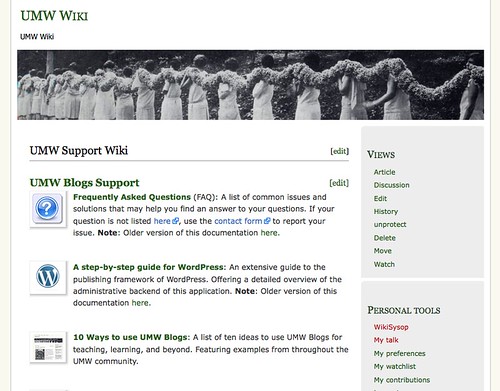
I tweaked the documentation for UMW Blogs to reflect the administrative back end changes for WPMu 2.5 & 2.6. I figured this may be helpful to some folks that are using this application and might need some screen shots, quick documentation, etc. It’s all Creative Commons, so no need to ask, just pilfer and pillage at will. Additionally, I put most of the screen shots on the UMW DTLT Flickr account so that folks can use what ever they need. Andy Rush and I will be turning to the videos soon, but as of now they haven’t been updated.
If anyone else is doing documentation of their own, it would be useful if you could share what you’ve got so far. I imagine seeing some other examples of how people are approaching this would help fill in the gaps that remain with the UWM Blogs FAQ and WordPress Guide. If you are so inclined just leave a link in the comments or e-mail me the URL of the site at jimgroom_at_gmail.com.
And by the way, Jim, keep on plugging D&D, that game was solely responsible for getting me to read and develop in the face of school being boring and oppressive.
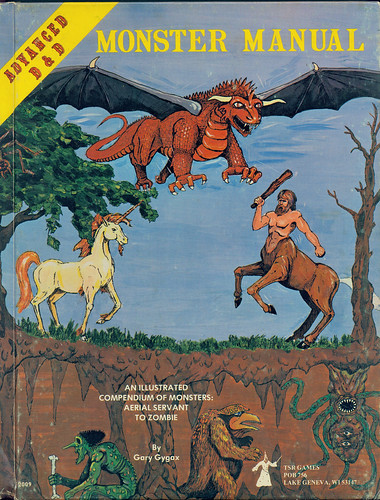
This idea immediately propelled me up into the attic, rifling though boxes in the insulated heat to find my copy of the Monster Manual, one of the greatest books of the 1970s. I found it, and I have been re-reading it for the last week or so, rather than reading Capital, Volume 1 as I have been promising myself. But I don’t really feel too bad about my choice, for this book is blowing my mind and framing Andy’s comment about reading and developing in ways I hadn’t imagined. In fact, it’s forcing me to re-visit why this book has remained quietly lodged in the ether of my psyche like a psionic Thought Eater for almost thirty years.
I started with the explanatory notes that introduce the logic of the Monster Manual, basically laying out how to read this book. These notes act as a kind of legend for deciphering the very particular vocabulary around the monster profiles, defining terms such as damage, alignment, % in liar, hit points, etc. The very first definition of this manual is pretty wild, it’s a brief explanation of the term “monster:”
The term “monster” is used throughout this work in two manners. Its first, and most important, meaning is to designate any creature encountered — hostile or otherwise, human, humanoid, or beast. Until the encountering party determines what they have come upon, it is a monster. The secondary usage of the term is in the usual sense: a horrible or wicked creature of some sort. Thus, a “monster” is encountered during the course of a dungeon expedition, and it is discovered to be an evil high priest, who just might turn out to be a monster in the other sense as well. Note, however, that despite this terminology, human (and such kin as dwarves, elves, gnomes, half-elves, and halflings) always use the matrix for humans when attacking, even if such humans were encountered as “monsters” in the course of an adventure.
I love this definition of “monster.” It becomes a kind of catch-all phrase for anything that is unknown or foreign, whether or not it’s human. A fascinating frame that resonates with the logic of the Age of Discovery and Exploration wherein those initially encountered in the New World narratives were always monstrous, deformed, and somehow other than human, despite their humanness. The moment between the encounter and the determination of what was encountered is a fascinating one—how long does it last? How does the very idea of the monster become something else entirely with this first and most important definition of monstrosity—which is really a definition of something that can’t be immediately understood.
So, this definition pushed me to look further into the idea of monstrosity, something that fascinates me anyway. And I found a book of essays called The Horror Reader that offers up a few theories of monstrosity. One of them is from Aristotle, which suggest that “Anyone who does not take after his parents is really in a way a monstrosity, since in these cases nature has strayed from the generic types.” Aristotle then goes on to draw a parallel between monstrosity and females as departures for the male norm. And such a definition of monstrosity, women, and birth seems to be at the very heart of of the Horror genre. From Mary Shelley’s monstrous conception of Frankenstein to Polanski’sRosemary’s Baby (1968) and Cronenberg’sThe Brood (1979). Maternal monstrosity and this idea of the progeny as somehow different from the parents, becomes tied up with the actual imagination of the woman as the imaginative producer of monstrosity, a deformed birth, as Marie Helene-Huèt points out, becomes the manifestation of a woman’s “unfulfilled desires and hidden passions” (The Monstrous Imagination 88).
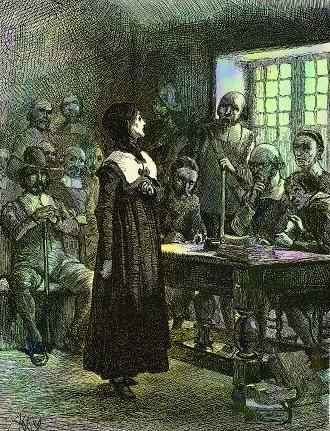
An idea which reminds me of one of the single most compelling moments of monstrous births framed as a public warning and divine testimony to the danger of America’s first true radical: the antinomian preacher Anne Hutchinson. A woman whose philosophy posed a grave and immediate threat to the Puritan “City Upon a Hill.” (As a side note, the trial of Anne Hutchinson is perhaps the most compelling read of all Puritan literature, and frames her genius in the face of intolerance and tyranny stunningly, you can read an excerpt here.) After Hutchinson is banished for the danger she represents to the social fabric, the Puritan governor John Winthrop reports publicly that she has given “monstrous birth” to “twenty-seven several lumps of man’s seed,” which becomes a way of justifying her exile and offering a divine punishment for her unholy difference—her ideas and radical spirit are physically manifested as monstrous.
Thanks to Gardner Campbell this meandering through the monstrous can take on epic proportions given a series of ideas that a recent reading of another Monster Manual in its own right, namely Book II of Paradise Lost, proffers the imagination. Particularly when Sin describes the incestuous birth of her son and brother Death:
Alone, but long I sat not, till my womb
Pregnant by thee, and now excessive grown
Prodigious motion felt and rueful throes. [ 780 ]
At last this odious offspring whom thou seest
Thine own begotten, breaking violent way
Tore through my entrails, that with fear and pain
Distorted, all my nether shape thus grew
Transform’d: but he my inbred enemie [ 785 ]
Forth issu’d, brandishing his fatal Dart
Made to destroy: I fled, and cry’d out Death;
Hell trembl’d at the hideous Name, and sigh’d
From all her Caves, and back resounded Death.
I fled, but he pursu’d (though more, it seems, [ 790 ]
Inflam’d with lust then rage) and swifter far,
Mee overtook his mother all dismaid,
And in embraces forcible and foule
Ingendring with me, of that rape begot
These yelling Monsters that with ceasless cry [ 795 ]
Surround me, as thou sawst, hourly conceiv’d
And hourly born, with sorrow infinite
To me, for when they list into the womb
That bred them they return, and howle and gnaw
My Bowels, thir repast; then bursting forth [ 800 ]
A fresh with conscious terrours vex me round,
That rest or intermission none I find. [Link.]
How is that for monstrous birth, “odious offspring,” and “inbred enemies”!
Yet, I digress, for monstrous maternity is just one, albeit a particularly rich and telling, way of how we deal with fear, uncertainty, difference, power, and subversion. The Dungeons & DragonsMonster Manual makes the idea of everything undetermined somehow monstrous (which makes the idea of birth and monstrosity even more telling and fascinating). A kind of general, sweeping idea of paranoia at the idea of otherness. And idea that makes the secondary definition offered by the Manual, or the more traditional idea of the monster as a “horrible and wicked” creature somehow wanting. And interestingly enough, in the very next sentence after offering this more popular definition, the uncertainty of what is or is not monstrous creeps back into this explanation, imbuing any clarification with a deep ambivalence.
Thus, a “monster” is encountered during the course of a dungeon expedition, and it is discovered to be an evil high priest, who just might turn out to be a monster in the other sense as well.
The evil high priest is only a “monster,” seemingly given his human affiliation, because he is unknown. But as soon as this definition of monstrosity is established, it is immediately qualified by the idea that this priest may very well turn out to be a monster in the “other sense.” The horrible, wicked sense? Or the undesignated sense of otherness that looms far larger than such a definition can control or maintain, yet at the same time beautifully opens up. Here the idea of monstrosity is not so much premised on the physical difference between things: some kind of unholy lack of resemblance. Rather, the monster may be monstrous in some “other sense,” some invisible sense that is not necessarily easily to determine. What does horrible and wicked look like? How do you determine these characteristics? Are they physically defined?
It reminds me of one of my top three films of all time: John Carpenter’s The Thing (1982). Perhaps one of the greatest situations in all of cinema, The Thing is rooted in an idea of monstrosity you can not immediately see. The monster (or is it the alien?) takes the shape and attributes of its victims down to every last detail. The distinctions are impossible to determine though visual or social interaction. Making the moment when they come up with a blood test one of the most compelling scenes in cinema of all time for me.
The physical blood test provides a reprieve from the ultimate horror and monstrosity, namely the idea that there is no way to truly distinguish between what is monstrous and what is not. It has no easily determined shape or form, it could be any of us—the great contribution of Invaders of the Body Snatchers (1955). A kind of general malaise of monstrosity that is indeterminable, but ever present.
And all of this from the first, “clarifying” paragraph from a manual dedicated to the idea of monstrosity. A work of art in every sense of the word, it is without question an imaginative fount of wonder. And while I’m easily sidetracked by the definition of monster it tries to provide, there is no question how deeply this book forced concepts on the mind of a hapless ten year old that created a certain sense of confusion. What does it mean that a Manticore has the alignment of Lawful Evil and a Centaur that of Neutral Chaotic Good? How do I hold these seeming antithetical ideas in harmony to make sense of this monstrous world? I remember working though this with a friend who was far smarter than me, how took the occasion to suggestion that the words lawful and evil aren’t necessarily contradictory. What a valuable lesson.
Yet, it was the profiles and images in the Monster Manual that made me want to understand this strange moral world of monsters. I would spend hours reading the descriptions of the monsters, determining their point system, and obsessing over the illustrations, all of which suggests the way this kind of text introduced a whole new way of imagining in relationship to numbers, text, images, and often maps as well. The Monster Manual is a truly unique work of the imagination, and I can’t tell you how fun it was to re-visit creatures like the Lurker Above, the image of which falling on an unexpecting victim always intrigued me how powerful this monster was.
And there was Mimic, a monster that can “perfectly mimic stone or wood” but cannot stand the sunlight. I just loved the image of the Mimic posing as a treasure chest, while at the same time cocking its fist prepared to knock the unassuming adventurer flat out.
And there was also the Mind Flayer, who crazy tentacled head, and psionic brain eating abilitie downright frightened me.
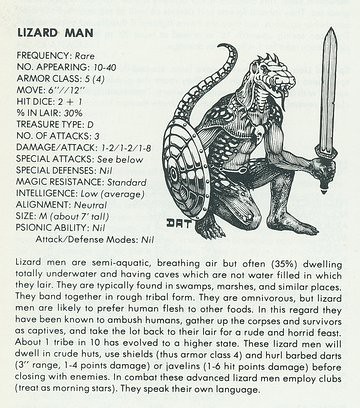
And a personal favorite were the more quotidian Lizard Men—who were always a personal favorite, especially since I paid my friend’s brother a dollar a figure to paint my Lizard Men lead figurines, it was worth it.
So, Andy, I think I have an idea of what you meant by your comment, and in fact it is funny how much re-reading this stuff brings back so much of that original wonder in the face of all things monstrous.
Update: The latest beta of the Anarchy Media player can be downloaded here, and you might be happy to know it works with WPMu 2.6—huge thanks go to IndyMedia for the tip in the comments below.
Has anyone seen this yellow button? I have been waiting patiently for what seems like months for the little yellow Anarchy button to appear in my Rich Text Editor for WP & WPMu version 2.5+, but no no avail. So as we are getting ready to upgrade UMW Blogs, I was wondering if anyone found a solution. I looked here, here, and here, but all active questions and development seem at a stand still. This is a bummer for me, because the Anarchy Media Player is without question the easiest and quickest way to insert all kinds of video and audio by simply copying and pasting a link. It helped make the overhead for including media into posts and pages seamless, one of the strongest selling points for WPMu on campus. Anyone figure out a workaround, or have the quick code to make it a tag? I imagine it can be done because the plugin still works if you use the Media button in the code/html view of the text editor.
And while I’m at it, where’s the add an image icon in WPMu 2.6? This one:
It’s gone away, and the default Add media option in WPMu 2.6 visual text editor only has the gray asterisk sans the image, video, and music icons, which I added through this hack here (though I am beginning to wonder why because the video and music icons don’t do much good because all they do is provide a link—they don’t embed anything).
Visual Text Editor for WPMu 2.6 (hacked to show icons)
And while I was able to get Viper’s Quicktags Plugin for YouTube and various other video services working with a hack (thanks Luke), it messes with the visual text editor to such a degree that it almost becomes too much labor in the long run. Has anyone else experienced these issues? Moreoever, has anyone else found a solution?
“As technology advances, it reverses the characteristics of every situation again and again. The age of automation is going to be the age of “do it yourself.” Marshall McLuhan, from the Essential McLuhan. Edited by Eric McLuhan & Frank Zingrone. Routledge 1997. Page 283.
I started my morning off with an IM Chat with Mikhail Gershovich who sent me the quote above which seems unbelievably timely, as if it were written in the recent wake of the EDUPUNK apocalypse. In fact, Gardner Campbell, whose recent post on blogging and method is a must read for anyone using blogs in education, has been talking about the necessity for re-visiting McLuhan since teaching his Intro to New Media Studies class. I’ve meant to do this, but as time would have it, I opted for re-watching classics like The Road Warrior and C.H.U.D. to further the debate. Yet the quote above inspired me to re-visit a video I found a couple of months back on the Media Funhouse blog (a wonderfully eclectic media blog) which linked to a debate between Marshall McLuhan and Norman Mailer on the CBC television show “The Summer Way” back in 1968.
Well, I can’t thank Mikhail enough for the push to re-visit this video, because the conversation between these two thinkers is unbelievably timely. Moreover, it seals the fact that I have to start reading McLuhan en masse sooner rather than later—he is absolutely wonderful in this discussion. I won’t ruin the clip for you, but below I have transcribed a few morsels that I will be feeding off for a while.
For example, their first exchange is absolutely mind bending:
Mailer: “Look Marshall, we’re both agreed that man is accelerating at an extraordinary rate…into a super technological world, if you will. And the modes and methods through which men instruct themselves and are instructed are shifting in extraordinary ways…”
McLuhan: “We’ve gone into orbit.”
Mailer: “Well, but at the same time there’s something profoundly auto-erotic about this process and it’s sinister for that reason…”
McLuhan: “It’s psychedelic…when you step up the environment to those speeds, you create the psychedelic thrill. The whole world becomes kaleidoscopic, and you go inward, by the way, it’s an inner trip not an outer trip.”
________
Or this gem…
McLuhan: “Whenever a new environment goes around an old one there is always terror. We live in a time when we have put a man-made satellite environment around the planet. The planet is no longer nature, it is no longer the natural world, it’s now the content of an artwork. Nature has ceased to exist…the environment is not visible, it’s electronic.
______
Or this…
McLuhan: “Every age creates as an Utopian image a nostalgic rear-view mirror image of itself, which puts it thoroughly out of touch with the present. The present is the enemy. The present is the—and this will delight you Norman—the present is only faced in any generation by the artist. The artist is prepared to study the present as his material because it is the area of challenge to the whole sensory life, and therefore it is anti-Utopian, it is a world of anti-values. And the artist who comes into contact with the present produces an avant-garde image that is terrifying to his contemporaries.”
______
And this…
McLuhan: “An electronic world re-tribalizes man”
______
Also this, especially if you can look beyond the insistence of the male pronoun…
McLuhan: “The contemporary artist is always seeking new patterns, new pattern recognition, which is his task, for heaven’s sake. The absolute indispensability of the artist is that he alone in the encounter with the present can get the pattern recognition. He alone has the century awareness to tell us what the world is made of. He’s more important than the scientist, than scientists will be waking up to this shortly and will be resorting en masse to the artist’s studio in order to discover the forms of the material they are dealing with…the scientist lives in a world of matching, and his idea of proof or verification is just the idea of matching evidence against evidence. When somebody doesn’t match but makes a new breakthrough, this is just as disturbing to the scientist as to the educator.”
______
So with that, I leave you with the video, which is a wonderful way to spend a half-an-hour of your day, I promise. And it re-confirms for me just how relevant McLuhan can be for my thinking about educational technology, as well as what a metaphorical tripper he once was and still is.
If you have a problem with the embedded video, view the original here.
is an ongoing conversation about media of all kinds ...
Testimonials:
Generations from now, they won't call it the Internet anymore. They'll just say, "I logged on to the Jim Groom this morning.
-Joe McMahon
Everything Jim Groom touches is gold. He's like King Midas, but with the Internet.
-Serena Epstein
My understanding is that an essential requirement of the internet is to do whatever Jim Groom asks of you while you're online.
-James D. Calder
@jimgroom is the Billy Martin of edtech.
-Luke Waltzer
My 3yr old son is VERY intrigued by @jimgroom's avatar. "Is he a superhero?" "Well, yes, son, to many he is."
-Clint Lalonde
Jim Groom is a fiery man.
-Antonella Dalla Torre
“Reverend” Jim “The Bava” Groom, alias “Snake Pliskin” is a charlatan and a fraud, a self-confessed “used car salesman” clawing his way into the glamour of the education technology keynote circuit via the efforts of his oppressed minions at the University of Mary Washington’s DTLT and beyond. The monster behind educational time-sink ds106 and still recovering from his bid for hipster stardom with “Edupunk”, Jim spends his days using his dwindling credibility to sell cheap webhosting to gullible undergraduates and getting banned from YouTube for gross piracy.
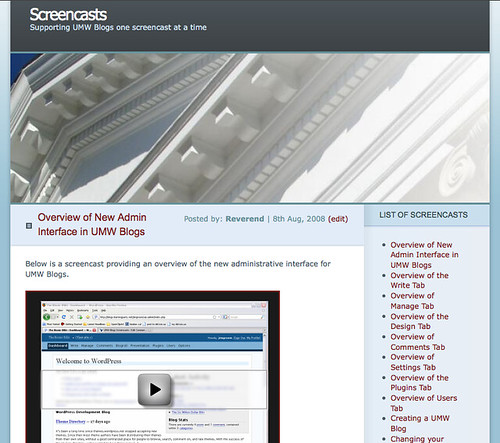 The inimitable Andy Rush (a.k.a. EduRush) and I have been working diligently to create a whole slew of screencasts documenting the new interface for WPMu 2.6. We’ve finished a whole bunch of them over the last week or so and published them on the now official UMW Blogs Screencasts site, so below is a list of the ones we have created. They’re all under a Creative Commons license, and while they’re currently published as SWF files, we will be uploading them all to Blip shortly. Keep in mind that these screencasts are specific to the UMW Blogs installation, but they still may prove useful for anyone who wants to point people to a quick overview of the administrative backend, the changes between versions WPMu 1.3.3 and 2.6, and a very tab-specific discussion of the how to manage a WordPress blog.
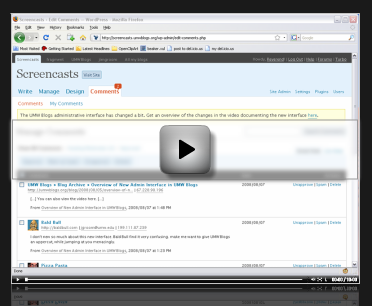 Now the difference between Andy’s screencasts and mine are easily discernible: he is the consummate professional and I’m the consummate hack. Andy’s are brief, no-nonsense, and precise poems, whereas mine are meandering, overly long, fraught with missteps, and bad jokes (the Overview of the Comments tab is an excellent example of this). That openly acknowledged, I really enjoyed this process because it forced me to approach this application, which I’ve inhabited deeply for almost two years, from the perspective of a novice. What I discovered along the way are some issues that I need to focus on to make UMW Blogs that much easier.
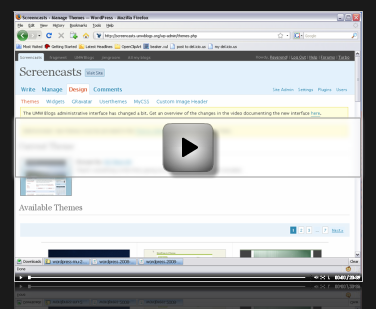 For example, I expected the screencast that provides an overview of the Design Tab to be straightforward and simple, yet I found that working with a wide array of themes, widgets, plugins, and dsader’s Userthemes is not always as simple as I preach. Take the fact that if someone changes the theme, they may lose the Meta login sidebar element that could totally throw off someone who is not familiar with the application.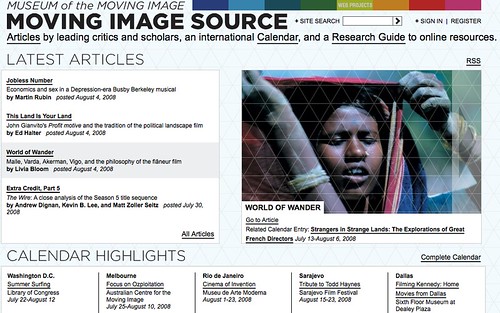


 On a
On a 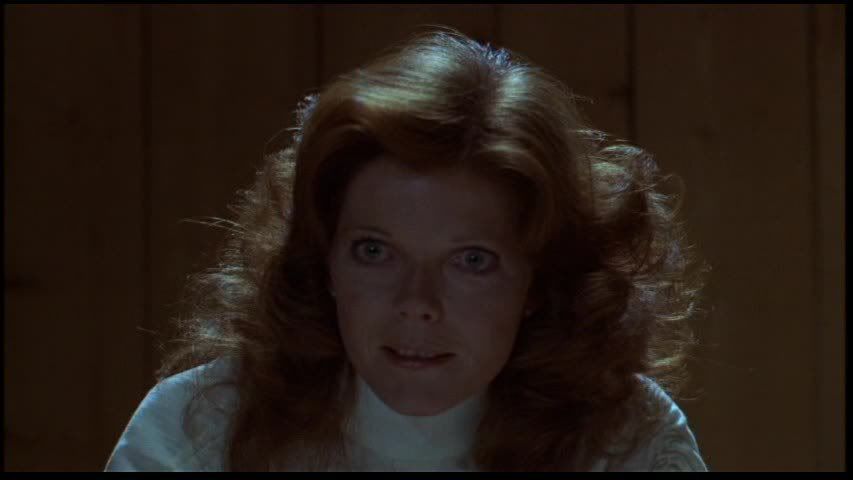 So, this definition pushed me to look further into the idea of monstrosity, something that fascinates me anyway. And I found a book of essays called
  An idea which reminds me of one of the single most compelling moments of monstrous births framed as a public warning and divine testimony to the danger of America’s first true radical: the
 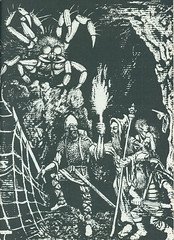 Yet, it was the profiles and images in the Monster Manual that made me want to understand this strange moral world of monsters. I would spend hours reading the descriptions of the monsters, determining their point system, and obsessing over the illustrations, all of which suggests the way this kind of text introduced a whole new way of imagining in relationship to numbers, text, images, and often maps as well. The Monster Manual is a truly unique work of the imagination, and I can’t tell you how fun it was to re-visit creatures like the Lurker Above, the image of which falling on an unexpecting victim always intrigued me how powerful this monster was.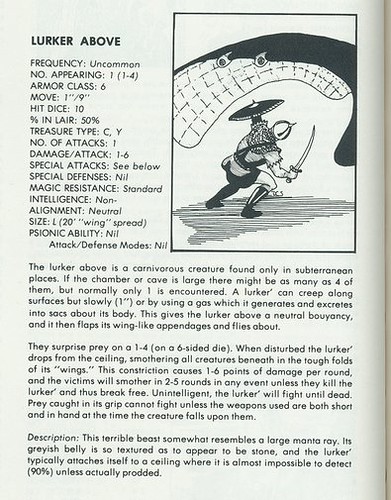
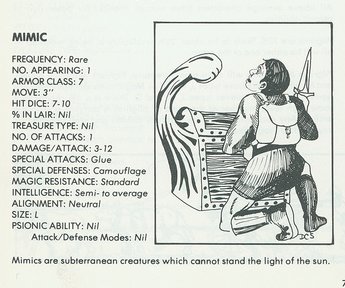
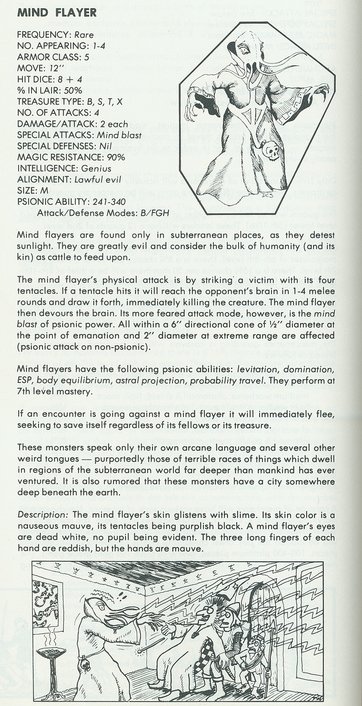
 Has anyone seen this yellow button? I have been waiting patiently for what seems like months for the little yellow Anarchy button to appear in my Rich Text Editor for WP & WPMu version 2.5+, but no no avail. So as we are getting ready to upgrade UMW Blogs, I was wondering if anyone found a solution. I looked