I picked up a friend from Italy at Dulles airport this evening, who will be staying with us for a couple of weeks, and we had a pretty interesting conversation on the ride home. The conversation immediately erupted into news about Barak Obama’s candidacy for president. And there was a real energy in the conversation, she was fresh off a nine hour flight from Milan, and she was truly excited about the prospect. And while I’m deeply wary of America’s two party system and often see their “different” positions as a matter of calculated degrees rather than heartfelt belief, I have to admit that as we were talking I was fired up as well. I got excited about US politics for the first time in a long, dreadful while, and it’s an energy I think I have been reading in other people’s work as well. Call me crazy, but reading Stephen Downes’s quote from Robert F. Kennedy on his Half an Hour blog last week, and then his post Friday on the OL Daily talking about his visit to RFK’s grave on the fortieth anniversary of his death, I was again excited. Did I mention that the sky in Northern Virginia was alight with electricity during our ride him, an intense lightening storm lit up the windshield and the scattered explosions were wild—-I wish you could have seen them.
But I digress, our excited talk about Obama quickly moved to the current state of things and how generally stagnant and asleep the US is currently. We have begun descent into an insane mortgage crisis fueled by speculative greed and unrepentant capital run amok. We are currently entering an oil crisis that we are all just waiting to see spiral out of control, not to mention the long, drawn out war premised on more misinformed speculation and reactionary nationalism left unchecked. And the question of why everything has been pretty quiet here during the 21st century, despite all these facts, was raised. Valentina said matter of factly, it’s “the death of ideology…no one has anything to really believe in anymore.” She was right, and it totally made sense to me, just goes to show you that an Italian is not afraid to use the word ideology in a conversation without entirely discounting it as something odious—rank with connotations of the Berlin Wall.
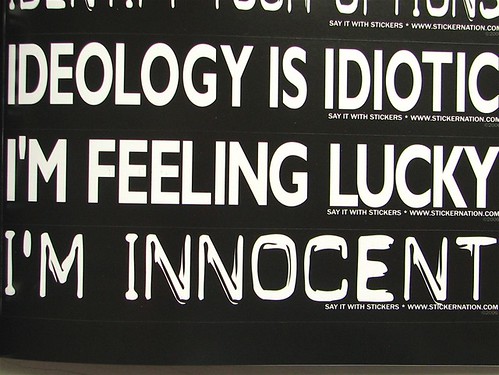
 photo credit: oskay
This discussion got me thinking about a couple of things, and they all have to do with this question of ideology which is on my mind a lot lately. What does this word mean exactly? And has it died? Well, given I have been spending some time on Wikipedia, I clicked over there and did some preliminary research. Here is an interesting definition:
An ideology is an organized collection of ideas. The word ideology was coined by Destutt de Tracy in 1796[1][2] (during the French Revolution) to define a “science of ideas”. An ideology can be thought of as a comprehensive vision, as a way of looking at things (compare Weltanschauung), as in common sense (see Ideology in everyday society below) and several philosophical tendencies (see Political ideologies), or a set of ideas proposed by the dominant class of a society to all members of this society. The main purpose behind an ideology is to offer change in society through a normative thought process. Ideologies are systems of abstract thought (as opposed to mere ideation) applied to public matters and thus make this concept central to politics. Implicitly every political tendency entails an ideology whether or not it is propounded as an explicit system of thought.
The “ideology in Everyday Society” section of this article notes the following:
In public discussions, certain ideas arise more commonly than others. Often people with diverse backgrounds and interests may find themselves thinking alike in startling ways. Social scientists might explain this phenomenon as evidence of ideologies.
Dominant ideologies appear as “neutral”, holding to assumptions that are largely unchallenged. Meanwhile, all other ideologies that differ from the dominant ideology are seen as radical, no matter what the content of their actual vision may be. The philosopher Michel Foucault wrote about the concept of apparent ideological neutrality. Ideology is not the same thing as philosophy. Philosophy is a way of living life, while ideology is an almost ideal way of life for society. Some attribute to ideology positive characteristics like vigor and fervor, or negative features like excessive certitude and fundamentalist rigor.
Organizations that strive for power will try to influence the ideology of a society to become closer to what they want it to be. Political organizations (governments included) and other groups (e.g. lobbyists) try to influence people by broadcasting their opinions.
When most people in a society think alike about certain matters, or even forget that there are alternatives to the status quo, we arrive at the concept of Hegemony, about which the philosopher Antonio Gramsci wrote. Modern linguists study the mechanism of conceptual metaphor, by which this ‘thinking alike’ is thought to be transmitted.
Wow, there’s a mouthful. But if you have gotten this far, the question is not so much that ideology is dead, but that our moment is projected back to us as one without alternatives. The dominant ideology (and given the apparent lack of alternatives may qualify as hegemony, or even post-hegemony) which I would argue we are immersed in currently is characterized by a push to consume mindlessly and develop irresponsibly in order to rack up as much capital as possible—so many “everyday people” were mainlined into this speculative market logic during the stock boom of the mid to late 90s and the housing boom of the turn of this century. After 9/11, the US went to war while most home owners in this country were calculating how much equity they accumulated, and then taking out loans to consume more. Neo-liberalism? I think so—it’s “the normative thought process” that remains the predominant ideology of our cultural moment. So, I don’t think we are without ideology, I just think the dominant one we have is premised on making itself appear as if there is a vacuum of alternatives fueled by the feeling that one can’t make a difference. The apotheosis of ideology is when it manifests itself as a naturalized reality. As if humanity was somehow tossed back into a world without ideology—a kind of cultural facticity (to borrow a concept from Heidegger).
And therein lies the problem, and it is a creative problem. Think about what else is out there right now? Communism? Socialism? A New Deal? The Civil Rights movement? What? Where is there an alternative? And while our culture is currently slumbering beneath the covers of one predominant ideology, why should “all other ideologies that differ from the dominant ideology [be] seen as radical”?
Meme vs. Ideology
Recently I have been involved in what many have referred to as a “meme.” A word I feel uncomfortable with, and I think I finally have the occasion to think it through a bit more specifically.
What is a meme? Well, according to Wikipedia….
Memes propagate themselves and can move through a “culture” in a manner similar to the behavior of a virus. As a unit of cultural evolution, a meme in some ways resembles a gene. Richard Dawkins, in his book The Selfish Gene,[2] recounts how and why he coined the term meme to describe how one might extend Darwinian principles to explain the spread of ideas and cultural phenomena. He gave as examples tunes, catch-phrases, beliefs, clothing-fashions, and the technology of building arches.
Meme-theorists contend that memes evolve by natural selection (similarly to Darwinian biological evolution) through the processes of variation, mutation, competition, and inheritance influencing an individual entity’s reproductive success. So with memes, some ideas will propagate less successfully and become extinct, while others will survive, spread, and, for better or for worse, mutate. “Memeticists argue that the memes most beneficial to their hosts will not necessarily survive; rather, those memes that replicate the most effectively spread best, which allows for the possibility that successful memes may prove detrimental to their hosts.”[3]
 How many of you knew that this idea of a meme was so closely allied to a Darwinian notion of natural selection? This is fascinating to me! The scientific language used in the passage above smacks of a kind of survival of the fittest, laissez faire social darwinism that diagnoses a cultural phenomenon in order to explain it away. The very language is eternally fatalistic: “‘Memeticists argue that the memes most beneficial to their hosts will not necessarily survive; rather, those memes that replicate the most effectively spread best, which allows for the possibility that successful memes may prove detrimental to their hosts.'” What? —memes are a cultural virus that we catch and then hope and pray that they are not detrimental? Jesus, we have all become powerless hosts of our own culture, invaded by ideas that will or will not propagate regardless of any thought we might have. This may very well be the most anti-intellectual definition of a social phenomenon I have ever read.
Yet, it is the normative logic of how we “host” ideas that we catch regularly on the internet. What could be a more naturalized framing of an idea, complete with natural sciences jargon and theories, presenting information as a series of ideas that may seem closer to some genetic design that we have to accept rather then one which we come to with some kind of critical examination. In many ways the definition of a meme frames it as natural invasion of information, but if you think about it, it is entirely external to any kind of individual will. It is something we have no control over and have to accept as our lot—and this may account for why it is so easy for people to write off a meme as such. They have no mode of discourse within it, it is in many ways sealed off from them, they can be a host but that is not the same as being a vessel.
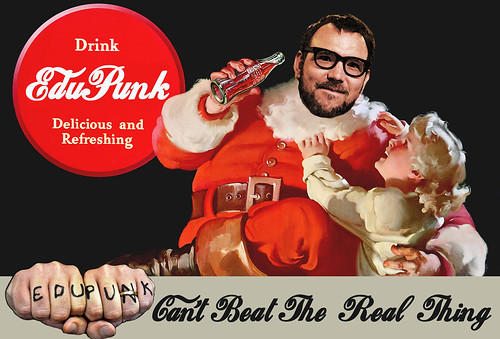
So, it is of particular interest to me that this recent meme, I’ll name it: EDUPUNK, has been defined in its fledgling (and most probably short-lived) Wikipedia article as an ideology:
Edupunk is an ideology referring to teaching and learning practices that result from a do it yourself (DIY) attitude. Many instructional applications can be described as DIY education or Edupunk. It describes inventive teaching and inventive learning.
What is interesting to me is that this definition of EDUPUNK as an ideology has seemingly won out over meme. In fact, the wikipedia article never referred to it as a meme, it was first described as a term at the article’s inception on May 30th, 2008 thanks to David Warlick, and then on June 2nd changed to ideology by a person at IP address 216.62.101.13. They also added a reference later on in the article remarking that it was “somewhat similar to punk ideologies.” So the relationship of this term (primarily the PUNK part, because EDU doesn’t really have any ideologies, just websites and emails 🙂 ) to a pre-existing set of “Punk ideologies” which “are a group of varied social and political beliefs associated with the punk subculture.”
So, what we have here is something that is quite different from the scientific definition of a meme grafted upon this social phenomenon (how did that work out for Social Darwinism, huh?) apparently because we can identify a set of “varied social and political beliefs” in punk. A pluralistic vision of ideologies that are premised on social struggle and political visions. As much as other musical genres have been thrown around in response to EDUPUNK over the last two weeks, I’m not sure how many of them have had such readily apparent and articulated social and political beliefs.¹ Hmmm, why is that more appealing to me than some term that invokes social darwinism in order to exploit the speed of information during our moment to discount the exchange of ideas and concepts as viral. A meme becomes something entirely denatured from any kind of political and social belief system.
So running with this idea, EDUPUNK is an ideology because it names a social and political struggle over the future of teaching and learning and it implies a series of beliefs, however varied, uncertain, and ill-defined. I like that, and I know if anyone actually reads this far, the word ideology in the Wikipedia article will be changed shortly to meme, and I like that too. I like it, because it draws into sharp focus what so few people seem to understand about the value of wikipedia (and the best of the internets more generally), it’s one of the few public places where an open, at times collaborative and others contentious, struggle over the meaning of ideas transpires. That’s important, and I think the morewe believe in ideas and preparing ourselves to struggle with them and over them, the further away we’ll get from memes and hopefully a bit closer to the very condition of possibility for our work: thinking and imagining creatively about the politics of our moment, and what it is we do.
Let the meme die, long live the ideology!!!
1. What are Pop music’s social and political beliefs? Disco? And how about Funk? Or even Rock? One might make a case for hippie music (does it have a name other than the Grateful Dead? Folk? psychedelic?) and Jazz, issues which I will defer to the myriad experts out there, one of which I am not.
 I had the great pleasure of re-watching one of my favorite films of all time recently with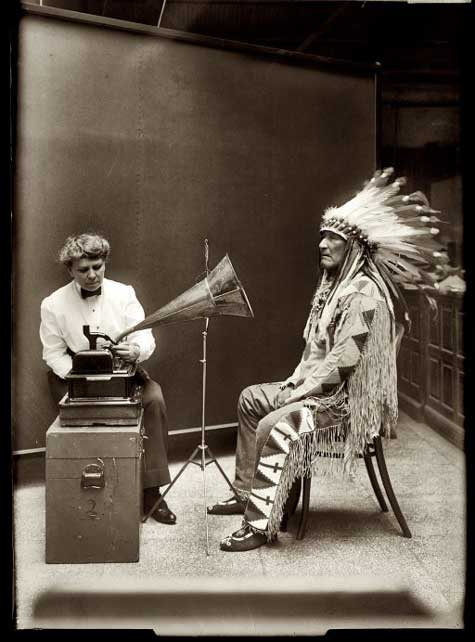

 Today I got to thinking about something while talking about building a community site: where is my community right now? Well,