
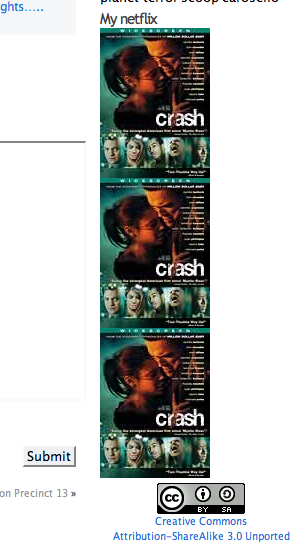
After a recent post and some good conversation, I got to thinking about why I hated Crash (2004) so much. And I think the reason, like with Monster’s Ball (2001) — but to a bit lesser extent, is that it packages a very easy pill for the viewing public to swallow when it comes to presenting a clichéd vision of race relations in the U.S. So, I started to think about The Hughes Brothers American Pimp (1999), a documentary that takes the complete opposite approach to these questions than a movie like Crash. Rather than pretending to be a deep drama about the complexities of race, it focuses on a particular stereotyped figure, in this case the Pimp, and examines it as a racial, social, and economic phenomenon.
I wouldn’t suggest that this documentary is a masterpiece by any means, and there is no question it is equally exploitative in many regards. Yet, it does offer an emblazoned look at questions surrounding race, class, and gender that introduces some very strong opinions, often preferable to the generic tropes that characterize a film like Crash. During a graduate seminar I took many years ago we were talking about issues surrounding race and identity in the nineteenth century, using Saidiya Hartman’s Scenes of Subjection as a lens through which to discuss the quotidian acts of terror and subjection that framed the intersections of race, identity and power during this period.
I was tasked to present on Hartman’s text and I decided to integrate a scene from American Pimp that offers a very brief and anecdotal history of the “Origins of the Pimp” as a means to suggest the transvaluation of something like prostitution during the postbellum period from an act that was tolerated (if not openly engaged) to a new severity of criminality in the late nineteenth and early twentieth century?
I don’t think my discussion went over very well, and will probably fail here once again. Nonetheless, I still think the idea opens up a fascinating opportunity to think through how we understand what is right and wrong and the identities around which we frame such a discussion. One of the pimps in the clip below has a complex theory of pimping in my mind that in many ways adheres to some of Hartman’s theories, namely prostitution (and by extension pimps) amongst the free, white populations was something that was often recognized and tolerated, if not entirely condoned.
Yet, by the end of the nineteenth century this reality becomes more and more strained as it becomes increasingly apparent that a number of free black men and women are making a living (tax free!). Now I understand this theory is overstated and anecdotal, and doesn’t even being to deal with the exploitation of women at work in such a model. Nonetheless, I think it might begin to open up a few ideas about the “nature” of laws, justice, and our larger ideas of some kind of moral integrity that is fraught with more quotidian acts of terror and control that Hartman outlines beautifully. Wouldn’t a dramatic criminalization of pimping and prostitution at this particular moment in history suggest how people, groups, and ideas make a constant nexus of mediated struggle abstracted through power and justice, which is itself constantly in flux.
So here is the two minute clip from American Pimp I showed in grad school, it has all kinds of harsh language and some brief and very tame nudity, so you have been warned, sucker!
[kml_flashembed movie="http://www.youtube.com/v/NE62akH1ky0" width="425" height="350" wmode="transparent" /]
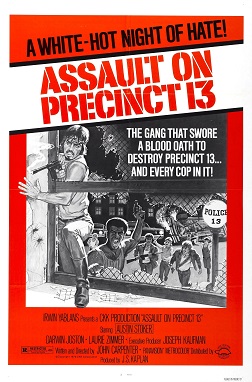 I am getting ready to embark on a series of posts that feature the ten most formative movies of my youth (and I stress movies here because none of them are films in the class-inscribed, pejorative sense). While doing my research (which is basically a nostalgia trip, something I love dearly) I re-watched