Gordian GIFs

Yesterday I refinished yet another old gold sash window in casa bava. The work is in preparation for larger changes, but more on that in another post. For now I just want to point out that Animated Knots might be my favorite and most practical use of image animation online I’ve seen to date. The weights that anchor the pulley system for the sash windows need to be tied on with a bowline knot, something I can never remember how to tie. Luckily the web has Animated Knots!

It’s an awesome site, although it ironically doesn’t use GIFs, rather videos and images that can be timed or moused over. It’s a brilliantly conceived site, and I love the idea of imagining such an eminently practical use of animation, something that often seems thrown away on pop culture-inspired hipster navel-gazing for entertainment on Tumblr. GET OFF MY BLOG, HIPPIES!

Posted in casa bava, fun | Tagged , , , | Leave a comment

Questioning the Conformity Curve

Image credit: Alan Levine’s “Converging and Crossing Lines”

The folks involved in Cal State University, Channel Islands’s domains project known as CI Keys, wrote a series of really thoughtful posts about the projects from a variety of vantage points. Michelle Pacansky-Brock wrote about the project as a catalyst for teaching on the open web. Jill Leafstedt wrote about the possibilities for faculty at CSU to create connected learning spaces for their courses. Jaimie Hoffman breaks down lessons learned after a year of building numerous classes out using CI Keys. And Michael Berman offers a broader rationale as to why an investment in CI Keys made sense. I love that each of them explained the impact of this pilot through their own lens, and it captures a nice cross-section of the possibilities and limits of such an initiative.

One of the things I think Berman totally nails is the willingness to question the adoption curve of a project like CI Keys. He notes the following:

I am coming to question the usefulness of the innovation diffusion curve in Ed Tech. First of all there’s an implicit value judgment that early adopters are better than late adopters – not to mention the infamous laggards. Not all technology adoption is useful, to say the least, and some is downright harmful. Second, why is success measured as universal adoption? If 20% of the faculty at my campus find CI Keys to be a useful and even transformational tool for encouraging student learning, does that necessarily mean that the other 80% are missing something by not using it? Perhaps, but I’m not so sure. It’s nice to think that we can provide a single tool for everyone to use but we can see where that’s gotten us. Instead, some will use institutional tools, some will use open source, some will use commercial tools, and faculty and students will use different tools (really, media) to accomplish different things. Is that hard from an ed tech support position? No doubt! But I think that’s the world we live in, not one where we always think in terms of scale-up and universal adoption – that ship has sailed.

I can’t possibly have said it better, and it really frames beautifully the predicament at many campuses. Someone throws out the stat that 85% of faculty are using the LMS and the conversation stops there. The various constituents who need resources beyond the LMS are poorly served, if at all. The adoption curve is actually a conformity curve used to justify supporting fewer and fewer tools on campus. So what should be seen as a pretty basic resource like web hosting/publishing are all but absent on many campuses. As Brian Lamb noted in the “Reclaiming Innovation” piece for EDUCAUSE Review:

…institutional leaders may refuse to support alternative systems….lest they draw attention and users away from the “serious” enterprise learning tool, diverting resources and endangering investments. If a technology is sufficiently large and complex, it can dictate policy, resource allocation, and organizational behavior far beyond its immediate application.

And the investment-based logic that can breed an aversion to alternatives often fails to comprehend that they’re not only significantly cheaper than any given system, but often complementary to that system. So, rather than endangering investments, it provides alternatives that make the system that much less monolithic. What’s more, it serves a portion of a campus community that has been forced to fend for themselves for almost a decade.

Posted in reclaim | Tagged , , | 2 Comments

Stabilizing AWS Costs on UMW Blogs

One of the quiet wins we had in DTLT this semester was moving UMW Blogs to Amazon Web Services. It was essential because this platform was quickly outgrowing the limits of a dedicated server. In fact, if it weren’t for Tim Owens‘s fancy footwork to help us scale the system, it may not have made it. Since the move it has worked beautifully, and we had no major issues the entire academic year.

One of the concerns we had throughout the year, however, was the cost. One of the reasons folks were scared of AWS is the fact that you pay monthly based on usage and resources rather than a fixed cost for a dedicated server. The idea of metered usage of servers, server infrastructure as a pay-per-use utility, is still a foreign concept for most IT units, not less purchasing! The lingering fear was that one month something would go wrong and the costs would skyrocket and our server budget would be eaten up in a month. While that could happen, there are all kinds of billing safeguards that make it fairly difficult.

Screen Shot 2015-07-05 at 1.40.51 PM

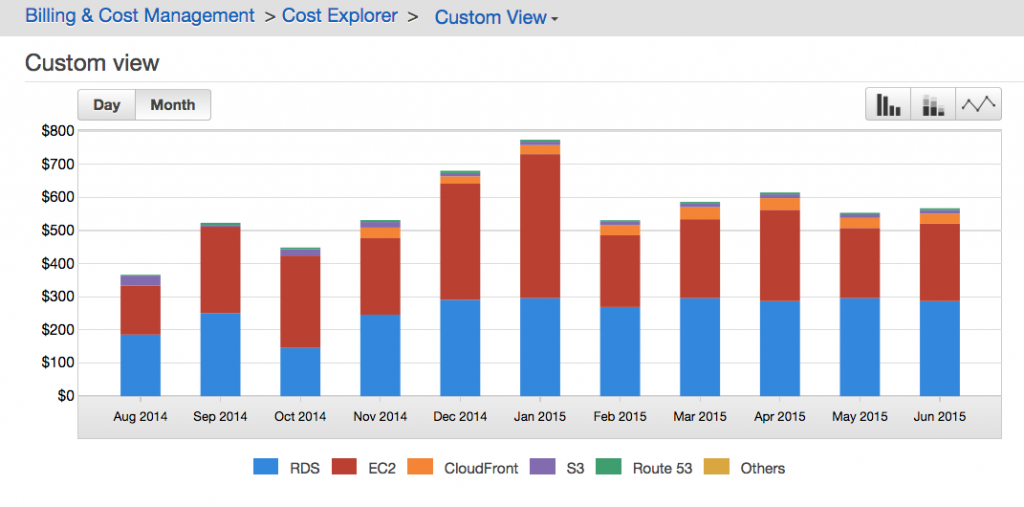
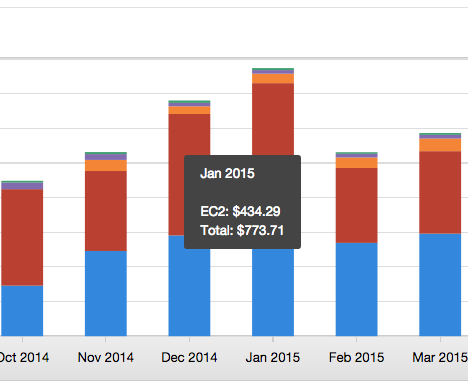
What’s interesting it to look back over our first year of usage in terms of costs to get a sense of how the system has become to find a rough monthly average in terms of costs. In the early fall we were running fewer EC2 instances, which meant the price was lower although the site was not nearly as fast. In November Tim rolled out four load balanced EC2 instances, and that was a brave new world. But as you can see from the costs for the EC2 servers in December and January, we had to dial back some of the settings because those two months were more expensive than we had planned. We needed to remain around the sweet spot of $550-$600 a month for this set up to be cheaper than what we were paying for a dedicated server, which was roughly $8500 a year.

Screen Shot 2015-07-05 at 1.41.06 PM

As you can see from February through June, we accomplished that. we averaged about $585 for those 4 months, and we had a completely stable system. The trick to managing AWS is having someone to experiment and mind those use patterns over the first year and tweak and perfect the setup. If we had more resources allocated for UMW Blogs we could certainly spend more, but such an exercise of managing to a budget is probably a good idea with AWS because it forces you to make sure your setup is tight. If it isn’t, you could keep throwing EC2 instances at the problem and spending a lot of money and still have a very fast, but quite expensive, infrastructure. Like anything, it takes good people who are willing to experiment and have an idea of what they are doing—or at least are willing to learn while they are flying!

Posted in AWS | Tagged , | 6 Comments

Duke’s Website has Gone Docker

29EcG

I was excited to see Tony Hirst retweet the news that Duke University’s website is being run in a Docker environment, and it could even be served through Amazon Web Services. Chris Collins, senior Linux admin at Duke, wrote about “Using Docker and AWS to Survive an Outage” they had as a result of DDoS attacks on their main site back in January. I love the way he tells the story:

While folks were bouncing ideas around on how to bring the site up again while still struggling with the outage, I mentioned that I could pretty quickly migrate the site over to Amazon Web Services and run it in Docker containers there. The higher-ups gave me the go-ahead and a credit card (very important, heh) and told me to get it setup.  The idea was to have it there so we could fail over to the cloud if we were unable to resolve the outage in a reasonable time.

TL;DR – I did, it was easy, and we failed over all external traffic to the cloud. Details below.

He goes on to describe his process in some detail, and it struck me how the shift in IT infrastructure is moving, and also made me wonder how many IT organizations in higher ed are truly rethinking their architecture along these lines. It’s one thing to push your services to a third party vendor that hosts all your stuff, it’s all together different to bring in a team that understands and is prepared to move a university’s infrastructure into a container-based model that can be hosted in the cloud. Not to mention what this might soon mean for personal options, and a robust menu of teaching and learning applications heretofore unimaginable. This would make the LAMP environment options Domain of One’s Own offers look like Chucky from Child’s Play 🙂

I know Tim and I are looking forward to thinking about what such a container-based architecture might means for an educational hosting environment that is simple, personalized, and expansive. Tim turned me on to Tutum recently, which starts to get at the idea of a personalized cloud across various providers—something Tim Klapdor gets at brilliantly:

MYOS is very much the model the Jon Udell laid out as “hosted life bits” – a number of interconnected services that provide specific functionality, access and affordances across a variety of contexts. Each fits together in a way that allows data to be controlled, managed, connected, shared, published and syndicated. The idea isn’t new, Jon wrote about life bits in 2007, but I think the technology has finally caught up to the idea and it’s now possible to make this a reality in very practical way.

His post on the topic deserves a close reading, and it’s the best conceptual mapping of what we might build I have read yet. I wanna help realize this vision, and I guess I am writing about Duke University’s move to Docker because it suggests this is the route Higher Ed IT will be moving towards anyway (sooner or later—which could be a long later for some 🙂 ). Seems we might have an opportunity to inform what it might look like for teaching and learning from the ground floor. It’s not a given it will be better, that will depend upon us imagining what exactly a teaching and learning infrastructure might look like. Tim Klapdor has provided one of the most compelling visions to date, building on Jon Udell’s thinking, but that’s just the beginning.

Posted in AWS, reclaim | Tagged , , | 2 Comments

That’s a Cinematic Parking Garage

8429d3fe8f851691e6a09ba88aaaa165

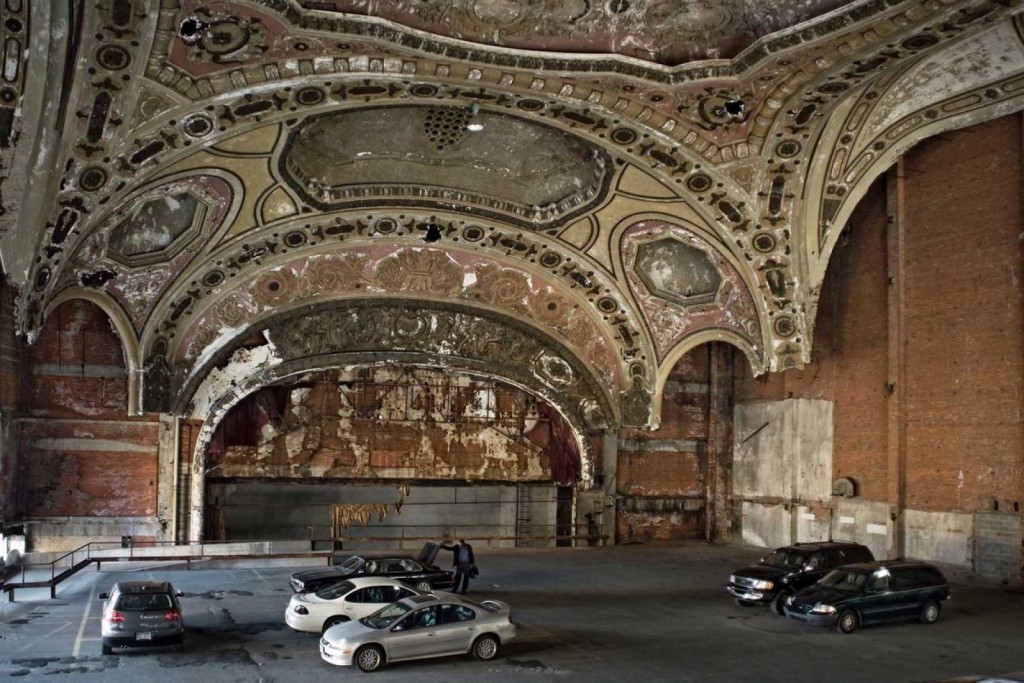
300KONG32COVERThe spring issue of Cinema Retro has a feature on the 1976 version of King Kong as well as an article on Orca: the Killer Whale (1977). Great reading, now I’m gonna have to re-watch both films this month. A short bit in the news section about The Michigan Theater caught my attention.  It was a quick blurb about this lavish French Renaissance-style, 4000-seat theater built in Detroit in 1926 which is now a pretty ostentatious parking lot.

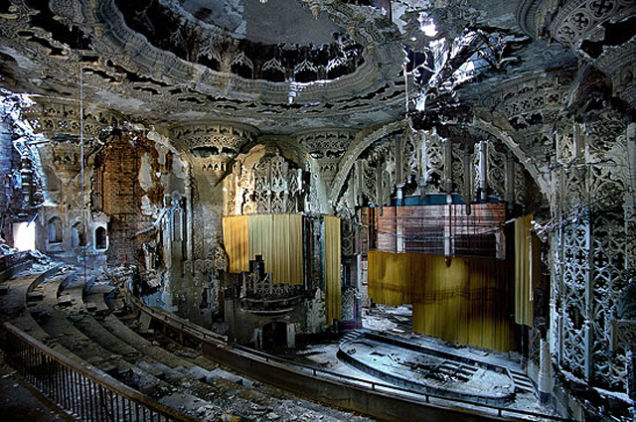
What struck me was how much this reminds me of the irresistible click-bait I chase all the time on the web. I love it. As much as I know Detroit ruins porn is wrong, it’s hard to look away ever since that first abandoned book depository Flickr set back in 2008. So seeing this in a British film magazine I’ve been buying fairly religiously over the last few years just seemed odd, although it really shouldn’t be. A quick search of the web brings up post after post after post about “The World’s Grandest Garage” (some better than others, but all of a piece). In fact, the history is fascinating, but the images are truly remarkable, it seems like something out of Planet of the Apes (1968).

18sjdc984eo37jpg

Now: The screen from the balcony. Image by: denverpost.com (recent photo)

And the before and after images circulating are quite striking:

MichiganTheaterlobbyDetroit

(Image: Gsgeorge, cc-sa-3.0)


One of the more interesting discussions about this can be found on this Reddit thread in which commentators start suggesting “This must be what it was like to live in the post-Roman Empire areas.” Post-industrial America analogized to post-imperial Rome. Interesting, the only argument I would make is that we may have done a far worse job than the Italians preserving our heritage 🙂

Posted in art, film, fun | Tagged , , | Leave a comment

Remember the time I photobombed Tim Berners-Lee at IndieWebCamp

Photo on 3-20-15 at 1.47 PM

That was awesome!

Posted in fun | Tagged , , , | Leave a comment

Nacho Cerdá is Phenomena!

AomLKlSCQAAFXpsSaw 2001: A Space Odyssey last night in 70MM at the relatively new movie theater Phenomena http://t.co/B23lwemtwC was awesome

One of the things I have been dying to writing about is the awesome movie experience I had in Barcelona at a brilliant new theater called Phenomena. I’m completely, entirely heads-over-heels in love with the mission driving this cinema: show the best possible prints of the best films from the last five or six decades. Note, I use the word best here loosely. This is a cinema that is premised on 35 MM and 70 MM prints that re-create that unique cinema experience. The programming focuses on an auteurs opus, grindhouse, Italian b-movies, themed double features, etc. It’s like the best of LA theaters without all the traffic. In fact, it reminded me a lot of the New Beverly, just with far more comfortable seats.

720x517x2

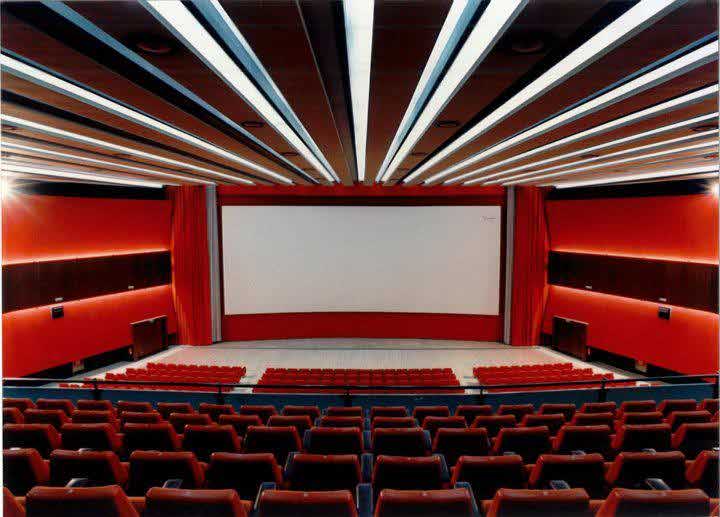
This look at the Phenomena theater is almost like a shot from Kubrick’s 2001

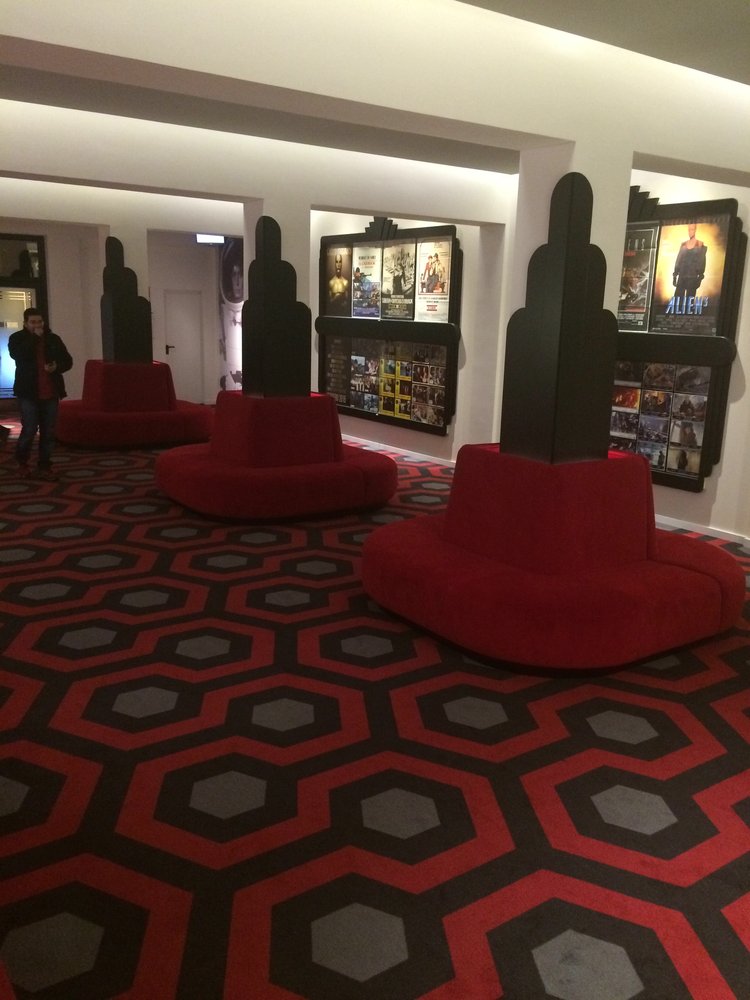
Although the biggest difference between Phenomena and the LA theaters is that many of the films they’re showing in their original formats were never theatrically released in Spain during the 50s, 60s, 70s and 80s. There’s a deep cultural turn and educational impulse to this project, and  the man behind this Phenomena is filmmaker Nacho Cerdá. I have to admit I had no idea who Cerdá was when I came to the theater a couple of weeks ago. I was alerted to the fact that 2001: A Space Odyssey was playing in 70 MM by the great Julià Minguillón Alfonso—I can’t thank him enough for his generosity of time and spirit during my trip. While waiting to meet up with Julià at the theater I was aimlessly walking around the lobby (which has the carpet from The Shining!)

o

It really pulls the cinema together!

I was greeted by the guy collecting the tickets at the door. He was unbelievably nice, and I think he could sense my lack of any resembling Spanish and bailed me out with fluent english asking me if I had been at the cinema before. I hadn’t, but right away he gave me a lowdown of the beautiful 70 MM print that had been just shipped from LA. His eyes lit up, he didn’t just work at this fine establishment—he was the best kind of film fan. One filled with joy at the very thought of a pristine print of one of his favorite movies. I was immediately sold on the while thing. He told me more about the gorgeous theater and Phenomena’s attempt to reclaim the wonder of the cinema experience, and then he was off to deal with the details a full house demand. I was really impressed by him, but my attention turned to finding my party and getting my hands on some of the affordable popcorn and Coca Cola.

maxresdefault

When we finally settled into our seats, that’s when it became clear to me what Phenomena was all about—returning the movie house to a place of magic and learning at once: marrying the sheer joy of the whole experience with intellectual pleasure of understanding its role in shaping our culture, and by extension us. The guy who greeted me in the lobby walked out in front of the audience and greeted everyone. Welcomed them in Spanish. He then went on to talk about the print, the film, and magic of 70 MM (or so I am guessing because I was piecing together the few linguistic clues). Seems he gave me the important bits I needed in english before the show, the consummate host. So the guy in the lobby was the vision and passion behind the theater, that became all too obvious, and when he left, the idea of preserving the experience was immediately apparent. I would try and describe it, but this site dedicated to the film does it far better than I ever could:

The curtain closes. There is an air of anticipation resonating from the audience. There is hardly a sound. Then, the curtain rises again, you expectantly wait for the screen to begin revealing incredible imagery. Instead, the screen remains blank. You first hear a hum and soon, the hum becomes a mysterious blend of instruments – sounding somewhat classical, but with an electronic edge. Members of the audience begin to murmur as some aren’t sure if the music is part of the film or not. Some even wonder if something is wrong with the projector as nothing is shown on the screen.

This is the very unique way 2001: A Space Odyssey begins, at least in a theater. The music is an excerpt from Ligeti’s Atmosphere’s

That a whole element of Kubrick’s intention for the experience that is all but impossible to reproduce in the home theater.

It sets a perfect tone for what is to come. The dark screen and eerie music set up what is going to be an enigmatic storyline. The score consists of highs and lows that are doppler shifted. That is, it sounds like you are speeding along with landmarks whizzing by you. Thus, a journey or odyssey.

All is quiet again. The MGM logo appears, not as a moving, roaring lion, but as a still drawing. Kubrick refused to have the roaring lion interrupt his opening act. He convinced the studio executives to allow him this request. They conceded.

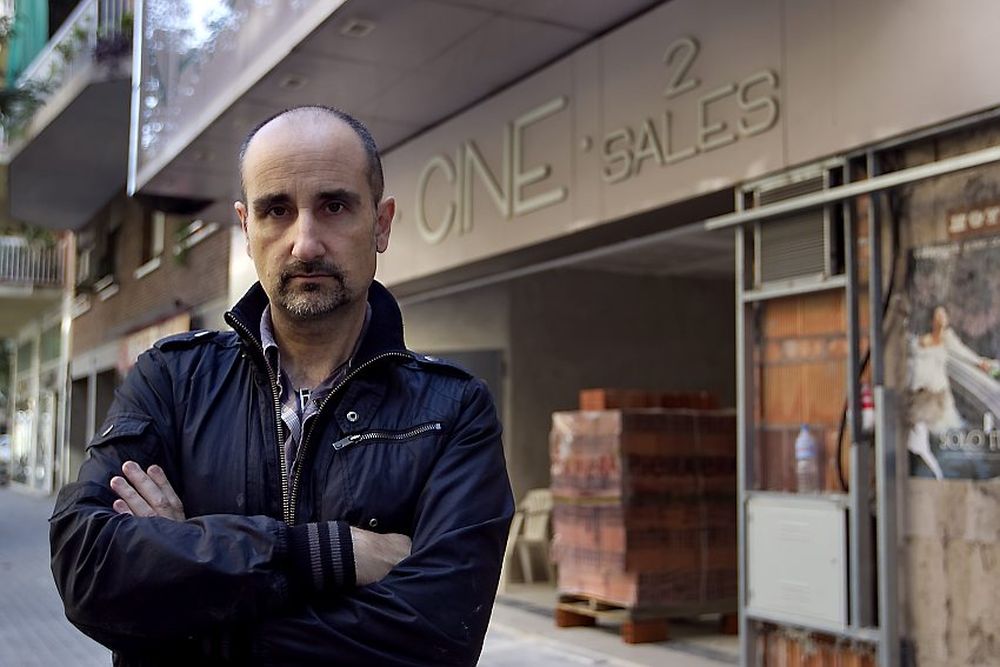
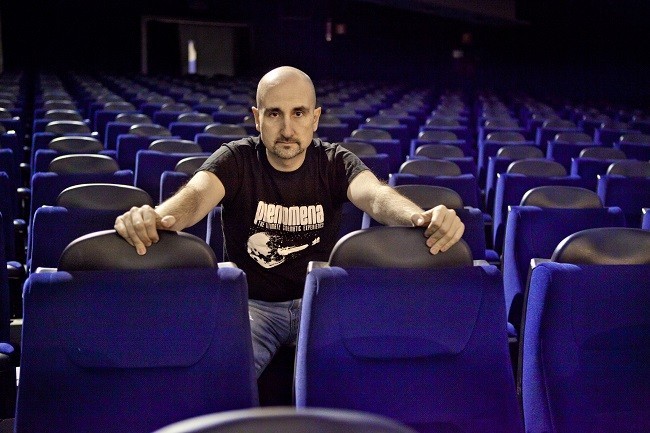
That’s cinema, and gripping experience that is both visceral and deeply intellectual. And by extension that was my experience of Phenomena. When the film came to the intermission, which was observed and folks piled out to smoke, get more popcorn, hit the bathroom, etc., I ran out looking for the proprietor to tell him what  huge fan I was. He was gracious, and simply said something along the lines of, “We’re just doing it the way it should be done.” Amen. I knew the guy who ran Phenomena was awesome at that moment, what I didn’t fully realize is that for the last four or five years this guy, Nacho Cerdá—a horror filmmaker and now cinema proprietor, was garnering a lot of attention for returning the cinematic experience to Spain.

Nacho Cerdá - a hero to me!

Nacho Cerdá – a hero to me!

While I was preparing to write a quick post about the theater I fell down a rabbit hole of video clips, articles, and interviews featuring the work and thought of Cerdá, and I have to say I am a huge fan. For example, this interview with the folks at Blog de Cine provides some amazing insights into his inspirations, interests, and motivations. I feel a kindred connections to his various inspirations given we are pretty much of the same generation, formative films like Jaws, The Thing, Alien, The Shining, etc. He even gives a shout-out to Mario Bava’s masterpiece Danger: Diabolik. But the meat of the interview is about the reason why he is doing this, to resist the increasingly industrialized and alienated experience of watching movies. To foster an idea of cinema as a unique experience that is not reduced to your BestBuy® home theater system or the ritual gouging when comes to ticket prices or refreshments at the local multiplex. This is just re-enforced by the complete disregard of anything resembling a unique experience in either of these venues when it comes to something like the music at the beginning of 2001 or a recognized intermission at Phenomenon. It’s a contract of good faith between the host and his or her guests. It’s a sense not just of an experience, but more importantly a shared experience amongst hundreds of people in time and space. A movie event!

GENTE CORRIENTE NACHO CERDA en el patio de butacas del Cine Comedia de Barcelona PHENOMENA - THE ULTIMATE CINEMATIC EXPIRIENCE Recupera peliculas de los años 70 y 80 FOTO MARTI FRADERA

GENTE CORRIENTE
NACHO CERDA en el patio de butacas del Cine Comedia de Barcelona
PHENOMENA – THE ULTIMATE CINEMATIC EXPIRIENCE
Recupera peliculas de los años 70 y 80
FOTO MARTI FRADERA

Cerdá says in the interview (which I had Google translate, so I’m sure it can be phrased better) “when it becomes a commodity, then I’ll leave [the] room” referring to Cinesa, competitor that recently started up based on the success of Phenomena that seems to be going for the “affect” of the project without any of the soul. And that’s what it’s hard to understand, sure Cerdá is doing something cool that others want to emulate, but he’s doing it as both an artist, fan and educator. It’s a space to introduce a whole generation of moviegoers to an experience that defined the dominant art medium of the 20th century, and that continues to be the grammar and syntax through which we understand our increasingly mediated world. Cerdá’s providing a social service of the highest order, and it’s my dream to do exactly what he has done for his community in Barcelona and beyond these last four years. I am a BIG FAN!

Posted in movies | Tagged , , , , | Leave a comment

Don’t get on the bava blacklist

In my last post I mentioned I was doing some sysadmin work for UMW Domains and UMW Blogs, as well as Reclaim Hosting—although Tim gives me only so much room to hang myself when it comes to Reclaim 🙂 One of the main issues we have on UMW Domains—UMW Blogs is an AWS dream right now [knock on wood]—is hacked files on compromised accounts that send spam. We’ve had a whack-a-mole problem in our main DTLT account which hosts a whole range of sites and applications—too many actually.

A hacked file will show up in one install, and once we squash that, it will show up in another, etc. So we have started moving all the various applications from various addon domains into their own account attempting to contain the issue to see where it’s coming from. I moved four accounts out this weekend, and Martha has been cleaning and moving out files since last week. Additionally, I spent much of this afternoon running the ConfigServer eXploit Scanner on the DTLT account to try and locate hacked files in the account. I think things may be starting to get cleaned up.

Why all this? Because over the course of the last week or so a few thousand  mails have been queued to be sent by spammers. We have been successful at rate limiting the larger runs which is important because it keeps us off the spam blacklists. There are also a few applications with open registrations that are getting spammed, so I am learning the ropes of hunting them down and fixing these issues. All in all, this is pretty fun, if not a bit harrowing. I like the trouble-shooting mindset it puts you in, and it’s a healthy reminder how rich a resource the web is for solving these issues.

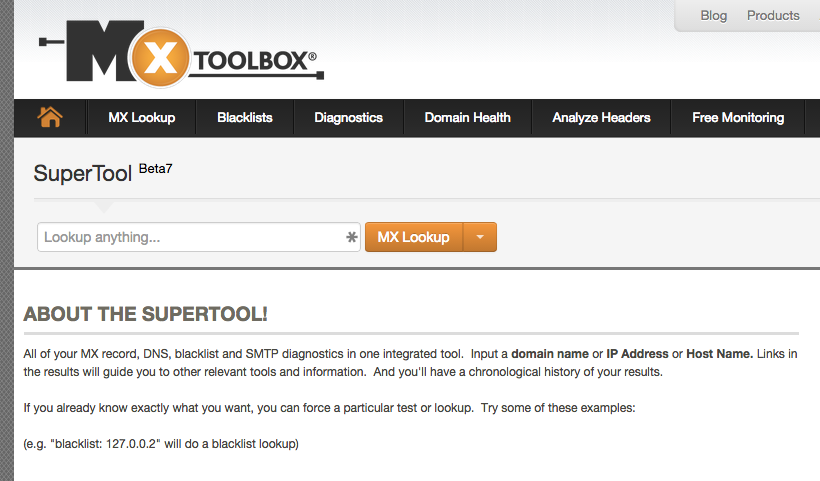
Screen Shot 2015-06-29 at 10.38.50 AM

One of the tools I know have in my sysadmin toolbox thanks to Tim (who has been a great teacher) is MX Toolbox, which allows you to put in your IP address and check if you have been added to any blacklists. Right now we have a greenlight, and I intend to keep it that way. No zombie machines on my watch!

Posted in sysadmin, Uncategorized | Tagged , , | 1 Comment

Reclaiming the bava

Been away, but now I’m back.

I’m finally starting to feel the transition away from UMW to Reclaim take hold. I’ve been traveling pretty non-stop since the beginning of June, and the last week back in Fredericksburg has been equal parts catching up on UMW work and ramping up my Reclaim duties. Needless to say, I’ve been pretty busy. Tim has officially taken his first real vacation in about 4 years from both UMW (he’s officially done as a UMW employee as of last week) and Reclaim Hosting. As for me “I’m the midnight to 8 man, I’m the commandant.” I’ll be relieving Tim over the next two weeks. Luckily, I’ll have some help given Reclaim has made its first official hire: the great Lauren Brumfield. She starts Monday, and I imagine she is still trying to wrap her head around the fact this may be the most anarchic, no frills experience in her fledgling professional career. Reclaim is punk rock: no titles, no bosses, just fast, cheap, and out of control edtech-inspired web hosting #4life.

Reclaim continues to pickup awesome folks who are working with us because they both understand and believe in our mission. I hear that in email after email, and I have to say it is really cool and gratifying. I find myself doing edtech for folks as well as helping them get stuff working, and not only are all the institutions who worked with us last year signing up again, but we have as many as 15 more schools running a Domains package this coming fall. We have been rather fortunate, seems like the work we (royal for Tim) have been doing is resonating, and folks are increasingly more interested. At the same time, the growth is still manageable. It’s wild, I am almost starting to feel like this whole thing is real.

As for UMW’s DTLT, there’s three job searches going at once this summer and I think things are starting to settle in after what was a trying year for everyone on campus. I finished by year-end report, my personnel evaluations, and I’m wrapping up a couple of letters of recommendation for faculty and students. I’m starting to feel a bit lighter. I’m serving on none of the search committees, and I pretty much have two responsibilities from here until the end of September: mind the UMW Domains infrastructure and work with faculty to get them up and running for fall. I feel like I’m going to be enjoying my life as an instructional technologist for at least a couple of months. All my director responsibilities are minimal given I’m now officially a short-timer and the group needs to figure out next steps. It’s a bit scary, but damn it is starting to feel really, really good.

Another little bit is that I’m actually going to be the “official” sysadmin for UMW Domains and UMW Blogs for the next month or so until Tim comes back to work with DTLT as a consultant. This means I’ll be minding the server store. I spent much of last week working with Tim on issues, dealing with hacked files, spam being sent, moving sites to new accounts, etc. It was kinda fun, and I’m really started to acquire a passable understanding of WHM and WHMCS. I still have to work on my command line kung-fu, but the web wasn’t built in a day.

I think the realities of my new professional life are starting to hit me. I can actually decide a fair amount of things I want to focus on, learn a lot of stuff I just didn’t have time to previously, and begin thinking long and hard about the conversations and ideas undergirding the future of digital learning environment infrastructure and how thinking through and trying to create personal APIs and social software systems might actually be my job now. I’m thrilled by the idea, and I have some work to do between here and there, but I travel along the stone path made up of the posts on this blog. Bava….the freedom edition!

Posted in reclaim | Tagged , , , | 6 Comments

The Un-education of a Technologist: From EDUPUNK to ds106

Below are the slides and a transcript of the text I planned to follow when I delivered my talk this morning at the EDEN Annual Conference in Barcelona. That said, I didn’t keep to the script because I get too excited and just ran with things. Let this be the record of what I wanted to say, not what I said 🙂

Into the Maelstrom

“Amidst the tumult, the academy appears oddly complacent. Open source technology, open access publication, open education have all had their successes, but none of these movements could fairly be described as having transformed practice. Models of publishing, reviewing and assessing research have not fundamentally changed. Innovation in teaching is at the margins, the essential structures of curriculum and assessment wholly unchanged. Educational technology, far from revolutionizing practice, seems primarily dedicated to perpetuating it: ‘clickers’ provide a sheen of interactivity in the cavernous lecture hall; ‘learning management systems’ promise to protect its users from the raging uncertainties of the digital chaos.” – http://unartist.wpmued.org/


This was the opening paragraph of an article Brian Lamb and I wrote for the Universities and Knowledge Societies Journal (RUSC) of the Universitat Oberta de Catalunya in April of 2009. We wrote most of it in late 2008, early 2009 and as the abstract notes in RUSC:

Two educational technologists and webloggers present a series of vignettes, contemplating the effects of modern networked communication on their practice. Recognizing their inability to construct a synthetic theory amidst the maelstrom, they curate a collection of observations and manifestos emphasizing themes of personal publishing, spontaneous collaborations, learning on the open web, and syndication.

The line “recognizing their inability to construct a synthetic theory amidst the maelstrom” is maybe one of my all time favorite research article abstracts ever 🙂 Thank you RUSC! But one of the things that’s interesting as I return to this article almost seven years later (what is that in Web 2.0 tech years?) is how so many of the curated vignettes around personal spaces, the open web, spontaneous connections, distributed collaborations, and syndication still remain core to a vision of what a revolutionary publishing and pedagogical practice might look like on the web.

What’s more, I’m an optimist. I think we are getting closer and closer to realizing that vision, and thanks to folks like Audrey Watters we may even be getting somewhere with a more “synthetic theory amidst the maelstrom,” i.e. the ahistorical, techno-solutionism undergirding Silicon Valley is launching a full frontal assault on the education sector.

In fact, the vignettes we list in that paper are the building blocks of this talk which loosely traces the work I‘ve been doing since writing that paper in December of 2008.

The vignette about “A Space of One’s Own” is a take on a “Domain of One’s Own,” an idea we have been playing with at UMW since 2007 or 2008. Give every student and faculty member their own domain and web hosting, and make them the “sysadmin of their own education,” to quote Gardner Campbell. The idea of building a university’s technical framework around personal cyber infrastructures was really radical just seven years ago, and arguably still is. But we have evidence that is possible, and can be the basis of an entire curriculum around web literacy and fluency.

The over-wrought section on revolutionary syndication buses was the basis of how we would build the Digital Storytelling course at UMW ds106 (#4life). A course that built on the idea of a personal cyberinfrastructre by giving all students their own domain and web hosting, but re-wired the course space as something that bring all that work back together. But not as an example of a creepy treehouse like Facebook or your favorite LMS, but as a distributed network that modeled itself on the web.

And ds106 reinforced, at least for me, two other vignettes from that paper, namely “serendipitous collaboration chains” and “spontaneous connections.” As we noted Stephen Downes note:  “Who cares if a few universities exchange learning content among themselves (not that this really happens a lot anyway)?” The more interesting models is how various individuals and groups forge entirely new collaborations and spontaneous connections that form networks above and beyond the institutional vision of “sharing.” This is where MOOCs began to fall down as a centralized approach to sharing that strayed away from anything resembling the web.

Speaking of MOOCs, our vignette about Massive Open Online Courses (MOOCs) may be one of the very first articles in an academic journal that says the “M” word. This was almost 3 years before the hype, and the logic undergirding MOOCs as they were laid out here was rather different. it wasn’t about marketing, colonial education, or efficiencies, it was about trying to understand how pedagogies of and for the web can be radically different.

EDUPUNK

This was all written and imagined during a moment when EDUPUNK was still a thing. Less than a year earlier Brian Lamb and I had began to articulate our dissatisfaction with how LMS companies like BlackBoard were making claims about being open and innovative when they had done nothing more than start to integrate a few basic practices that were predominant on the web rather badly into their LMS. It was insult to injury, because that company had done little to nothing in terms of innovating on their product for years. Again, with stridency and righteousness:

…if we reduce the conversation to technology, and not really think hard about technology as an instantiation of capital’s will to power, than anything resembling an EdTech movement towards a vision of liberation and relevance is lost. For within those ideas is not a technology, but a group of people, who argue, disagree, and bicker, but also believe that education is fundamentally about the exchange of ideas and possibilities of thinking the world anew again and again, it is not about a corporate mandate to compete—however inanely or nefariously—for market share and/or power. I don’t believe in technology, I believe in people.

-From “The Glass Bees” on bavatuesdays

The only moment either of us presented on EDUPUNK was when Brian Lamb delivered a really compelling talk of these very ideas back in 2010 right here in Barcelona at Zemos98.

EDUPUNK also became a victim of its own very mild success as an idea, and was soon a logic exercised when it comes to neocon logic of dismantling higher ed. Stuff I was very uncomfortable with, and ultimately had to right my Dear John letter in 2011 to an idea I was really smitten with:

DS106

But EDUPUNK and I never really split, we just changed its name to ds106. In the Spring of 2011 ds106 provided a beautiful the moment when so many of the ideas Brian and I were trying to wrap our heads around (personal spaces, spontaneous connections, serendipitous collaborations, syndication hubs, MOOCs, etc.) came together. But not so much as a synthetic theory, but as a practical application of how teaching and learning can be part and parcel of the web. How we can “descend into the Maelstrom” by studying the action of the whirlpool and cooperating with it—the quote from Malcolm McLuhan quoting Edgar Allen Poe that Brian Lamb used to frame the whole idea of working within the chaos.

But I am getting ahead of myself, what is ds106? Digital Storytelling (also affectionately known as ds106) is an open, online course that happens at various times throughout the year at the University of Mary Washington and elsewhere… but you can join in whenever you like and leave whenever you need. This course is free to anyone who wants to take it, and the only requirements are a real computer, a hardy internet connection, preferably a domain of your own and some commodity web hosting, and all the creativity you can muster.

ds106 opened up questions about infrastructure, architecture, student agency, pedagogy, and much more all at once. It wasn’t just about technology, it was about how the technology affords new ways for us to collaborate, share, and learn with and from one another.

One of its many great moments of this experiment came during the summer of 2011, during what is now referred to as the “Summer of Oblivion.”

“The idea was to have a daily radio/TV broadcast by Dr. Brian Oblivion (featured in the animate gif above), a character from David Cronenberg’s Videodrome who only ever appears as a mediated pedagogical presence on TV. The idea was to update this for 2011, and have this be an online, mediated pedagogical appearance only on the web. Effectively I took on an alternative teaching identity. I wanted to push myself in this course to not only experiment with and challenge some of the ideas we have about the role of the professor, online learning, and mediated communication…if I am not pushing myself to explore and be consumed by this media then it would run counter to the whole reason for the course in the first place. So, there it is, ds106: The Summer of Oblivion—but this analyzing is paralyzing, let’s play this dang thing!” from http://bavatuesdays.com/ds106-the-summer-of-oblivion/

And it looked something like this the first few days:

The course ran as an alternative reality in some ways, what Ray Land calls a “pedagogy of uncertainty.” By the end of the first week Dr. Oblivion went missing, the TA (jim Groom) came in and became a tyrant banishing students, and the class started to rebel. It was magic. Here is one of the student created videos about the upheaval of course power:

The idea of the class was about sense-making online, taking control of your digital presence, and imbuing a broader range of digital literacies and fluencies across tools, but more importantly managing one’s presence online.

Domain of One’s Own

This gave way to the Domain of One’s Own initiative at UMW that provides every student and faculty member their own domain and web hosting, providing a platform for a broader, institutional wide digital fluency toolkit, not to mention a sandbox for broader web-based exploration for everyone.

This took on a whole different level of thinking when I met up with Audrey Watters and Kin Lane at the Reclaim Hackathon at MIT sponsored by the DML. The ideas there continue to drive the work at UMW and beyond. Thinking in more focused ways about how we provide students and faculty a technical and curricular framework that provides more control over personal data. Ideas of University and personal APIs, virtualized server infrastructure, Docker, and much more. This is the beginning of what has become my new focus—Reclaiming. It’s also why I started with the demo. Based on the work we’ve done at UMW, my partner Tim Owens and I are working on a model that provides individuals, courses, departments, and/or universities with cheap, virtualized infrastructure to run this locally.  A way of decentralizing IT and edtech support. That’s Reclaim Hosting, and that’s the future!

Posted in digital storytelling, edupunk, reclaim, reclaimopen | Tagged , , , , , | 3 Comments