D’Angelo Barksdale reads The Great Gatsby

The Wire: D’Angelo reads The Great Gatsby

This is a scene from The Wire I constantly return to in my mind for some reason. I mean it might seem obvious given I have a quickly vanishing background in American literature, and I certainly believe that the The Great Gatsby is one of those works that gives you something new and desperate no matter how many times you’ve read it. But I’m not sure that’s it.

Oddly enough, this scene reminds me of a huge, survey lecture of English Literature I took at UCLA with Robert Aguirre in the early 90s. We had just finished reading either James Joyce or Virginia Woolf, I don’t remember which, and his basic wrap for this particular lecture focused on how literature makes the reader somehow different. Which is not an idea I disagree with necessarily at all, but what struck me about his telling was that the difference amounted to feeling somehow different upon your return home after reading these immortal words, as if you couldn’t look at the people, places, and things in your life the same way. I read his suggestion as a kind of imposed alienation and superiority all at once. It infuriated me to no end, and I stood up and said as much when he finished. I’ve always thought that if something as awesome and intensely regenerative as literature is framed as an excuse for invidious distinction, then all is lost for the humanities. Do we study the greatest words to feel better than those who didn’t or couldn’t? Moreover, did those who wrote them imagine them as a wedge rather than a window?

D’Angelo’s reading of  Gatsby is such a beautiful antidote to such a worldview of culture. It’s one of the few, and definitely the most powerful, moments in TV or film wherein literature becomes a struggle with life rather than an object of invidious cultural distinction or an allusion to be caught or missed depending upon your cultural literacy. In this scene literature is about the raw act of reading honestly and personally, which has nothing to do with how much you have read, or how much more you know or don’t know than another. Maybe that’s why I can’t shake this scene from my head, I love literature, but not as a cultural trophy, but rather a sincere struggle with all that is human and that haunts us.

Posted in television, TV | Tagged , , | 11 Comments

EDUPUNK Battle Royale, Part 4

To steal from the title of the Samuel Beckett reader: “I can’t go on, I’ll go on.”

EDUPUNK Battle Royale, Part 4

Posted in edupunk | Tagged , , , , | 18 Comments

Afterload, or the internet as oracle

So last night, while I was whipping up another WPMu, bbPress, and BuddyPress casserole for an upcoming NEH Grant on Whitman (but more on that soon), I found my fearless partner, confidant, and earliest inspiration for all my edtech dreams was online. That’s right, I finally caught the elusive Zach Davis of Cast Iron Coding fame online, and I cornered his ass for some wildcard dns love. He’s the admin genius behind the venerable UMW Blogs, and I can’t say enough how badass he is, we’re running for almost two years now, and we are rock solid: off-site redundant nightly backups, dedicated server love, multiple-databases, and we can count the amount of downtime over the last two years on one hand. Make no mistake about it, UMW Blogs is a well-oiled machine, and we owe it all to the fine folks at Cast Iron Coding. But this post isn’t about that, it’s about the internet as oracle.

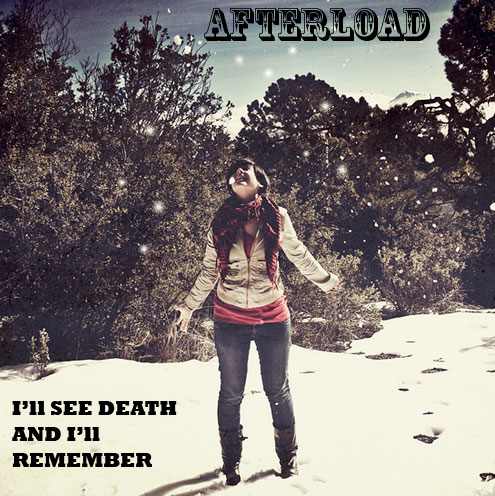
Zach was understandably not all that happy when I found him online, because he was in the middle of an important project. He was making creating his very first album based on a meme that has been around a while. I first saw this meme last year thanks to Stephen Downes’s post about his own album cover. So, while I was already familiar with the meme, and I have to admit Zach’s album was pretty awesome, I’ll reproduce it here.

Afterload

But what is even better than that, was Zach’s quick thoughts about the internet as a modern day oracle. He explained it like this:

The internet is the….Delphic Oracle. You too can find out your future. In the Renaissance people would open the bible to random pages and look for guidance. Now we use wikipedia and flickr. Thank god.

Brilliant, just brilliant. When is this guy gonna start blogging so I don’t have to do it for him? Here’s to you Zach, you rule!

Posted in fun | Tagged , , , , , , | 11 Comments

The EdTech Survivalists are heading to SXSW

Well, it all got confirmed today, Tom Woodward and I will be traveling together to SXSW. The trip is made possible thanks to Dave Lester’s panel on EDUPUNK that I will take part in, along with Barbara Ganley, Gardner Campbell, and Stephen Downes. I’m really excited for this talk, if not a bit nervous.

But I have to admit I’m even more excited about working alongside Tom to create a series of videos of as much of SXSW as we can. A kind of documentary of our time there, the only twist on that is that we’ve agreed to be in character the whole time as EdTech Survivalists interviewing folks about our current social, economic, and political climate as it pertains to education and beyond. I’m sure four days of sustained madness will give us plenty of fodder for some fun stuff. I mean when Stephen Downes is using The Day After to put our current climate into perspective, I think it’s a sure fire sign things are getting bad. It seems an important moment for us to try our hand at a little Dziga Vertov Man with a Movie Camera and get out there an try and capture the pulse of our moment survivalist style. So it’s going to be all work as play at SXSW, and I’m fired up for the opportunity. It’s time to dig in!

Posted in edtech survivalist | Tagged , , , , | 8 Comments

eduLURV

Image Credit: Zenera’s “Love to all my contacts*”

The great Scott Leslie recently tweeted about the dissatisfaction with the EDUPUNK debates happening on the bava, and a part of me deeply agrees with him. Perhaps I am getting sucked in again despite my sense of this whole concept as a generative metaphor for creativity. Perhaps the comment debate is becoming more of a grad school throw down than a deep reflection and understanding on how this idea might help us forge alternatives. I guess it is in the very logic of a charged idea and debate around questions of the future of education, leadership, and networks that are premised on people, not technologies, that this whole thing can get confused and entangled. I, for one, recognize that my strident calls against leadership and institutional hierarchy might inevitably begin to frustrate some and alienate others. And for this I am sorry, I just don’t know how else to say it.  I’m frustrated and tired, and I want more than anything to be face-to-face with the people whom I follow and respect throughout the internet.  I want to commune with them, talk with them, and reassure them that we have something more at stake than an argument or a disagreement, we have a future of thinking and acting together.

And if EDUPUNK precludes that future, then I will gladly walk away from it because it’s the people I respect and admire most who make this space different for me—less academic and more intimate and transcendent. I’m willing to embrace eduLURV because I don’t want to become a posterboy for choosing sides and being righteously right or officiously wrong. We have too much of that in our world. I want a third space, a new way of coming together that will not feel so fraught with the old clothes of feeling accomplished by besting another. I’m through being cool, I want much more, and I want it now—and no term or idea or concept or meme or ideology or prompt is worth endangering a movement that must necessarily consist of people who don’t agree and have strong opinions about what’s next and how we get there. Scott, I’m all about the eduLURV, and I want it to be a love supreme, strong enough to buoy tired souls and raze institutions in a single bound, brilliant enough to re-imagine education in a way we could only dream of in our philosophy.

Posted in eduLURV | Tagged , , | 20 Comments

Blogs@Baruch batting over a 1000

I just read that Blogs@Baruch has recently pushed passed 1,000 users. What?! It seems like only yesterday that this young upstart was clamoring about it’s big debut in September 2008, then wham!, only six months later 1,152 users. Looks like they’re officially exploding! This article in the Baruch newspaper The Ticker does an excellent job framing the explosion through the story of Miya Owen, who was the 1000th student (she is also an alum of Clara Barton High School where I taught high shcool English for a year and a half—the lattice of coincidence casts a wide net 🙂 ).

More importantly, I just want to take a moment to say how unbelievable it is for me to see CUNY breaking out of the BlackBoard stranglehold, and embracing new and vastly improved publishing platforms for New York City’s finest. It almost brings a tear to my eye to think that CUNY, the largest public city university in the US (which has a rich history of open education and hardcore leftist thought), might once again rise from the neoliberal ashes of NYC and become a leader in open education through an elegant, affordable, and kick ass system like WPMu. This stuff is real, and it impacts people in real ways, and watching Luke Waltzer and Mikhail Gershovich brings Blogs@Baruch, a full blown, open source publishing platform, into the largest college in this 22 college system is fucking awesome. It marks for me some great triumph of a community of lost and goofy graduate students helping to make good on commitment to openness that public institutions all over the country have all but forgotten. I’m proud of Luke and Mikhail, and I’m proud of what we are all doing, and i’m not gonna stop talking about it ’til somebody pulls my cold, dead hands from this keyboard.

The revolution is now!!!

Posted in Uncategorized | Tagged , , | 2 Comments

EDUPUNK Battle Royale, Part 3

And for your sins, here’s part 3:

EDUPUNK Battle Royale, Part 3

The third installation of this video takes us deeper into the questions surrounding leadership. This is an issue that hits close to home for both Gardner and I, and it may seem to move away from the logic of EDUPUNK for some—but in many ways it’s one of the issues that’s at the heart of it. It’s also an idea I struggle with regularly from within an institution, especially when I see how destructive bad leadership can be for so many folks trying to creatively imagine the historical moment we are living through for education. Revolution is already happening (we didn’t need EDUPUNK for that), but more times than not, leadership is just an obstacle in the way. Why do we need it? I once proposed at a DTLT meeting a couple of years ago that our group do away with the idea of a director, and share the responsibilities and recognize the fact that we are more akin to a group that is self-motivated and anti-hierarchical. And while the idea is somewhat radical, I still believe it has value and that we need to re-conceptualize ourselves not as workers or underlings, but as creative collaborators working towards a common goal for a larger community. The other I want to stress is that EDUPUNK was meant to be fun, but it also needs to be “red in tooth and claw” against a tired diplomacy that is making the issues that surround us academic. They aren’t, they are deeply personal and emotionally charged—like anything of value is—and we have to be brave enough to go there.

Posted in edupunk | Tagged , , , , , , | 6 Comments

Googleopoly or: A Case for Personal Publishing

Let me give you one example of why I’m apprehensive—and I am—about companies like Google. This post over at Coyle’s Information (which Patrick Murray-John recommended a while back) should be read in its entirety, but here is a snippet that frames the deal Google made with the Association of American Publishers (AAP), and how it impacts libraries who had been invited by Google to help them digitize their libraries for free (or a deal with the devil):

The deal that Google and the libraries had was that in exchange for working with Google to digitize books in their collections, the libraries received a copy of the digital file. After that, it was up to the libraries to do the right thing based on their understanding of copyright law. Participating with Google has been an expensive proposition for the libraries in terms of their own staff time and in the development of digital storage facilities. Part of the appeal of working with Google was the assumption that partnering with the search giant gave the entire project clout and provided some protection for the libraries. With Google and the AAP now in cahoots, the libraries must join them or try to stand alone in an unclear legal situation; an unclear situation that Google invited the libraries into in the first place.

This is classic bait and switch. And it is bait and switch with powerful commercial interests against public institutions. There is no question about it…

THIS IS EVIL

Why should schools be any different than libraries? And as Tony Bates notes in his post about “Googleopoly”, anyone who has published, or intends to publish, should be looking into the implications of the Google Settlement regarding their right to copy and distribute published books. He refers to a couple of quotes from Grace Westcott’s article “Googleopoly” in the Globe and Mail, which frames the implications of Google’s settlement with the AAP for other countries, and it looks just as bad for them as small libraries in the US:

‘The settlement is astonishing in its scope. If approved, it will permit Google, on a non-exclusive basis, to continue to digitize books from any source, and to maintain, expand and sell access to its enormous digital library in a number of specified ways.’

‘One implication you won’t find mentioned in U.S. summaries is the effect on libraries in Canada and the rest of the world. Unable to get access to a Google institutional subscription outside the U.S., Canada’s university libraries will be unable to compete with the more comprehensive offerings in the U.S., or, for that matter, with the offerings of even the smallest of its public libraries, each of which is entitled under the settlement to free access on one terminal to the entire Google database. Because the settlement does not address Canadian rights in books, Canadian users don’t get the benefits; outside the U.S., Google Book Search remains unchanged.’

I can’t see a more compelling case for pushing personal publishing with the tools we now have ever more vehemently, it is time for us to take back ownership of our ideas. All of us!

Posted in publishing | Tagged , , , , , , , | 10 Comments

Gursky World (2002)

That just in from UBUWEB:

99 cent

In the first programme of a major new arts strand, Ben Lewis’s amusing odyssey delves into the world of the planet’s most influential photographer, Andreas Gursky. Trying to find out what makes Gursky tick, Lewis’s bizarre journey takes him on an adventure from Reading to Dusseldorf. When he meets finally his hero, he gains a fuller understanding of what it means to live in a ‘Gursky World’.

Download Gursky World (2002)

Posted in art | Tagged , , , | 3 Comments

bavacon or: How Blog Branding Ate My Soul

Image of Batman fighting Blade

Image credit: “Pittsburgh Comicon” by RL Johnson.

Let me be frank here, I love the bava, I do, I love the little fucker. And I pretty much say whatever I want on it, and really could care less about the consequences. It’s my little space to create and have fun, and I seldom, if ever, wield it as a hammer against others. In fact, that’s not the logic of this space, if, indeed, there is one. I also don’t brood over the blogging process, I write half-baked thoughts and let them die an ignoble death. That’s an important element of this space for me because it is a liberation from my grad school days of writing–a period that’s was a deep source of inadequacy and trepidation for me. I kind of think of the bava as an unlearning of that process, an intentional reaction to that prison house that I no doubt helped to create in my mind.

So, it’s funny how this process has recently become a source of anxiety for me in other regards. Namely, the idea of “creating a brand” through my blog. I absolutely hate the idea of framing one’s blog, online presence, digital identity, etc. as a brand. It is that very market-speak language of the web that robs it of any of its vitality. It makes what so many people are doing in this space for a wide variety of complex and conflicted reasons synonymous with some kind of consumer recognition bull shit. It turns these spaces about people, into a product-driven logic of statistics, rankings, and meager celebrity. It removes one from the very act of sharing and discourse that undergirds the power of such space. If we are using the term online branding to frame our conversations about institutions, personal blogs, or digital identities, then the apotheosis of people as product has been realized, and we might as well tattoo a bar code on our necks and get scan-inventoried at the local Wal-Mart. Resist market speak in education, fight the nefarious logic that seems to so innocently seep—or is the proper green, bio-metaphor of the moment “organically” more appropriate here—into a space that needs to remain ever vigilant about what the realities of markets do to any sense of community, culture, and camaraderie both to their own sense of mission, as well as for the culture at large they were designed to serve.

So, at this point in the post one might ask, “Hey, bava, why all the preaching and teaching, hoss? Get to the punchline already.” Well, the punchline is that my own exhortation is born out of an ambivalence about what I have to say next. You see, “a foolish consistency is the hobgoblin of little minds,” and I am capitalizing on this quote from Emerson to introduce an idea that has been bandied about on this blog in jest, and one which a quite persistent and rather funny blogger has been taking quite seriously. What I’m referring to here is bavacon. What the hell is bavacon? I don’t know, I might blame Bryan Alexander for it via his throw away comment here, and I also might blame Steven Egan for taking my attempt to downplay the whole thing with a joke quite seriously. But when we get rid of the idea of bava from this equation, what Steven is talking about really fascinates me, and I will quote extensively from his post on the subject below:

Might it be possible to arrange a digital conference thing with no physical location? A mash-up of sorts using different digital communication tools? AV chats, chat room discussions, feeds and more through a portalesque webpage to the individual locations? If needed I have a domain that would work well for this, and this goes right along with my plans for it. Unfortunately I don’t have the hosting or know-how to do that, or I would.
….
First is the timing. With the economy problems, travel budgets are shrinking. The technologies to be used are easily accessible and widely varied. People are taking a serious interest in education and distance education. That interest is starting to wane due to other pressures. So, having a digital conference, possibly with a physical location, could start a wave of accessibility to learning conferences. With some interest in pushing the conference model into the Web 2.0 and other interests in improving conferences, now could very well be the best time for such an experiment

Second is the draw. The Bava is a collection of creations by Jim Groom, who has plenty of contacts and could likely draw a crowd. That means the first event could be a big success. That would increase the chances of other conferences following suit. It also means that the word would spread, where if I were to try to do this there wouldn’t be the draw to make it work.

Third is the accessibility. Jim is a serious advocate of accessibility in learning, be it in tools, materials, opportunities or software. So I don’t doubt he would try to make the Bavacon accessible to the masses. This also came out of a discussion on not being able to attend conferences and events, so it isn’t just Jim’s ideals. It’s also the direction this thing started in.

Fourth is the potential. This is where it becomes important. The timing of this could make this a big event in the learning circles. The draw of him and his contacts could add to the bigness of the event. An accessible learning conference would mean that teachers, educators, students and the masses could attend. Together that makes for a potentially huge event where students, teachers and policy makers can attend and possibly participate. Yet that is just the tip of the ice burg.

Local viewings and discussions are a possibility. In a single chat room it is hard to deal with 50 or more people. Yet if you have up to around 20 people in a discussion it is entirely possible.

Live and archived videos, twitter, RSS feeds, live and archived audio, chat rooms and live physical viewings or the video with discussion sessions afterward are all possibilities. That’s all interaction and starting conversations.

The fact is, I think Steven is right about so many points, save the one where I might be the draw and impetus for such an event. What it could and should be is a collective happening that is distributed and would push a whole bunch of people to think about how we might be able to bring people together for a kind of focused learning party that is not dependent on geographic space. I think it would have to be an event for creativity and performance, not papers and research. We could synch our twitter accounts and watch films “together,” a model I saw here and thought was brilliant. We could get a venue in Second Life and perform our work—I was inspired by NMC’s Second Life conference “Rock the Academy” for the possibilities here this past November. We could create mashups, art, poetry and the like in a distributed space that syndicates into a site over the course of a specific period of time, and what else….? I don’t know, the ideas would have to be generated by everyone, and would be a large part of why this would be valuable. Namely, imagining ways to create these personal and social communions online at specific times and places throughout the distributed web. One thing I am pretty sure of, however, is that it would have to be free, open, and archivable with everything that was created and captured made freely available with an open license. Moreover, it would take a number of people interested and able to make this idea a reality.

All that said, a large part of me would much prefer being in the same physical space with these people hanging out and talking and riffing about these things (hence WordcampFred). That said, I think this model of a focused, distributed event might make for an interesting opportunity for thinking through and innovating with the very technologies that might point the way forward in terms of alternatives. So, to that end I have this to say, I’ll help Steven organize this if other people are see some potential value in it. The other condition is that we kill the name bavacon, let’s call it abjectacon or infocultacon or con-a-punk or something like that. Moreover, perhaps this is happening already, and such an event may just seem like more work or duplicated effort—something none of us need at this point. But I do know that I’d like to have something to work towards, and more times than not it’s the usual presentation venue and form that isn’t really pushing us to new ways of imagining how to share this stuff. That’s what I am interested in with this push, what do you think?

Posted in fun | Tagged , , , , , , , , , , , , , , , , , , , , , , | 25 Comments